














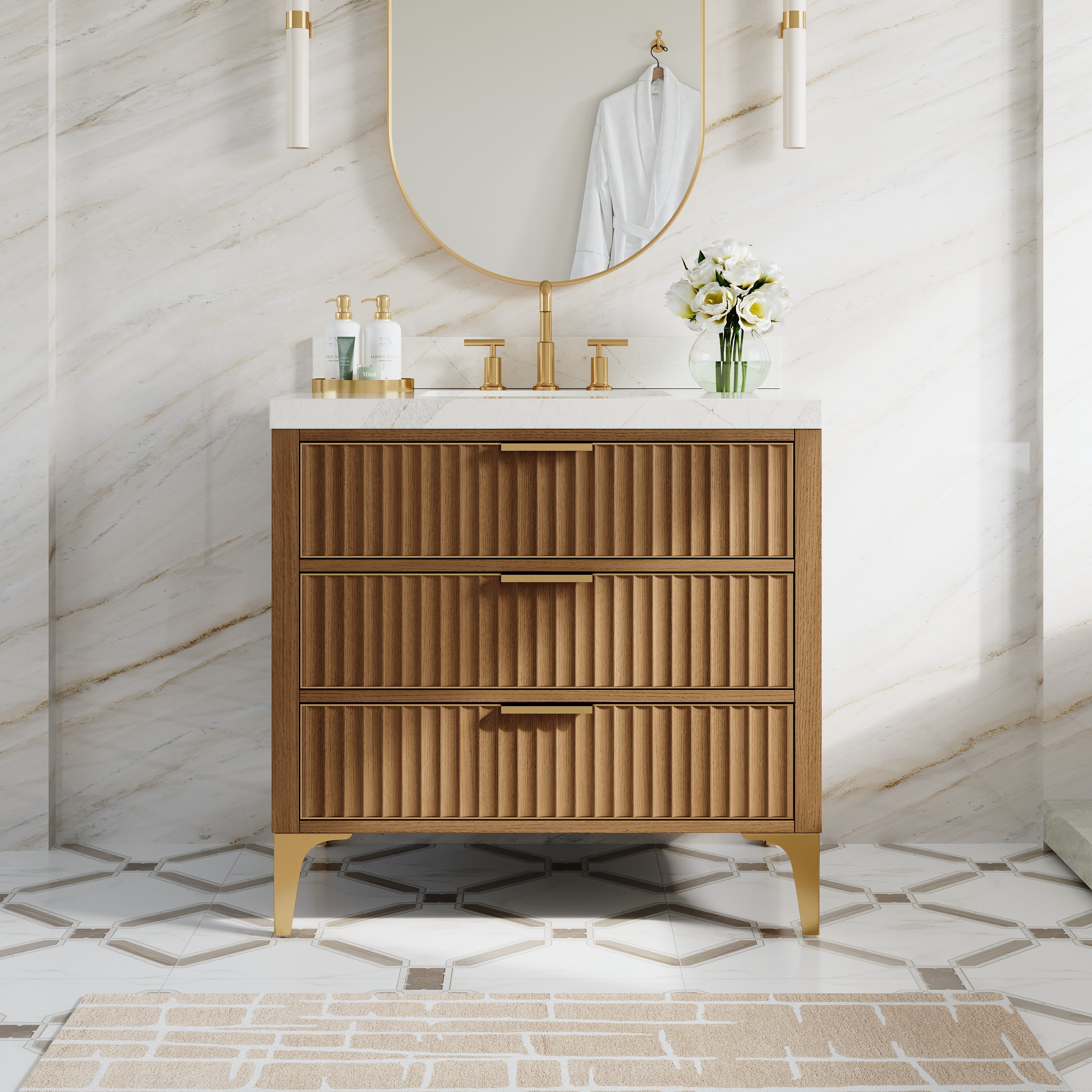
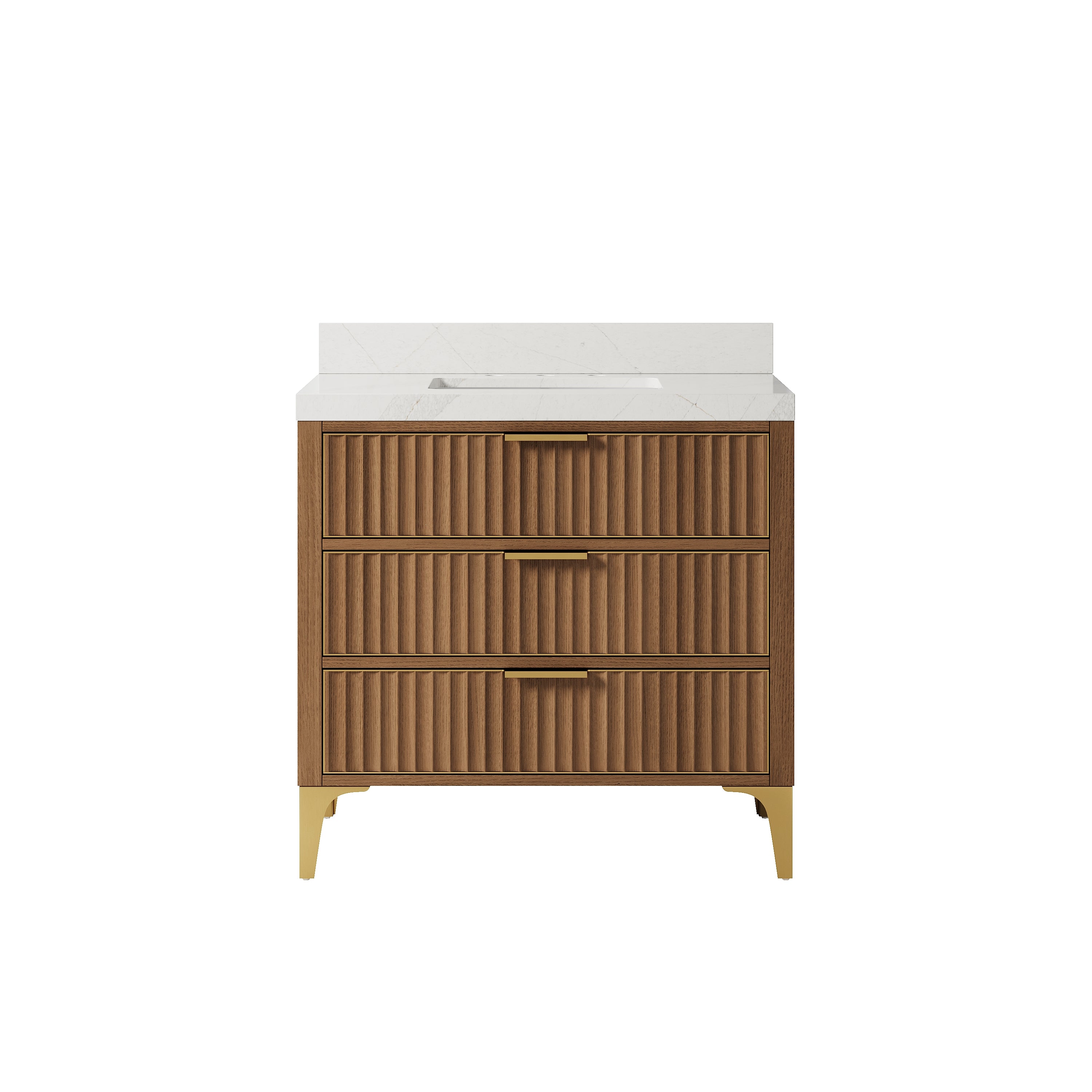
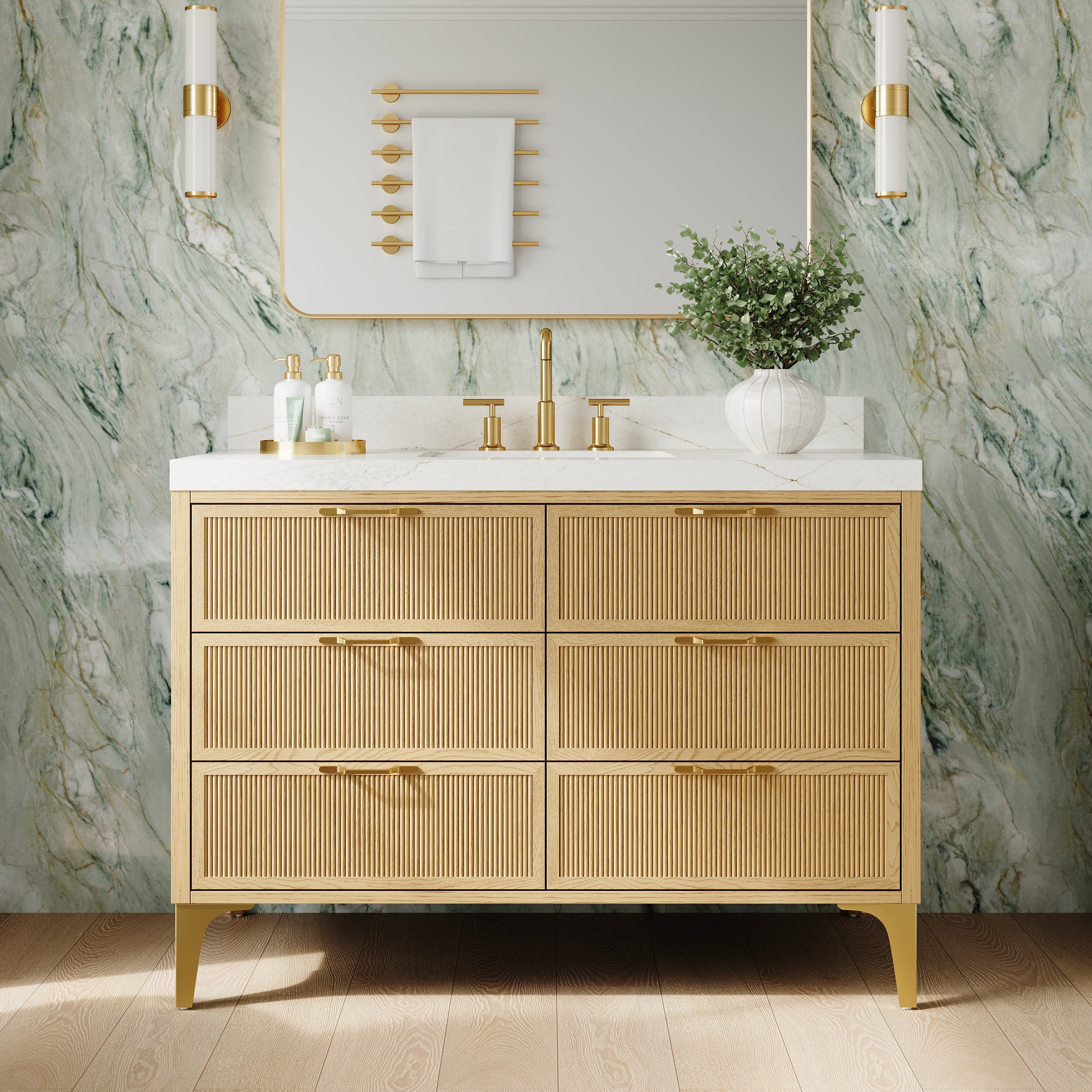
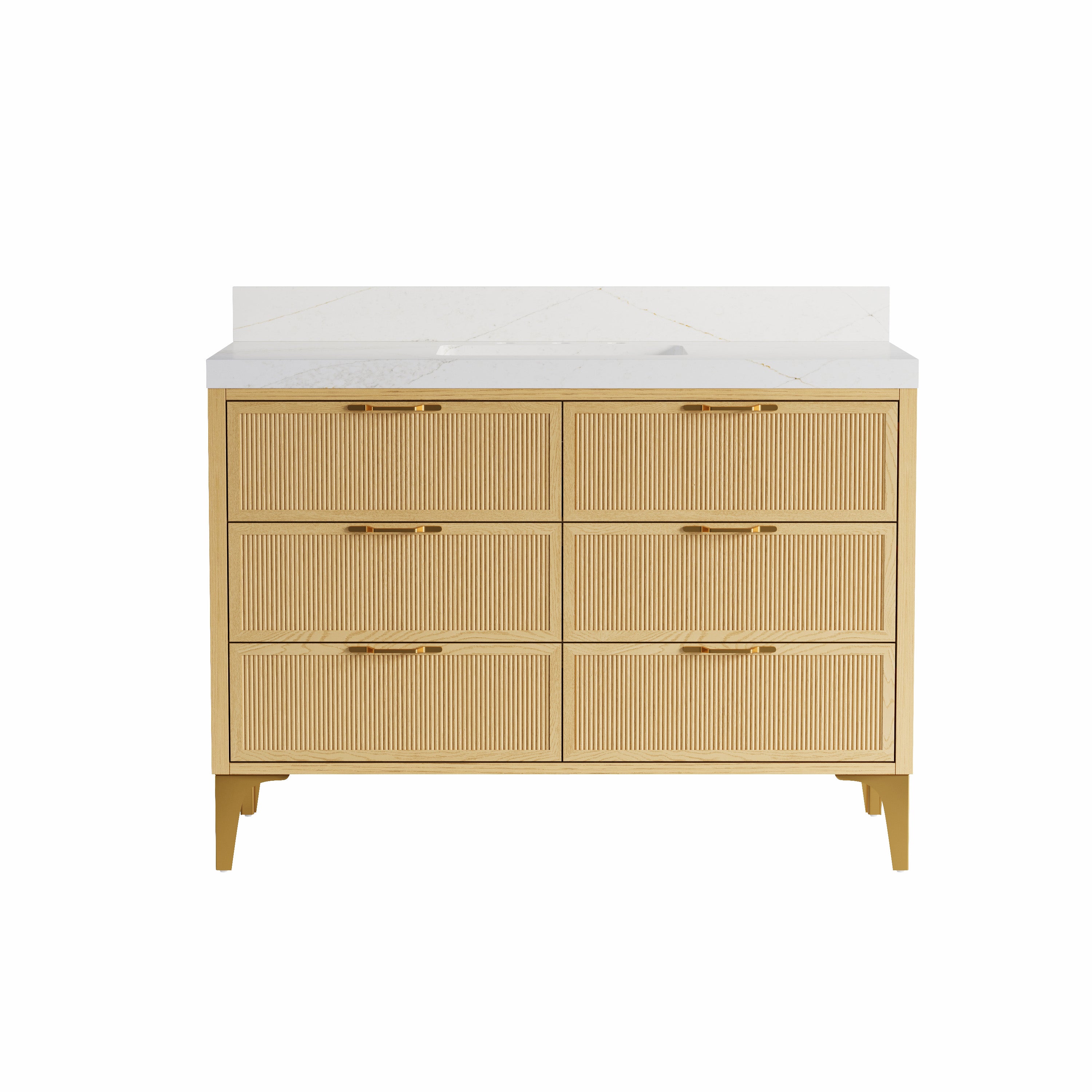


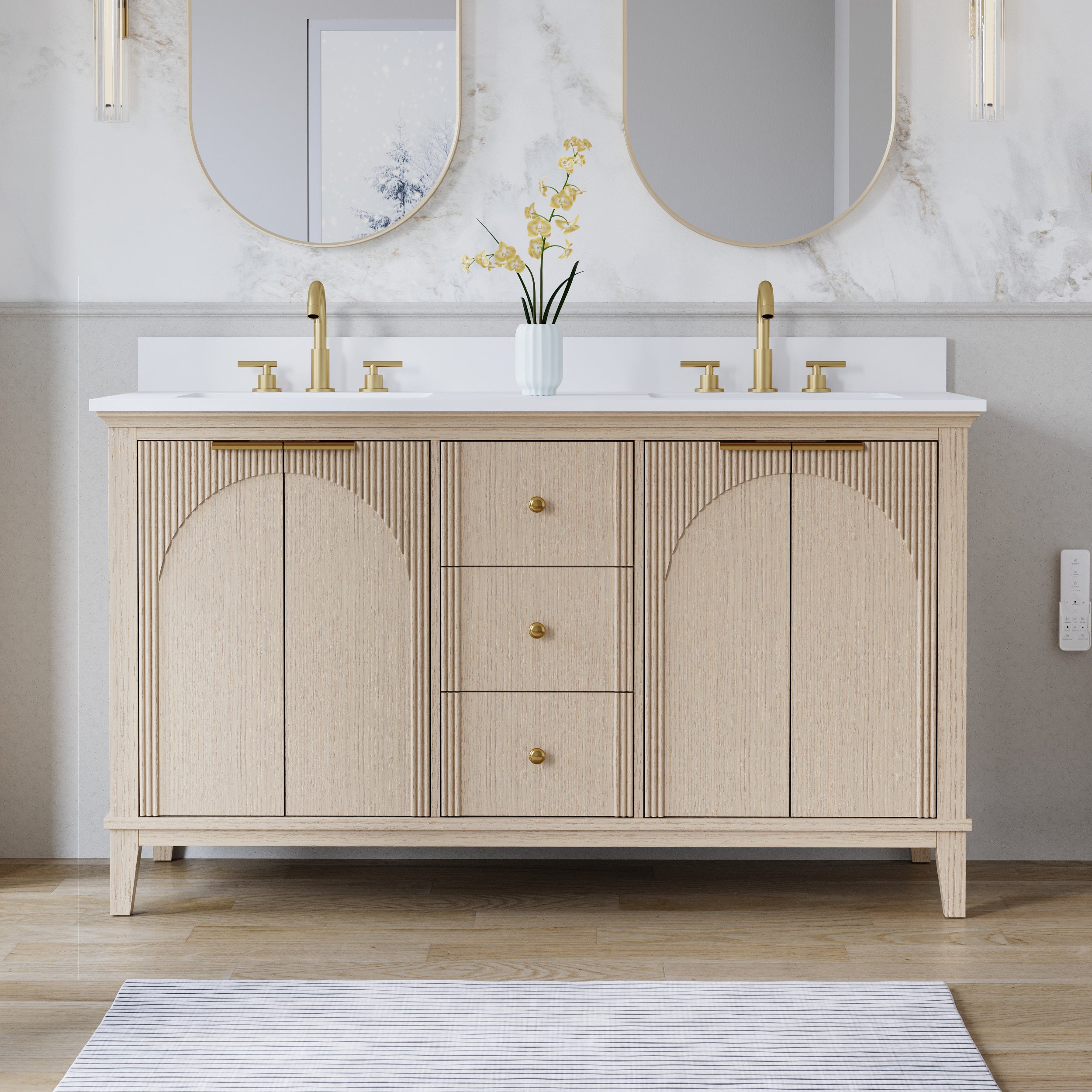
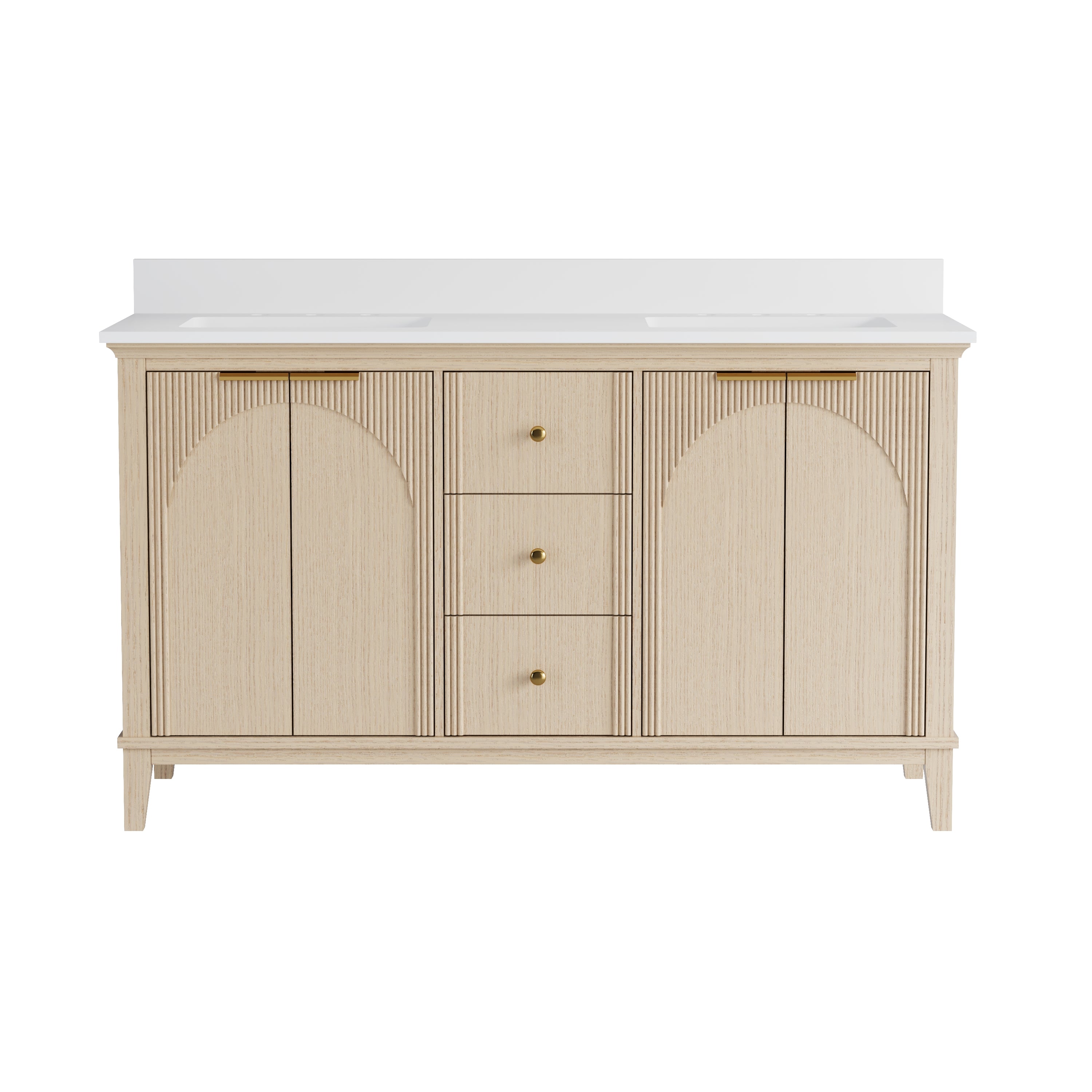
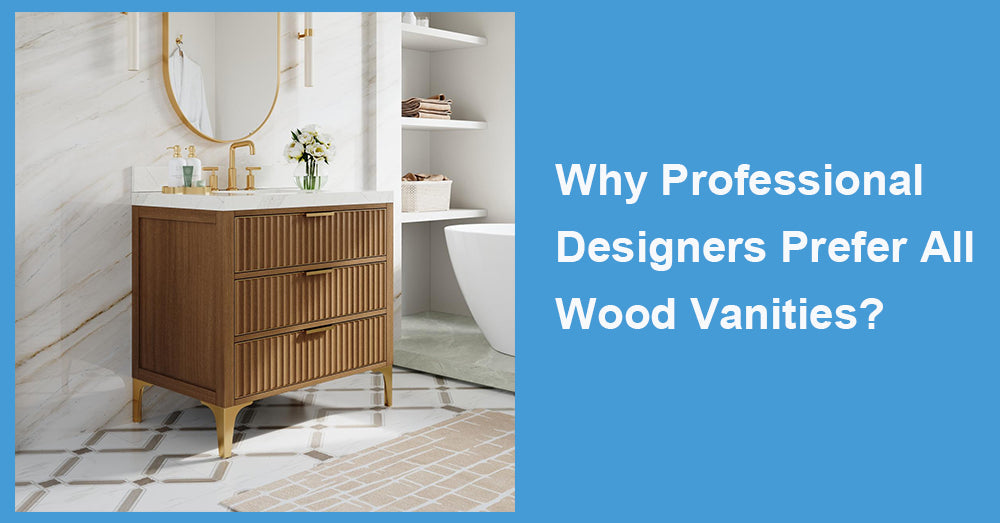
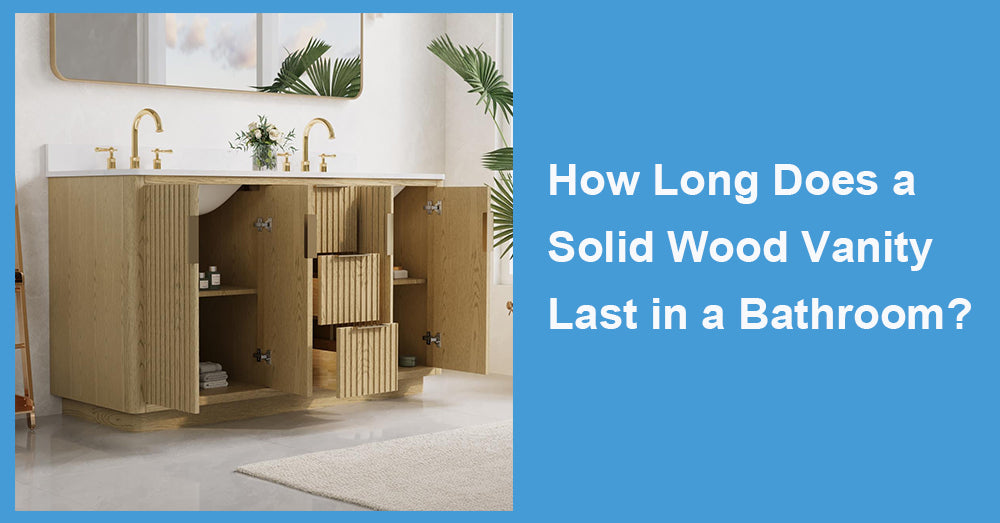
When a bathroom renovation needs to feel elevated and hold up to daily use, many pros lean toward all wood vanities for reasons that go far beyond aesthetics. Wood brings warmth to a room filled with hard surfaces, supports timeless styling across multiple design directions, and usually offers better long-term serviceability than fiberboard-heavy alternatives. Current renovation data also aligns with what designers see on job sites: wood tones remain the most common choice for new vanity colors at 28% (Source: 2025 U.S. Houzz Bathroom Trends Study), and among those selecting wood vanities, 74% choose solid wood (Source: 2025 U.S. Houzz Bathroom Trends Study).
1. Wood Creates Instant Warmth and Visual Balance
Bathrooms are dominated by tile, stone, glass, and metal. Designers often describe the problem as “too many cold surfaces.” Wood fixes that quickly because grain, tone, and texture soften the room without adding clutter. That is one reason wood tones continue to lead vanity color choices, ahead of white and other finishes (Source: 2025 U.S. Houzz Bathroom Trends Study).
From a design standpoint, wood also plays well with common countertop palettes. White countertops appear in 48% of renovated bathrooms, and wood plus white is one of the easiest combinations to keep looking fresh for years (Source: 2025 U.S. Houzz Bathroom Trends Study).
2. The “Natural Materials” Trend Is Not Just a Trend
Pros pay attention to what will still look right in five or ten years, not just what is popular this season. Industry reporting reinforces the move toward biophilic, natural materials. In NKBA’s 2026 Bath Trends release, wood-faced vanities (62%) are reported as more popular than painted (53%), reflecting the continued priority on natural materials (Source: NKBA press release, 2026 Bath Trends Report).
Designers prefer specifying materials that align with long-horizon taste, because it reduces the risk of a client feeling “dated” after a short cycle.
3. Wood Supports the Most Requested “Quiet Luxury” Features
A vanity is touched constantly. If it rattles, slams, or drifts out of alignment, the bathroom feels cheap no matter how beautiful the tile is. That is why pros care about construction and hardware as much as color.
Soft-close is now the norm: 78% choose soft-close drawers and 75% choose soft-close doors (Source: 2025 U.S. Houzz Bathroom Trends Study).
All-wood vanities, especially those built with solid wood frames and quality joinery, tend to hold hinges and slides more securely over time. That stability keeps door gaps consistent and drawers running smooth, which protects the “premium feel” long after install day.
4. Better Resilience When Real Bathroom Life Happens
Designers know the biggest enemy in bathrooms is not style. It is moisture: steam, splashes, and slow leaks.
A key durability difference shows up after water exposure. A Composite Panel Association technical bulletin notes that when particleboard or MDF swells and expands beyond its original dimensions due to high humidity or water exposure, that change is not reversible after re-drying (Source: Composite Panel Association, Dimensional Stability Technical Bulletin).
Wood is not waterproof, but solid wood components are often more serviceable. If a finish gets worn or lightly damaged, wood can frequently be touched up or refinished rather than forcing a full replacement. That repair pathway is a practical reason designers prefer wood when longevity is part of the brief.
5. Wood Works With the Way Pros Actually Design Bathrooms
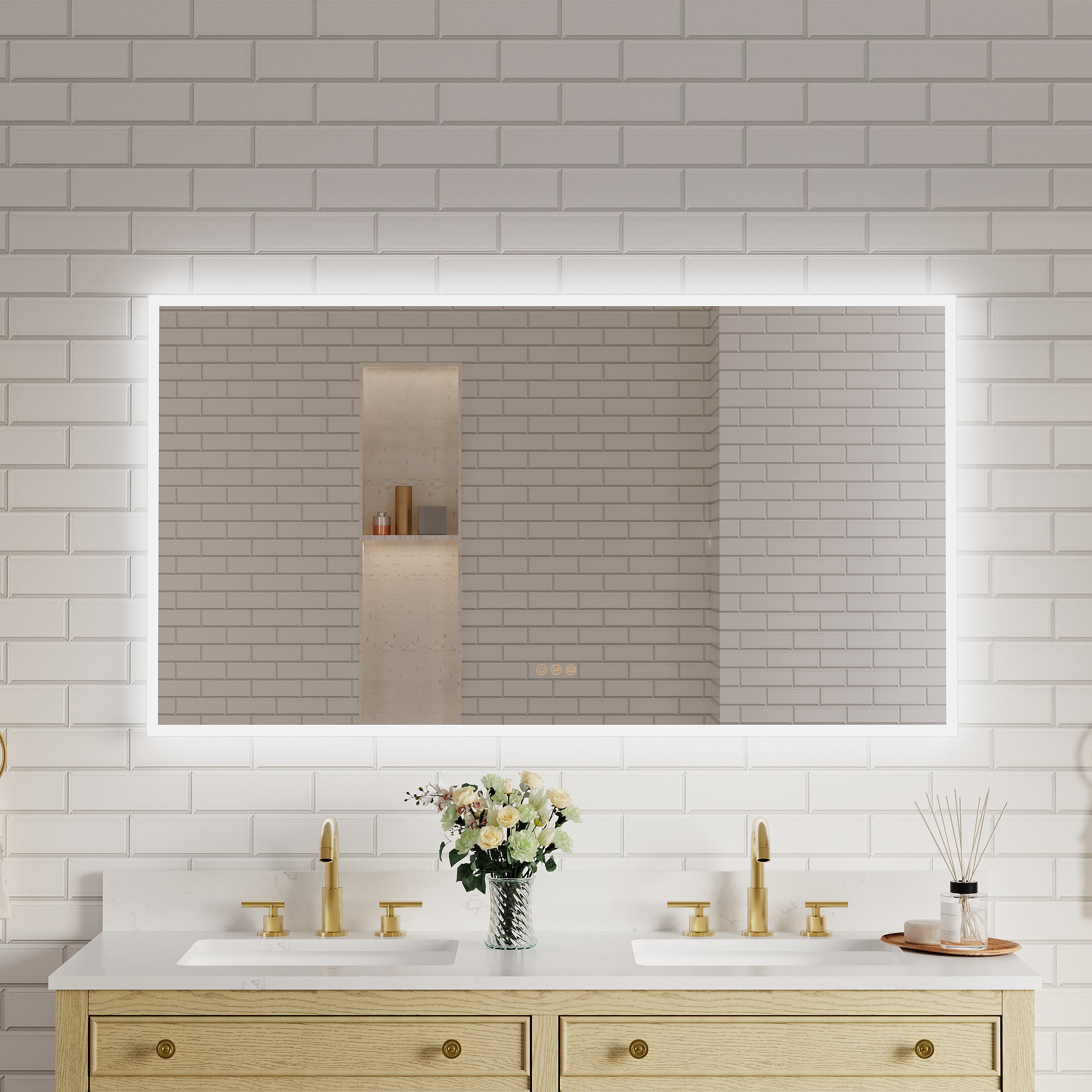
Professional designers rarely treat the vanity as a standalone product. It is part of a system: mirror, lighting, hardware finish, wall color, flooring tone, and storage behavior.
Wood adapts across styles without feeling off:
· Modern: clean flat-panel or slim shaker in oak or walnut.
· Transitional: classic shaker with neutral stains or paint.
· Traditional: richer stains, furniture legs, more detailed door profiles.
· Spa-inspired: light wood tones with soft whites and warm lighting.
This versatility reduces risk. A designer can steer the room modern or classic using the same wood base, simply by changing the countertop, hardware, and lighting.
6. Custom and Semicustom Projects Favor Wood
Designers often push for better sizing, better storage, and better proportions, especially in primary baths where daily routines matter. Renovation data supports this behavior: 55% opt for either a fully custom (33%) or semicustom (22%) vanity (Source: 2025 U.S. Houzz Bathroom Trends Study).
Wood construction is a natural fit for customization because it can be modified, repaired, and matched more predictably. That matters when aligning drawer layouts with plumbing, adding filler panels, or dialing in a furniture-style look.
7. Designers Think in “Systems,” and Humidity Control Is One of Them
Even the best wood vanity will suffer if a bathroom stays damp. Pros typically advise ventilation and humidity control as part of protecting the investment.
EPA guidance recommends keeping indoor humidity below 60%, ideally between 30% and 50%, to reduce moisture problems and mold risk (Source: U.S. Environmental Protection Agency, Care for Your Air; Source: U.S. EPA Mold Course Chapter 2).
This is also why designers often specify better exhaust fans, ensure proper door undercuts, and avoid design choices that trap steam.
8. What Designers Look for in a High-Quality All Wood Vanity
If you want the same “pro standard” filter, here is a quick checklist designers use:
A. Construction that stays square
· Solid wood doors and face frame.
· A rigid cabinet box and reinforced mounting points.
B. Finish that protects vulnerable areas
· Sealed edges and corners.
· Sealed sink cutouts and plumbing openings.
· Finished interior surfaces, not raw wood.
C. Hardware that matches daily use
· Soft-close hinges and slides.
· Smooth drawer travel with minimal wobble.
D. Material honesty
· Clear labeling of what is solid wood vs. engineered components.
The goal is not just “wood.” The goal is a vanity that stays aligned, stays quiet, and stays attractive after years of humidity cycles and daily contact.

Conclusion
Professional designers prefer all wood vanities because they deliver a rare combination: warmth that elevates the room instantly, versatility across style directions, and durability that handles real bathroom conditions. The renovation data matches what pros see in the field: wood tones lead new vanity color choices at 28%, solid wood is the dominant wood type at 74%, and soft-close features are overwhelmingly preferred (78% drawers, 75% doors) (Source: 2025 U.S. Houzz Bathroom Trends Study). Add industry trend reporting that wood-faced vanities have overtaken painted in popularity, and the preference becomes easy to understand (Source: NKBA press release, 2026 Bath Trends Report).












Leave a comment
This site is protected by hCaptcha and the hCaptcha Privacy Policy and Terms of Service apply.