














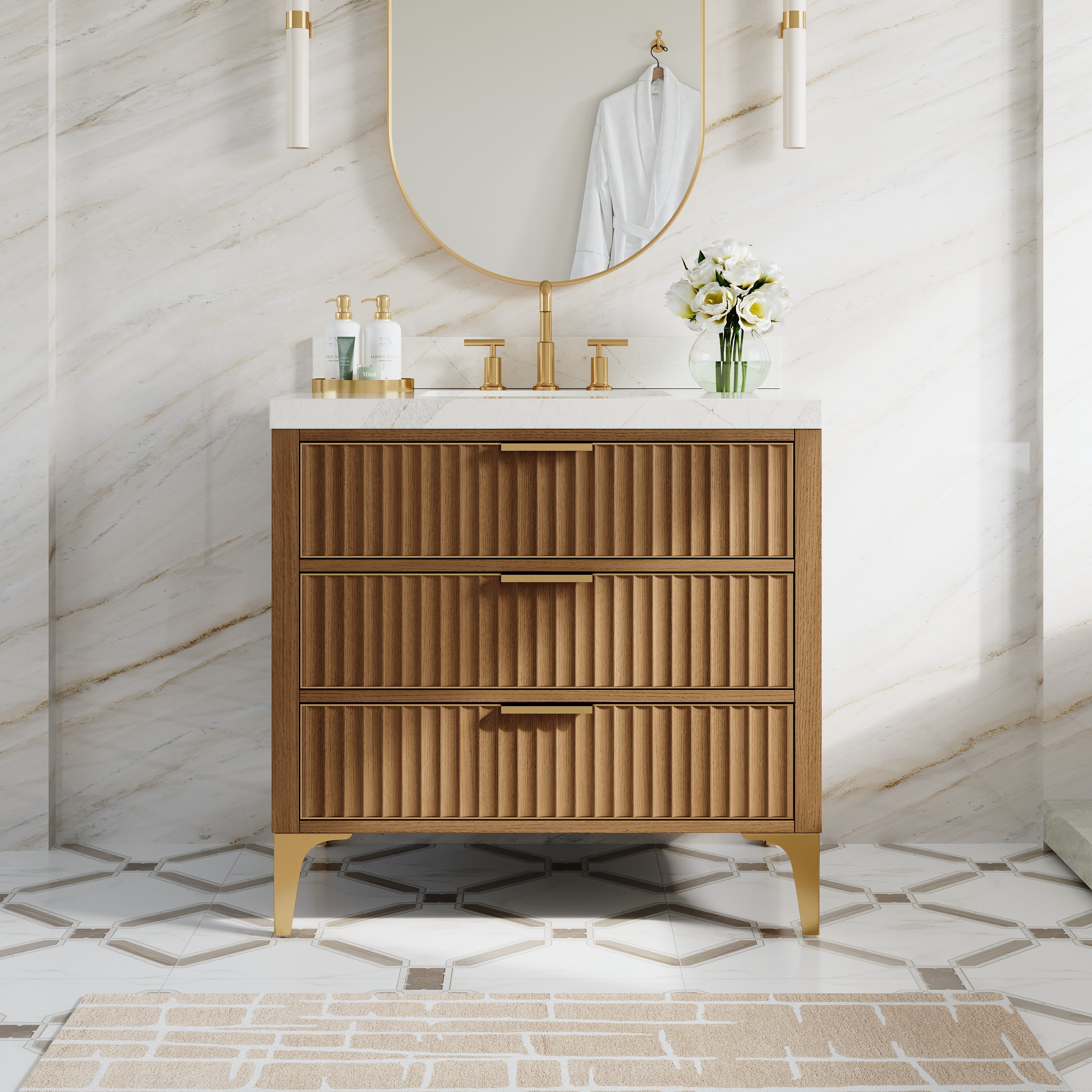
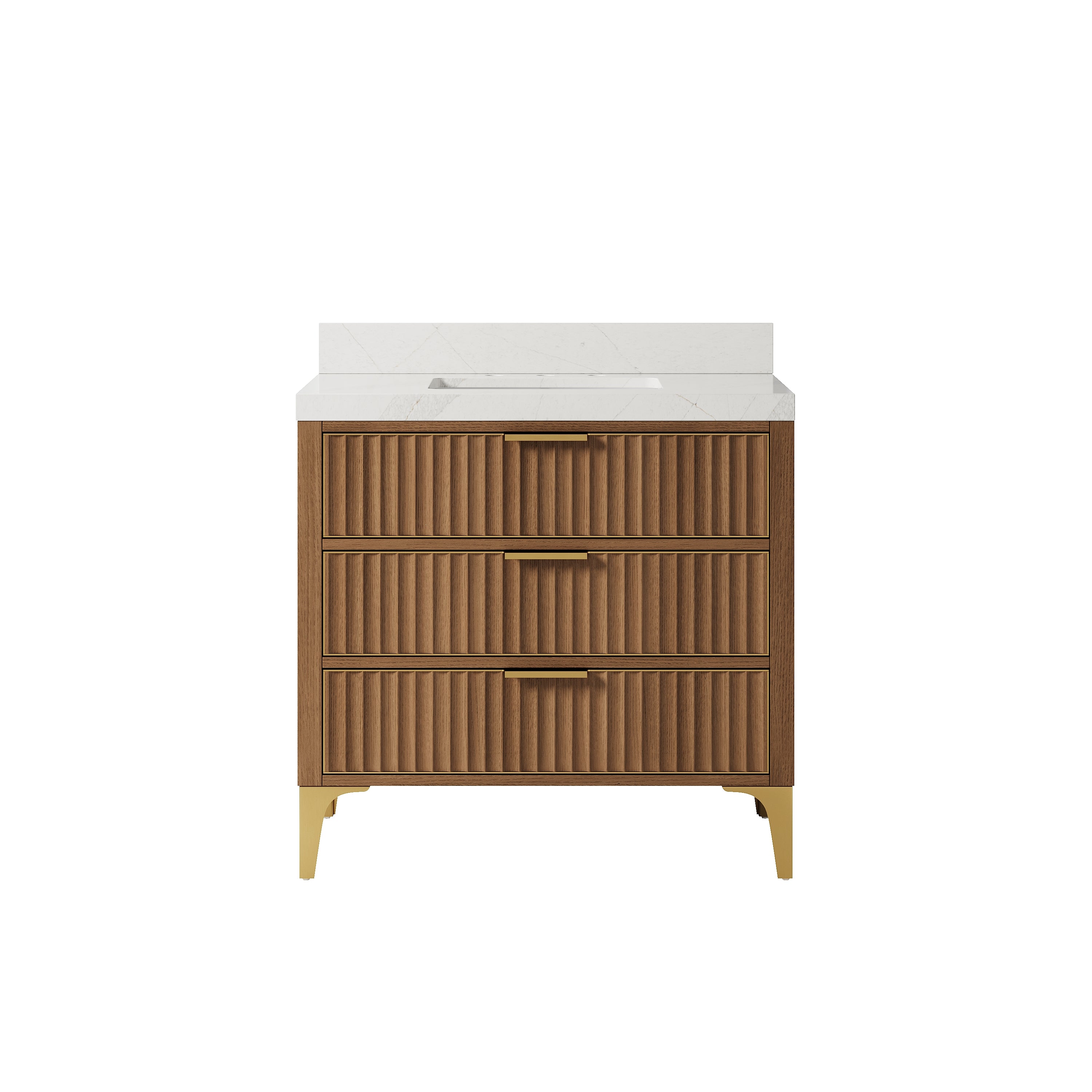
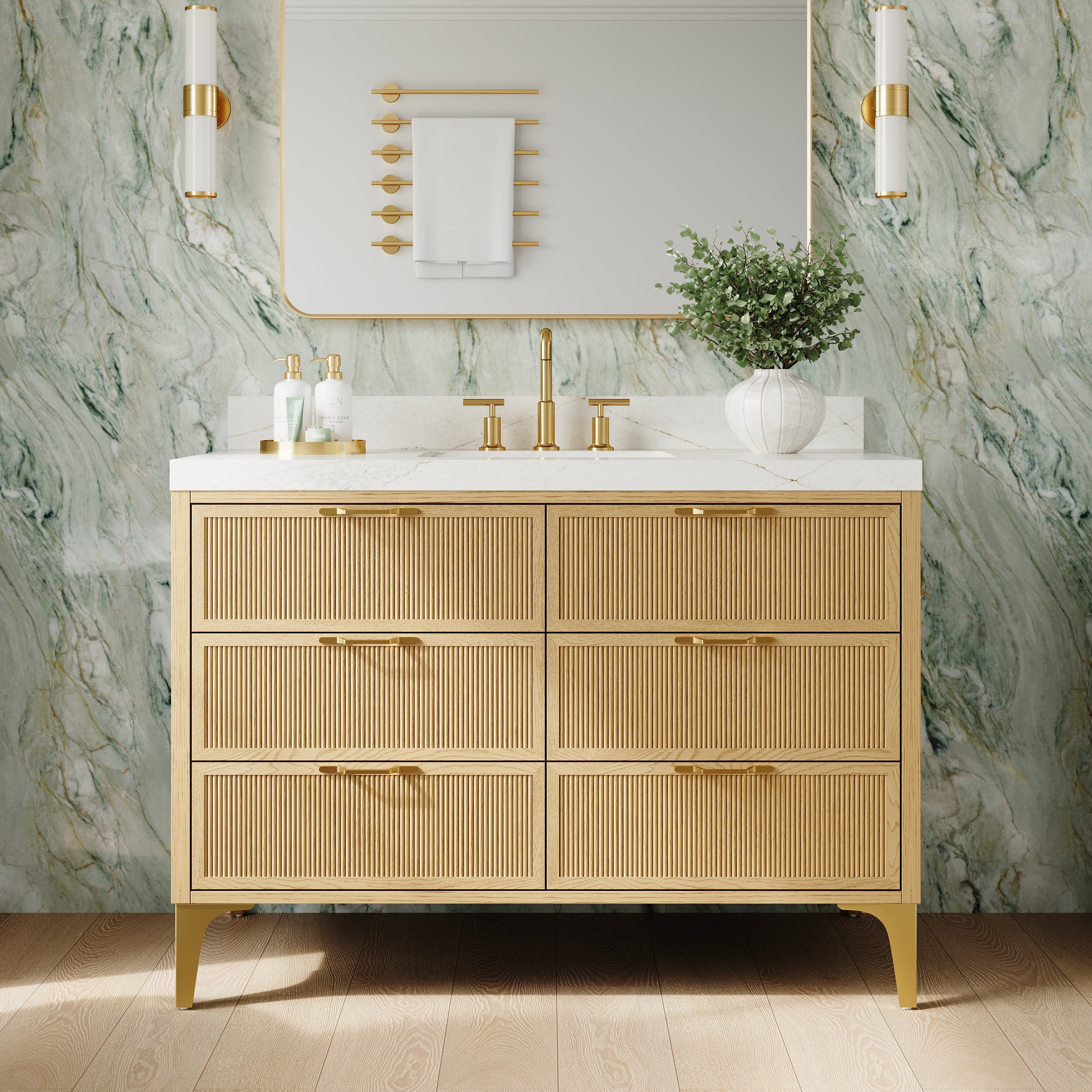
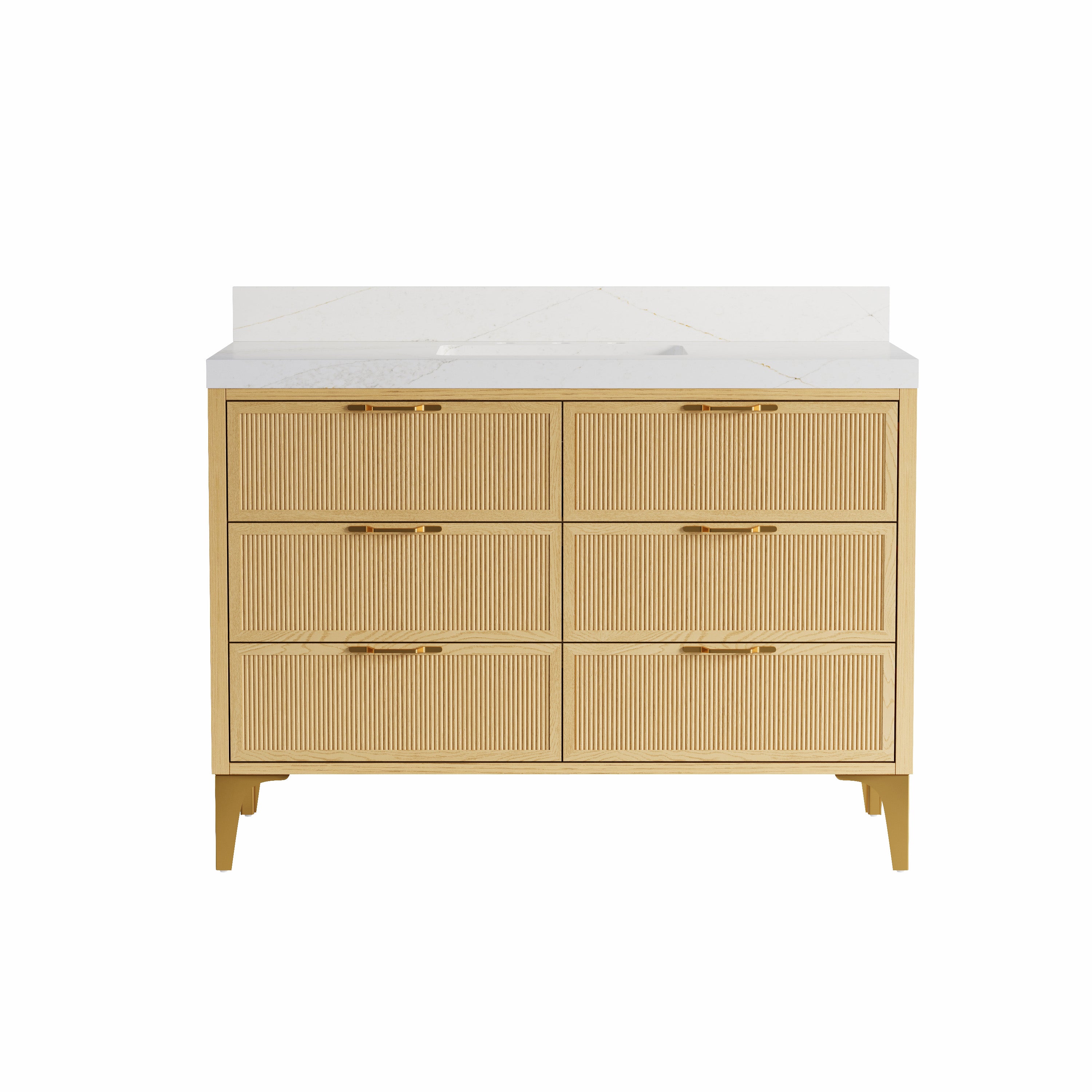


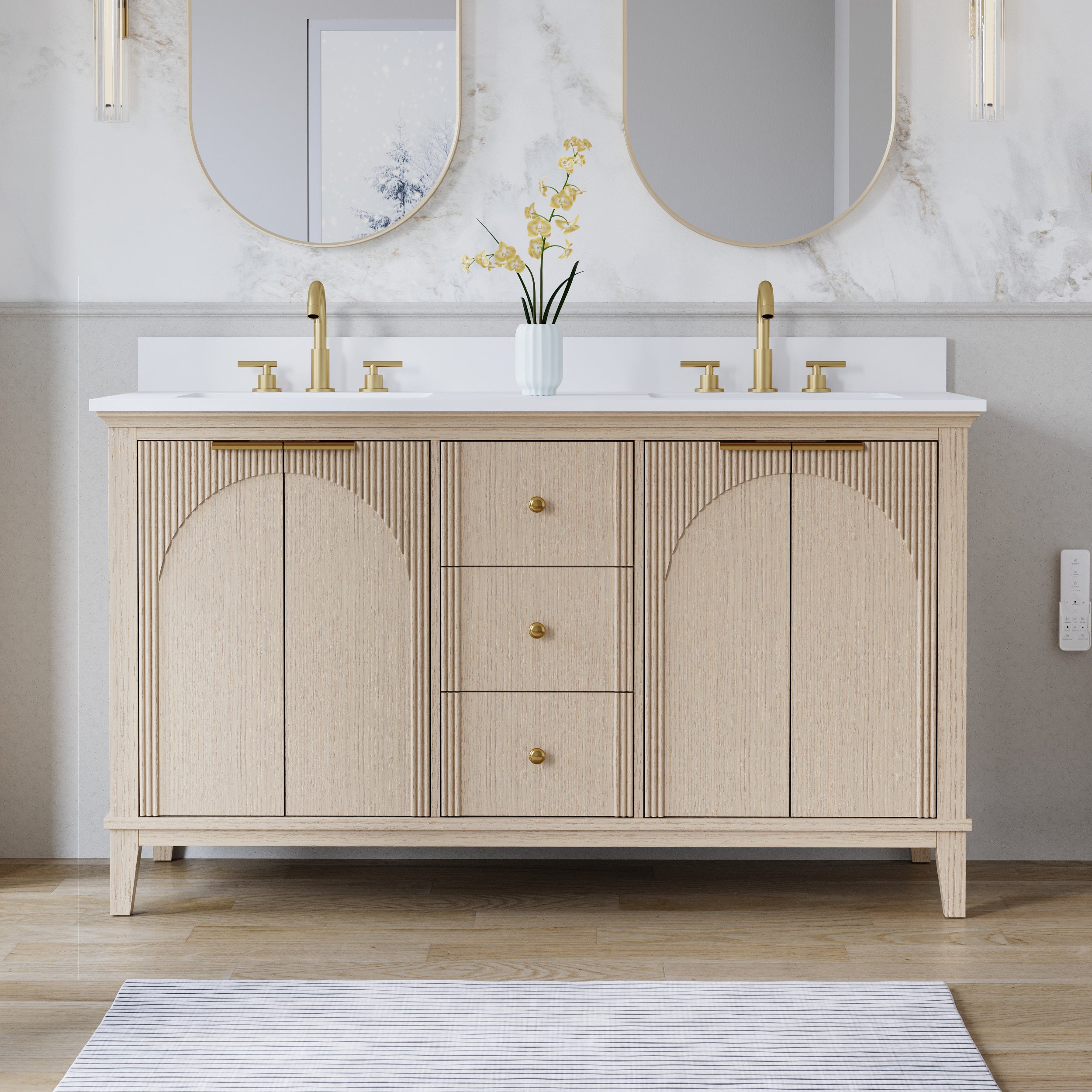
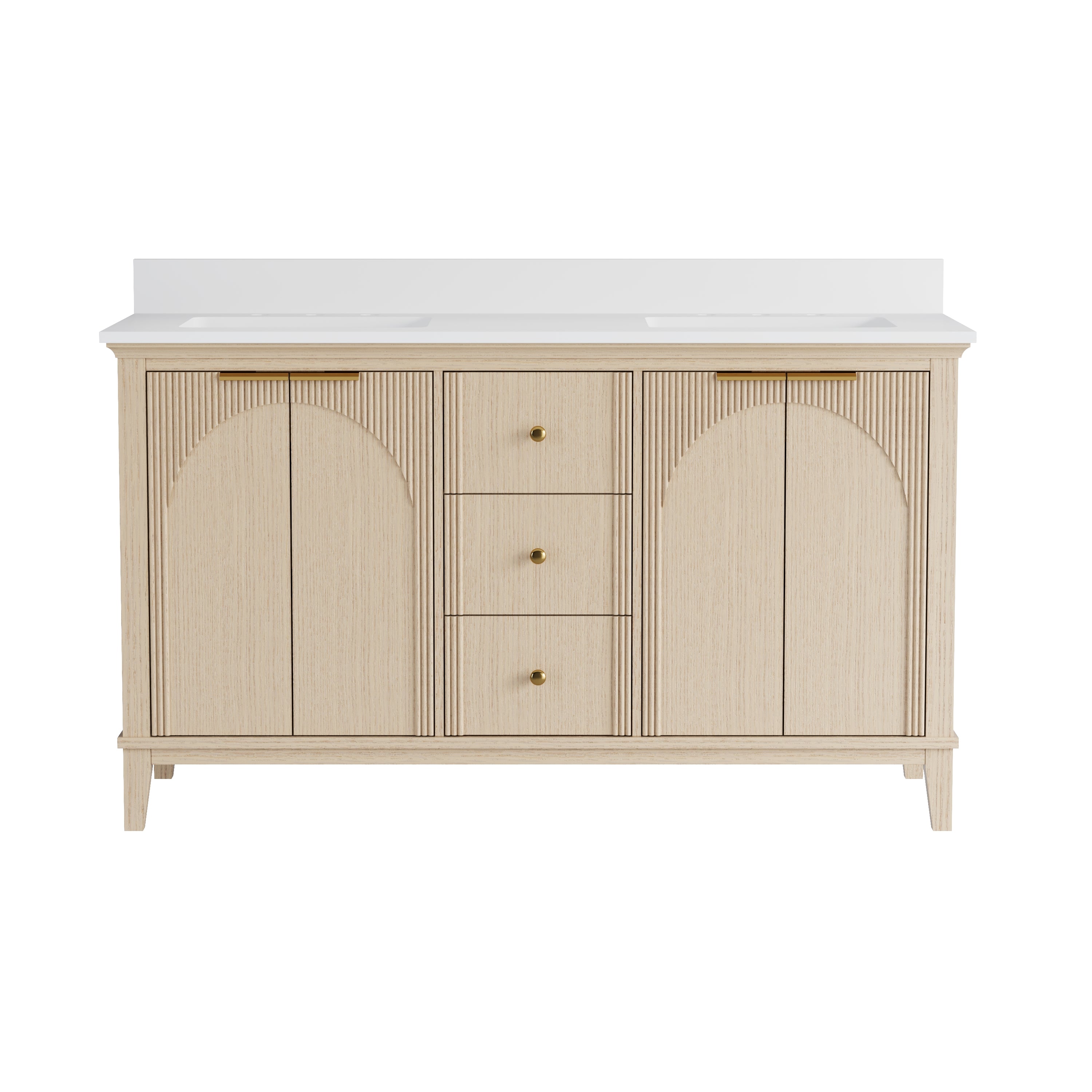
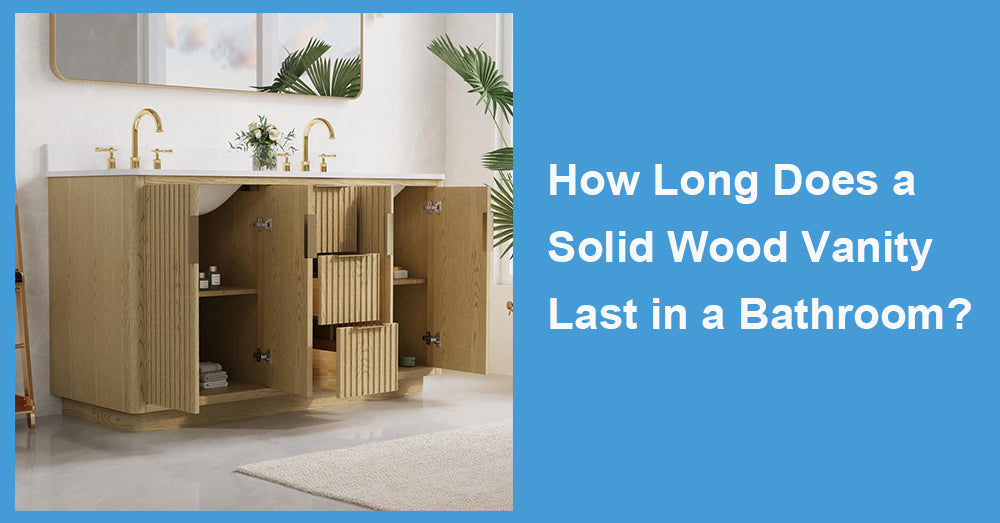
A bathroom is one of the toughest rooms for cabinetry. Steam, splashes, cleaning chemicals, and the occasional slow leak all add up. The good news is that a solid wood vanity can last a long time when it is built well, sealed correctly, and paired with basic moisture control. In many homes, a quality vanity easily reaches the “decade-plus” range, and solid wood often goes beyond that because it can be repaired and refinished instead of replaced.
The Realistic Lifespan Range
Most bathroom vanities, across materials and quality levels, are commonly expected to last about 10 to 20 years (Source: Edward Martin, “How Long Do Bathroom Vanities Last?”, 2025). Solid wood vanities often land on the higher end of that range, and with good construction and care, it is reasonable to see 15 to 25 years of service life (Source: Wellfor buying guide, 2025).
That range is not a promise. It is a practical expectation based on how bathrooms are actually used. The bigger drivers are moisture exposure, finish quality, and installation details.
Why Solid Wood Can Last Longer Than Many Alternatives
Solid wood has two advantages that matter for durability:
1. Repairability: Scratches, small dents, and worn finish can often be sanded and refinished. Many engineered panels cannot be restored the same way once they swell or delaminate.
2. Hardware holding strength: Hinges and drawer slides stay aligned longer when the cabinet structure holds screws securely.
Solid wood is not “immune” to humidity. Wood naturally exchanges moisture with the surrounding air, which can cause small dimensional changes (Source: Oregon State University Extension, “Wood and Moisture Relationships”). But good cabinet design accounts for that movement.
What Shortens the Life of a Solid Wood Vanity
Think of vanity lifespan as a math problem: small stressors repeated every day do more damage than one dramatic incident.
1. Poor Moisture Control
High indoor humidity increases the likelihood of mold and moisture damage. A commonly recommended target is to keep indoor humidity between 30% and 50%, and below 60% (Source: U.S. Environmental Protection Agency, “Care for Your Air”, 2025; Source: U.S. EPA Mold Course, 2025).
If your bathroom regularly feels damp for hours after showers, the vanity is living in a harsh climate.
2. Unsealed Edges and Cutouts
The most vulnerable areas are the places you do not notice until it is too late:
· Sink cutouts under the countertop
· Plumbing holes at the back panel
· Toe-kick and bottom edges near wet floors
· Door and drawer edges where water can sit
A “pretty” exterior finish does not help much if raw edges inside the cabinet were left unsealed.
3. Slow Leaks
A tiny drip from a supply line or trap can destroy any vanity, including solid wood. The difference is that solid wood may survive longer before structural failure, but you still do not want to test it.
4. Low-Quality Build or Wet Wood at Manufacturing
Solid wood performance depends heavily on how dry and stable the wood was before assembly and finishing. Wood used for interior furniture and cabinetry is commonly managed to a relatively low moisture content range to reduce movement issues (Source: Wagner Meters overview of acceptable interior wood moisture levels).
A Quick Comparison: Why “Water Events” Matter So Much
Even if you are buying solid wood, it helps to understand why water incidents are the turning point for many vanities.
Engineered panels like MDF can swell when exposed to high humidity or water, and that swelling may not fully reverse after drying (Source: Composite Panel Association, Dimensional Stability Technical Bulletin, 2023). Solid wood can also swell, but it is generally more serviceable: you can often dry it out, stabilize the finish, and repair the surface. That difference is one reason solid wood tends to age more gracefully in bathrooms.
How to Tell If a Solid Wood Vanity Is Built to Last
Not all “solid wood” labels mean the same thing. Use these checkpoints:
Construction Checklist
· Solid wood doors and face frame (good sign for strength and repairability).
· Strong joinery in drawers and frames (better than staples-only construction).
· Quality hardware (soft-close hinges and slides reduce stress and racking).
· A sealed interior (open the doors and look for consistent coating, not raw wood).
Finish Checklist
· Smooth, consistent finish on corners and edges.
· Sealed areas around sink and plumbing cutouts.
· No strong chemical odor that lingers (ask about material compliance if you are sensitive).
If any part of the vanity includes composite wood panels, you can also ask whether those components meet formaldehyde emission requirements under TSCA Title VI (Source: U.S. Environmental Protection Agency, Formaldehyde Emission Standards for Composite Wood Products).
Maintenance That Actually Extends Lifespan
These habits are simple, but they protect the finish and prevent moisture from turning into structural damage.
Weekly
· Wipe splashes around the sink rim and countertop edge.
· Do not store dripping items (wet towels, cleaning bottles) directly on the cabinet base.
Monthly
· Check the bottom panel for dampness or staining.
· Make sure caulk lines at the backsplash and sink area are intact.
Twice a Year
· Inspect supply lines, shutoff valves, and the trap for slow leaks.
· Tighten loose hardware before doors sag and stress the frame.
If your bathroom stays humid, run the exhaust fan during showers and for 15 to 30 minutes afterward. Keeping humidity in the recommended range (30% to 50%, and below 60%) reduces long-term moisture stress on the vanity and the room (Source: U.S. Environmental Protection Agency, 2025).
Signs Your Vanity Is Near the End of Its Life
A solid wood vanity does not usually “suddenly fail”. It gives warnings:
· Doors will not stay aligned even after hinge adjustment.
· Drawers start rubbing or sticking because the box is no longer square.
· The cabinet base feels soft, spongy, or permanently swollen.
· You see recurring mold or odor that returns quickly after cleaning.
· Finish keeps peeling around edges due to repeated moisture intrusion.
If the problem is only cosmetic (surface scratches, worn sheen), solid wood often can be refinished. If the cabinet structure is compromised by prolonged water exposure, replacement is usually more cost-effective.

Bottom Line
A solid wood vanity commonly lasts 10 to 20 years in real-world bathroom conditions, and a well-built, well-sealed solid wood vanity can often reach 15 to 25 years with reasonable care (Source: Edward Martin, 2025; Source: Wellfor buying guide, 2025). The biggest lifespan multipliers are moisture control, sealed edges, and leak prevention. Keep indoor humidity in a healthy range, protect the finish, and catch plumbing issues early, and your vanity has a strong chance of staying solid for decades rather than merely years.











Leave a comment
This site is protected by hCaptcha and the hCaptcha Privacy Policy and Terms of Service apply.