














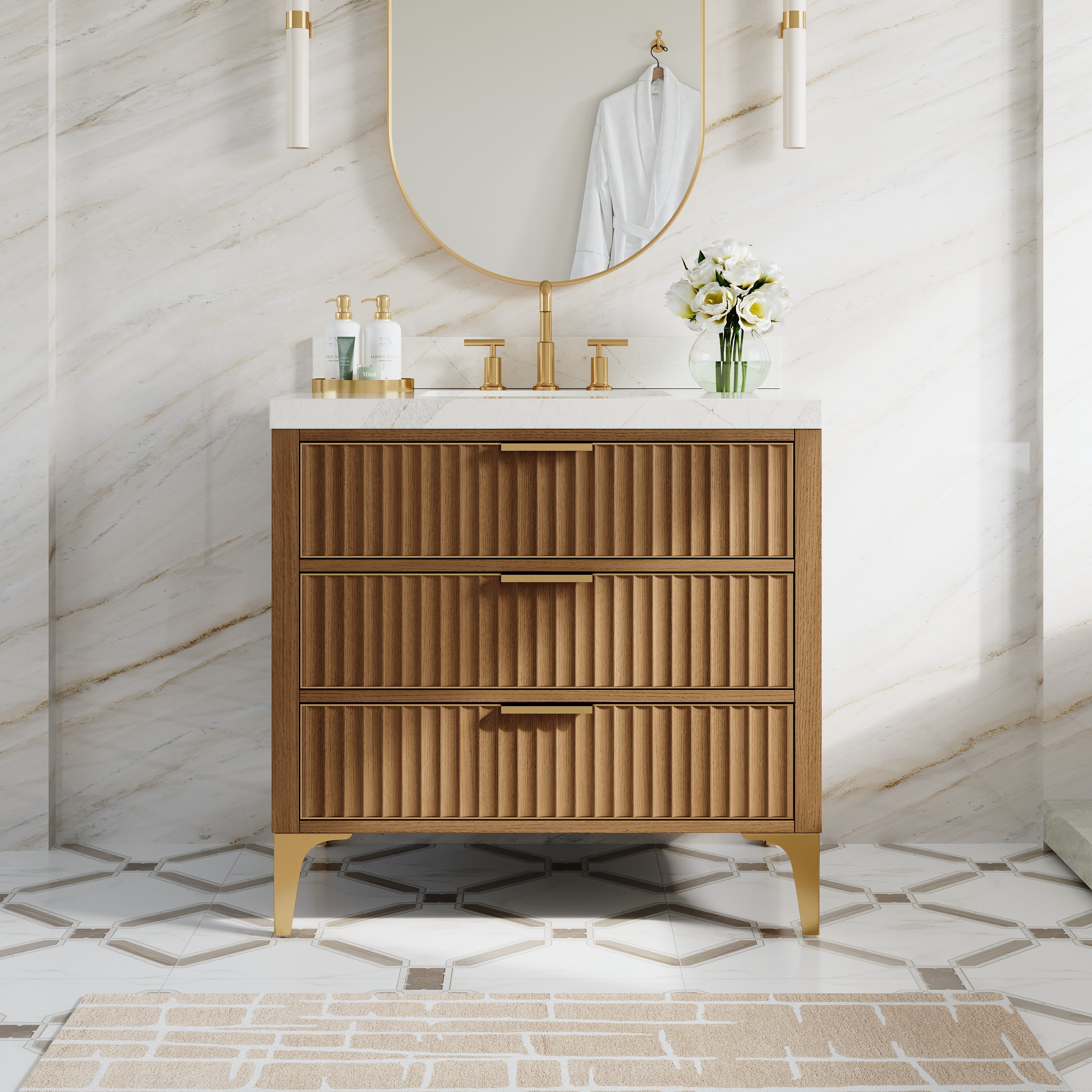
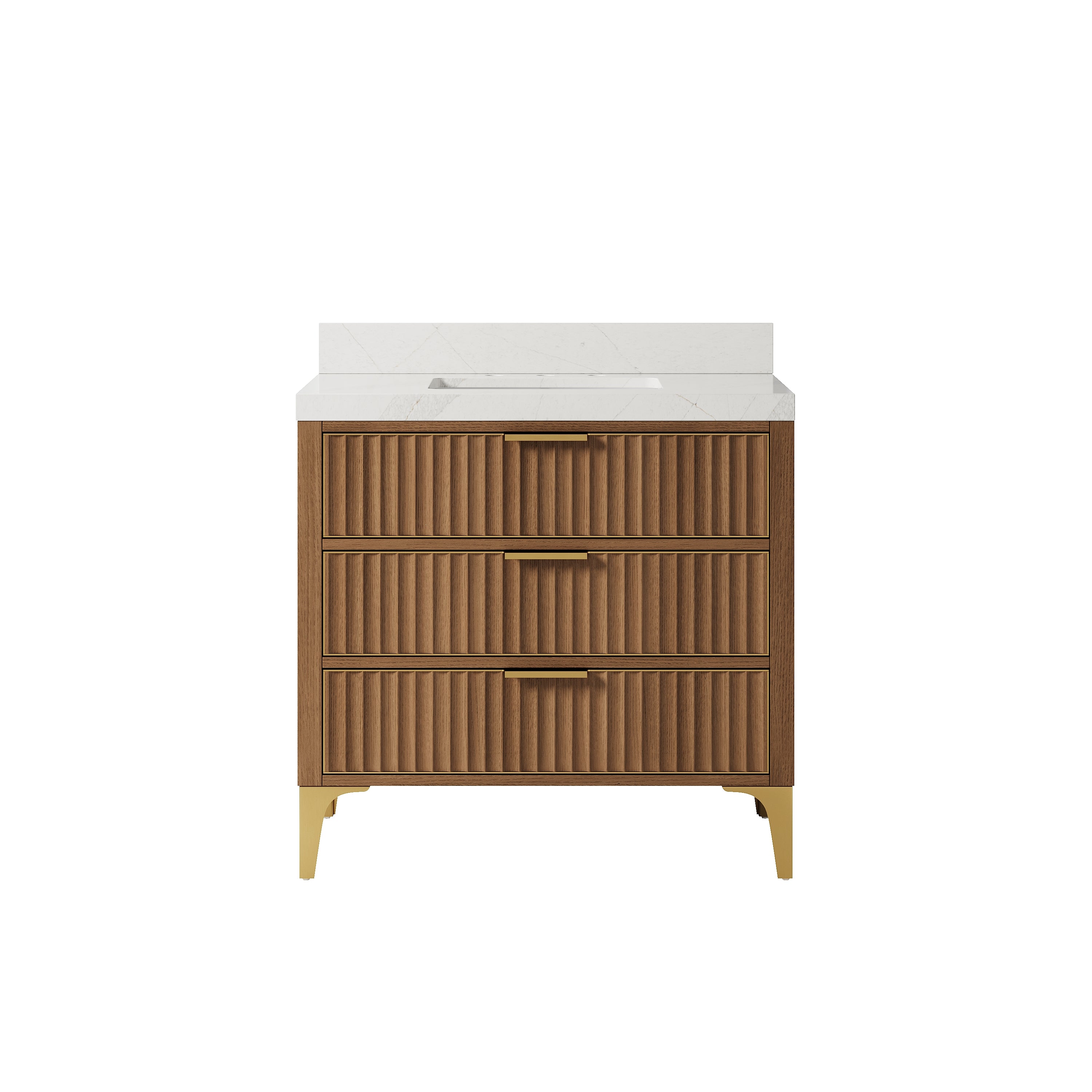
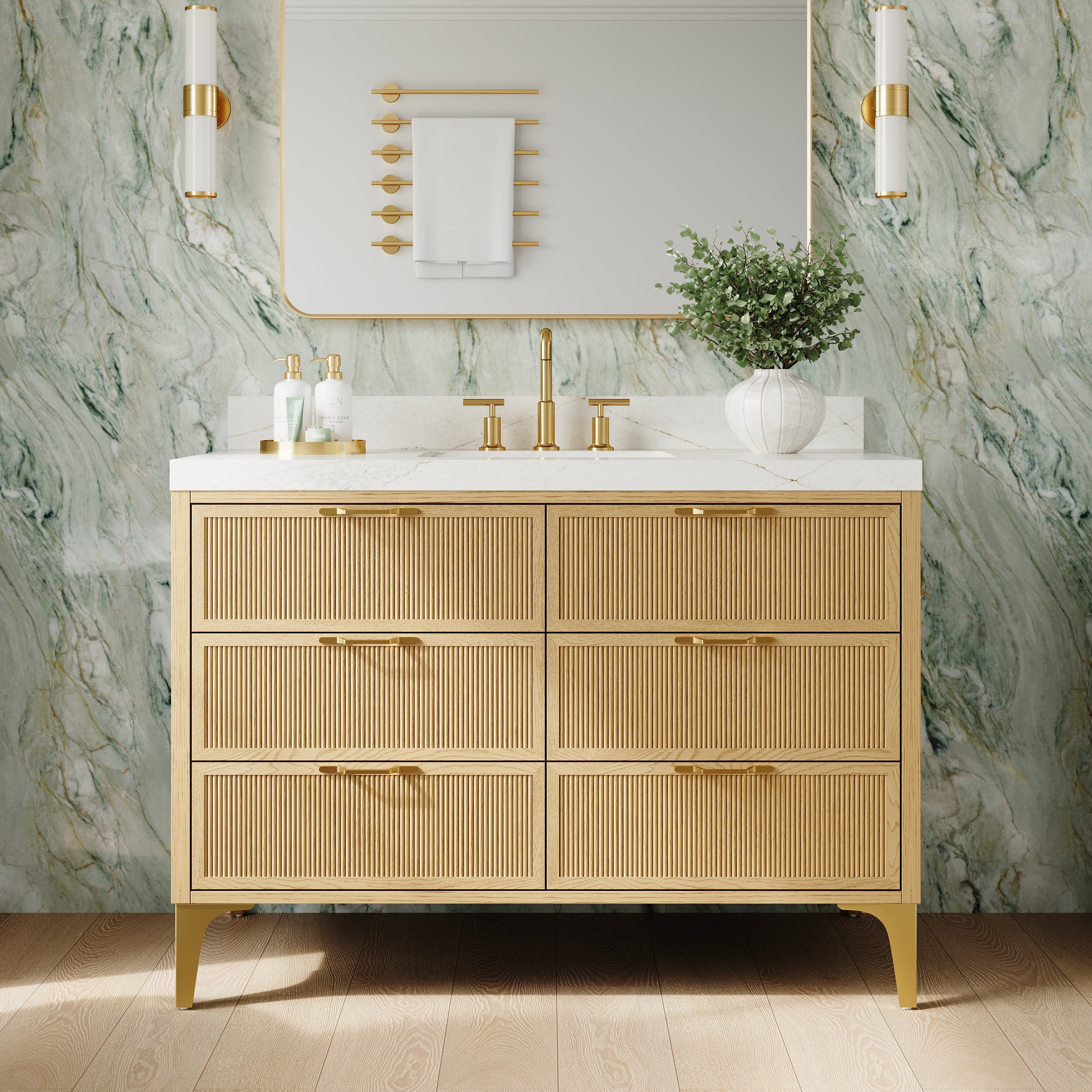
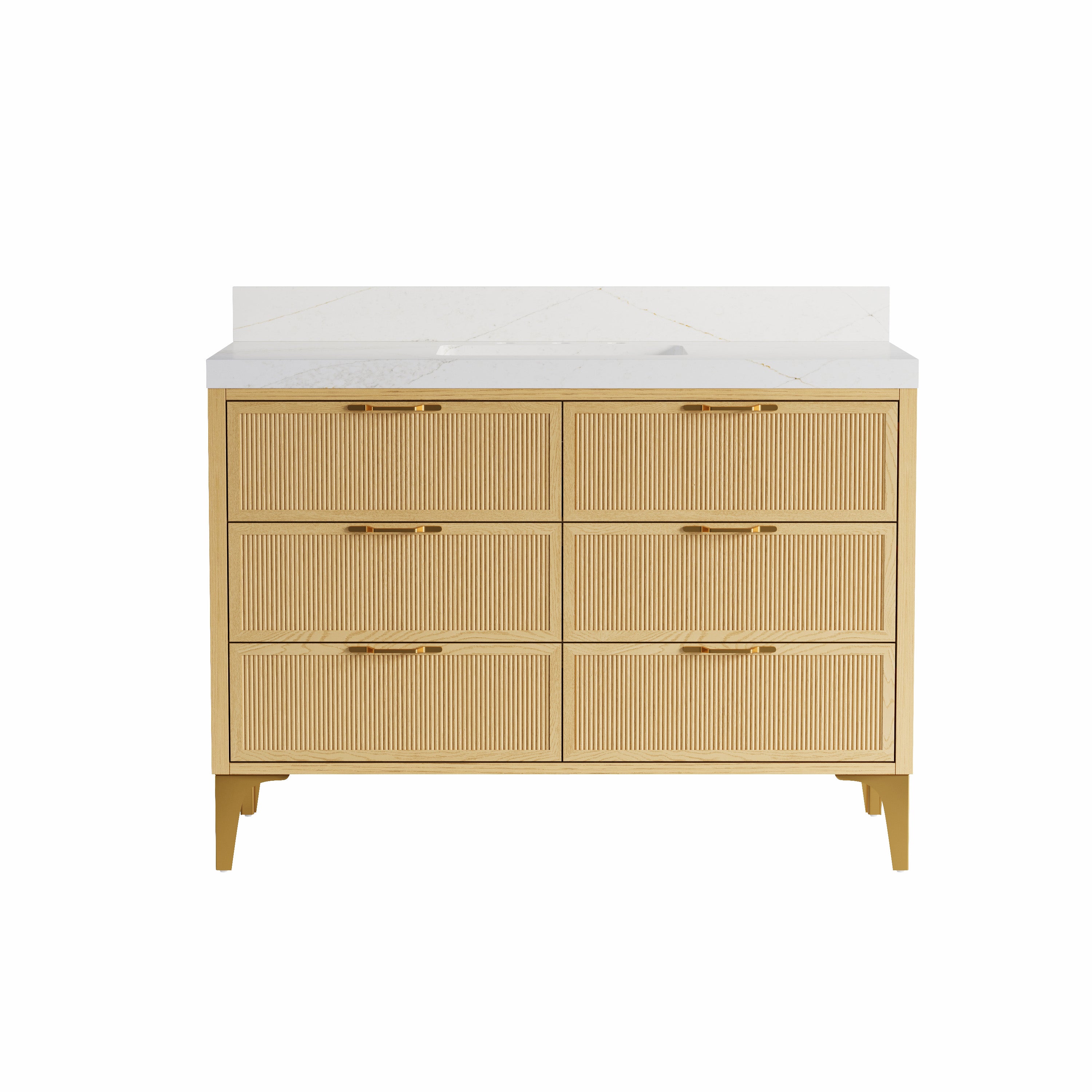


Choosing a vanity is not just about looks. If the goal is long-term performance in a humid, splash-prone room, the material under the paint or stain matters a lot. An all wood vanity often wins on repairability and fastener strength, while MDF can look smooth and stable in the short term but is far less forgiving once moisture gets into seams or edges. The real answer is not “wood good, MDF bad.” Durability depends on how the cabinet is built, sealed, and used, plus whether the “all wood” claim actually means solid wood everywhere or a smart mix of solid wood and plywood.
What “Durability” Really Means in a Bathroom
In a bathroom, durability is usually a mix of four stress tests:
· Moisture exposure: steam, wet hands, splashes, and slow leaks.
· Dimensional movement: seasonal humidity changes that cause materials to expand and contract.
· Impact and wear: dents, scratches, and cleaning products.
· Hardware holding power: hinges, drawer slides, and mounting points staying tight over time.
Solid wood and engineered wood can handle these differently. MDF is manufactured wood fiber compressed with resin. It is consistent, flat, and paint-friendly, but it behaves poorly when water finds a weak point.
How Solid Wood Behaves With Moisture
Solid wood is hygroscopic, meaning it exchanges moisture with the air. As moisture content changes, wood can swell or shrink, and the amount varies by species and grain direction. This is normal wood behavior, not a defect (Source: USDA Forest Service, Forest Products Laboratory, “Moisture relations and physical properties of wood”).
What this means for a vanity:
· Solid wood can move with humidity, so good construction matters (proper joinery, floating panels, quality finishes).
· If the finish gets nicked, solid wood can often be sanded, refinished, or spot-repaired.
· Solid wood is generally strong at screw holding, which helps hinges and slides stay aligned.
So, wood is durable, but it needs correct design and sealing to keep movement controlled.
How MDF Behaves With Moisture (The Key Weakness)
MDF’s biggest durability risk in bathrooms is swelling. When MDF absorbs moisture, it can expand and lose structural integrity, especially at unsealed edges, toe-kicks, or around plumbing cutouts.
Industry guidance on panel products notes that when particleboard or MDF swells due to high humidity or water exposure, that expansion is not fully reversible after drying (Source: Composite Panel Association, Technical Bulletin on Dimensional Stability). In real-life terms, that is why an MDF vanity can look fine for years, then fail quickly after one leak or repeated splashing at the same seam.
To be fair, MDF is not automatically fragile:
· It is stable and flat in dry conditions.
· It paints beautifully, which is why many painted cabinet doors use MDF panels.
· There are moisture-resistant MDF variants, but they are still not “waterproof” and still require sealing and edge protection (Source: general material guidance summarized across cabinet and building material references).
The durability question becomes: are you planning for “normal humidity and careful use,” or “real life, plus occasional water incidents”?
“All Wood” Does Not Always Mean “Solid Wood Everywhere”
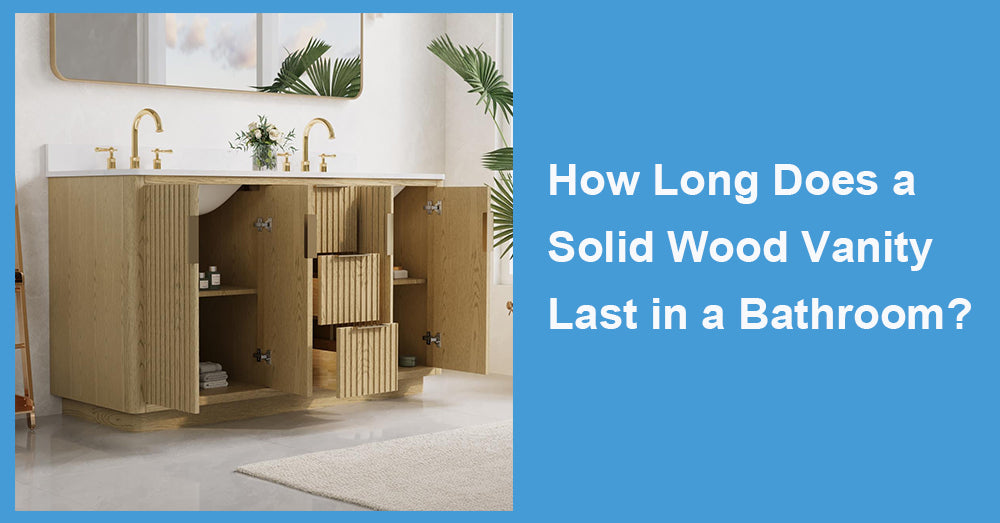
Many quality vanities that advertise “wood” are actually a hybrid, such as:
· Solid wood face frame and doors.
· Plywood cabinet box (often hardwood plywood).
· Solid wood drawer boxes or plywood drawers.
This can be a strong durability mix because plywood has cross-laminated layers that help it resist warping and maintain strength under changing humidity. Wood-based panel standards and research frequently highlight that engineered panels, when made to performance standards, can provide reliable stability and strength (Source: USDA Forest Service, Forest Products Laboratory, “Wood-Based Composites and Panel Products,” Chapter on wood-based panels and performance standards).
So, the better durability comparison is often:
· Solid wood + plywood cabinet construction versus MDF-heavy cabinet construction.
Hardware and Structural Strength: Where MDF Often Loses
A vanity fails slowly before it fails loudly. Common early signs are doors drifting out of alignment, drawer fronts rubbing, or hinges loosening.
Why it happens:
· MDF is dense, but it can have weaker long-term holding strength at screw points compared with solid wood or quality plywood, especially if moisture cycles have started.
· If the cabinet bottom or toe-kick swells, it changes the geometry of the box, and hardware alignment suffers.
If you plan to use a heavier countertop (like stone), cabinet rigidity and joint strength matter even more. A stronger box material helps the vanity stay square.
Moisture Control Matters More Than Most People Think
Even the best material can be punished by constant dampness. Building and indoor air guidance often recommends keeping indoor humidity below 60% relative humidity, with many comfort and durability targets falling around 30% to 50% when practical (Source: U.S. Environmental Protection Agency guidance on indoor humidity and moisture control).
For vanity durability, this translates into practical habits:
· Run the exhaust fan during showers and for 15 to 30 minutes after.
· Wipe standing water on the countertop edge and around the sink.
· Check supply lines and traps a couple times a year for slow leaks.
Those habits protect wood, plywood, and MDF. They just matter more for MDF.
Finish Quality: The Hidden Durability Multiplier
If you only remember one rule, make it this: edges and seams decide lifespan.
A durable vanity finish should include:
· Fully sealed interior surfaces, not just the visible exterior.
· Sealed cutouts around plumbing and sink openings.
· Strong coating coverage at toe-kicks and the cabinet bottom edges.
With MDF, edge sealing is especially critical because edges are where moisture penetration often starts. With wood, a good finish reduces swelling and staining and helps keep movement consistent and predictable.
Health and Compliance: Composite Wood Standards Are a Quality Check
MDF is a composite wood product. Many vanities also use plywood or particleboard components even if the doors are solid wood. If you care about material compliance, it is worth asking whether composite wood components meet formaldehyde emission standards.
Composite wood products such as MDF, hardwood plywood, and particleboard are covered under TSCA Title VI requirements, including labeling and compliance expectations for finished goods containing these materials (Source: U.S. Environmental Protection Agency, “Formaldehyde Emission Standards for Composite Wood Products”).
This does not decide durability by itself, but it is an EEAT-style buying step: you are verifying materials, not guessing.
When MDF Can Be a Reasonable Choice
MDF can be durable enough if:
· The bathroom is well-ventilated and not persistently damp.
· The vanity is well-sealed, especially at edges and the base.
· You do not expect frequent splashes or standing water near seams.
· The cabinet design protects the bottom panel and toe-kick from wet floors.
In short, MDF can work in a controlled environment with decent construction.
When an All Wood Vanity Is Usually the Better Durability Bet
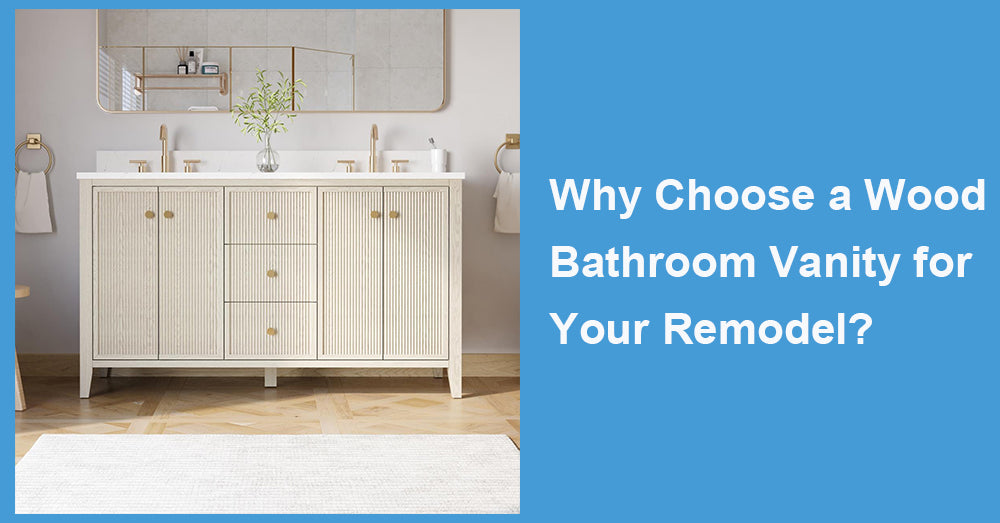
An all wood vanity, especially one built with solid wood plus plywood box construction, is typically the safer long-term choice when:
· The bathroom gets heavy daily use.
· There is higher risk of splashes, kids, or cleaning water getting everywhere.
· You want the option to repair dings, scratches, or finish wear instead of replacing panels.
· You want stronger hardware mounting and better long-term structural stability.
It is not that wood never has problems. It is that wood problems are often fixable, while MDF problems after water exposure can become permanent.

Bottom Line
If the question is strictly durability, an all wood vanity is usually better than MDF, but only if it is built well and sealed properly. MDF performs well when kept dry and fully protected, yet it is far less forgiving once moisture penetrates, and swelling damage may not fully reverse after drying (Source: Composite Panel Association). The most durable real-world choice often looks like this: solid wood doors and frames, a plywood cabinet box, quality hardware, and thorough edge sealing.











Leave a comment
This site is protected by hCaptcha and the hCaptcha Privacy Policy and Terms of Service apply.