














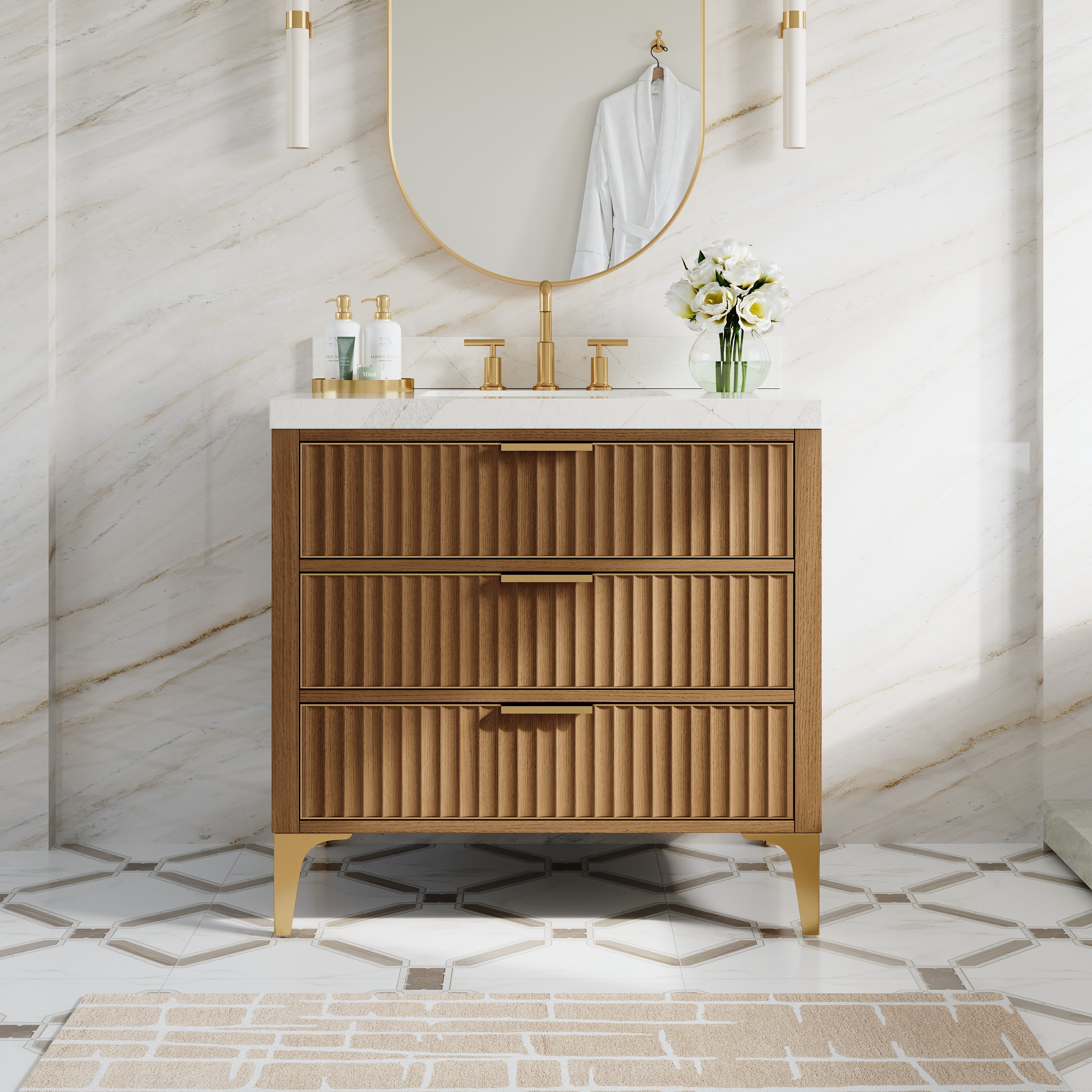
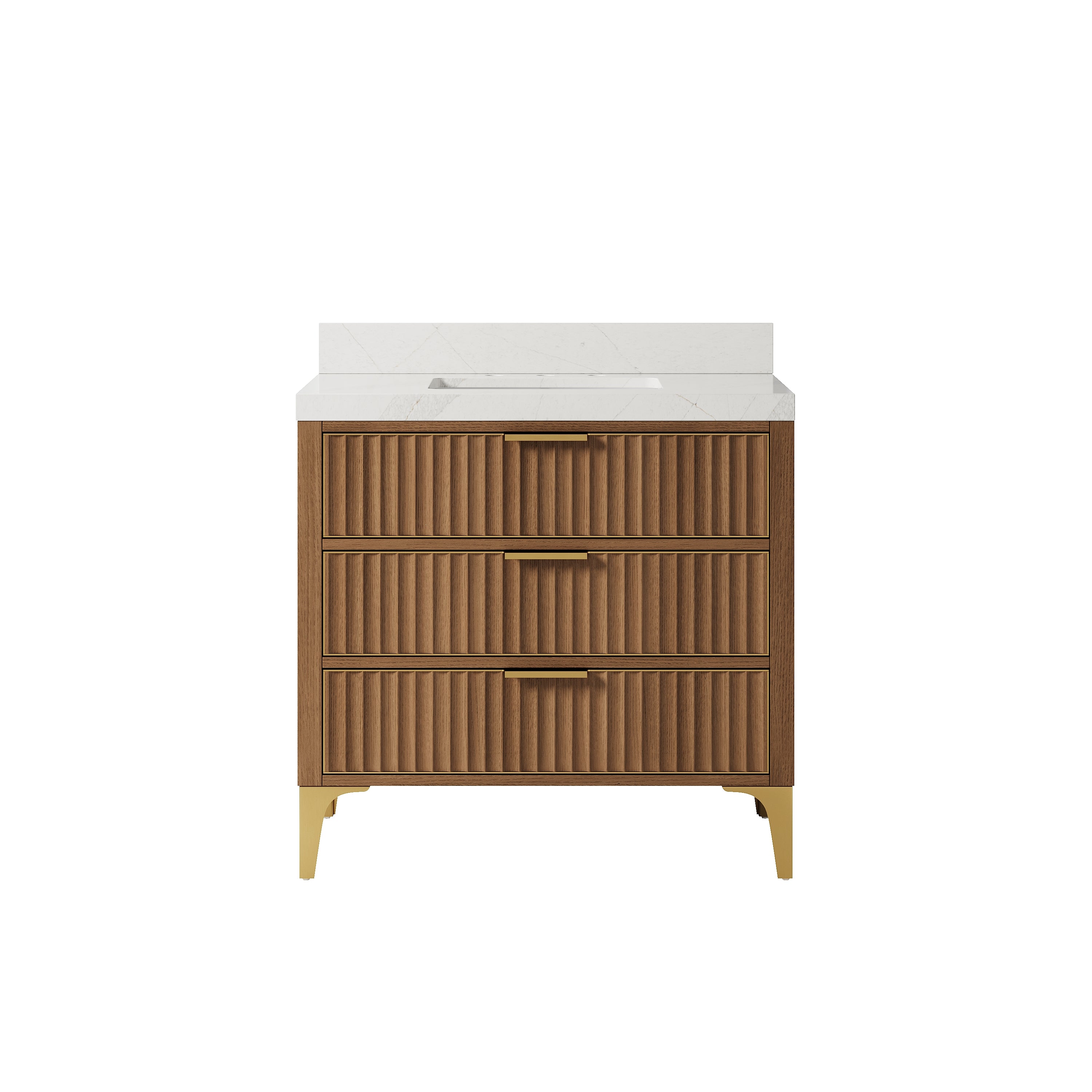
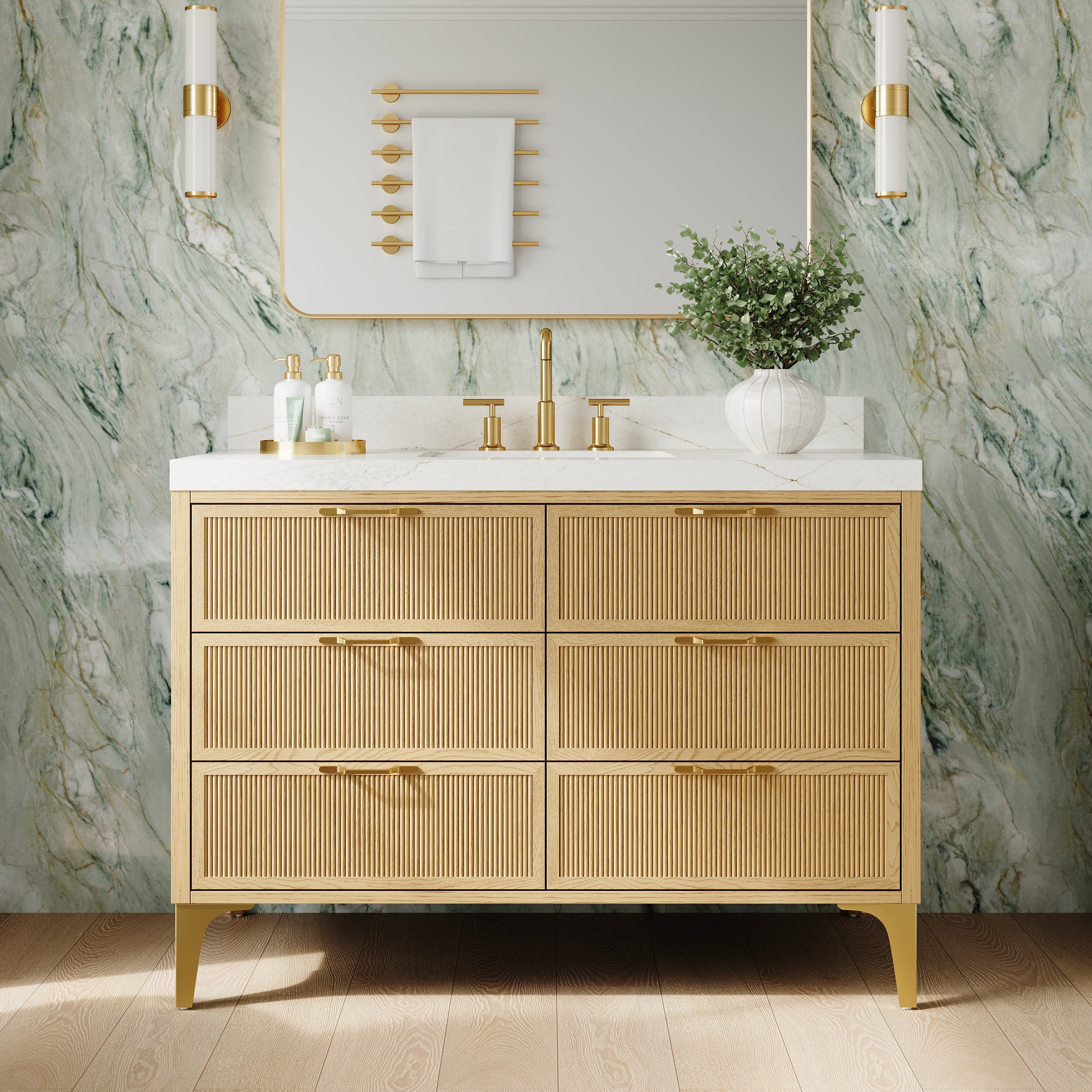
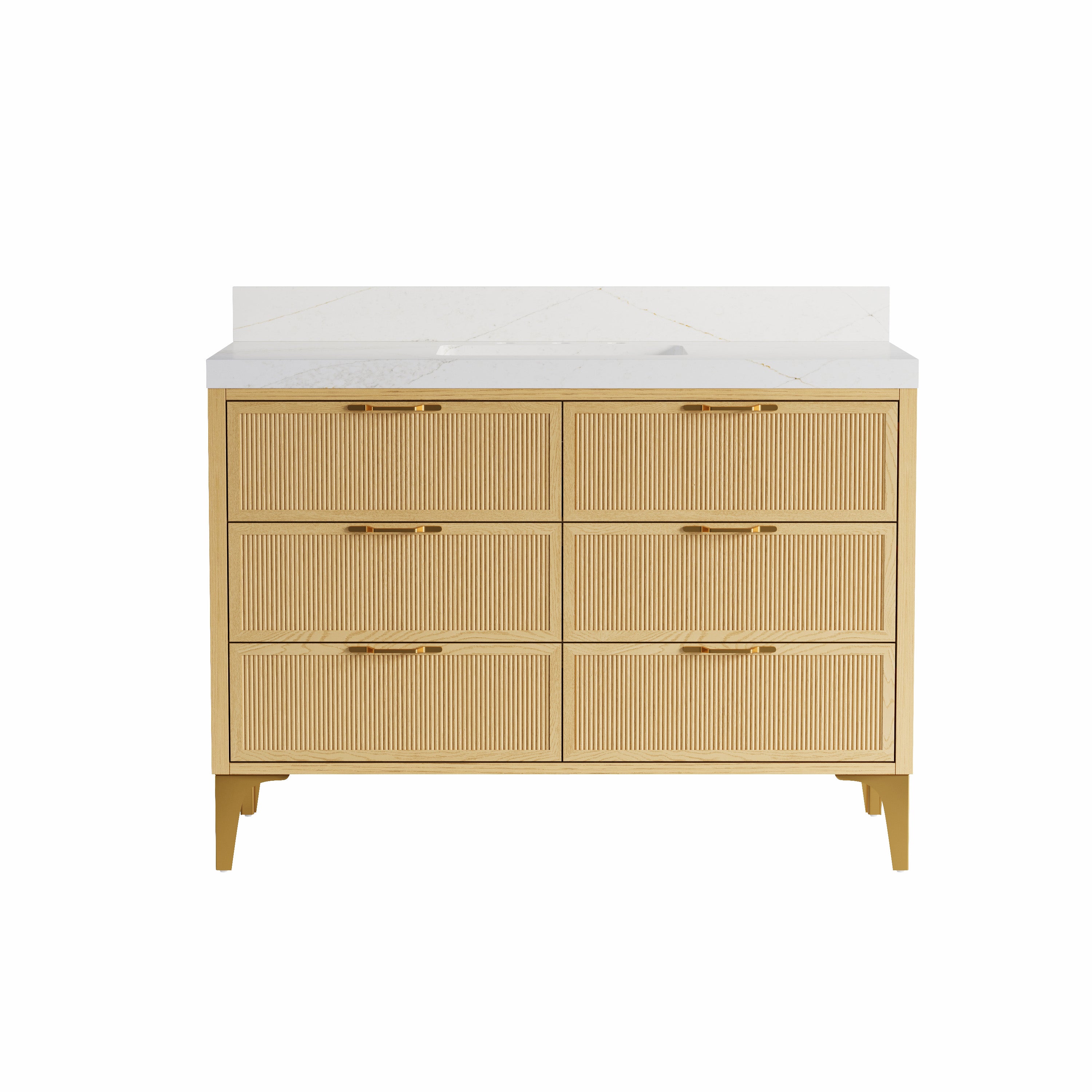


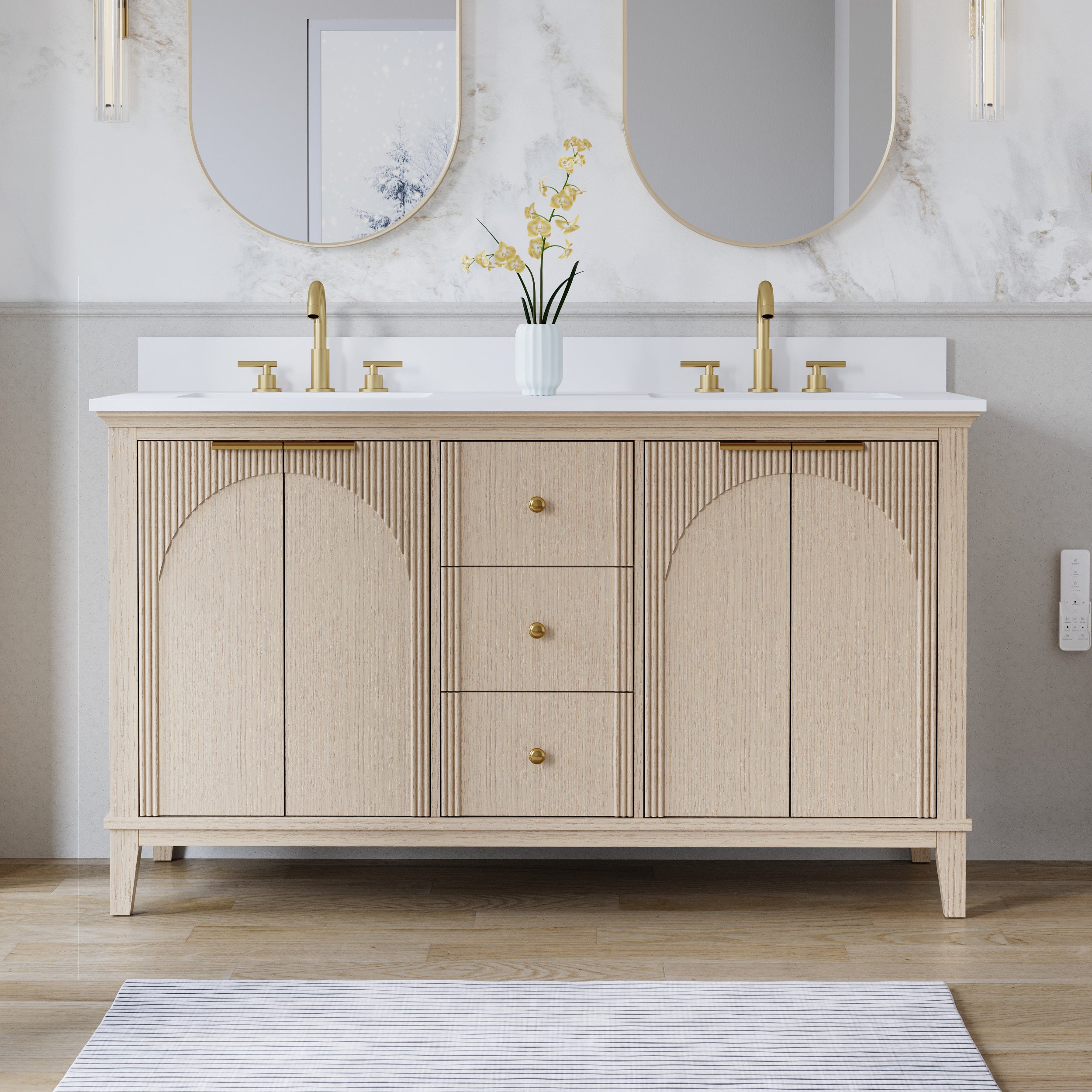
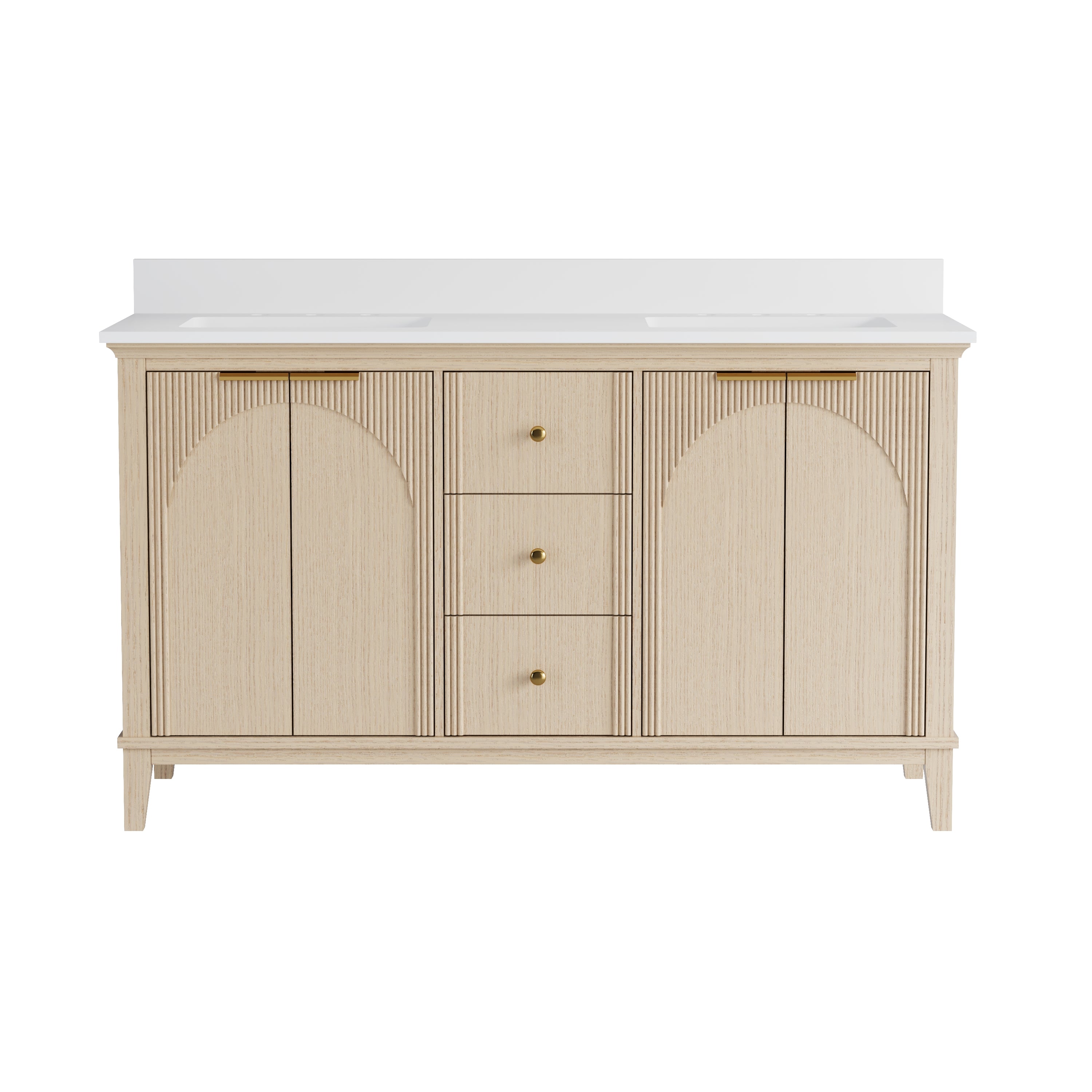
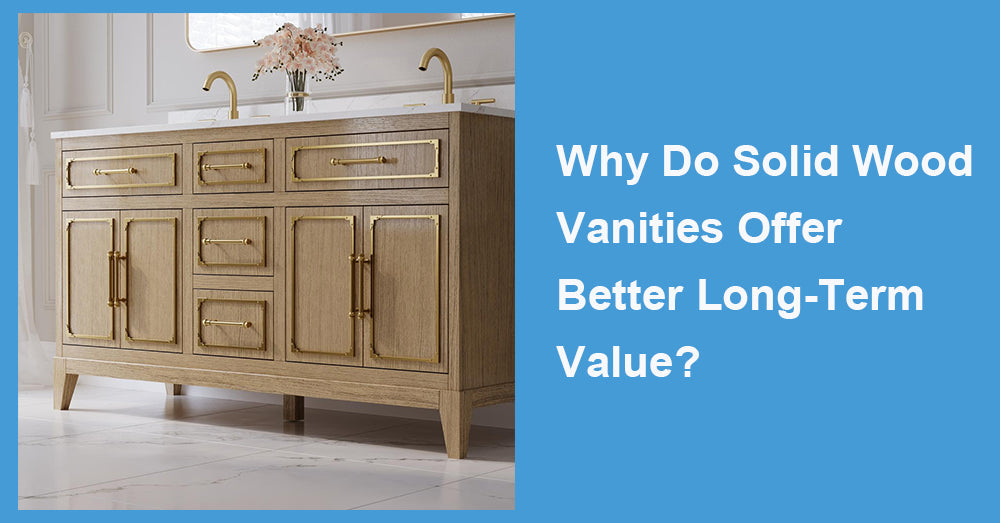
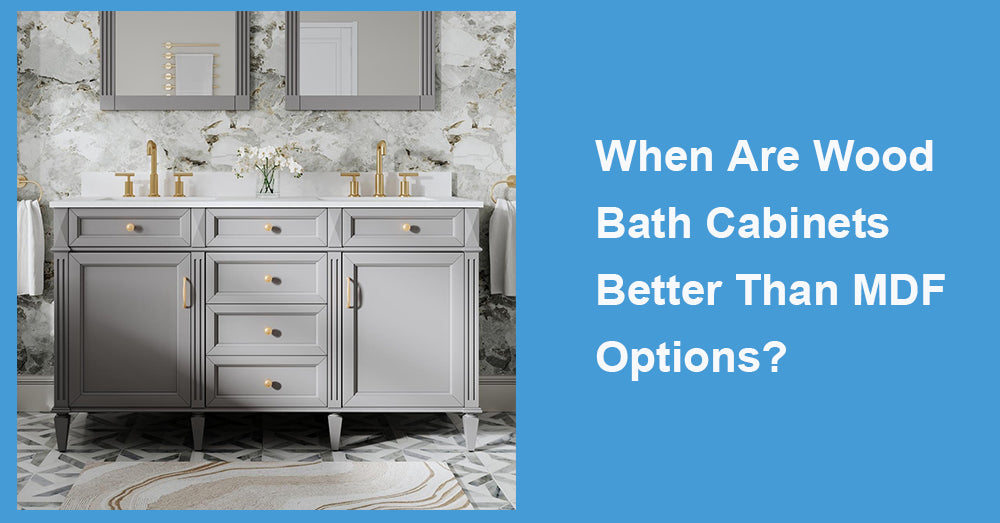
When people talk about upgrading a bathroom, solid wood vanities often come up as the “spend a little more now, replace less later” option. That long-term value is not just about looks. It comes from how solid wood handles daily wear, how well it holds hardware, and how repairable it is when life happens. If you care about durability, lower replacement risk, and a vanity that still feels solid after years of use, solid wood can be one of the smartest material choices you can make.
1. Long-Term Value Starts With a Longer Useful Lifespan
A vanity’s value is measured over time, not at checkout. Many sources place typical bathroom vanity lifespan in the 10 to 20 year range, with better materials and upkeep extending beyond that (Source: Edward Martin, “How Long Do Bathroom Vanities Last?”, 2025). When you spread the cost over more years of reliable use, the “cost per year” drops, and the vanity becomes a better long-term deal.
What that looks like in real life:
· A vanity that stays square, closes properly, and resists moisture-related damage is less likely to need replacement.
· Small cosmetic wear is less likely to force a full teardown if the surface can be restored.
2. Solid Wood Is More Serviceable When Wear Shows Up
Bathrooms are not gentle spaces. Toothpaste, makeup, water splashes, and frequent cleaning create constant surface stress. Solid wood has a practical advantage: it can often be touched up, sanded, and refinished. That means minor damage does not automatically turn into a replacement project.
This matters for long-term value because:
· You can restore the finish instead of replacing the cabinet.
· Some parts (like doors or drawer fronts) can be replaced more easily if needed.
· Solid wood tends to “age” in a way that still looks natural rather than degraded.
3. Solid Wood Typically Holds Hardware Better Over Time
Many people replace a vanity not because the cabinet is “broken,” but because it starts feeling worn out:
· Doors sag.
· Hinges loosen.
· Drawers rub or go out of alignment.
Those problems often trace back to how well the material holds screws and how stable the cabinet structure stays. Solid wood face frames and door rails generally provide strong fastening zones for hinges and slides, helping the vanity keep that tight, aligned feel longer.
Soft-close features also support long-term value by reducing repeated impact stress. In renovation research, soft-close is widely chosen: 78% select soft-close drawers and 75% select soft-close doors (Source: 2025 U.S. Houzz Bathroom Trends Study). When the cabinet is not constantly slammed, hardware and joints last longer.
4. Solid Wood Avoids Some “One-Way” Damage Common in MDF and Particleboard
A big part of long-term value is risk management. The most expensive vanity problem is not a scratch, it is a moisture event that permanently damages the cabinet box or base.
A Composite Panel Association technical bulletin notes that when particleboard or MDF swells and expands beyond its original dimensions due to exposure to high humidity or water, that swelling is not reversible upon re-drying (Source: Composite Panel Association, “Dimensional Stability of Particleboard and MDF” Technical Bulletin). In practical terms, that means:
· A slow leak can permanently puff up toe-kicks and cabinet bottoms.
· Swollen edges may never return to flat and square.
· Doors and drawers stop aligning because the box geometry is compromised.
Solid wood is not waterproof, but it is often more recoverable. With good drying, sealing, and repairs, solid wood components are less likely to end in a “permanently swollen” failure mode.
5. Wood’s Moisture Behavior Is Predictable, So Good Designs Can Plan for It
Wood is hygroscopic, meaning it exchanges moisture with the surrounding air. This moisture relationship influences performance and explains why humidity management and sealing matter (Source: USDA Forest Service, Forest Products Laboratory, “Moisture Relations and Physical Properties of Wood”). The key point is that wood movement is generally predictable, so well-built vanities use joinery and construction that account for seasonal humidity changes rather than ignoring them.
This is where quality construction becomes value:
· Better joinery stays tight through humidity cycles.
· Panels and frames are designed to reduce warping and stress.
· The cabinet stays square, so hardware remains aligned.
6. Humidity Control Multiplies the Value of Solid Wood
Even premium materials need a good environment. A simple humidity guideline helps protect the vanity and everything around it.
EPA guidance recommends keeping indoor humidity between 30% and 50%, and maintaining indoor relative humidity below 60% to reduce moisture problems (Source: U.S. Environmental Protection Agency, “Care for Your Air”; Source: U.S. EPA, “Moisture Control”). When a bathroom stays steamy for long periods, finishes break down faster, and cabinet interiors stay damp longer.
If you want solid wood to deliver maximum long-term value:
· Run the exhaust fan during showers and for 15 to 30 minutes after.
· Fix slow leaks quickly.
· Keep water from sitting on edges and seams.
Those habits cost very little, but they protect the vanity’s finish and structure, extending usable life.
7. Resale and Remodel Value: Quality Bathrooms Tend to Hold Value Better
Long-term value is not only “how long it lasts,” but also “how it supports overall home value perception.”
In the 2025 Cost vs. Value Report, a midrange bathroom remodel shows 80% cost recouped (Job Cost $26,138; Resale Value $20,915) (Source: Journal of Light Construction, 2025 Cost vs. Value Report). A solid vanity does not guarantee resale value by itself, but it contributes to the overall impression of quality in a room where buyers notice details quickly: door alignment, drawer feel, and finish durability.
8. Why Solid Wood Remains a Strong Preference in Renovations
Trends are not proof of quality, but they can reflect what performs well and what people trust. In the 2025 Houzz Bathroom Trends Study, nearly three-quarters of renovating homeowners choosing wood vanities selected solid wood (74%) (Source: 2025 U.S. Houzz Bathroom Trends Study). That preference is consistent with long-term value logic: people gravitate toward materials they believe will hold up and feel substantial.
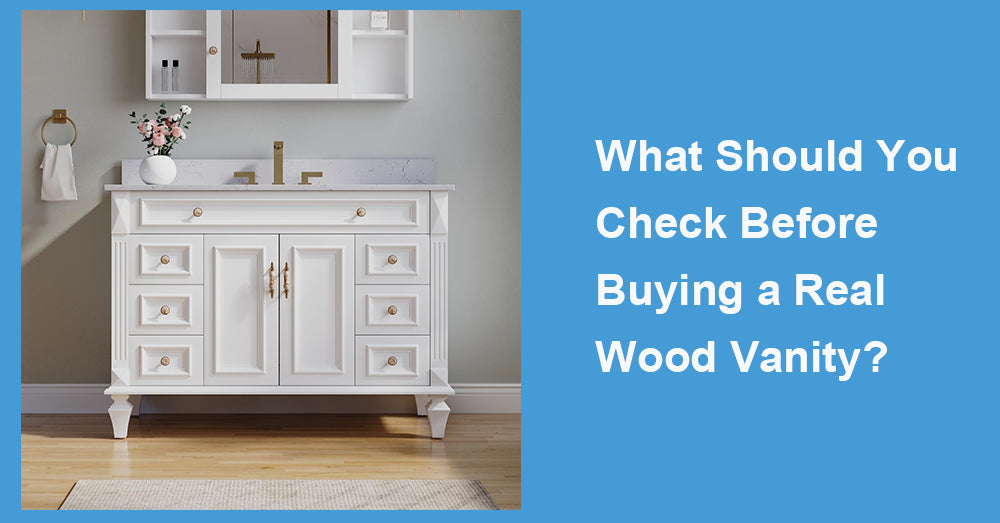
9. What to Look For So You Actually Get the Long-Term Value
Not every product labeled “wood” delivers the same durability. Use this checklist to shop smart:
Construction and materials
· Solid wood doors and face frame.
· A rigid cabinet box that stays square.
· Clear material disclosure (so you know where composites exist).
Finish and sealing
· Finished interior surfaces, not raw wood.
· Sealed edges around sink cutouts and plumbing holes.
· Protected toe-kick and bottom edges.
Hardware and usability
· Soft-close drawers and doors (Source: 2025 U.S. Houzz Bathroom Trends Study).
· Smooth drawer travel with minimal wobble.
· Hinges that feel adjustable and stable.
Moisture plan
· Aim for 30% to 50% indoor humidity and keep RH below 60% (Source: U.S. Environmental Protection Agency).

Conclusion
Solid wood vanities offer better long-term value because they tend to last longer, hold hardware more securely, and remain serviceable when normal wear appears. They also avoid some irreversible moisture damage risks common in MDF and particleboard once swelling occurs (Source: Composite Panel Association). Pair a solid wood vanity with good sealing and humidity control targets recommended by the EPA, and you are more likely to get a vanity that stays aligned, looks better longer, and costs less to own over time (Source: U.S. Environmental Protection Agency; Source: USDA Forest Service, Forest Products Laboratory). Add the broader remodeling data showing strong value retention for bathroom upgrades, and the long-term case becomes even stronger (Source: Journal of Light Construction, 2025 Cost vs. Value Report).












Leave a comment
This site is protected by hCaptcha and the hCaptcha Privacy Policy and Terms of Service apply.