















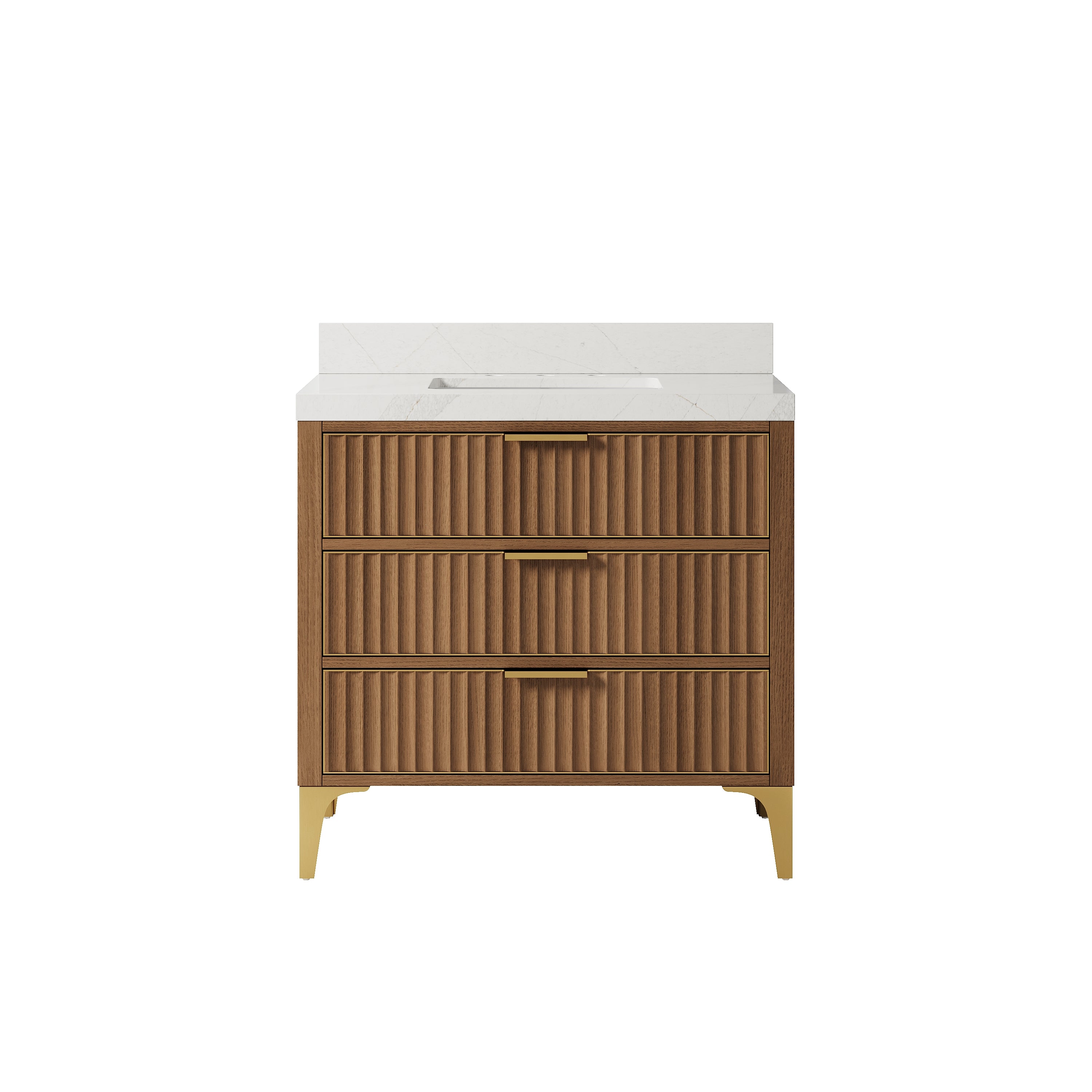

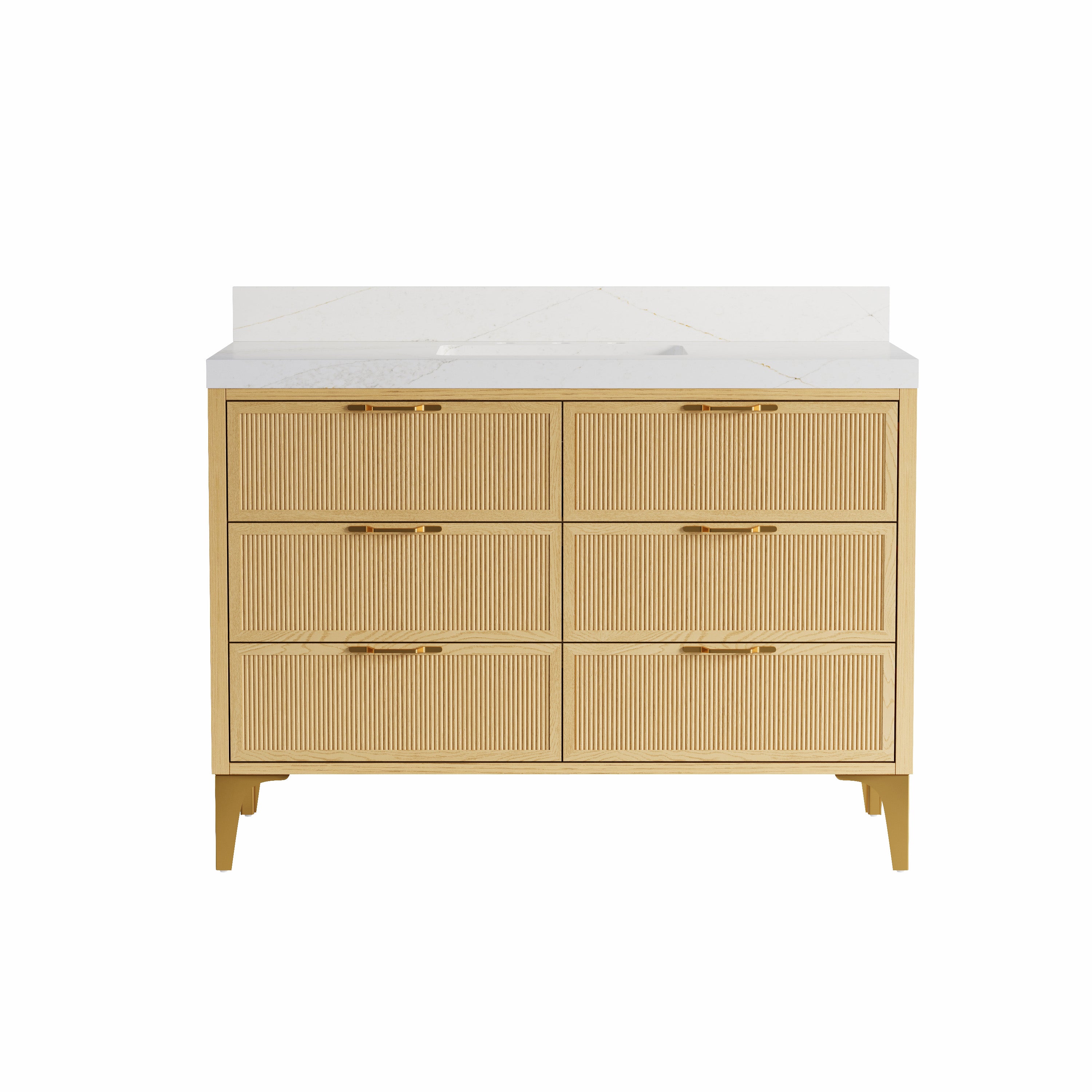


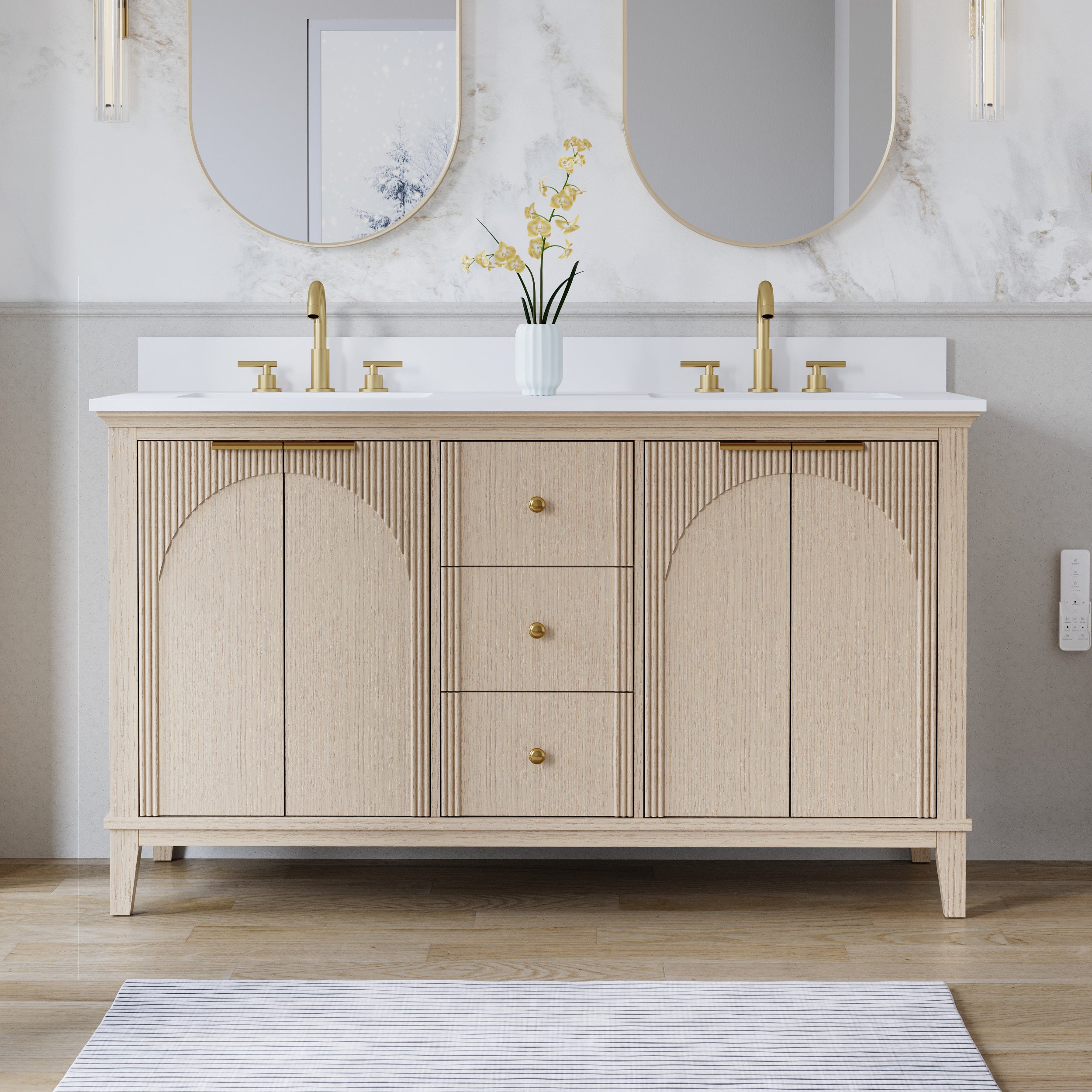
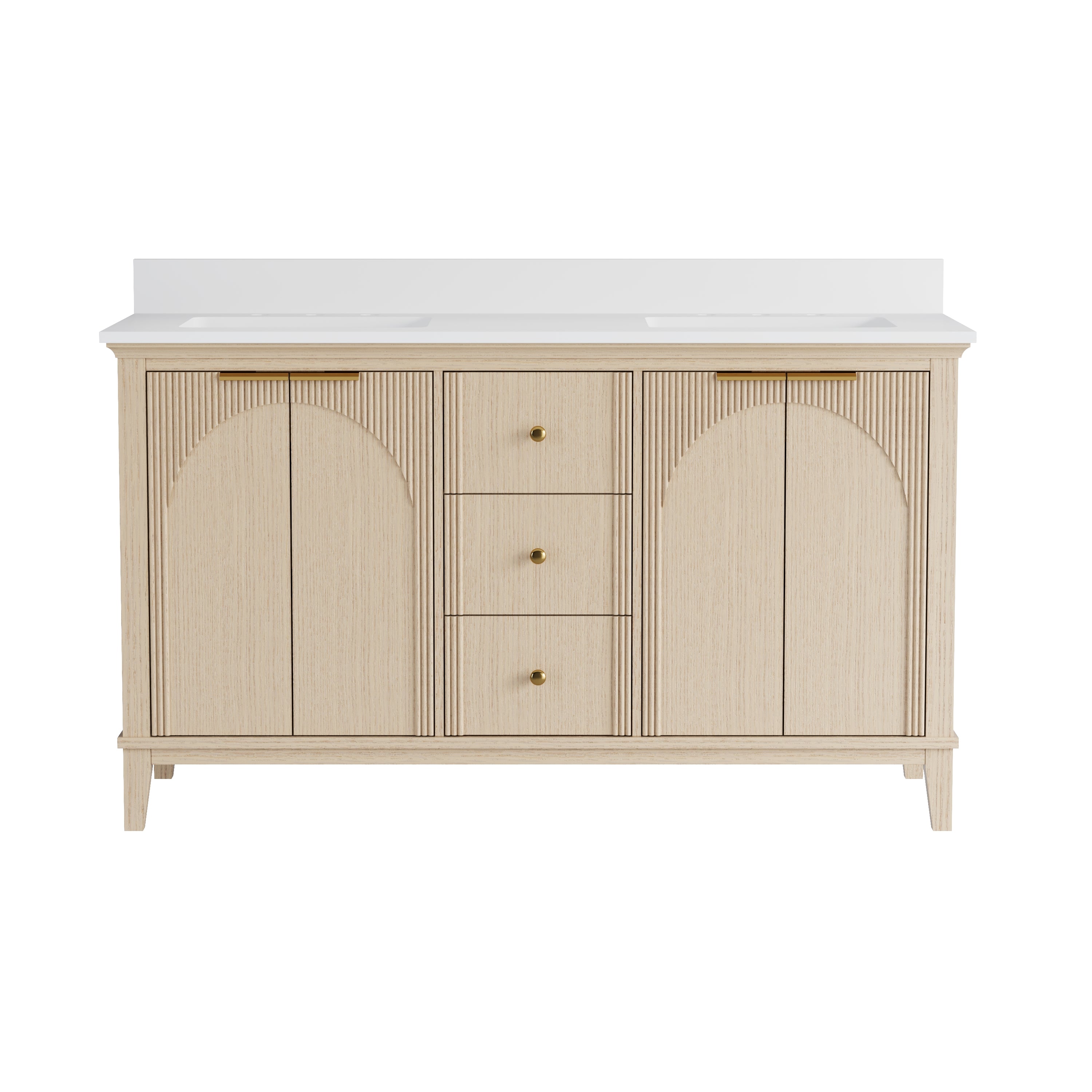

A real wood vanity can be one of the best long-term upgrades you make in a bathroom, but only if “real wood” means more than a nice-looking finish on the outside. Bathrooms are tough on cabinetry: steam, splashes, cleaning products, and the occasional slow leak test every joint and every edge. Before you buy, it helps to check the details that actually predict durability, daily usability, and whether the vanity will still look good years from now.
1. Verify What “Real Wood” Means on This Specific Product
“Real wood” can describe several different constructions, and the differences matter.
· Solid wood: natural lumber, often used for doors, face frames, and drawer fronts.
· Plywood: layered wood veneers, commonly used for cabinet boxes and shelves in higher-quality builds.
· Veneer over engineered core: a thin wood layer over MDF or particleboard. It can look great, but core performance matters in bathrooms.
Why it matters: MDF and particleboard can swell when exposed to high humidity or water, and that swelling may not fully reverse once the material expands beyond its original dimensions (Source: Composite Panel Association, Technical Bulletin on Dimensional Stability of Particleboard and MDF).
What to do: Look for a materials breakdown that clearly lists what the doors, face frame, and cabinet box are made of. If a listing only says “wood” or “wood construction,” treat it as incomplete until you see specifics.
2. Inspect the Cabinet Box, Not Just the Door Front
Many vanities look premium from the front and cut costs in the box. In real bathrooms, the box is the backbone that keeps everything aligned.
Better signs:
· Plywood side panels and bottom panel.
· Reinforced back panel or mounting rails that feel sturdy.
· A cabinet that feels rigid (no flex) when you press lightly on the side walls.
Red flags:
· Soft or “spongy” feel at the base.
· Thin panels with lots of staples and minimal reinforcement.
· Exposed raw edges inside the cabinet.
A vanity that goes out of square often shows up as drawers rubbing, doors misaligning, and hardware loosening prematurely.
3. Check Joinery and Drawer Construction
A bathroom vanity is opened and closed constantly. Strong joinery helps the cabinet survive daily cycles without loosening.
Look for:
· Drawer boxes with structural joints (commonly dovetail or other interlocking joinery).
· Drawer bottoms seated into grooves rather than stapled to the underside.
· Solid corner connections and consistent assembly.
If you can, open drawers and gently wiggle them side to side. Excess wobble on day one often gets worse over time.
4. Evaluate the Finish Like It’s a Protective Coating
In bathrooms, the finish is not just cosmetic. It is moisture protection.
Wood is hygroscopic, meaning it exchanges moisture with the surrounding air, and that moisture relationship influences performance (Source: USDA Forest Service, Forest Products Laboratory, Wood Handbook: Moisture Relations and Physical Properties of Wood). A good finish slows moisture entry and protects vulnerable areas.
Where finishes fail first:
· Underside of the sink cutout and countertop edge line.
· Plumbing openings in the back panel.
· Toe-kick and bottom edges near wet floors.
· Door and drawer edges where water sits after handwashing.
What to check:
· Is the interior finished, or only the visible front?
· Are corners and edges evenly coated?
· Are cutouts and seams sealed, not raw?
A beautiful exterior finish with unfinished interior edges is a common reason “wood” vanities age poorly.
5. Confirm Hardware Quality and Daily “Feel”
Hardware is where you experience quality every single day.
What you want:
· Smooth drawer slides, ideally full-extension for easy access.
· Soft-close hinges and slides (reduces impact stress and wear).
· Doors that close evenly with consistent gaps.
Soft-close has become a widely expected upgrade in modern bathroom renovations (Source: 2025 Houzz Bathroom Trends Study). Even if you are not chasing trends, soft-close reduces slamming forces that can loosen screws and stress joints over time.
6. Measure the Space Like a Installer Would
A real wood vanity can be perfect and still be the wrong choice if it does not fit your layout.
Measure and check:
· Vanity width: common sizes include 24 in., 30 in., 36 in., 48 in., 60 in., and 72 in.
· Depth: ensure you still have comfortable standing room and door swing clearance.
· Height: many vanities fall between 30 in. and 36 in., and comfort height is often closer to 34 in. to 36 in. (Source: NKBA planning guidance and common manufacturer specifications).
· Plumbing location: confirm drain height, shutoff valve position, and whether the vanity has a removable back panel or plumbing cutout.
If you are considering a floating vanity, confirm there is appropriate wall blocking and a secure mounting strategy.
7. Look for Moisture Strategy, Not Just Moisture Claims
Humidity control is a major predictor of cabinet life.
EPA guidance commonly recommends keeping indoor relative humidity below 60%, ideally between 30% and 50%, to reduce moisture problems and mold risk (Source: U.S. Environmental Protection Agency, moisture and mold guidance). If your bathroom is frequently steamy, the vanity needs extra protection.
Smart checks for humid bathrooms:
· Fully finished interior surfaces.
· Well-sealed toe-kick and base edges.
· Materials that are less likely to suffer permanent swelling if exposed to dampness (Source: Composite Panel Association).
If mirrors stay fogged for a long time after showers, plan to run the exhaust fan longer, or improve ventilation. A great vanity cannot outwork chronic dampness.
8. Ask About Composite Wood Compliance (If Any Composite Parts Exist)
Even “solid wood” vanities often include composite components somewhere (drawer bottoms, back panels, shelves). Composite wood products are subject to formaldehyde emissions standards, and compliance labeling may apply (Source: U.S. Environmental Protection Agency, TSCA Title VI Formaldehyde Emission Standards for Composite Wood Products).
This is not just a technical detail. Clear documentation is often a sign the brand takes material transparency seriously.
9. Check Returns, Parts, and Warranty Terms Before Checkout
Heavy vanities can arrive with shipping scuffs, cracked tops, or missing hardware. Long-term satisfaction depends on what happens next.
Before buying, confirm:
· Return window (how many days, and from delivery date or order date).
· Whether freight returns require original packaging.
· Replacement parts policy for damaged doors, handles, hinges, or drawer slides.
· Warranty coverage and what it excludes (finish wear, water damage, improper installation, etc.).
This is especially important for vanities with countertops included, because damage claims can be more complicated when multiple components ship together.
10. A Simple “Real Wood Vanity” Pre-Buy Checklist
Use this quick scorecard to compare options:
Materials
· Solid wood doors and face frame.
· Cabinet box material clearly disclosed (preferably plywood for many bathroom conditions).
Build
· Rigid box, reinforced corners, strong drawer construction.
· Minimal wobble, consistent door gaps.
Finish
· Sealed edges and cutouts.
· Finished interior surfaces.
Hardware
· Soft-close hinges and slides.
· Full-extension drawers if storage matters.
Fit
· Width, depth, height, door swings, plumbing alignment.
Moisture plan
· Bathroom humidity managed toward 30% to 50%, below 60% (Source: U.S. Environmental Protection Agency).
Support
· Clear returns, parts replacement, and warranty terms.

Conclusion
Before buying a real wood vanity, focus less on the headline and more on the evidence: material breakdown, cabinet box strength, joinery, edge sealing, and hardware performance. Wood’s moisture behavior is well understood, and a well-built vanity can thrive when finishes and construction account for humidity (Source: USDA Forest Service, Forest Products Laboratory). Protect that investment with reasonable moisture control targets (Source: U.S. Environmental Protection Agency), and avoid “mystery wood” products where the core materials are unclear, since some engineered cores can swell in ways that are not fully reversible once expansion occurs (Source: Composite Panel Association). If you run through this checklist before checkout, you are far more likely to end up with a vanity that looks good, works smoothly, and lasts.























Leave a comment
This site is protected by hCaptcha and the hCaptcha Privacy Policy and Terms of Service apply.