














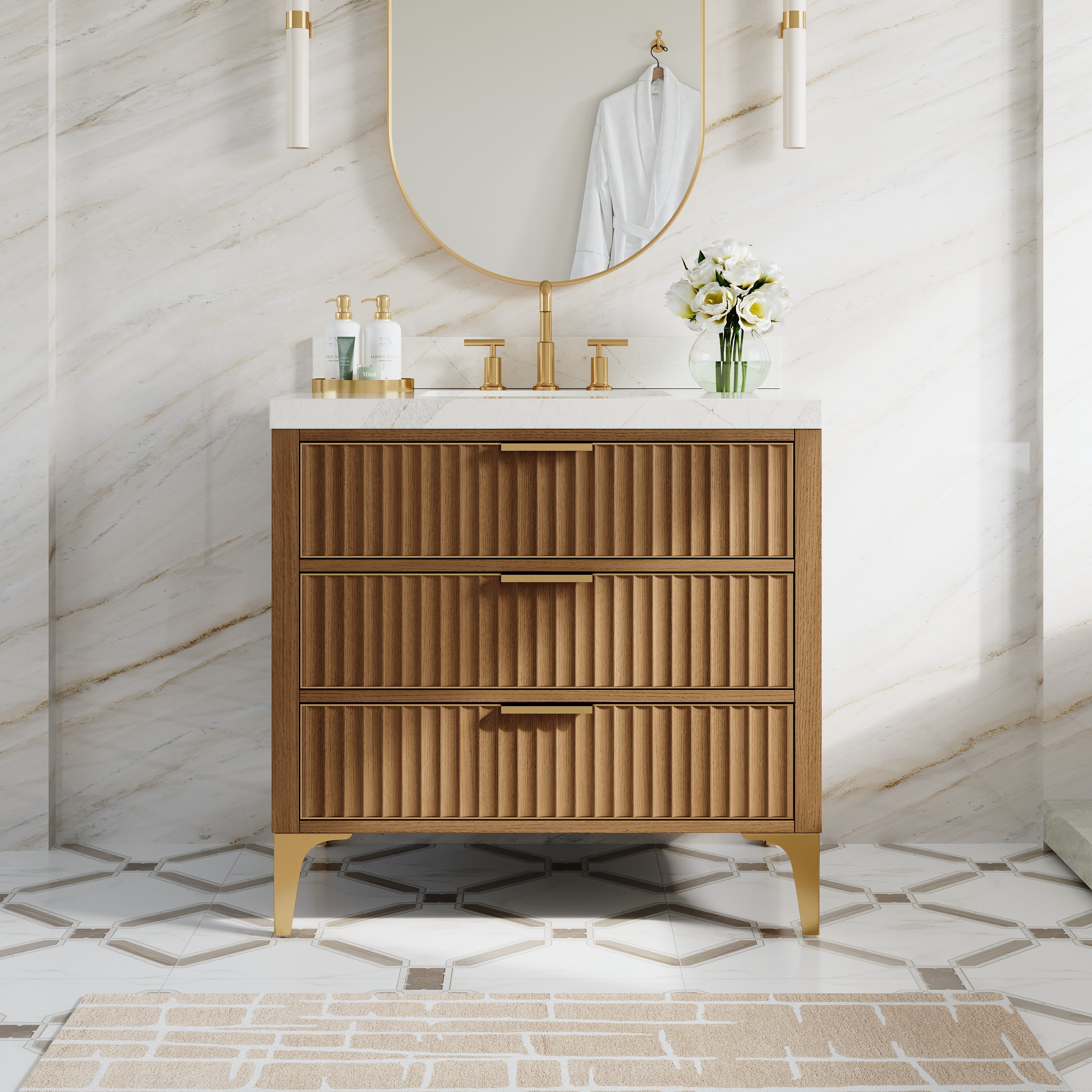
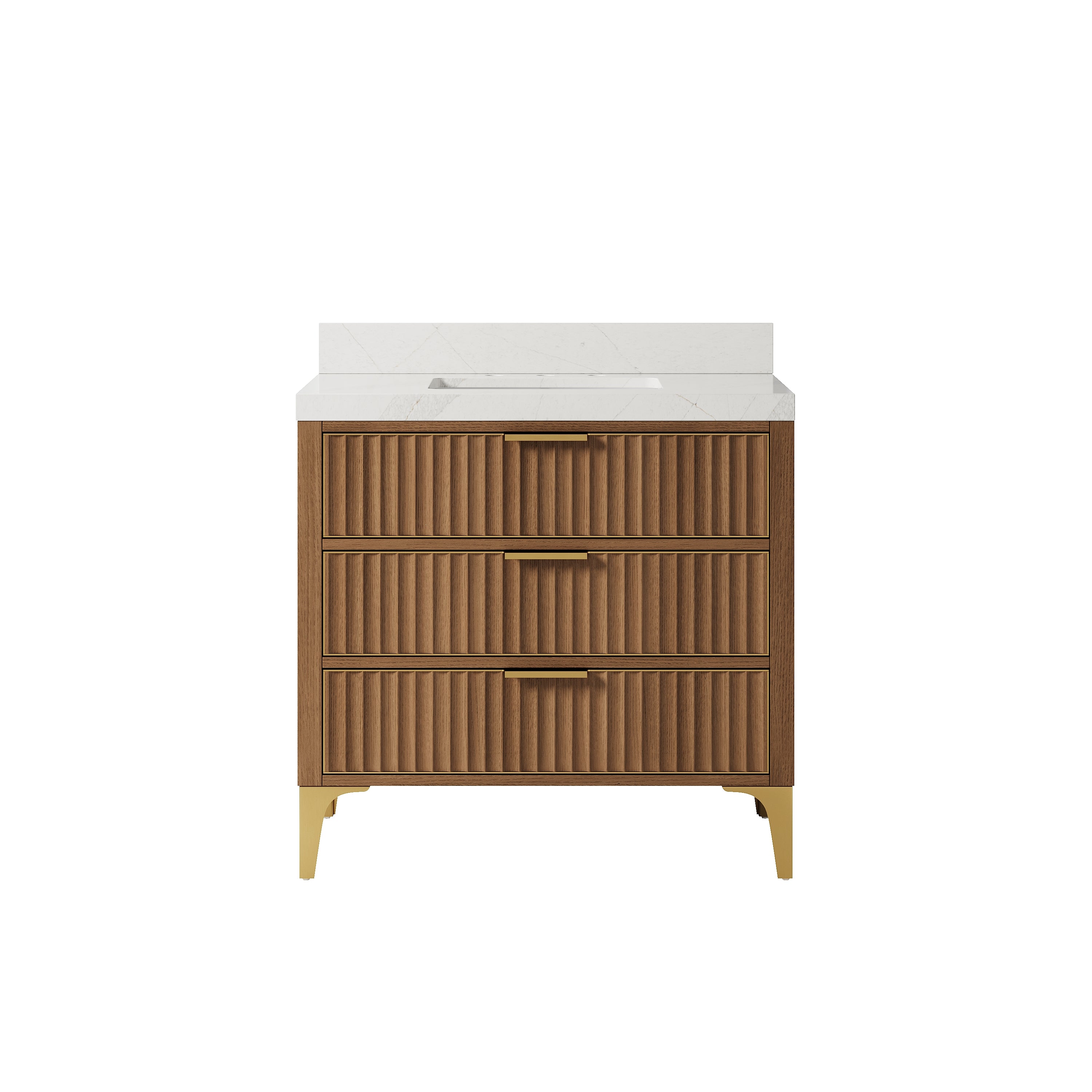
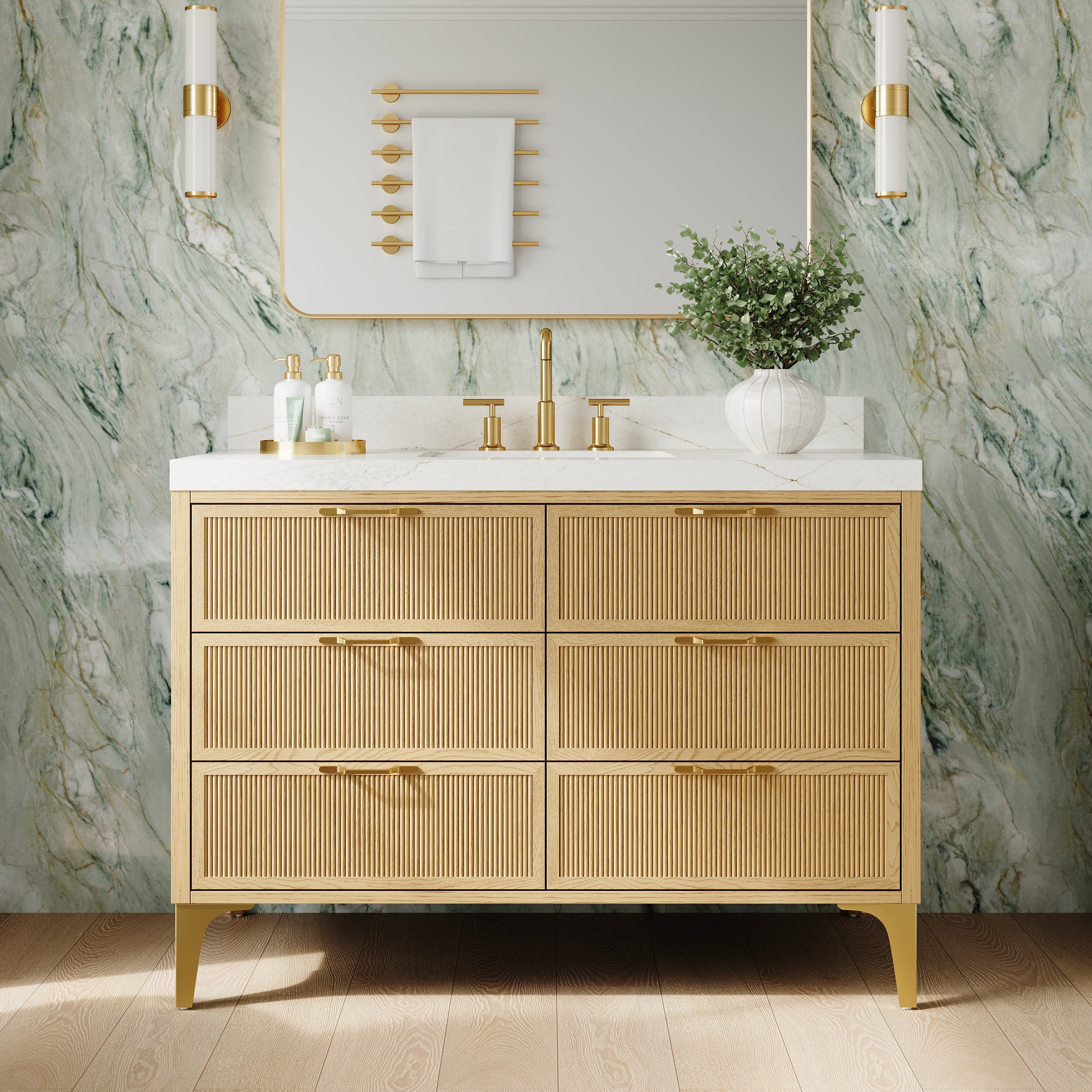
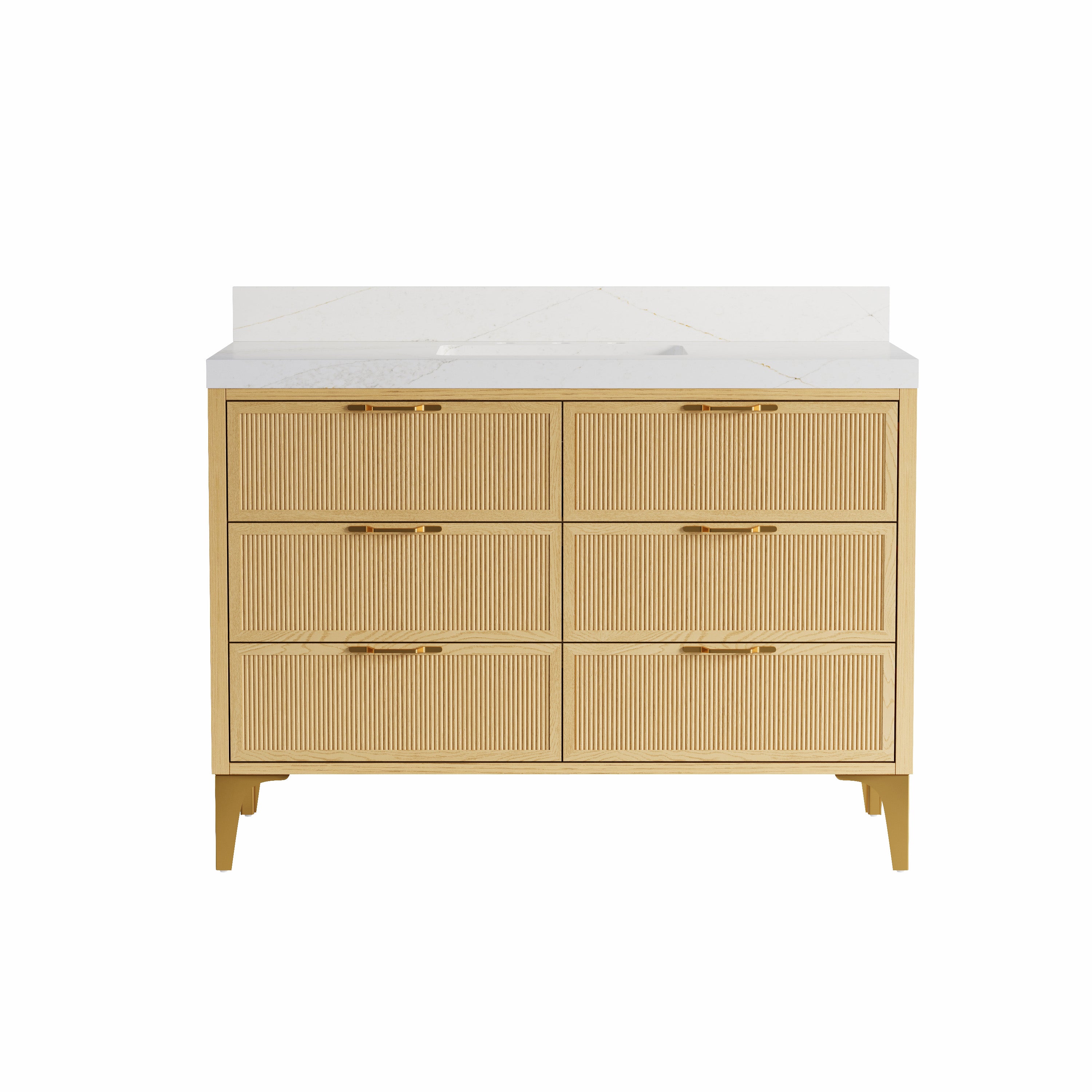


Shopping for bathroom vanities online can save time and open up far more styles and price points than a single store visit. The downside is risk: misleading material claims, missing dimensions, complicated freight returns, and “too good to be true” listings. The safest way to compare vanities online is to use a repeatable process that checks five things in order: fit, construction, finish, seller reliability, and total cost (including shipping and returns).
1. Start With Fit: Dimensions That Prevent Costly Mistakes
Before you compare brands or finishes, lock down measurements. A vanity that is perfect on paper can fail if drawers hit the toilet or doors collide with the bathroom entry.
What to measure:
· Width (common sizes: 24 in., 30 in., 36 in., 48 in., 60 in., 72 in.).
· Depth (important in tight layouts).
· Height (often 30 in. to 36 in. depending on style).
· Plumbing location (drain height, water supply lines, and whether the vanity has an open back or cutout).
· Door swing and drawer clearance (especially if the toilet is close).
Data point: In renovation research, nearly half of homeowners still choose vanities 48 in. or less (47%), showing how common compact footprints are even in updated bathrooms (Source: 2025 U.S. Houzz Bathroom Trends Study).
Practical tip: Only compare vanities that fit your “dimension envelope.” Anything outside it is noise.
2. Compare Construction Like a Pro: Box First, Then Doors, Then Hardware
Online listings can make every vanity look premium from the front. The real durability story is hidden in the cabinet box and how it holds hardware over time.
A reliable structure often looks like:
· Solid wood doors and face frame (high-touch zones).
· A stable cabinet box material (often plywood in higher-quality builds).
· Reinforced mounting rails (especially important for floating vanities).
Why construction honesty matters: MDF and particleboard can swell after high humidity or water exposure, and a technical bulletin notes that once particleboard or MDF expands beyond original dimensions due to high humidity, it is not reversible upon re-drying (Source: Composite Panel Association, Dimensional Stability Technical Bulletin).
How to verify online:
· Look for a materials breakdown that lists door material, frame material, and box material separately.
· Look for interior photos. If the interior is unfinished or edges look raw, expect faster wear in humid bathrooms.
3. Treat Finish as a Moisture Shield, Not Just a Color
Bathrooms are humid environments, and finish quality often matters more than wood species.
Wood is hygroscopic, meaning it exchanges moisture with the surrounding air, and this moisture relationship influences performance (Source: USDA Forest Service, Forest Products Laboratory, Wood Handbook chapter on moisture relations). (Note: the Houzz PDF is used elsewhere; for wood science, rely on your product documentation or reputable references if provided.)
Where finishes fail first:
· Sink cutouts under the countertop.
· Plumbing openings in the back panel.
· Toe-kicks and bottom edges near wet floors.
· Door and drawer edges where water sits after handwashing.
Humidity target to protect finishes: EPA guidance recommends keeping indoor humidity between 30% and 50% (Source: U.S. Environmental Protection Agency, Care for Your Air).
When comparing online, prioritize listings that mention:
· Fully finished interiors.
· Sealed edges/cutouts.
· Moisture-resistant topcoats (and show close-up photos).
4. Use Feature Data to Separate “Nice” From “Necessary”
Some features are not luxury anymore; they are baseline usability. Soft-close hardware is a good example.
Renovation data shows 78% choose soft-close drawers and 75% choose soft-close doors (Source: 2025 U.S. Houzz Bathroom Trends Study).
Why it matters for safety in online shopping:
· Listings that omit basic hardware details often omit other important details too.
· Soft-close reduces slamming stress, which helps keep doors aligned and drawers gliding longer.
Other high-value specs to compare:
· Full-extension drawer slides (easier access).
· Adjustable levelers (helps with uneven floors).
· Countertop material and thickness (if included).
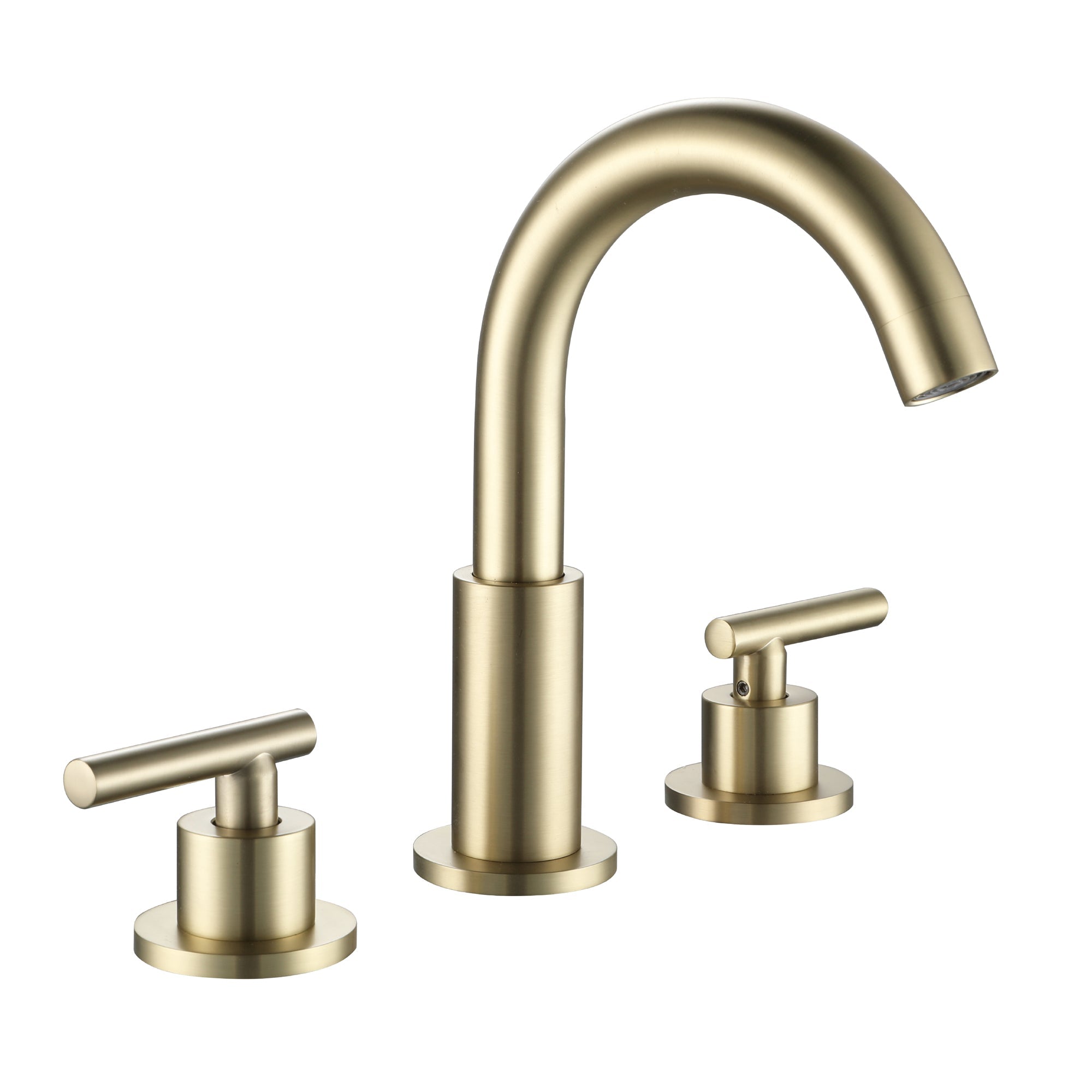
· Faucet drilling type (single-hole vs. widespread).
5. Compare Seller Reliability Before You Compare Price
A “better deal” is not better if it arrives damaged, ships late, or cannot be returned without paying a fortune.
A. Shipping promises and timing
The FTC notes a rule: sellers must ship within the time they promise, and if they do not promise a time, they generally must ship within 30 days after receiving your payment and shipping information (Source: FTC Consumer Advice on Online Shopping).
For vanities shipped by freight, also check:
· Whether delivery is curbside or threshold/room-of-choice.
· Appointment scheduling and what happens if you miss the delivery window.
· Inspection requirements (some carriers require notes at delivery).
B. Payment protection
The FTC recommends using safer payment methods like credit cards when buying on online marketplaces because they have legal protections (Source: FTC advice on buying from an online marketplace).
This is one of the simplest “online safety” upgrades you can make.
C. Returns and freight rules
Vanity returns are not like returning a small box. Always read return rules before checkout, especially for large or fragile items (countertops, sinks, mirrors).
Examples of common policy baselines:
· Wayfair states it accepts returns for most items within 30 days of delivery in original, undamaged condition (Source: Wayfair Returns page).
· Home Depot states most merchandise can be returned within 90 days with proof of purchase, with exceptions (Source: Home Depot Return Policy).
· Lowe’s states most new, unused merchandise can be returned within 90 days with receipt, with exceptions (Source: Lowe’s Returns Policy).
Use these as comparison points, not as guarantees for every item category. Always check the exact listing’s exclusions (custom, clearance, special order, etc.).
6. Build a “Safe Comparison Scorecard” (Copy-Paste Friendly)
Use a simple 10-point score to compare finalists:
Fit (0–2)
· 2: All dimensions verified + plumbing compatibility confirmed.
· 1: Dimensions okay, plumbing unclear.
· 0: Missing key measurements.
Construction (0–2)
· 2: Clear materials breakdown (doors/frame/box) + interior photos.
· 1: Some materials listed, box unclear.
· 0: Vague “wood construction.”
Finish & Moisture Readiness (0–2)
· 2: Finished interior + sealed edges/cutouts described or shown.
· 1: Finish described but little proof.
· 0: No finish details.
Hardware & Function (0–2)
· 2: Soft-close + full-extension drawers + clear slide/hinge details.
· 1: Soft-close only or partial details.
· 0: Hardware not specified.
(Soft-close prevalence is high in remodel choices, so missing it can be a red flag.)
Seller Safety (0–2)
· 2: Clear delivery terms + simple return path + protected payment.
· 1: Return policy exists but freight terms unclear.
· 0: Hard-to-find policies or risky payment methods.
Pick the vanity with the highest total score, not the lowest sticker price.
7. Red Flags That Should Make You Scroll Past
· No cabinet depth listed (common in scammy listings).
· “Solid wood” claim with no mention of box material.
· Photos that never show the inside, back, or base.
· No return address, unclear seller identity, or pressure to pay via wire transfer. (FTC warns about safer payment methods and researching sellers.)
· Prices far below normal without a clear reason (open box, clearance, cosmetic defect, etc.).
8. Final Step: Plan for Humidity, So the Vanity You Buy Stays “Good”
A safe online purchase is also one that performs well after installation. If your bathroom stays steamy, protect any vanity choice by controlling humidity.
EPA guidance recommends keeping indoor humidity between 30% and 50% (Source: U.S. EPA, Care for Your Air).
This helps finishes last longer and reduces moisture stress inside cabinets.

Conclusion
To compare bathroom vanities online safely, treat it like a structured decision, not a scroll-and-feel exercise. Filter by fit first, verify construction and finish details next, then judge seller reliability through shipping promises, payment protection, and return rules. Use data-backed expectations like the widespread adoption of soft-close drawers and doors (78% and 75%) to spot incomplete listings (Source: 2025 Houzz Bathroom Trends Study).
Finally, protect your investment after it arrives by keeping humidity in the recommended 30% to 50% range (Source: U.S. EPA).











Leave a comment
This site is protected by hCaptcha and the hCaptcha Privacy Policy and Terms of Service apply.