














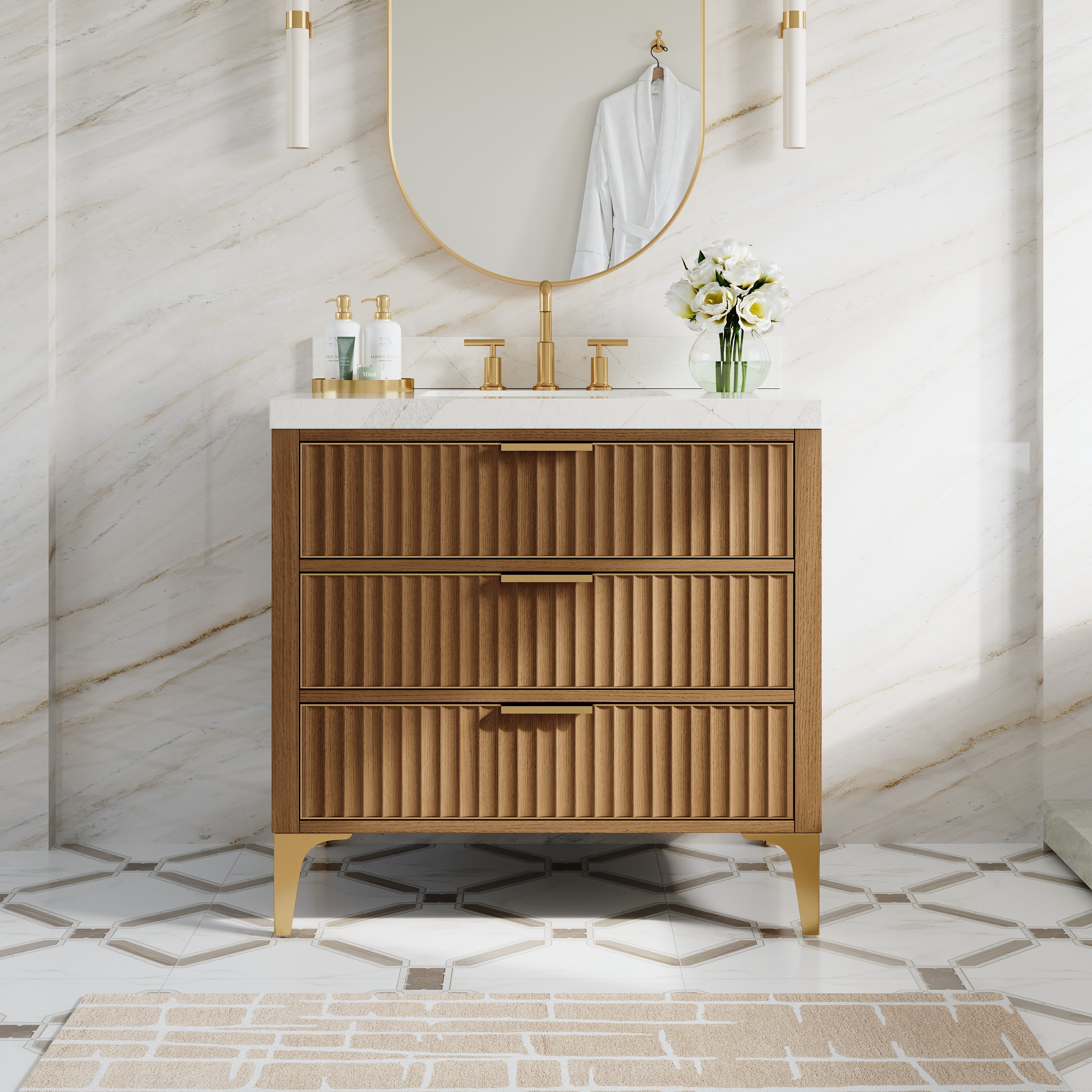
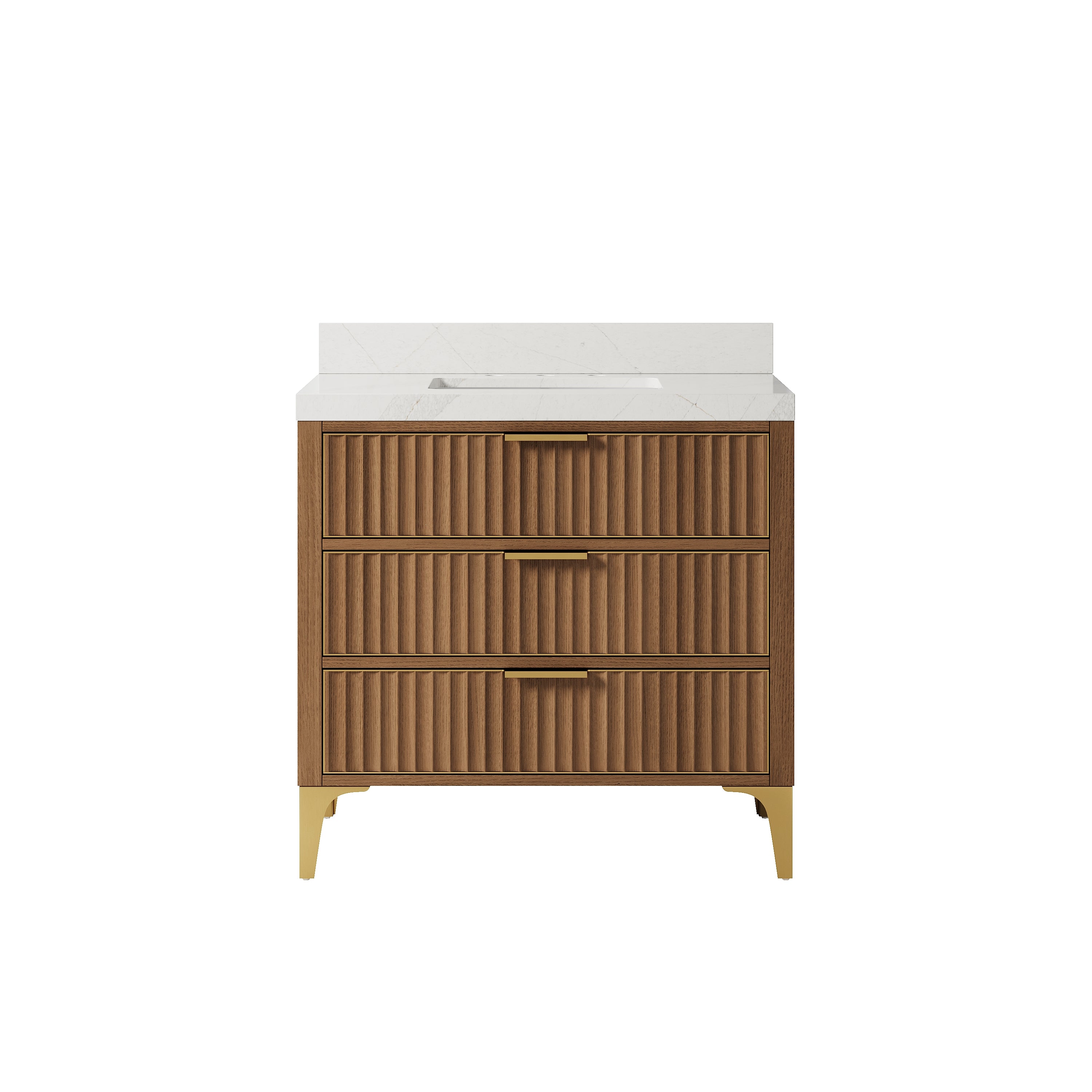
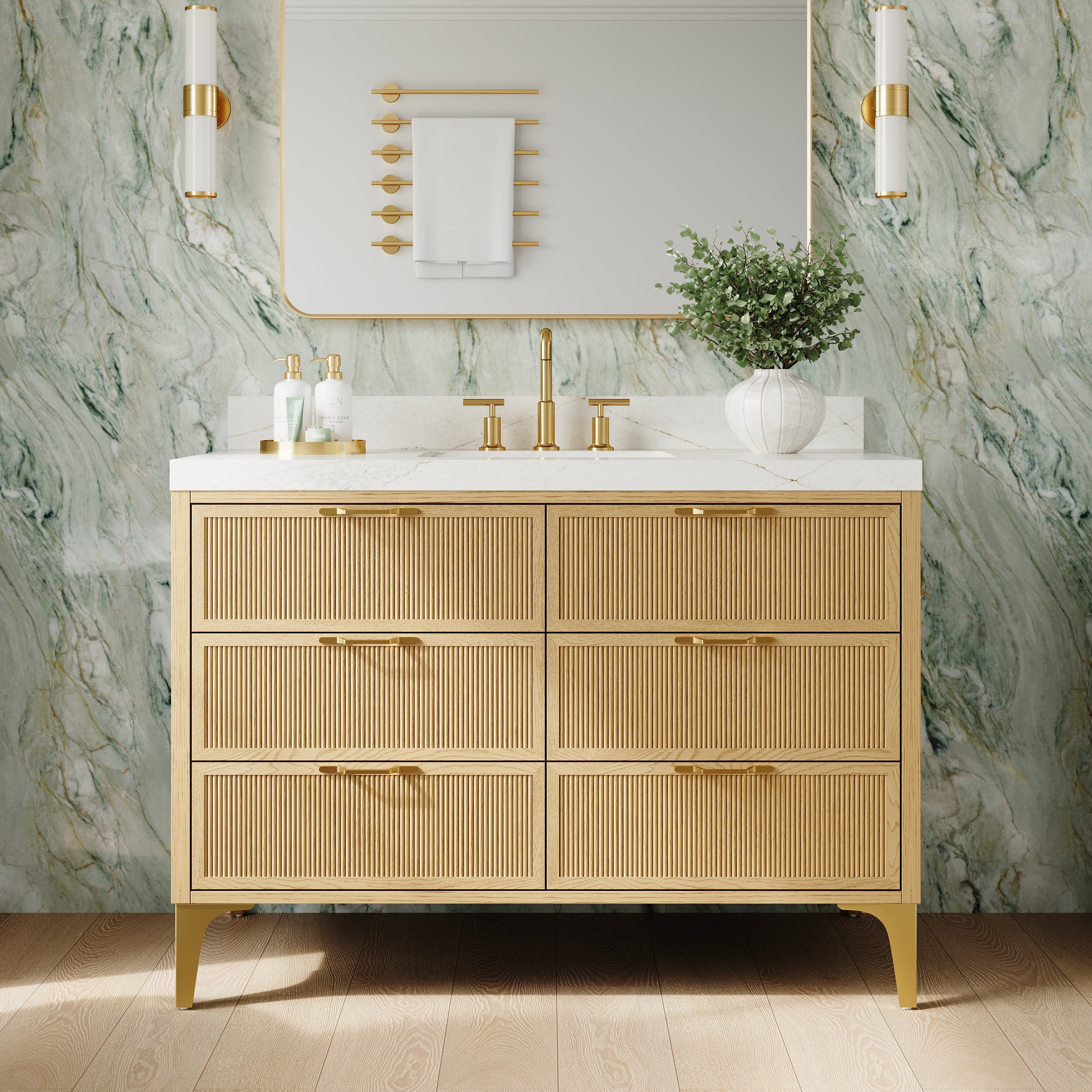
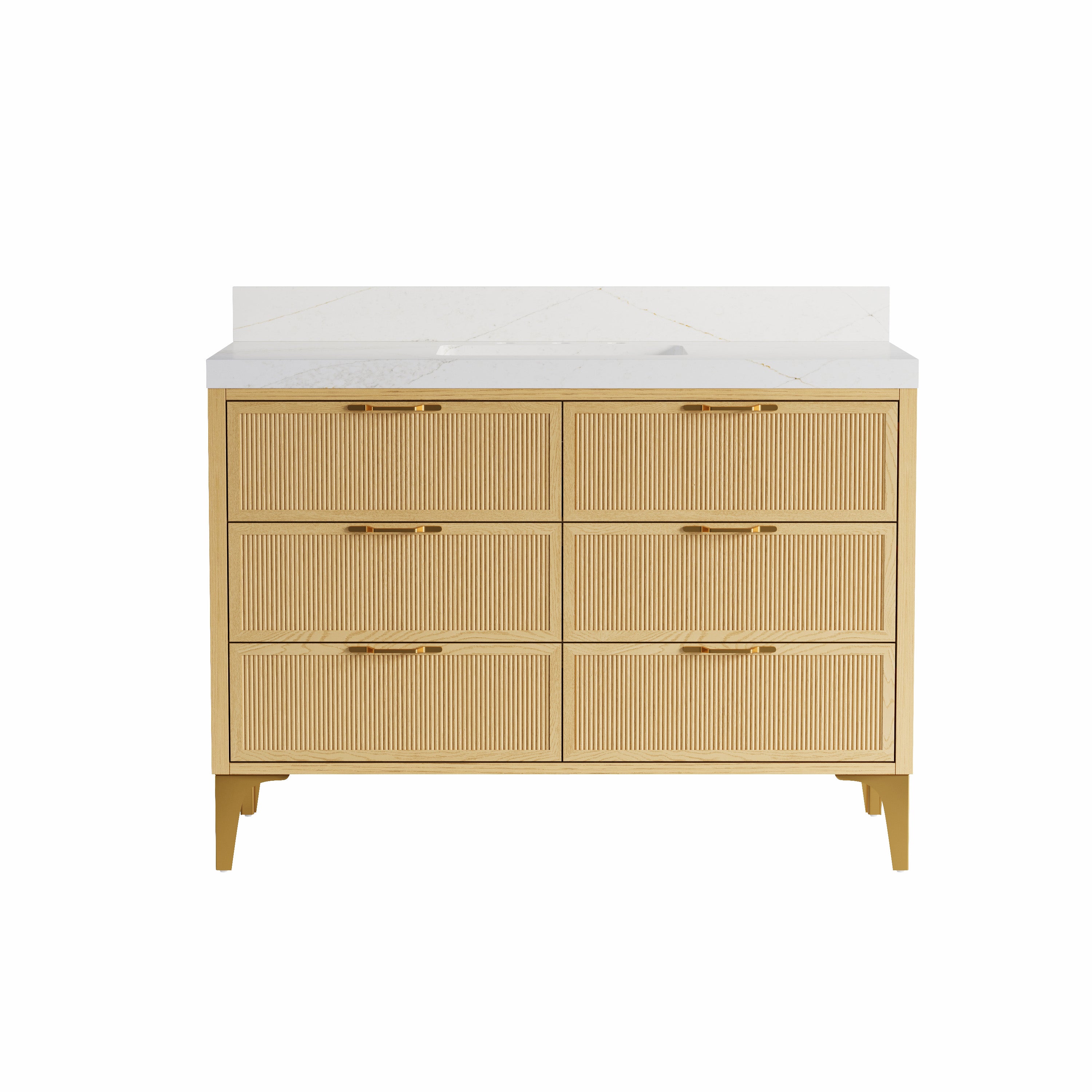


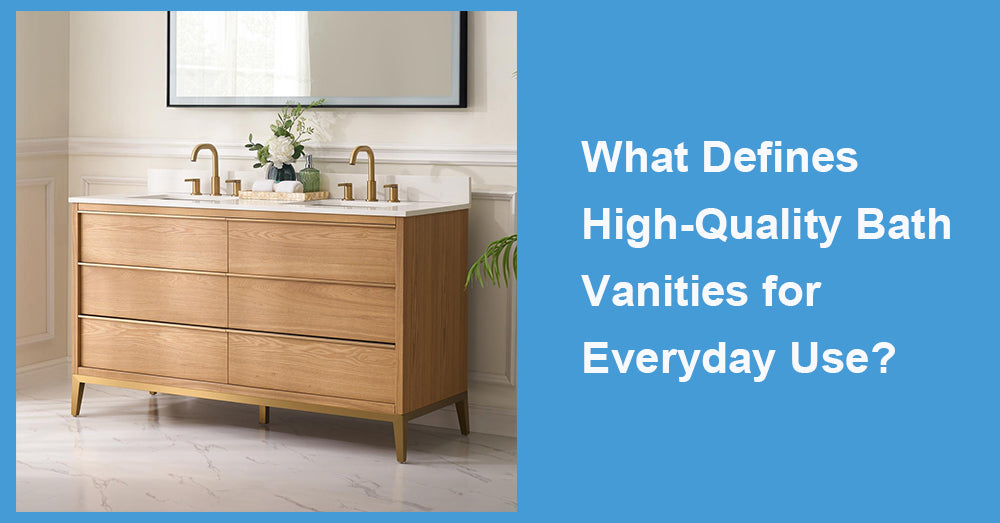
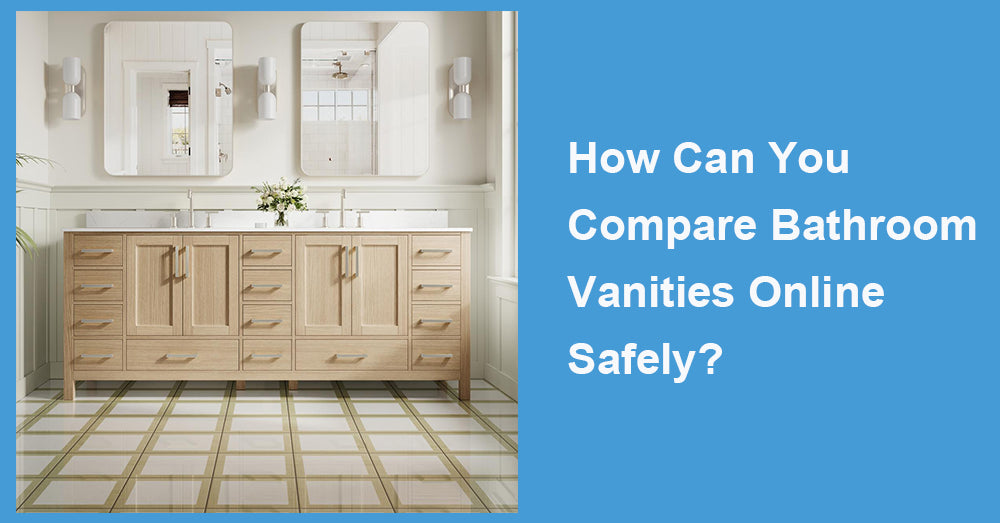
A vanity is the most “used” piece of furniture in a bathroom. It gets splashed, wiped down, opened and closed all day, and exposed to steam that quietly tests every seam. That is why high-quality bath vanities are defined less by a pretty photo and more by what stays stable after months and years of real routines. The best everyday vanities combine measurable build quality (materials, joinery, finish, and hardware) with practical design (storage layout, easy cleaning, and moisture readiness).
1. Quality Starts With the Cabinet Box, Not the Door Front
Many vanities look great from the front and cut costs in the cabinet box. For everyday use, the box is the backbone that keeps everything aligned.
What a high-quality cabinet box does:
· Stays square so doors do not drift and drawers do not rub.
· Supports the countertop load without sagging.
· Holds mounting points securely (especially on larger sizes and floating designs).
What to look for in product details:
· Clear material breakdown for doors, frame, and cabinet box.
· A rigid build with reinforced corners and a strong back panel or mounting rails.
Why it matters: moisture events happen in bathrooms, and some panel products do not recover well once they swell. The Composite Panel Association notes that when particleboard or MDF swells and expands beyond its original dimensions due to high humidity or water exposure, that change is not reversible upon re-drying (Source: Composite Panel Association, “Dimensional Stability of Particleboard and MDF” Technical Bulletin). A box that permanently changes shape is a box that can no longer keep doors and drawers aligned.
2. Materials Matter, But Transparency Matters Even More
“Wood vanity” can mean solid wood, plywood, veneer, or an engineered core with a wood look. High-quality vanities usually earn trust by disclosing what is used where.
A durability-forward material mix often includes:
· Solid wood for doors and face frames (high-touch and hinge-stress zones).
· A stable cabinet box material (often plywood in many quality builds).
· Moisture-resistant interior panels where appropriate.
Also note that even “solid wood” products may include composite components (drawer bottoms, back panels, shelves). Composite wood products are covered under formaldehyde emission standards and labeling expectations (Source: U.S. Environmental Protection Agency, TSCA Title VI composite wood standards). Clear compliance information is not just a health checklist, it is a transparency signal.
3. Joinery and Drawer Construction: The Difference You Feel Every Day
Daily use means thousands of open-and-close cycles per year. Weak joints loosen. Strong joints stay quiet and aligned.
High-quality drawer and frame signals:
· Drawer boxes built with structural joints rather than staples alone.
· Drawer bottoms set into grooves (more stable under load).
· Reinforced face-frame connections.
If you can view close-up photos, look for clean, tight corners and consistent assembly. If you can test in person, pull a drawer out gently and check for wobble. Excess movement early often becomes misalignment later.
4. Finish Quality Is Moisture Protection, Not Just Color
Bathrooms are humid. Even if the vanity never sees a flood, it sees repeated steam cycles. Wood is hygroscopic, meaning it exchanges moisture with the surrounding air, and moisture content changes can influence wood performance (Source: USDA Forest Service, Forest Products Laboratory, “Moisture relations and physical properties of wood”).
Where finishes fail first:
· Sink cutouts under the countertop.
· Plumbing holes in the back panel.
· Toe-kicks and bottom edges near wet floors.
· Door and drawer edges where water sits after handwashing.
A high-quality vanity usually has:
· Even finish on edges and corners.
· Sealed cutouts and protected interior seams.
· A finished interior (not raw, exposed material).
Humidity guidance helps set expectations. EPA guidance commonly recommends keeping indoor relative humidity below 60%, ideally 30% to 50%, to reduce moisture problems and mold risk (Source: U.S. Environmental Protection Agency, moisture and mold guidance). Good ventilation supports the finish and keeps cabinet interiors fresher.
5. Hardware: Quiet Function Is a Quality Feature
For everyday use, hardware can make a vanity feel premium or frustrating.
Modern renovation data shows how widely soft-close has become the norm: 78% choose soft-close drawers and 75% choose soft-close doors (Source: 2025 U.S. Houzz Bathroom Trends Study). Soft-close reduces impact stress, helping hardware and joints last longer.
High-quality hardware signs:
· Soft-close hinges and slides.
· Full-extension drawer slides (better access, less digging).
· Smooth drawer travel with minimal wobble.
· Doors that close evenly with consistent gaps.
Hardware quality is not only the brand of hinge, but also the cabinet’s ability to hold screws and stay square over time.
6. Storage Design: Usable Space Beats “More Space”
Everyday quality depends on whether the vanity prevents countertop clutter.
A strong everyday storage layout includes:
· At least two drawers for daily items (skincare, grooming tools).
· A deeper drawer or cabinet zone for bulk items.
· Plumbing-friendly drawer cutouts or pull-out trays so under-sink space is usable.
Even small add-ons can matter. Renovation feature data highlights organizers as popular practical upgrades (Source: 2025 U.S. Houzz Bathroom Trends Study). Drawers with dividers reduce the “pile effect” that makes a vanity feel messy even when it has enough volume.
7. Fit and Planning: A Great Vanity Can Fail in a Bad Layout
A vanity can be high quality and still be a bad everyday experience if it blocks movement.
What to confirm:
· Door and drawer clearances near the toilet or shower.
· Depth and walkway space, especially in narrow bathrooms.
· Plumbing alignment and back-panel access.
· Whether the vanity is freestanding or wall-hung and what installation support is required.
If you are planning a tight layout, the NKBA Bath Planning Guidelines provide minimum clearances that can help avoid regrets, such as at least 21 in. in front of fixtures and other spacing recommendations (Source: NKBA Bath Planning Guidelines). Choosing a vanity that respects these clearances protects daily comfort.
8. Maintenance and Longevity: The Everyday Habits That Protect Quality
Even the best vanity benefits from basic care:
· Run the exhaust fan during showers and for 15 to 30 minutes after.
· Wipe standing water around the sink edge.
· Fix slow leaks quickly.
· Re-caulk failing seams at the backsplash and sink edge.
These habits support the humidity targets of keeping indoor RH below 60%, ideally 30% to 50% (Source: U.S. EPA). They also reduce the risk of irreversible swelling in moisture-sensitive panel cores (Source: Composite Panel Association).
9. A Practical “Everyday Quality” Checklist
If you want a quick scorecard, use this:
Construction
· Rigid cabinet box, reinforced corners, strong back/mounting rails.
· Clear material disclosure for doors, frame, and box.
Finish
· Sealed edges and cutouts, finished interior surfaces.
Hardware
· Soft-close doors and drawers, smooth slides, consistent door gaps (Source: 2025 U.S. Houzz Bathroom Trends Study).
Storage
· Drawer-forward layout, usable under-sink space, organizers.
Moisture readiness
· Ventilation plan to keep humidity below 60%, ideally 30% to 50% (Source: U.S. EPA).

Conclusion
High-quality bath vanities for everyday use are defined by what stays stable under daily stress: a strong cabinet box, transparent materials, durable joinery, sealed finishes, and hardware that remains smooth and aligned. Data shows soft-close features are now widely adopted in renovations (78% drawers, 75% doors), reflecting how important quiet, impact-reducing function has become (Source: 2025 U.S. Houzz Bathroom Trends Study). Combine those build details with humidity control targets (below 60%, ideally 30% to 50%) and you get a vanity that feels good daily, resists moisture wear, and avoids the irreversible swelling risks seen in some panel products (Source: U.S. Environmental Protection Agency; Source: Composite Panel Association; Source: USDA Forest Service, Forest Products Laboratory).











Leave a comment
This site is protected by hCaptcha and the hCaptcha Privacy Policy and Terms of Service apply.