














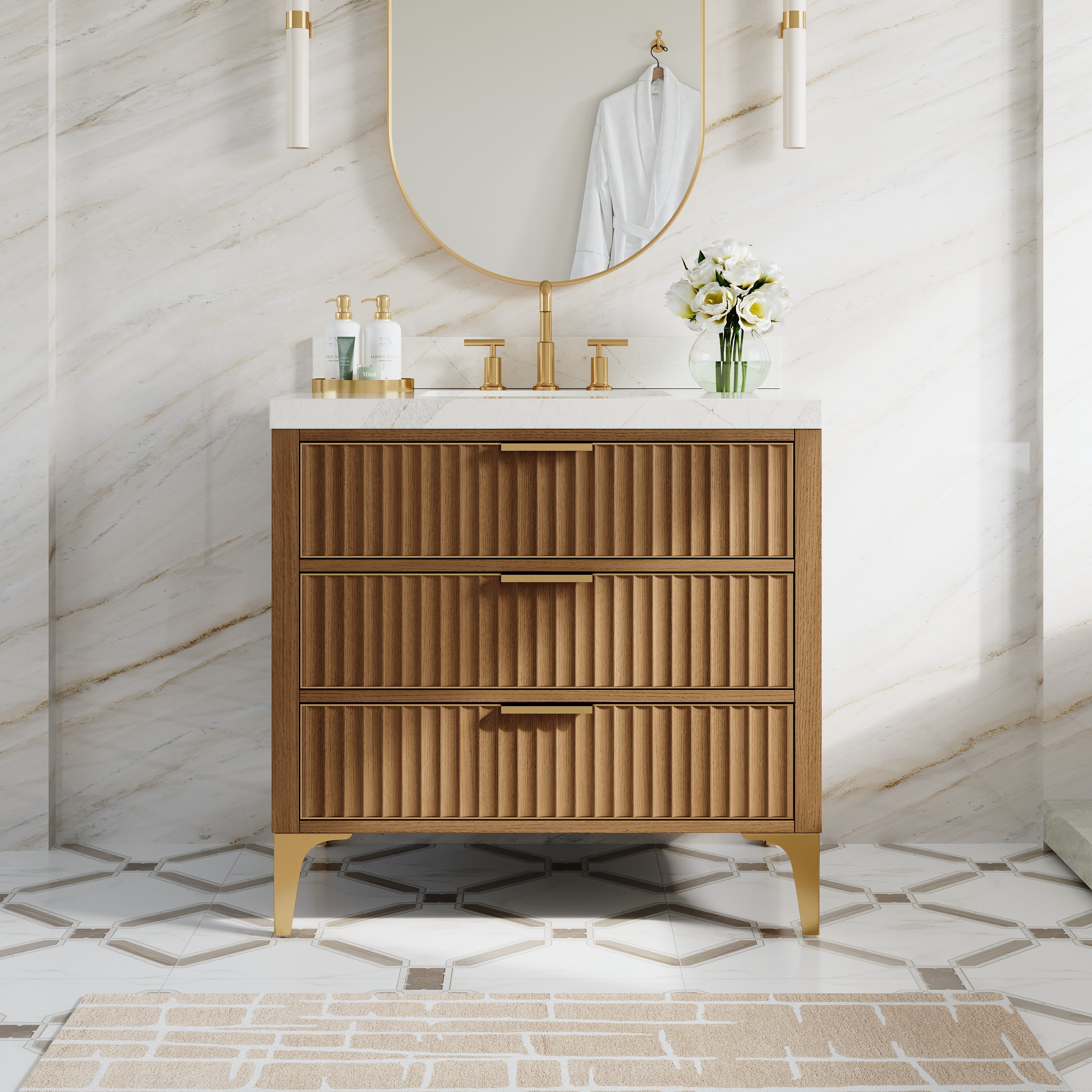
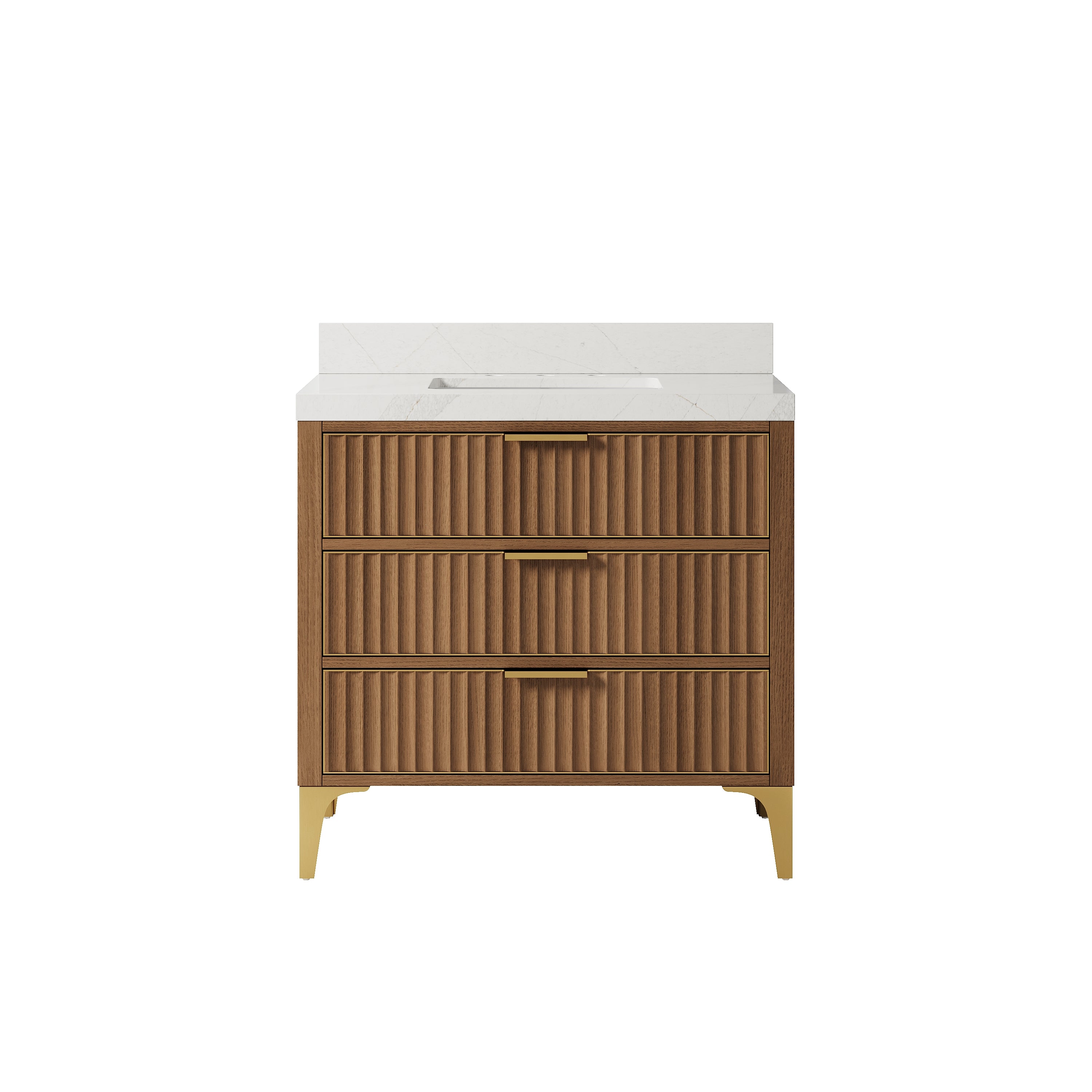
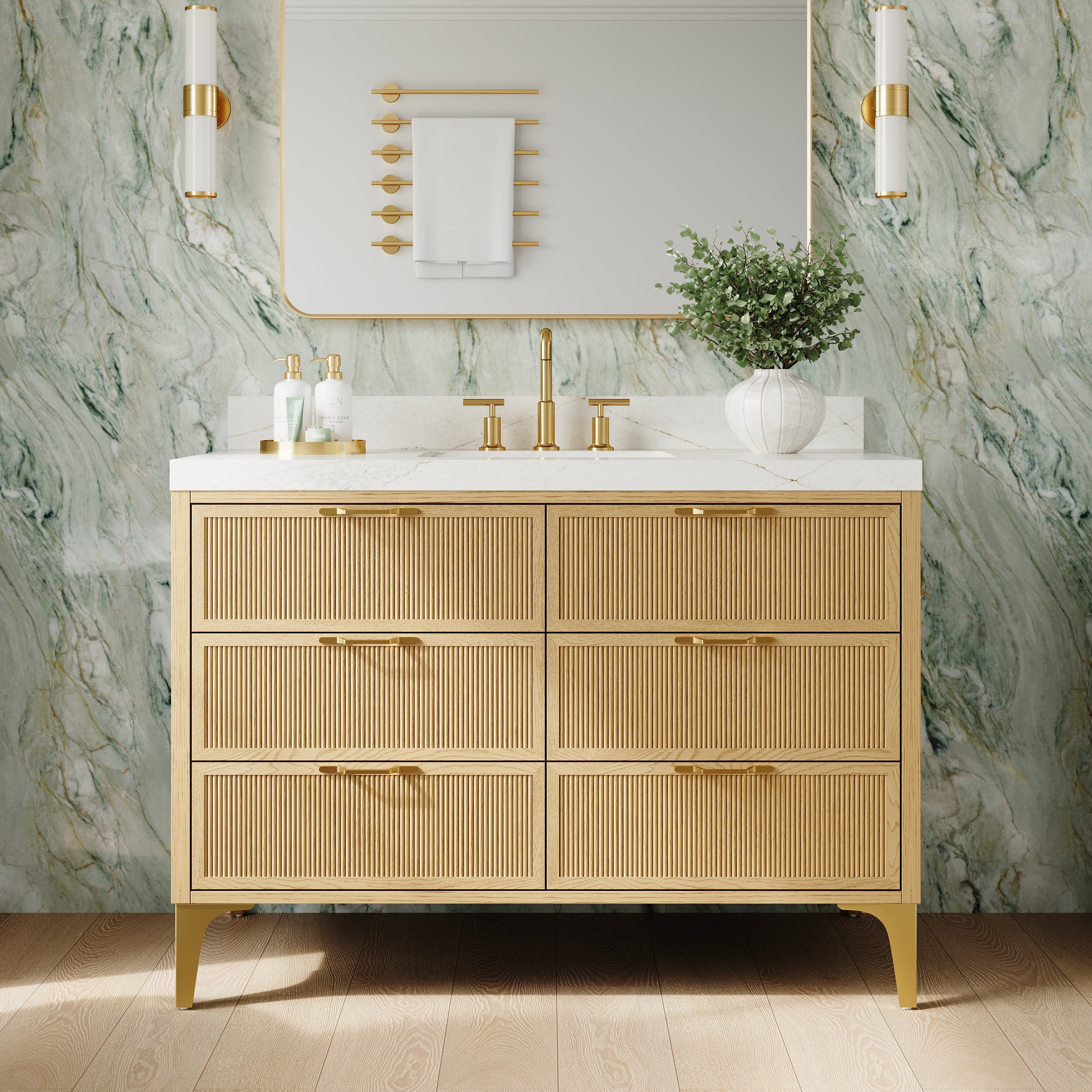
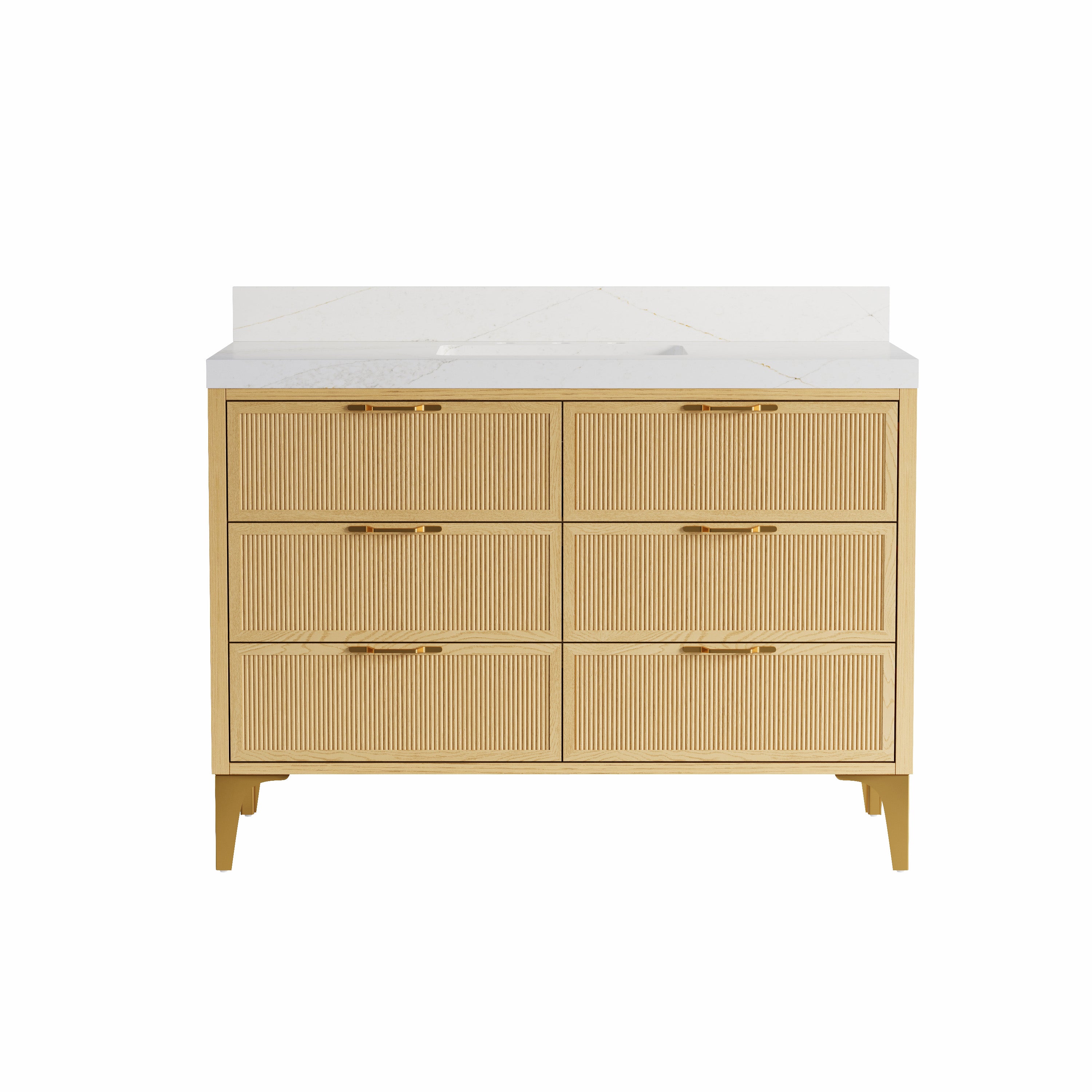


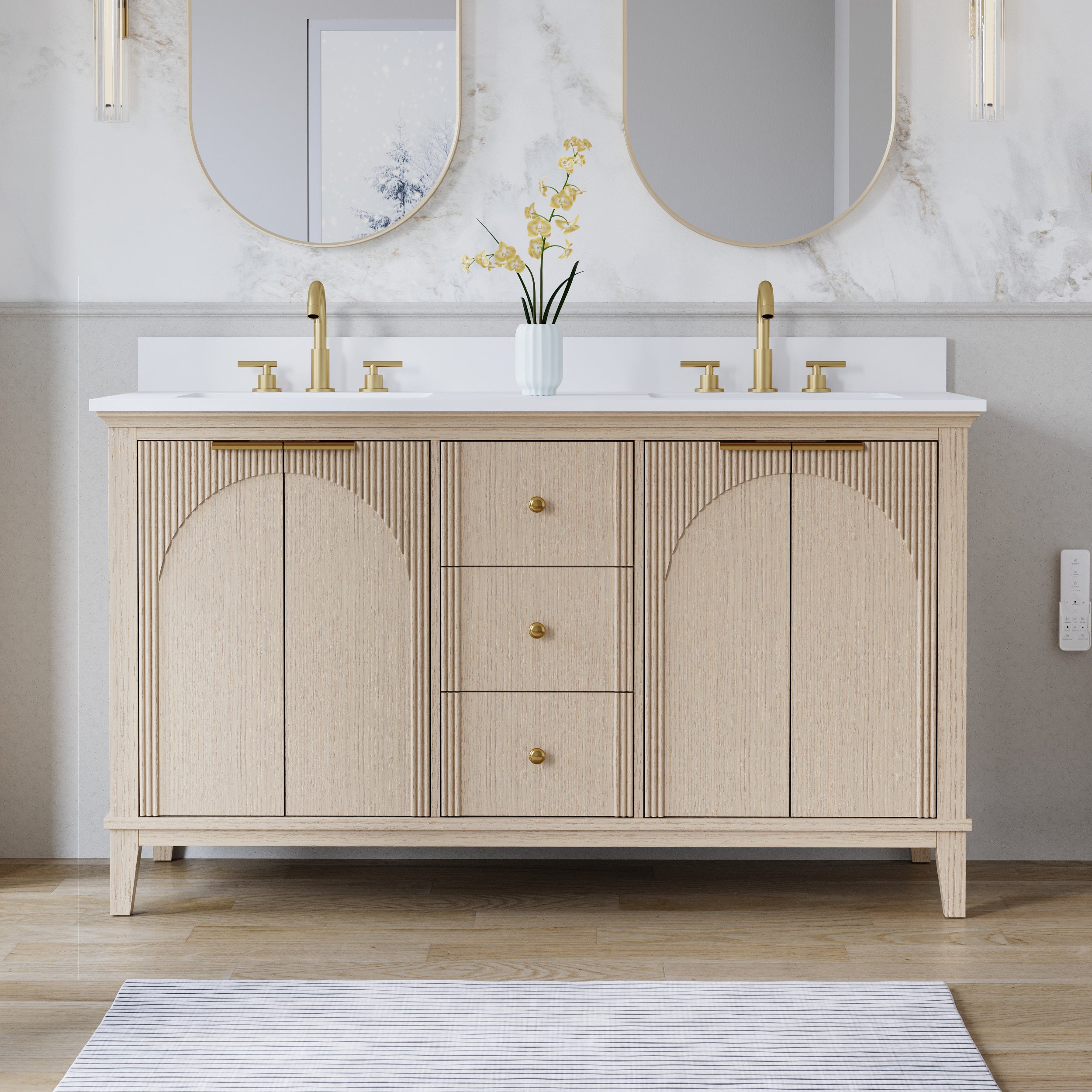
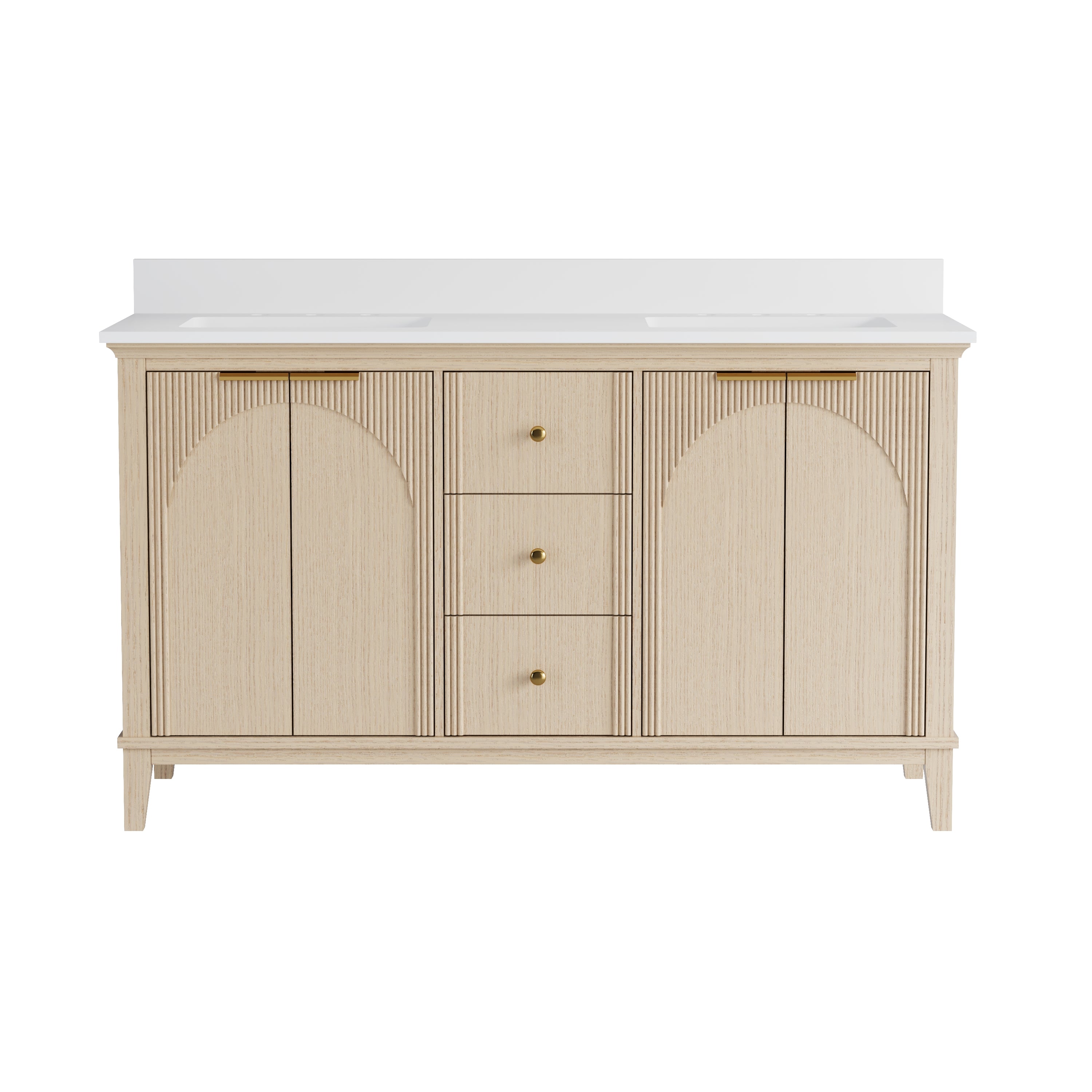
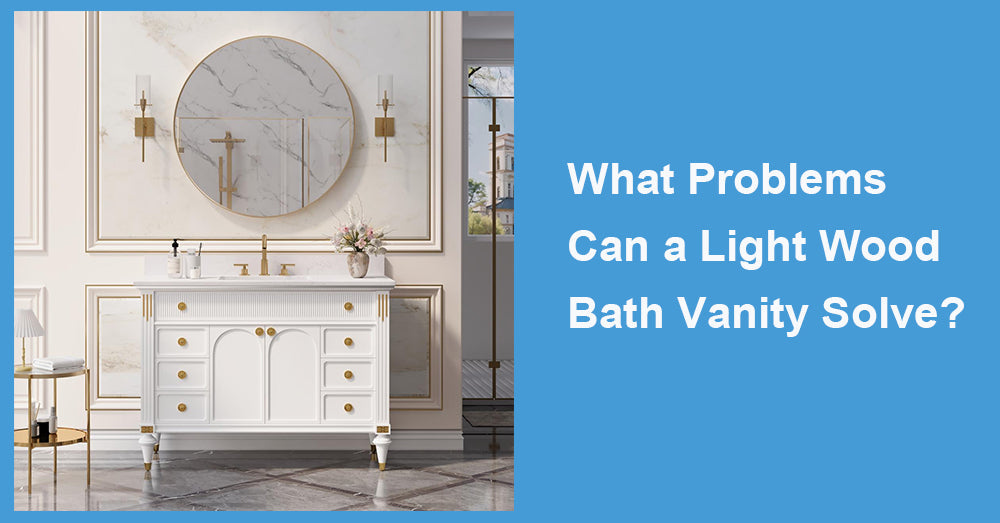
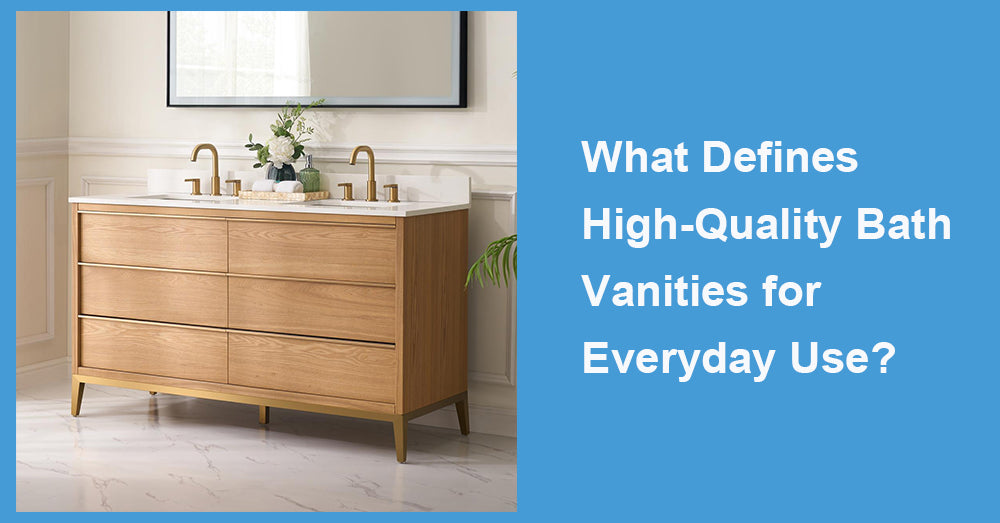
A light wood bath vanity can solve more than a style question. In many bathrooms, the real problems are practical: the room feels smaller than it is, the countertop collects clutter, and dark finishes make limited light feel even dimmer. Light wood addresses those pain points by reducing visual weight, adding warmth without heaviness, and pairing easily with the most common countertop direction in renovations. In fact, wood tones are the most frequently chosen vanity color, and lighter wood shades make up a meaningful share of those choices.
1. Problem: A Small Bathroom Feels Tight and Boxy
How light wood helps: It creates “visual space.”
In compact bathrooms, the vanity often occupies the biggest visual block in the room. Dark vanities can anchor a space, but in tight layouts they can also make the lower half of the room feel heavier. Light wood softens that effect by blending more gently with floors and walls, which can make the room feel more open even when the footprint stays the same.
This matters because one of the most common bathroom sizes is 5 ft by 8 ft, a layout that typically fits a single sink, a toilet, and a shower or tub-shower combination. In spaces like this, anything that reduces visual bulk helps the room feel more comfortable.
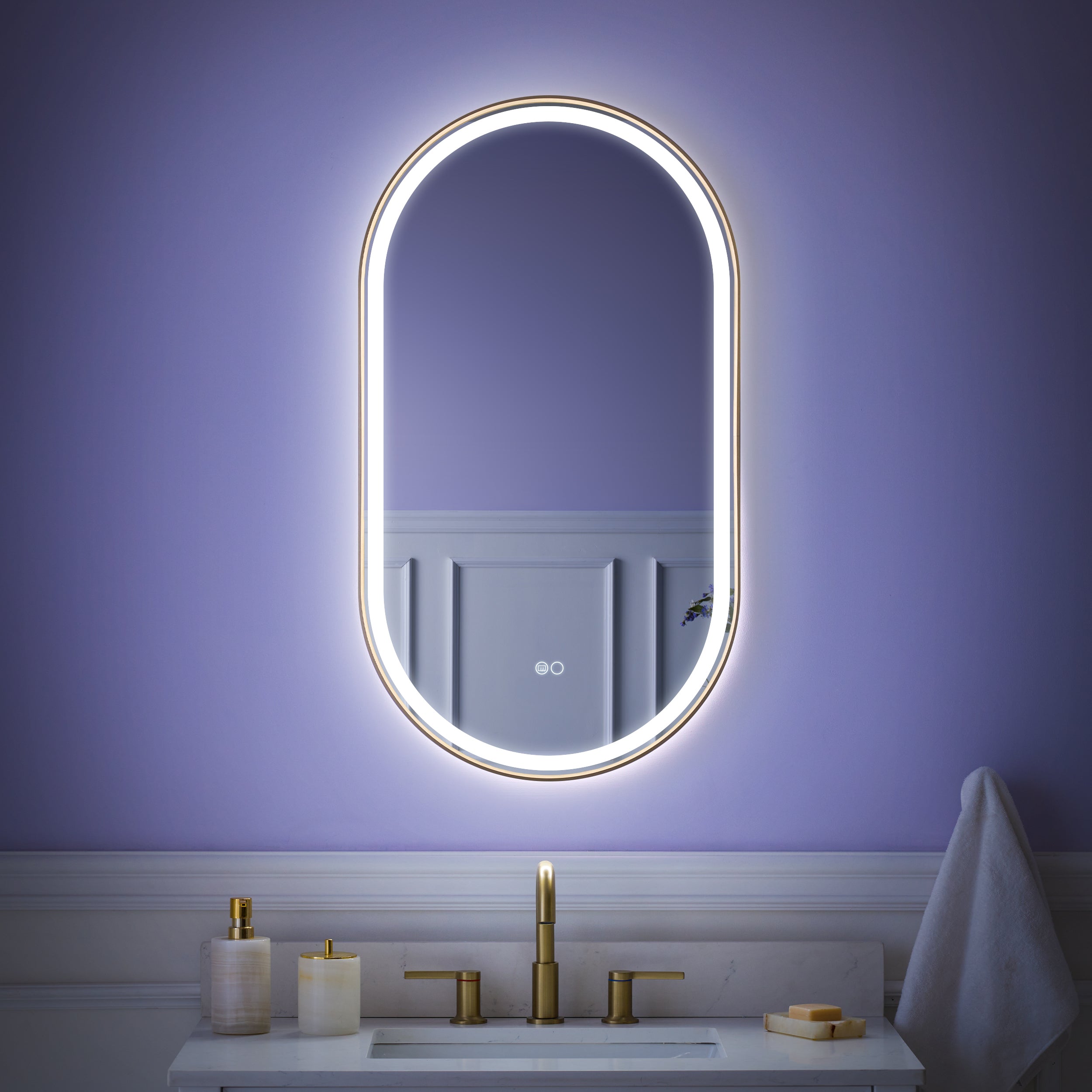
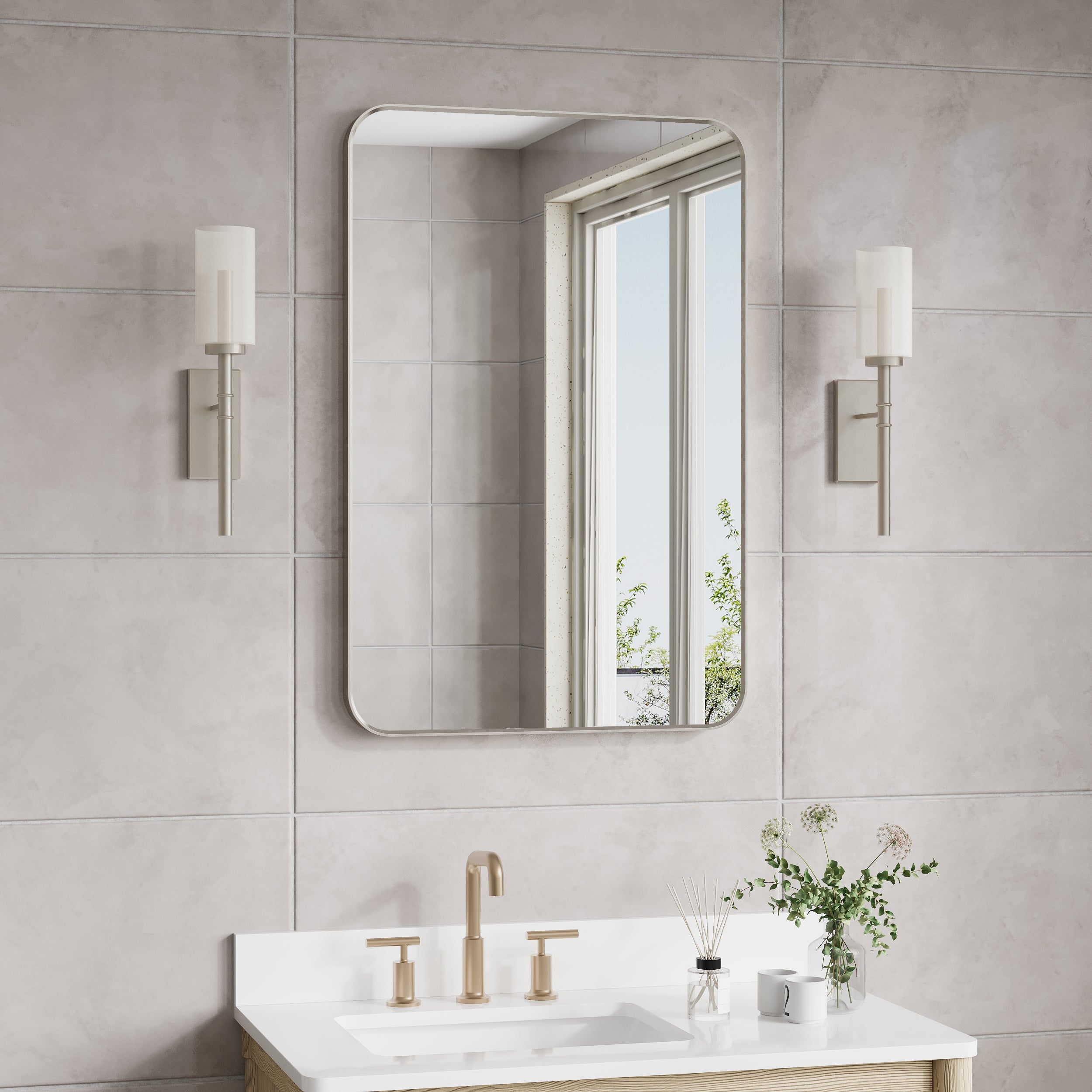
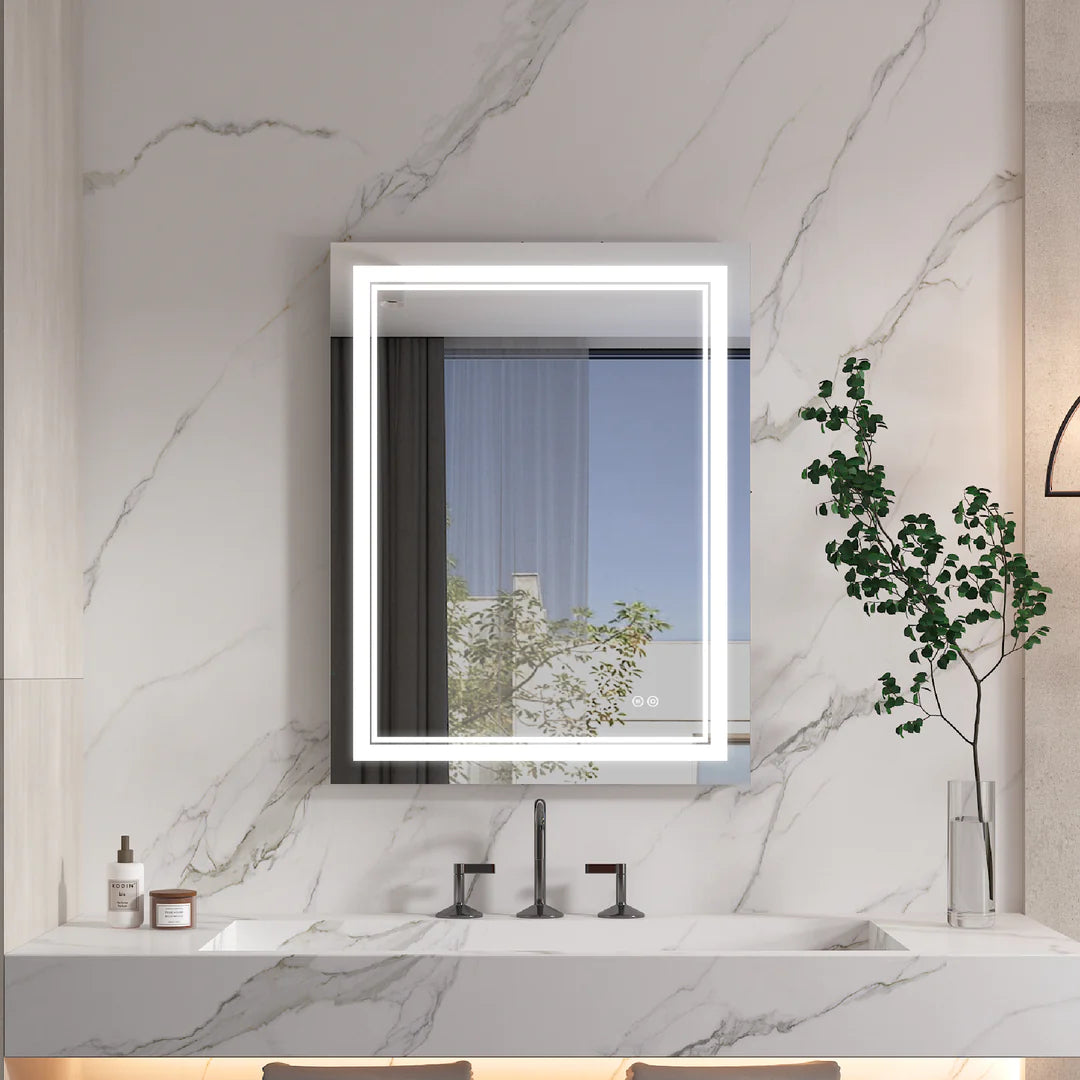
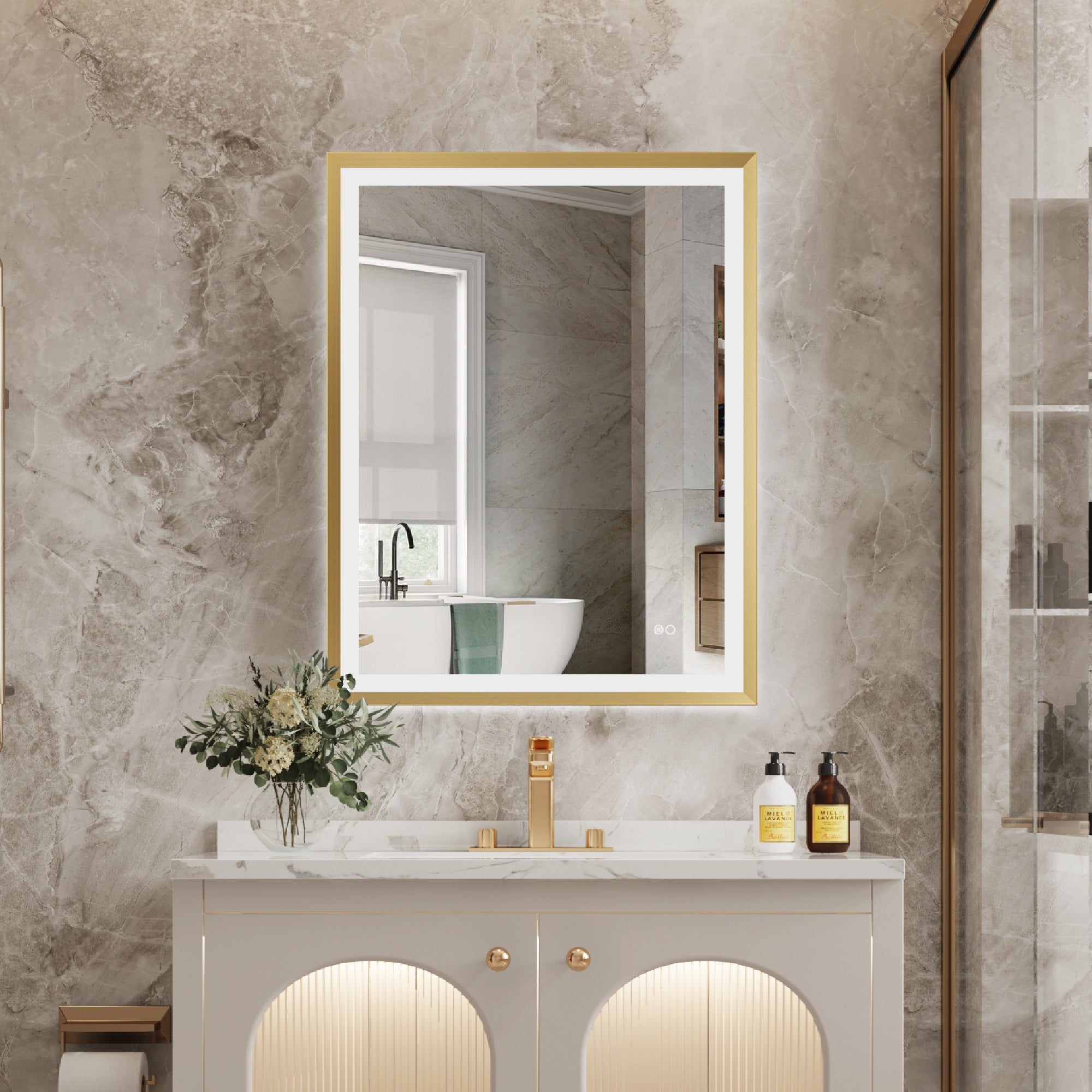
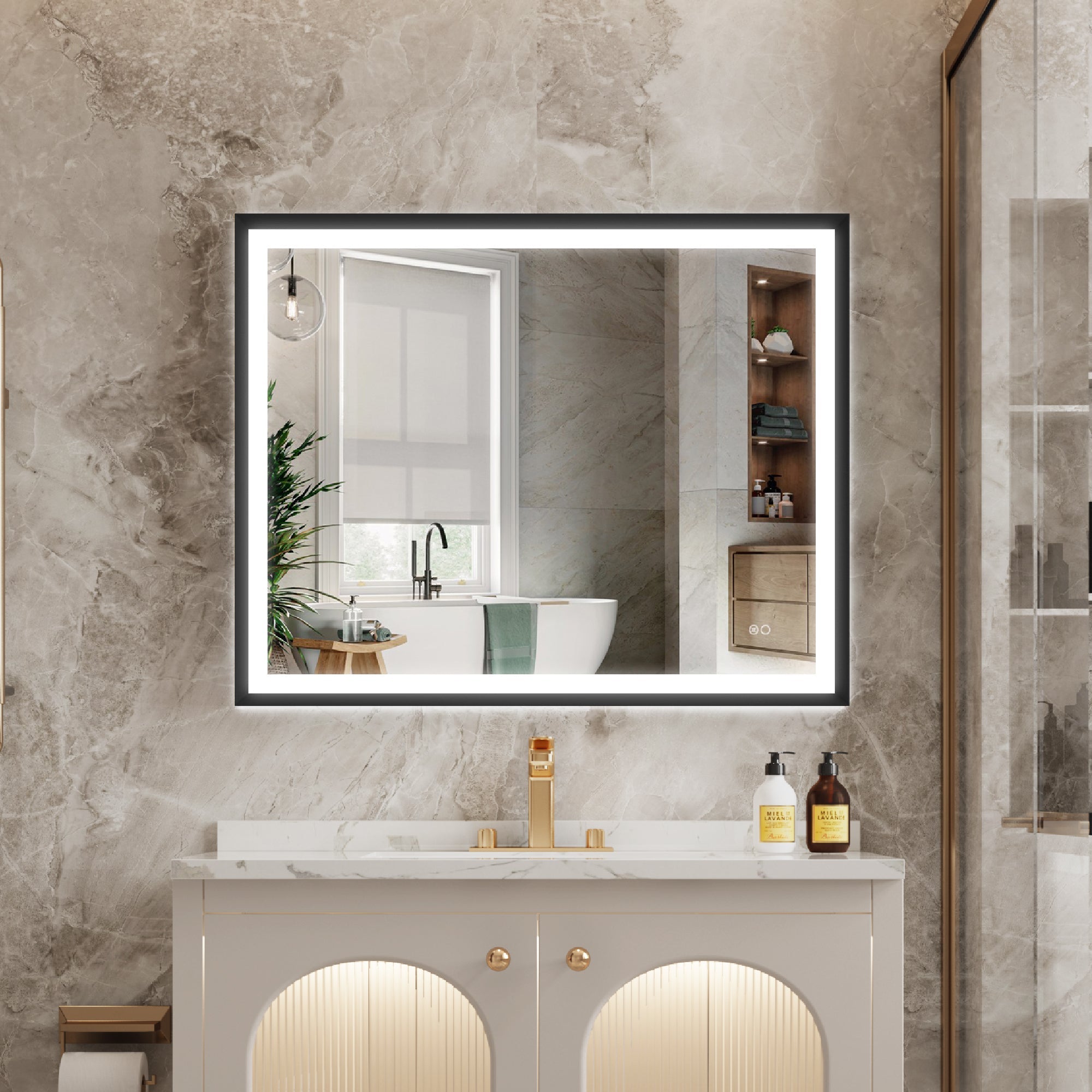
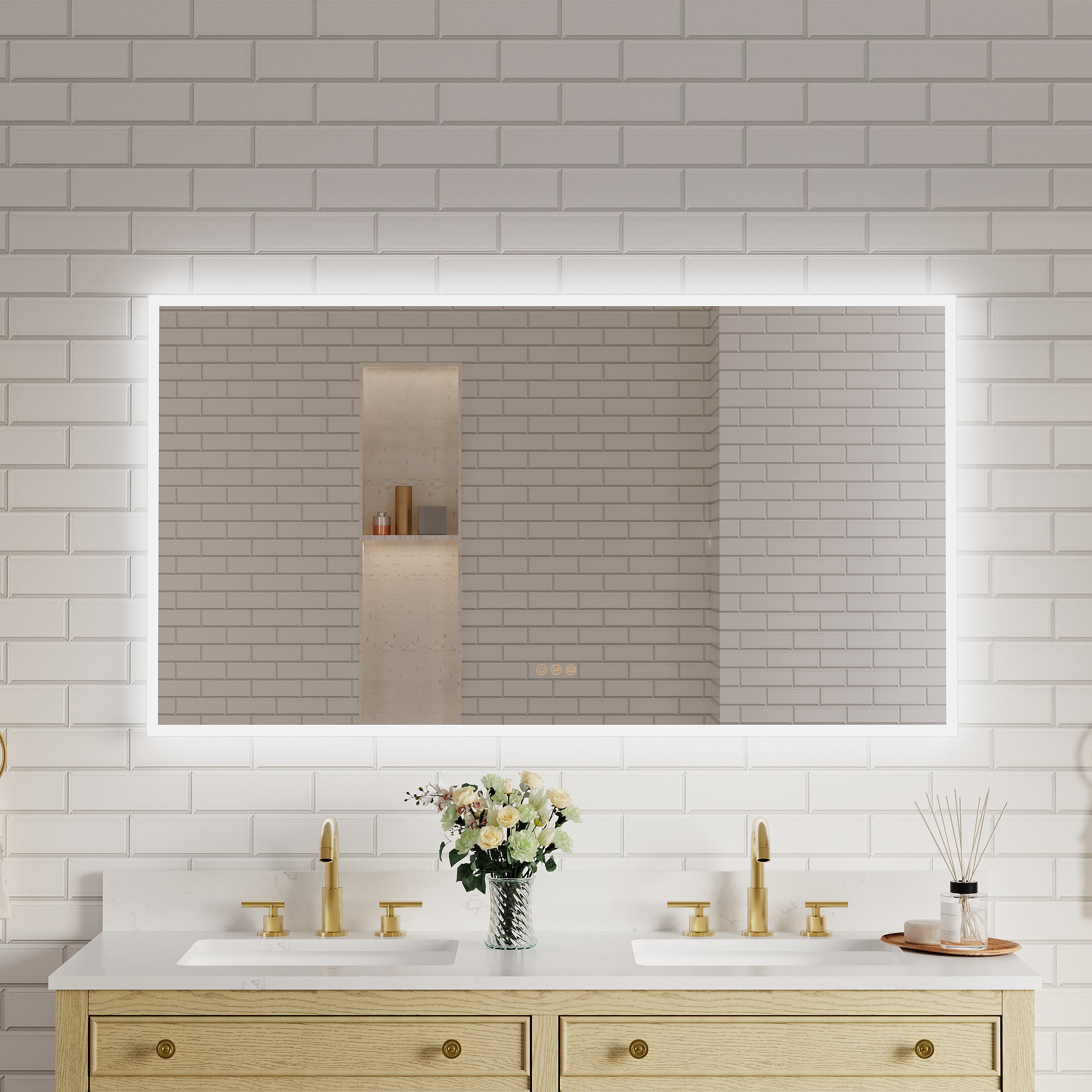
Practical styling move: pair a light wood vanity with a simple mirror and minimal hardware finishes so the vanity reads as “calm” rather than “busy.”
2. Problem: The Room Lacks Warmth, but White-Only Feels Sterile
How light wood helps: It adds warmth without darkening the space.
Many bathrooms rely on white tile, white paint, and bright fixtures to feel clean. But an all-white scheme can feel flat. Light wood introduces texture and warmth while keeping the brightness that small rooms need. This is one reason wood tones continue to lead vanity color choices, and lighter wood shades are repeatedly highlighted in renovation reporting.
3. Problem: Countertops Look Messy Fast
How light wood helps: It supports a clean, high-contrast surface pairing.
Countertops are where clutter shows up first: toothbrushes, skincare, soap dispensers, hair tools. A light wood base pairs naturally with a light countertop, especially white, which remains the most common countertop color choice in renovated bathrooms.
A clean pairing can make daily mess feel less chaotic because:
· the counter surface stays visually consistent,
· the vanity base adds warmth without competing with the items on top,
· the overall palette makes “less stuff on the counter” feel more achievable.
4. Problem: Storage Exists, but It Is Not Usable
How light wood helps: The finish is not the storage solution, but this vanity style is often sold in the most storage-efficient layouts.
In small bathrooms, the difference between “I have storage” and “my bathroom stays tidy” is usually drawer usability. Renovation data shows soft-close mechanisms are prevalent, with 78% choosing soft-close drawers and 75% choosing soft-close doors.
Why this solves real problems:
· drawers reduce the need to stack and dig through a deep cabinet,
· soft-close reduces slamming and wear over time,
· smoother daily use encourages people to actually put things away.
What to look for:
· full-extension drawers,
· a top drawer design that accounts for plumbing,
· organizers for small items.
5. Problem: The Bathroom Feels Dark Even With Decent Lighting
How light wood helps: It reflects and “shares” light better than dark finishes.
Light wood finishes tend to keep rooms from feeling bottom-heavy. In bathrooms with one small window or no window, that matters because the vanity sits below the light sources and can visually “absorb” or “reflect” brightness depending on finish. Light wood helps maintain an airy look without relying on glossy, fingerprint-prone surfaces.
If you want to push this further, a floating (wall-hung) version can help visually by showing more floor, but the core effect still comes from the lightness of the finish and the simplicity of the overall palette.
6. Problem: The Vanity Looks Good at First, Then Ages Poorly
How light wood helps: It can hide certain wear patterns better, and it is often easier to refresh if built from real wood components.
Everyday wear shows up around pulls, drawer edges, and sink splash zones. Light wood often disguises small dust and water spots better than high-gloss dark finishes. More importantly, if the vanity uses real wood components, surface wear can often be touched up more gracefully than a thin “wood-look” film.
Still, longevity depends on construction. The biggest failure points in bathrooms are edges and bases, not the center of a door panel.
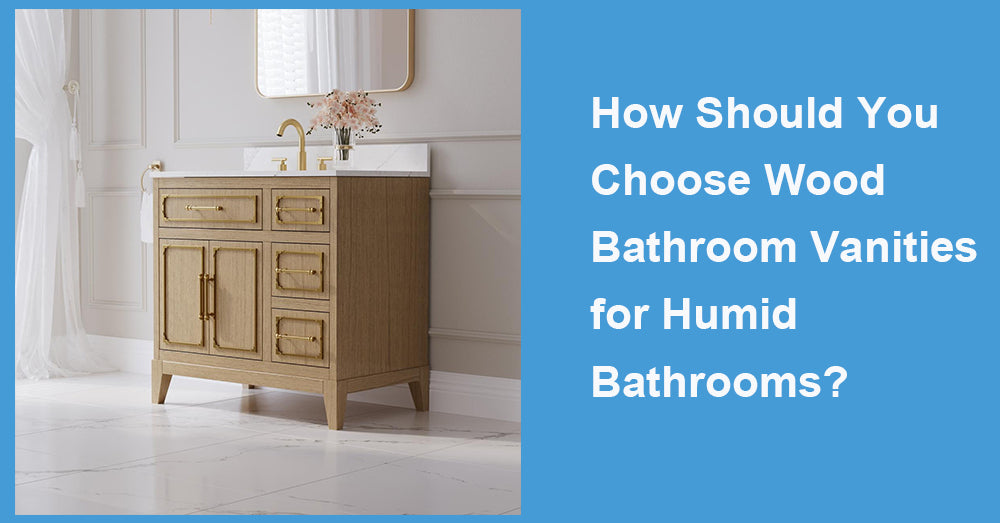
7. Problem: Humidity and Water Exposure Create Swelling, Odors, and Finish Failure
How light wood helps: Only when the construction and sealing are humidity-aware.
A light wood finish does not automatically mean it is “bathroom safe.” The real performance difference is in the cabinet box material, edge sealing, and ventilation habits.
Humidity target that protects cabinetry: EPA guidance recommends keeping indoor humidity between 30% and 50%.
Why cabinet materials matter: if a vanity uses particleboard or MDF in moisture-exposed areas, swelling can become permanent. The Composite Panel Association notes that when particleboard or MDF swells and expands beyond its original dimensions due to exposure to high humidity, it is not reversible upon re-drying.
What to check on any light wood vanity:
· sealed sink cutouts and plumbing openings,
· protected bottom edges and toe-kick,
· finished interior surfaces,
· clear materials disclosure for doors, frame, and box.
8. Problem: Style Feels “Dated” Too Quickly
How light wood helps: It sits in a timeless zone between modern and classic.
A light wood vanity typically works across multiple design directions:
· modern: flat-panel doors, minimal pulls,
· transitional: simple shaker fronts, warm metals,
· spa-inspired: light wood + white surfaces + soft lighting.
Because it is neither very dark nor very high-contrast, it is easier to keep the room feeling current with small updates (mirror, lighting, hardware) instead of needing a full remodel.
9. Problem: Busy Homes Need Bathrooms That Stay Calm
How light wood helps: It supports a “quiet” palette and encourages better organization.
Clutter is not just about storage volume, it is about friction. When the vanity is easy to use and drawers close smoothly, it is easier to maintain routines. Soft-close adoption rates reflect how strongly people value quieter, smoother function in real bathrooms.
Pair that with a light wood finish and the room feels calmer even when it is used heavily.
A Quick Checklist: Choose a Light Wood Vanity That Actually Solves These Problems
1. Right scale for the room
In a 5 ft by 8 ft bathroom, protect movement first and then maximize storage.
2. Drawer-forward storage
Soft-close drawers and doors are strong usability signals.
3. Countertop pairing
White countertops are the most common choice in renovated bathrooms, and they pair naturally with light wood.
4. Humidity plan
Aim for 30% to 50% indoor humidity, and keep moisture from lingering.
5. Moisture-smart construction
Avoid moisture-sensitive cabinet bases where possible, since swelling in particleboard or MDF can be non-reversible after high humidity exposure.

Conclusion
A light wood bath vanity can solve the problems that most small or busy bathrooms struggle with: rooms that feel tight, spaces that feel cold, countertops that collect clutter, and finishes that look heavy or dated too quickly. Renovation data shows wood tones remain the leading vanity color choice, with lighter wood shades forming a notable portion of that preference. When paired with a bright countertop and drawer-forward storage, it becomes a practical upgrade, not just a pretty one. Add humidity control targets and moisture-smart construction, and light wood becomes a long-term solution for both style and daily life.









Leave a comment
This site is protected by hCaptcha and the hCaptcha Privacy Policy and Terms of Service apply.