














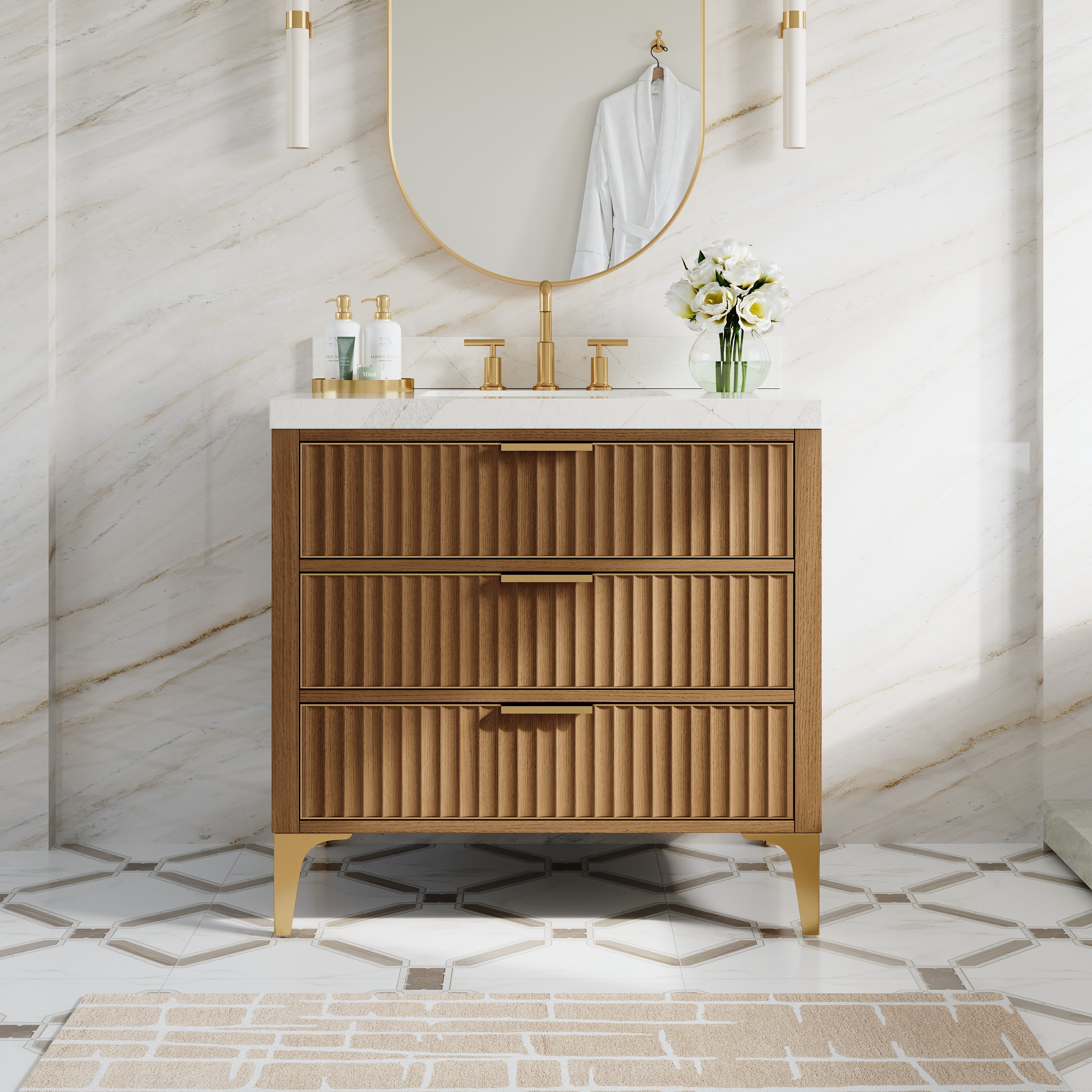
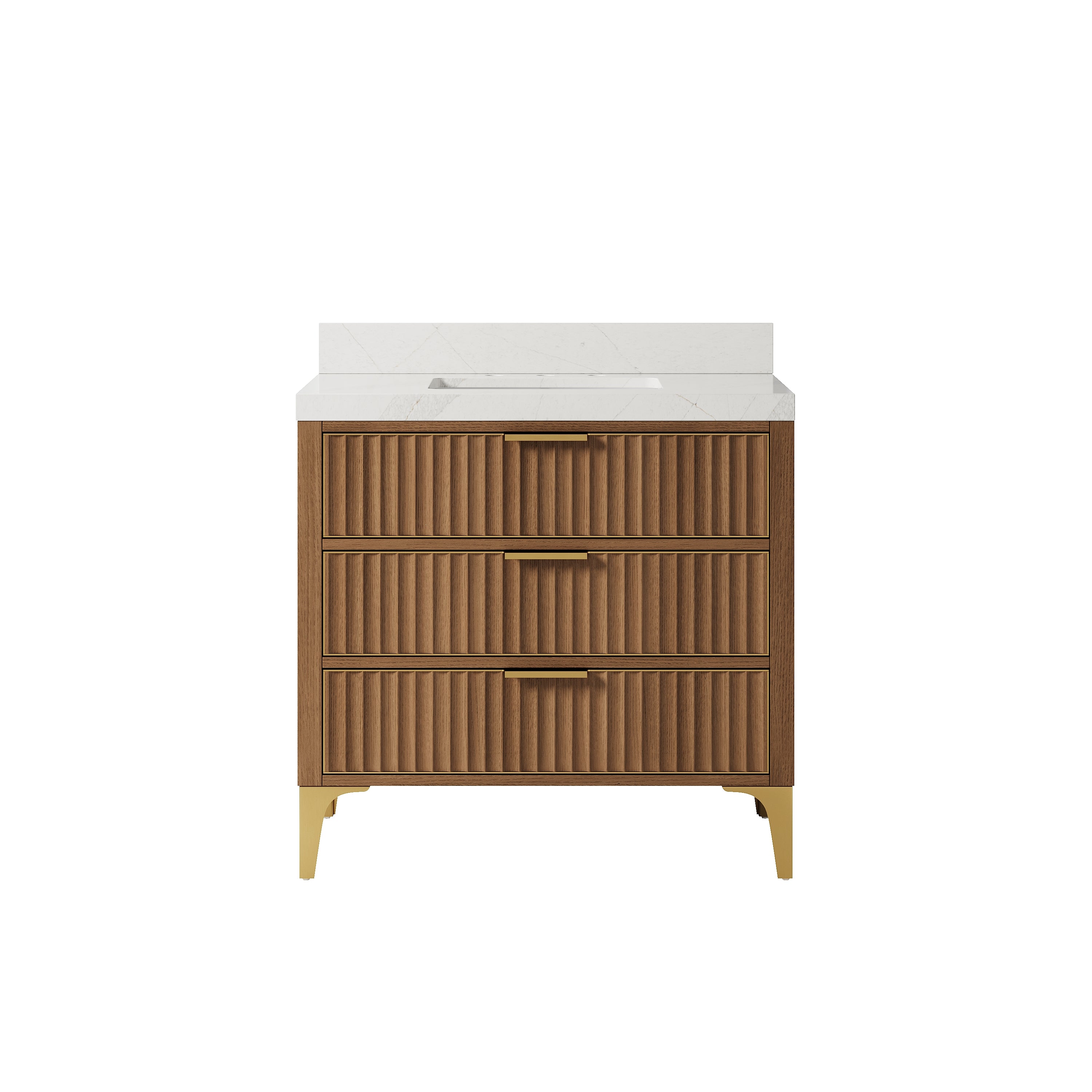
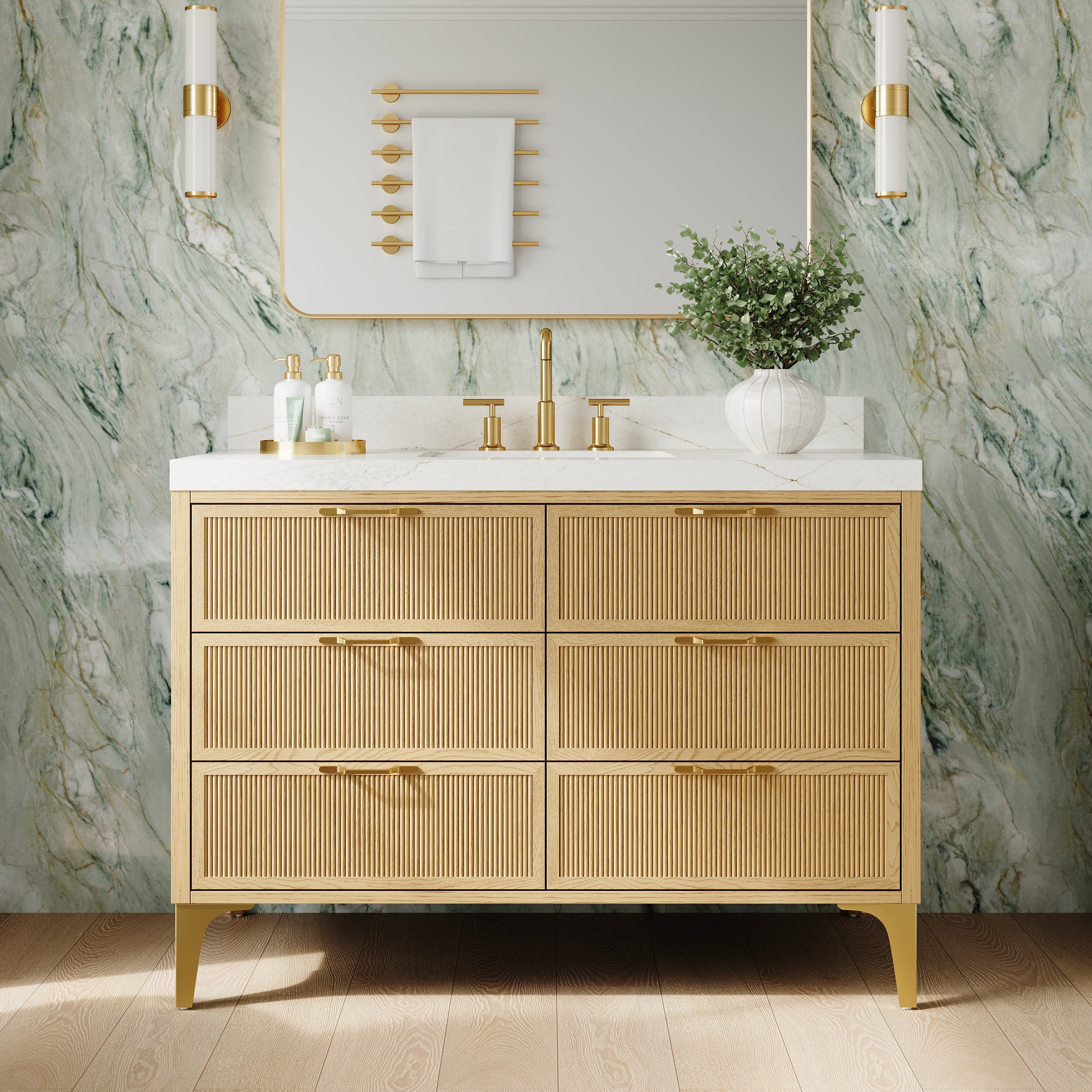
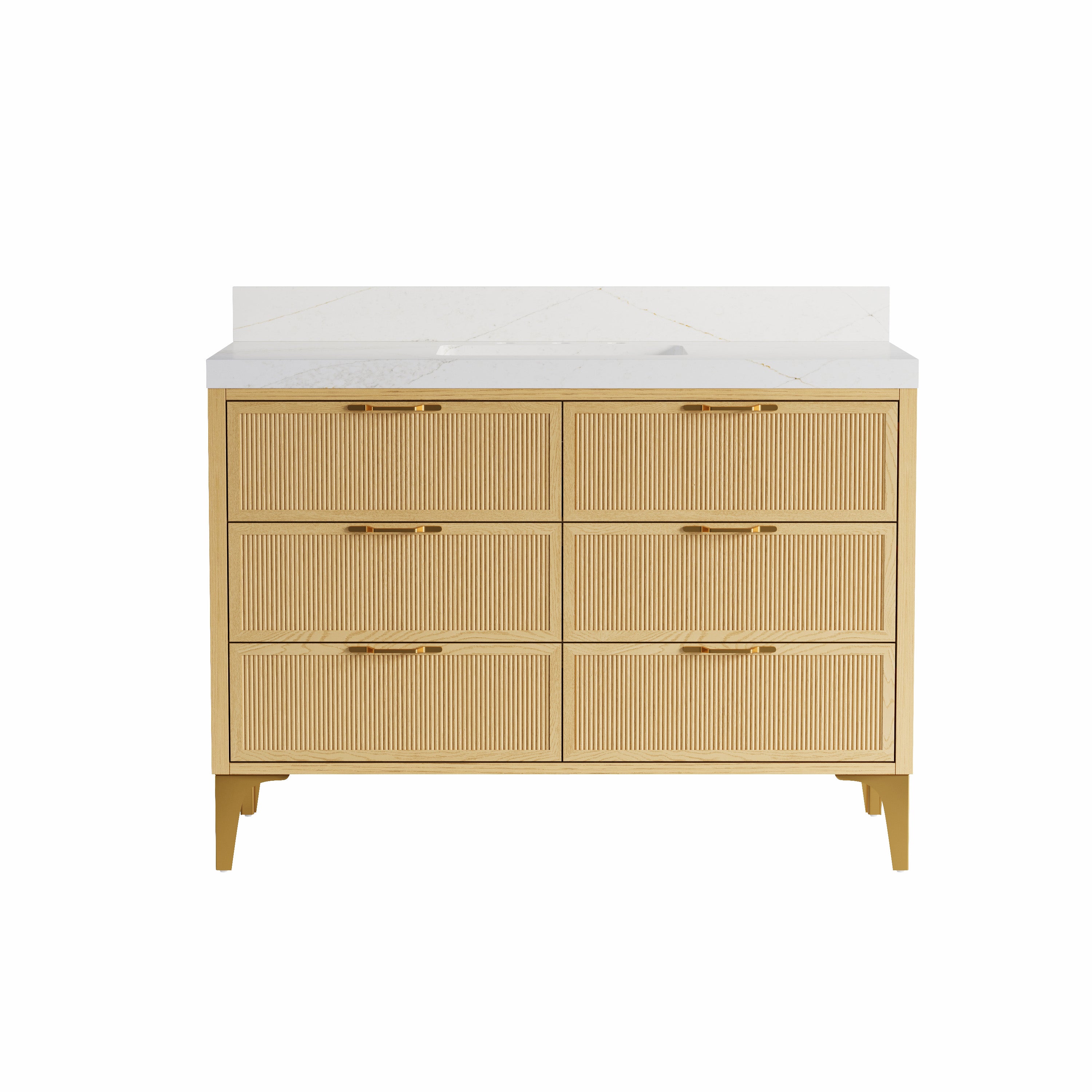


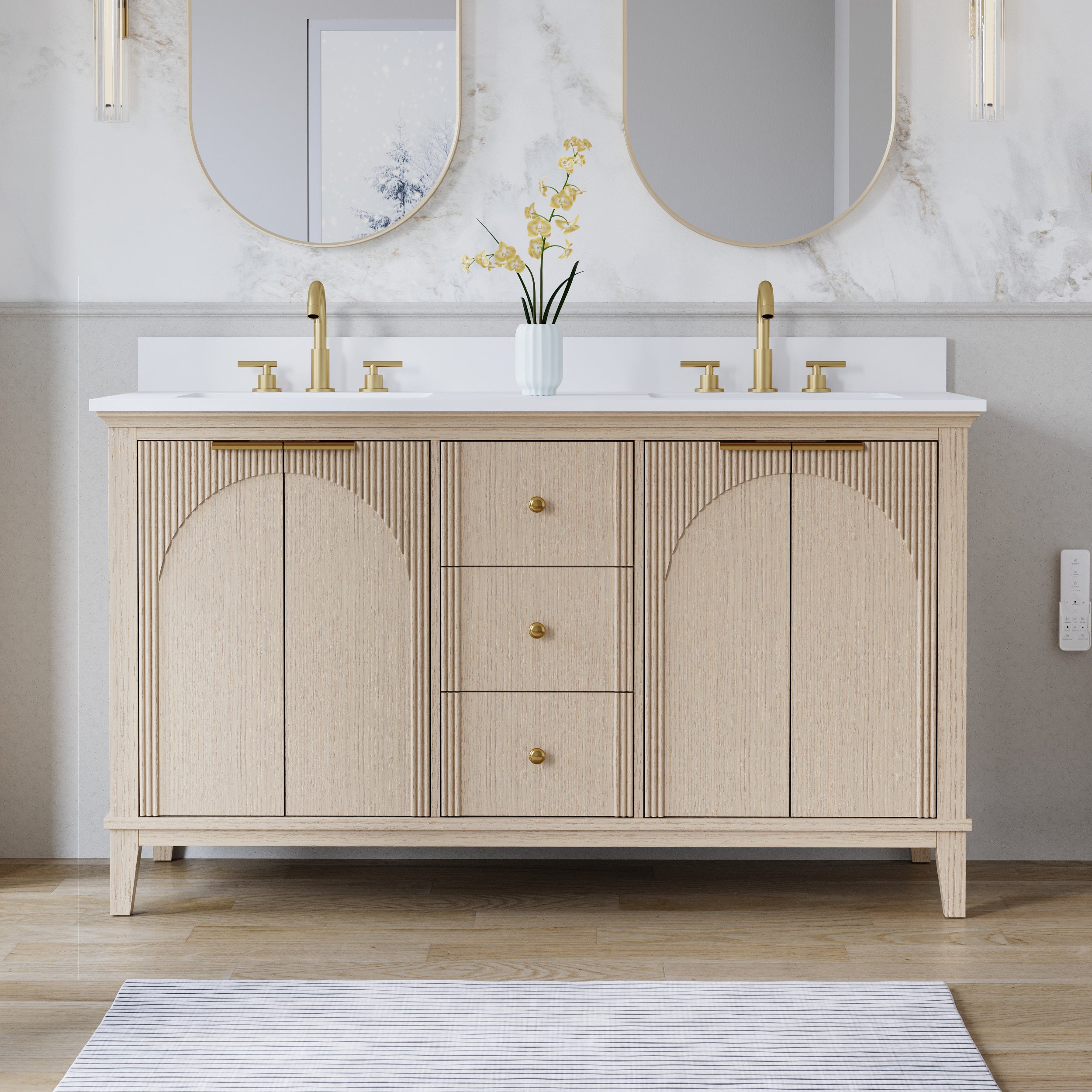
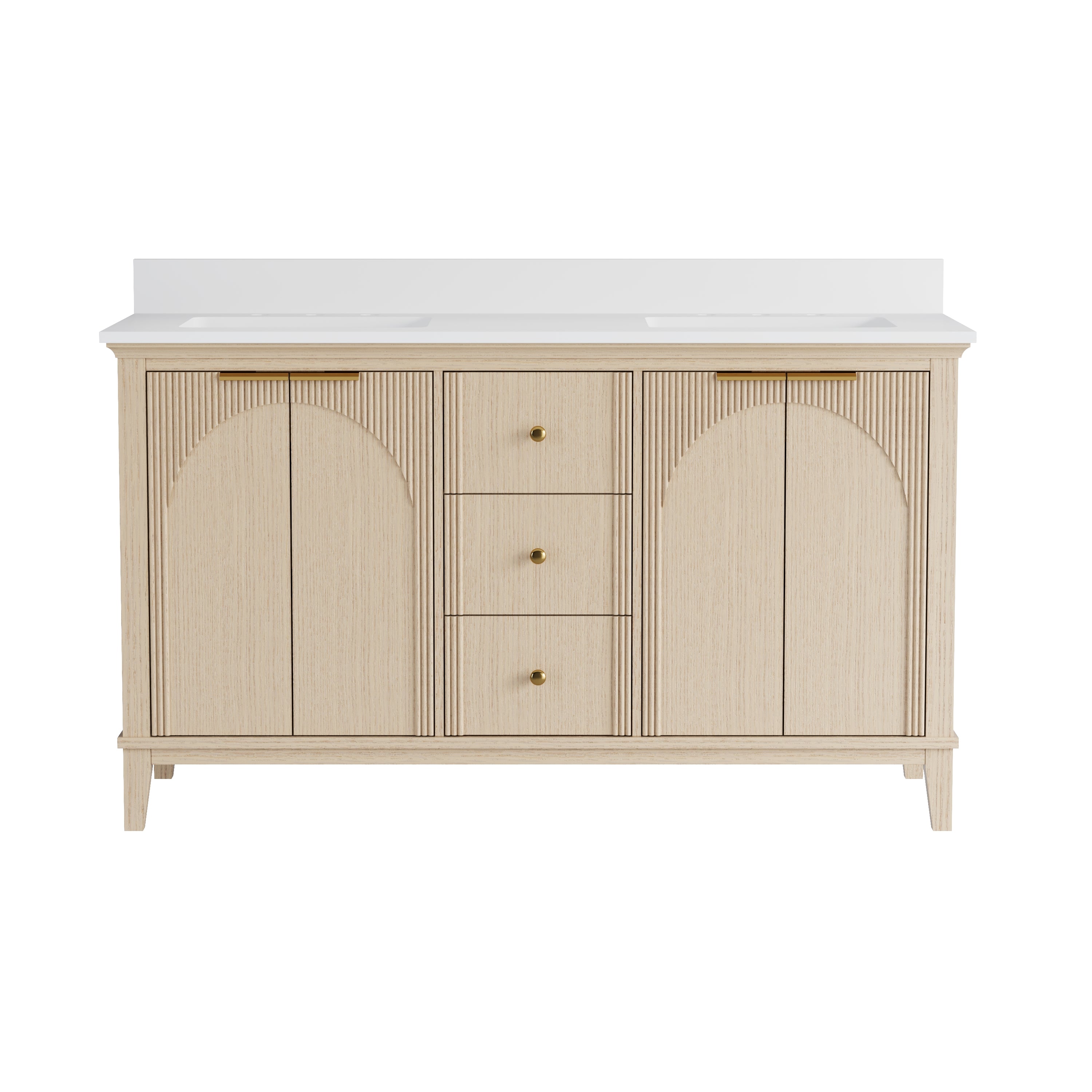
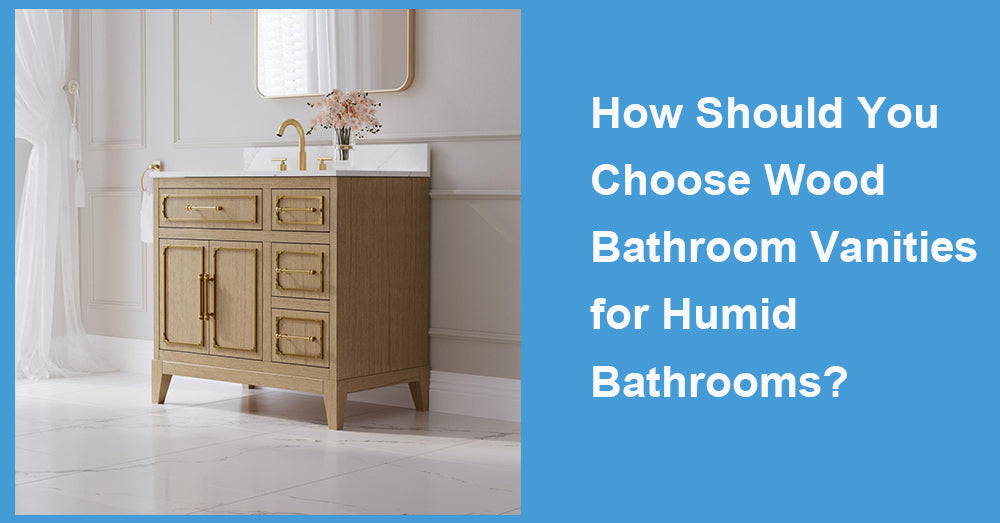
Humid bathrooms can be demanding, but wood bathroom vanities can still be an excellent choice when you select the right construction and plan for moisture control. Wood adds warmth and a furniture-like feel, and solid wood components are often serviceable over time. The key is buying a vanity designed for humidity: stable structure, fully sealed surfaces, and hardware that stays aligned through daily steam cycles.
1. Start With Humidity Reality, Not Just Style
Wood naturally exchanges moisture with the surrounding air, which can influence how it moves and performs over time (Source: USDA Forest Service, Forest Products Laboratory, Wood Handbook, “Moisture relations and physical properties of wood”). In a bathroom, that means the vanity needs both good design and a reasonable humidity plan.
A practical benchmark is indoor relative humidity. EPA guidance commonly recommends keeping indoor humidity below 60%, ideally around 30% to 50%, to reduce moisture problems and mold risk (Source: U.S. Environmental Protection Agency, mold and moisture guidance). If your bathroom stays steamy for long periods after showers, any vanity will age faster, regardless of material.
2. Choose Construction That Stays Stable in Moisture
“Wood vanity” can mean many things. In humid rooms, construction matters more than marketing labels.
Best-performing structure for humidity
· Solid wood doors and face frame (where hinges and daily impacts concentrate).
· A stable cabinet box (often plywood in higher-quality builds).
· Reinforced mounting rails (especially important for floating vanities).
Why this matters: MDF and particleboard can swell when exposed to high humidity or water. The Composite Panel Association notes that when MDF or particleboard swells and expands beyond its original dimensions due to high humidity or water exposure, that swelling is not reversible upon re-drying (Source: Composite Panel Association, “Dimensional Stability of Particleboard and MDF” Technical Bulletin). This is why toe-kicks and cabinet bottoms are common failure points in damp bathrooms.
3. Prioritize Finish Quality and Edge Sealing
In humid bathrooms, the finish is not just cosmetic. It is moisture protection.
Where failures usually start:
· Sink cutout underside and the countertop edge line.
· Plumbing openings in the back panel.
· Toe-kick and cabinet bottom edges near wet floors.
· Door and drawer edges where water sits after handwashing.
What to look for:
· A finished interior, not just a painted front.
· Sealed cutouts and consistent coating in corners.
· Smooth, even finish on edges (no thin, chalky, or raw-feeling areas).
If you can open the doors and see unsealed wood around cutouts or corners, expect faster wear in humid conditions.
4. Pick Hardware That Reduces Wear in a Busy Bathroom
Humidity is not the only stress. Families slam drawers. Guests tug doors. Over time, impact loosens screws and throws alignment off.
Soft-close features are now widely chosen in bathroom remodels: 78% select soft-close drawers and 75% select soft-close doors (Source: 2025 Houzz Bathroom Trends Study). Soft-close hardware helps durability by reducing impact loads that loosen joints and fasteners.
What to check in person (or in specs):
· Full-extension drawer slides for easy access.
· Stable drawer travel (minimal wobble).
· Doors that close evenly with consistent gaps.
5. Choose a Layout That Helps the Vanity Dry Out
Humid bathrooms punish trapped moisture. Your vanity choice can help or hurt drying.
Floating (wall-hung) vanities
Pros:
· More visible floor area, often better airflow under the cabinet.
· Easier floor cleaning, less water sitting against the base.
Watch-outs:
· Requires proper wall blocking and strong mounting points.
· Storage volume may be slightly reduced, so favor drawers.
Freestanding vanities with a base
Pros:
· Often offers more storage volume.
· Can feel more furniture-like and substantial.
Watch-outs:
· The toe-kick and bottom edges need excellent sealing.
· In very humid bathrooms, water on the floor can linger against the base.
6. Select Wood Tone and Surface Pairings That Stay Timeless
Humid bathrooms often need materials that look good even with frequent wiping and cleaning. Wood tones are popular for good reason: they add warmth and hide minor wear better than many glossy finishes.
Renovation data shows wood tones are the most frequently chosen vanity color at 28% (Source: 2025 Houzz Bathroom Trends Study). If you want a safe, long-term look:
· Pair wood with lighter countertops for a clean palette.
· Choose simple door styles (shaker and flat-panel age well).
· Use hardware finishes that match your faucet and lighting.
7. Look for Material Transparency and Sensible Specs
Quality brands clearly state:
· What parts are solid wood.
· What parts are plywood or engineered.
· What finish type is used and whether interiors are sealed.
Even if you are buying “wood,” many products include composite components somewhere. If composite wood is present, it is reasonable to ask about compliance and labeling related to formaldehyde emission standards (Source: U.S. Environmental Protection Agency, TSCA Title VI guidance for composite wood products). This is not just a health question, it is a transparency signal.
8. Plan Ventilation as Part of Your Vanity Decision
A great vanity cannot compensate for poor ventilation. Many remodelers treat ventilation upgrades as a priority, and for good reason.
In the 2025 Houzz Bathroom Trends Study, ventilation fans were the most common added system feature among those upgrading systems, selected by 58% (Source: 2025 Houzz Bathroom Trends Study). Better ventilation helps:
· Lower humidity faster after showers.
· Reduce musty cabinet interiors.
· Extend finish life on doors and drawer fronts.
Practical rule: if the mirror stays fogged long after showers, extend fan run time or improve airflow.
9. A Simple Buying Checklist for Humid Bathrooms
Use this checklist to compare wood bathroom vanities quickly:
Construction
· Solid wood doors and face frame.
· Stable cabinet box (preferably plywood over MDF-heavy boxes in damp bathrooms).
· Reinforced mounting points (especially for floating).
Finish and sealing
· Finished interior surfaces.
· Sealed sink and plumbing cutouts.
· Protected bottom edges and toe-kick.
Hardware
· Soft-close drawers and doors (Source: 2025 Houzz Bathroom Trends Study).
· Full-extension slides, smooth travel.
Moisture plan
· Aim to keep indoor humidity below 60%, ideally 30% to 50% (Source: U.S. EPA).
· Use ventilation consistently and address leaks quickly.
10. Maintenance Tips That Make Wood Vanities Last Longer
A humid bathroom does not require perfection, just consistency:
· Run the exhaust fan during showers and for 15 to 30 minutes after.
· Wipe standing water around the faucet and sink edge.
· Re-caulk failing seams at the backsplash or sink edge.
· Check supply lines and traps twice a year for slow leaks.
This is especially important because MDF and particleboard swelling after humidity or water exposure may not reverse once expansion occurs (Source: Composite Panel Association).

Conclusion
Choosing wood bathroom vanities for humid bathrooms comes down to three priorities: stable construction, thorough sealing, and moisture control. Wood’s moisture behavior is well understood, and good cabinet design can work with it rather than fighting it (Source: USDA Forest Service, Forest Products Laboratory). Keep humidity in a reasonable range (below 60%, ideally 30% to 50%), prioritize sealed edges and quality hardware, and you will get the warmth and durability wood can offer without the common humidity headaches (Source: U.S. Environmental Protection Agency; Source: 2025 Houzz Bathroom Trends Study; Source: Composite Panel Association).










Leave a comment
This site is protected by hCaptcha and the hCaptcha Privacy Policy and Terms of Service apply.