














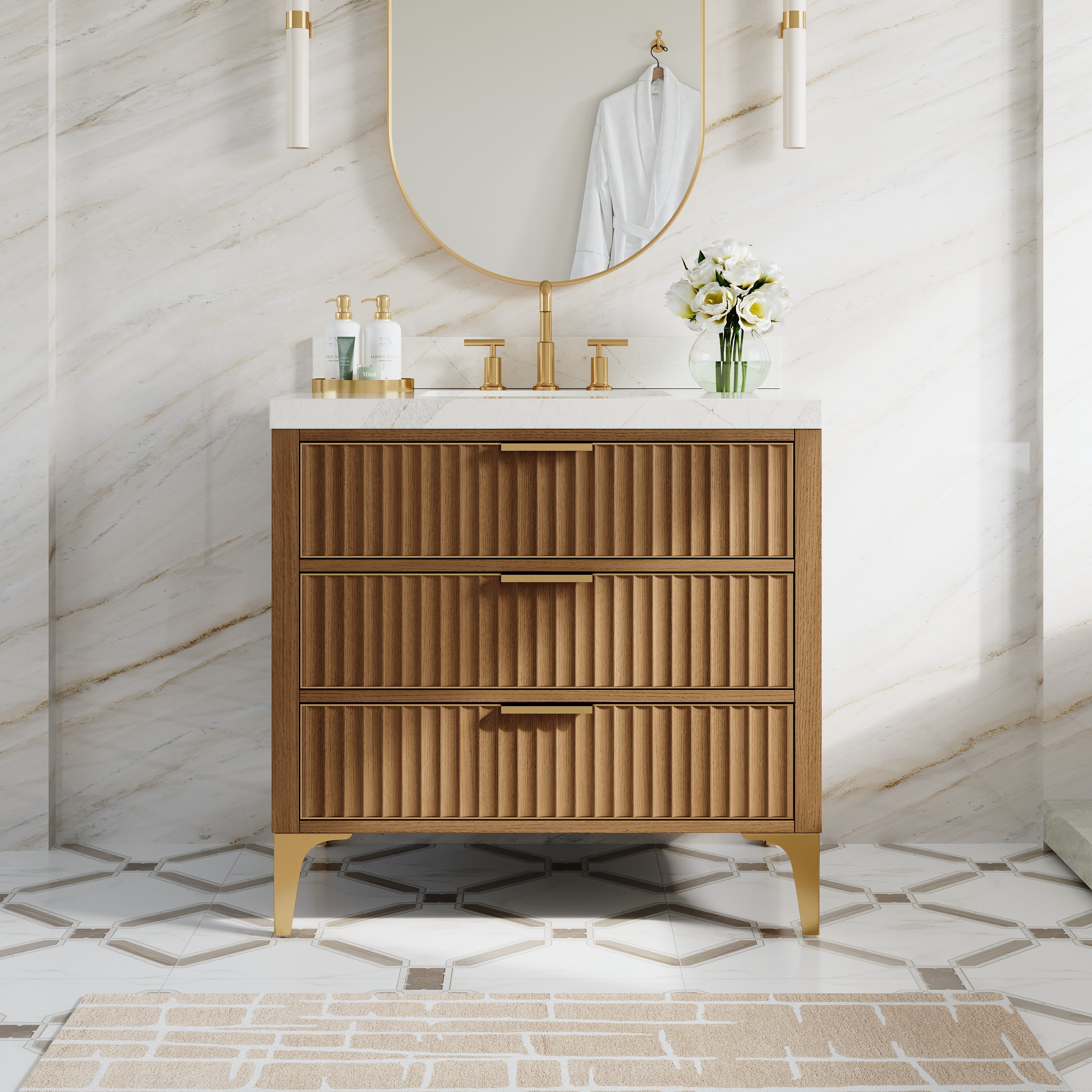
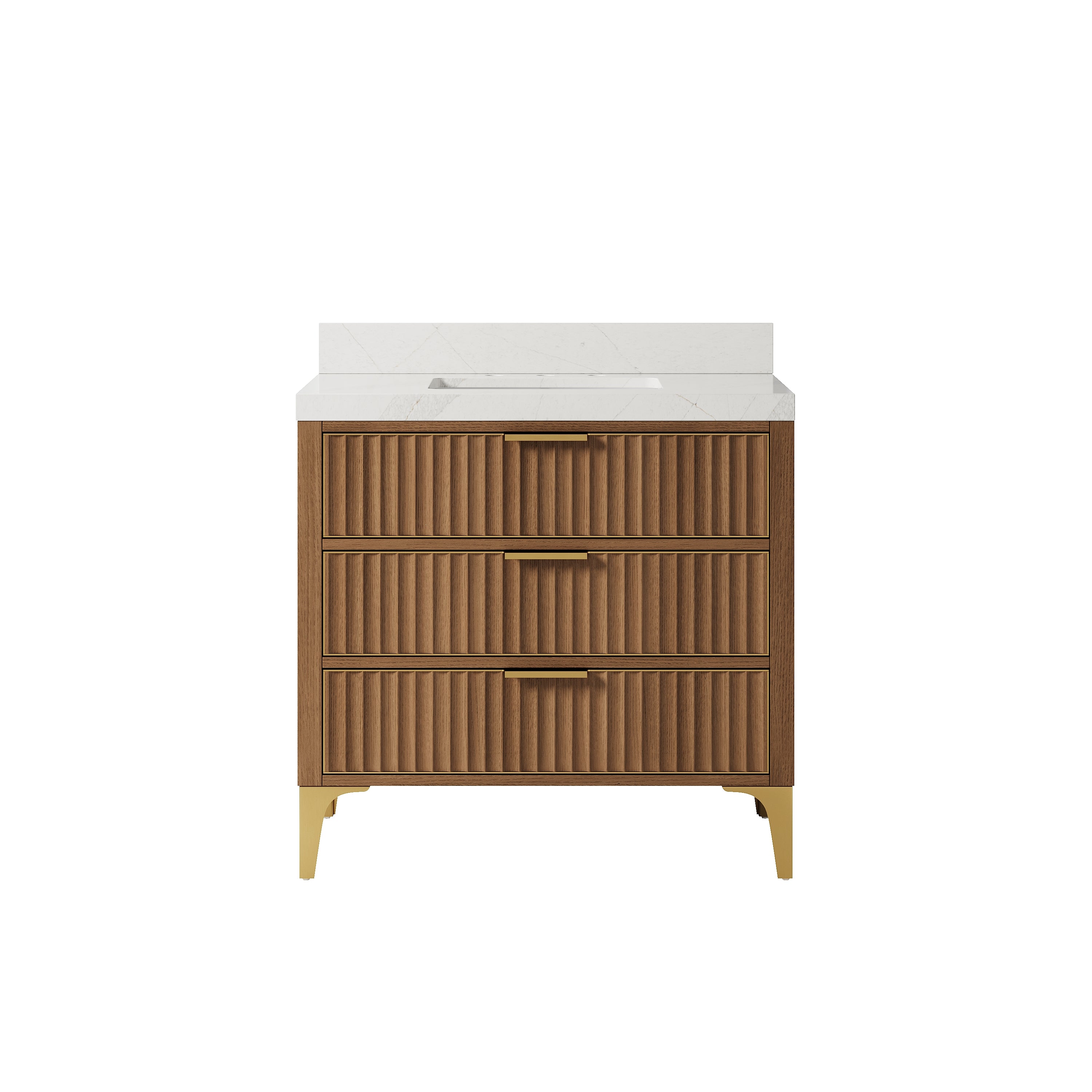
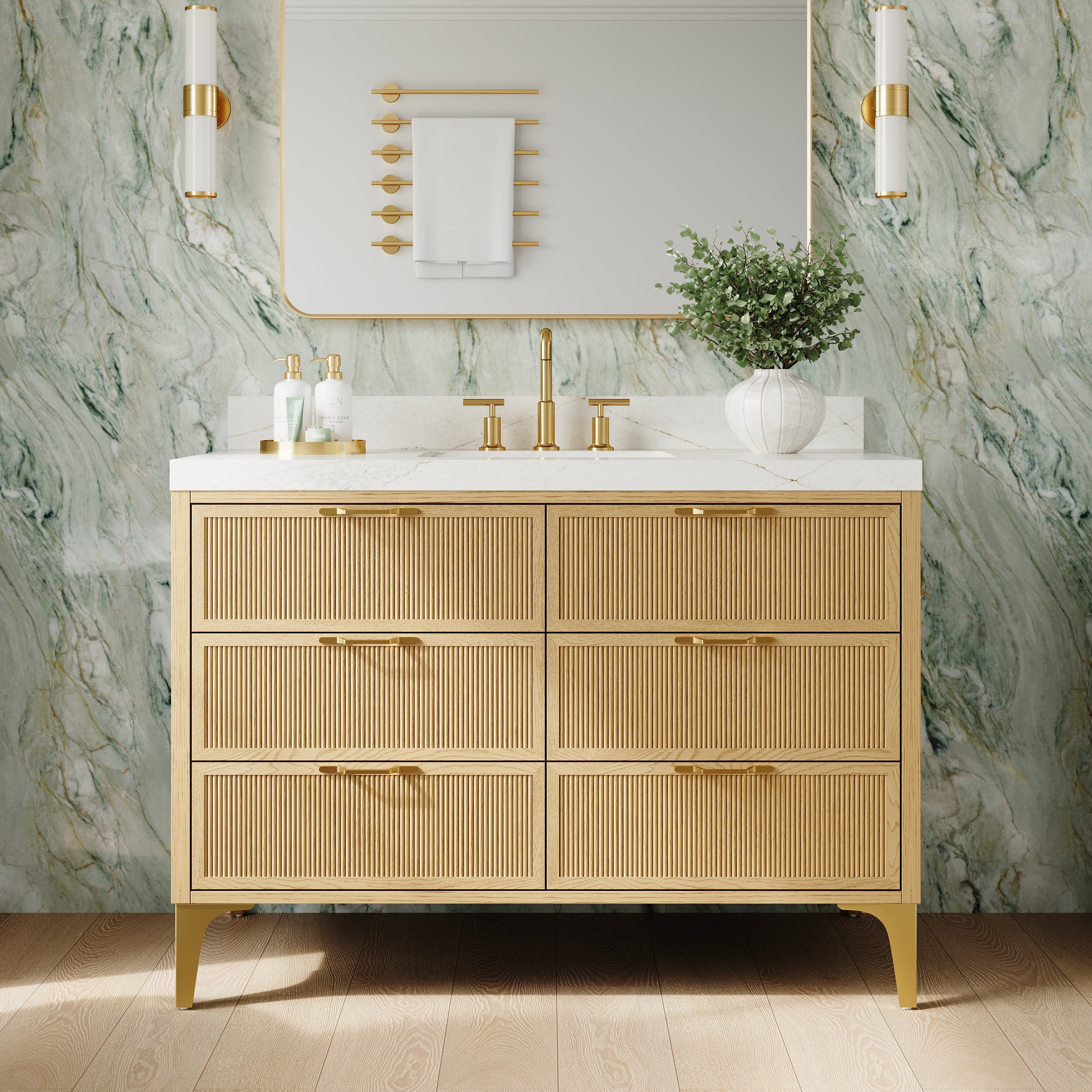
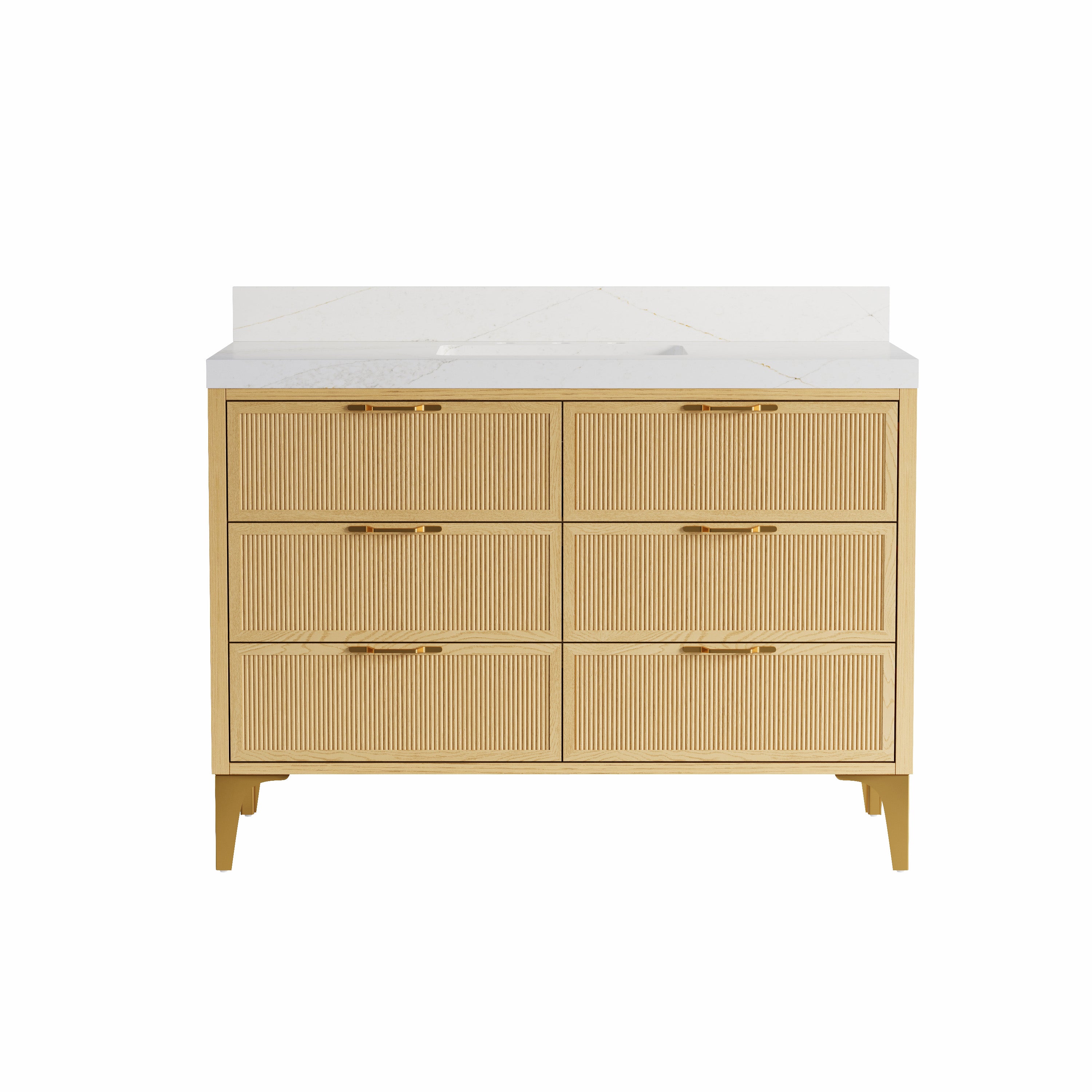


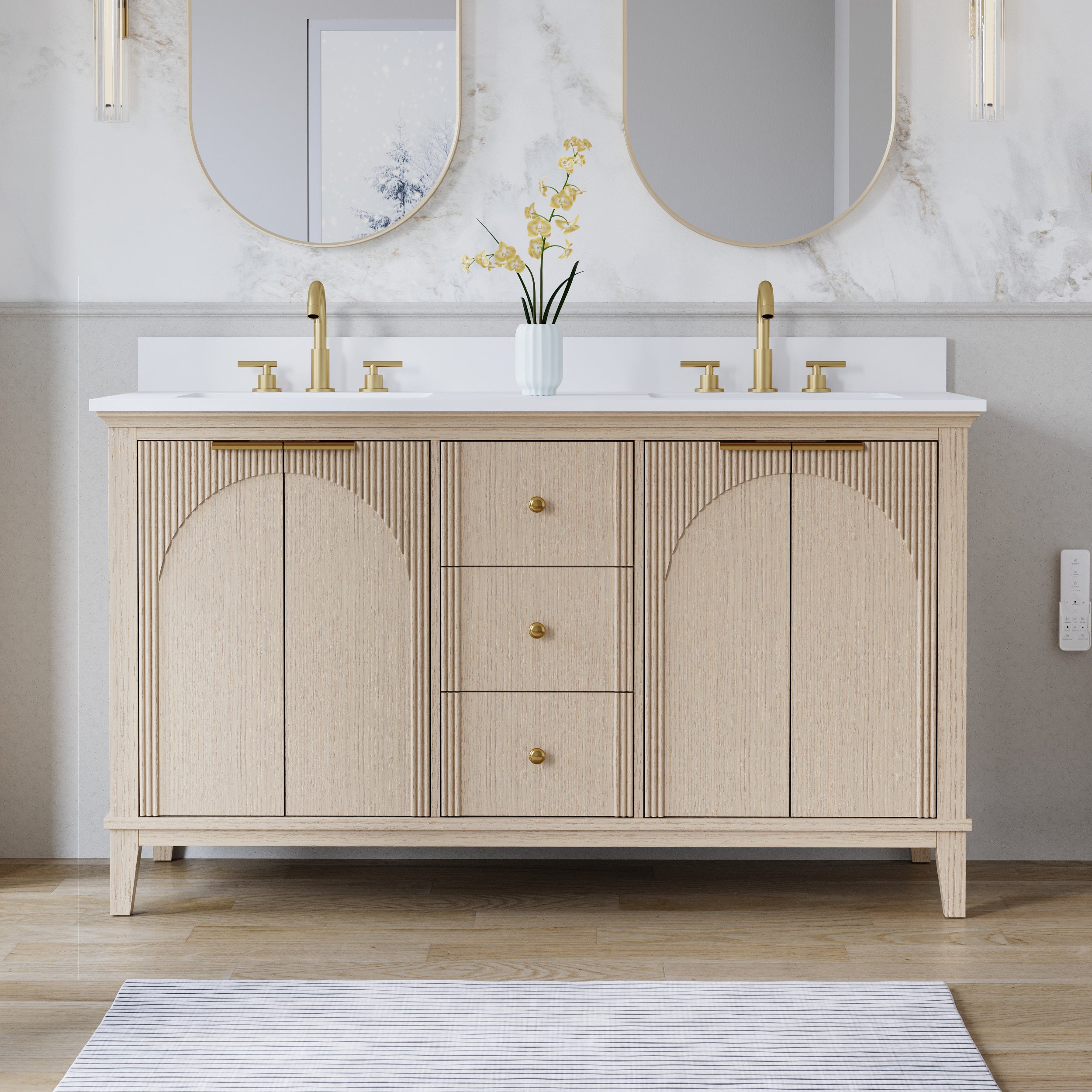
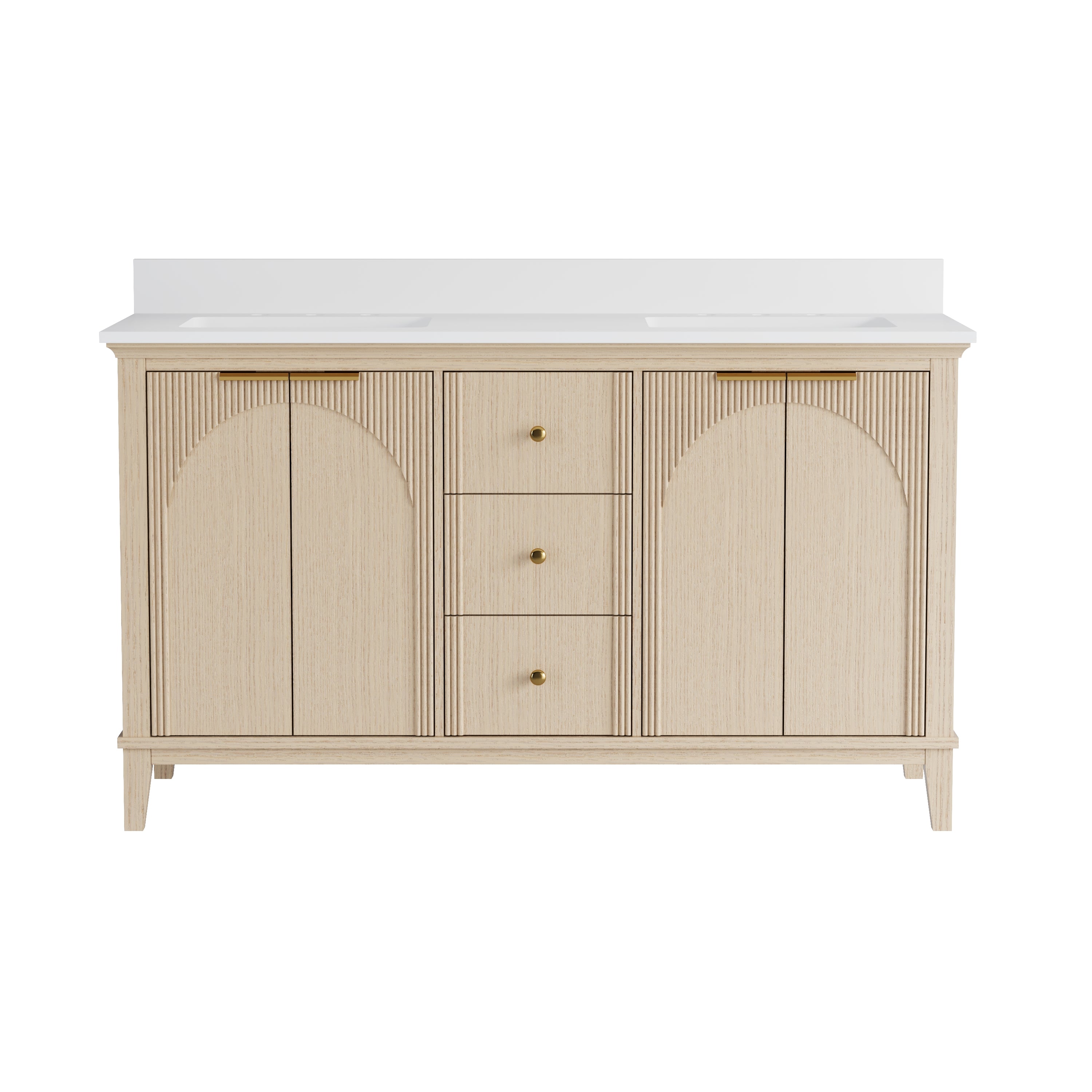
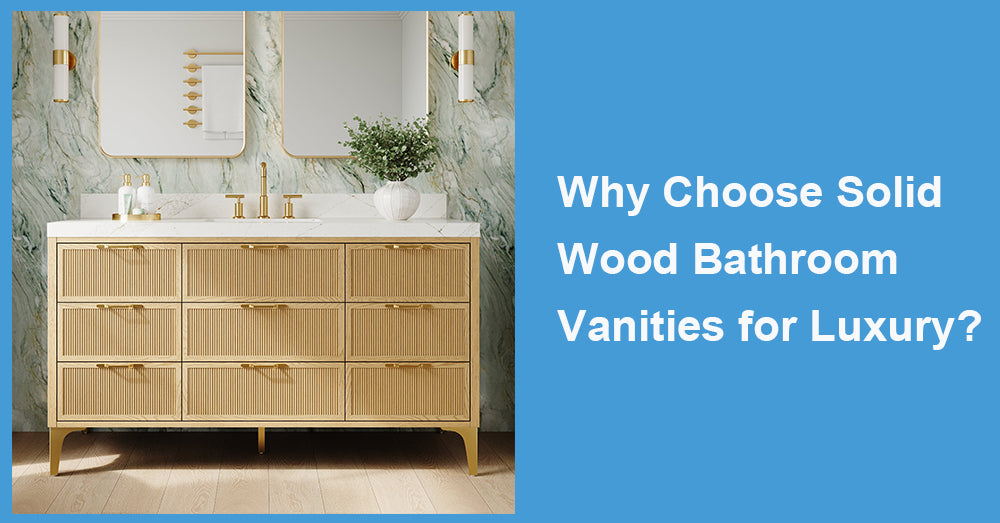
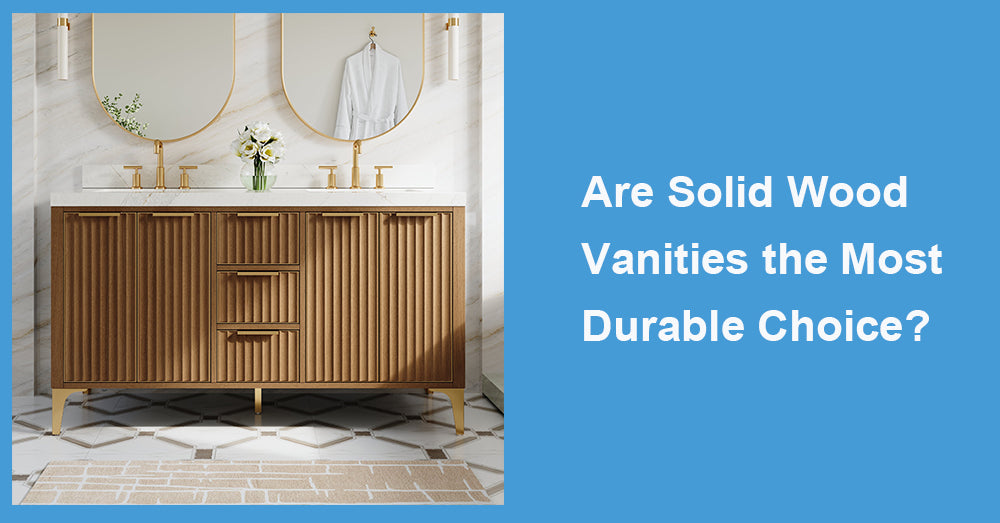
Solid wood bathroom vanities have become a defining detail in luxury bath design because they combine what high-end projects actually need: lasting structure, tactile craftsmanship, and a “quiet confidence” that reads expensive without shouting. Recent renovation research shows that when people choose wood vanities, solid wood dominates the decision—74% select solid wood, far ahead of MDF (10%), plywood (6%), particleboard (4%), and veneer (3%). That preference matters because a vanity isn’t décor; it’s a daily-use cabinet that has to stay square, smooth, and visually clean for years.
Luxury Starts With What Stays Aligned After Years of Use
Luxury bathrooms are judged on details that don’t photograph as “features” but are instantly felt: doors that stay perfectly even, drawers that don’t rack, and corners that don’t swell. Solid wood construction helps because it can provide stronger screw-holding and a more stable base for hinges and drawer slides than many lower-cost substrates. In a high-humidity room, that stability is part of the luxury experience: the vanity still closes cleanly and looks crisp long after install.
This becomes even more important as remodeling costs rise. Verisk’s Repair and Remodeling Index has shown repair and remodeling costs are now almost 62% higher than a decade ago, making long-lasting choices more financially meaningful.
“Natural Material Luxury” Is Moving From Trend to Default
Luxury design is leaning toward calmer, organic materials—less shine, fewer fussy seams, and more natural texture. NKBA’s 2026 Bath Trends release signals this directly: wood-faced vanities (62%) overtake painted (53%) in expected popularity, alongside broader momentum toward timeless and organic/natural styles.
This is why solid wood matters. Wood grain and depth are difficult to fake convincingly at close range. When the vanity is the visual anchor of the room (often paired with stone, glass, and metal), authentic wood texture becomes one of the clearest signals of luxury.
The Wood Species Story Becomes Part of the “Luxury Read”
Luxury is not just “wood vs. not wood.” It’s also the type of wood and the visual language it creates. Houzz data shows maple and white oak lead among solid-wood vanity choices: maple (29%) and white oak (23%), followed by birch (12%) and walnut (9%).
In practice, that aligns with what luxury baths tend to aim for:
· White oak often supports a warm, modern, spa-like look.
· Walnut leans moodier and more tailored.
· Maple can read clean and refined, especially in lighter stains or painted finishes.
The material choice becomes a design tool, not a checkbox.

Luxury Is Also “Workflow Luxury,” Not Only Visual Luxury
High-end bathrooms are increasingly expected to function like a suite: organized, quiet, and efficient. Houzz findings show the most adopted vanity upgrades are practical mechanics: soft-close drawers (78%) and soft-close doors (75%).
Solid wood tends to pair well with these features because higher-grade vanities often invest more in the cabinet box strength and mounting points that keep soft-close hardware operating smoothly over time. The luxury payoff is daily: less noise, fewer misalignments, and a vanity that still feels “tight” rather than loose and rattly.
Scale and Proportion: Luxury Baths Are Sized Around the Vanity
Luxury bathrooms rarely look luxurious if the vanity feels undersized or awkwardly proportioned. Houzz reports vanity width selections cluster in familiar “design-standard” sizes: 48 inches or less (47%), 60 inches (19%), 72 inches (14%), and more than 72 inches (13%).
Those widths show how luxury is often built:
· A 60-inch or 72-inch vanity creates symmetry, landing space, and storage that feels suite-like.
· Wider spans can support dual sinks and more intentional separation of personal items.
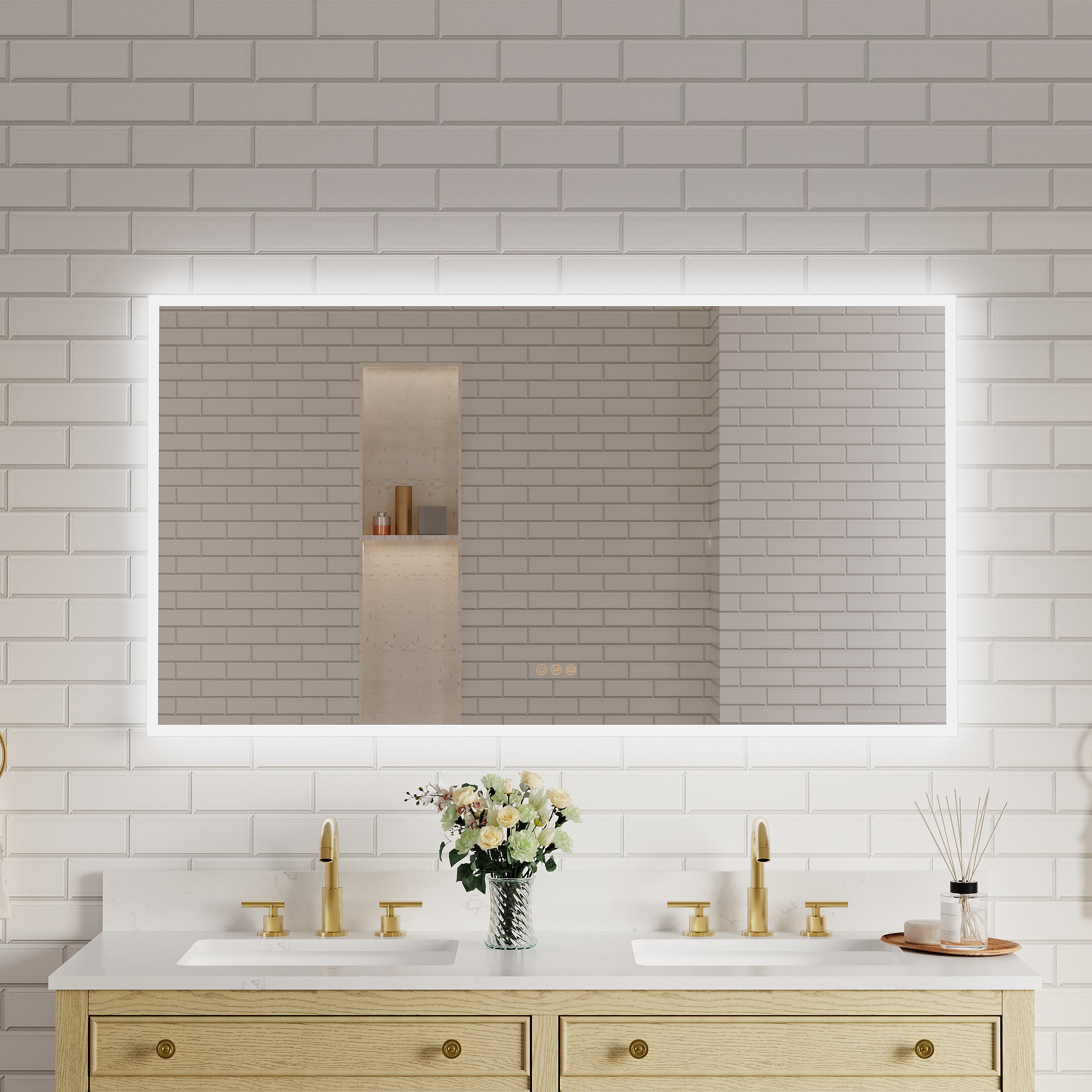
· Even smaller baths can feel elevated when the vanity size is balanced with mirror scale and lighting.
Luxury doesn’t require a giant vanity, but it does require proportions that look intentional.
Finish Choices Are Shifting Toward Crafted, Not Flashy
Luxury is moving away from overly glossy, reflective surfaces and toward finishes that feel calm and durable. Houzz reports paint remains the leading vanity finish choice (36%), with stain second (23%). That split is useful: paint can look clean and architectural, while stain showcases wood grain and warmth.
NKBA’s 2026 Bath Trends also points to durability and practicality as major considerations in bath material selection, reinforcing the broader shift toward “low-maintenance luxury.” The takeaway is simple: luxury finishes are expected to age well, not just look dramatic on day one.
Countertops Matter, But Wood Builds the Foundation for Them
Stone and engineered surfaces do heavy lifting in luxury bathrooms, but they rely on the vanity underneath to stay stable. Houzz reports engineered quartz leads vanity countertop choices (45%), followed by quartzite (20%), granite (14%), and marble (13%).
A solid wood vanity can be a better long-term partner for these heavier or more rigid surfaces because the cabinet’s structural integrity helps keep seams, edges, and alignment cleaner over time. That’s not about chasing a single “best” material—it’s about ensuring the entire system (cabinet + top + plumbing) stays crisp and quiet.
Hospitality-Inspired Bathrooms Reward Real Materials
Luxury bath design is increasingly influenced by hotel and resort experiences. NKBA reports 77% of respondents expect tying bath design to hotel/resort experience to be popular, reflecting a broader move toward wellness-centered, curated bathrooms.
In that context, solid wood vanities fit naturally. They provide the warmth that makes stone and tile feel inviting rather than cold, and they help create the layered material mix that reads as “designed,” not just “renovated.”
Value Retention: Luxury Is About Daily Use, but Durability Still Matters
Not every luxury upgrade is about maximizing resale math, but durability supports both everyday satisfaction and long-term value. The 2025 Cost vs. Value Report lists a midrange bath remodel with an average 80% cost recouped (job cost $26,138, resale value $20,915). While luxury projects vary widely, the consistent theme is that bathrooms are evaluated heavily—and materials that stay aligned, clean, and attractive help the space age better.
Solid wood doesn’t guarantee “value” by itself, but it does reduce the risk of the most common luxury-killers: swelling, misaligned doors, tired-looking edges, and cabinets that feel worn before the rest of the bathroom does.
The Bottom Line: Solid Wood Is “Quiet Luxury” You Touch Every Day
Solid wood bathroom vanities make sense for luxury because they combine design warmth with structural confidence. The market data backs up the direction: solid wood is the overwhelming preference among wood vanity buyers, and natural-material styling is rising as a priority. In a remodeling environment where costs are elevated, choosing a vanity that stays stable, refined, and pleasant to use is not just an aesthetic choice—it’s a long-term performance decision.










Leave a comment
This site is protected by hCaptcha and the hCaptcha Privacy Policy and Terms of Service apply.