














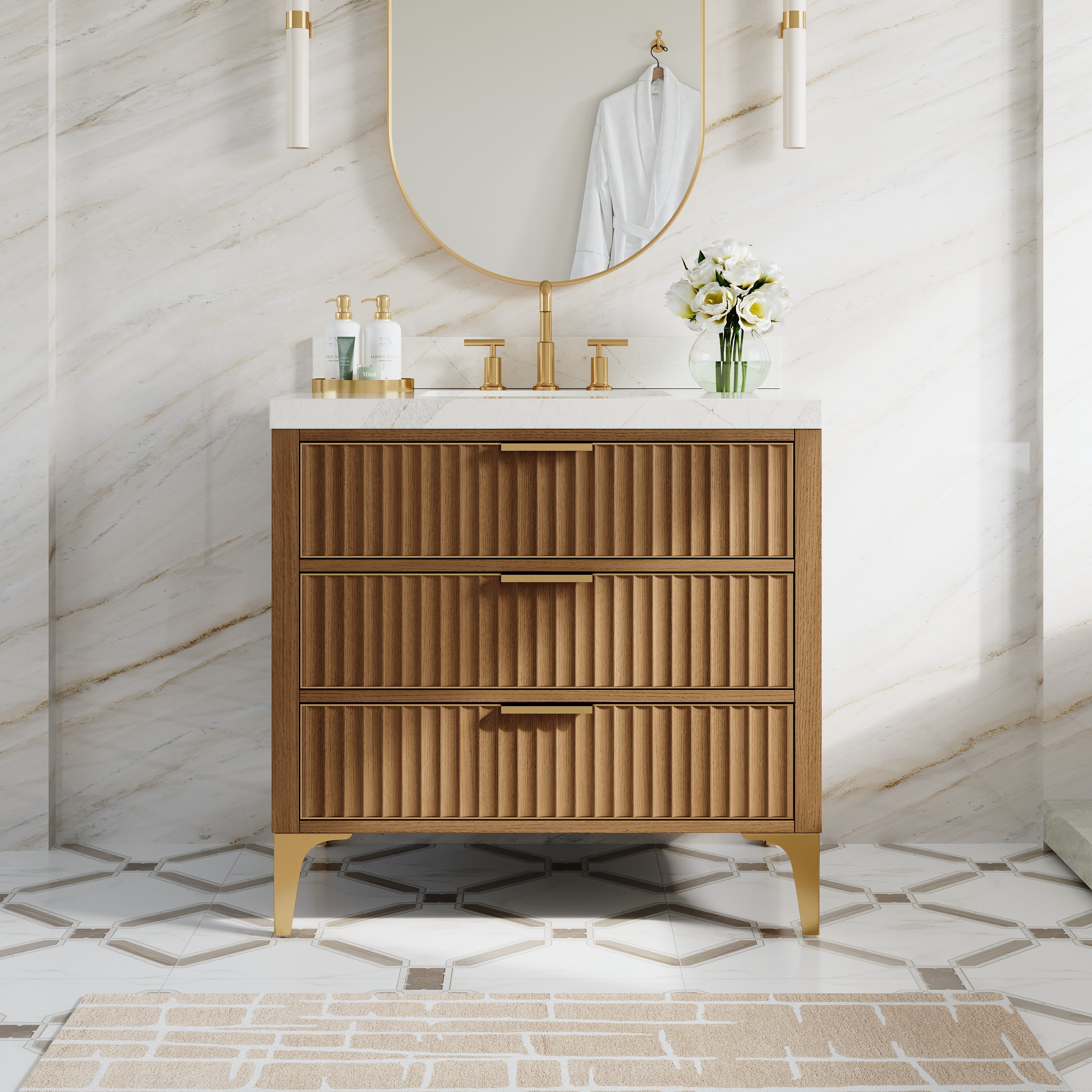
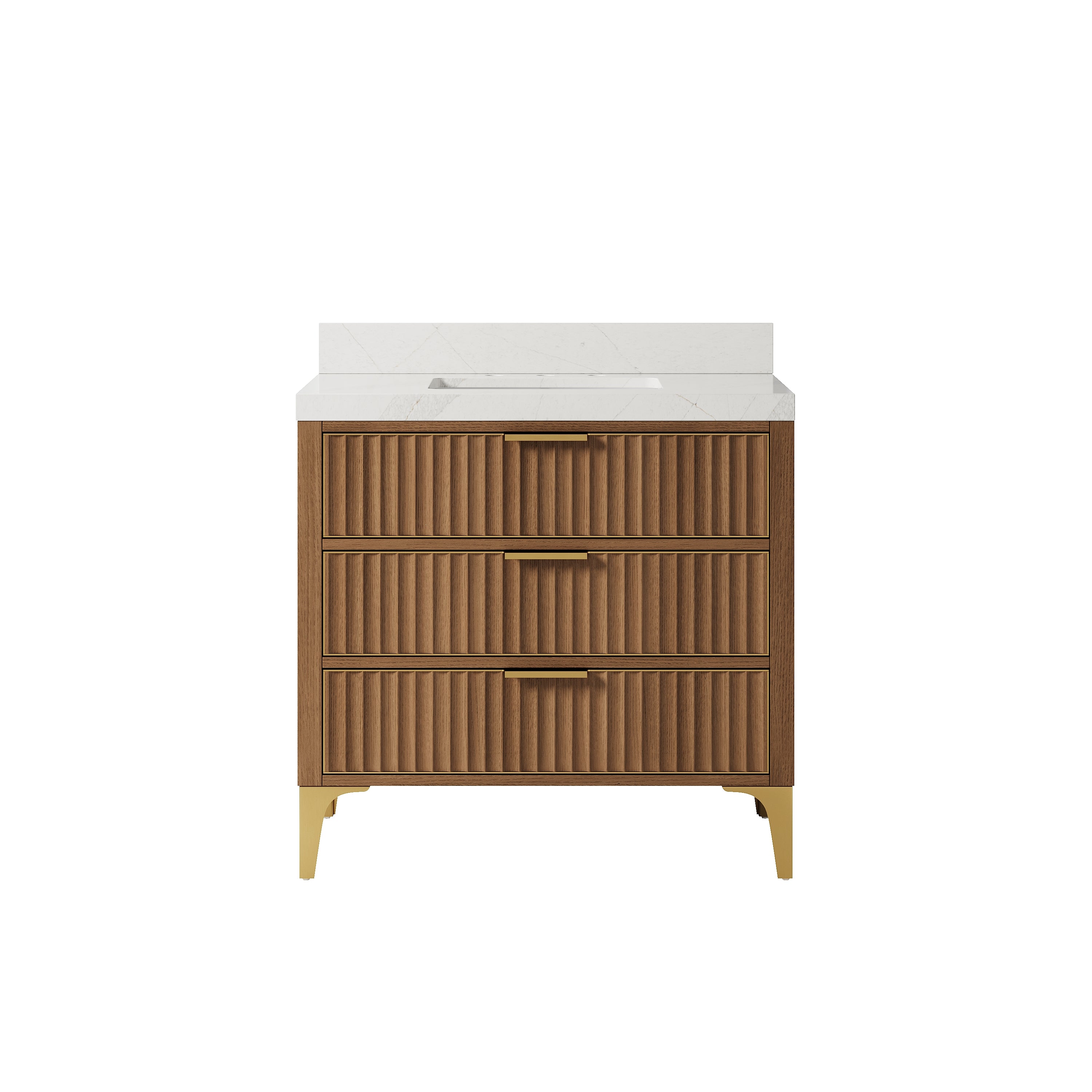
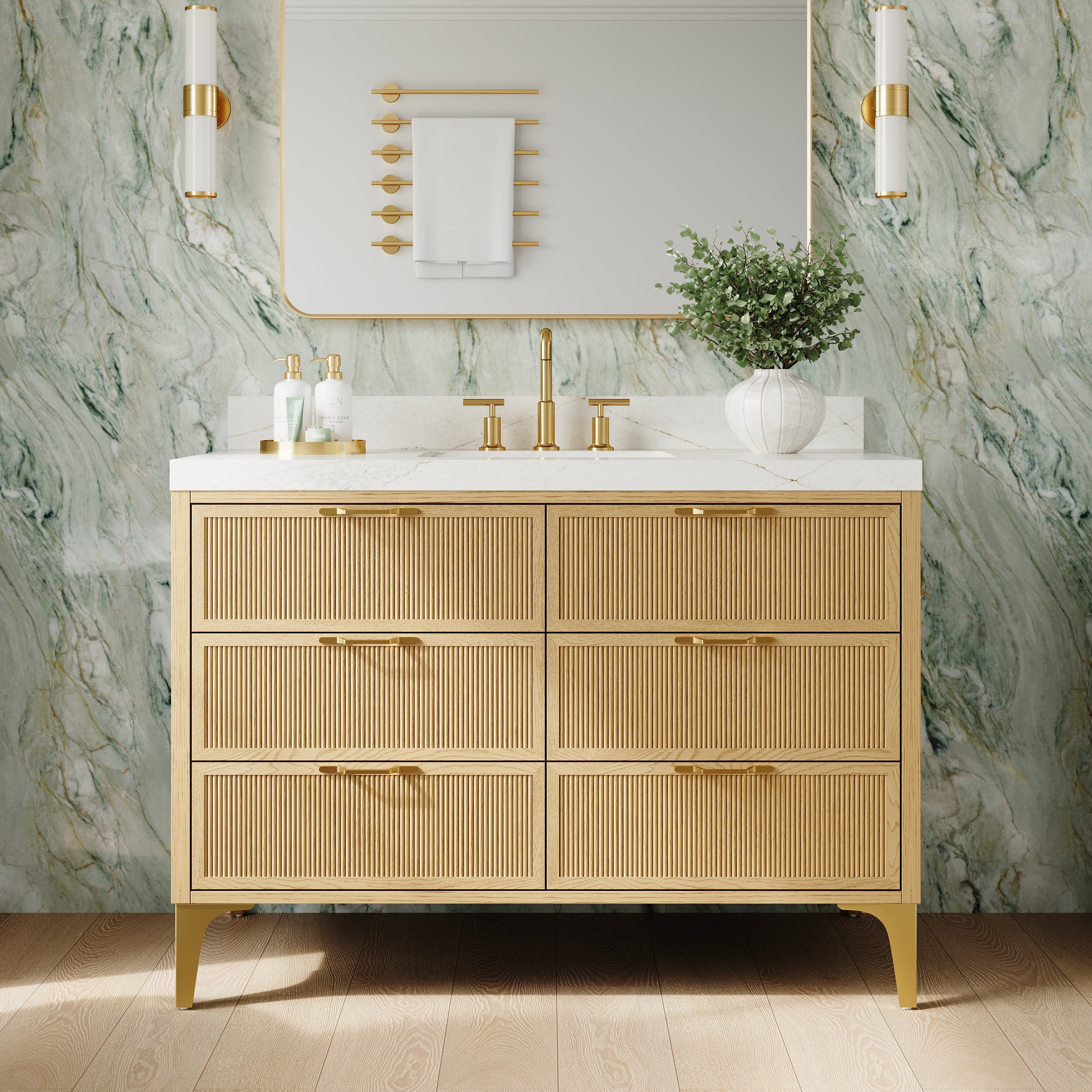
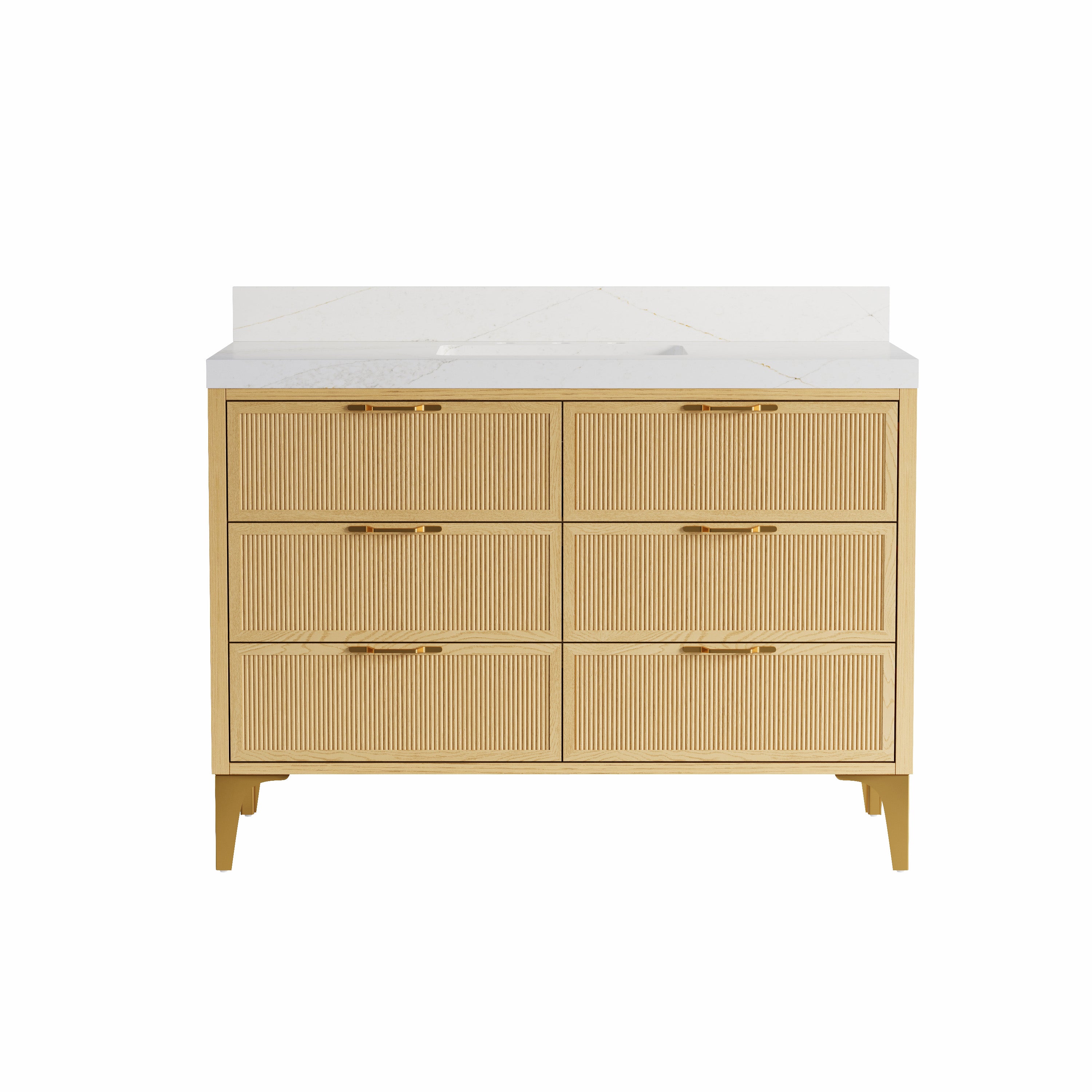


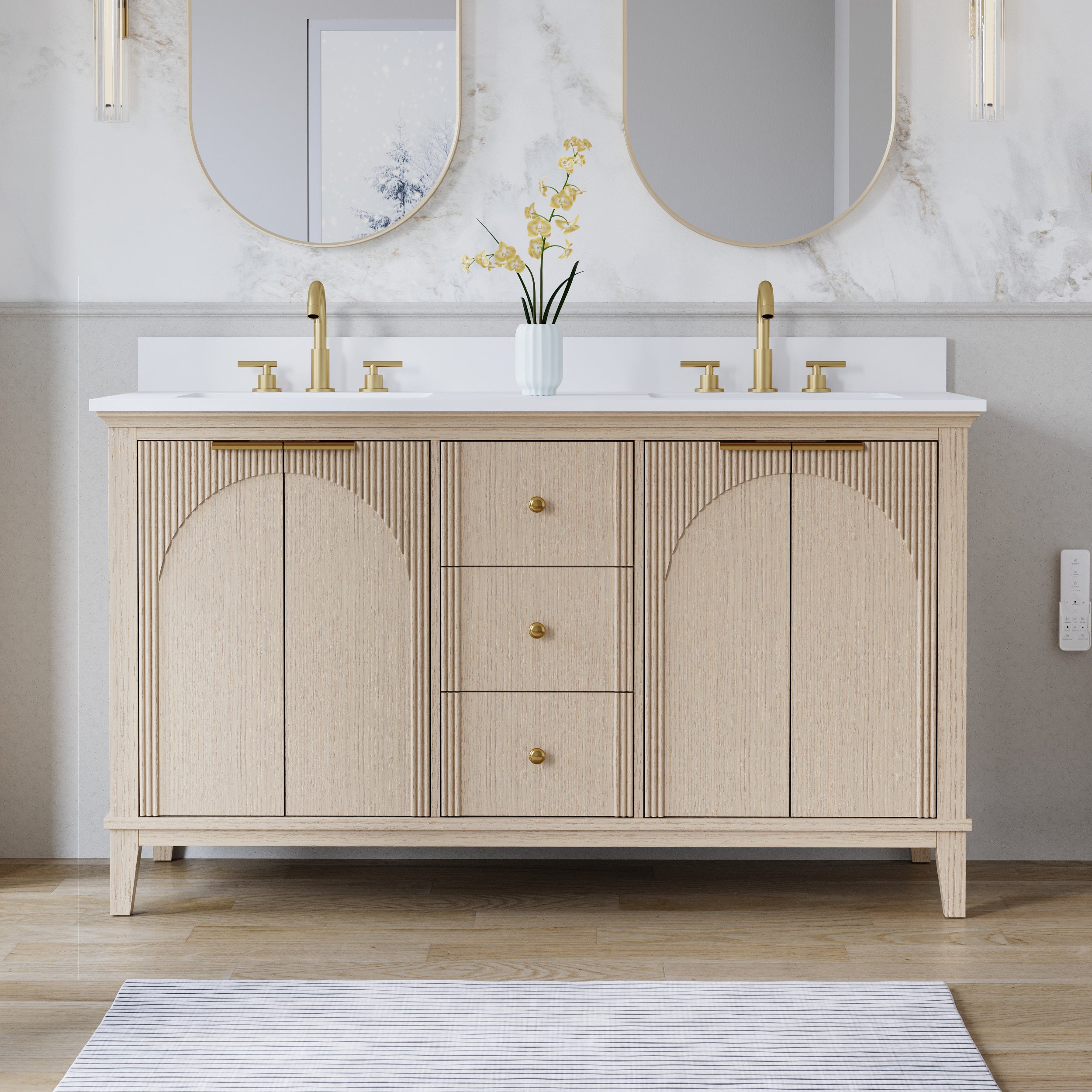
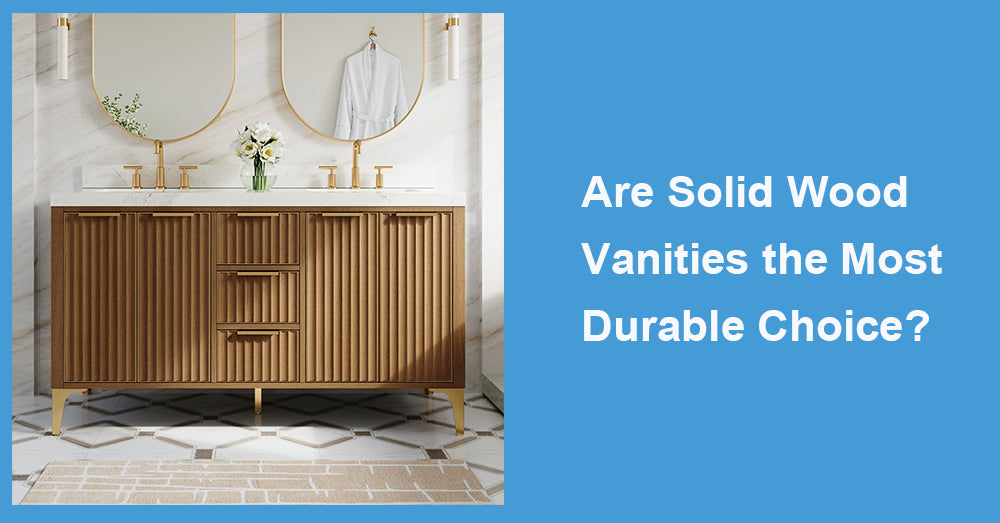
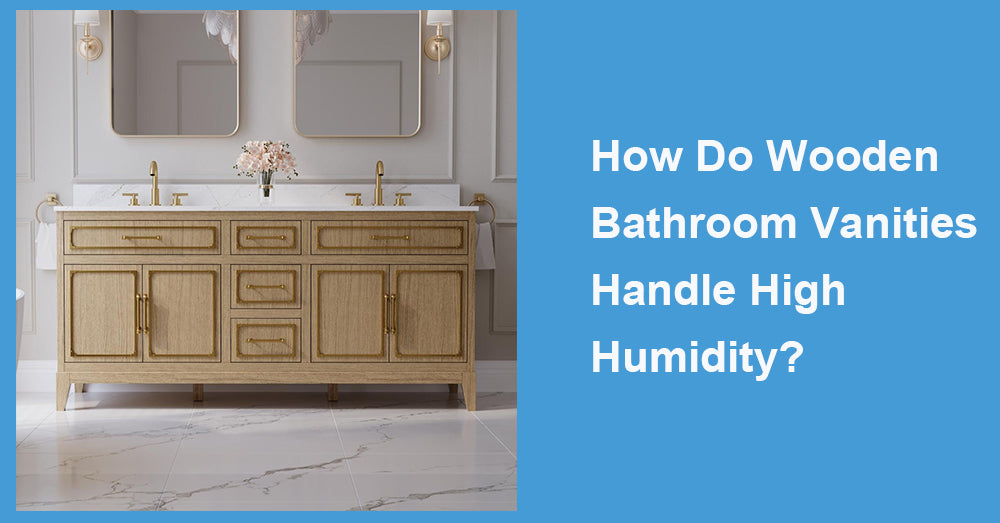
When people ask whether solid wood vanities are the most durable option, the real answer is that durability in a bathroom is a system: the wood (or panel) you choose, the way the cabinet is built, the finish that seals it, and how well the room controls moisture. That question is getting more attention as remodeling activity remains strong overall. Harvard’s Joint Center for Housing Studies projects annual homeowner spending on improvements to reach $518 billion by the end of 2026, raising the stakes for “buy once, install once” decisions.
What “durable” really means for a vanity in a wet room
A vanity fails in predictable ways: drawer boxes go out of square, hinges loosen, doors sag, edges swell, and the toe-kick or side panels start to soften after repeated splash exposure. The most important thing to understand is that bathrooms aren’t just “humid sometimes.” Moisture is routine, and materials respond to it.
The Forest Products Laboratory notes that wood is hygroscopic, meaning it absorbs and releases moisture from the surrounding air; changes in moisture content can significantly affect performance. That’s not a knock on wood. It’s the baseline reality you have to design around.
Why is solid wood often viewed as the premium durability pick
Solid wood tends to earn its reputation for durability because it’s tough, repairable, and holds fasteners well. If a door edge gets dinged, solid wood can often be sanded and refinished. If hardware needs to be re-tightened years later, a solid-wood frame can keep screws anchored better than many low-density substrates.
That “repairability” is part of what makes solid wood read as long-term value in high-use spaces. It’s also consistent with what renovation data shows people choose: the Houzz Bathroom Trends Study reports 74% of renovating homeowners selecting wood vanities choose solid wood, far ahead of MDF (10%), plywood (6%), particleboard (4%), and veneer (3%).
The catch: solid wood moves with humidity, so construction matters more than the label
Because wood exchanges moisture with the air, solid-wood panels can expand and contract with seasonal humidity swings. The Forest Products Laboratory frames this as a core engineering reality of wood: moisture changes are behind many challenges in wood performance.
That means “solid wood” is not automatically “most durable” unless the cabinet is built to accommodate movement. In real-world product design, the most durable vanities usually use solid wood strategically (frames, doors, drawer fronts) while relying on stable engineered panels in areas where movement could cause alignment issues.
Why plywood is a serious durability competitor in bathrooms
Furniture-grade plywood is often a quiet winner for bathroom durability due to its dimensional stability. APA materials explain that plywood’s cross-laminated construction provides “superior dimensional stability,” helping resist warping or buckling in the plane of the panel when exposed to moisture.
In practice, that’s why many better-made vanities use plywood cabinet boxes with solid wood frames/doors. You get the tactile, repairable front surfaces of solid wood, plus a box that’s less likely to rack or twist over time.

MDF and particleboard: stable in theory, risky at exposed edges
MDF is engineered for consistency and smooth machining. The Composite Panel Association describes MDF as a fiber-based panel bonded with resin under heat and pressure, and notes that additives can be used to impart additional characteristics. That’s why MDF can look great under paint.
But durability in bathrooms is rarely about the middle of the panel; it’s about edges, screw holes, and seams. CPA technical guidance on dimensional stability explains how moisture can enter particleboard or MDF, creating moisture gradients that lead to thickness swell and warping.
So MDF can be durable in controlled conditions with excellent sealing and careful use. Still, it is less forgiving of repeated splash exposure or chronic leaks—especially where the protective finish gets nicked.
The “most durable” vanity is usually a hybrid build
If you’re trying to maximize durability, the highest-performing recipe is often:
Solid wood for frames and doors (strength, feel, repairability)
Plywood for the cabinet box (dimensional stability)
High-quality slides and hinges, because the parts you touch every day determine whether the vanity still feels “tight” in year five
This aligns with renovation behavior: soft-close is now mainstream, with 78% selecting soft-close drawers and 75% selecting soft-close doors in the Houzz Bathroom Trends findings. Those adoption rates reflect a durability mindset: people want hardware that reduces shock loads, noise, and misalignment over time.
Finish quality is the durability multiplier (and the failure point)
Bathrooms punish unfinished edges. Even the best substrate will fail faster if water can wick into raw end grain, exposed panel edges, or unsealed sink cutouts.
This is why “wood quality” alone is not enough. Two vanities can both claim “solid wood,” but the one with better sealing, better edge finishing, and tighter joint tolerances will last longer. If you’re positioning products as “durable,” the most credible story is usually about construction, finish, and hardware, not just “solid wood.”
Installation and moisture management decide the outcome more than the material does
Even the most durable material loses if the vanity is installed out of level, allowed to rock, or left with an unsealed backsplash seam that funnels water behind the cabinet. In other words, durability is partially a jobsite issue.
This is also why many homeowners are gravitating toward natural-material looks but still want practical performance. NKBA’s 2026 bath trends report highlights natural materials, noting that wood-faced vanities (62%) are expected to overtake painted (53%) in popularity, reflecting a broader move toward warm, organic finishes.
A simple priority list for “durable first” buyers
If your goal is maximum durability (not just the “solid wood” label), a reliable order of operations is:
Stop water before it starts: sealed seams, no chronic leaks, proper ventilation
Choose a stable structure: a plywood box is a strong baseline
Use solid wood where it counts: doors/frames/drawer fronts
Prioritize hardware and alignment: soft-close, full-extension, and sturdy mounting
Inspect finishing details: sealed edges, smooth underside finishing, clean cutout protection
So, are solid wood vanities the most durable?
They can be, but “solid wood” by itself is not a guarantee. Wood is hygroscopic, so durability depends heavily on how the cabinet manages moisture-driven movement and how well finishes protect edges and joints. In many bathrooms, the most durable real-world solution is a hybrid: solid wood for the parts you see and touch, and plywood for the structural box that needs to stay square.











Leave a comment
This site is protected by hCaptcha and the hCaptcha Privacy Policy and Terms of Service apply.