














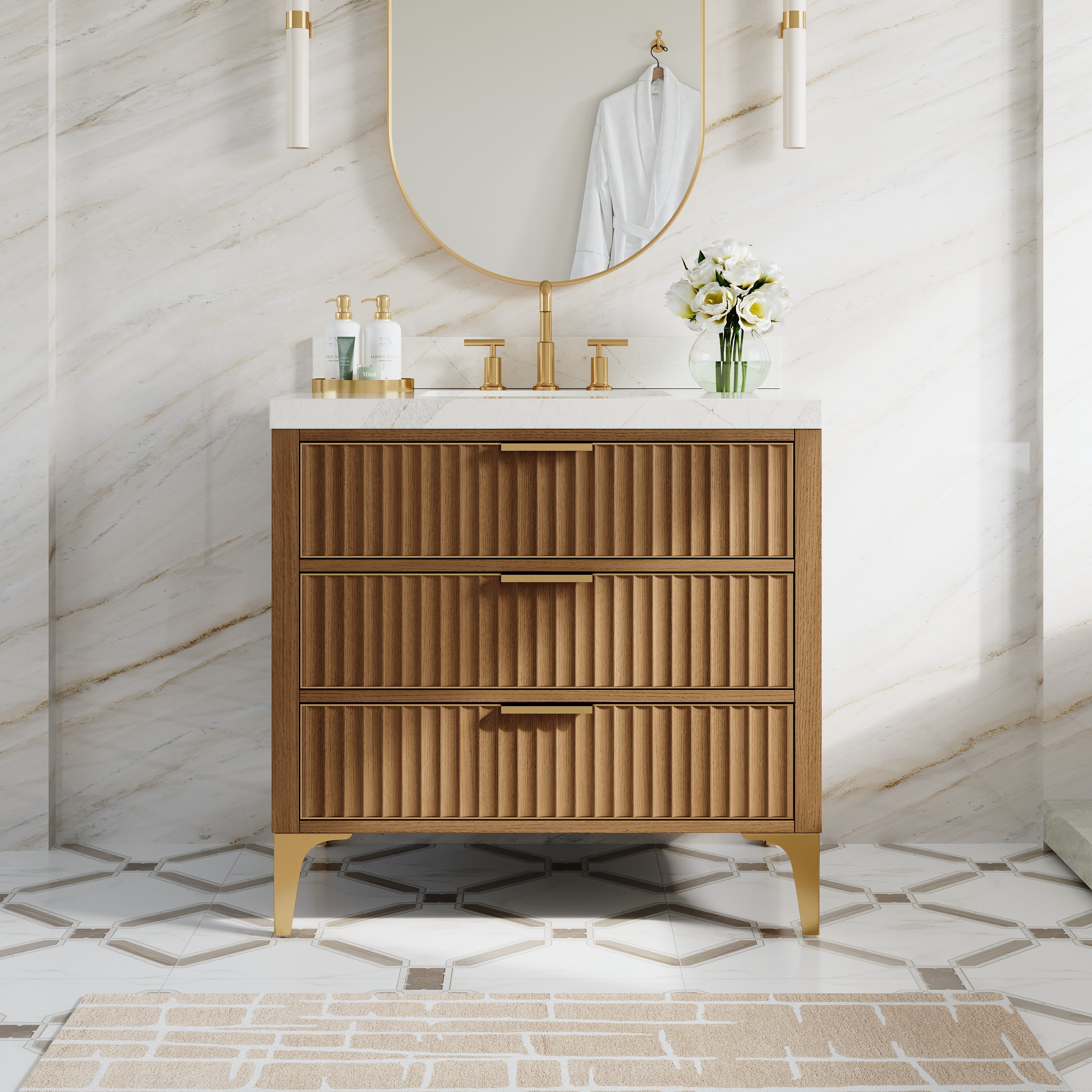
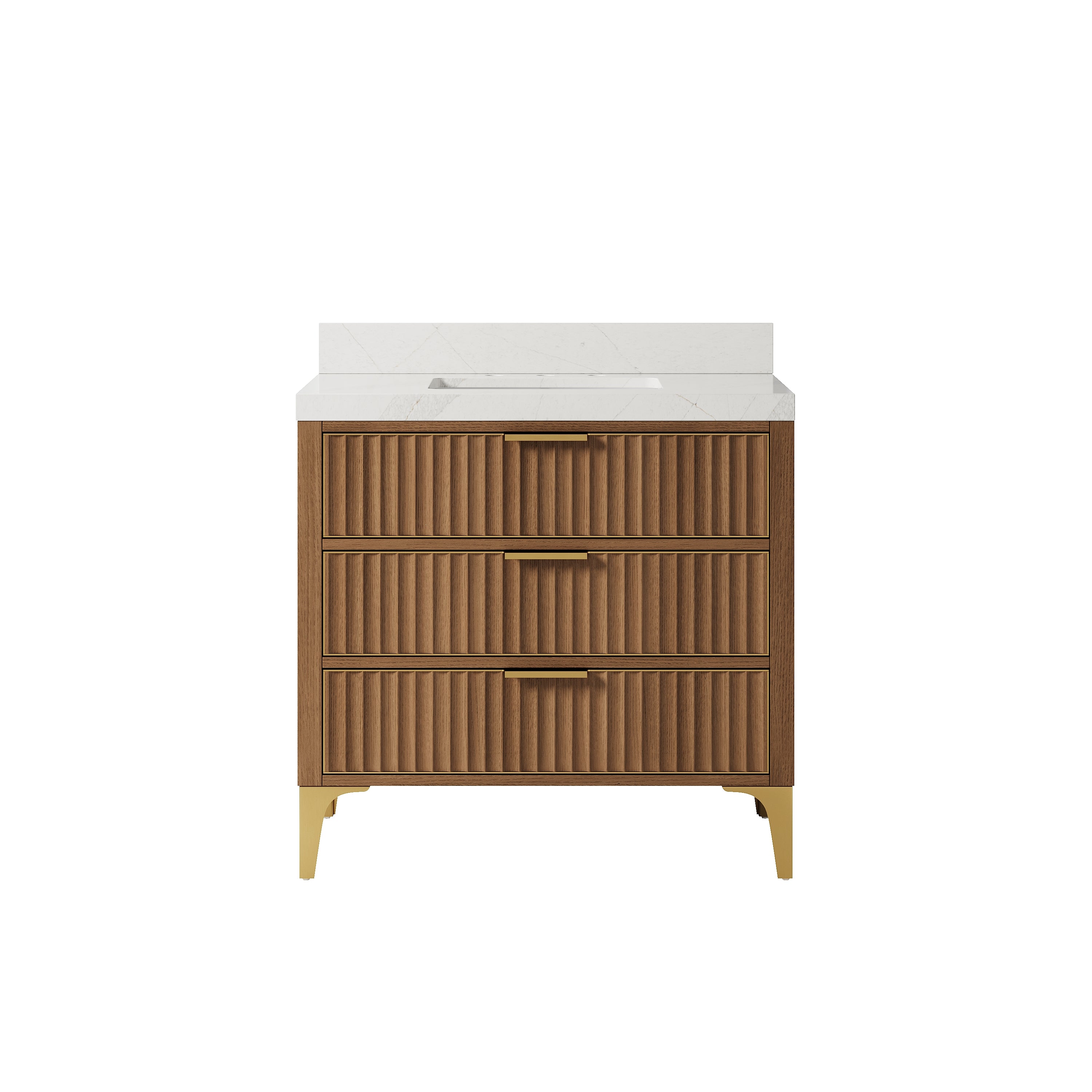
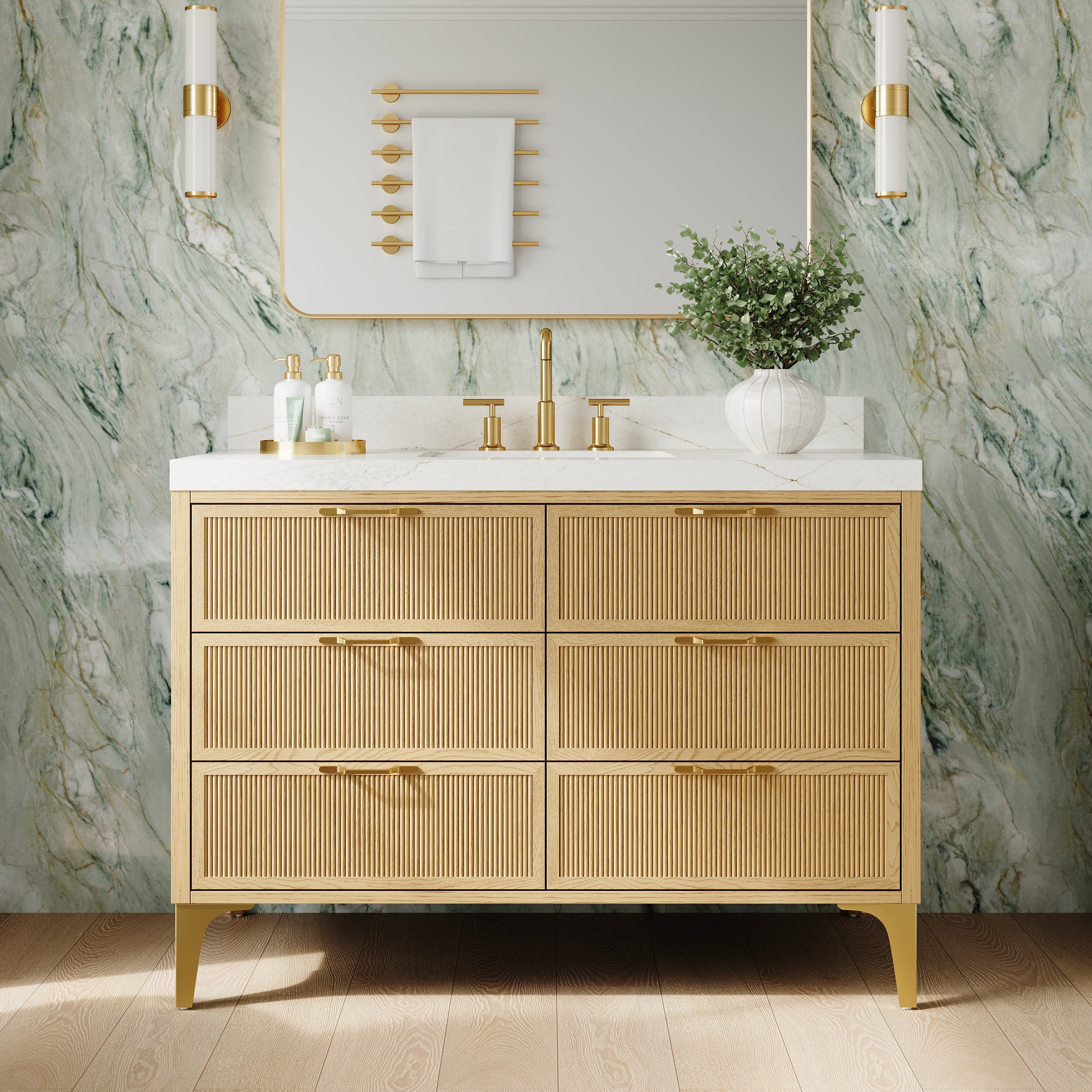
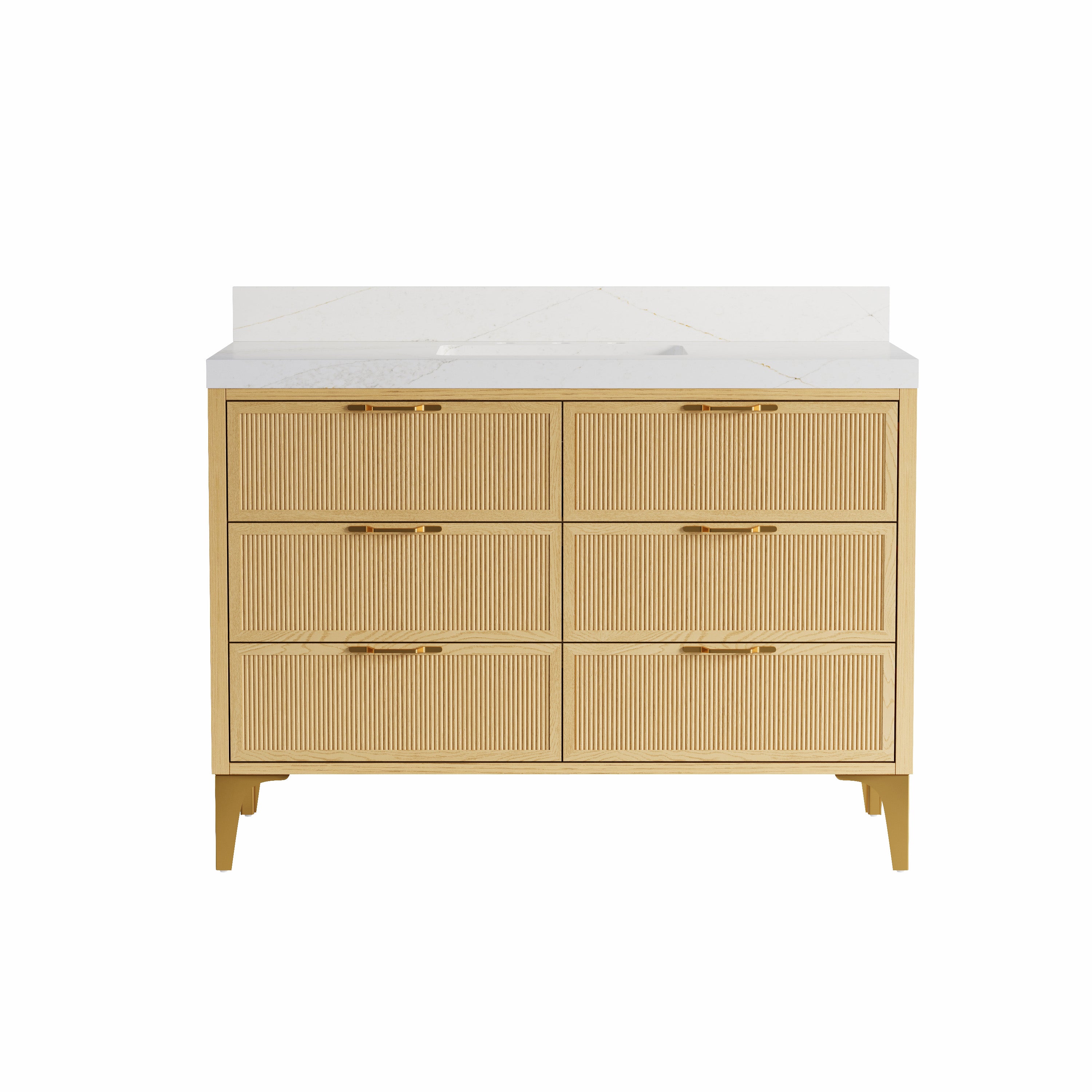


Bathrooms are humidity machines. Hot showers push moisture into the air, mirrors fog, and damp towels raise the baseline humidity for hours. The good news is that wooden bathroom vanities can perform very well in high-humidity spaces when they are built correctly, finished properly, and paired with reasonable moisture control. The bad news is that wood is not “humidity-proof.” It is a living material that exchanges moisture with the air, so the real durability story is about managing moisture, protecting vulnerable edges, and choosing construction that stays stable over time.
1. Why Humidity Matters to Wood in the First Place
Wood is hygroscopic, meaning it naturally takes on and releases moisture depending on the surrounding relative humidity and temperature. This moisture exchange influences wood properties and performance, and many real-world wood issues trace back to changes in moisture content or an abundance of moisture within the wood (Source: USDA Forest Service, Forest Products Laboratory, “Moisture relations and physical properties of wood”).
In practical terms, when humidity rises:
· Wood absorbs moisture and can swell slightly.
· When humidity drops, it releases moisture and can shrink slightly.
These shifts are usually small, but repeated cycles can stress finishes and joints if a vanity is poorly designed or not sealed well.
2. What “High Humidity” Looks Like in a Home
You do not need a flood for humidity to cause damage. Persistent high relative humidity is enough to encourage mold, musty odors, and finish breakdown.
EPA guidance commonly recommends keeping indoor relative humidity below 60 percent and ideally between 30 percent and 50 percent, if possible (Source: U.S. Environmental Protection Agency, Mold Course Chapter 2; Source: U.S. EPA Moisture Control guidance).
Why this matters for vanities:
· Above these ranges, moisture lingers on surfaces longer.
· Cabinet interiors stay damp, especially behind closed doors.
· Small leaks and splashes do more damage because drying is slower.
3. How a Well-Built Wood Vanity “Handles” Humidity
A quality wooden vanity manages humidity in three ways:
A. Predictable movement, not sudden failure
Because wood gradually responds to humidity changes, it tends to move in a predictable way. Good cabinetry design anticipates this behavior through joinery, panel construction, and spacing. The wood is not “resistant” because it never changes, it is “resilient” because it changes in a manageable way (Source: USDA Forest Service, Forest Products Laboratory).
B. Strong fastener holding and structural integrity
Solid wood face frames and doors generally hold screws well, which matters for hinges and drawer slides. When the cabinet stays square and hardware stays tight, the vanity feels solid year after year.
C. Repairability
If humidity or daily use wears the finish, many solid wood parts can be touched up, sanded, or refinished. That serviceability is a big reason wood remains a long-life material choice in bathrooms.
4. Where Humidity Actually Damages Vanities
Most damage does not start in the middle of a door panel. It starts at weak points:
· Sink cutouts and the underside of the countertop lip
· Plumbing holes and back panel openings
· Toe-kick and bottom edges near wet floors
· Door and drawer edges where water sits after handwashing
In high humidity, those zones dry slower. If the finish is thin or the edges are not sealed, moisture gets into end grain and seams first.
5. Why Some “Wood” Vanities Fail Faster Than Others
Not all wood-based products behave the same in humid environments. The biggest difference is how the vanity reacts after moisture intrusion.
A Composite Panel Association technical bulletin explains that when particleboard or MDF swells and expands beyond its original dimensions due to exposure to high humidity or water, that swelling is not reversible upon re-drying (Source: Composite Panel Association, “Dimensional Stability of Particleboard and MDF” Technical Bulletin).
That is why vanities with MDF-heavy cabinet boxes can look fine until a slow leak or repeated dampness triggers permanent swelling at the base or edges. Solid wood can also swell, but it is often more serviceable and less likely to suffer a one-way “puffing” failure at seams.
6. Finish Quality Is the Real Moisture Shield
In high humidity, the finish system matters as much as the wood species.
A humidity-ready wooden vanity typically has:
· Fully coated exterior and interior surfaces
· Sealed edges, especially on doors, drawer fronts, and bottom panels
· Protected sink and plumbing cutouts (no raw wood exposed)
· Caulked transitions where water commonly sits
Think of the finish as the vanity’s rain jacket. A great wood species without a great finish is not a premium vanity in a steamy room.
7. Ventilation Is the “Hidden Feature” That Protects Wood
Even the best vanity cannot outwork bad moisture control. Renovation research shows many homeowners prioritize ventilation upgrades during bathroom remodels. In the 2025 Houzz Bathroom Trends Study, ventilation fans were the most popular added system feature, selected by 58 percent of homeowners upgrading systems (Source: 2025 U.S. Houzz Bathroom Trends Study).
That aligns with real-world durability:
· Faster moisture removal reduces finish stress.
· Lower baseline humidity reduces musty cabinet interiors.
· Drying time after splashes is shorter, which reduces edge swelling risk.
A simple rule: if mirrors stay fogged for a long time after showers, the vanity is living in a harder environment than it should.
8. Practical Steps to Help Wooden Vanities Thrive in High Humidity
You do not need perfection. You need consistency.
Step 1. Keep humidity in a safer band
Aim to keep indoor RH below 60 percent and ideally between 30 percent and 50 percent when possible (Source: U.S. Environmental Protection Agency).
If humidity routinely runs high, consider running the fan longer after showers, improving airflow, or using a dehumidifier in extreme cases.
Step 2. Control water at the source
· Wipe splashes around the sink rim and countertop edge.
· Avoid leaving wet items inside the cabinet.
· Fix slow leaks immediately. One small drip can become a cabinet-killer.
Step 3. Protect the vanity’s “weak zones”
· Re-caulk failing seams at the backsplash and sink edge.
· Touch up nicks in paint or stain so moisture cannot creep into exposed wood.
· Use a soft mat or drip tray inside the cabinet if plumbing condensation is common.
Step 4. Choose humidity-smart construction from the start
Look for clear specs that indicate:
· Solid wood doors and face frame
· Plywood cabinet box (often a strong stability choice)
· Soft-close hardware (reduces impact stress over time)
· Thoroughly finished interiors
9. What to Look For During Inspection and Ownership
A wooden vanity is handling humidity well if:
· Doors remain aligned and gaps stay consistent.
· Drawers glide smoothly without rubbing.
· The cabinet base stays firm (no spongy feel at the toe-kick).
· There is no persistent musty odor inside the cabinet.
· Finish remains intact on edges and around the sink area.
Early warning signs of humidity stress:
· Peeling or whitening finish near edges.
· Slight swelling at the bottom corners.
· A cabinet interior that always feels damp.
· Hinges loosening more frequently than expected.

Conclusion
Wooden bathroom vanities can handle high humidity because wood responds to moisture in a predictable way and can remain structurally strong and repairable over time (Source: USDA Forest Service, Forest Products Laboratory). The key is pairing a good build and a robust finish with moisture control habits. Keep indoor humidity below 60 percent and ideally between 30 percent and 50 percent when possible (Source: U.S. Environmental Protection Agency). And remember that humidity-related failures often come from unsealed edges or moisture-sensitive panel cores, where swelling may not reverse after exposure (Source: Composite Panel Association).










Leave a comment
This site is protected by hCaptcha and the hCaptcha Privacy Policy and Terms of Service apply.