














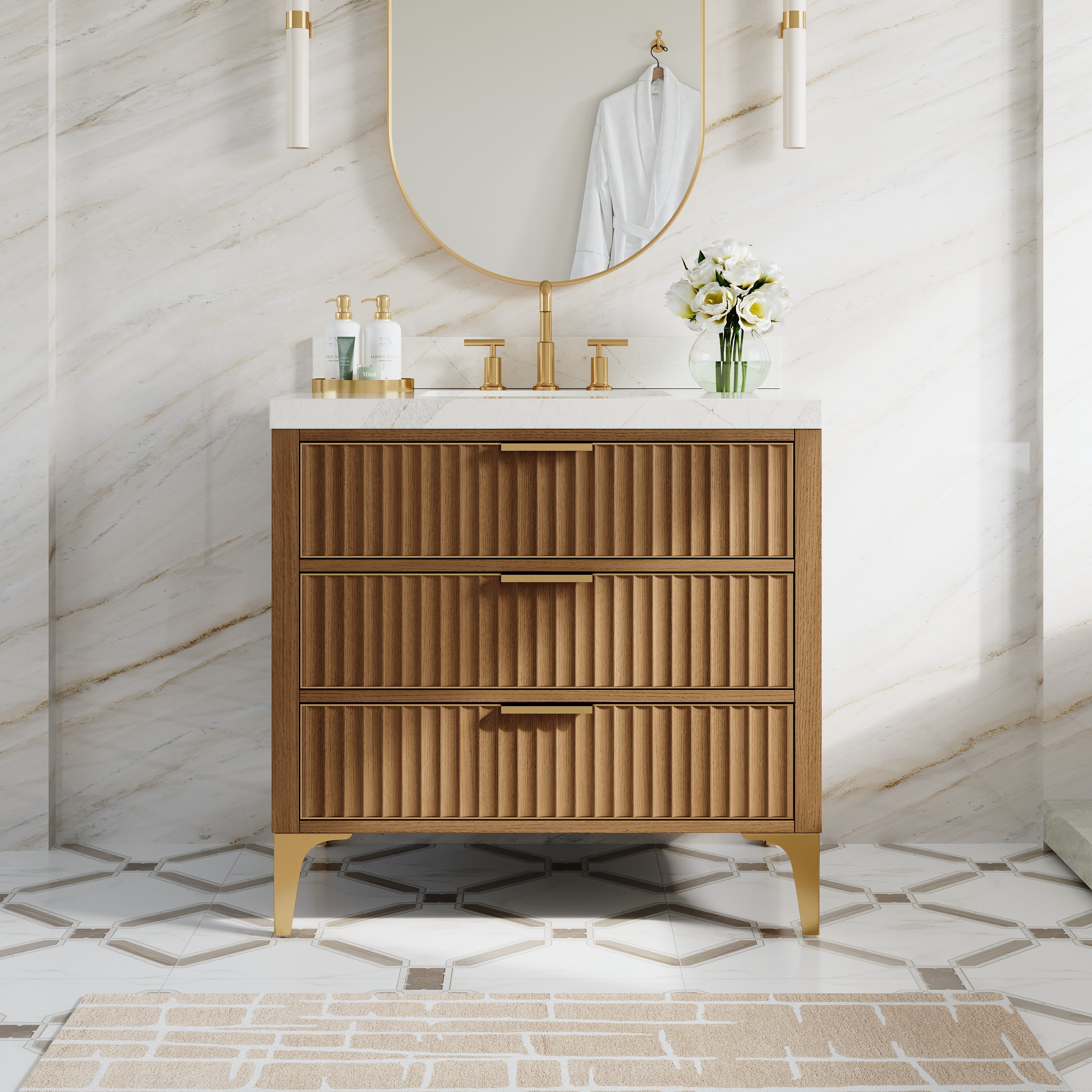
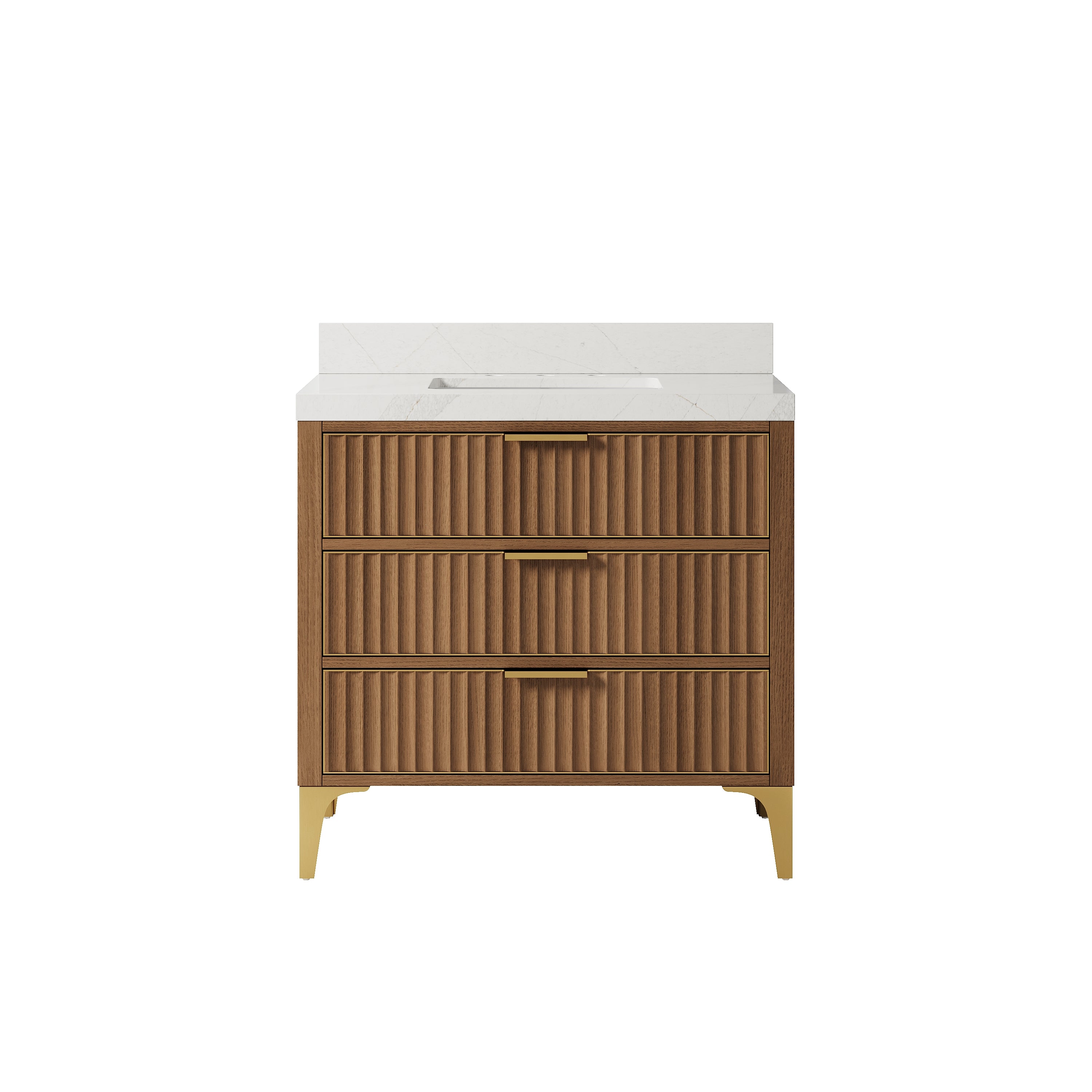
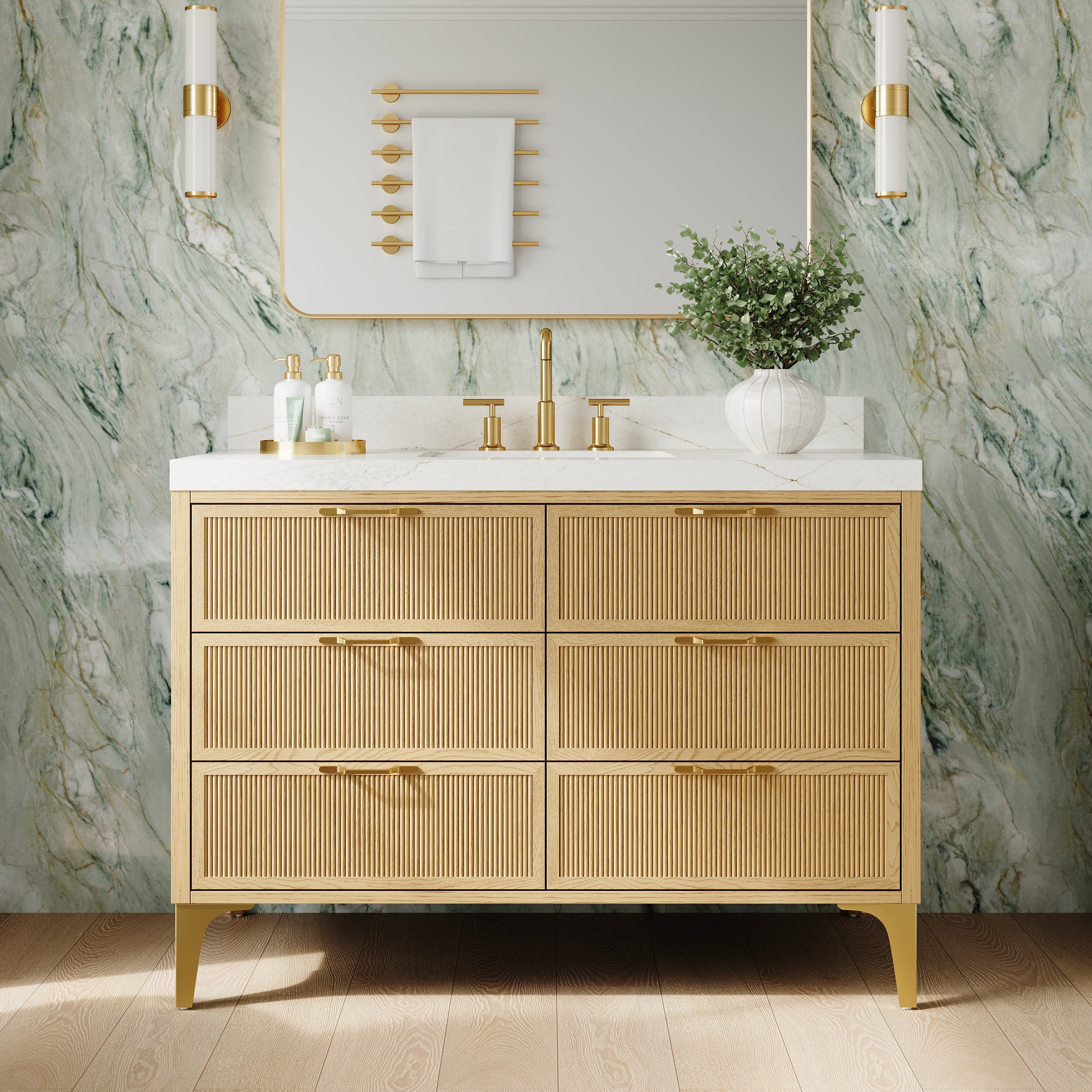
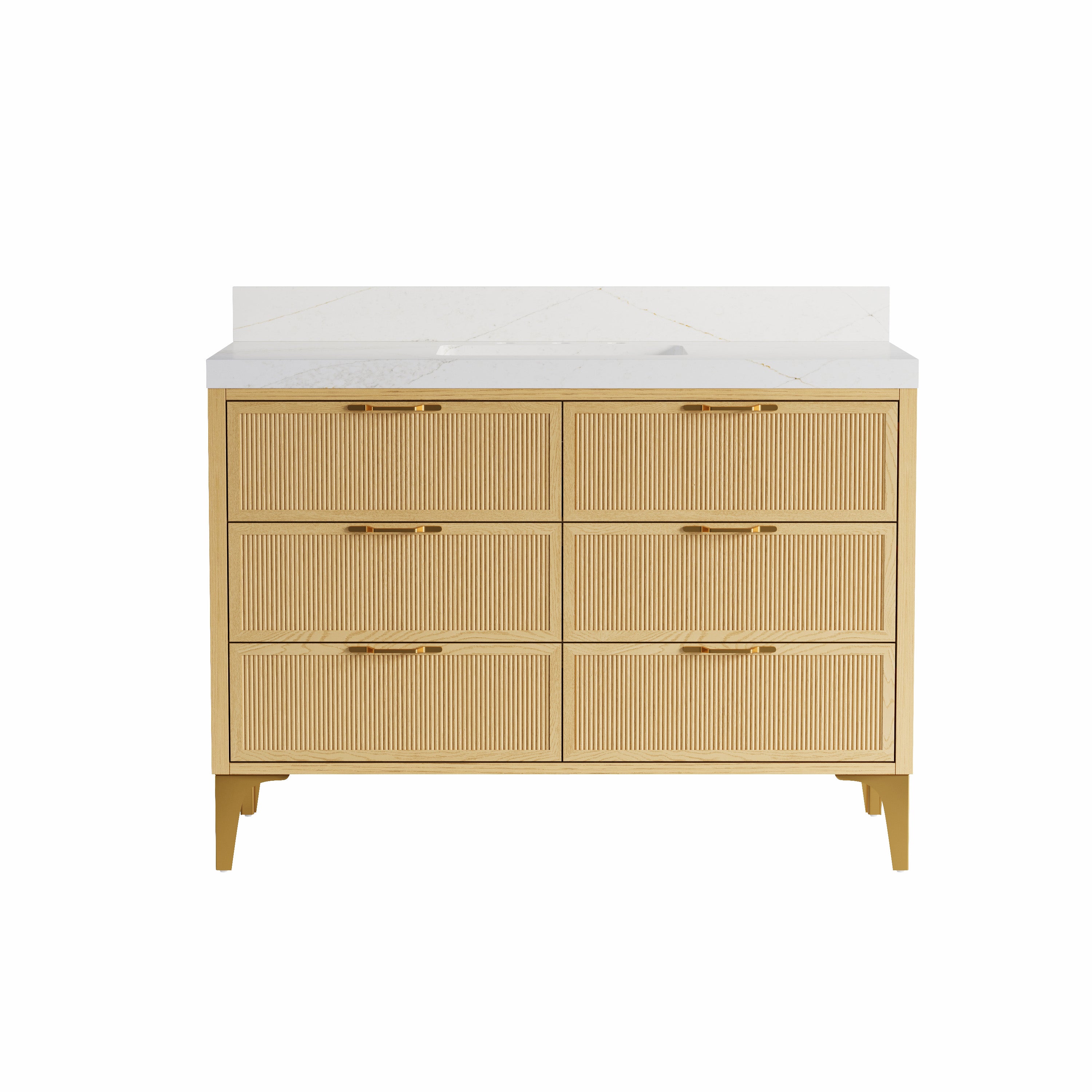


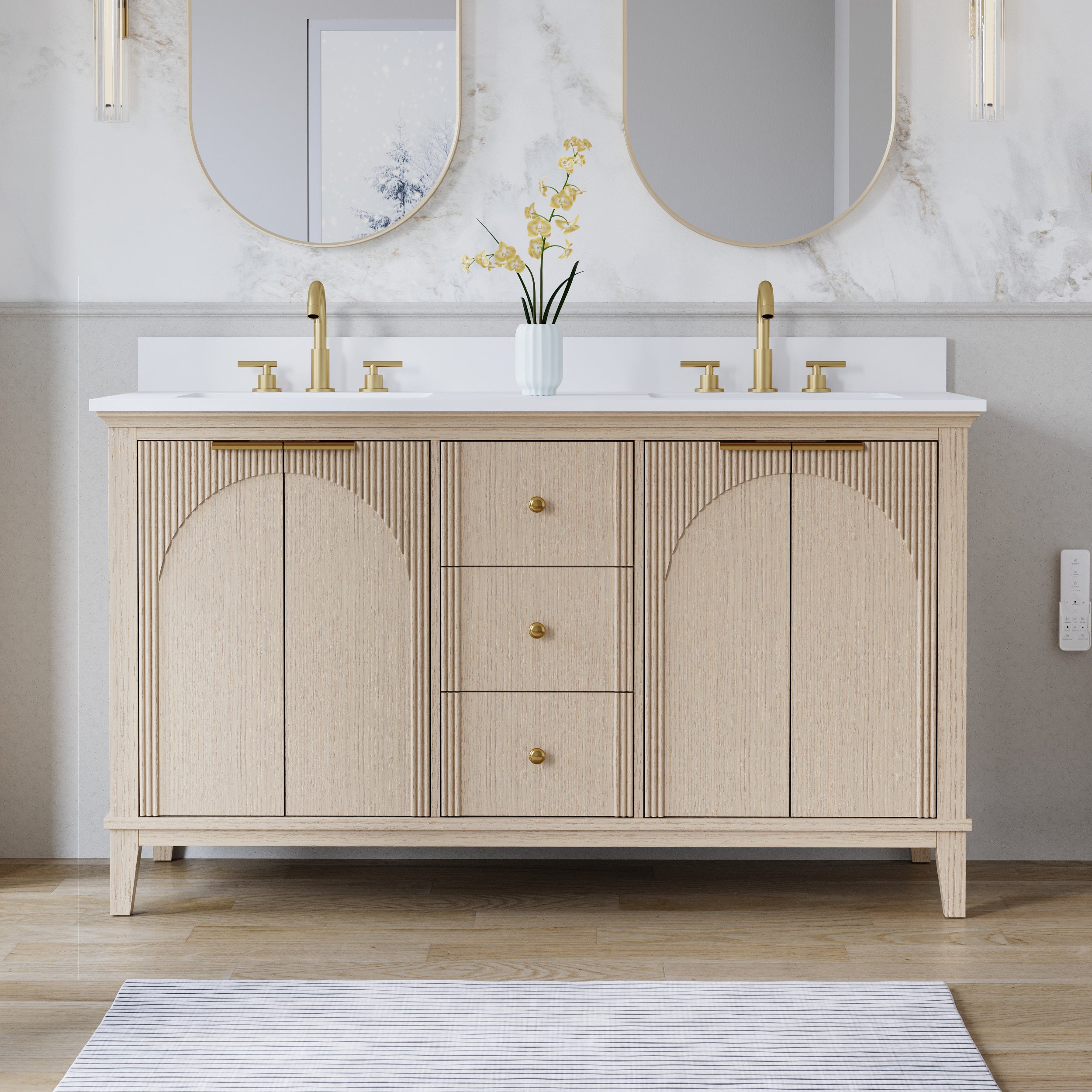
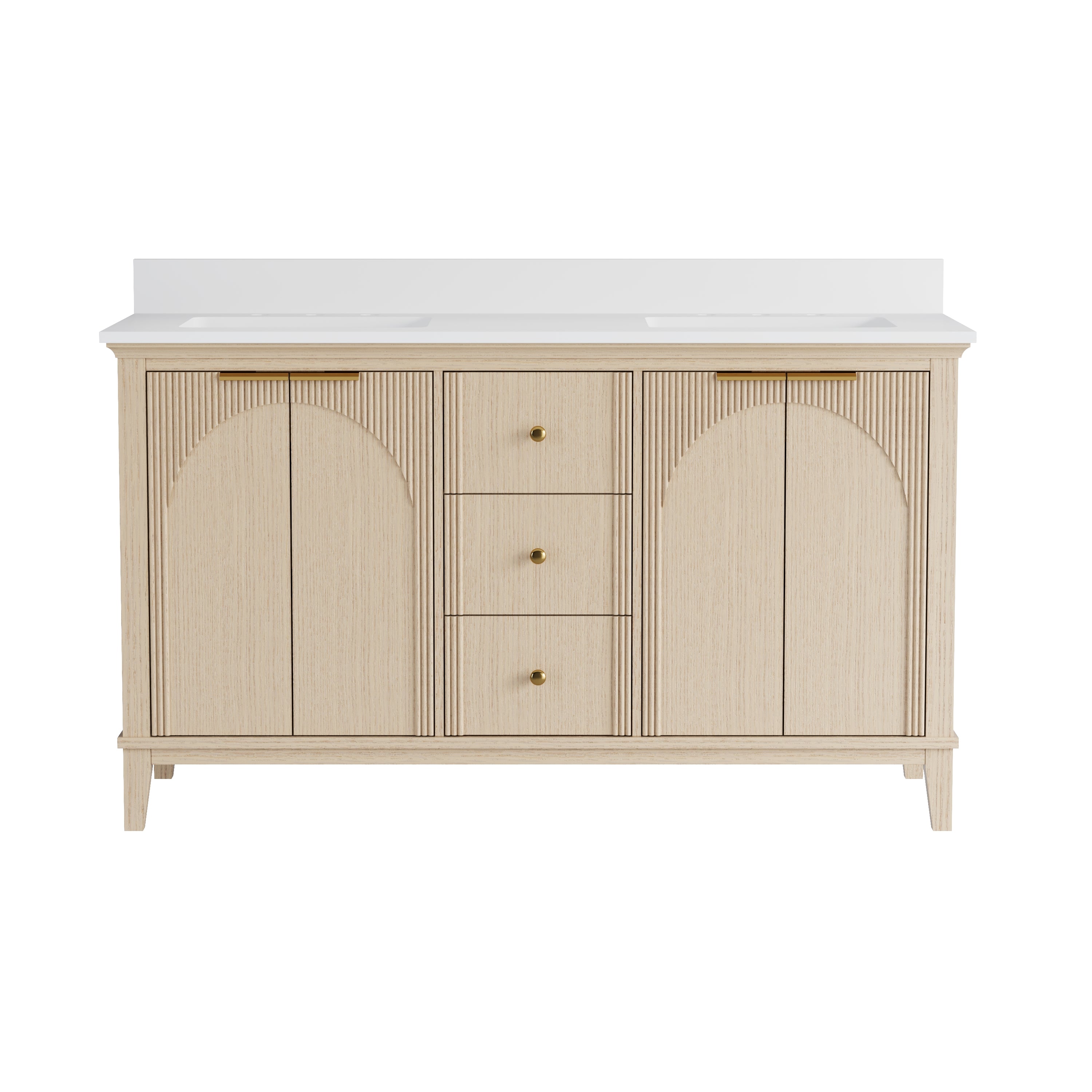
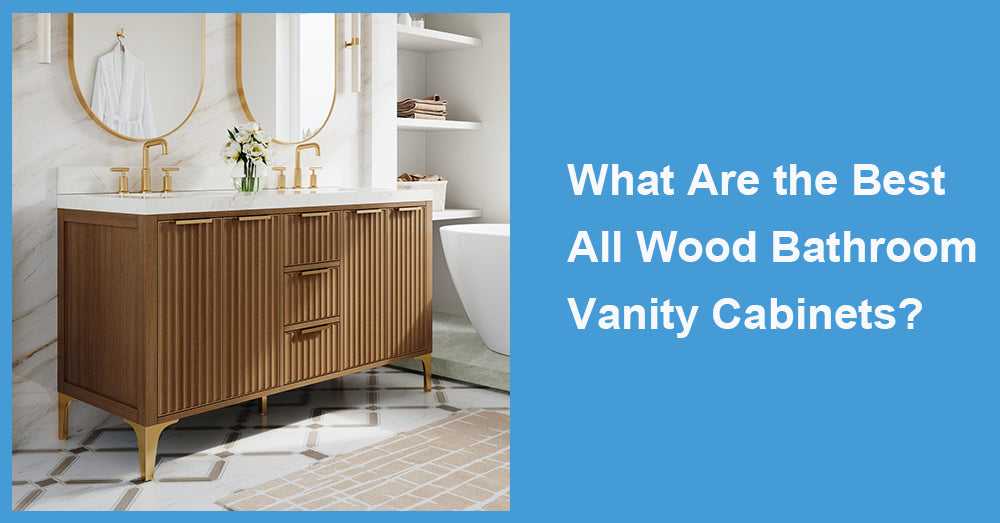
If you are searching for all wood bathroom vanity cabinets, “best” is less about one perfect model and more about choosing the right construction that survives steam, splashes, and daily wear without loosening up or swelling at the edges. The strongest long-life picks usually share the same DNA: solid wood where the stress happens (doors, face frame), a stable cabinet box, fully sealed finishes, and hardware that stays aligned for years. Trend data supports why this category keeps growing. Wood tones are the most frequently chosen new-vanity color at 28% (Source: 2025 U.S. Houzz Bathroom Trends Study).
Below is a practical, pro-style guide to what counts as “best,” the top cabinet types to consider, and a checklist you can use to evaluate any vanity before you buy.
1. First, Clarify What “All Wood” Should Mean for Durability
Marketing language varies, so treat “all wood” as a goal you verify, not a label you trust.
The most durable real-world structure is usually:
· Solid wood doors and face frame (high-touch and hinge-stress zones).
· A stable cabinet box material (often plywood).
· Fully sealed edges and interiors.
Why this matters: moisture is the bathroom’s main stress test. MDF and particleboard can swell when exposed to high humidity or water, and that swelling is not reversible once expansion occurs beyond original dimensions (Source: Composite Panel Association, Dimensional Stability Technical Bulletin).
2. The “Best” All Wood Vanity Cabinets, Ranked by Long-Term Performance
Best Choice 1: Solid Wood Frame + Plywood Cabinet Box
This is the most common “sweet spot” in high-quality vanities because it balances strength and stability.
Why it is best:
· Solid wood frame holds hinges and fasteners well.
· Plywood box resists racking and stays square under humidity swings.
· Repairs are easier compared with fiberboard-based boxes.
Who it fits:
· Primary bathrooms with heavy daily use.
· Remodels where you want longevity without going fully custom.
Best Choice 2: Hardwood Face Frame and Doors With Heavy-Duty Drawer Construction
If you want a premium feel, hardwood doors and a strong face frame often deliver better dent resistance and long-term “tightness.”
What to look for:
· Hardwood doors (oak, maple, walnut, etc.).
· Sturdy drawer boxes (ideally with stronger joinery and thick bottoms).
· Soft-close hardware (now widely expected).
Data point: soft-close drawers are selected in 78% of renovated bathrooms and soft-close doors in 75% (Source: 2025 U.S. Houzz Bathroom Trends Study).
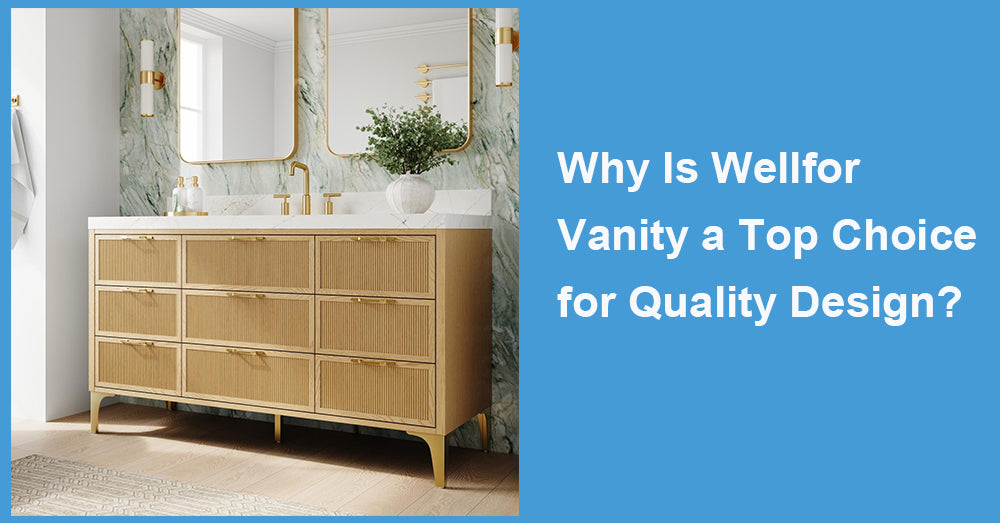
Best Choice 3: Furniture-Style Wood Vanity Cabinets (Legs or Built-In Base) With Reinforced Structure
Furniture-style pieces are popular because they look elevated and add visual lightness, but they must be structurally reinforced to avoid wobble.
Why it can be “best” when built right:
· Strong aesthetics that stay timeless.
· Easier floor cleaning under open-leg designs.
What makes or breaks it:
· Rigid internal frame and strong corner reinforcement.
· A finished, sealed underside and protected base edges.
Best Choice 4: Floating Wood Vanity Cabinets With Proper Wall Blocking
Floating vanities look modern and make the room feel larger, but they must be installed correctly.
Best when:
· You have solid wall backing and a strong mounting rail system.
· You want easier floor maintenance and a cleaner silhouette.
Watch-outs:
· Installation quality matters more than ever. A great cabinet can fail if mounted into weak framing.
Best Choice 5: Double-Sink All Wood Cabinets With a Center Support Strategy
Large vanities look stunning, but they need thoughtful structure to prevent sagging and alignment problems over time.
Look for:
· Reinforced rails under the countertop.
· Strong center dividers and support points.
· Heavy-duty slides and hinges.
3. Humidity Is the Make-or-Break Variable
Even the best wood vanity needs a moisture plan. EPA guidance recommends keeping indoor relative humidity below 60%, ideally 30% to 50% (Source: U.S. EPA, Moisture Control; Source: U.S. EPA Mold Course Chapter 2).
Why designers care about this:
· High humidity slows drying, which stresses finishes and edges.
· Cabinet interiors stay damp longer, increasing odor and mold risk.
· Small leaks do more damage because they do not dry out quickly.
4. What “Best” Looks Like in Materials and Build Details
Cabinet Box Material
· Prefer: plywood box panels and back.
· Avoid (for bathrooms): MDF-heavy boxes unless you have exceptional sealing and moisture control.
Again, MDF/particleboard swelling after humidity exposure is not fully reversible once it expands beyond original dimensions (Source: Composite Panel Association).
Finish Quality
The best all-wood vanity cabinets are sealed where most people never look:
· Sink cutout underside.
· Plumbing openings.
· Toe-kick and cabinet bottom edges.
· Door and drawer edges.
Finish is not just cosmetic. It is moisture protection.
Hardware
The best cabinets use:
· Soft-close hinges and slides.
· Smooth drawer travel with minimal wobble.
· Stable mounting points that do not strip.
5. “Best” Also Means Smart Style Choices That Age Well
Wood vanities are trending for a reason. Industry trend reporting notes wood-faced vanities are now more popular than painted, reflecting a continued shift toward natural materials (Source: NKBA 2026 Bath Trends Report press release).
If you want a vanity that still feels current years later:
· Choose wood tones that match other permanent finishes.
· Pair wood with light countertops for a clean, flexible palette. White countertops appear in 48% of renovated bathrooms (Source: Houzz 2025 feature summary).
· Keep door style simple (shaker and flat-panel tend to stay timeless).
6. A Practical “Best Vanity Cabinet” Checklist
Use this scorecard before buying:
· Materials disclosed clearly: solid wood doors and frame, box material specified.
· Stable cabinet box: preferably plywood.
· Sealed interior and edges: especially around sink and plumbing cutouts.
· Soft-close hardware: doors and drawers.
· Rigid feel: no flexing side panels, no wobbly base.
· Humidity plan: target 30% to 50% RH, keep below 60% (Source: U.S. EPA).
· Leak prevention mindset: check plumbing connections periodically.
7. Is “Best” Worth Paying For?
Bathroom improvements tend to hold value better than many other projects. The 2025 Cost vs. Value report lists a midrange bath remodel with 80% cost recouped (Job Cost $26,138; Resale Value $20,915) (Source: JLC 2025 Cost vs. Value Report).
A premium vanity does not guarantee resale value by itself, but strong cabinetry is a highly visible quality signal in a room where buyers notice details quickly.

Conclusion
The best all wood bathroom vanity cabinets are not defined by a single brand name. They are defined by proven construction: solid wood where it matters, a stable box (often plywood), complete edge sealing, and quality soft-close hardware. Combine that with humidity targets of 30% to 50% (and below 60%) from EPA guidance, and you get a vanity cabinet that stays aligned, looks better longer, and is more likely to be repairable rather than disposable (Source: U.S. EPA; Source: Composite Panel Association).











Leave a comment
This site is protected by hCaptcha and the hCaptcha Privacy Policy and Terms of Service apply.