














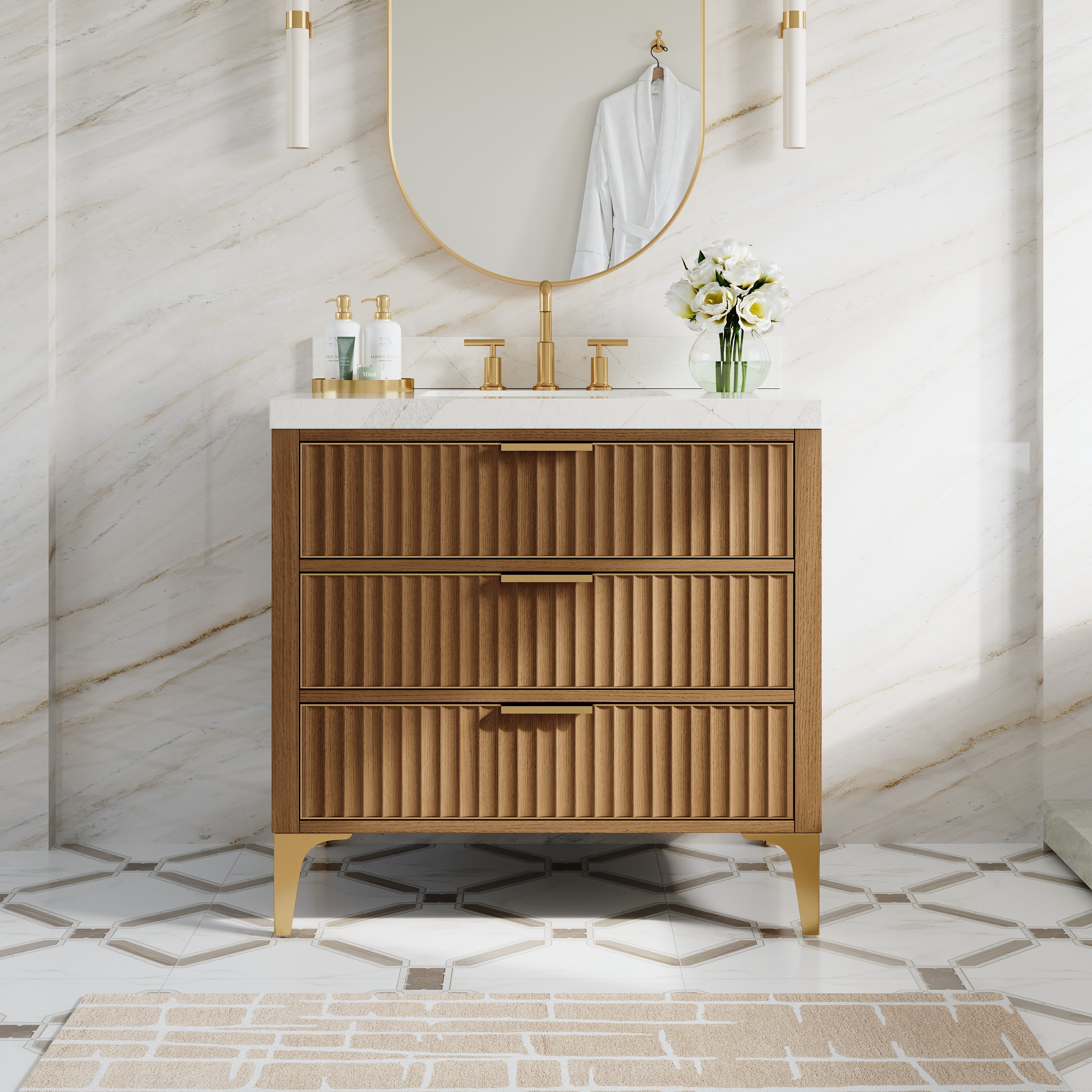
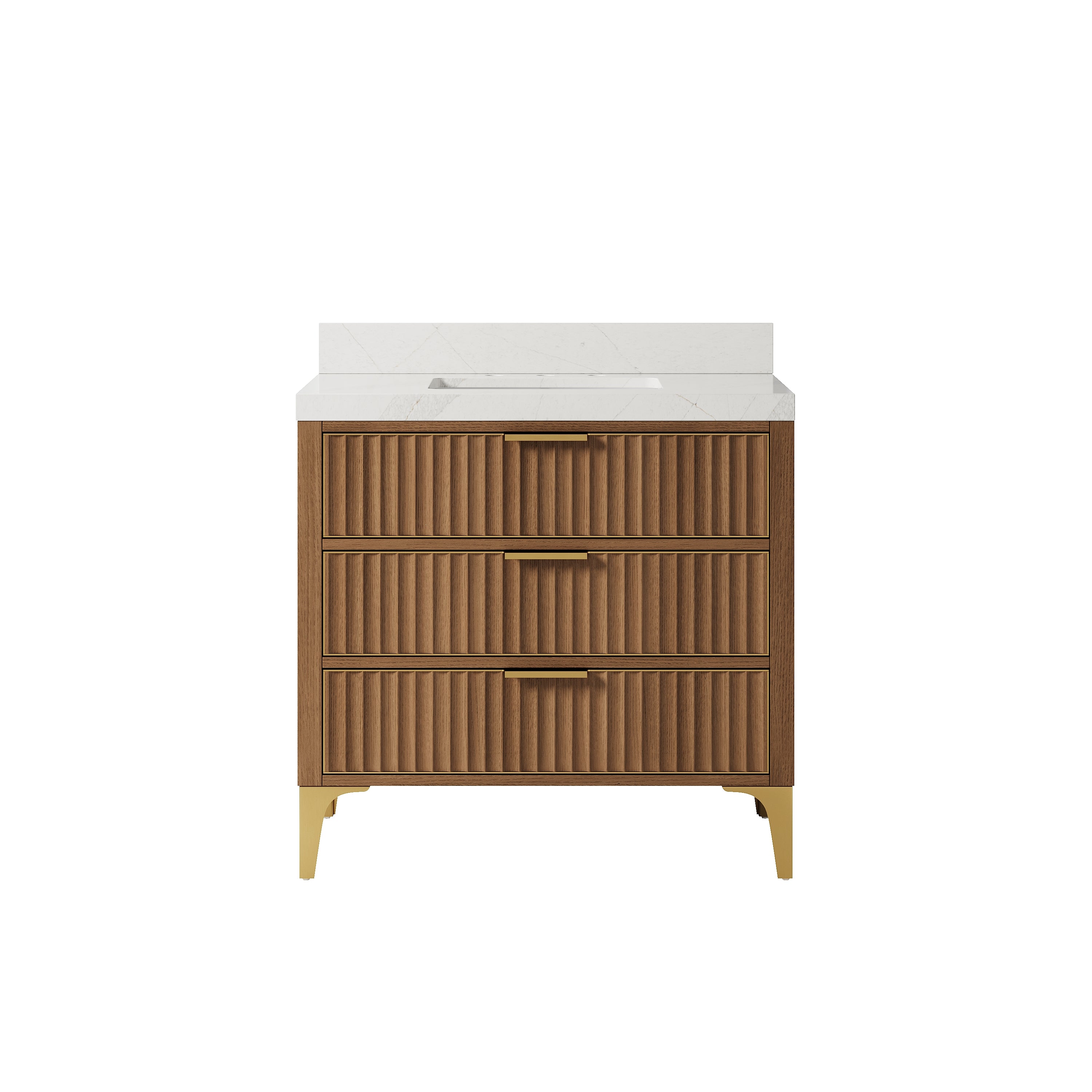
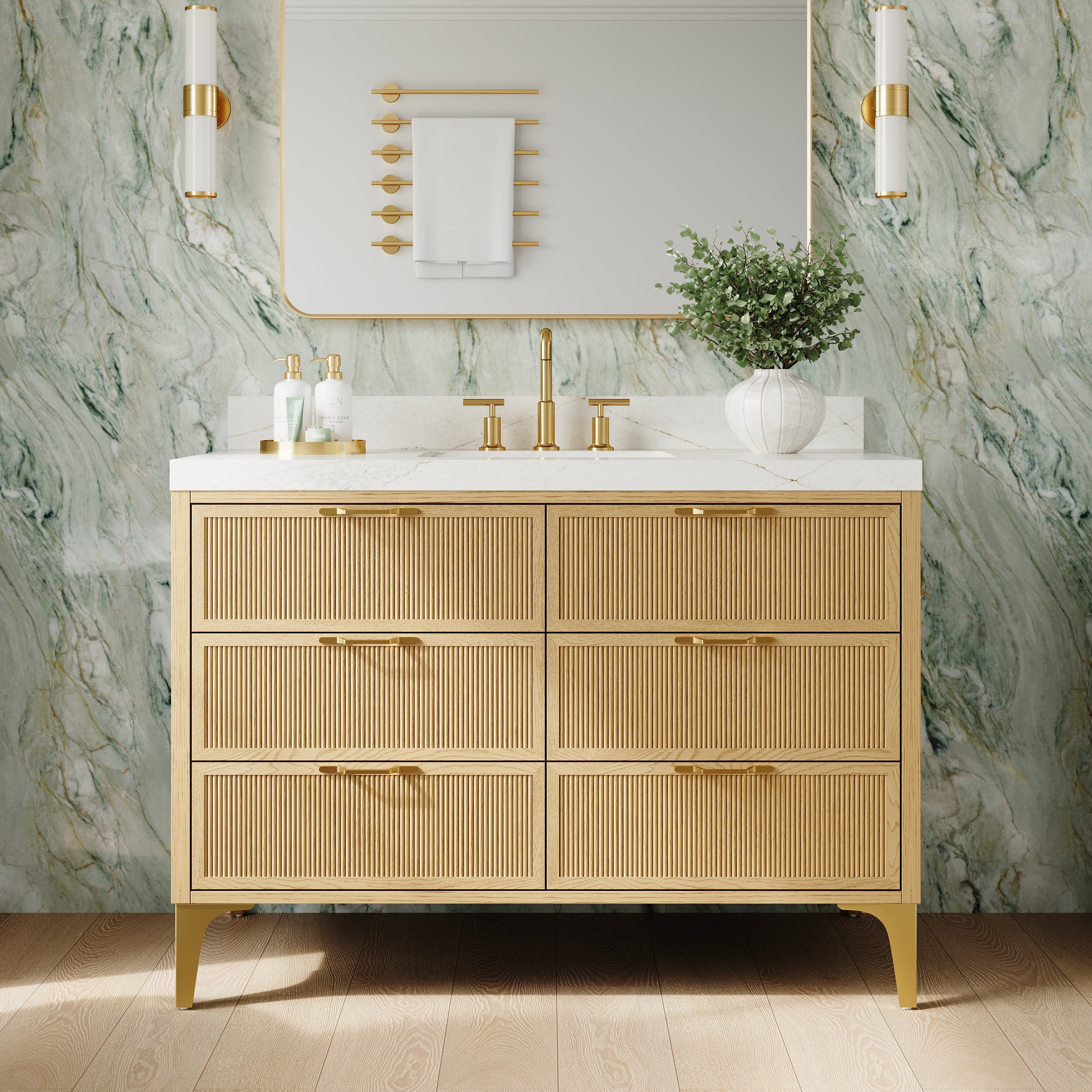
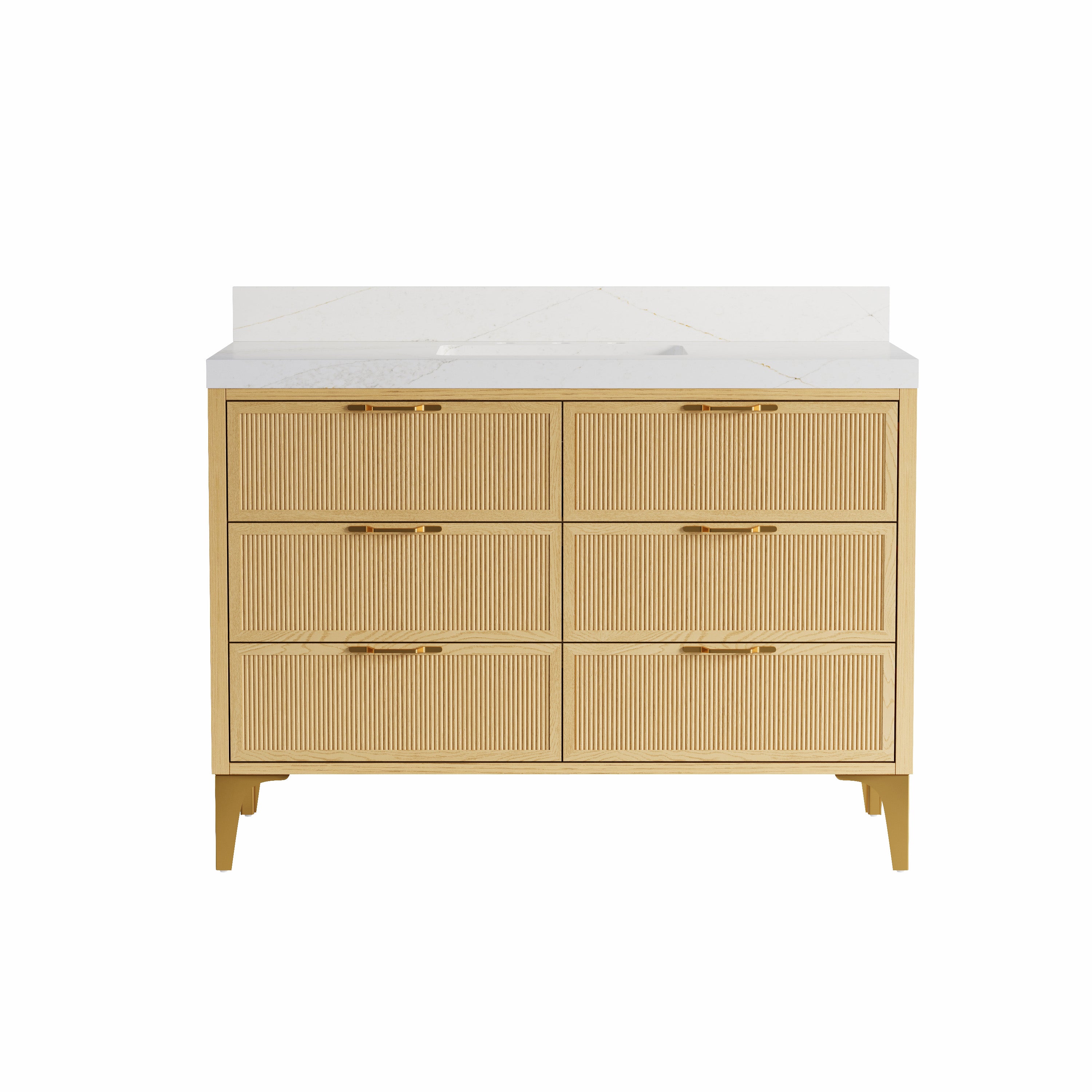


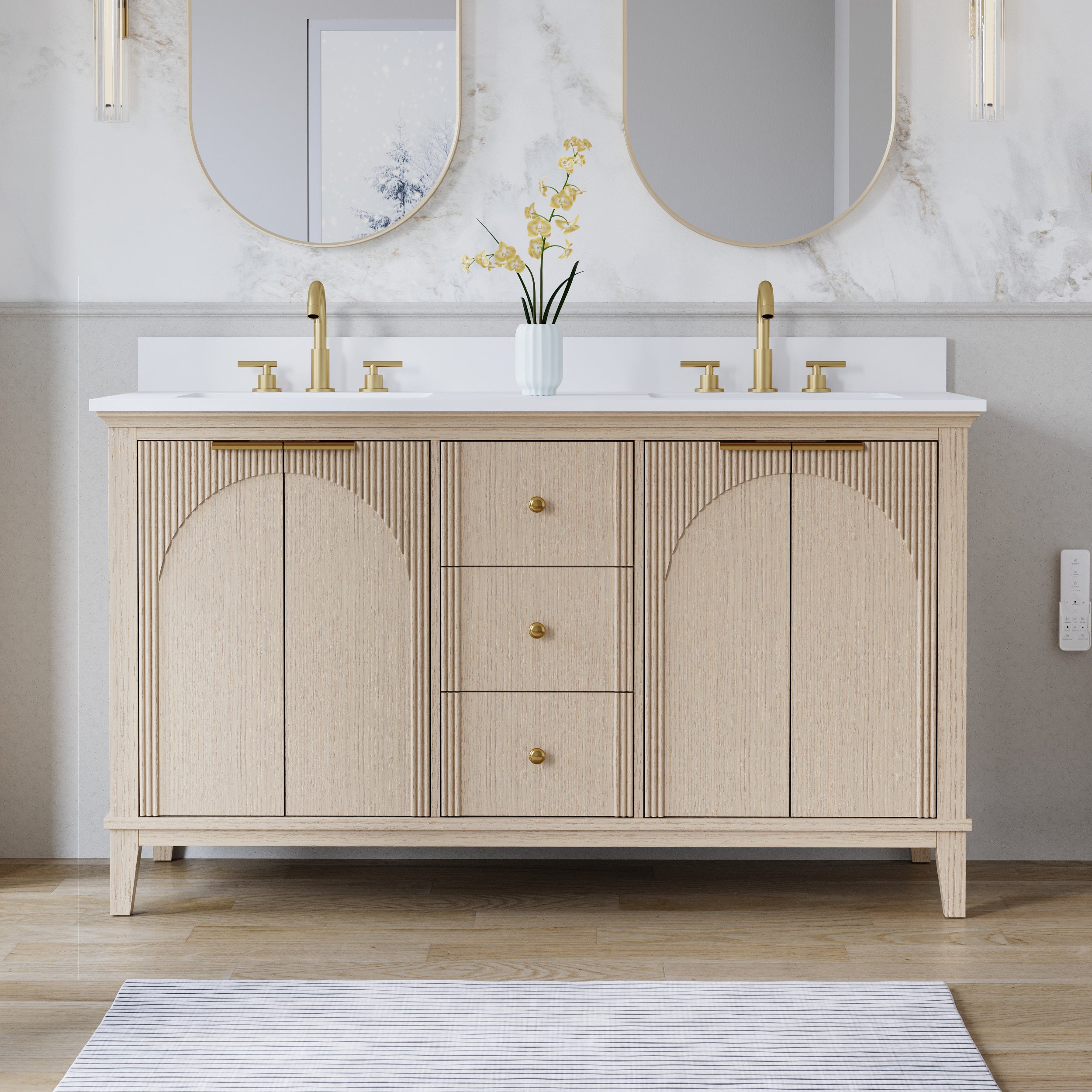
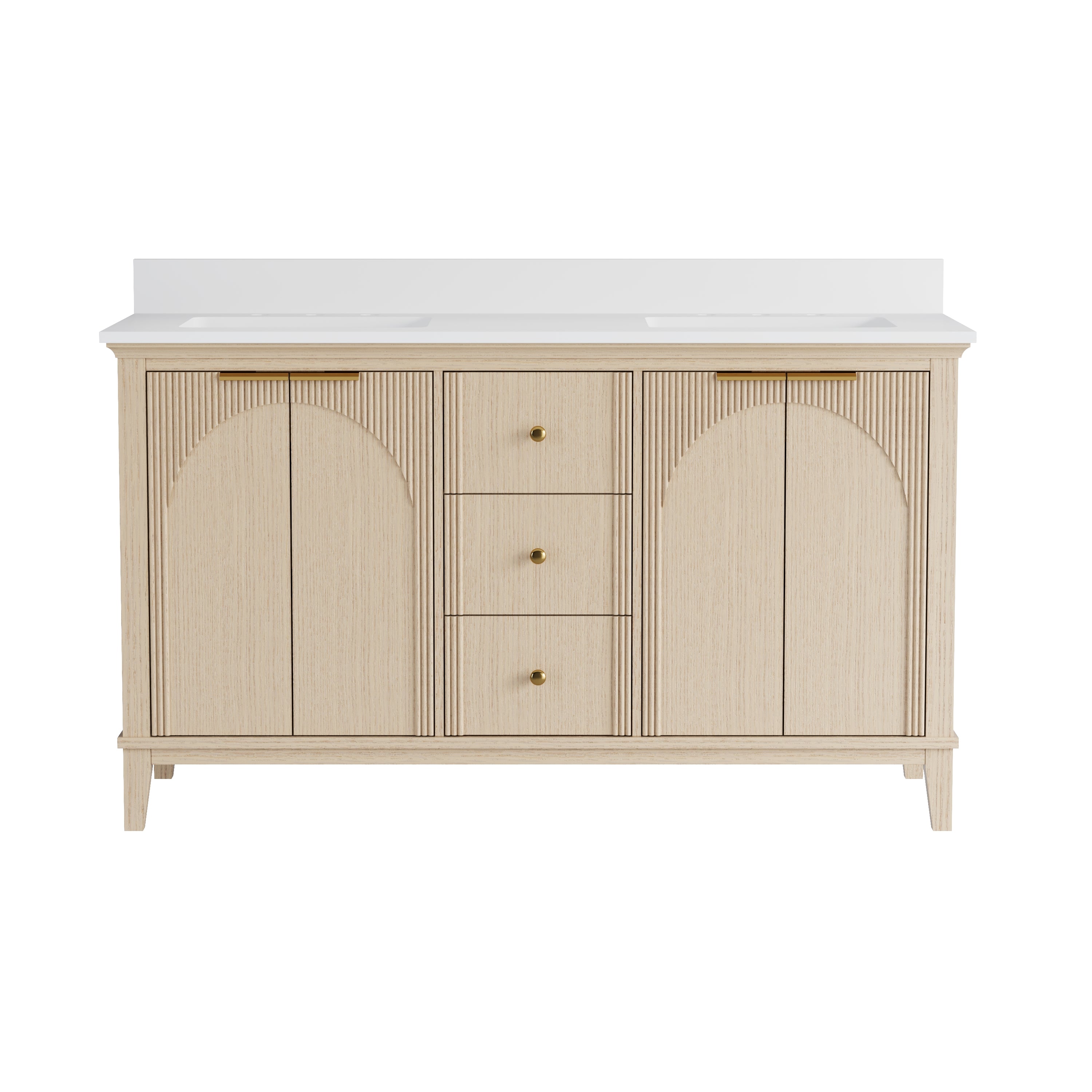
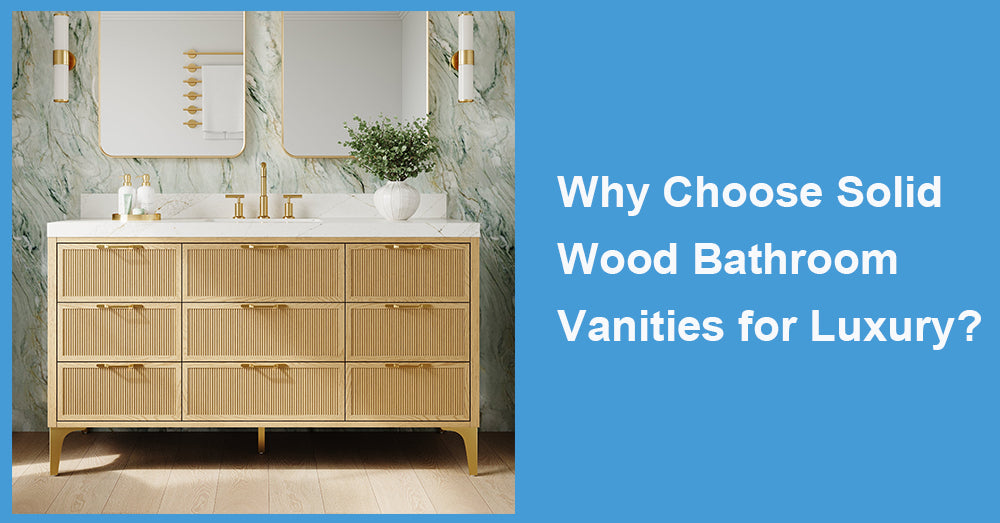
If you’re shopping for wood bathroom vanities with tops, you’re following one of the clearest shifts in bathroom remodeling: fewer “piece-by-piece” purchases and more complete, installation-ready packages that reduce delays and surprise costs. That trend makes sense in a renovation cycle where overall improvement spending is still projected to reach $518 billion by the end of 2026, keeping pressure on faster timelines and predictable scope.
Why “ready-to-install” packages are showing up everywhere
Bathroom remodels are increasingly managed like mini construction projects, with tight sequencing between plumbing, electrical, flooring, paint, and finish carpentry. Houzz’s 2025 Bathroom Trends Study reports that 84% of homeowners hire professionals for their bathroom renovations, indicating that projects often require coordination rather than DIY-only swaps.
A vanity that arrives as a matched cabinet-and-top set helps reduce the number of coordination points. Instead of templating a top, waiting for fabrication, and hoping the sink and faucet holes land exactly right, an “all-in” unit creates fewer handoffs. In other words, fewer chances for the schedule to slip.
Custom is still popular, but stock solutions are gaining share
The market is not abandoning customization, but it’s becoming more selective about where customization is worth the time. Houzz reports that 55% of homeowners choose either a fully custom (33%) or semi-custom (22%) vanity, while stock models have become more popular for the fourth year in a row.
This is exactly where ready-to-install vanities win: they deliver a “designed” look with fewer custom steps. When your countertop, sink cutout, and backsplash are already matched to the cabinet footprint, you reduce the number of variables that typically force rework.
Wood quality remains the top “signal” of long-term value
The reason wood vanities hold their appeal is simple: they are opened, closed, leaned on, splashed, cleaned, and used daily. Houzz found that among homeowners who opted for wood vanities, 74% chose solid wood, far ahead of MDF (10%), plywood (6%), particleboard (4%), and veneer (3%).
That preference isn’t just about appearance. Solid wood (paired with good finishing and stable construction) tends to support better hinge and slide alignment over time—especially important when you’re buying a vanity as a “ready-to-install” kit that you expect to perform smoothly for years.
Why the “top” matters as much as the cabinet
In many remodels, the countertop is one of the most visible upgrades, and it’s frequently replaced. In Houzz’s study, engineered quartz is the leading vanity countertop material at 45%, followed by quartzite (20%), granite (14%), and marble (13%.
That mix helps explain why bundled tops are gaining traction: quartz and stone choices are often selected for durability and appearance, but custom fabrication can be the time bottleneck. When the vanity comes with a pre-matched top (and often an integrated or pre-cut sink), you keep the visual upgrade while removing the slowest step in the chain.

“Right size, right now”: the vanity widths people actually choose
Ready-to-install vanities work best when their sizes map to real-world renovation patterns. Houzz reports that 47% of homeowners favor vanities 48 inches or less, while larger widths remain significant: 60 inches (19%), 72 inches (14%), and more than 72 inches (13%).
This is important because pre-matched tops and sinks tend to be most reliable in the most common footprints. If your plan calls for a 30-inch, 36-inch, 48-inch, 60-inch, or 72-inch vanity, you’re more likely to find ready-to-install options with well-tested sink placements, faucet hole spacing, and backsplash compatibility.
What “ready to install” should actually include
A true installation-ready vanity isn’t just “cabinet + slab.” The best sets typically include:
l A cabinet built square and stable (so doors and drawers stay aligned).
l A top that is already fitted to the cabinet footprint (reducing onsite trimming).
l A backsplash option that’s sized for the top (minimizing gaps along the wall).
Compatible sink configuration (pre-cut for undermount or integrated, depending on the product).
Hardware you’ll feel every day.
On that last point, Houzz data shows how much people prioritize smooth daily function: 78% select soft-close drawers and 75% select soft-close doors. Built-in extras trail behind: outlets (29%), drawer organizers (22%), hair-tool organizers (13%).
That’s a clear buying signal: nail the core mechanics first, then add convenience features if the layout and budget support them.
Installation planning: how these sets reduce mistakes, not just time
Even a perfect vanity set can fail if the prep work is rushed. “Ready-to-install” works best when the site is ready too:
l Confirm the wall is reasonably flat where the top and backsplash will meet.
l Verify plumbing rough-in locations so drawers don’t collide with supply lines or the trap.
l Dry-fit the cabinet to ensure it sits level and doesn’t rock.
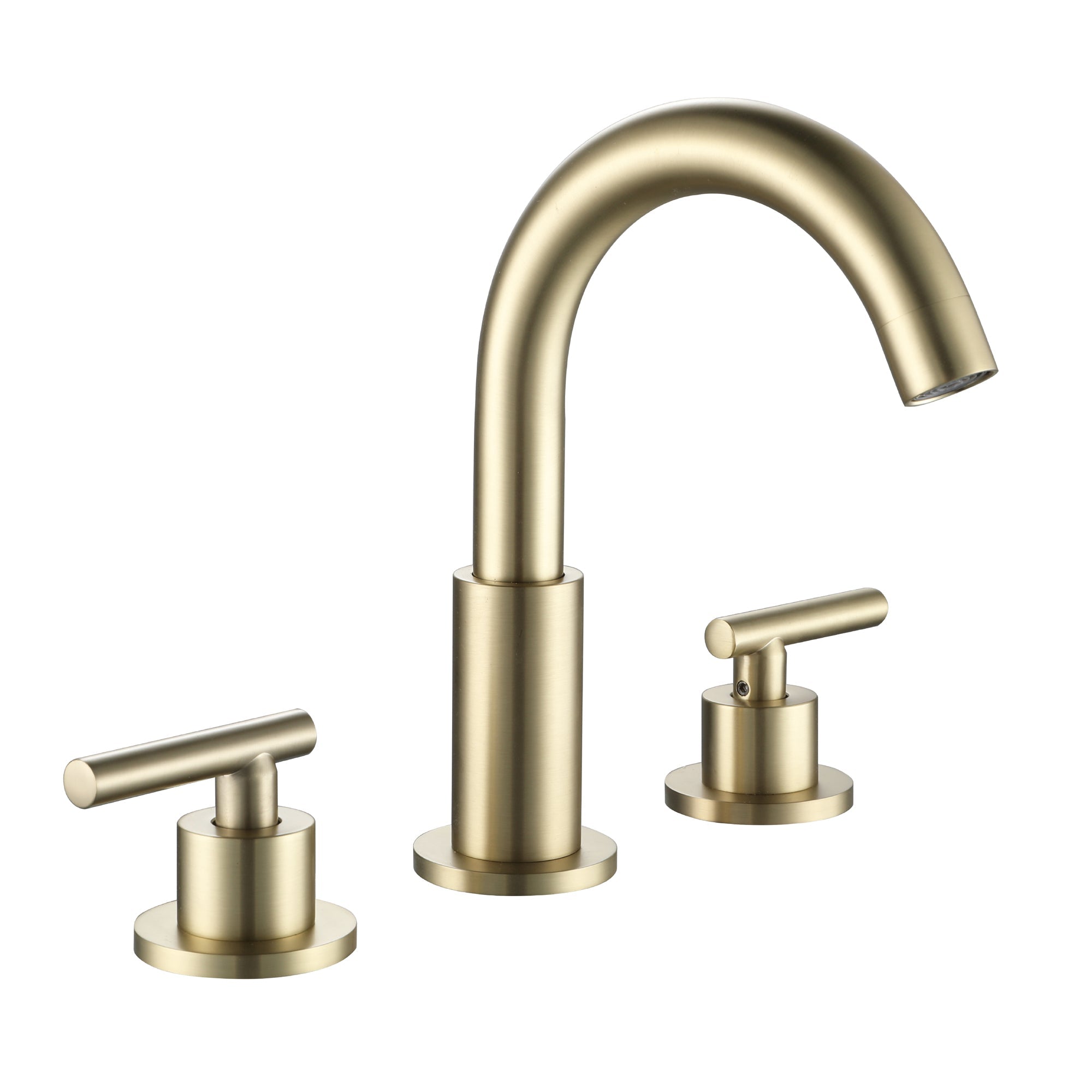
l Confirm your faucet type and hole requirements before setting the top (single-hole vs widespread).
The biggest advantage of a matched set is that the top-to-cabinet interface is pre-determined. That reduces field improvisation—one of the main sources of leaks, uneven seams, and misalignment.
Caulking and sealing: small steps that prevent big damage
Bathrooms are wet environments, and the most common long-term problem isn’t a dramatic flood—it’s slow, repeated moisture at seams. EPA guidance is blunt: moisture control is the key to mold control, and wet areas should be dried quickly to prevent growth.
For a wood vanity, the water-intrusion prevention checklist is simple but non-negotiable:
l Seal the backsplash-to-wall seam.
l Seal the backsplash-to-top seam.
l Seal around faucet and fixture penetrations if the manufacturer calls for it.
Avoid leaving unsealed gaps where splash water can wick behind the cabinet.
A ready-to-install top helps here, too: when the top and backsplash are designed to fit together, you usually get cleaner, more consistent joints that are easier to seal correctly.
The value argument: bathrooms reward clean execution
Bathroom upgrades aren’t only about aesthetics; they’re often evaluated through resale value and perceived condition. The 2025 Cost vs. Value Report lists a midrange bath remodel with a job cost of $26,138, resale value of $20,915, and 80% cost recouped.
A ready-to-install wood vanity with a matching top supports that “clean execution” goal in a practical way: fewer delays, fewer mismatched parts, fewer imperfect seams, and a more cohesive finished look. It’s not that custom work is “bad,” it’s that many projects benefit more from predictable results than from custom complexity.
Bottom line: Who should buy a ready-to-install wood vanity with a top?
These sets tend to be the best fit when:
You want a faster project with fewer moving parts.
You’re choosing a common vanity width (like 30, 36, 48, 60, or 72 inches).
You value solid construction and daily function (soft-close, smooth slides) over niche add-ons.
You want the countertop material to look premium, but don’t want countertop fabrication to drive the schedule.
With solid wood strongly preferred among wood vanity buyers and engineered quartz leading countertop selections, “wood vanity + matched quartz-style top” packages are among the most practical, high-impact upgrades for 2026 bathroom remodels.









Leave a comment
This site is protected by hCaptcha and the hCaptcha Privacy Policy and Terms of Service apply.