














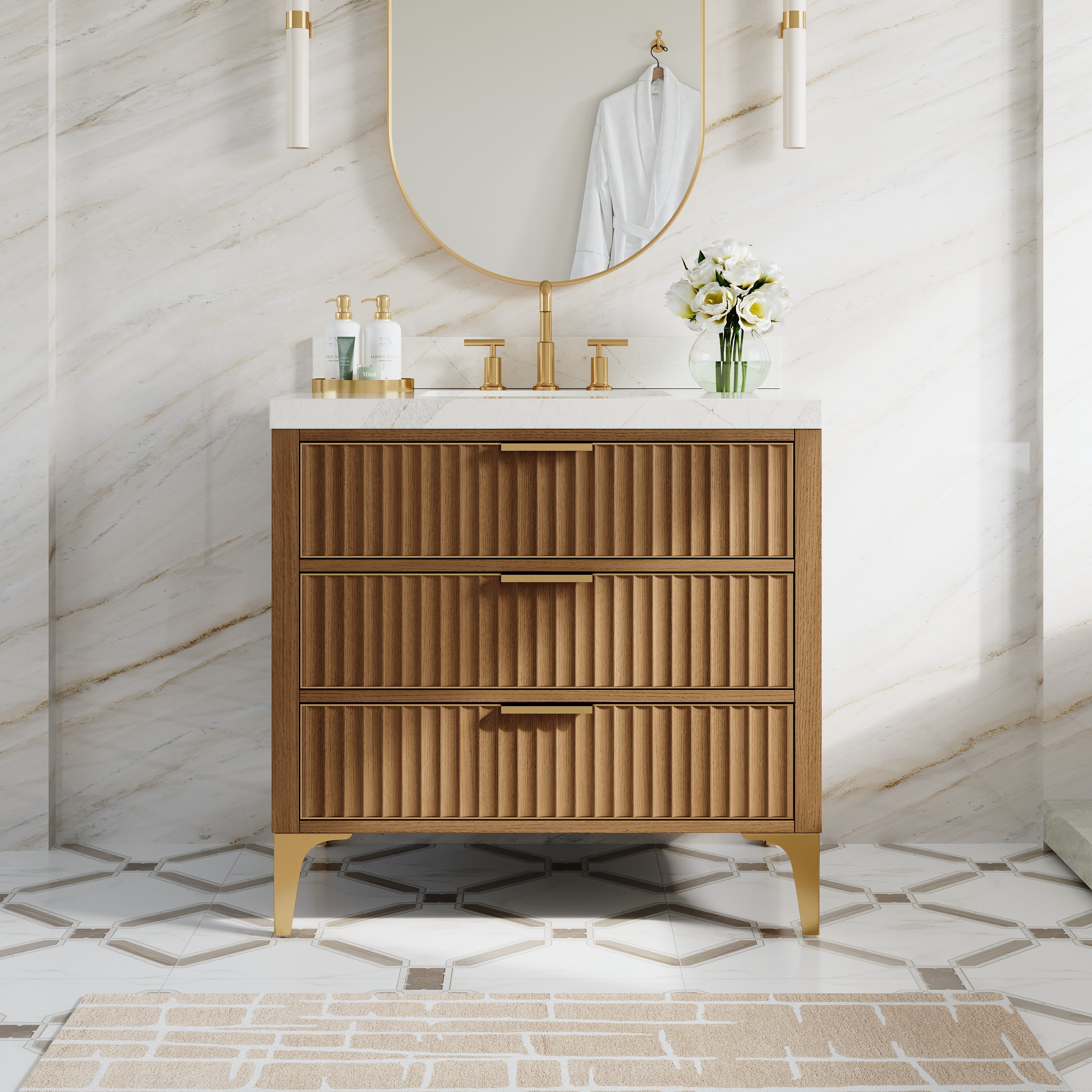
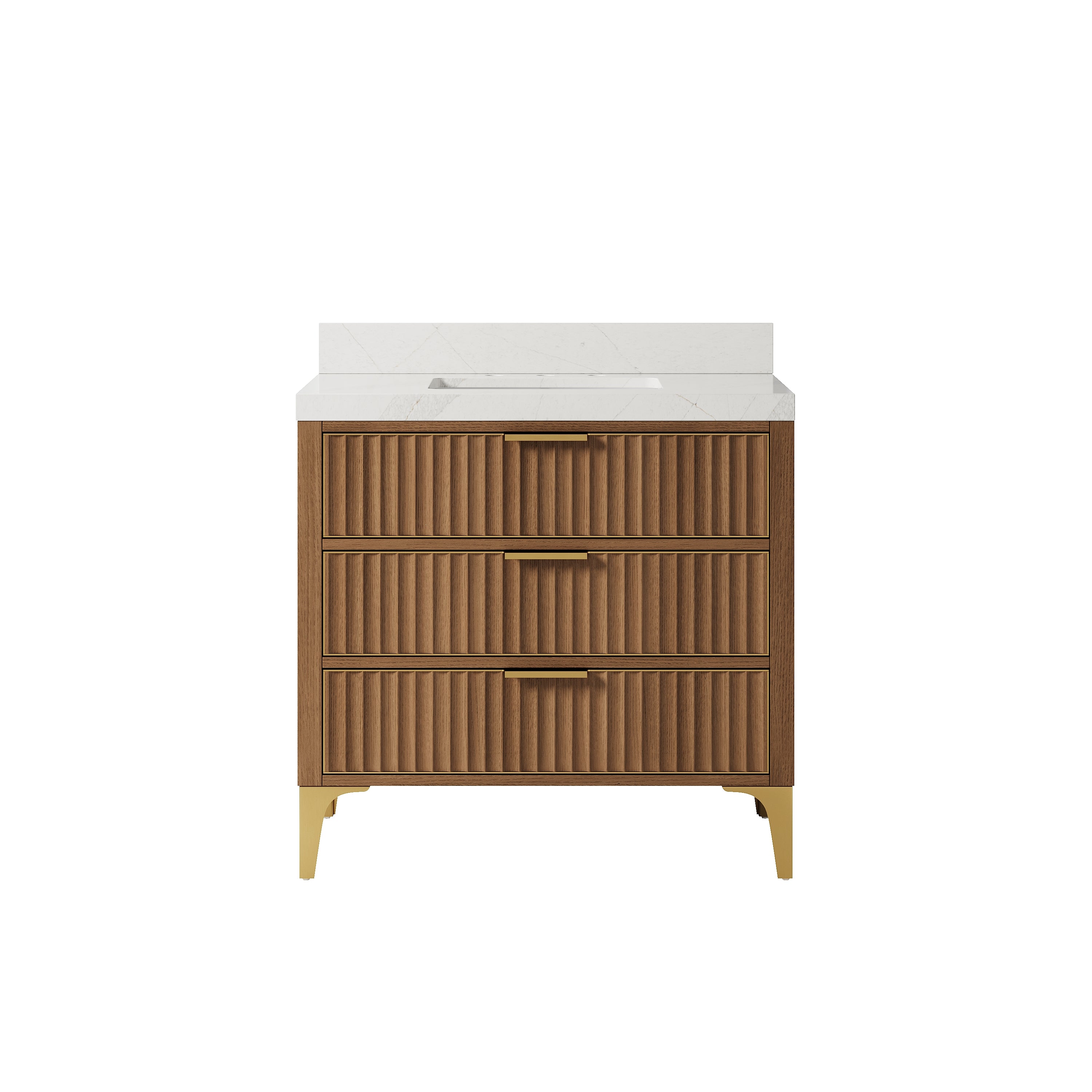
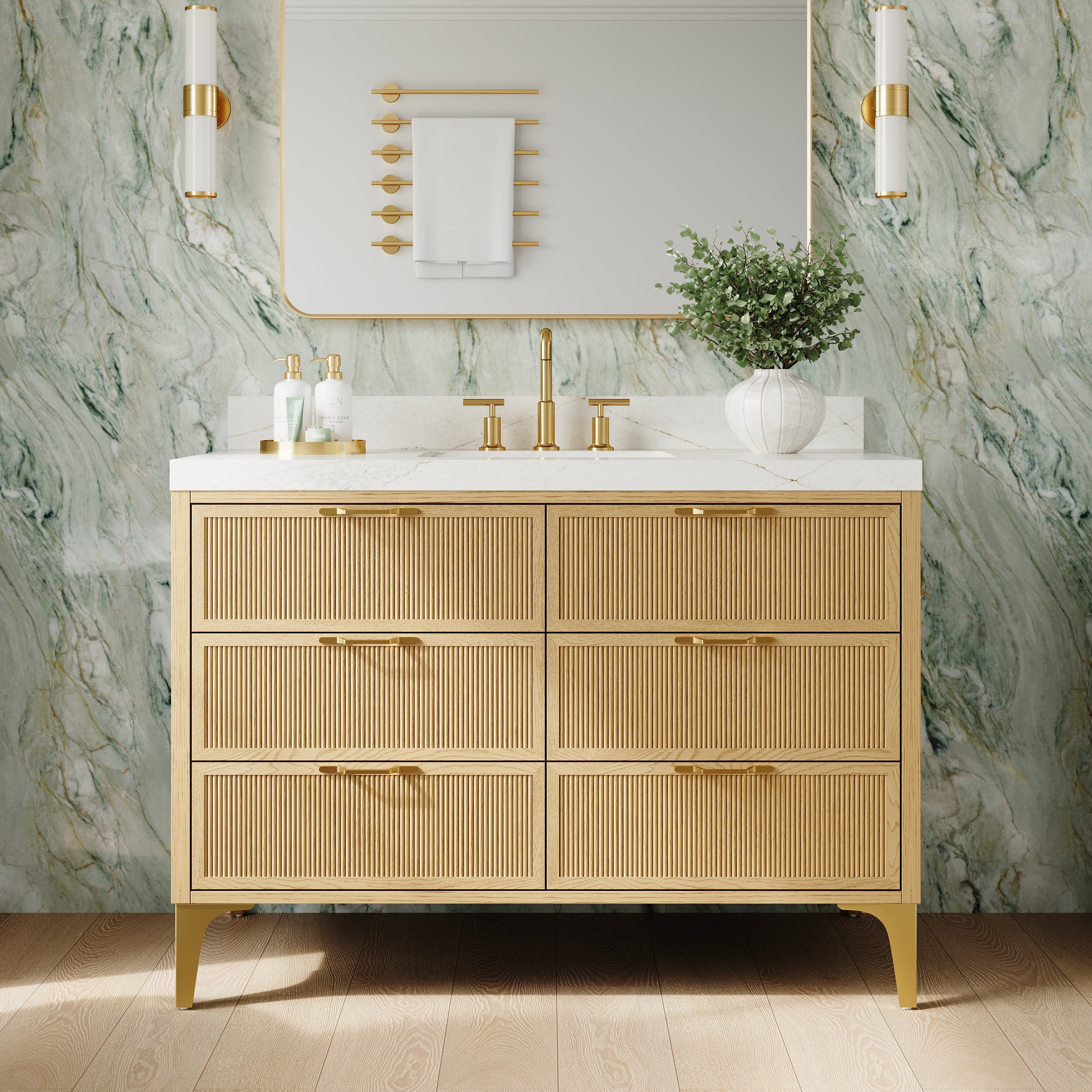
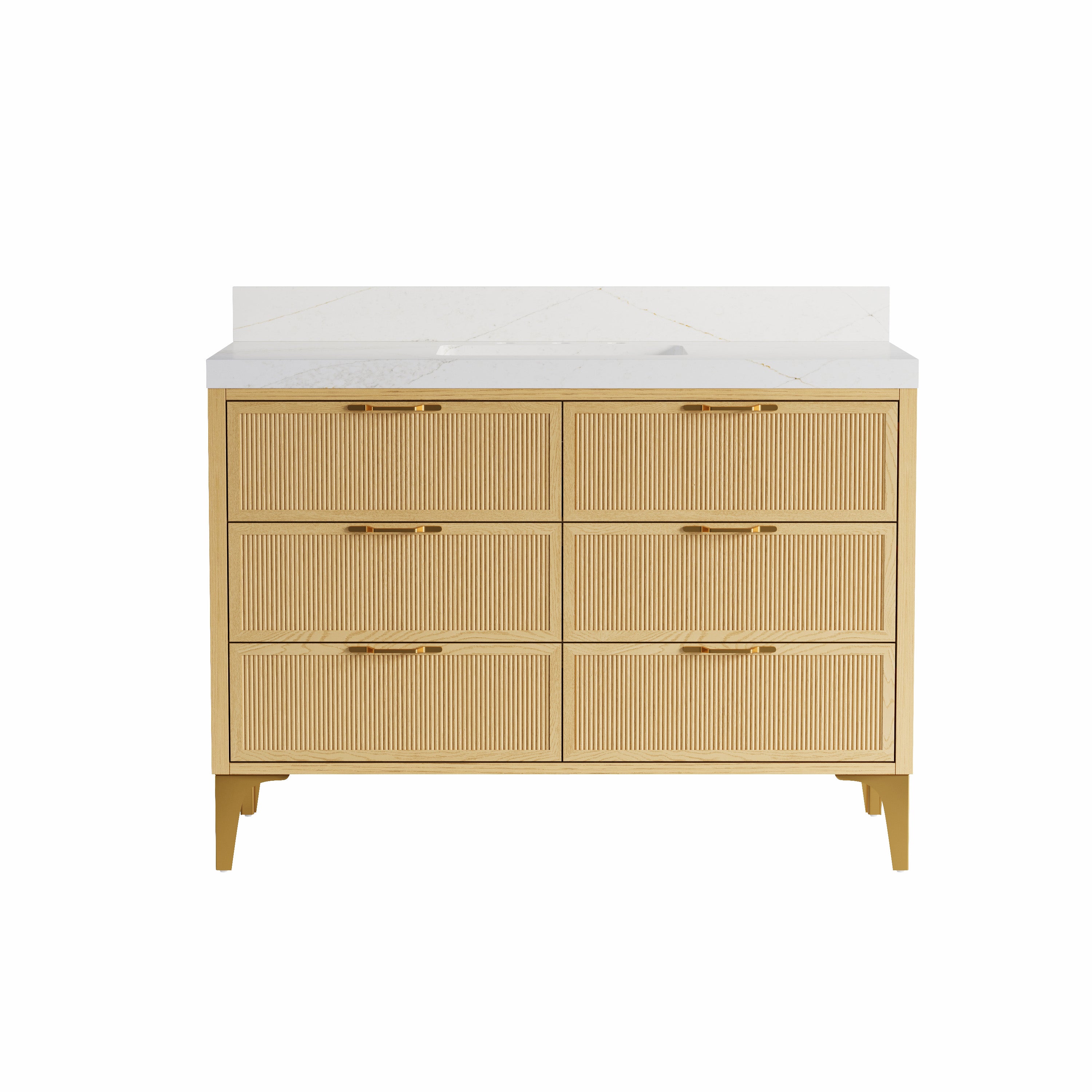


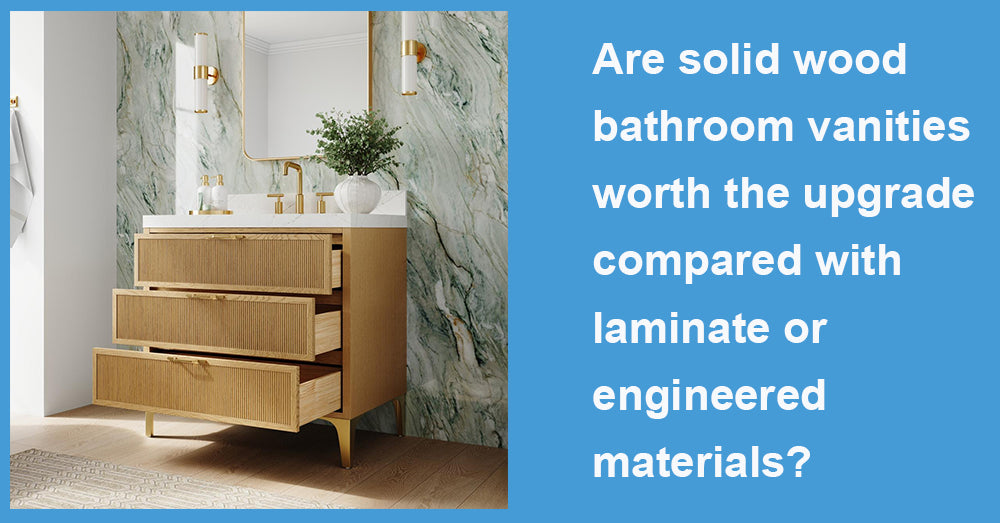
Against the backdrop of the continued rise in the residential renovation market, wooden bathroom vanities have once again become an important element in mid to high-end bathroom spaces. According to data from the Residential Renovation Industry Association (NARI) and multiple building materials research institutions, by 2025, over 41% of consumers in bathroom renovation projects are expected to choose sink products with natural wood-grain effects rather than all-metal or PVC materials. At the same time, high-humidity environments, hot steam, residual water stains, and frequent cleaning also pose more stringent durability challenges for wooden washbasins.
Industry data show that when bathroom relative humidity exceeds 65% for an extended period, the probability of slight warping and deformation in solid wood panels that have not been fully sealed will increase significantly within 12 months. In southern and coastal states, due to generally high air humidity, the repair rate of wooden bathroom cabinets is significantly higher than in dry areas. Therefore, "surface treatment process" is no longer just about appearance decoration, but has become a key technical link that determines product life.

Polyurethane coating is still the mainstream protection solution.
In the current bathroom and furniture industry, polyurethane remains one of the most widely used wood protection processes. Its core advantage lies in the ability to form high-density cross-linked film layers, thereby blocking water vapor infiltration and improving surface wear resistance.
Industry test data shows that multi-layer polyurethane sealing technology can reduce the moisture absorption rate of wood by about 30% to 40%. For bathroom environments that require long-term exposure to hot steam and water splashes, this process can significantly reduce the risk of wood expansion, shrinkage, and cracking.
The woodworking industry magazine WOOD Magazine notes that polyurethane can better resist mild wear and daily scrubbing than ordinary varnish or water-based coatings. The magazine recommends that bathroom cabinets be coated with at least three layers of complete polyurethane coating to enhance moisture resistance.
At present, there are two main polyurethane solutions in the market:
Oil based Polyurethane
Water based Polyurethane
Among them, oil-based polyurethane penetrates deeper and offers greater durability, but it may cause slight yellowing; waterborne polyurethane is more suitable for light-colored wood and has lower VOC emissions. More and more environmentally friendly residential projects are shifting towards water-based systems.
In the Reddit woodworking community, several professional painters with over 20 years of experience have stated that the durability of modern water-based polyurethane has approached or even surpassed traditional oil-based products. A commercial woodworking practitioner shared that their bamboo bathroom countertop treated with 6-layer waterborne polyurethane has maintained good condition for many years in high-frequency household environments.
Transforming varnish into a popular process in the high-end market
Compared to traditional polyurethane, Conversion Varnish is rapidly becoming popular in the high-end bathroom cabinet market. This process forms a high-density protective layer through chemical curing, offering stronger resistance to water vapor, cleaning agents, and scrubbing, making it especially suitable for high-frequency household and hotel projects.
Industry data shows that conversion varnish is significantly better than ordinary wood paint in terms of chemical corrosion resistance and wear resistance. Due to its fast curing speed and stable film layer, (edwardmartin.com) has been increasingly used by customized bathroom brands in their mid to high-end product lines.
UV curing process improves industrial production efficiency.
In recent years, large bathroom cabinet manufacturers have been accelerating the adoption of UV-cured coating technology.
Unlike traditional natural drying methods, UV technology instantly cures coatings through ultraviolet radiation, greatly reducing production cycles and improving film uniformity. For bathroom cabinet companies that require large-scale production, this means higher production line efficiency and more stable quality control.
Industry data shows that UV-cured film layers usually have higher hardness and scratch resistance while reducing local water leakage caused by human spraying errors.
At present, high-end prefabricated bathroom cabinet brands generally adopt a combination process of "UV primer+polyurethane topcoat" to balance production efficiency and durability.
Open wood wax oil is losing market share.
Although Oil Finish can preserve the natural wood grain texture, its durability in high-humidity bathrooms is increasingly being questioned.
Research has shown that although permeable oil coatings have a certain protective ability against liquid water, their effectiveness in blocking water vapor is limited. In long-term high-humidity environments, its moisture resistance will rapidly decrease.
In addition, wood wax oil requires periodic re-maintenance, usually requiring reapplication every few months. For ordinary families, this high-maintenance demand does not conform to the current consumption trend of "low-maintenance homes".
In the Reddit community, several woodworking enthusiasts have pointed out that relying solely on wood wax oil makes it difficult to resist long-term bathroom steam erosion, especially in veneer or composite board structures, where edge bulging and coating failure are more likely to occur.
Therefore, currently open wood wax oil in the market is more commonly used for dry area furniture rather than high humidity areas in the main bathroom.
Full-edge sealing technology has become a new industry standard.
In recent years, there has been a clear trend in the bathroom cabinet industry: shifting from "surface protection" to "overall sealing".
More and more manufacturers are emphasizing:
Backboard closure
bottom edge sealing
Basin opening seal
Hardware hole sealing
Internal coating of the drawer
Industry experts point out that many wooden bathroom cabinets are not damaged on the front, but gradually deform after absorbing moisture from the back, bottom, or inside.
Therefore, even if high-grade polyurethane is used, it is difficult to truly prevent long-term moisture if the internal bare wood structure is still retained.
At present, high-end custom bathroom brands have started to make "fully sealed edges and moisture-proof" one of their core selling points. Some factories even apply the same level of spray treatment to hidden areas as the outer surface to reduce long-term moisture infiltration.
The importance of ventilation system is re emphasized.
It is worth noting that industry research is re-emphasizing the importance of "environmental management" for the lifespan of wooden washbasins.
Data shows that bathrooms without exhaust systems can quickly exceed 75% air humidity after showering for 10 minutes and last for more than 30 minutes. Long-term repeated humidity fluctuations will continuously disrupt the stable balance between wood and coatings.
Therefore, building standards generally recommend that bathroom exhaust air volume should be above 50CFM and continue to operate for 15 to 20 minutes after showering.
Industry insiders generally believe that even the best surface treatment technology cannot completely offset the damage caused by long-term extreme humidity.
The industry is shifting from "beauty competition" to "durability competition."
From the current development trend of the bathroom industry, the competitive logic of wooden bathroom vanity is changing.
In the past, consumers paid more attention to wood grain, color, and design style; Nowadays, resistance to steam, water stains, corrosion from cleaning agents, and low maintenance capability are gradually becoming important indicators for purchasing decisions.
Polyurethane, multi-layer closed systems, conversion varnish, and UV curing processes are becoming mainstream manufacturing standards. However, the traditional open wood wax oil solution has gradually been marginalized due to high maintenance costs and limited moisture resistance.
For the bathroom industry, the core competitiveness of future wooden washbasins is no longer just "looking like natural wood", but whether they can maintain stability and durability in real high-humidity home environments.









Leave a comment
This site is protected by hCaptcha and the hCaptcha Privacy Policy and Terms of Service apply.