














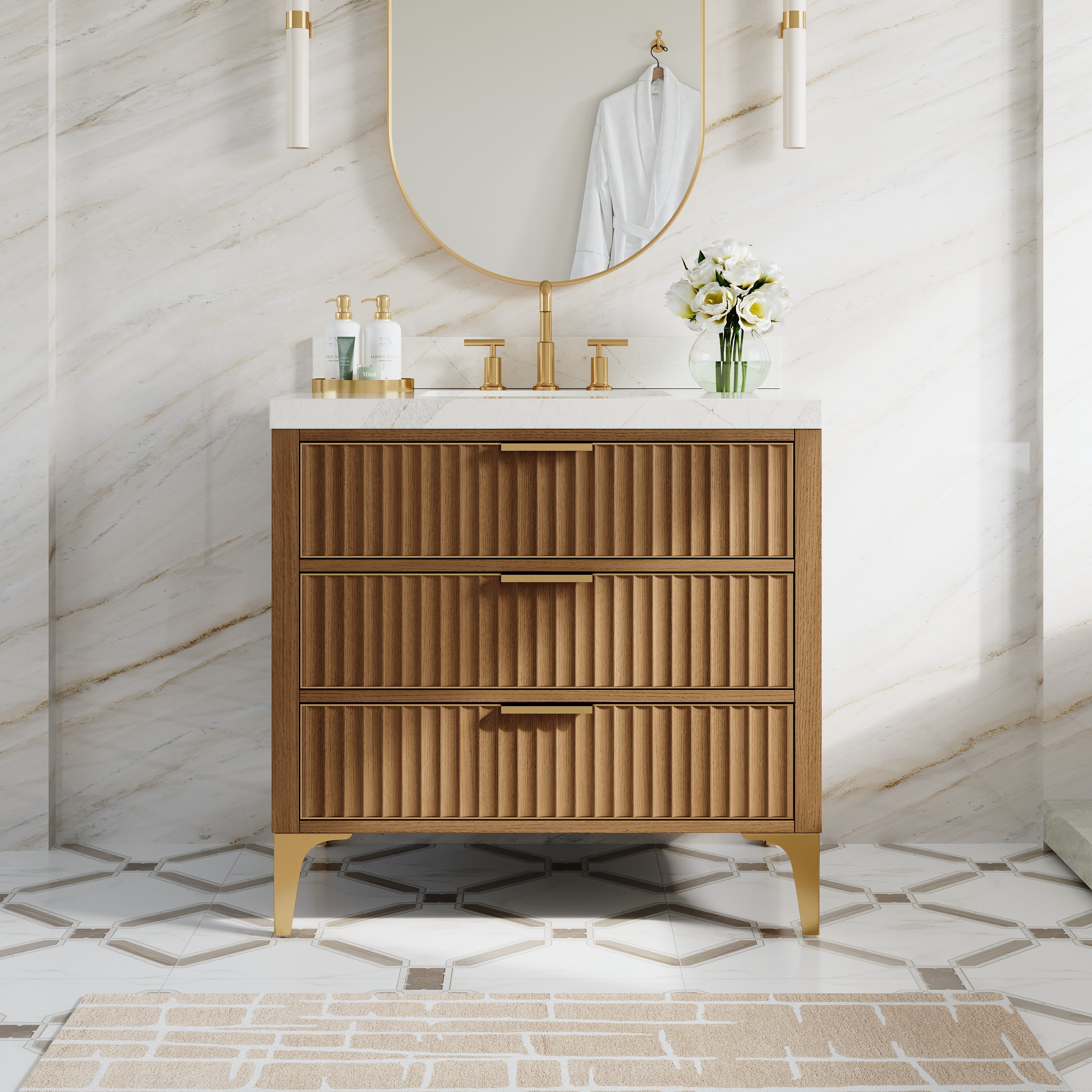
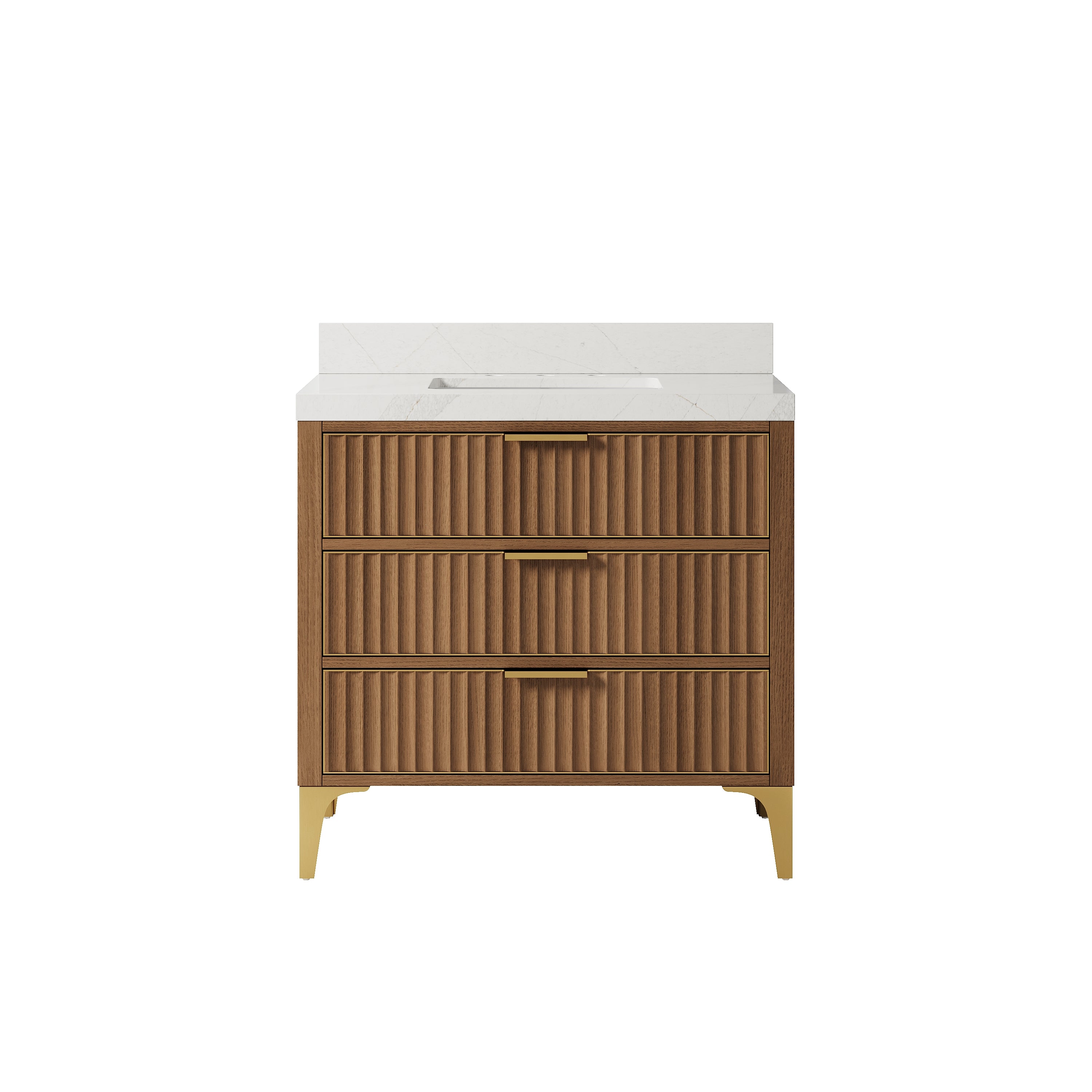
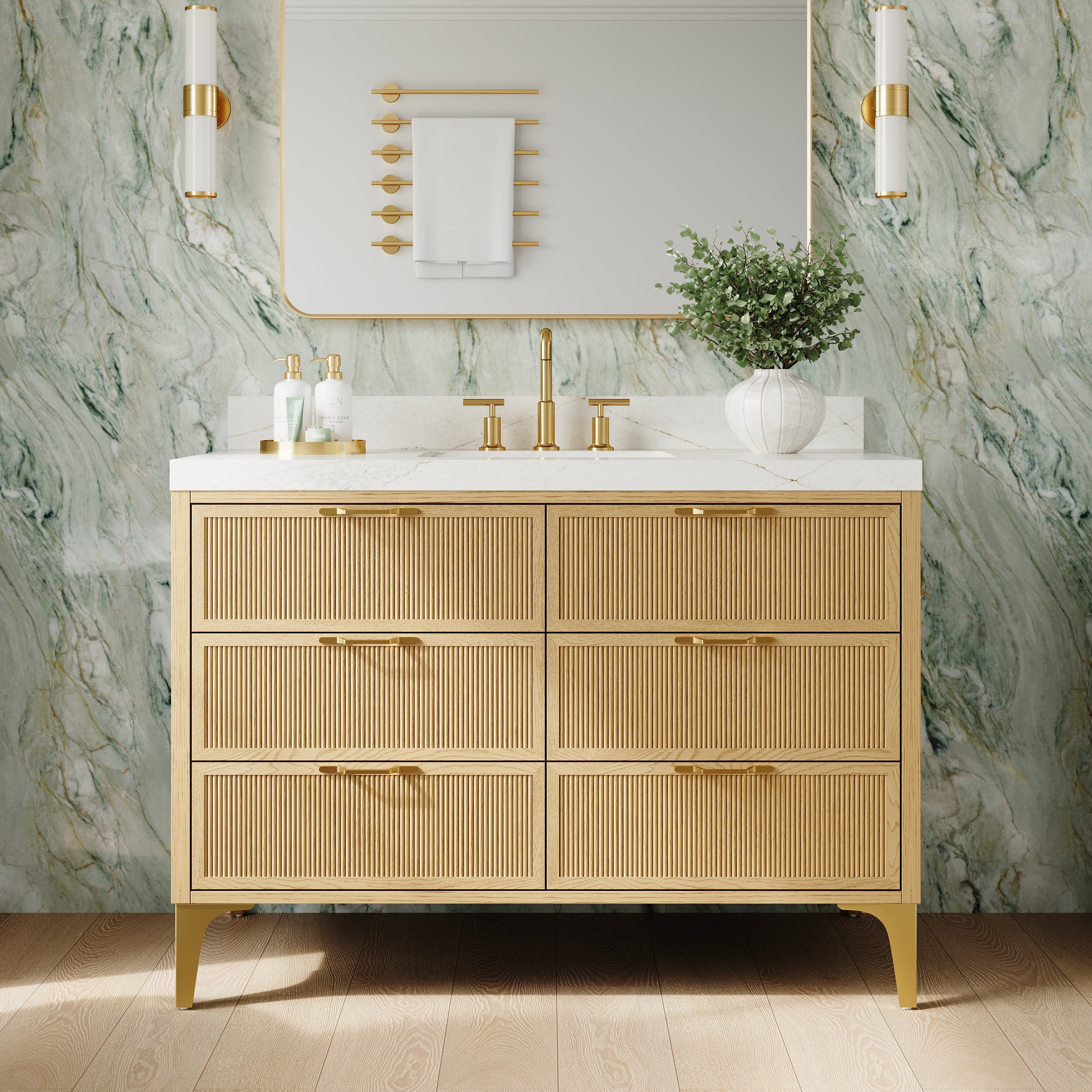
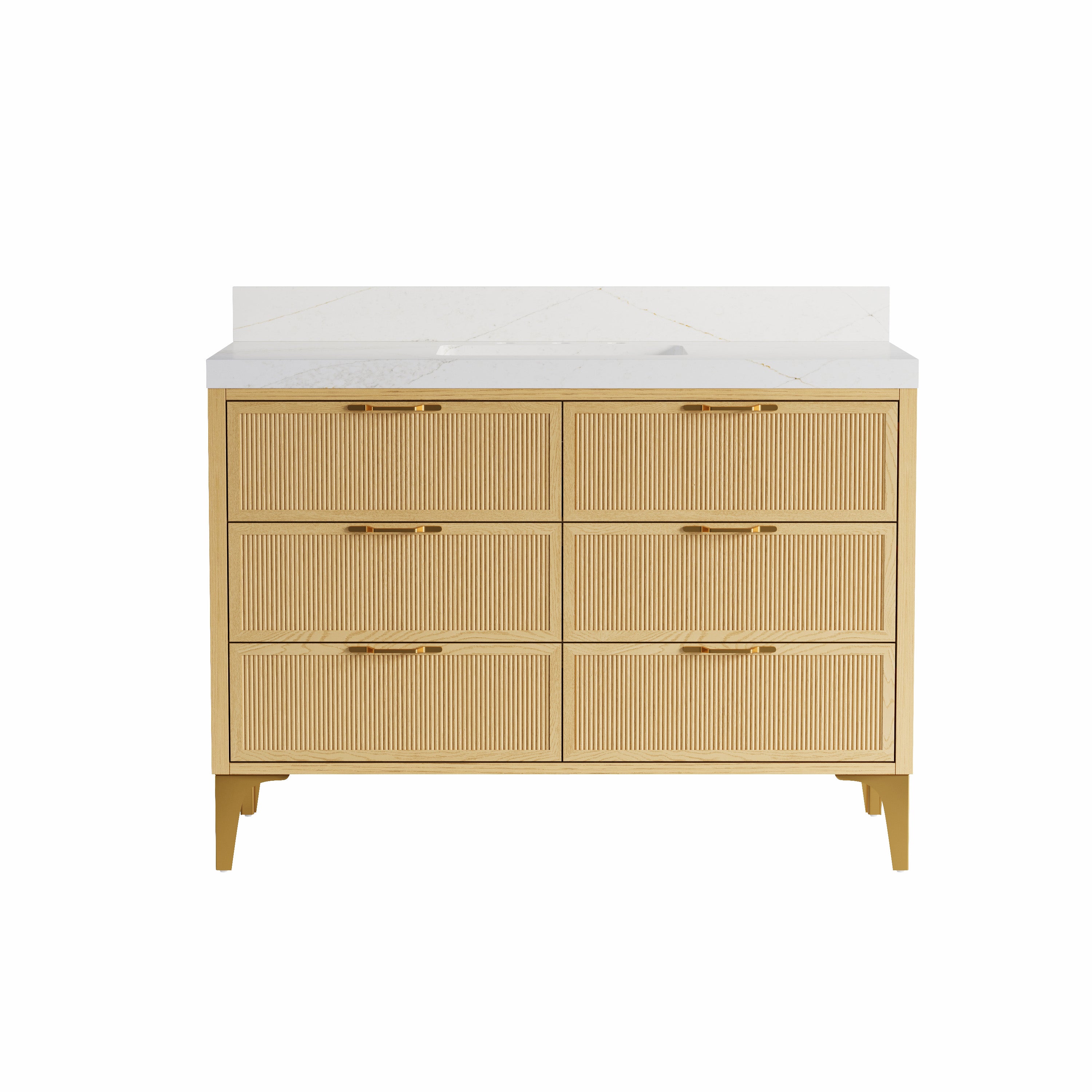


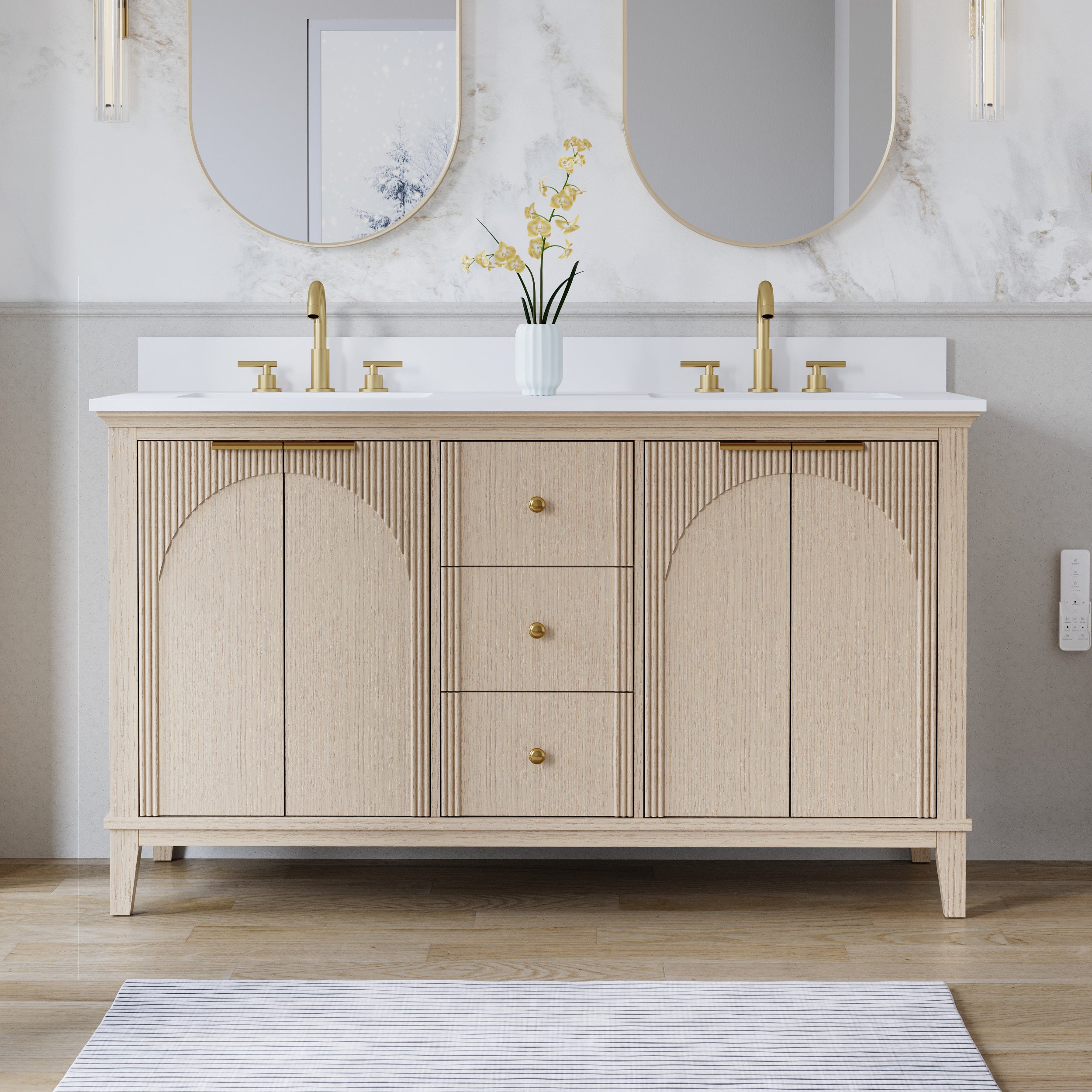
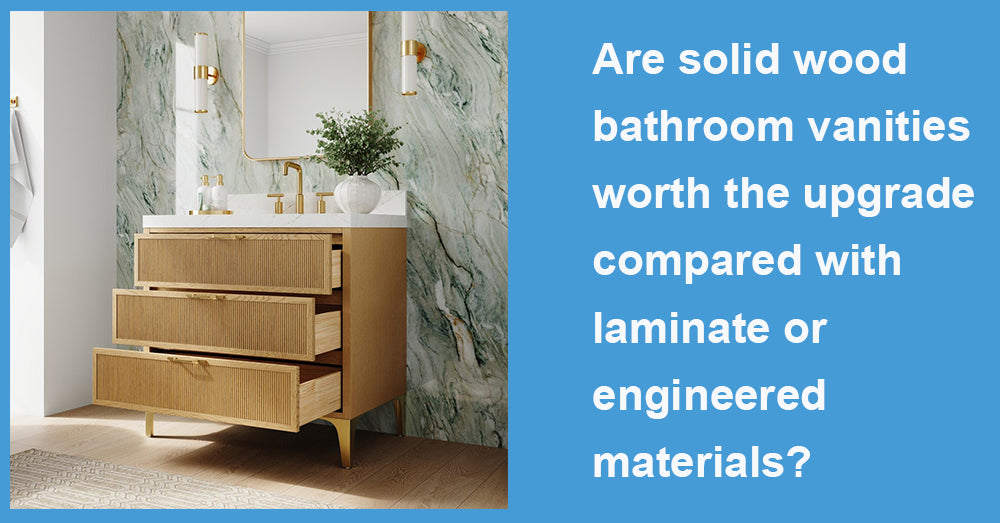
Against the backdrop of the continuous heating up of the bathroom renovation market, "Is a solid wood vanity worth upgrading?" is becoming a hot topic in the home decoration industry. In the past decade, laminates and medium-density fiberboards (MDF) have dominated the mainstream due to their low cost and industrial advantages. However, as consumers' emphasis on durability, environmental friendliness, and a long-term living experience increases, solid wood washbasins are regaining favor with high-end and middle-class families.
According to the 2024 U.S. Houzz Bathroom Trends Study, the median expenditure on bathroom renovations has reached $ 15,000, an increase of 11% year-on-year. At the same time, more and more consumers are placing "long-term self-occupancy needs" before resale value.

Industry analysts note that this shift in consumer attitudes is driving a rebound in demand for solid wood bathroom vanities.
Why are consumers re-focusing on 'real materials'?
The Houzz bathroom trend report shows that wood has become the most popular color for bathroom cabinets, accounting for 26% and surpassing white and gray.
The design trend is also clearly shifting towards' natural materials'. Home media, including "Better Homes&Gardens" and "Real Simple," have noted that warm wood colors, natural textures, and customized wooden cabinets are replacing the previous cold, grey, industrial style.
Industry insiders believe that there are three core reasons behind this:
Consumers place greater emphasis on long-term durability
Traditional laminated bathroom cabinets are usually made of particleboard or MDF as the base material, with an outer layer covered with PVC or melamine veneer. Its advantages are that it is cheap and has good moisture resistance in the initial stage, but it is prone to the following problems after prolonged exposure to moisture:
Board expansion
Edge cracking
Loose hardware
Cabinet door sagging
In contrast, solid wood frames and plywood structures are more stable in high-humidity environments.
In the Reddit decoration community, many users have mentioned that "old solid wood cabinets are still sturdy after more than a decade of use, while new artificial board cabinets begin to deform after a few years".
In recent years, the residential renovation industry has also shown a trend of "retaining solid wooden cabinets and only replacing countertops". Some families have even given up on overall demolition because the quality of old-fashioned oak or maple cabinets is significantly better than some modern, cheap products.
How big is the cost gap?
From the retail market perspective, there is a significant price difference for bathroom vanities.
In general, the mainstream price of MDF or laminated bathroom cabinets is between $300 and $900, making them a common choice for most economical decoration and rental housing projects. This type of product has a lower cost and a variety of styles, but its service life is usually only 5 to 10 years. After being exposed to moisture for a long time, it is prone to problems such as expansion and edge peeling.
In contrast, mid- to high-end bathroom vanities with plywood boxes and solid wood frames are generally priced between $900 and $ 1,800. This is also the most commonly chosen gear among mainstream middle-class families at present, as it offers a good balance of moisture resistance, stability, and price.
The price of a truly high-end, custom-made, all-solid-wood bathroom cabinet is usually between $2000 and $5000. If high-end woods such as white oak, walnut, and cherry wood are used, combined with quartz stone countertops, soft closing hardware, and customized storage systems, the overall price may even exceed $8000.
Industry data shows that the overall price of solid wood products is often 40% to 120% higher than ordinary MDF products, but in long-term self-occupied households, their longer service life and better structural stability are making more and more consumers believe that such upgrades are "worth the money".
Why is the real estate market driving demand for solid wood?
In recent years, the housing market has experienced inventory shortages and rising costs of moving, leading many families to choose renovation over moving.
Houzz pointed out that consumers are increasingly inclined to improve the functionality of existing housing rather than quickly renovating it for resale.
This trend has a huge impact on the bathroom cabinet industry.
In the past, many homeowners would choose:
Minimum budget
Quick Installation
Decorate for sale
Nowadays, there is a greater tendency towards:
Long-term durability
Personalized design
Higher material grade
Stronger storage capacity
And solid wood cabinets perfectly fit this change.
Especially in high-housing-cost states such as California, New York, and Washington, more and more middle- to high-income families are willing to invest more in primary bathrooms.
Is solid wood really "waterproof"?
This is the most easily misunderstood question by consumers.
In fact, any wood is afraid of long-term waterlogging.
But industry experts point out that the biggest difference between "solid wood" and "cheap artificial board" is not just whether they are afraid of water, but the structural performance after being dampened.
For example:
MDF usually expands irreversibly after absorbing water
Particle board is prone to overall disintegration
Solid wood may only undergo slight deformation
High-end solid wood bathroom cabinets usually also use:
Marine-grade plywood
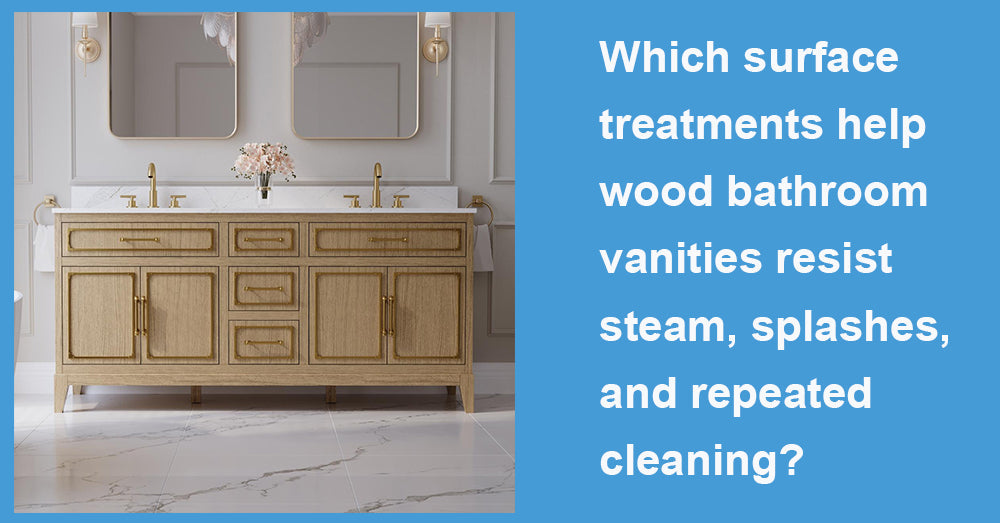
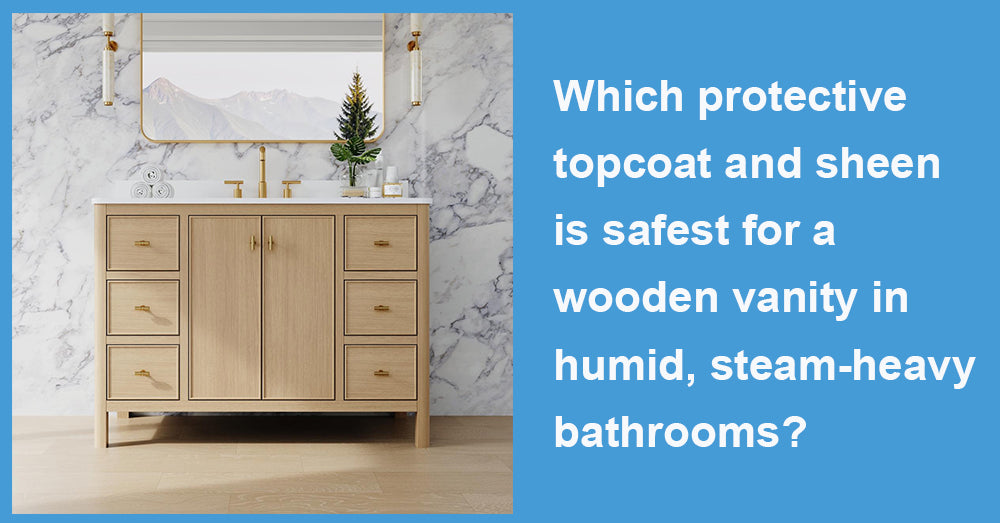
UV moisture-proof coating
Multi-layer sealing paint
mortise and tenon joint
Solid wood frame+plywood box
Therefore, high-end brands currently rarely use "pure solid wood full cabinets", and more often use a mixed solution of "solid wood+high-grade plywood" to balance stability and cost.
But solid wood is not suitable for all households.
Industry insiders emphasize that whether upgrading solid wood is worth it depends on three things:
Firstly, is it a long-term self-occupation
If you plan to sell your house within 2 to 3 years, solid wood cabinets may not be able to fully recover their costs.
Mid-end buyers usually pay more attention to:
Is the countertop new
Is the lighting modern
Is the overall style consistent
It may not necessarily pay a significant premium for 'real solid wood'.
Secondly, bathroom ventilation conditions
If the bathroom is damp for a long time and there is no exhaust system, even the most expensive wood will be damaged.
Southern high-humidity states are particularly prone to:
Wood expansion
Blistering on the paint surface
Mold on the seams
Therefore, the industry typically recommends:
A strong exhaust fan must be installed
Avoid long-term water accumulation in the shower area
Regularly check the edge banding
Thirdly, the budget hierarchy
Many designers actually recommend "plywood cabinets+solid wood door panels".
Because it can:
Preserve the appearance of solid wood
budget control
Improve stability
Reduce the risk of cracking
This is also the most common solution in the current mainstream mid to high-end market.
Conclusion: Is the solid wood bathroom vanity worth it or not?
If we only look at short-term prices, solid wood is indeed more expensive.
But if evaluated comprehensively from the following perspectives:
service life
long-term stability
visual texture
Home Ownership Experience
Mid to high-end decoration trend
For families planning long-term living and with budget constraints, upgrading solid wood bathroom vanities is usually "worth the money".
Especially as bathroom design increasingly emphasizes natural materials, long-term durability, and personalization, solid wood is no longer just a "luxury upgrade" but is becoming a new standard in the mid- to high-end residential market.










Leave a comment
This site is protected by hCaptcha and the hCaptcha Privacy Policy and Terms of Service apply.