














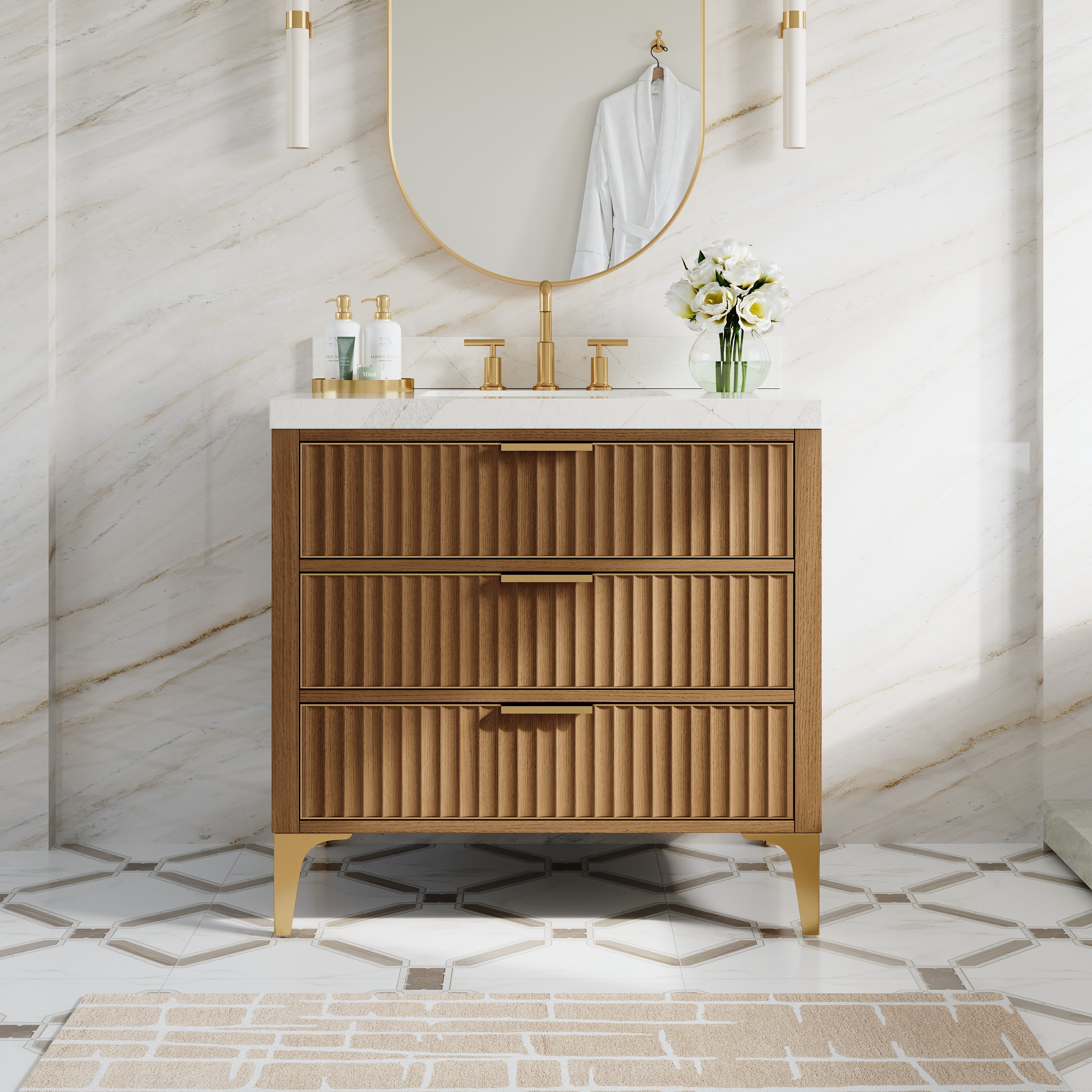
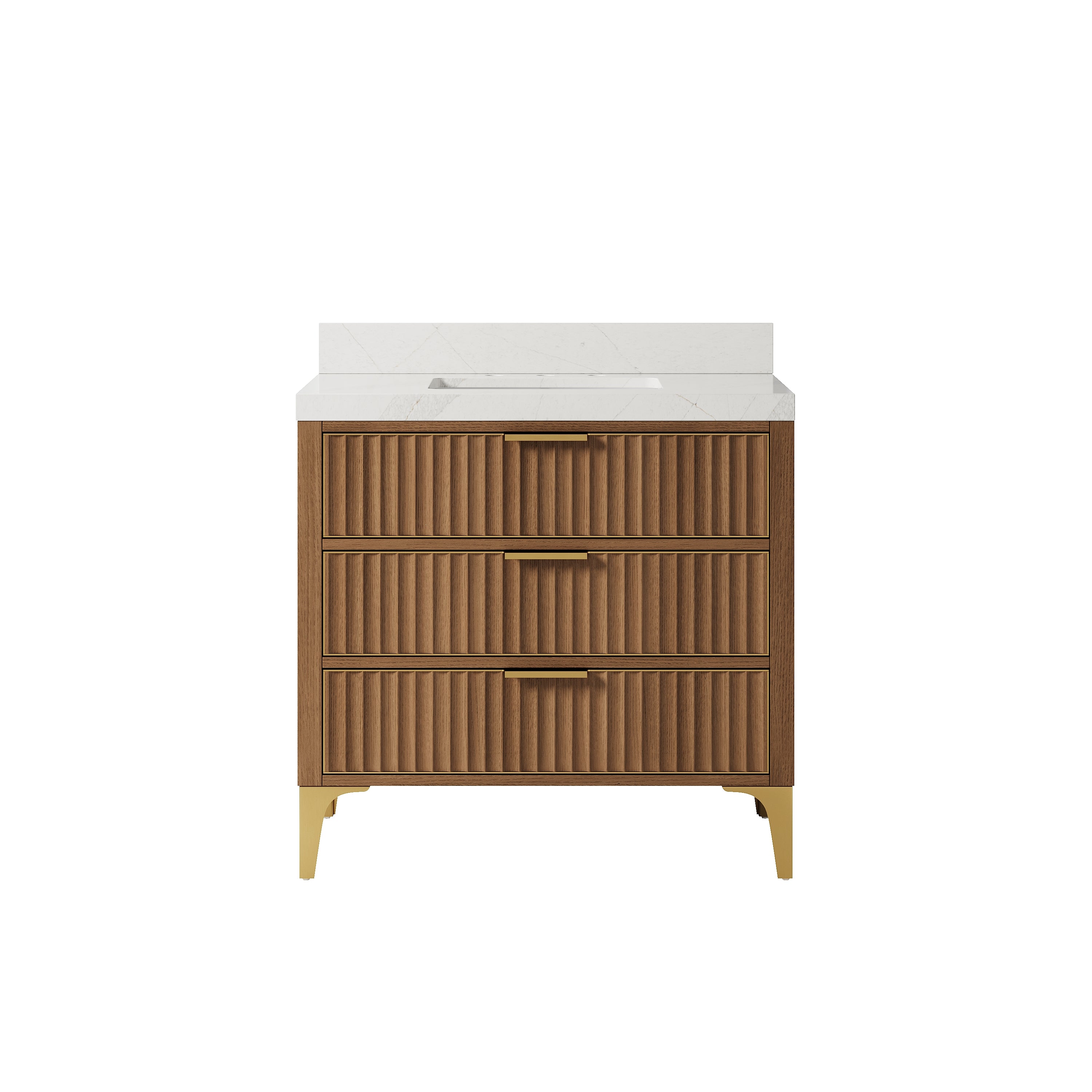
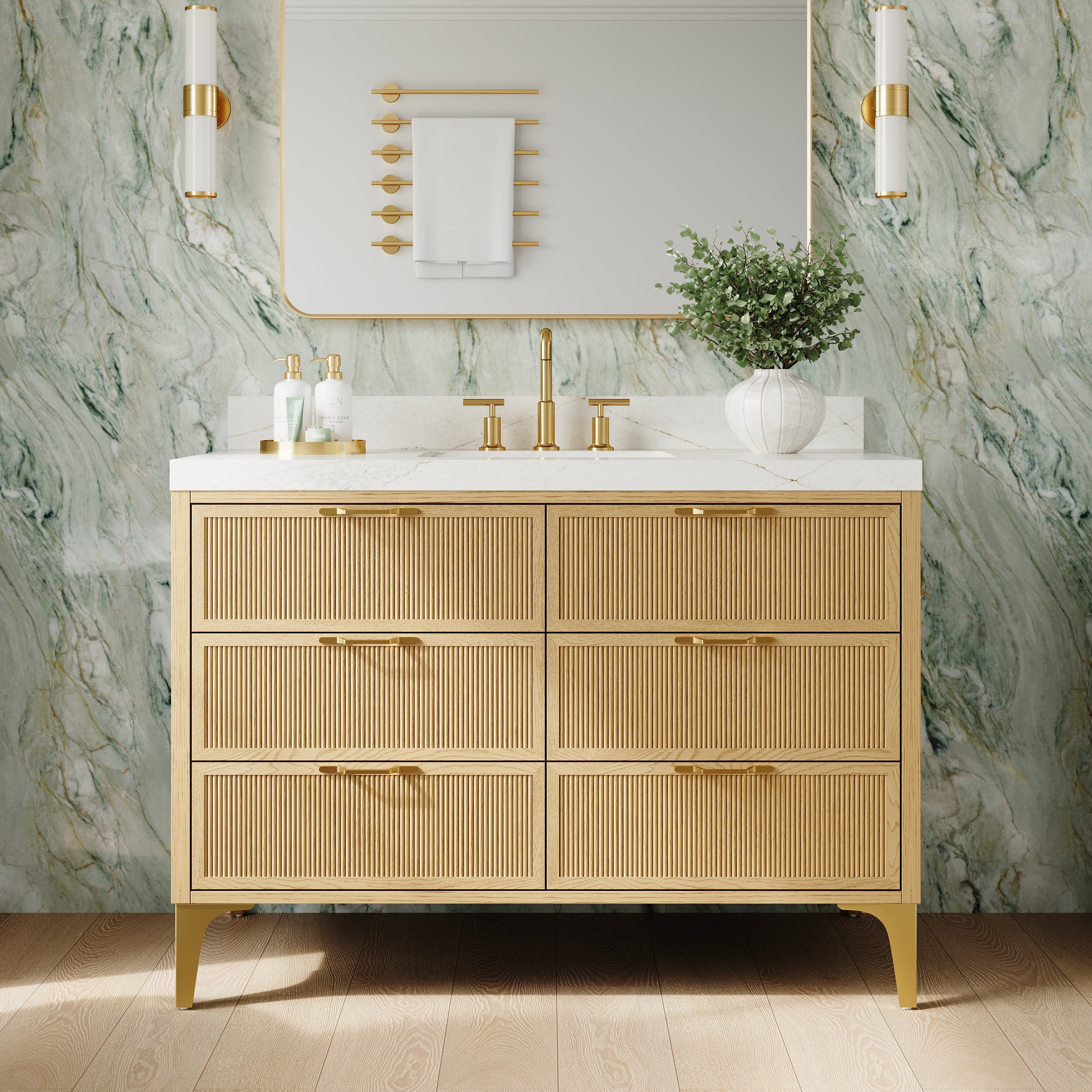
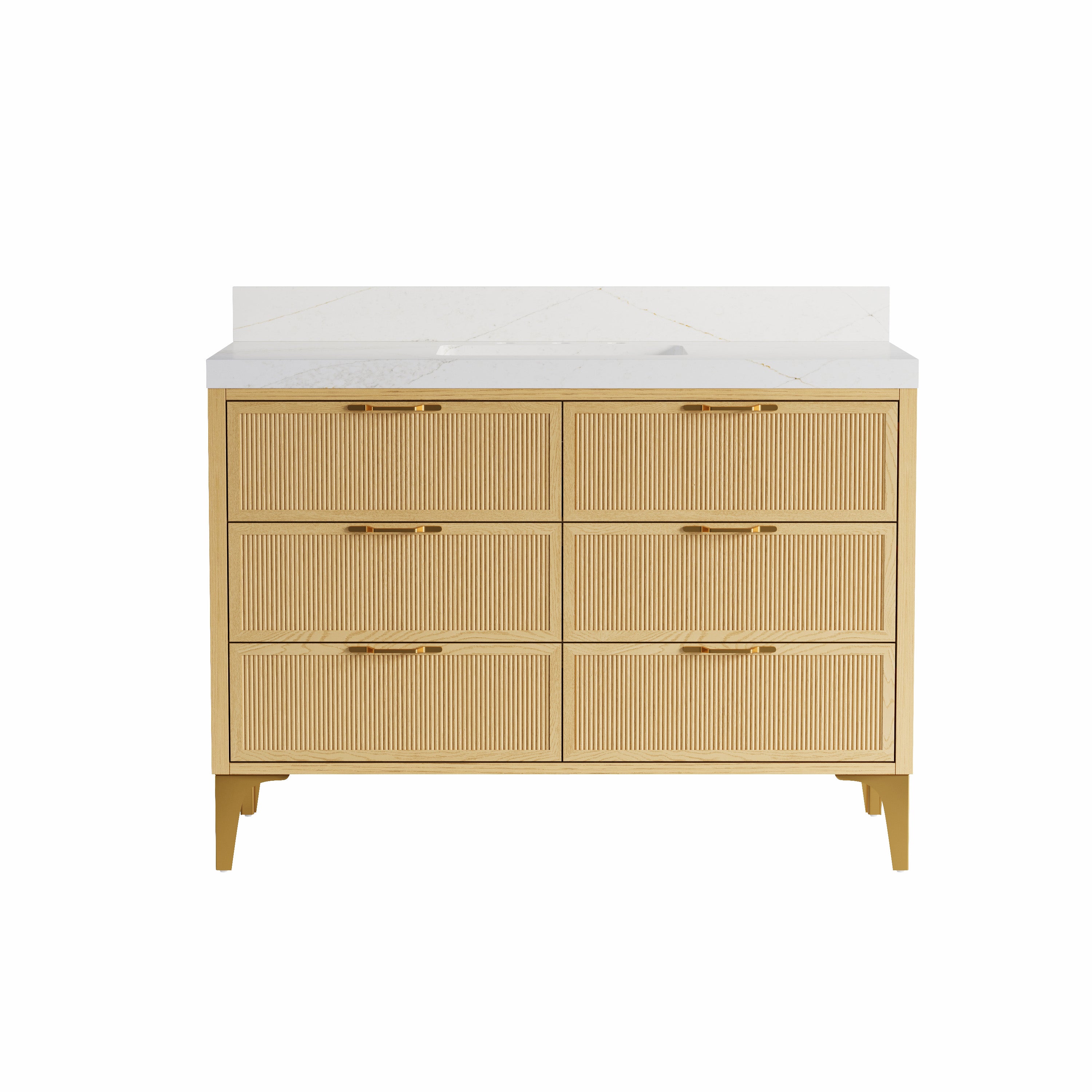


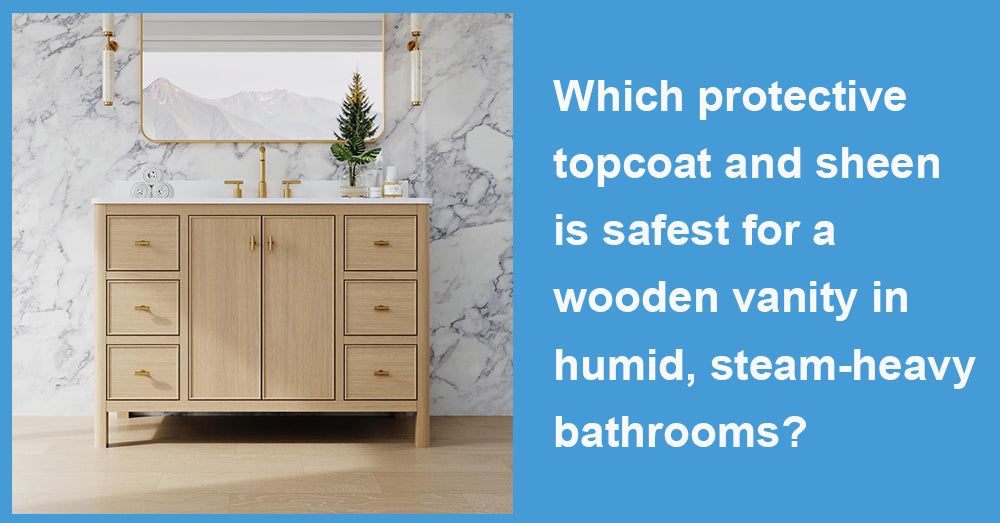
Against the backdrop of the continued rise in the residential renovation market, the issue of moisture resistance protection for bathroom wooden vanity is becoming an important technical topic in the North American home decoration industry. Especially in environments with high humidity, frequent cold and hot cycles, and long-term steam exposure, the failure rate of traditional wood coatings is much higher than that of ordinary indoor furniture. According to recent statistics from the bathroom renovation industry, cracking, bubbling, mold growth, and swollen washbasin edges caused by moisture are among the most frequent issues in consumer complaints.

Industry media and paint manufacturers generally believe that the core of bathroom wooden washbasins is not just about "choosing what color", but "choosing what protective system". Among them, the type of topcoat and glossiness (Sheen) directly determine the wood's resistance to moisture.
Why does a high-humidity bathroom destroy a wooden Vanity?
The biggest difference between the bathroom environment and ordinary bedrooms and living rooms is the long-term fluctuation of air humidity. After taking a hot shower, the local humidity often quickly rises to 70% or even higher, and wood itself has moisture-absorbing and releasing properties, constantly expanding and contracting. The woodworking industry points out that if the sealing layer is insufficient, the wood will exhibit:
Seam cracking
Surface foaming
Wood veneer delamination
MDF base expansion
Fungal attachment
Especially in MDF or plywood washbasins commonly found in North American households, once the edges are damaged, moisture will quickly infiltrate the base layer. In the Reddit home decoration community, a large number of users have reported that MDF bathroom cabinets are prone to bulging and deformation in children's homes or poorly ventilated environments.
Angi suggests maintaining the bathroom's relative humidity between 30% and 55%; otherwise, the wood's lifespan will decrease significantly.
Industry mainstream answer: Polyurethane topcoat is still the best solution
In the wood coating industry, the most widely recognized protective material for bathroom wooden washbasins is still the polyurethane system.
WOOD Magazine noted that polyurethane topcoats are significantly better than ordinary nitro paints and low-end water-based paints in terms of moisture resistance, wear resistance, and resistance to chemical cleaning agents.
It can be further divided into two mainstream systems:
1. Water-Based Polyurethane
This is currently the fastest-growing product in the mid to high-end residential renovation market.
The advantages include:
Low VOC emissions
Fast drying speed
Not prone to yellowing
More suitable for light colored wood
Light odor
Especially in modern-style bathrooms, white oak, maple, and white-wash wood washbasins extensively use water-based polyurethane systems.
But industry insiders also point out that its chemical corrosion resistance is slightly lower than traditional oil-based systems, and for households that frequently come into contact with cleaning agents, higher-grade products are needed.
2. Oil-Based Polyurethane
Traditional oil-based polyurethane still has extremely strong water resistance.
Advantages:
Thicker paint film
Stronger moisture resistance
High durability
More suitable for high-frequency use in the bathroom
The disadvantages include:
Slow drying
High VOC content
Easy to turn yellow
Obvious odor
Therefore, the high-end custom cabinet industry currently tends to adopt "2K Waterborne Polyurethane" to balance environmental protection and moisture resistance.
Glossiness is the real key
In recent years, the paint industry has increasingly emphasized that glossiness is as important as the paint itself in bathroom environments.
The reason is that:
The higher the gloss, the denser the paint film.
The resin content of high-gloss paint is higher, making it more difficult for water vapor to penetrate the paint film and enter the wood.
The current industry recommendations for the sheen of wooden bathroom vanities are as follows:
Matte: Low moisture resistance. Water vapor can easily penetrate due to the relatively porous film structure, so it is generally not recommended for bathrooms with long-term humidity and heavy steam exposure.
Eggshell: Moderate moisture resistance. It performs better in scrub resistance and humidity protection than matte finishes, but is still best suited for well-ventilated, low-humidity bathrooms. Its long-term durability is weaker in high-use environments compared to higher-gloss finishes.
Satin: High moisture resistance. It is currently one of the most widely used options in the residential market, balancing moisture protection, stain resistance, and aesthetic appeal. It provides solid humidity resistance without excessive reflection, making it popular for modern wooden vanities.
Semi-Gloss: Very high moisture resistance. Its denser paint film effectively blocks moisture and condensation. It is widely regarded as a classic solution for high-humidity bathrooms and is also easy to clean, making it common in high-traffic or family bathrooms.
High Gloss: Extremely high moisture resistance. It offers the strongest waterproofing and stain resistance due to its highly sealed surface. However, its strong reflectivity can highlight surface imperfections, so it is more commonly used in hotels, commercial spaces, or high-end modern designs rather than typical residential bathrooms.
Among these, Satin and Semi-Gloss remain the most commonly used finishes in residential bathroom applications.
Data shows that ventilation is more important than paint type.
It is worth noting that in recent years, the industry has increasingly emphasized "system protection".
Even with the highest level of topcoat, if the bathroom is not well ventilated for a long time, the wood will still age.
Multiple industry organizations have pointed out that:
The bathroom exhaust fan should continue to run for at least 20 minutes after taking a shower
Long-term humidity exceeding 60% will significantly shorten the lifespan of wooden products
Long-term retention of water droplets can damage the edge sealing structure
The user community has also found that the same MDF washbasin may be used for more than 20 years in well-ventilated homes, and may be damaged within a few years in high-humidity, multi-person environments.
New trend in the high-end market: bathroom-specific wood systems
At present, the high-end customization market in North America has begun to adopt the "bathroom-specific coating system".
This type of system typically includes:
Anti mold primer
Two-component sealing layer
Waterborne polyurethane topcoat
Multi-layer edge closure
UV-curing cover layer
The industry believes that relying solely on ordinary furniture paint is no longer sufficient to meet the demands of modern high-humidity bathrooms.
At the same time, a trend report from the National Kitchen and Bath Association (NKBA) shows that suspended wooden washbasins, light woodgrain, and natural wood finishes remain popular.
This means:
In the coming years, moisture-proof coating technology will remain a key competitive advantage in the bathroom furniture industry.
Conclusion: What is the best solution?
Taking into account the trends in the woodworking industry, paint market, and residential renovation, the most suitable solution for wooden washbasins in damp and steam-filled bathroom environments is now quite clear.
Topcoat type: High-quality polyurethane system
Recommended direction: two-component waterborne polyurethane
Best Gloss: Satin
Extreme humid environment: Semi Gross
The most important auxiliary conditions: strong exhaust and complete edge sealing
In other words, the modern industry has shifted from a single logic of "brighter, more waterproof" in the past to a comprehensive balance of "moisture resistance, visual texture, and environmental performance".
For the future bathroom furniture market, the true determinant of product lifespan is no longer just the wood itself, but the completeness of the entire protective system.









Leave a comment
This site is protected by hCaptcha and the hCaptcha Privacy Policy and Terms of Service apply.