














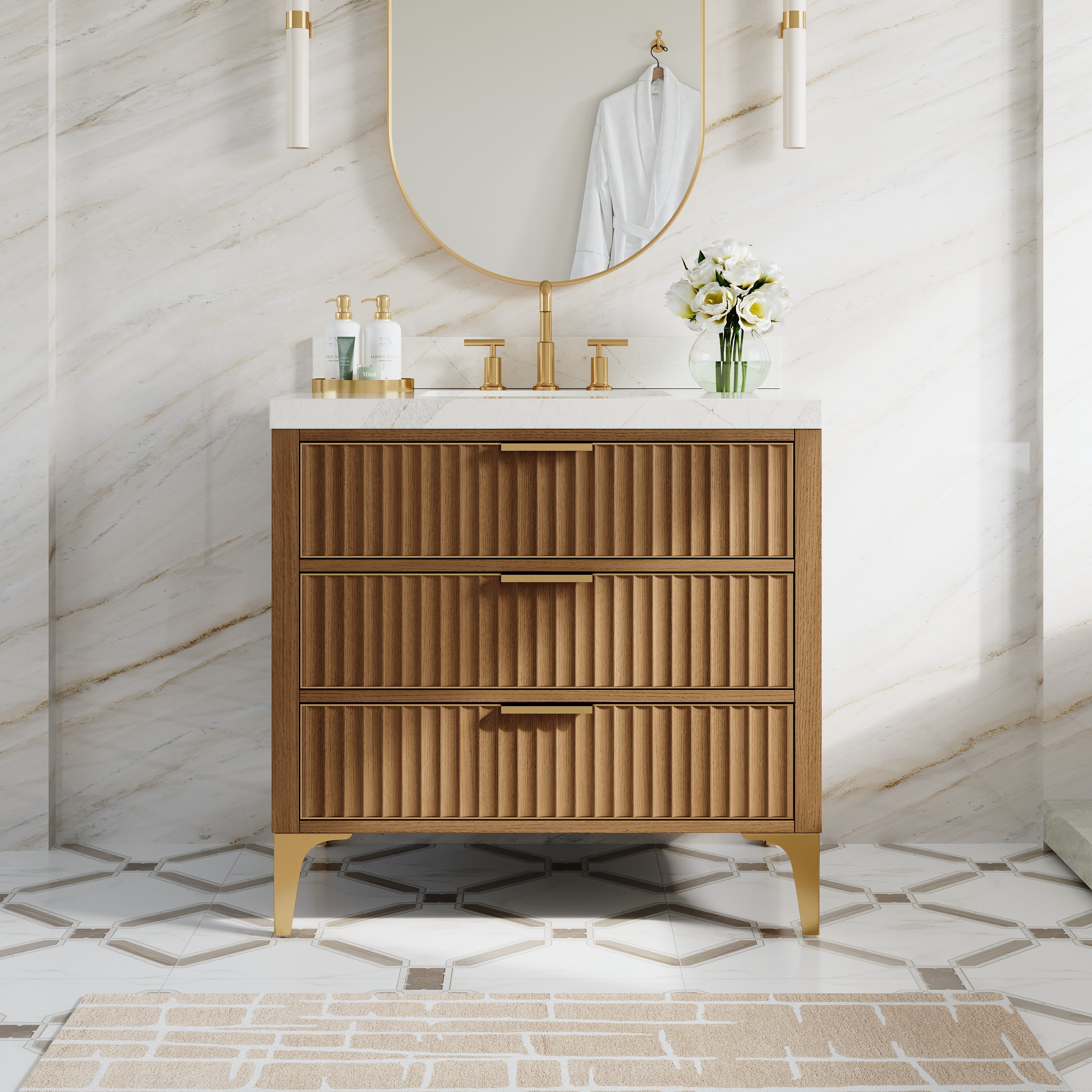
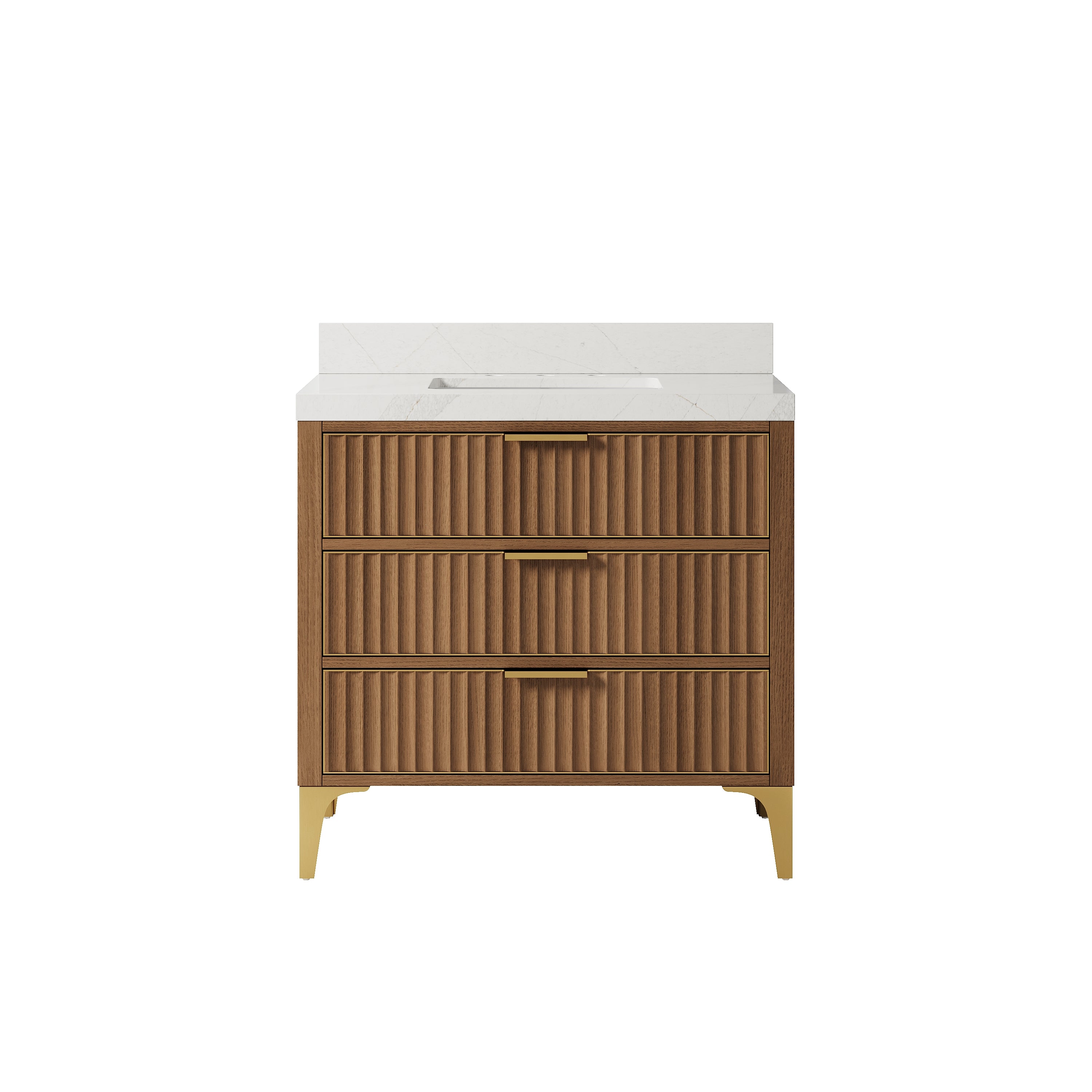
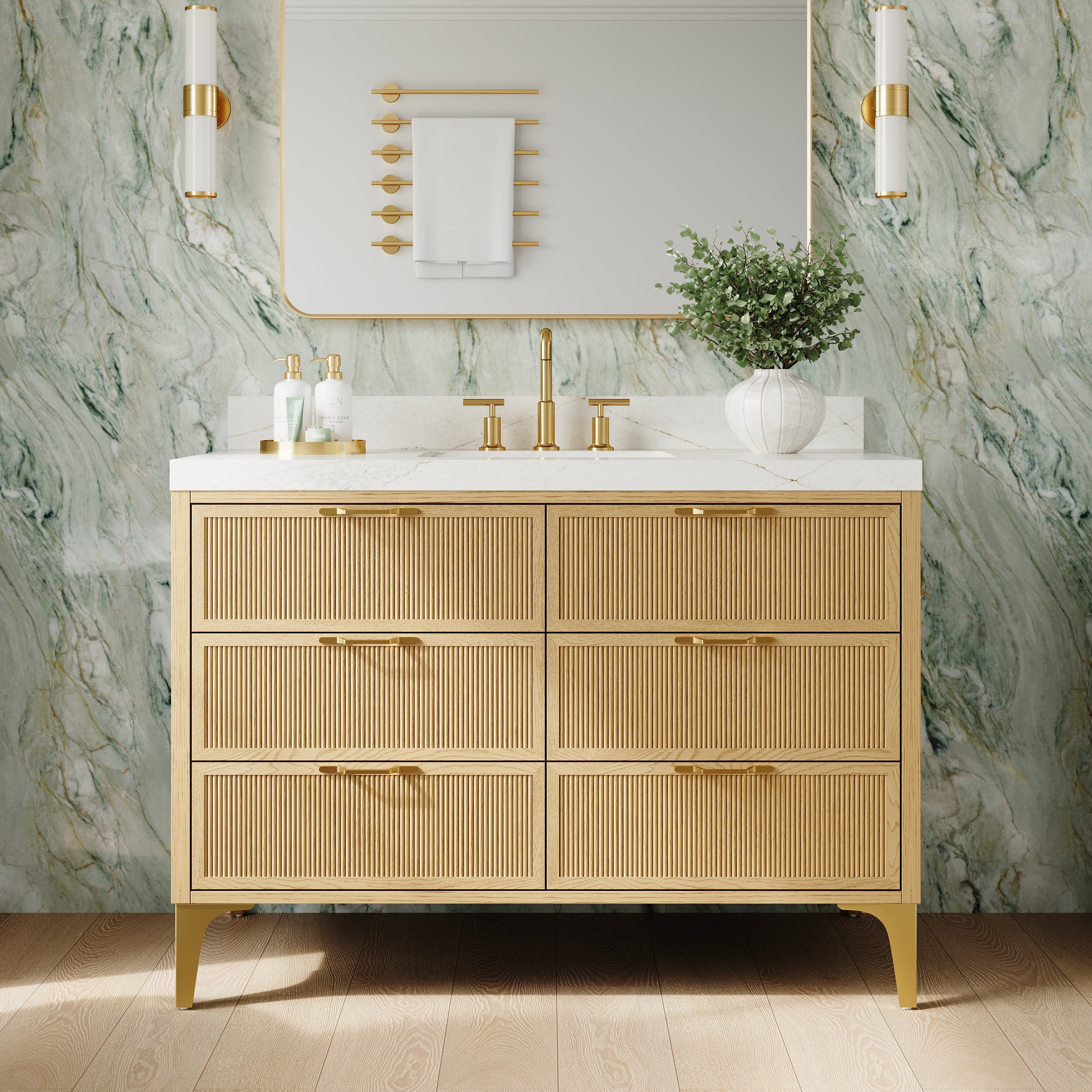
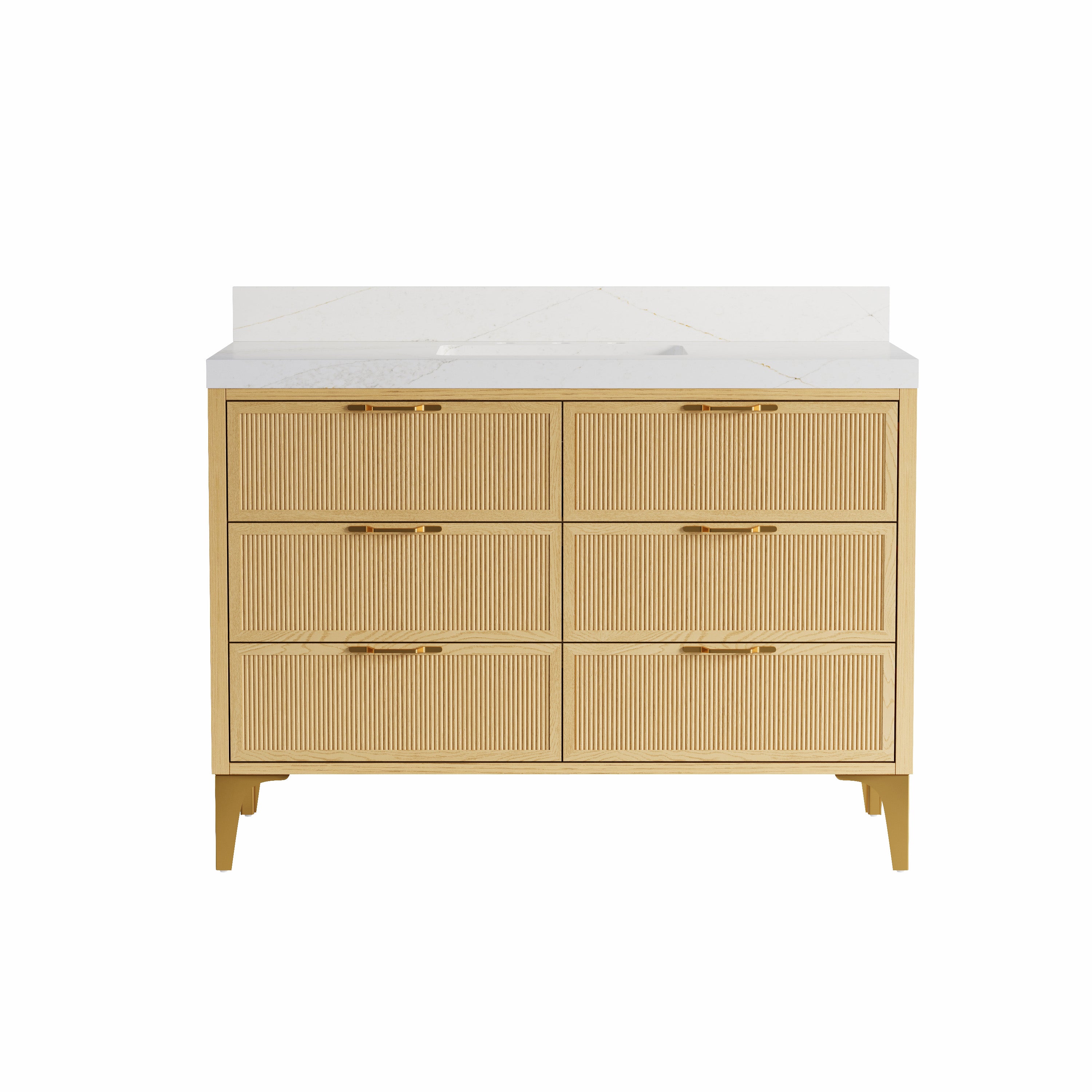


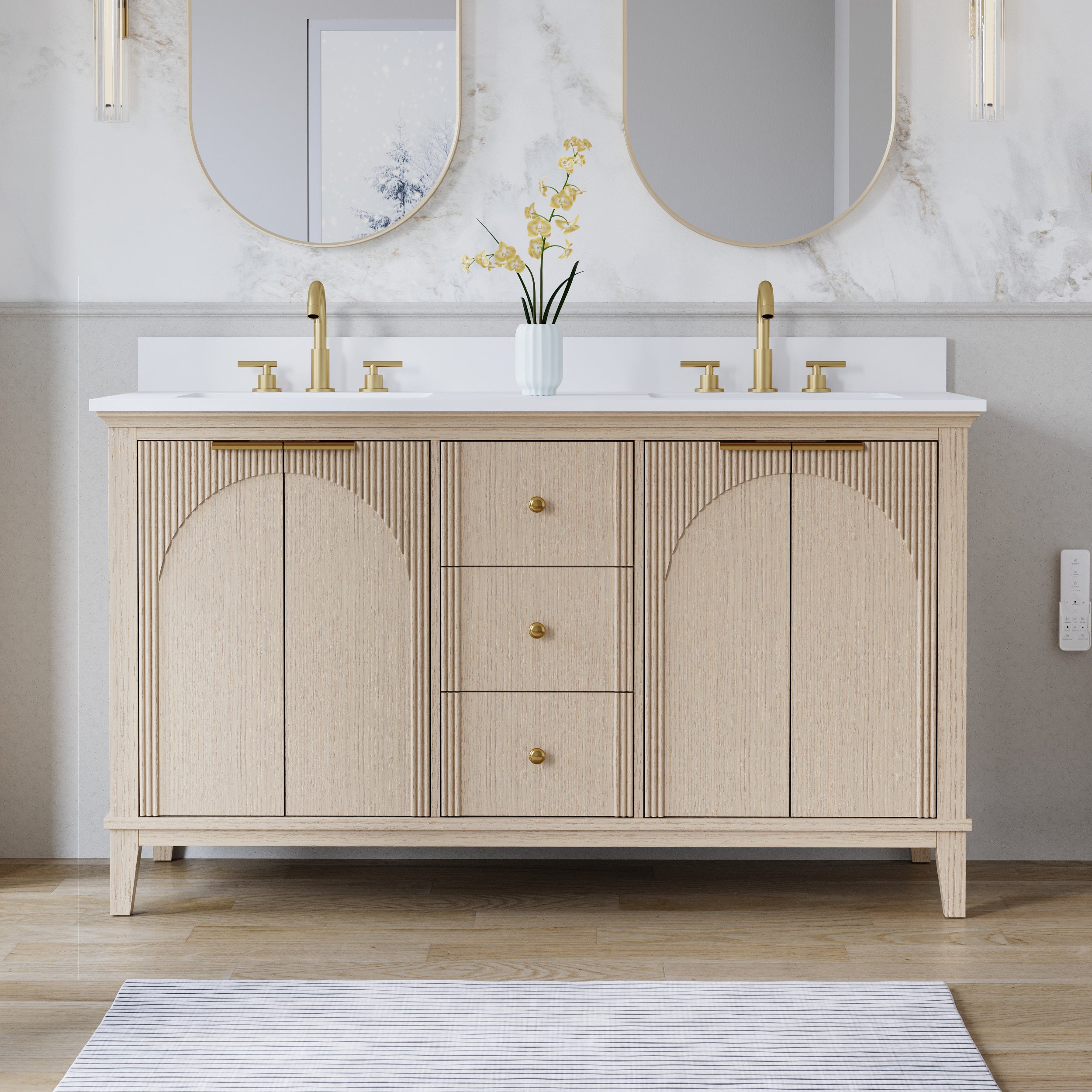
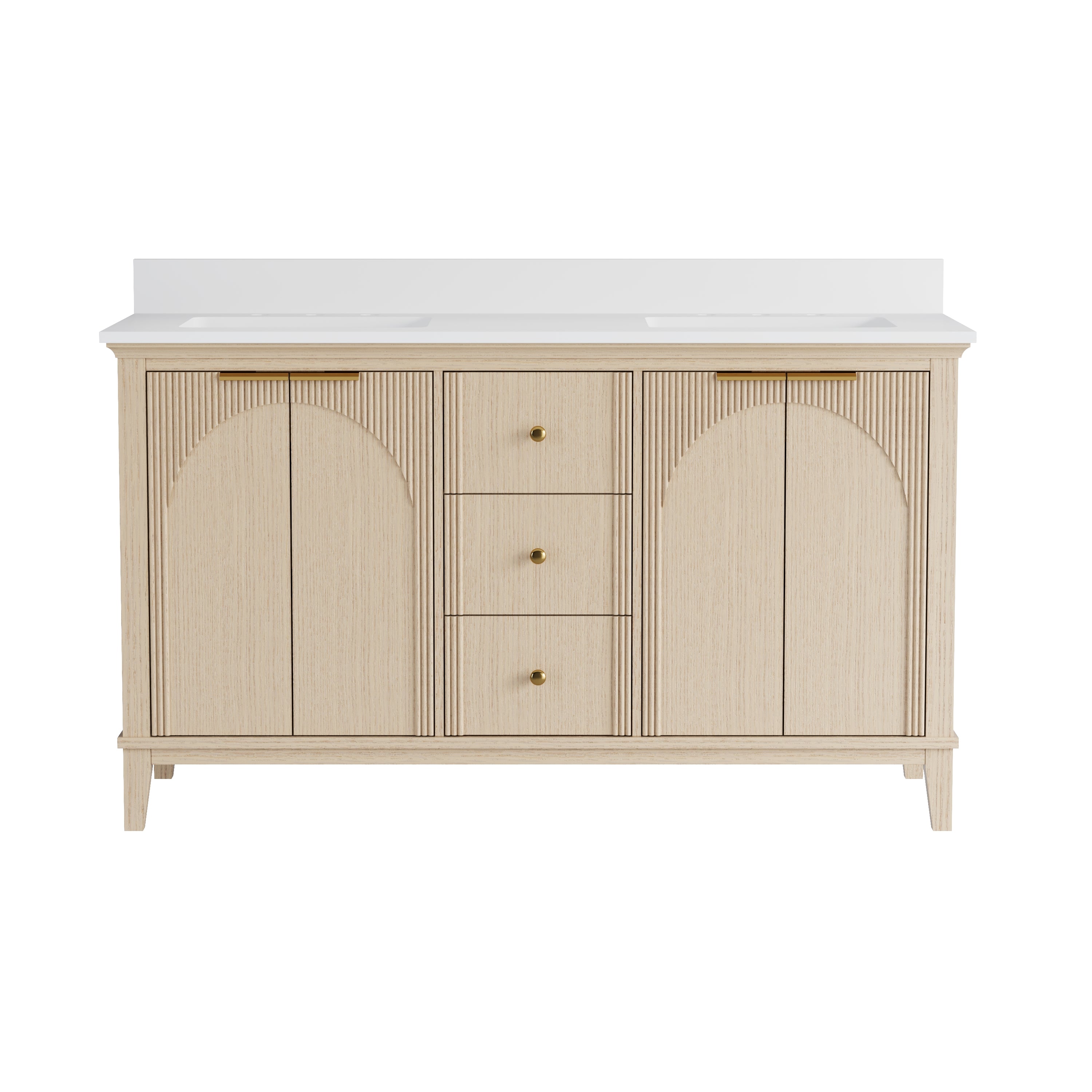
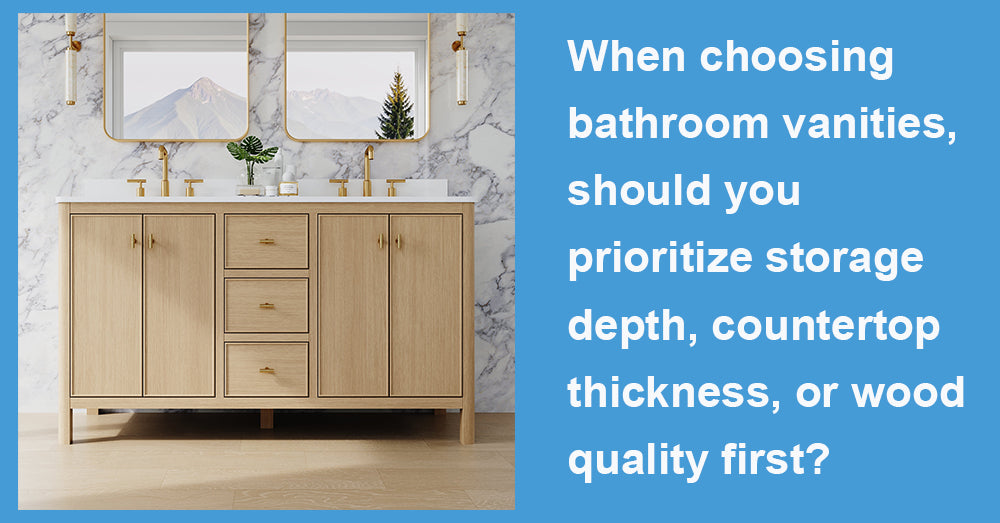
When shopping for bathroom vanities, the “right” priority order depends on what can’t be fixed later without tearing the room apart. In the current remodeling cycle, homeowners are upgrading a wide set of bathroom elements at once—countertops (76%) and faucets (87%) lead the list—so the vanity decision is increasingly treated as a long-term core purchase, not a decorative add-on.
The industry reality: vanities are being upgraded for performance, not just style
Renovation research shows the vanity is one of the most engineered parts of the bathroom: storage, plumbing clearance, countertop support, and daily wear all converge here. Houzz’s 2025 Bathroom Trends data highlights how feature-driven these choices have become: soft-close drawers (78%) and soft-close doors (75%) are now mainstream, while built-in add-ons like outlets (29%) and drawer organizers (22%) are still “nice-to-have” upgrades rather than universal requirements.
This matters because it hints at what people value most: reliable construction and smooth daily use beat “extras.”
First checkpoint: if depth breaks the layout, it becomes priority No. 1
Before ranking depth, wood, or countertop thickness, confirm that the vanity will fit the room comfortably.
Industry planning guidance recommends 30 inches of clear floor space in front of bathroom fixtures, with 21 inches often cited as a minimum baseline in front of items like a tub and lavatory zones. If your vanity depth pushes you below comfortable clearance, no amount of better wood or thicker stone will make the bathroom feel good to use.
That’s why depth is sometimes the first decision by force: in tight baths, a shallower vanity can prevent a “pinched” walkway and reduce door-swing conflicts.
Storage depth: standard sizes are common, but “usable depth” is what counts
In many product lines, the most common vanity cabinet depth is around 21 inches, with variations often falling in the 20 to 23-inch range. That standard exists for a reason: many lavatories are designed to work with a typical 21-inch deep vanity cabinet.
But the hidden truth is that “cabinet depth” isn’t the same as “usable storage depth.” Plumbing, sink basins, and drawer box clearances can steal meaningful space from the back of the cabinet. So if storage is a key driver, ask a more specific question than “How deep is it?”:
How much of that depth is actually usable for drawers (full-extension vs. partial)?
How much volume is lost to the sink and plumbing chase?
Are the drawers designed to avoid the P-trap area, or do you end up with a wide “false” drawer?
A deeper vanity isn’t automatically better if the rear space becomes dead storage.
Wood quality: if you want durability, it’s usually the safest “priority” after fit
Once you confirm the vanity depth works with your clearances, wood quality is the most important of your three options because it determines structural stability, moisture resilience, and how well the vanity holds hardware alignment over time.
Trend data support that buyers are actively choosing better wood. Among homeowners who select wood vanities, 74% choose solid wood, with much smaller shares going to MDF (10%), plywood (6%), particleboard (4%), or veneer (3%).
That preference isn’t just aesthetic. Wood quality influences:
Whether doors stay square and drawers keep their glide alignment.
Whether joints loosen or panels swell in humid conditions.
Whether the cabinet can reliably support a heavy top without long-term sag.
If you plan to keep the vanity for years, wood quality is the decision most likely to protect your investment.

Countertop thickness: prioritize the material first, then treat thickness as a “finish strategy.”
Countertops are upgraded in 76% of bathroom renovations, which shows how visible the surface choice is. But in day-to-day value, the material and fabrication quality usually matter more than going thicker.
Houzz reports that engineered quartz is the most selected countertop material at 45%, followed by natural stones such as quartzite (20%), granite (14%), and marble (13%). This tells you where demand is concentrated: durability and low maintenance are winning.
Thickness is often more about the look you want:
Many quartz products are commonly offered in sizes of about 3/4 inch and 1-1/4 inches, depending on the brand and line.
A thinner slab can still look “thick” with edge detailing (such as a built-up edge), while keeping weight and cost more manageable.
So if you’re forced to rank the three, countertop thickness is usually third—unless you have a specific design goal (a chunky edge profile) or a structural situation (large unsupported spans) that makes thickness more relevant.
A practical priority order that works for most remodels
If you want a simple rule you can apply quickly:
Storage depth (fit first): Confirm the vanity depth preserves comfortable clearance and doesn’t create door or walkway conflicts. Use 30 inches of clear floor space as a strong target whenever possible.
Wood quality (longevity second): Favor stronger construction because it affects alignment, durability, and moisture performance—especially when solid wood is already the dominant preference in real renovation choices.
Countertop thickness (visual third): Choose the right material (quartz leading at 45%), then use thickness and edge style to achieve the look you want.
What the “feature data” suggests you should NOT ignore
Houzz’s vanity feature data is a helpful tie-breaker: while built-in outlets and organizers remain under one-third adoption, soft-close mechanisms are chosen by roughly 3/4.
Translation: if you’re prioritizing value, focus on the core experience first:
Good drawer construction + good slides (daily touchpoint)
Door alignment and hinge quality
A finish that can handle humidity and cleaning
Then add organizers and outlets if your budget and layout support them.
Why this priority order matters for resale perception, too
Vanity decisions also land in a broader “condition” story. The 2025 Remodeling Impact research notes that 46% of home buyers are less willing to compromise on the condition of the home. A vanity that feels flimsy, swollen, misaligned, or poorly finished can signal “work needed,” even if the rest of the bathroom looks updated.
On the upside, midrange bathroom remodels can retain meaningful value at resale; the 2025 Cost vs. Value data lists a midrange bath remodel with 80% cost recouped (model estimates vary by market, but it’s a strong indicator that bathroom execution matters).
The bottom line
If your bathroom layout is tight, storage depth comes first because fit problems are expensive to undo. After that, wood quality is the best long-term priority because it governs durability and the feel of quality every time you open a drawer. Countertop thickness is typically the last priority—still important for style, but usually less important than choosing the right countertop material and a fabrication approach that delivers the look you want.












Leave a comment
This site is protected by hCaptcha and the hCaptcha Privacy Policy and Terms of Service apply.