














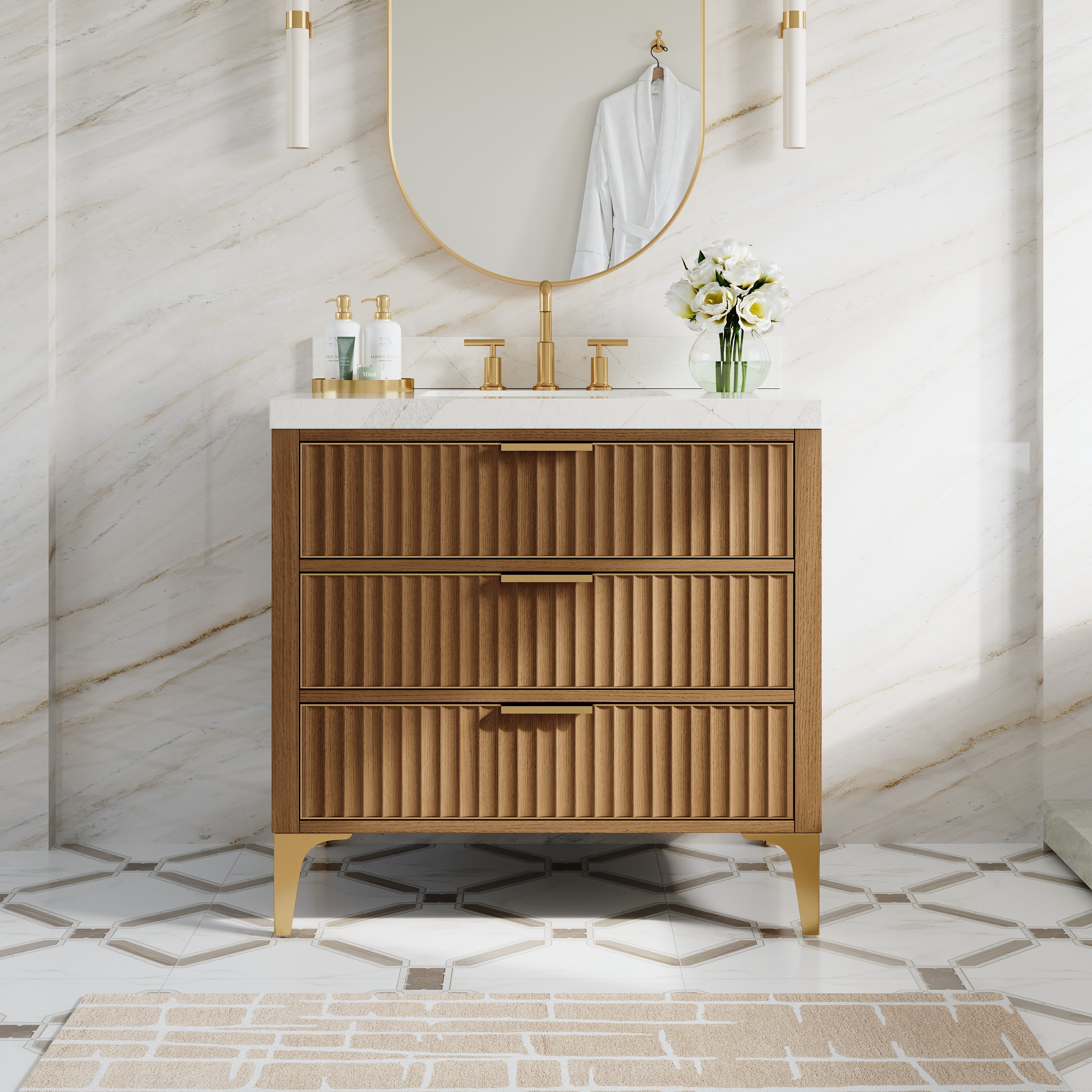
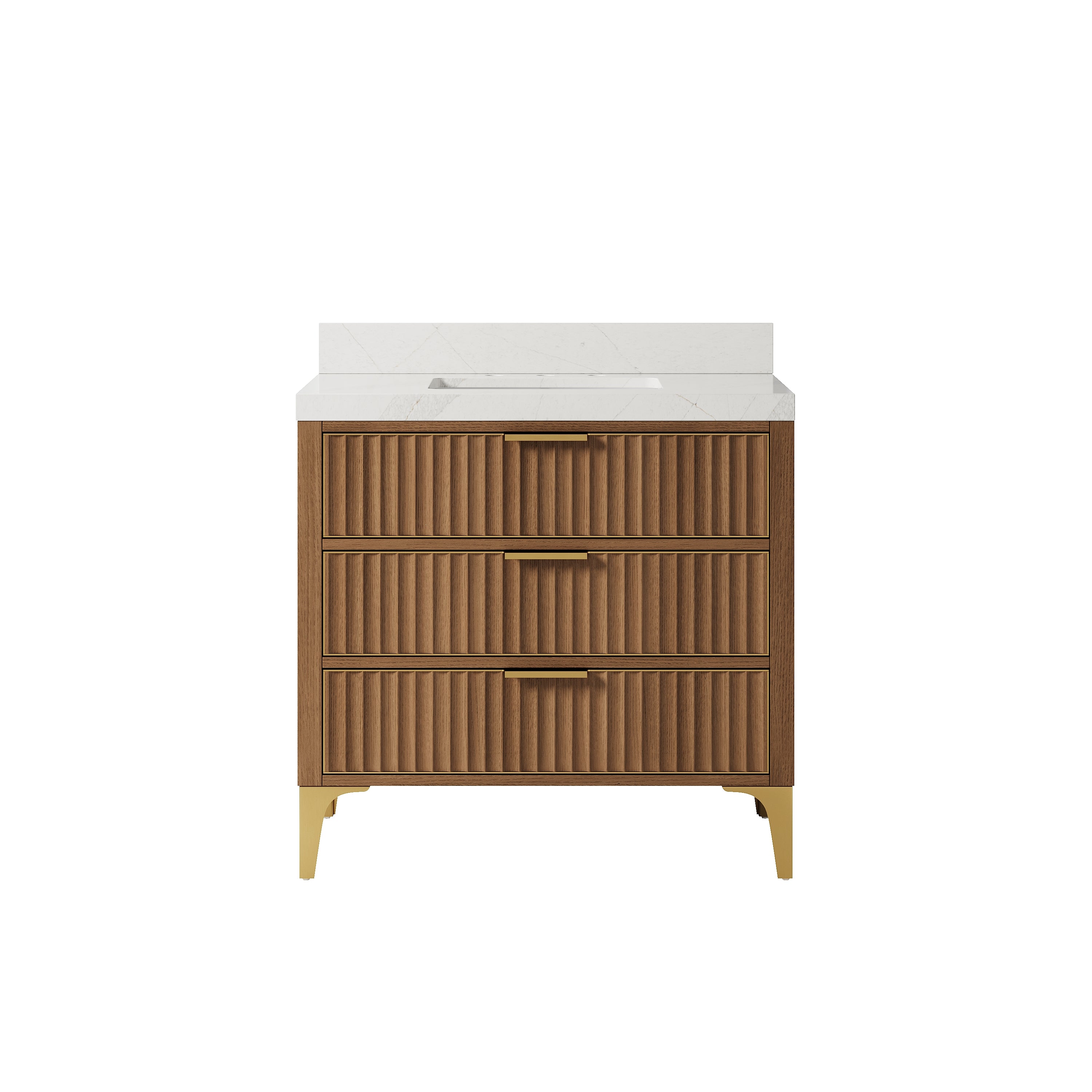
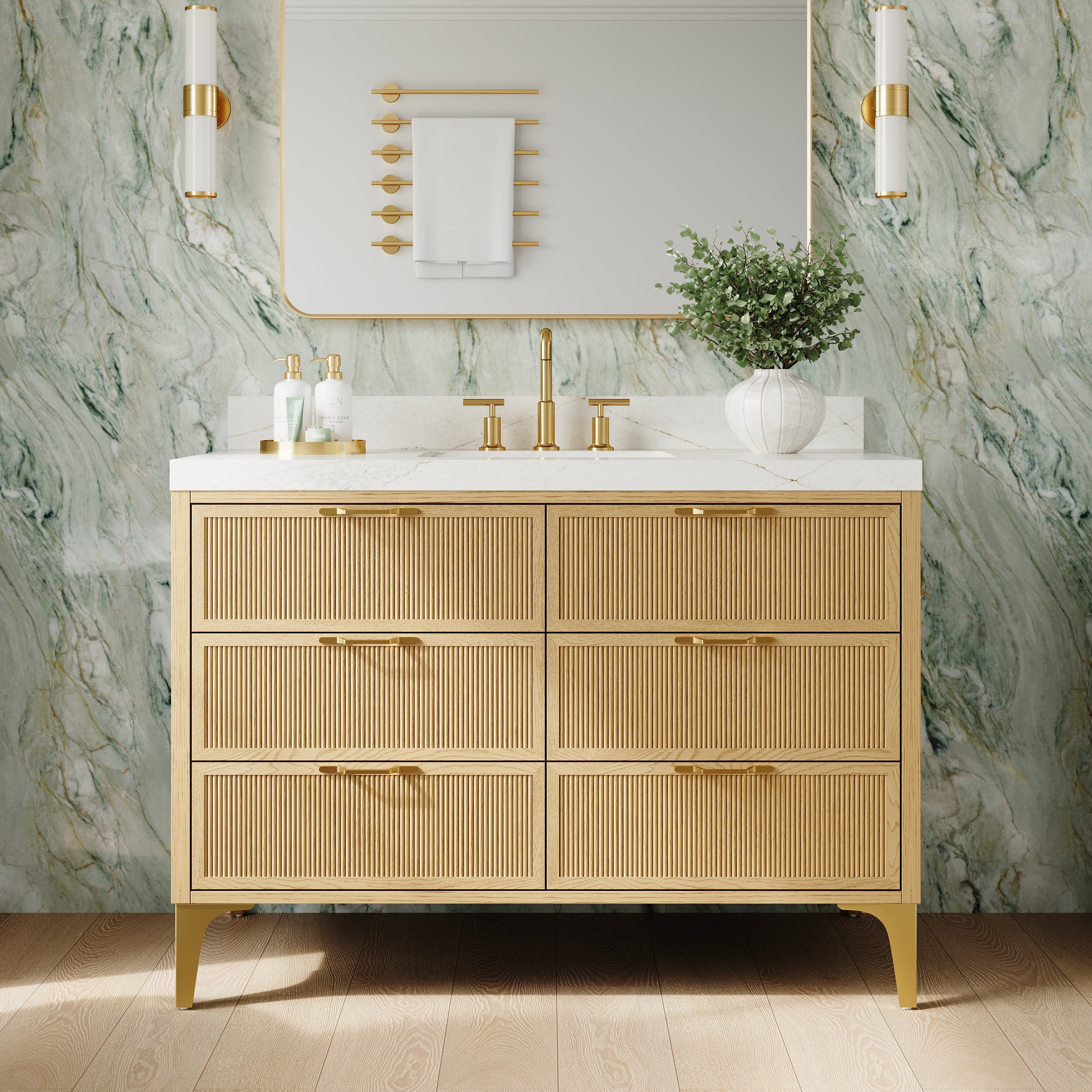
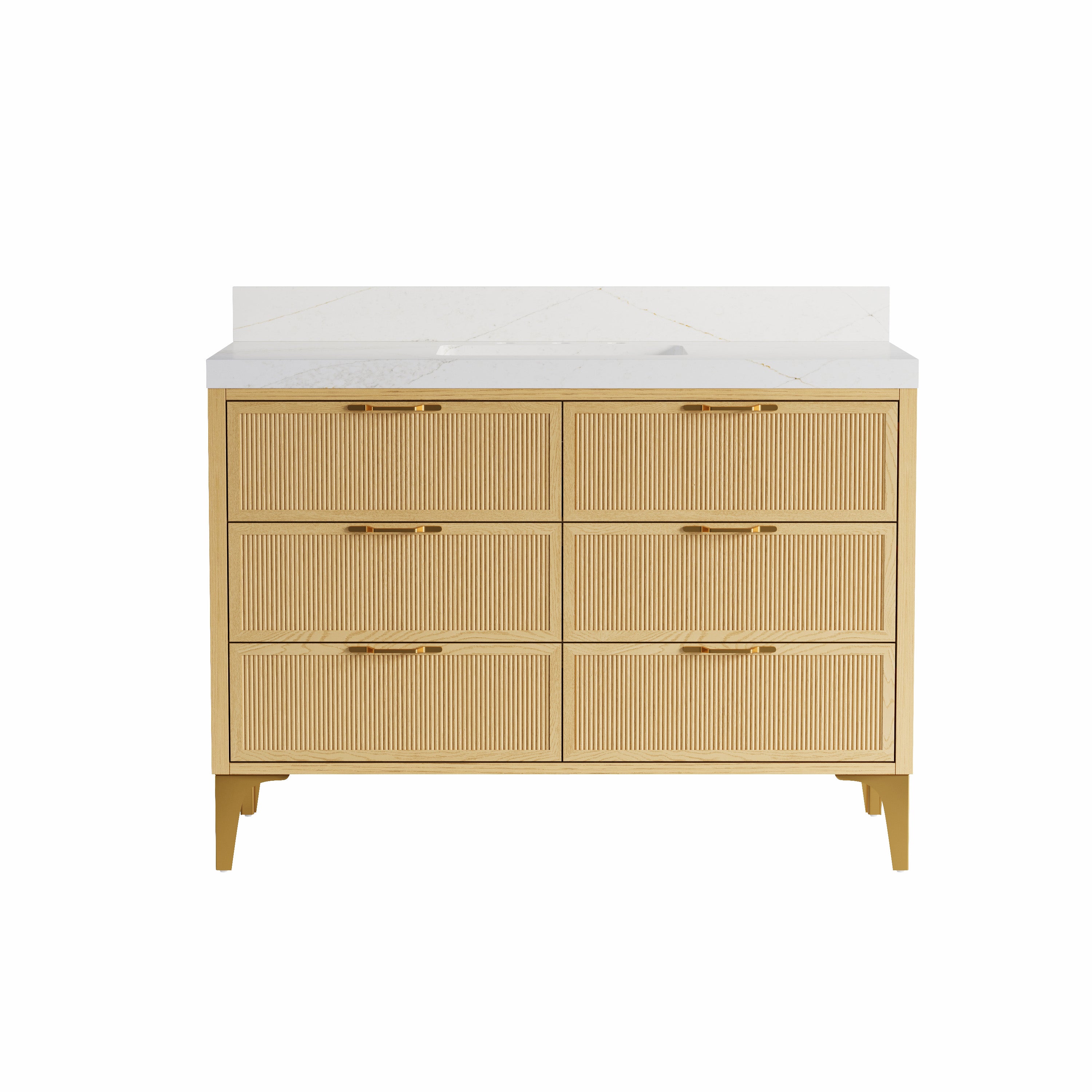


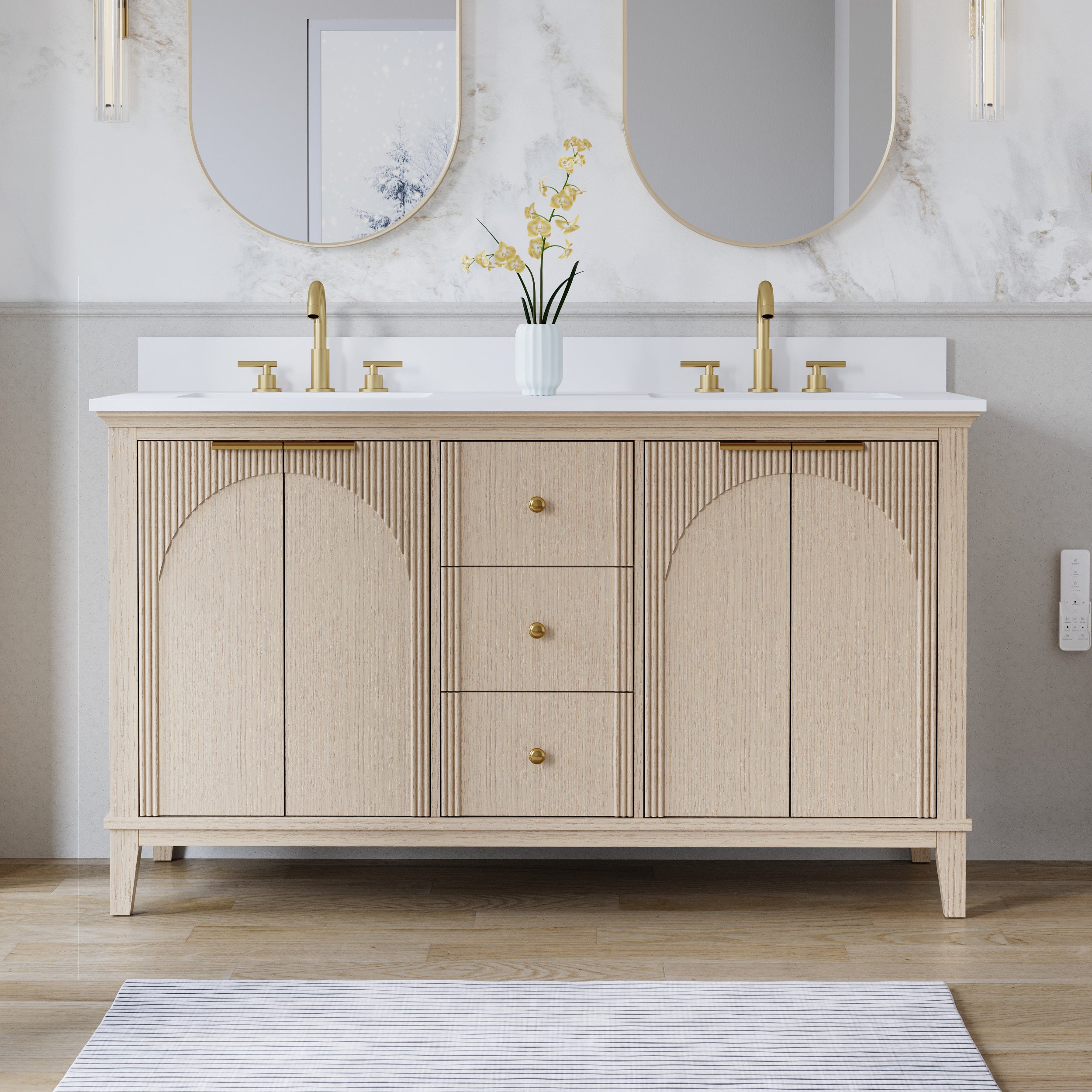
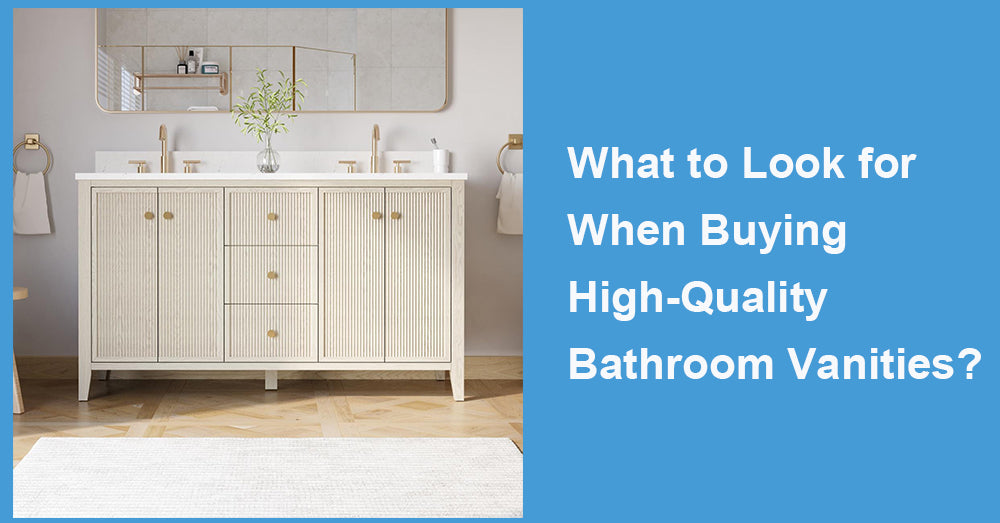
In bathroom renovations and space upgrades, bathroom vanities often play a more critical role than imagined.
It is not only the core component of the washing function but also determines the storage efficiency, space utilization, and long-term stability of use.
Long-term industry tracking data show that bathroom cabinets are among the bathroom products with the most significant differences in rework rates and satisfaction, and the key to these differences is often the neglect of "quality details" during the early purchase phase.
1. Cabinet structure, more indicative of quality than appearance
The first criterion for judging a high-quality bathroom cabinet is not whether it looks good on the surface, but whether the internal structure is reasonable and stable.
Industry testing shows that bathroom cabinets with multi-layer boards or solid-wood frame structures have significantly greater stability than simple compression board structures under long-term humidity fluctuations.
Especially in the mainstream size range of 36-60 inches, structural strength's influence on deformation resistance is particularly significant.
The drawer connection method is equally crucial.
The dovetail or reinforced connection structure can maintain good stability after repeated opening and closing for many years, while the simple nail structure is more prone to loosening.
2. Size planning determines whether it looks good or is useful
Industry data shows that a large proportion of the inconvenience in using bathroom cabinets is due to size errors rather than product quality.
The most common widths are 24, 30, 36, 48, and 60 inches.
24-30 inches are more suitable for compact spaces.
36-48 inches perform the best in terms of functional and spatial balance.
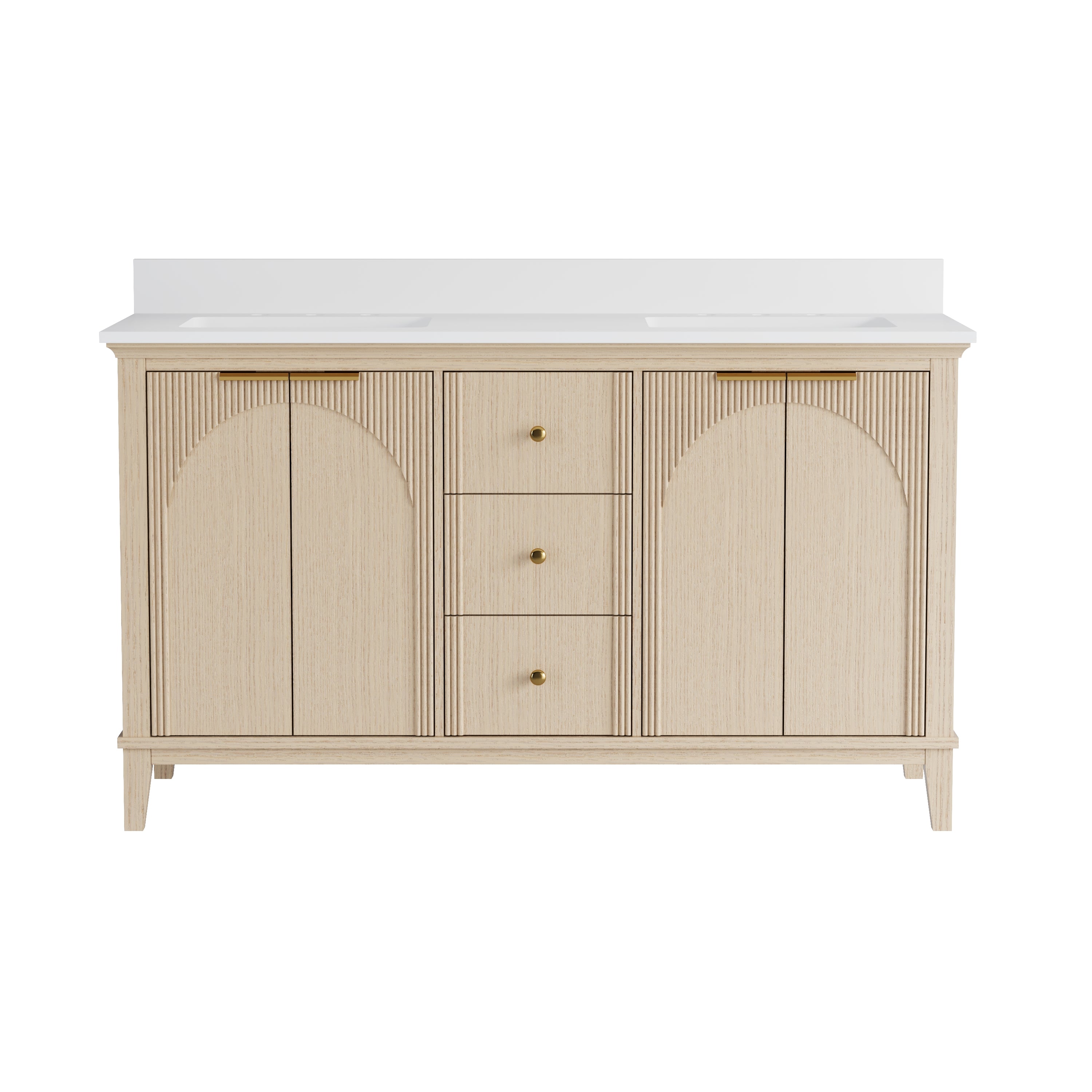
60 inches or more is ideal for dual-use scenarios.
The depth is usually 18-22 inches.
Shallow water splashes easily, while deep water compresses the flow line.
In terms of height, the traditional 32-inch height is gradually being replaced by comfortable heights of 34-36 inches, in line with modern ergonomic trends.
3. Moisture resistance is the core indicator of the lifespan of bathroom cabinets
The biggest challenge in bathroom environments is humidity fluctuations.
Industry maintenance data shows that most cabinet problems are caused by long-term moisture intrusion, rather than occasional water ingress.
High-quality bathroom cabinets typically undergo multiple sealing treatments at the edges of panels, the back panels, and internal connections to slow the rate of water vapor infiltration.
Coatings not only serve aesthetic purposes, but are also an essential component of moisture-proof systems.
If the internal edges of the cabinet are rough, even if the appearance is exquisite, the long-term durability will be significantly reduced.
4. The hardware system determines how long the user experience can last
Drawer rails and hinges are the most frequently used components in daily use.
Industry tests have shown that high-quality buffer rails maintain significantly better opening and closing smoothness than ordinary hardware after years of high-frequency use.
In large-sized bathroom cabinets over 48 inches, the hardware system carries a greater load, and inferior guide rails are more prone to sinking or jamming.
Buffer closure, anti-pinch design, and fully pull-out structure have gradually become standard features of high-quality bathroom cabinets, rather than just additional selling points.
5. The material of the countertop is directly related to long-term maintenance costs
Although many people are attracted to the appearance of countertops when making purchases, industry feedback indicates that durability and ease of cleaning are more critical.
Quartz countertops have high satisfaction in long-term use due to their stable scratch resistance and permeability resistance.
Natural stone has a high-quality texture, but requires more maintenance.
Composite countertops have a cost advantage, but durability depends on the level of craftsmanship.
A well-designed water-blocking edge can effectively prevent water stains from entering the cabinet interior at a standard table depth of 20-22 inches.
6. The storage structure determines whether the space becomes more cluttered as it is used
High-quality bathroom cabinets will consider real-life usage scenarios during the design phase.
Industry usage data show that bathroom cabinets with drawers as the main component and partition structures have significantly higher long-term cleanliness than single-cabinet-door structures.
Drawers of different heights can store small and large items separately, reducing stacking and searching.
In cabinets over 36 inches, reasonable internal planning is more important than simply increasing capacity.
7. Backboard and installation details, often overlooked but extremely critical
Many bathroom cabinets look good quality in terms of appearance and front structure, but the back panel treatment is very simplified.
Industry experience shows that thin backplates or insufficient moisture-proof treatment can serve as the primary channel for moisture intrusion.
High-quality bathroom cabinets usually use thickened backboards and seal the installation opening areas to reduce the impact of water vapor from the source.
8. Brand craftsmanship standards are more valuable references than parameters
Under the same size and material conditions, the differences in usage caused by different levels of craftsmanship are pronounced.
Mature manufacturing systems are often more stable in structural design, moisture-proof details, and hardware selection.
Industry feedback shows that truly high-quality bathroom cabinets rarely attract attention through stacking parameters.
Instead, they demonstrate durability in detail.

9. Conclusion: High quality, never just "looking expensive."
The core of choosing high-quality bathroom amenities is not to pursue the most complex configuration, but to judge whether:
the structure is stable,
the size is reasonable,
the moisture resistance is in place,
the hardware is durable.
When these foundations are in place, bathroom cabinets can often remain stable and aesthetically pleasing even after years of use.
Neglecting these key points, even if they look good in the early stages, can easily expose problems over time.
True quality is the ability to withstand the test of humidity, time, and heavy use, rather than an exquisite appearance at a glance.










Leave a comment
This site is protected by hCaptcha and the hCaptcha Privacy Policy and Terms of Service apply.