

















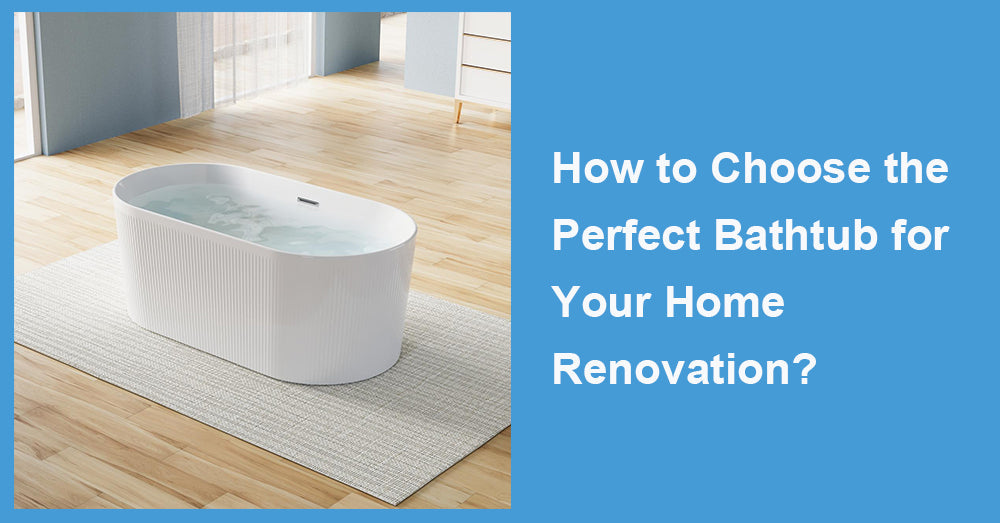
In bathroom renovation projects, the bathtub is often one of the most expensive and impactful items. Long-term industry data show that once a bathtub is installed, it is usually used for more than ten years, so the cost of choosing the wrong one is much higher than most bathroom products. The truly ideal bathtub choice is not the most stylish or eye-catching in terms of specifications, but the result of a high degree of matching between size, material, usage, and spatial conditions.
1. Starting from spatial reality, not from product catalogs
Before choosing a bathtub, the first step is never to choose a style, but to measure the available space accurately. Industry experience shows that size-judgment errors are among the reasons for the highest rework rate in bathtubs.
The standard bathtub length falls between 59 and 60 inches, which is the most common and adaptable range. In a larger space, a 66-67-inch bathtub can significantly enhance the sense of relaxation. Under a compact layout, a short bathtub of about 54-55 inches is easier to integrate.
The width is usually between 28 and 32 inches, which directly affects the shoulder movement space. The immersion depth is mainly 14-16 inches, and the deeper the immersion, the more immersive the bathing experience; however, greater emphasis is placed on the safety of entry and exit.
When measuring, in addition to the size of the bathtub body, it is also necessary to reserve access channels and maintenance space, which is often overlooked.
2. The usage method determines whether the bathtub is truly "worth installing."
Industry research shows that many households find that the frequency of bathtub usage is much lower than expected after renovation, not because they dislike taking baths, but because the bathtub does not match their lifestyle.
If the bathroom is designed for high frequency and quick use, a low-threshold entry and an easy-to-clean structure are often more practical than a deep-soaking design. If the space allows and relaxation is the core scene, the long-term satisfaction of an independent or deep-soaking bathtub is significantly higher.
In other words, the bathtub is first and foremost a "living tool", followed by a "space decoration".
3. Material selection determines long-term experience and maintenance costs
At present, the mainstream bathtub materials are mainly concentrated in three categories: acrylic, cast iron, and composite materials.
Acrylic bathtubs are widely used for their lightweight design and high degree of design freedom, especially in standard sizes around 60 inches. It has good insulation performance and a repairable surface, making it a convenient choice in renovation projects.
Cast iron bathtubs are known for their stability and excellent insulation. Still, they typically weigh over 300 pounds and require a stronger floor structure and installation conditions, making them more suitable for projects that reserve load-bearing space during the planning phase.
Composite materials fall somewhere in the middle, balancing a certain sense of heaviness and modern styling, but their durability depends on the level of craftsmanship.
4. The structural form has a much greater impact on space than imagined
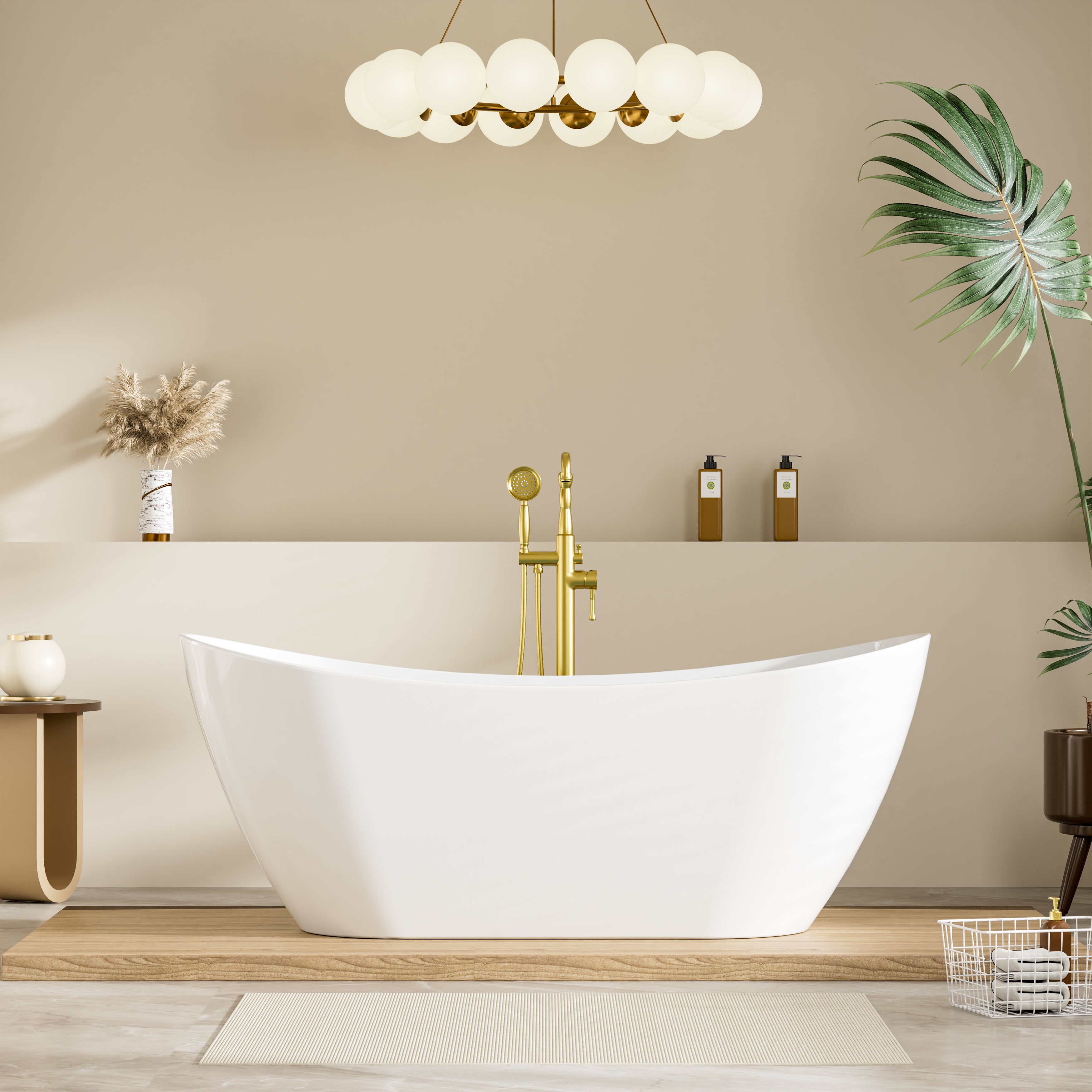
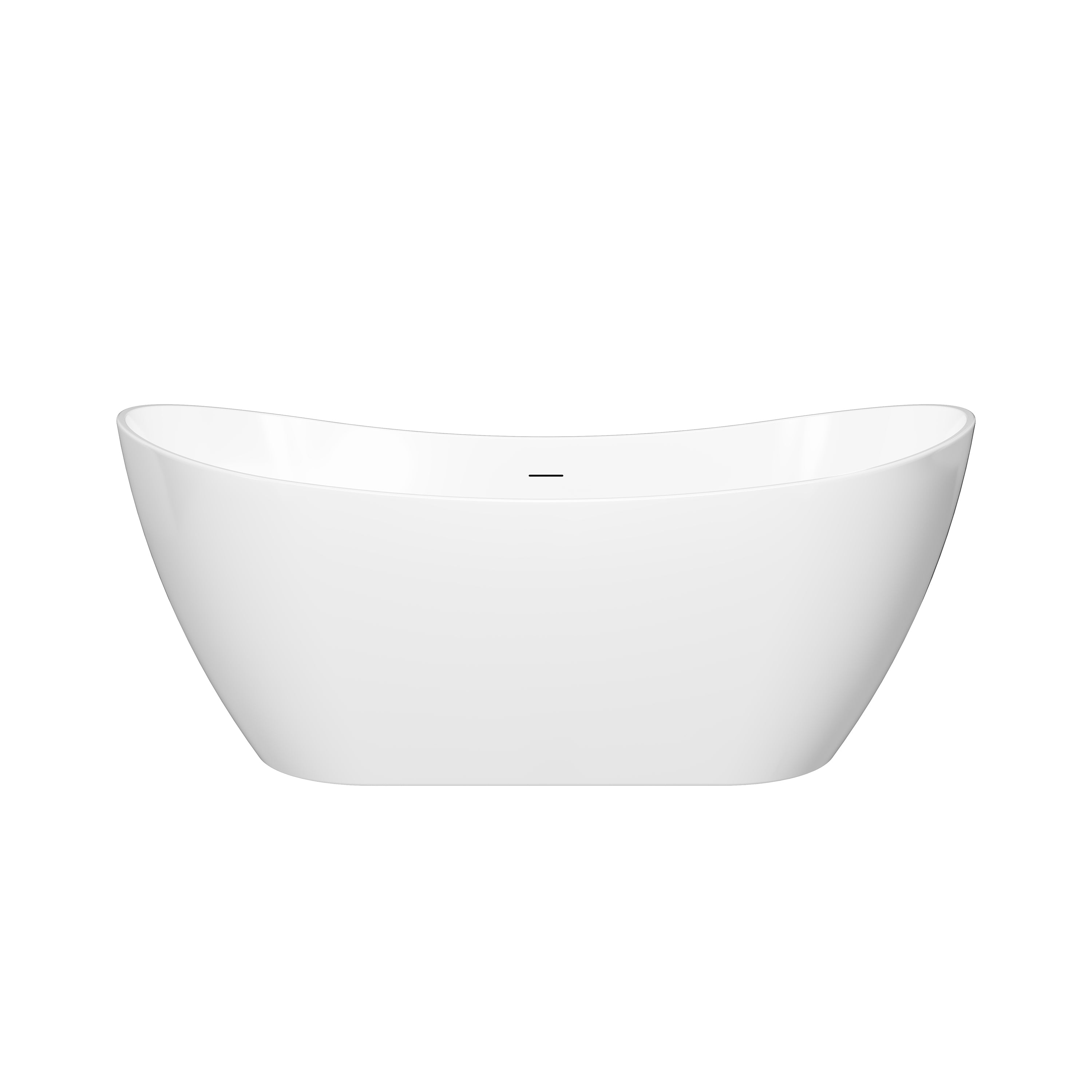
Structurally, bathtubs can be roughly divided into three categories: embedded, wall-mounted, and freestanding.
An embedded bathtub is the most space-saving option for small and medium-sized bathrooms; a wall-mounted design strikes a balance between form and space utilization; an independent bathtub is more focused on visual focal points and typically requires a larger amount of space.
Industry data shows that in compact bathrooms, embedded bathtubs have the highest long-term satisfaction, while in spacious main bath spaces, independent bathtubs bring a stronger sense of spatial value.
5. Comfort details often determine final satisfaction
Many bathtubs may look similar in terms of parameters, but actual differences in experience often come from detailed design.
For example, whether the angle of the internal backrest conforms to the curve of the human body, whether the bottom anti-slip texture is natural, whether the drainage outlet is located away from the sitting and lying area, and whether the edge width is sufficient to accommodate toiletries. These seemingly small designs directly affect the comfort and safety of long-term use.
Industry feedback indicates that bathtubs with well-optimized ergonomics have a significantly higher usage frequency than products with a single design.
6. Weight and installation conditions cannot be considered until the construction phase
Especially during the renovation of the upper bathroom, the weight of the bathtub must be evaluated in advance. Under full water conditions, a 60-inch bathtub may have an overall load exceeding several hundred pounds.
Industry experience shows that lightweight materials offer greater adaptability in renovation projects, while heavyweight bathtubs are better suited for newly built or structurally controlled spaces.
7. Long-term maintenance determines whether to "like it more and more."
The differences in cleaning and aging performance among materials will gradually become apparent over the years of use.
The acrylic surface is easy to clean daily and can be repaired for minor scratches; the cast iron surface is highly wear-resistant, but once there is a profound impact, the repair cost is relatively high. When choosing, not only should the initial texture be considered, but also the convenience of long-term maintenance.

8. Conclusion: The perfect bathtub is matched, not picked out
The process of choosing a bathtub is essentially about balancing spatial conditions, usage methods, material properties, and long-term experience. Industry experience has repeatedly proven that there is no "best bathtub", only the "most suitable bathtub".
When the size (precisely planned in inches), structural form, and lifestyle habits are in alignment, the bathtub will truly become a part of relaxation and enjoyment, rather than a decorative item that takes up space but is rarely used. This is the proper standard for a successful renovation.

















Leave a comment
This site is protected by hCaptcha and the hCaptcha Privacy Policy and Terms of Service apply.