














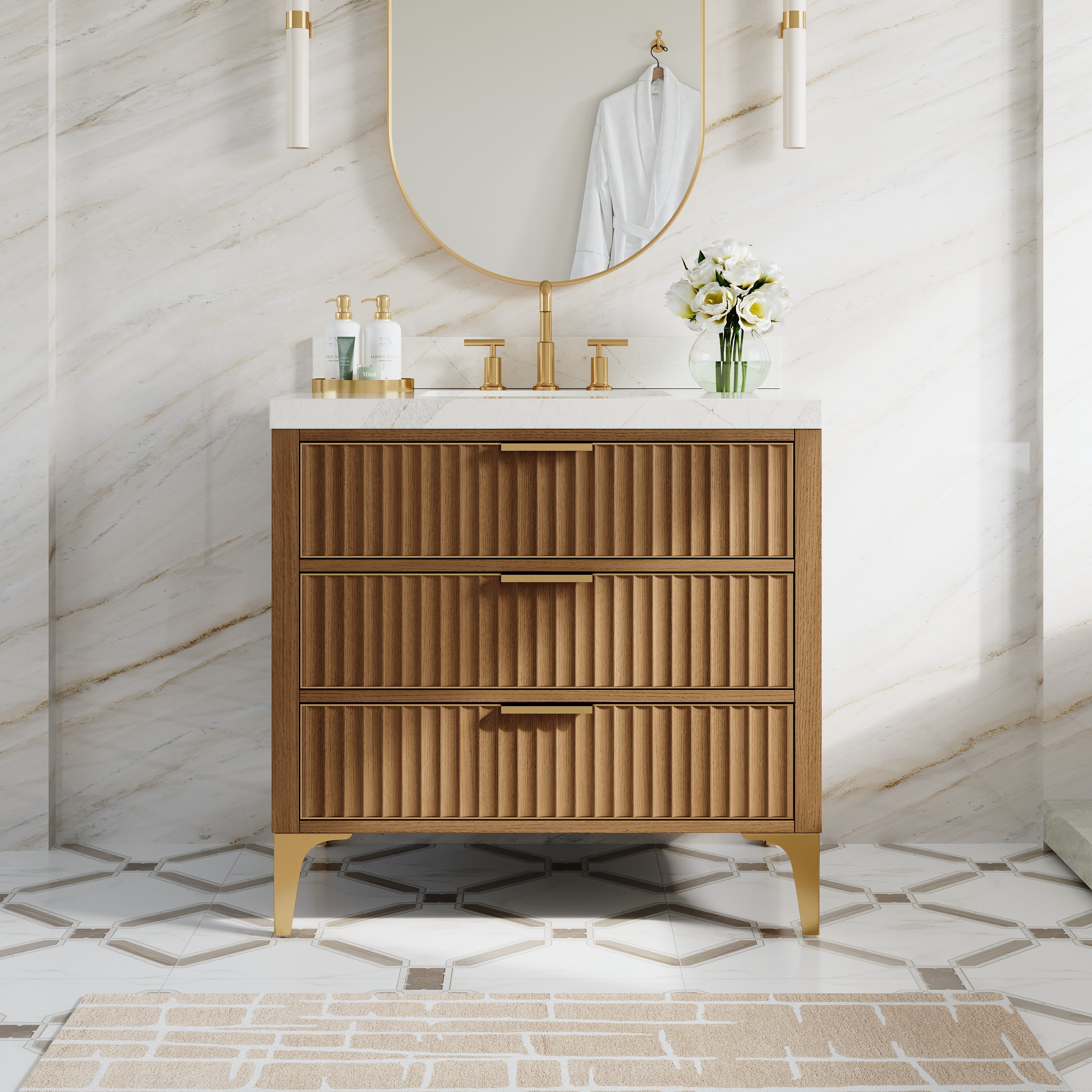
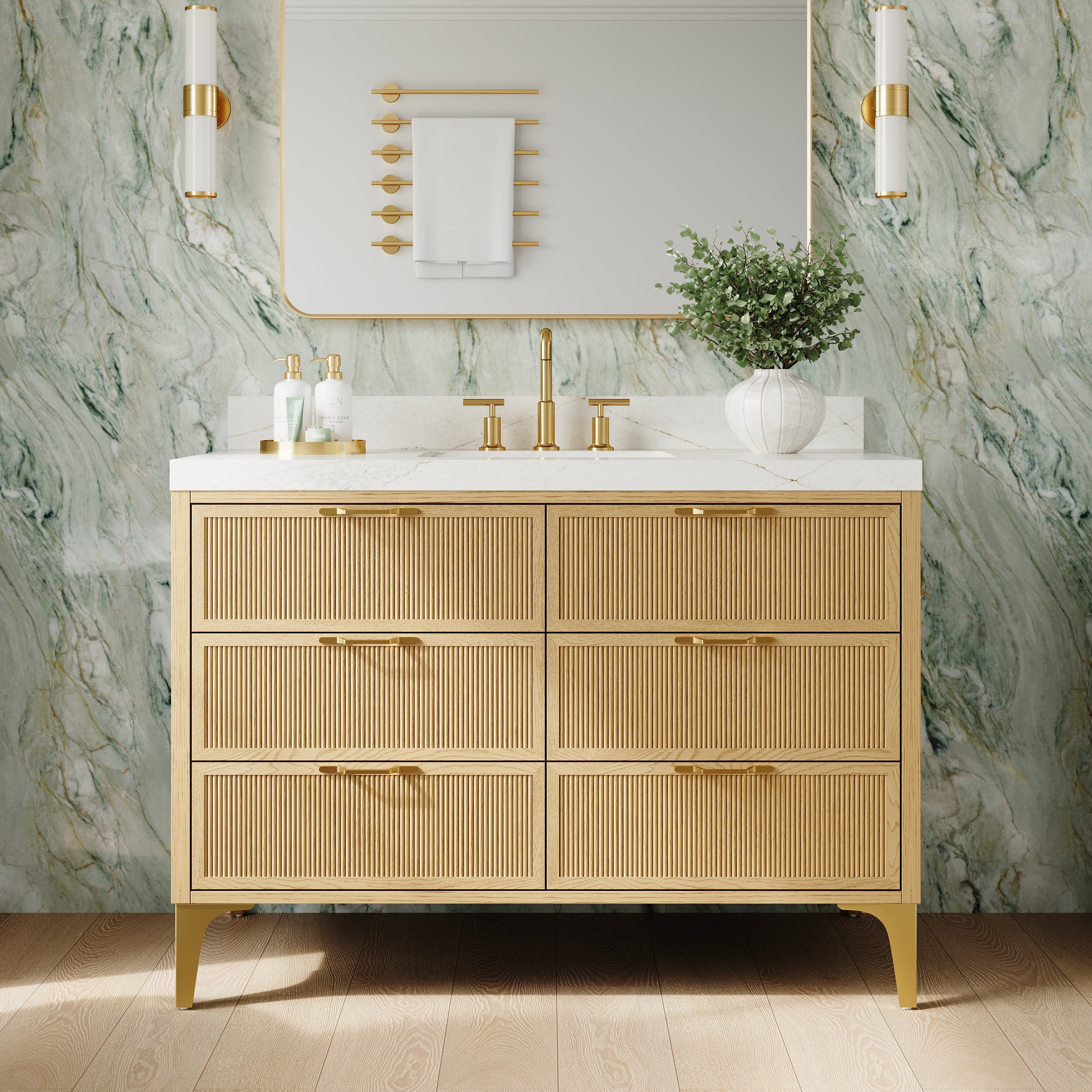


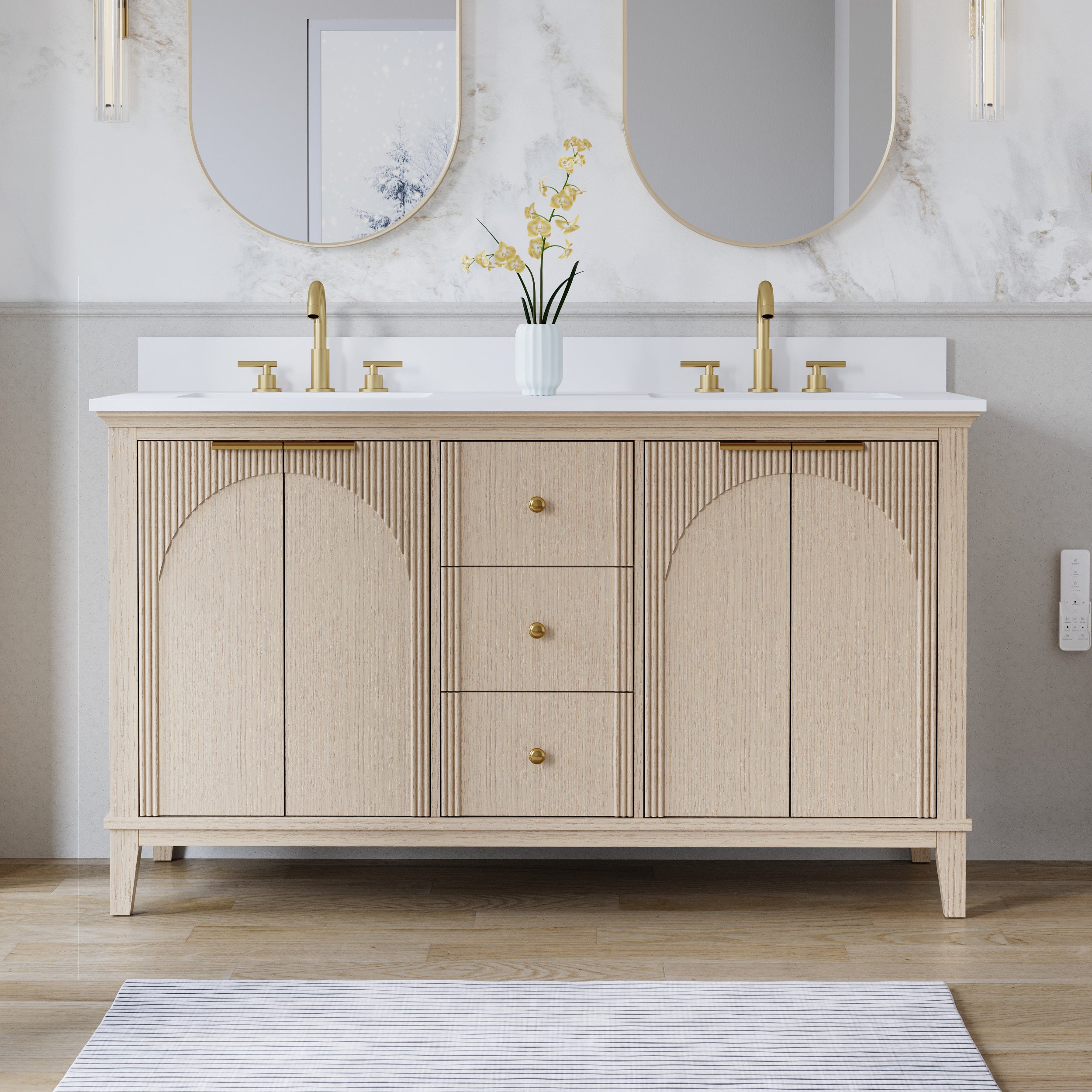
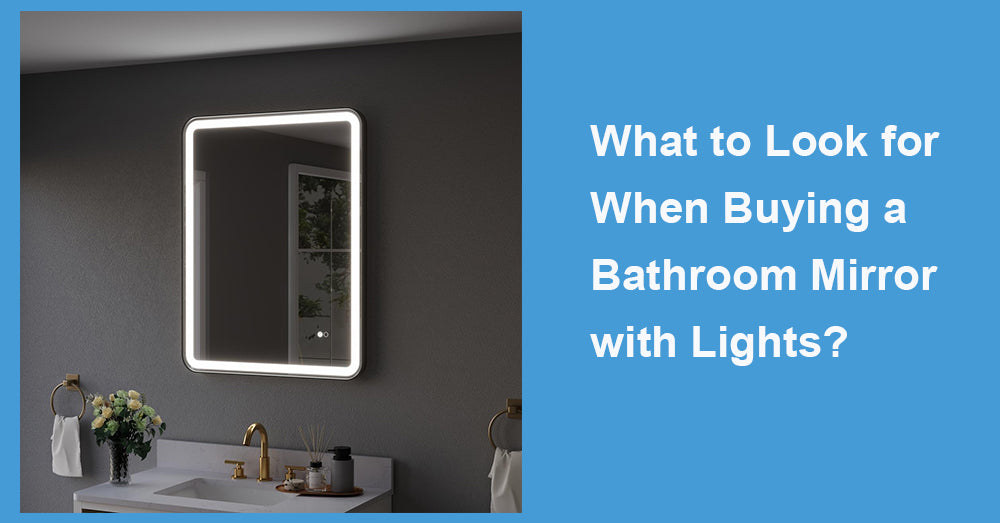
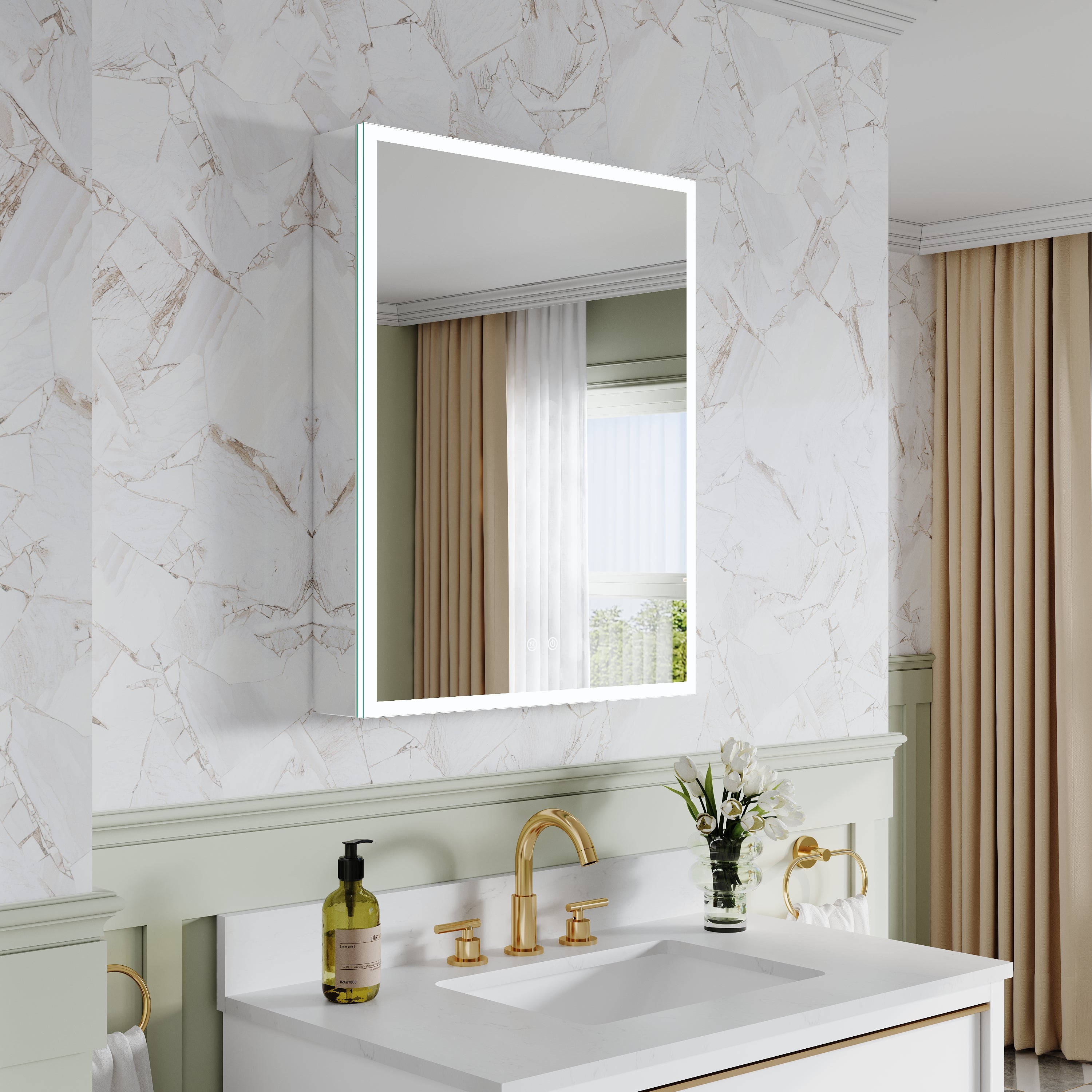
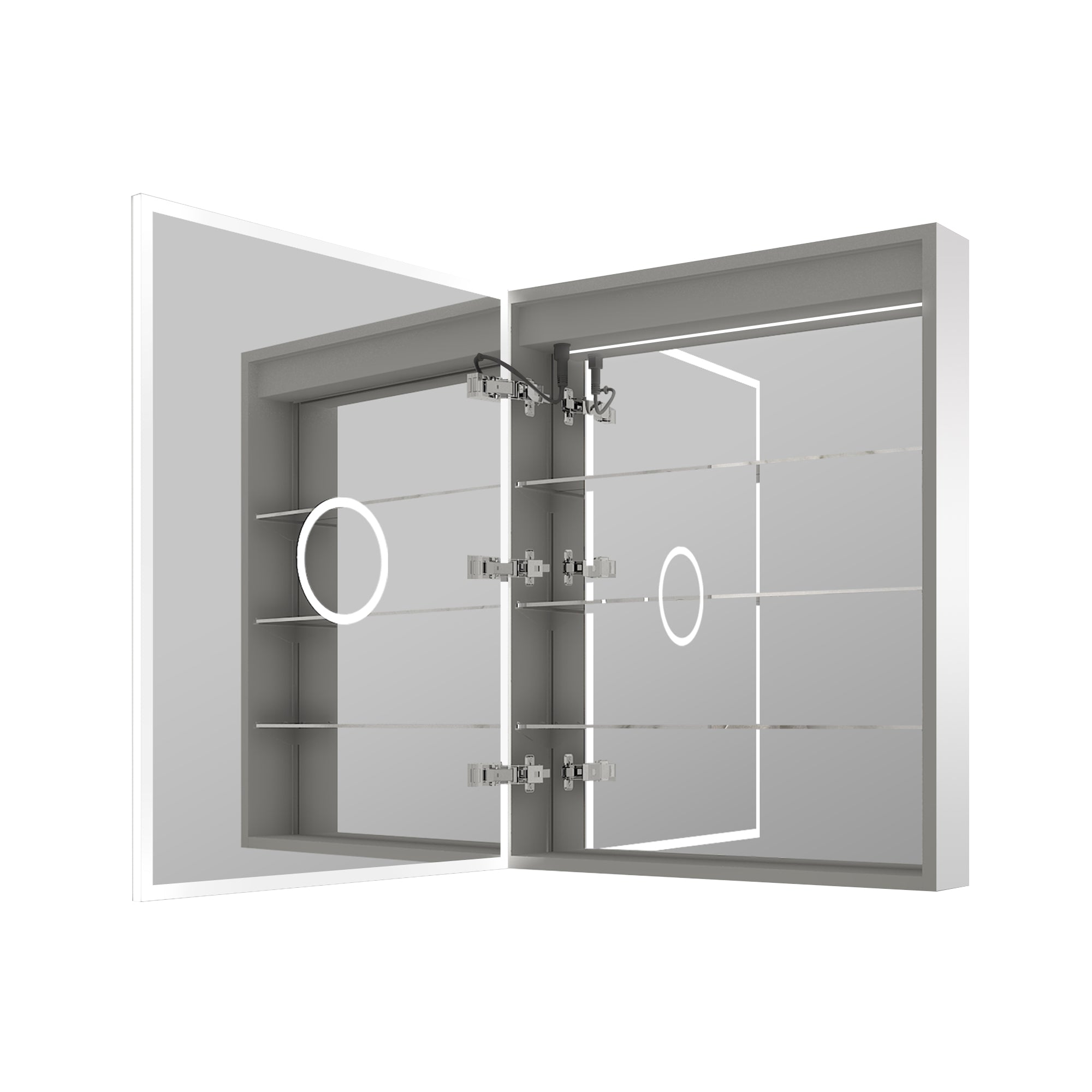
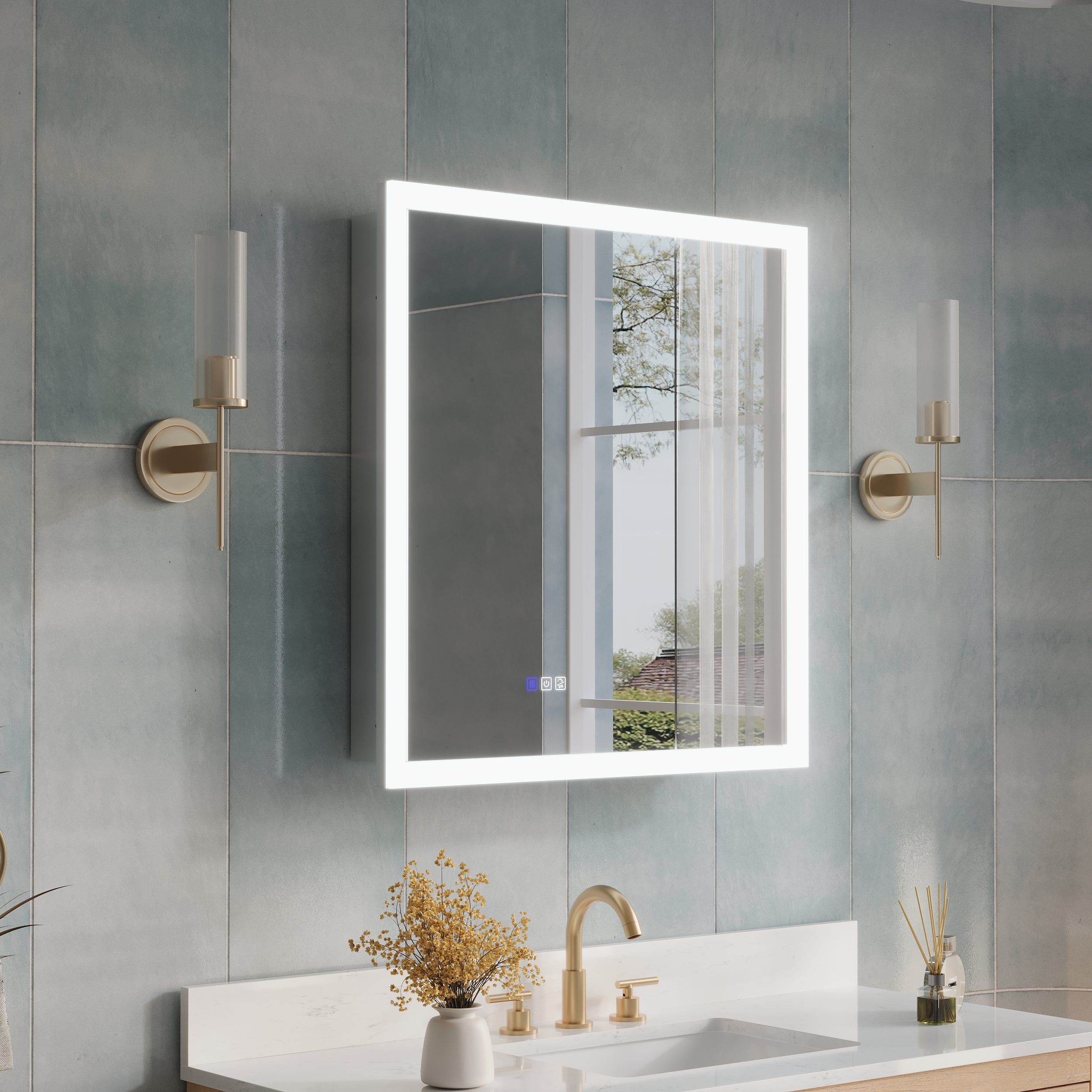
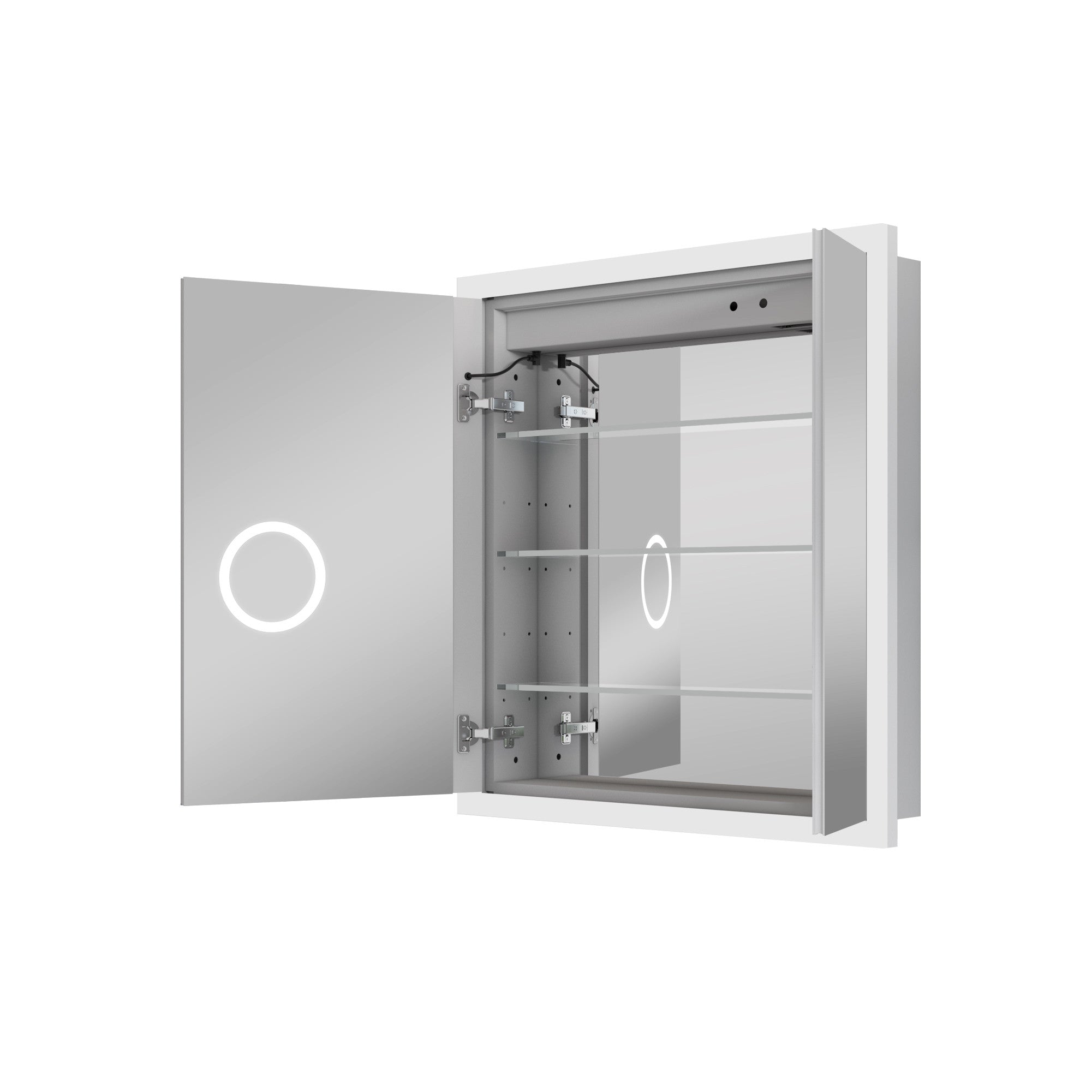
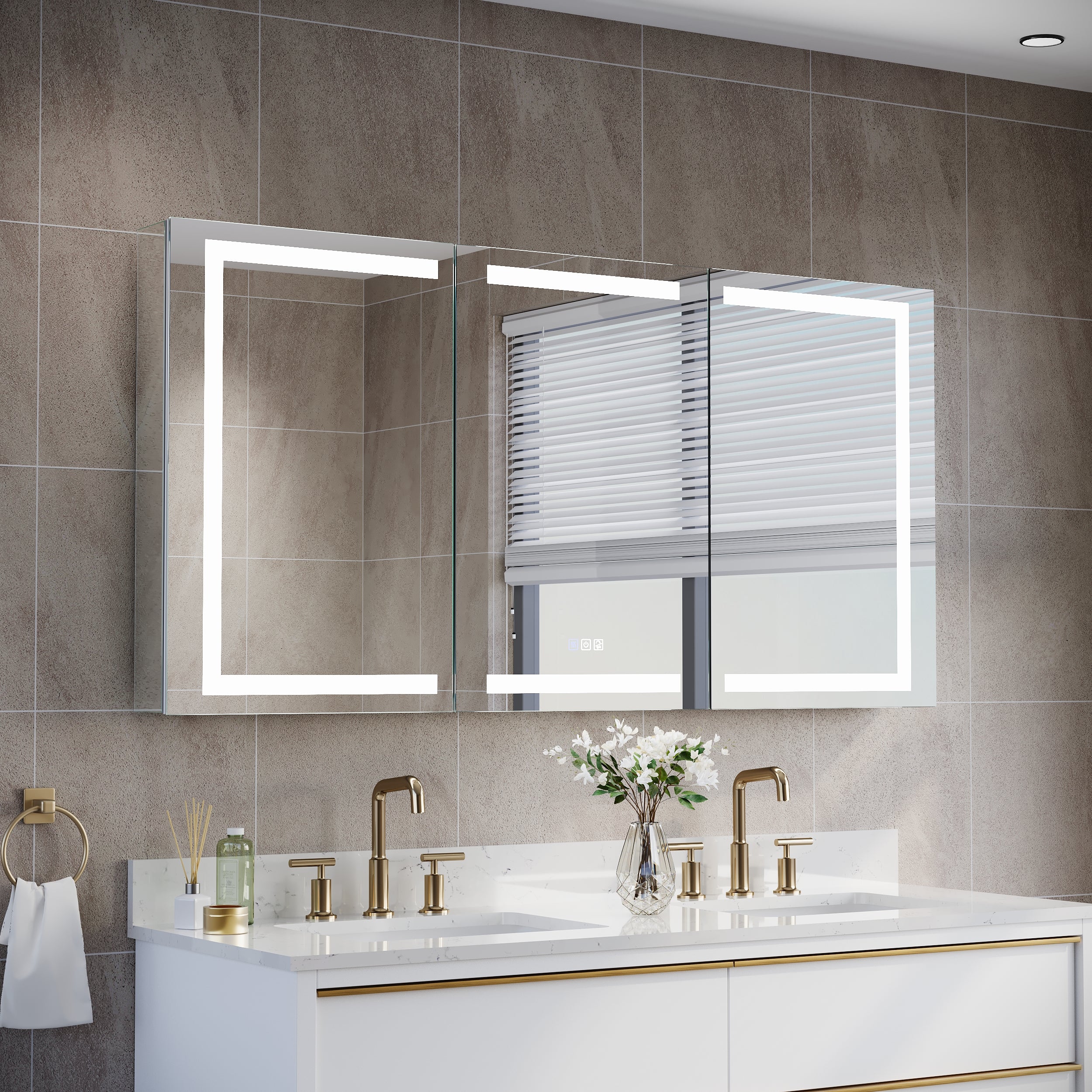
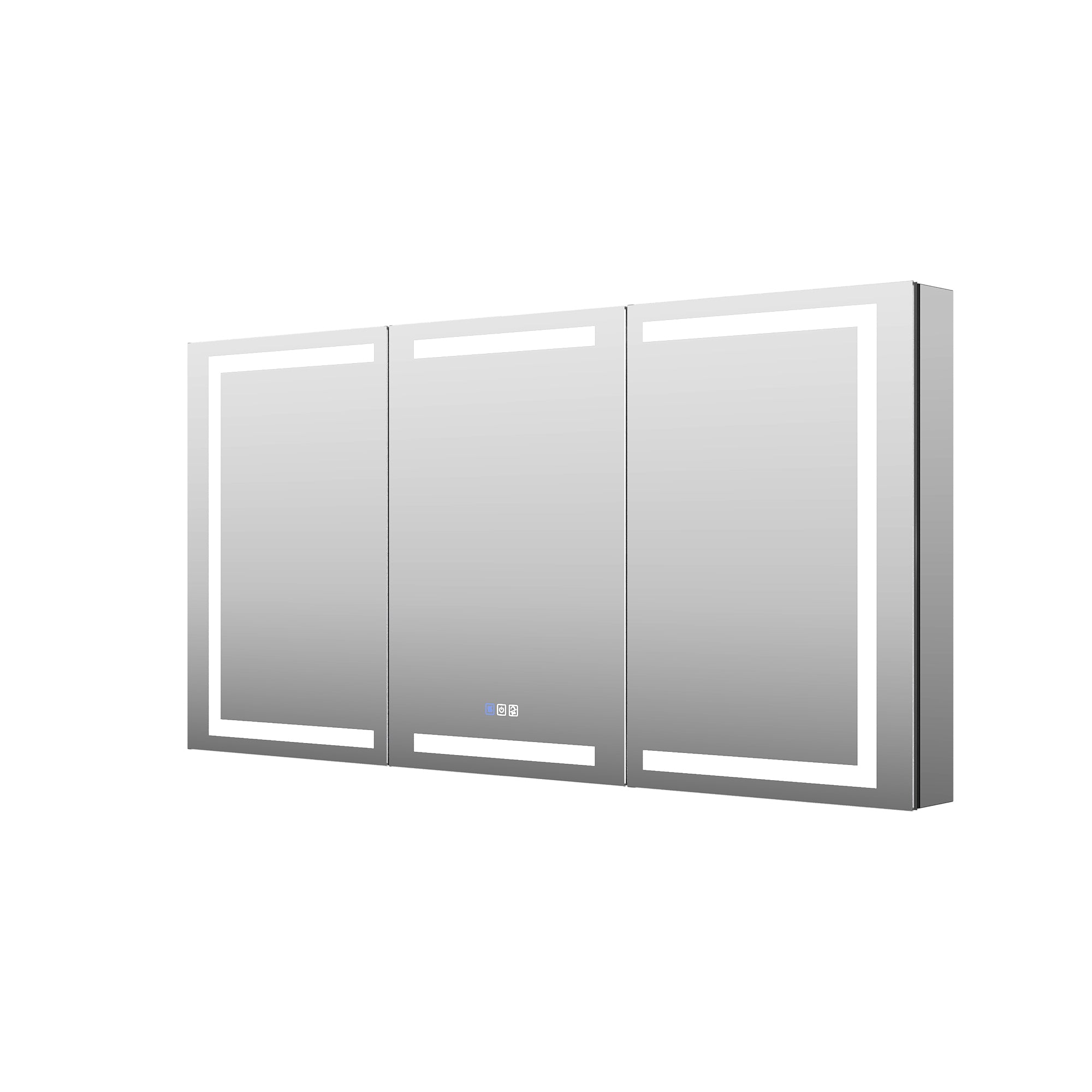
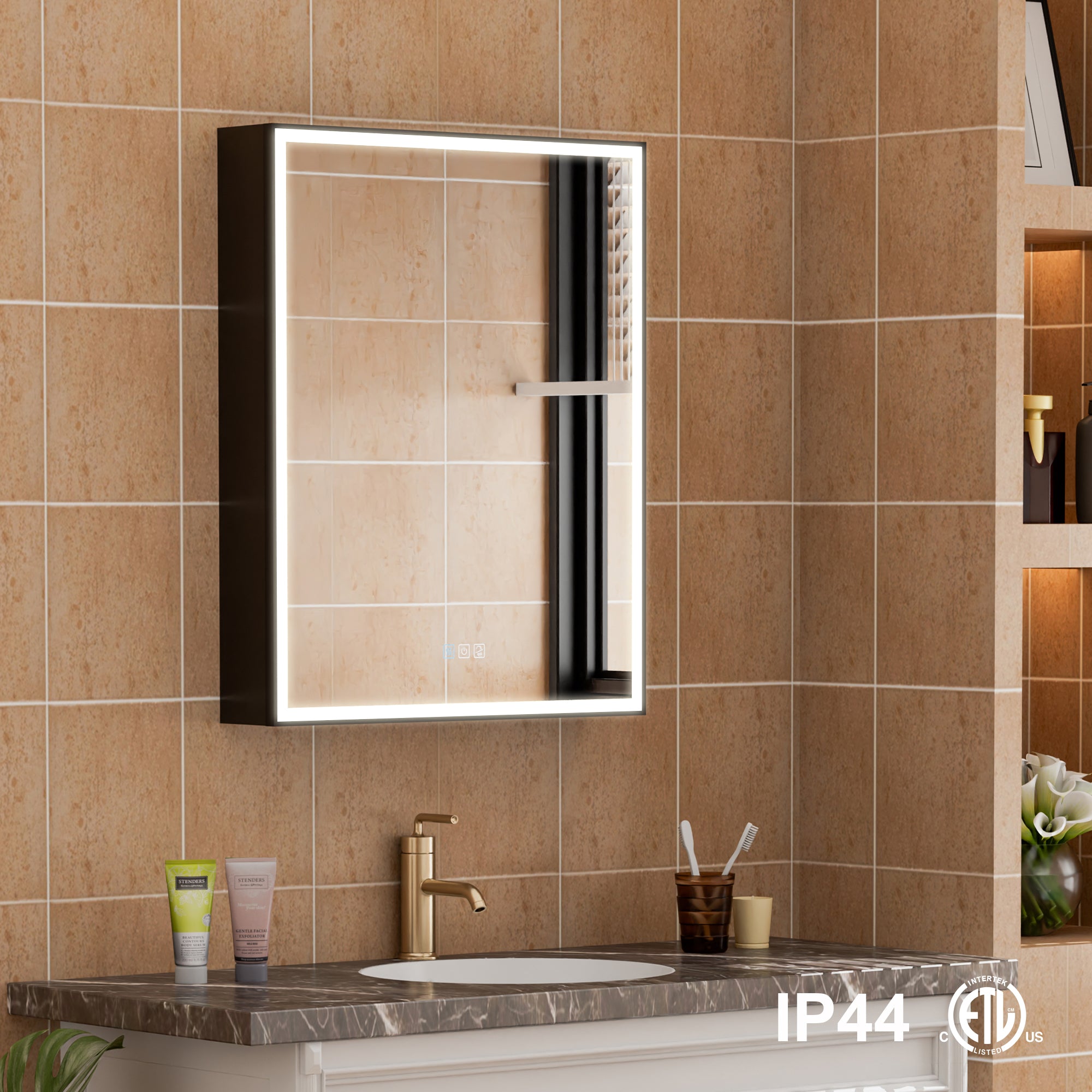
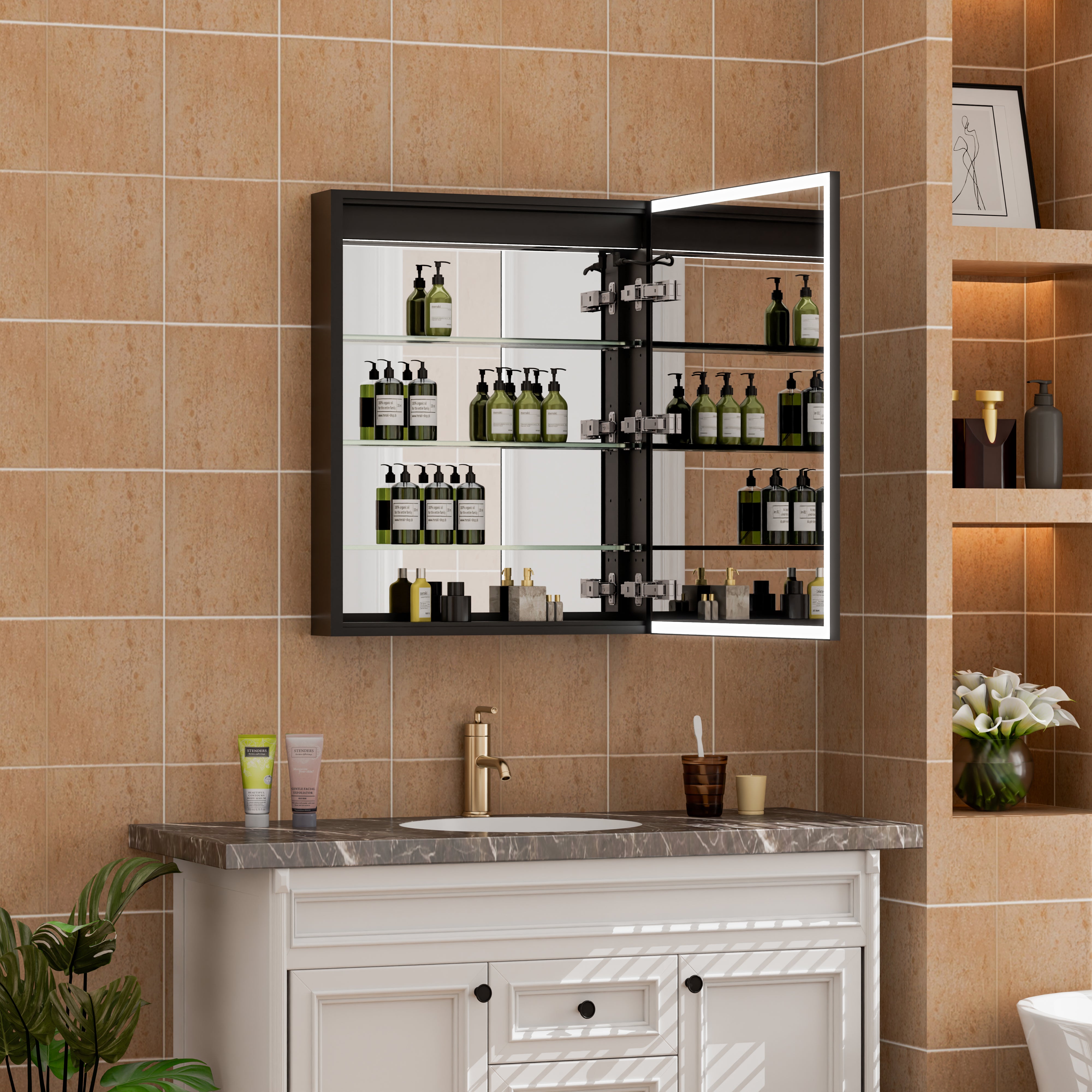
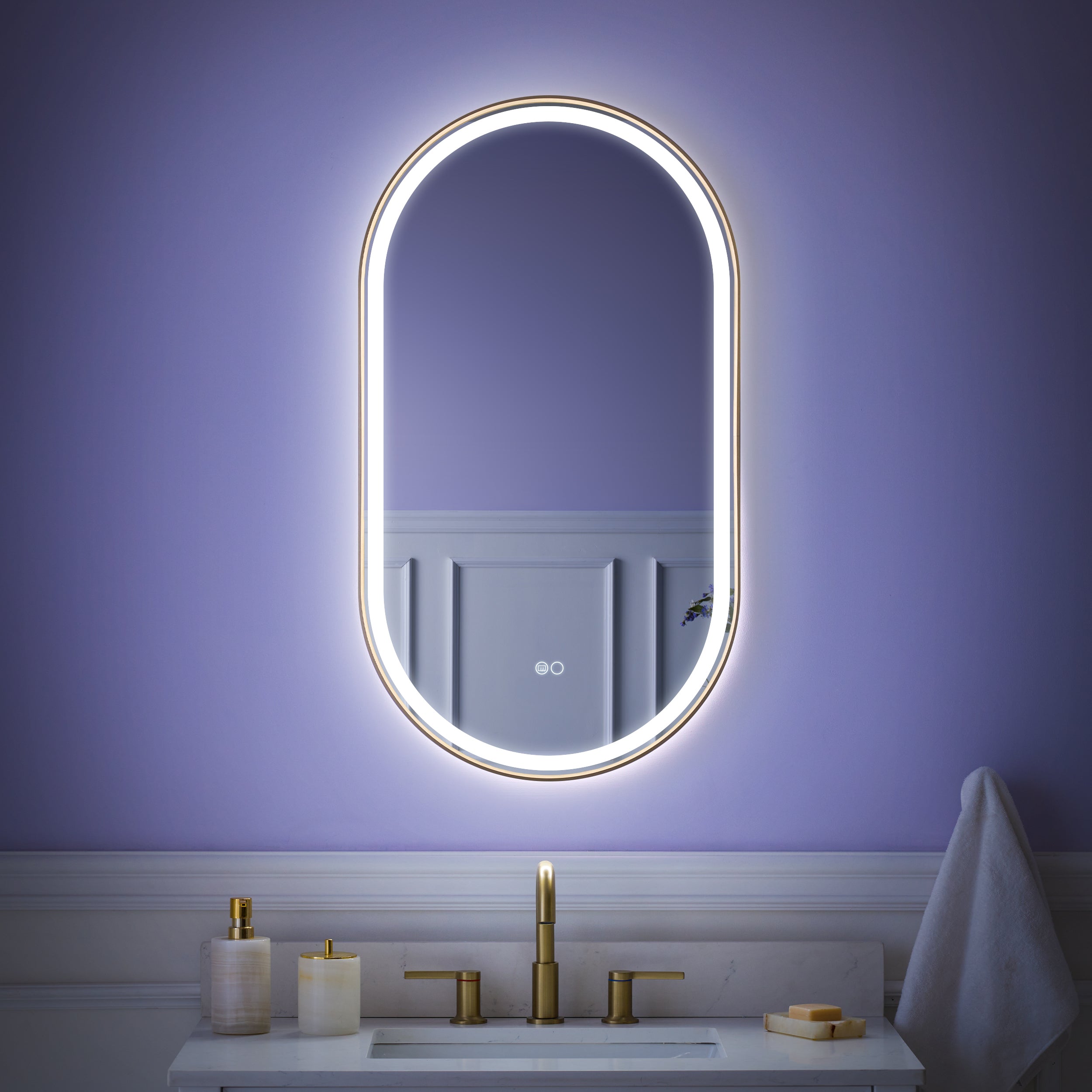
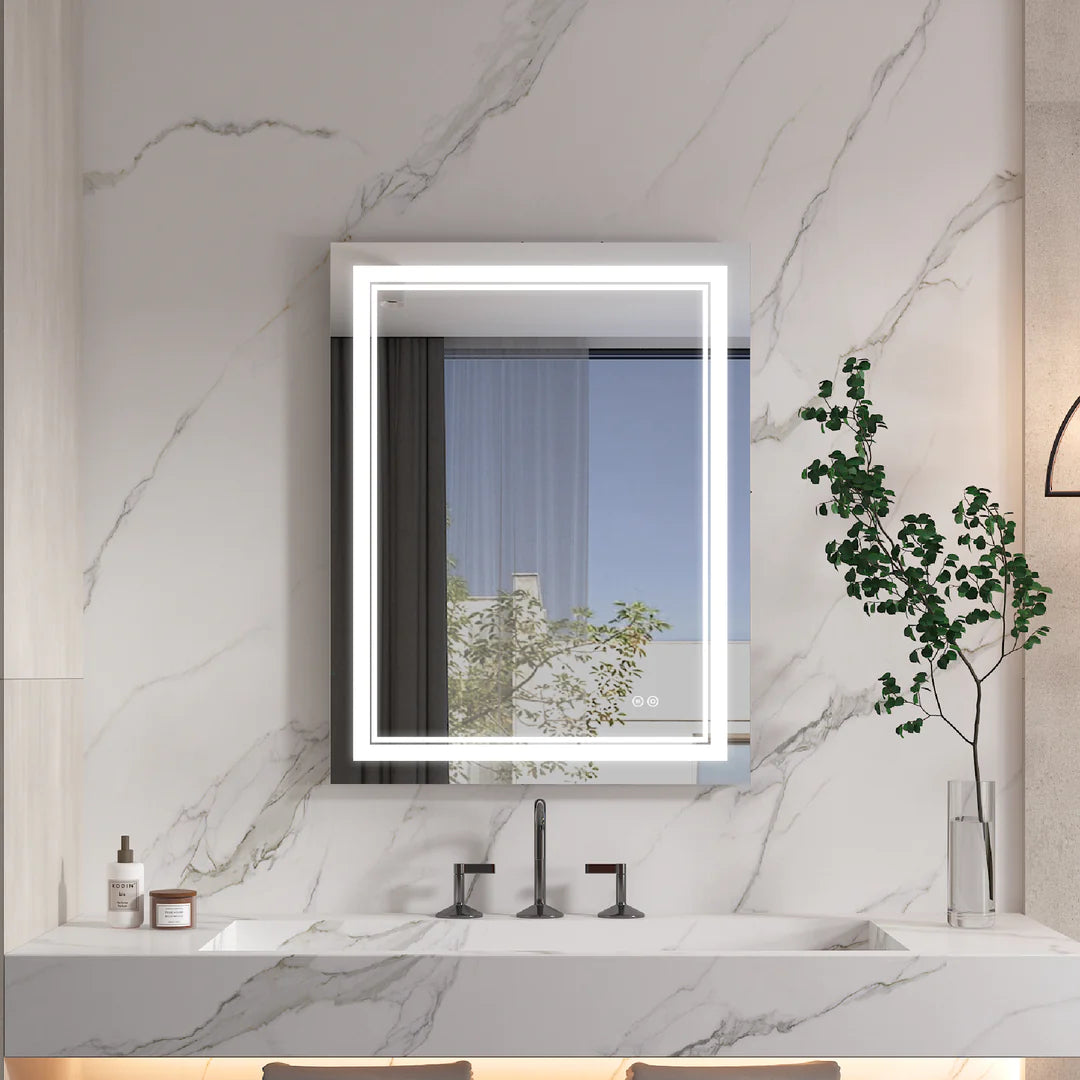
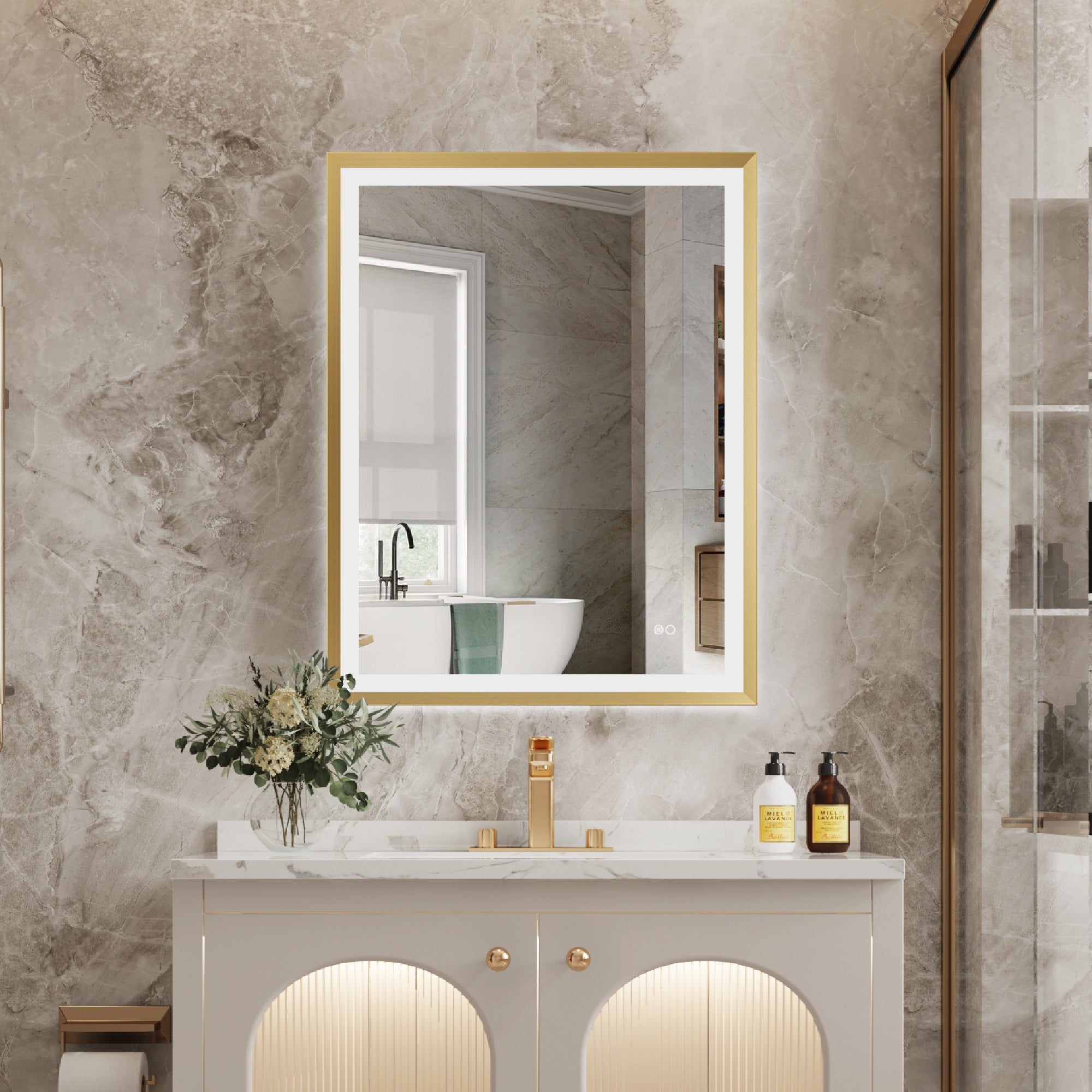
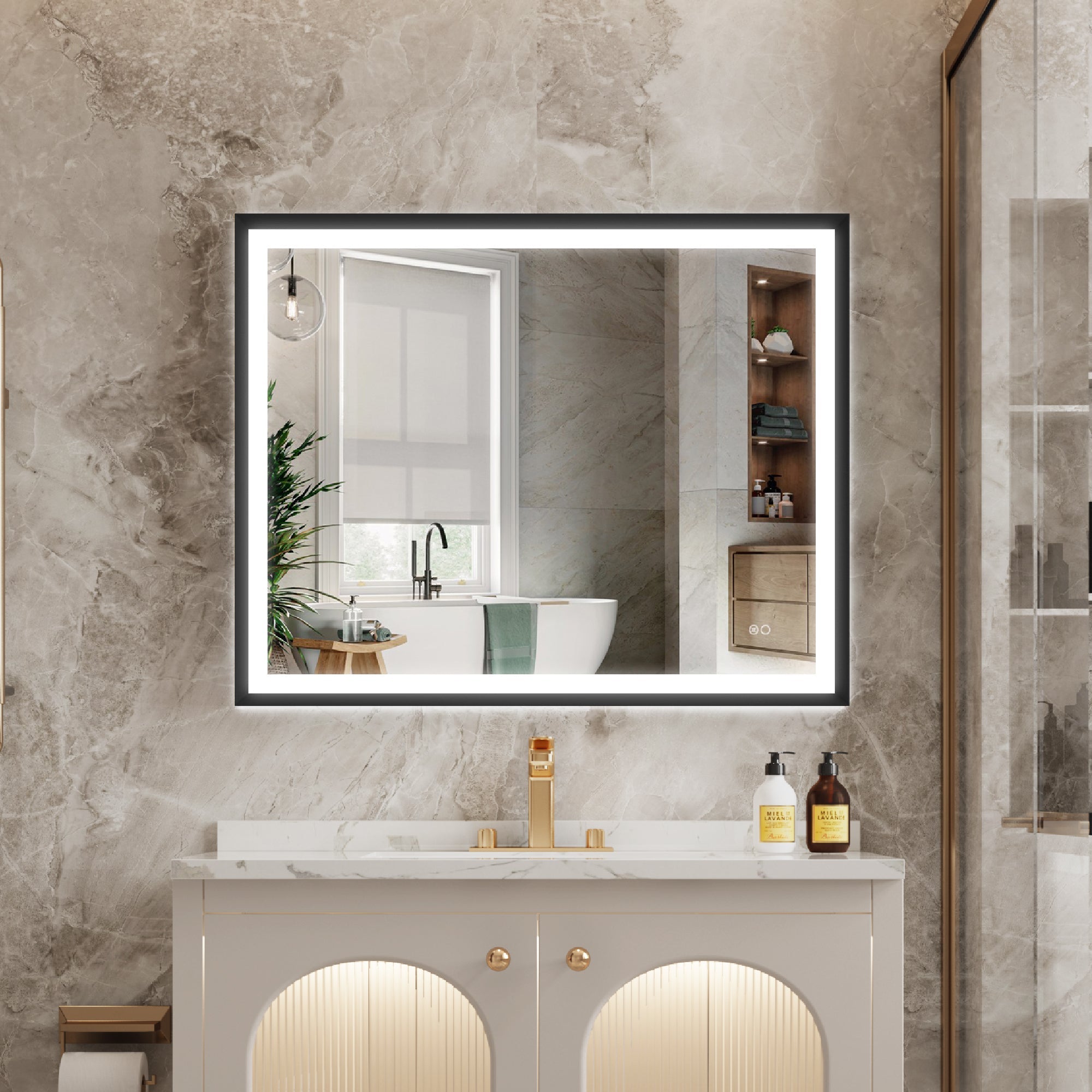
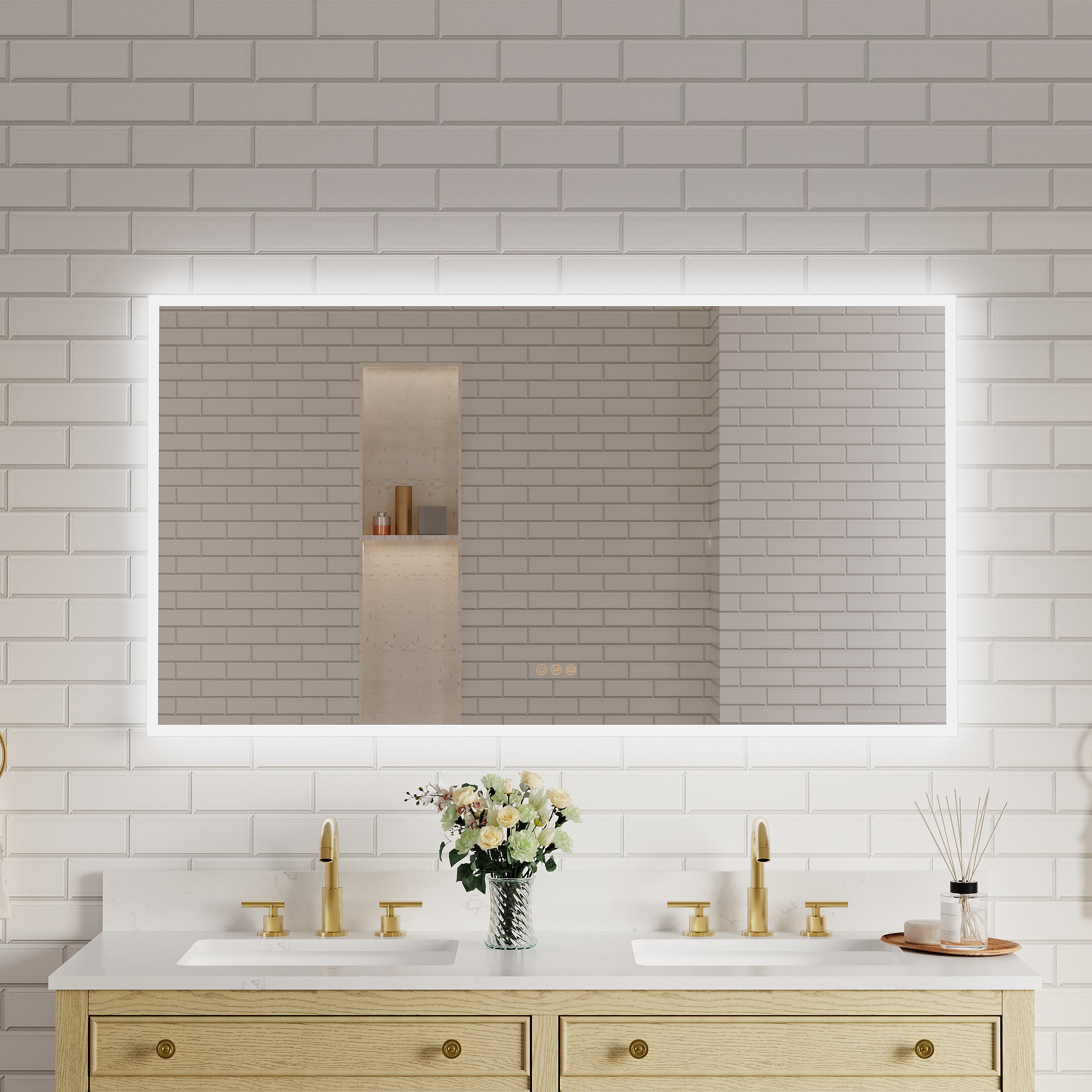
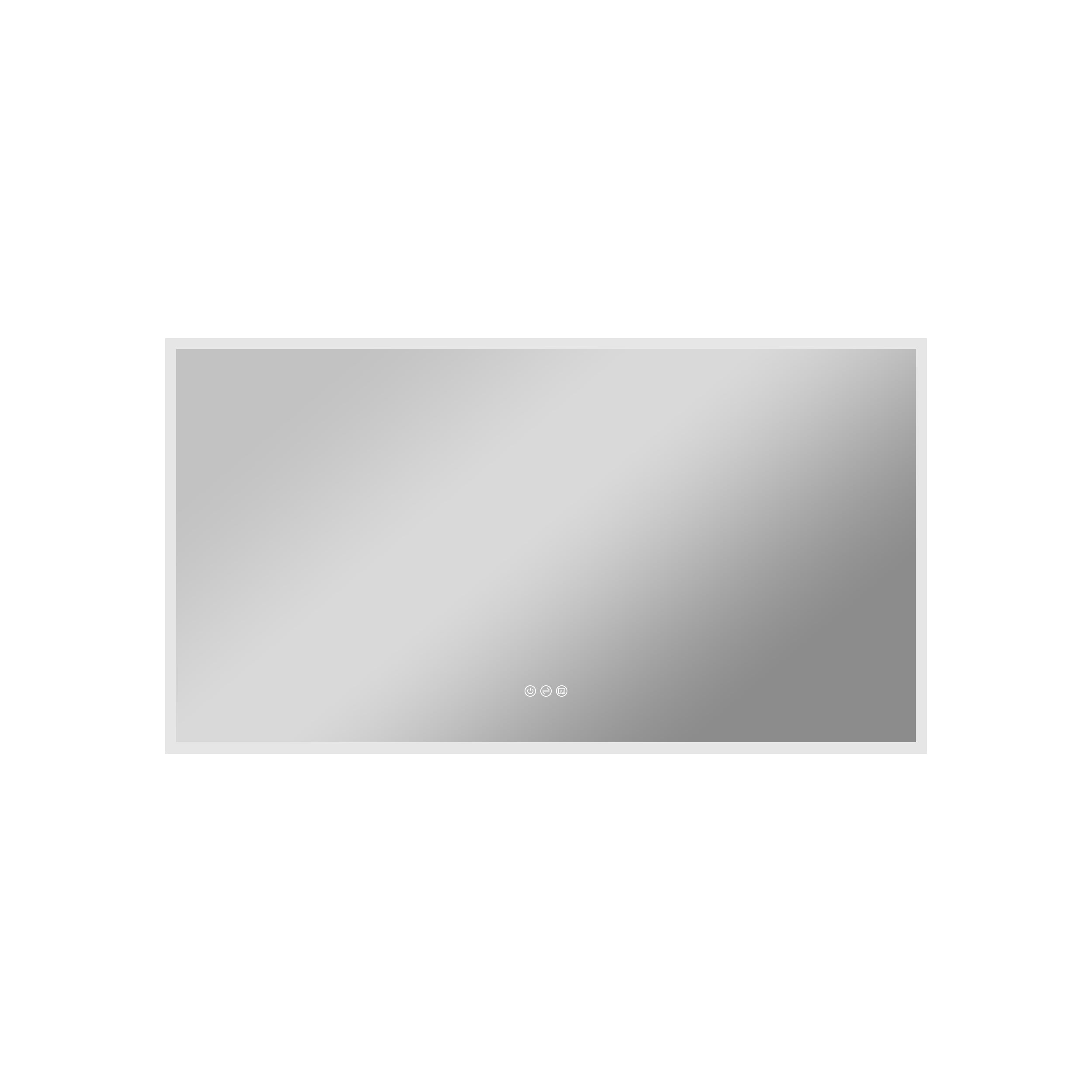
In the contemporary trend of bathroom upgrades, bathroom mirror with lights have become a core component that combines functionality and design. Compared to traditional wall mirrors paired with wall lamps or ceiling lights, illuminated mirrors integrate lighting and reflection into a single structure, optimizing light distribution and improving spatial cleanliness. From a 24-inch single-basin layout to a 60-inch or 72-inch dual-basin structure, choosing an illuminated mirror that is both long-lasting and durable requires careful consideration of multiple factors, including brightness, color temperature, size ratio, electronic stability, and protection level.
1. Brightness and luminous flux: not just 'bright enough.'
Lighting performance is the primary criterion for choosing a mirror with lights. The recommended basic illumination for the bathroom is usually around 50 to 75 foot candles. For a bathroom with an area of approximately 80 to 100 square feet, the total luminous flux typically requires 2000 to 4000 lumens.
The output brightness of a common 36-inch-wide LED mirror is approximately 1200 to 2000 lumens; the 48-inch to 60-inch model can reach 2500 to 3500 lumens. If the bathroom area is small or there is already ambient light at the top, around 1500 lumens can meet daily facial lighting needs.
Data show that when the color rendering index (CRI) reaches 90 or higher, skin tone restoration accuracy improves by about 20%, which is particularly important for makeup and care. Therefore, it is necessary not only to pay attention to the brightness value but also to confirm the CRI index.
2. Color temperature adjustment range
Modern illuminated mirrors typically offer color temperature adjustment between 3000K and 6000K. 3000K warm light is suitable for a relaxing atmosphere at night; 4000K is close to daylight effect; 5000K or above is more suitable for fine care.
Research shows that in adjustable color-temperature products, user satisfaction is about 15% higher than in fixed-color-temperature products. If family members have different preferences for light color, products with three levels or stepless adjustment functions are more practical.
3. Match size and proportion
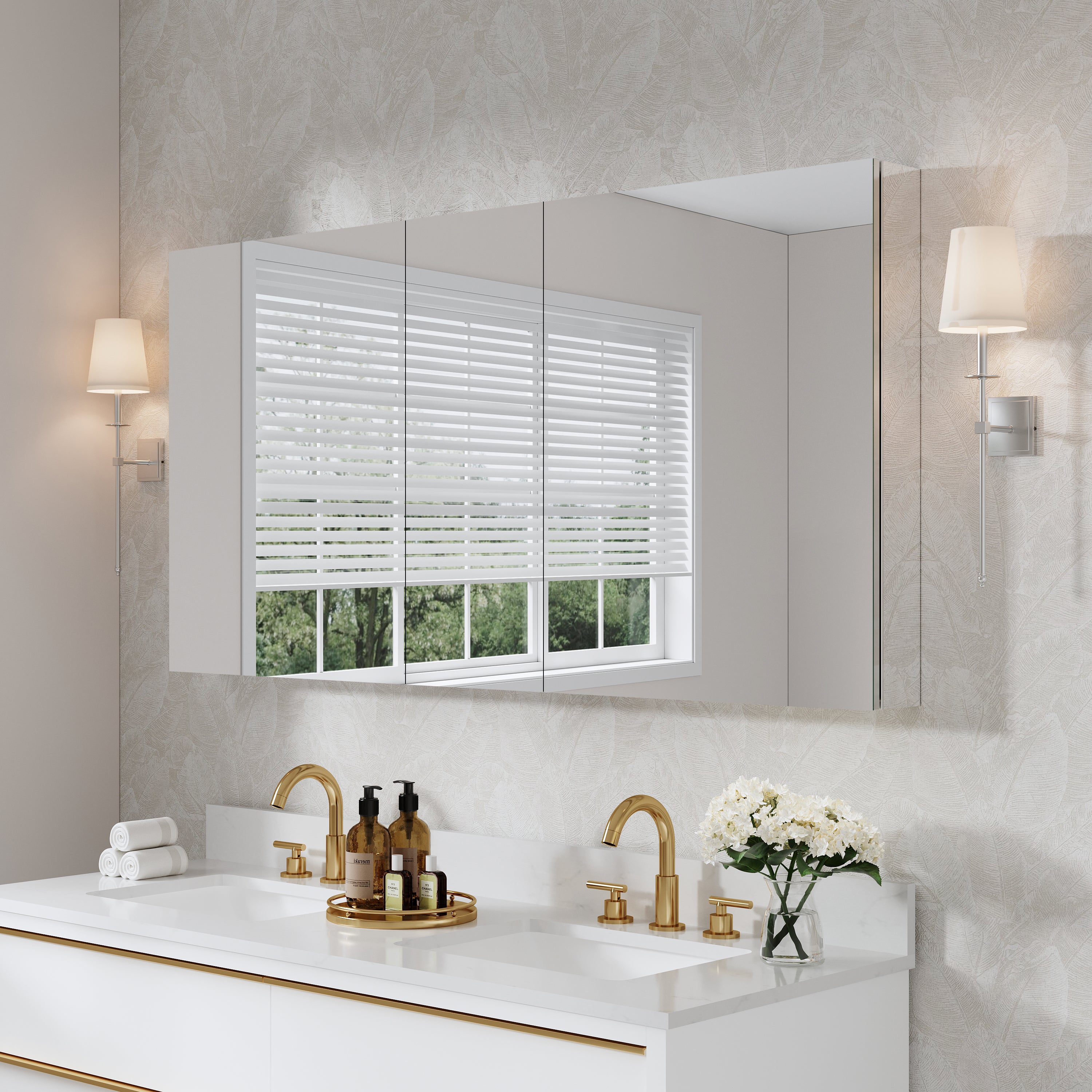
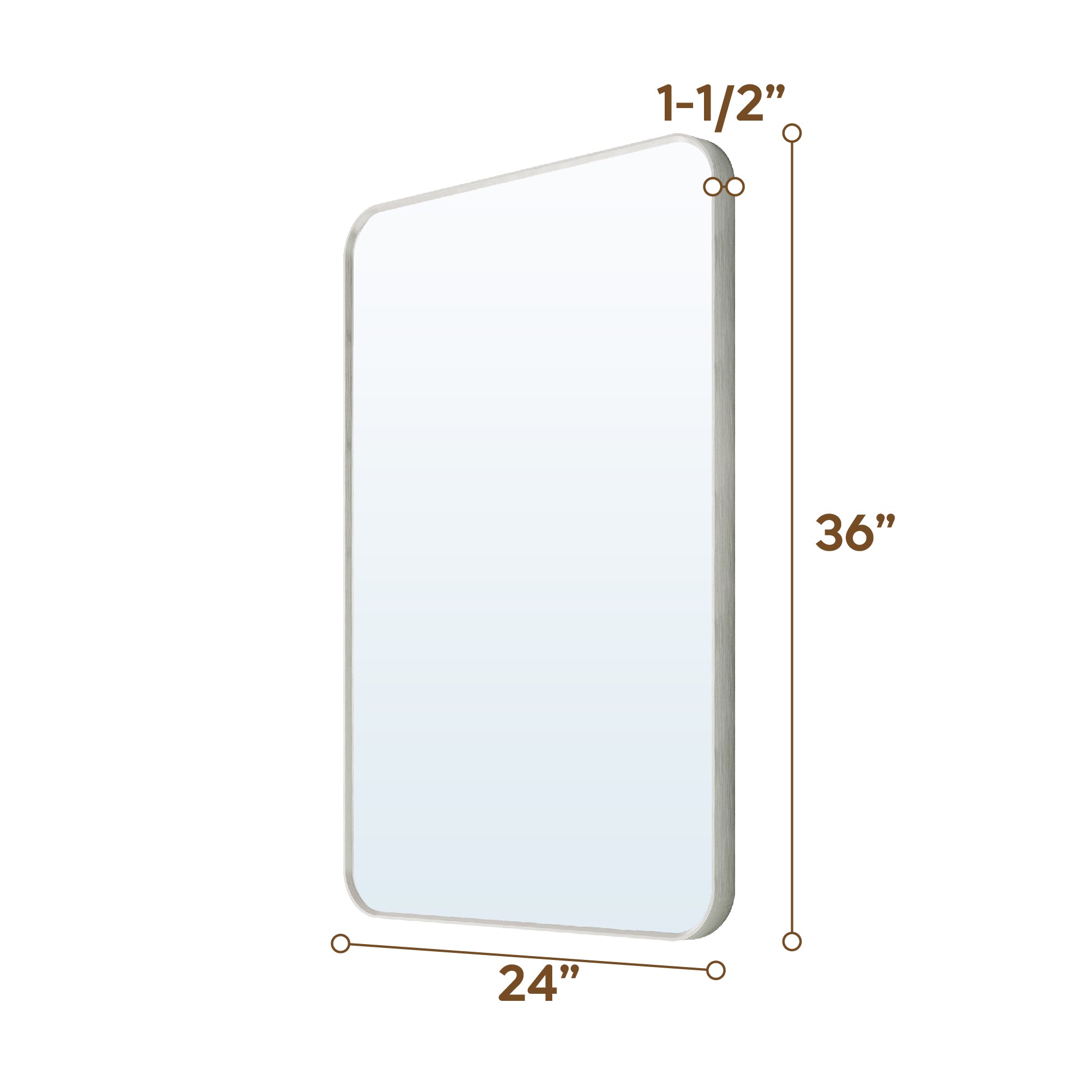
The mirror's size should be coordinated with the vanity's width. The design principle usually recommends a mirror width of 70% to 90% of the tabletop width. For example, a 36-inch countertop can be paired with a 28-inch to 32-inch illuminated mirror; the 60-inch double-bowl structure can use two 30-inch mirrors or one 54-inch to 60-inch integral mirror.
In terms of height, common mirror heights range from 30 inches to 36 inches. When installing, the center of the mirror should be about 60 inches to 65 inches from the ground, which is more comfortable.
The data show that when the imbalance between the mirror's width and the tabletop's proportion exceeds 10%, satisfaction with the space decreases significantly.
4. Is the anti-fog function necessary?
In high-humidity environments, ordinary mirrors will form water mist within about 3 to 5 minutes after showering. The defogging mirror with a heating film maintains a clear surface when the humidity exceeds 70%.
Test data shows that mirrors equipped with defogging function maintain a clarity retention rate of over 90% within 10 minutes after showering. If the bathroom ventilation is average or if family members use it frequently, the defogging function is particularly practical.
5. Power supply and installation method
Hardwired or plug-in connections usually power mirrors with lights. Hardwired connections are cleaner, but a wall-mounted power supply needs to be reserved. If a comprehensive renovation is carried out, planning the route can reduce the later construction costs.
In terms of power, the common 36-inch mirror runs between 30W and 60W; the 60-inch model may reach over 70W. Suggest confirming the power supply line's carrying capacity and selecting a stable power supply design.
Data shows that in environments with significant voltage fluctuations, high-quality driving modules can extend LED lifespan by about 20%.
6. Protection level and moisture resistance performance
The humidity in the bathroom environment fluctuates widely, so it is recommended to choose products with an IP44 or higher protection rating. IP44 means it can prevent water from splashing into the internal structure.
Data shows that in environments with long-term humidity above 65%, the failure rate of electronic products with insufficient protection levels has significantly increased.
At the same time, attention should be paid to the sealing of the mirror edge and the backing plate material to avoid long-term water vapor infiltration.
7. Touch and Additional Features
Modern illuminated mirrors are often equipped with touch switches, memory brightness settings, or timed-off functions. The memory function can restore the previous settings the next time it is turned on, improving usability.
Some high-end models also integrate Bluetooth audio or built-in sockets. Although these features enhance the user experience, they also increase electronic complexity, so it is necessary to weigh actual needs when making a purchase.
8. Long-term maintenance and lifespan
The theoretical lifespan of LED light sources can reach 30000 to 50000 hours. If used for 1 hour per day, the theoretical usage period can exceed 20 years.
But electronic components are sensitive to humidity and temperature. Keeping the bathroom humidity between 40% and 55% and turning on the exhaust system for at least 15 minutes after showering can help extend its lifespan.
9. Budget and Investment Return
The price of a mirror with lights is usually 20% to 40% higher than that of a regular mirror. If considering reducing the cost of additional wall lights and wiring installation, the overall investment may not necessarily be higher.
Data shows that in the overall bathroom renovation budget, illuminated mirrors typically account for 5% to 10% and significantly improve the quality and functional integrity of the space.

10. Conclusion
When choosing a bathroom mirror with lights, consider multiple factors, including brightness, color temperature, size ratio, protection level, and electronic stability. Whether it's a 28-inch compact structure or a 60-inch wide design, every inch size and every watt of power will affect the experience. Understanding the relationships among luminous flux, CRI index, and spatial proportions is necessary to achieve an optimal balance between aesthetics and functionality. For those who pursue modern lighting experience and spatial cleanliness, choosing a light mirror is an investment that combines practicality and long-term value.












Leave a comment
This site is protected by hCaptcha and the hCaptcha Privacy Policy and Terms of Service apply.