














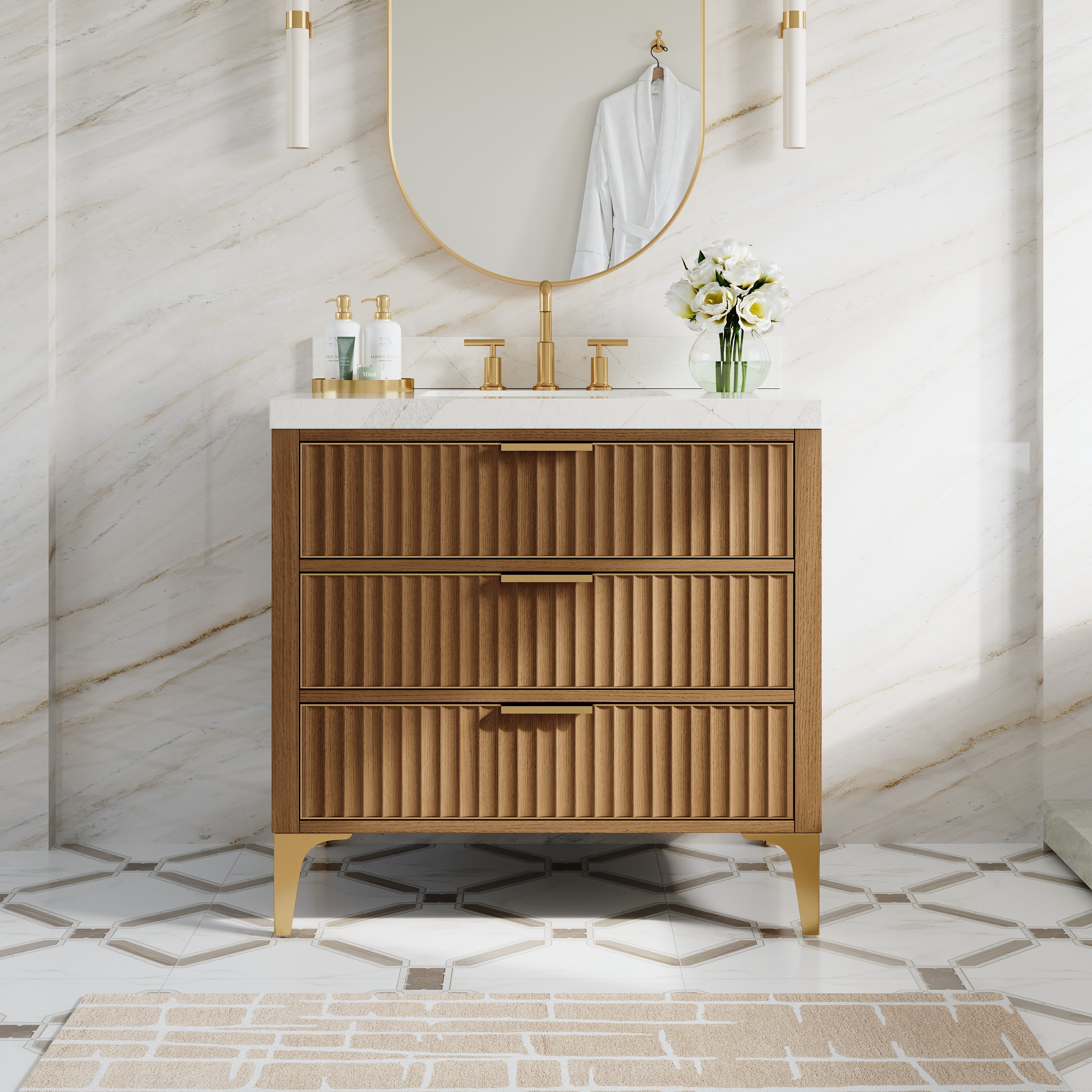
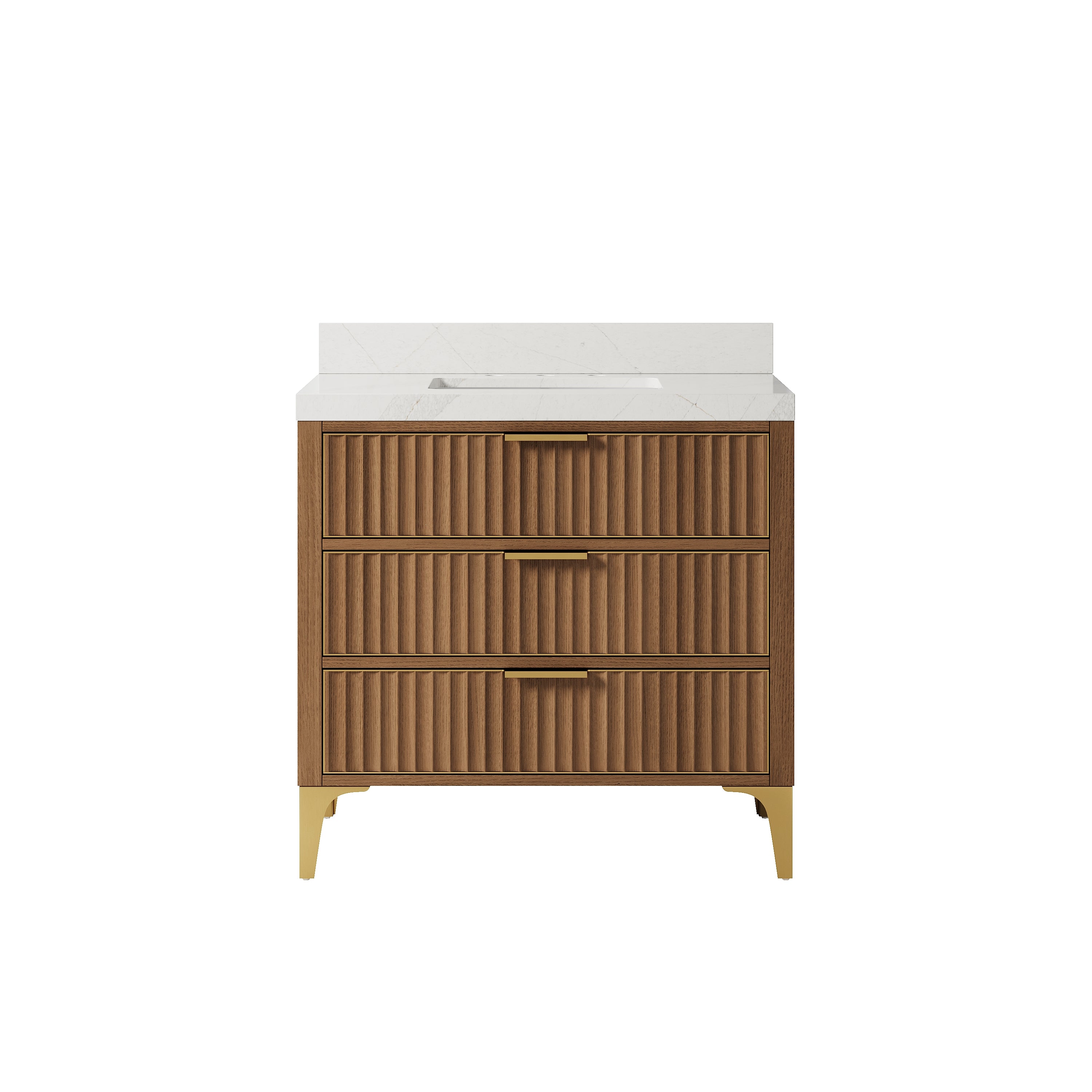
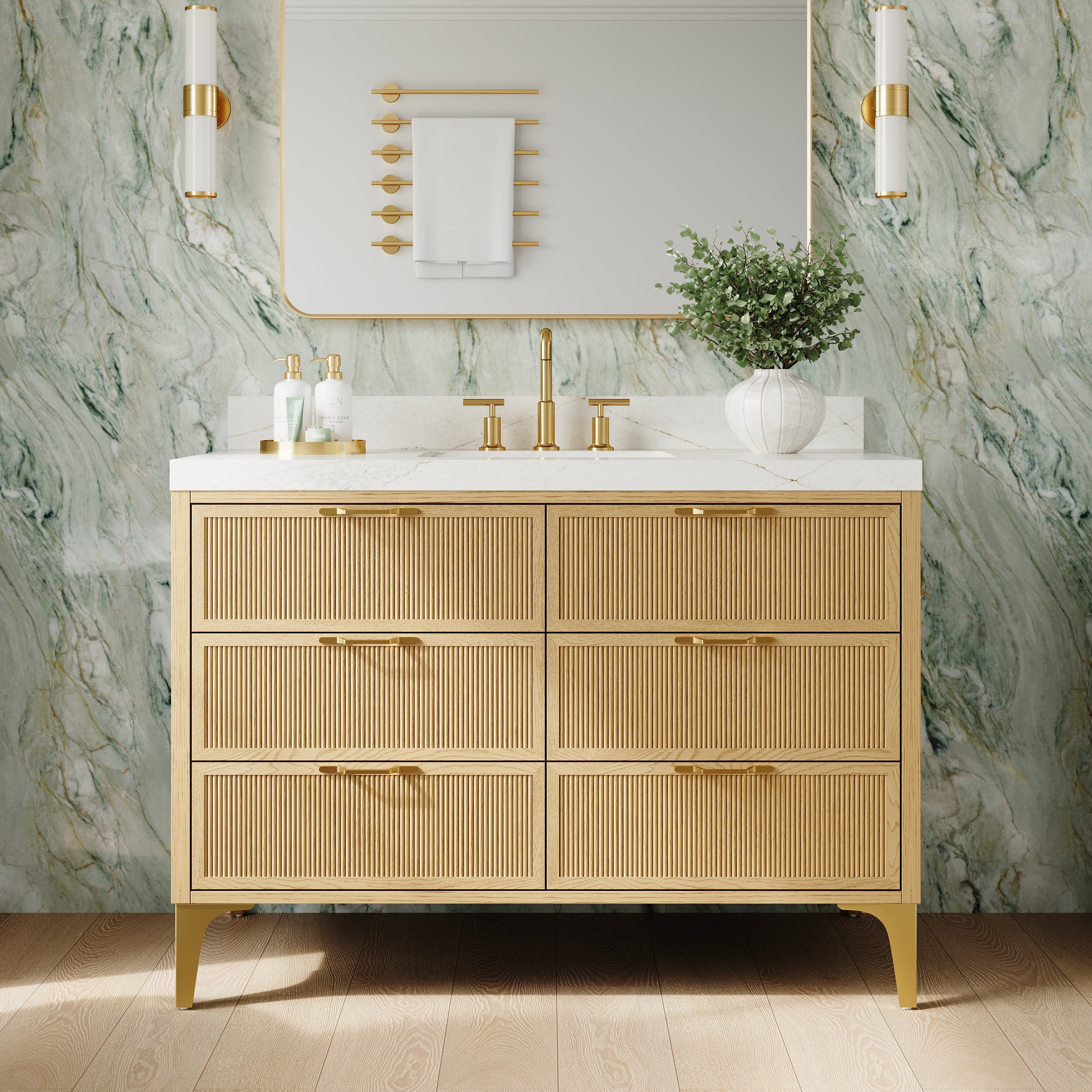
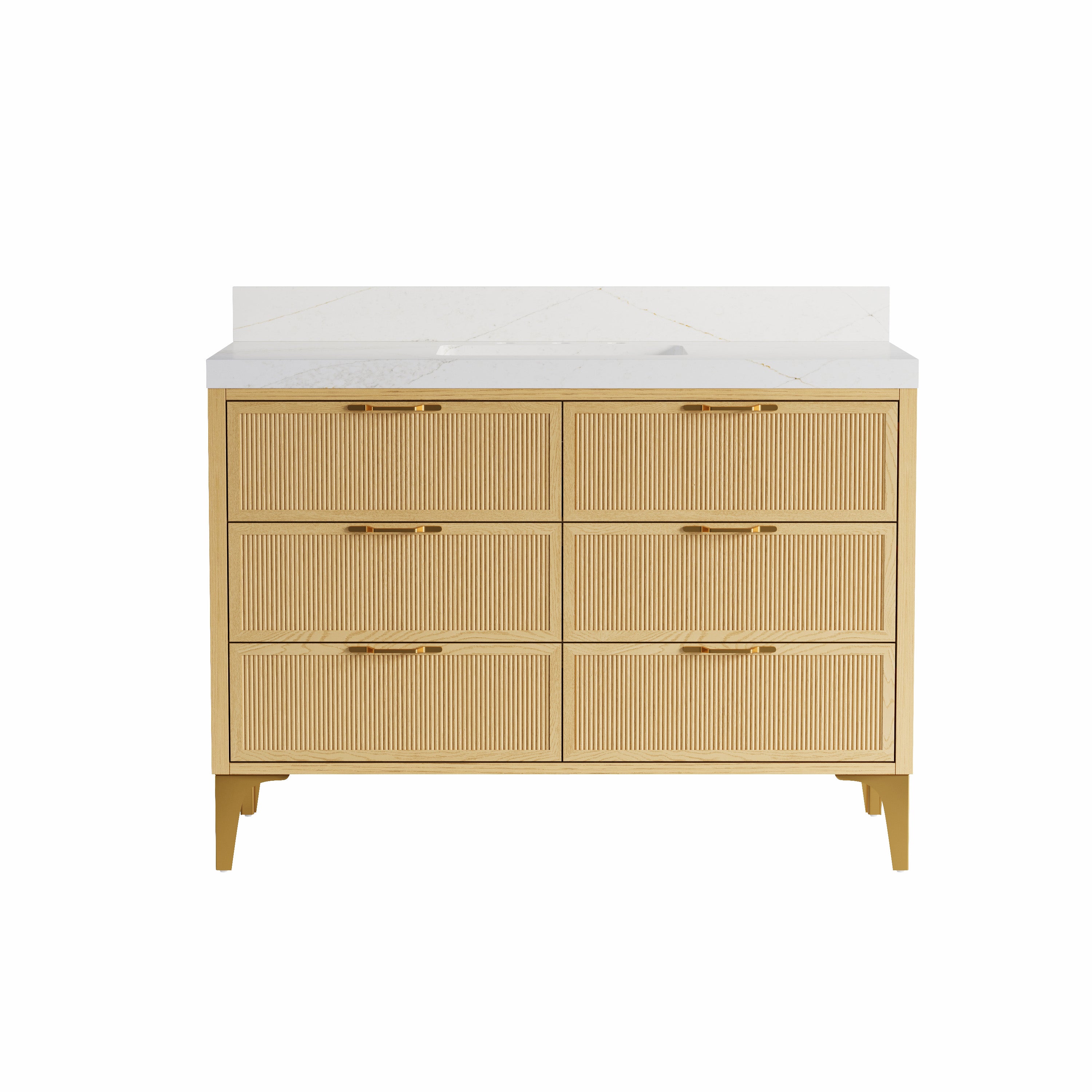


Buying bathroom vanities online can be a smart way to get a better selection and faster project timing, especially while remodeling activity stays high and schedules are tight. Harvard's Joint Center for Housing Studies notes annual homeowner spending on improvements is expected to reach $518 billion by the end of 2026, which helps explain why more projects are being planned with fewer surprises and fewer redo steps. The key is treating an online vanity order like a mini-spec review, not a casual décor purchase.
Will the vanity actually fit your room's clearances when doors and drawers are open?
Start with the "people space," not the cabinet. NKBA planning guidance calls for 30" x 48" of clear floor space at fixtures for access planning, and also references typical minimums such as 21" in front of a lavatory and 24" at a shower entry in code-referenced notes.
Ask:
l What is the vanity depth (front-to-back), and how much walkway remains in front of it?
l Will a door swing or a drawer pull-out block the toilet, shower entry, or bathroom door?
l If two people use the space, can one pass behind the other without constant sidestepping?
Which width is "standard enough" to avoid custom headaches?
Many online listings look similar until you hit sizing. Renovation data shows vanity widths cluster in common sizes: 47% choose 48" or less, while larger sizes remain popular, including 60" (19%), 72" (14%), and more than 72" (13%).
Ask:
l Is the vanity width one of the common footprints (for example, 30", 36", 48 ", 60 ", 72") that typically have readily available matching tops and mirrors?
l Does the listing give the exact overall width, or only a rounded marketing size?
What plumbing rough-in does the vanity require, and will it conflict with drawers?
Online photos won't tell you if the P-trap will crash into a top drawer.
Ask:
l Where are the cutouts for supply lines and drain located (centered, offset left/right)?
l Are the top drawers U-shaped or otherwise designed to route around plumbing?
l Does the cabinet have a removable back panel or "false drawer front" that reduces usable storage?
What comes in the box: cabinet-only, top included, sink included, backsplash included?
This is where "ready to install" can either save your timeline or create a surprise shopping list.
Ask:
l Is the countertop included, and if yes, is it already cut for the sink?
l Is a backsplash included, and is it required for the warranty or installation method?
l Are side splashes included or optional?
l Is the sink included, and if yes, is it undermount, top-mount, or integrated?
Trend data shows countertops are frequently upgraded, and popular surface choices include engineered quartz (45%) alongside natural stones. A bundle that includes the top can reduce coordination steps, but only if you confirm compatibility.

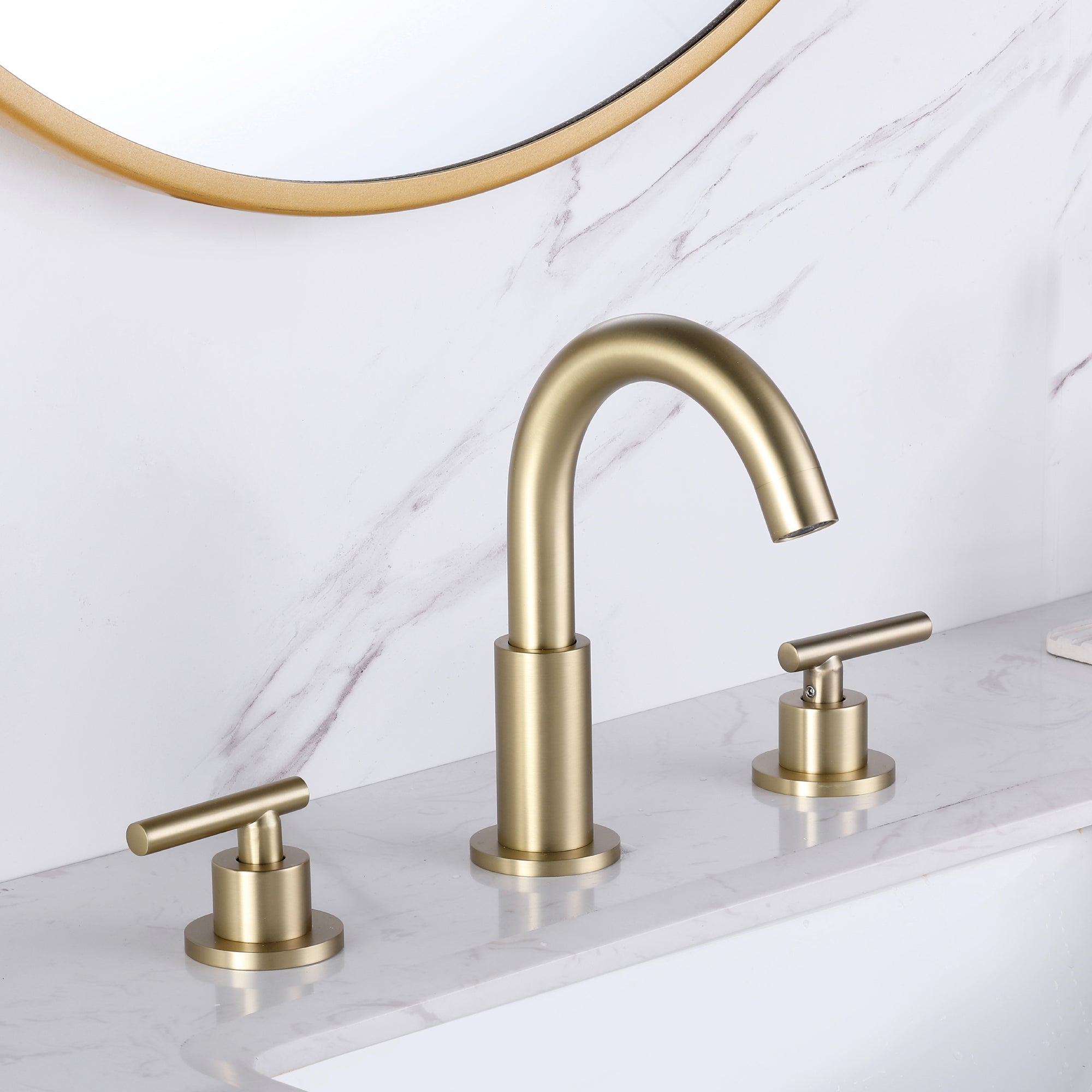
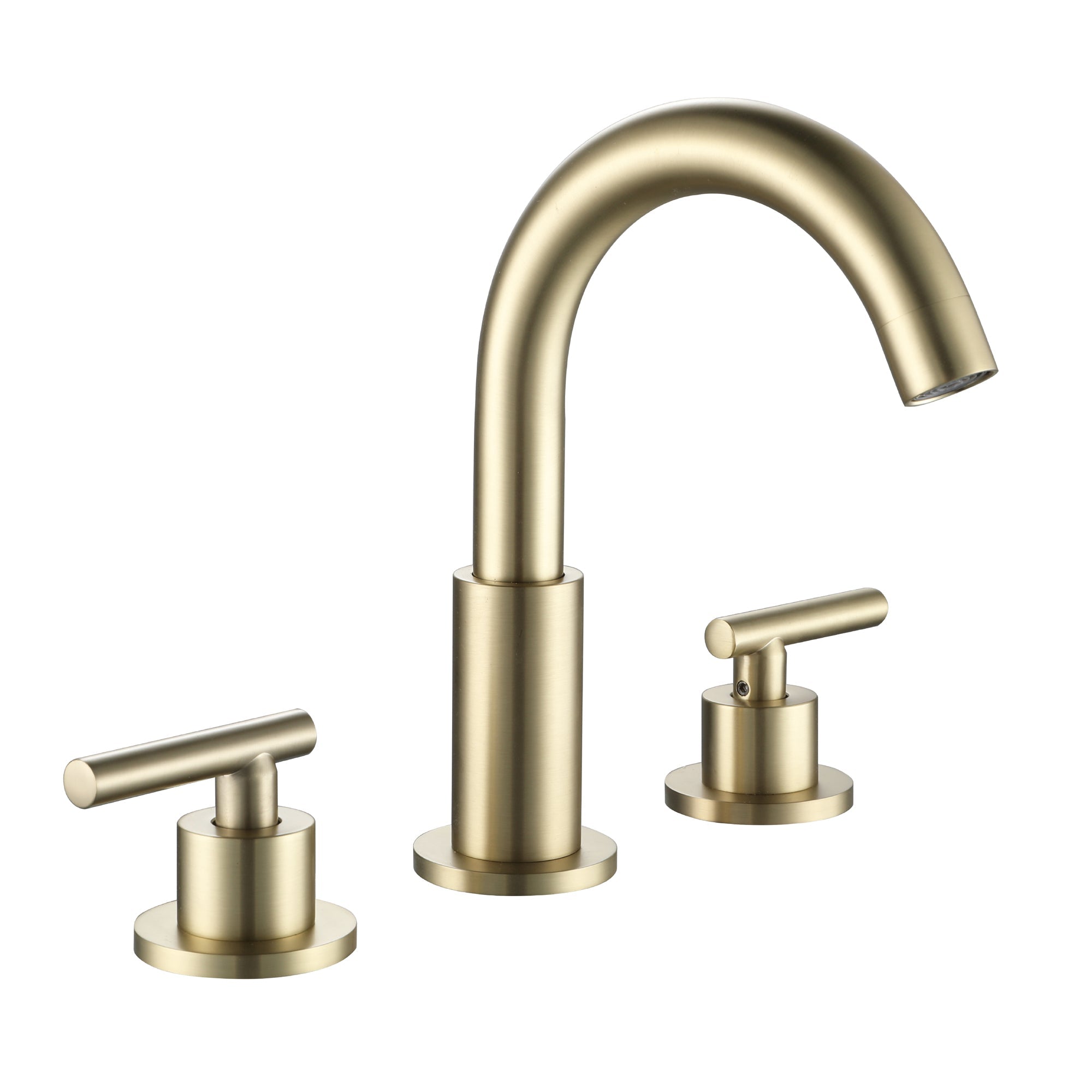
What faucet hole drilling is provided, and does it match your faucet plan?
A common online ordering mistake is buying a widespread faucet and receiving a single-hole top, or vice versa.
Ask:
l Is it the top drilled single-hole, 4" centerset, or 8" widespread?
l If it's single-hole, is there a deck plate option you're planning to use?
l Are you adding an accessory (soap dispenser) that needs an extra hole?
What is the cabinet made of, and what should you verify for indoor air and compliance?
"Solid wood," "plywood," "MDF," and "particleboard" can all appear in different parts of the same vanity. If the listing includes composite wood components, it's reasonable to confirm compliance with labeling.
Ask:
l Is the cabinet box plywood, solid wood, or MDF/particleboard?
l Are doors and drawer fronts solid wood or veneer-wrapped?
l If composite wood is used, can the seller confirm TSCA Title VI compliance labeling requirements for composite wood products and finished goods?
This isn't about being paranoid. It's about knowing what you're installing in a small room that sees heat and humidity.
What hardware and storage functions matter most for daily use?
Hardware is one of the clearest quality signals you can't fully judge from photos. In renovation choices, soft-close has become mainstream: 78% opt for soft-close drawers and 75% select soft-close doors.
Ask:
l Are the drawers full-extension (so you can reach items at the back)?
l Are the slides and hinges soft-close, and are they adjustable for alignment?
l Are the shelves adjustable, and do they include anti-tip clips or shelf pins that won't loosen?
l Is there enough usable drawer height for bottles, hair tools, or stacked towels?
Are reach and usability designed for real life, not just staging photos?
A bathroom vanity works best when daily items sit within an easy reach band. Accessibility guidance commonly references reach ranges up to 48" high for operable parts, with 15" as a typical lower reach boundary for side reach conditions.
Ask:
l Are frequently used drawers positioned where they're easy to access without bending deeply?
l If the vanity includes an internal outlet or organizer, is it placed where it's actually usable (not buried behind plumbing)?
l Are pulls/handles comfortable, and is there enough knuckle clearance?
If a sink is included, is it certified and compatible with your plumbing plan?
When the vanity includes a sink, you want fewer unknowns, not more. For plumbing-related components, it's reasonable to look for recognized certification marks where applicable. IAPMO notes the cUPC mark helps confirm independent testing and compliance with performance standards for plumbing products.
Ask:
l Does the sink have recognized certification (if required in your area)?
l Is the drain location standard, and does it work with your trap setup?
l Are you using a pop-up drain with overflow, and does the sink have an overflow?
What are the delivery, inspection, and returns rules before you click "Buy"?
Online vanity orders fail most often at the last mile: damage, missing parts, or a return policy that's stricter than expected.
Ask:
l Is delivery curbside only, or does it include room-of-choice placement?
l What is the inspection window on arrival, and what documentation (photos, packaging retention) is required if there's damage?
l Are returns allowed once the box is opened?
l Are there restocking fees, and who pays return freight for a large, heavy item?
Also, ask one more practical question: if anything arrives wrong, will you get replacement parts (a door, drawer front, hinge set), or is it "return the entire vanity"?
What installation details protect the vanity from water over time?
Even the best vanity fails if seams and splash zones are ignored. NKBA's planning guidance emphasizes clearances and access needs, but the day-to-day reality is moisture and movement.
Ask:
l Does the manufacturer specify where to caulk (backsplash-to-wall, backsplash-to-top, top-to-cabinet)?
l Is the vanity finished on all sides that could see moisture exposure (toe kick, side panels, door bottoms)?
l Are you sealing exposed cut edges around plumbing penetrations?
The bottom line: the "online vanity questions" that prevent 80% of regrets
If you only have time for a short checklist, prioritize these:
l Fit and clearance (targeting the 30" comfort guideline where possible).
l Plumbing compatibility (drawer conflicts are the silent killer).
l What's included (top, sink, backsplash, drilling).
l Build and hardware (soft-close prevalence shows what people expect now).
l Compliance and certification were relevant (TSCA Title VI for composite wood labeling, recognized marks for plumbing components).















Leave a comment
This site is protected by hCaptcha and the hCaptcha Privacy Policy and Terms of Service apply.