














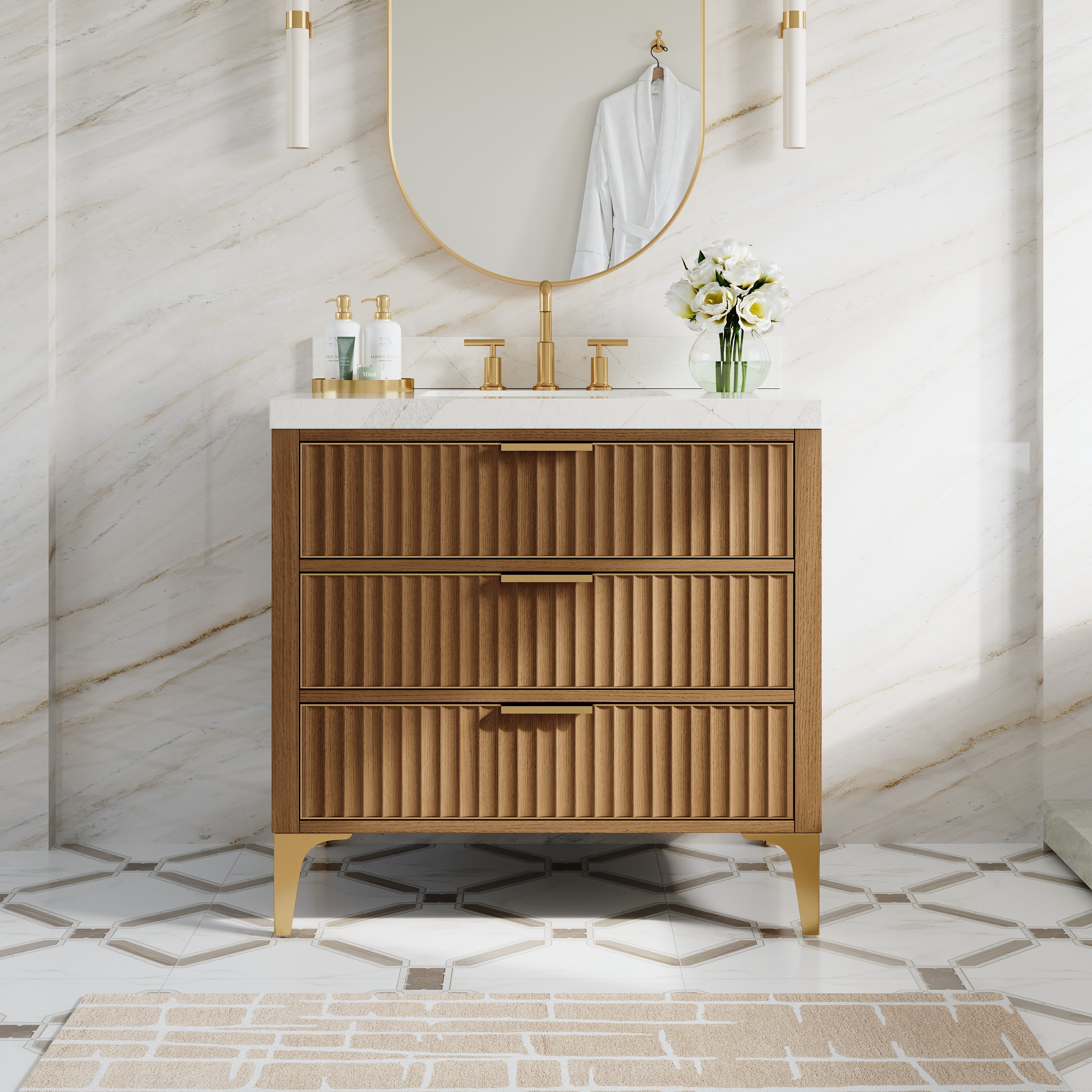
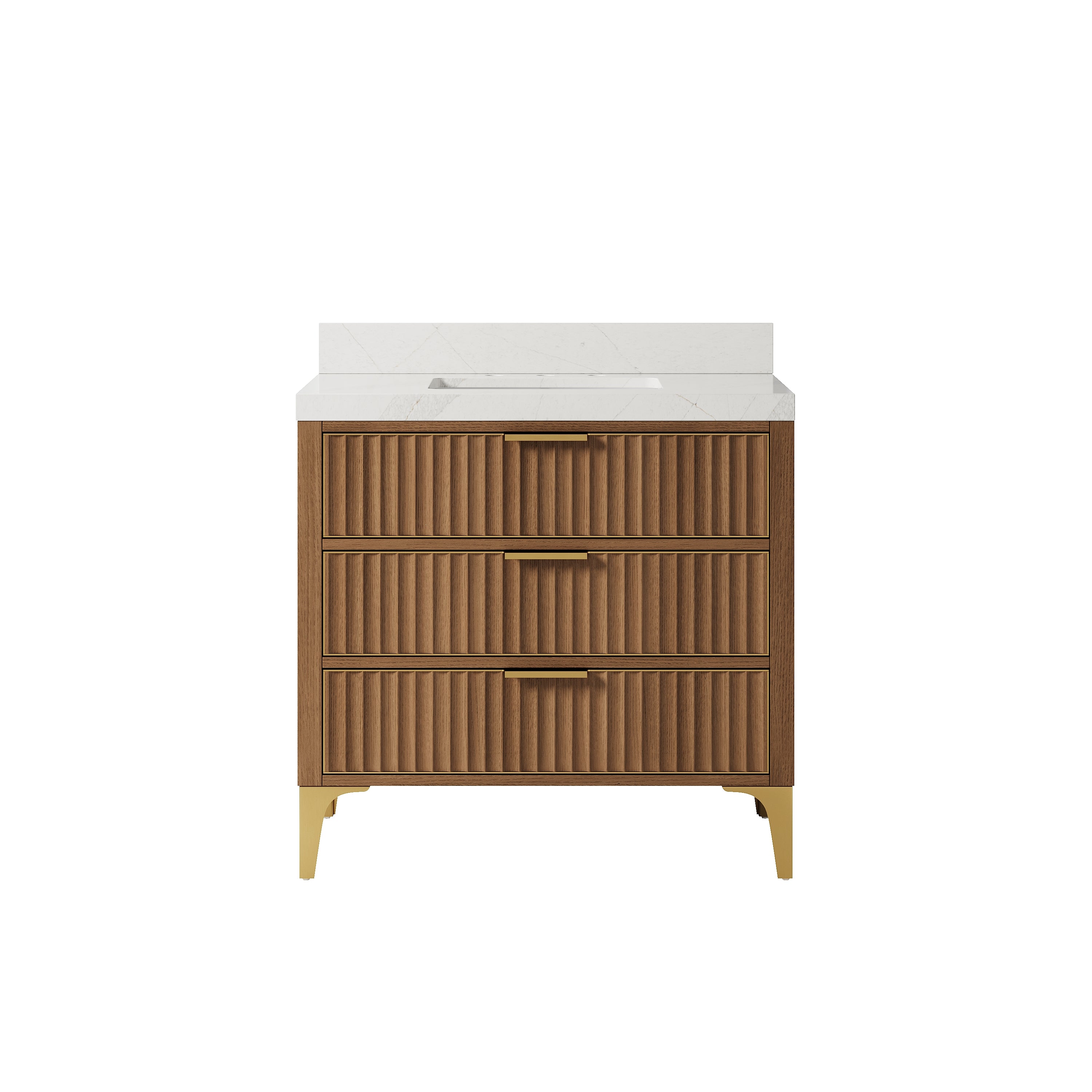
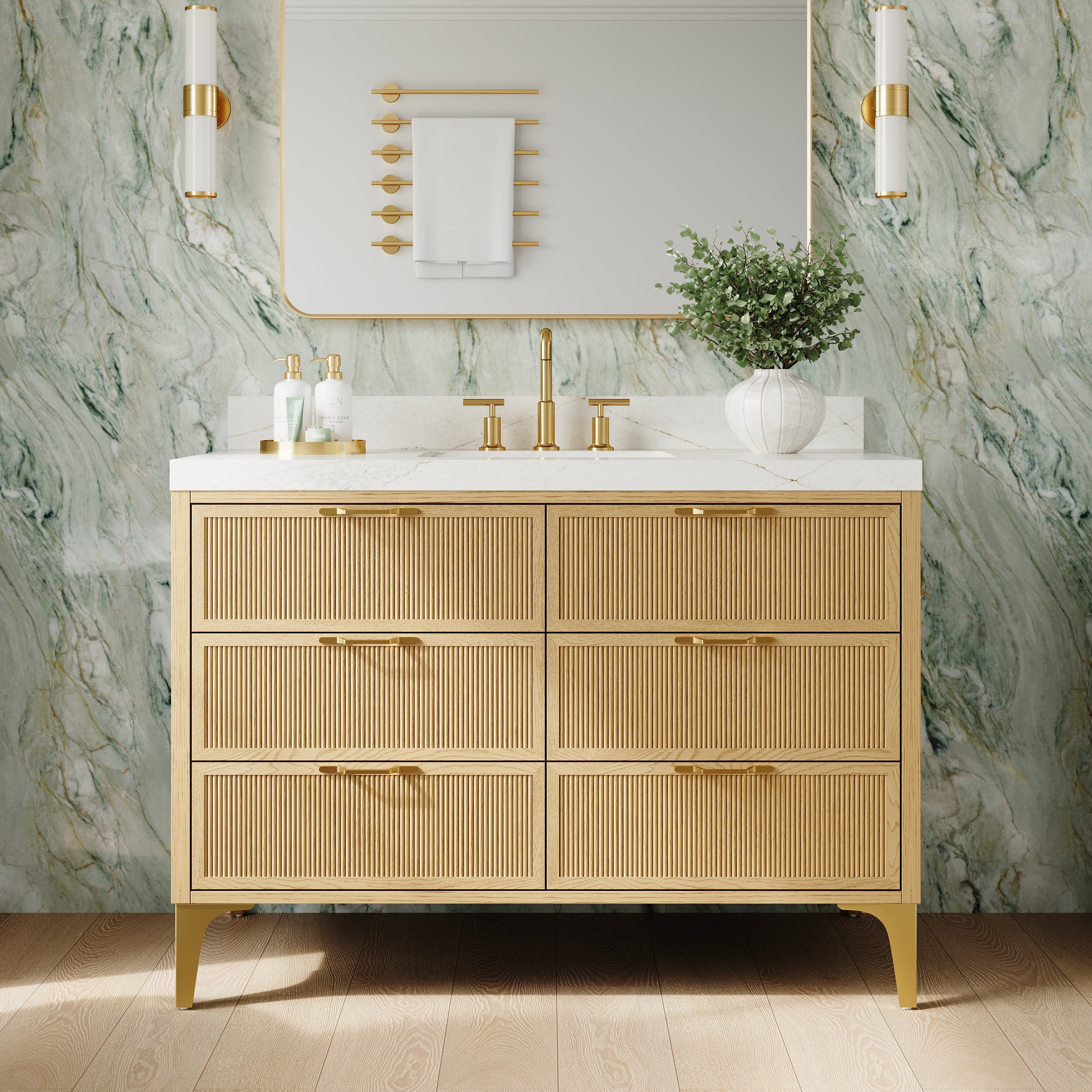
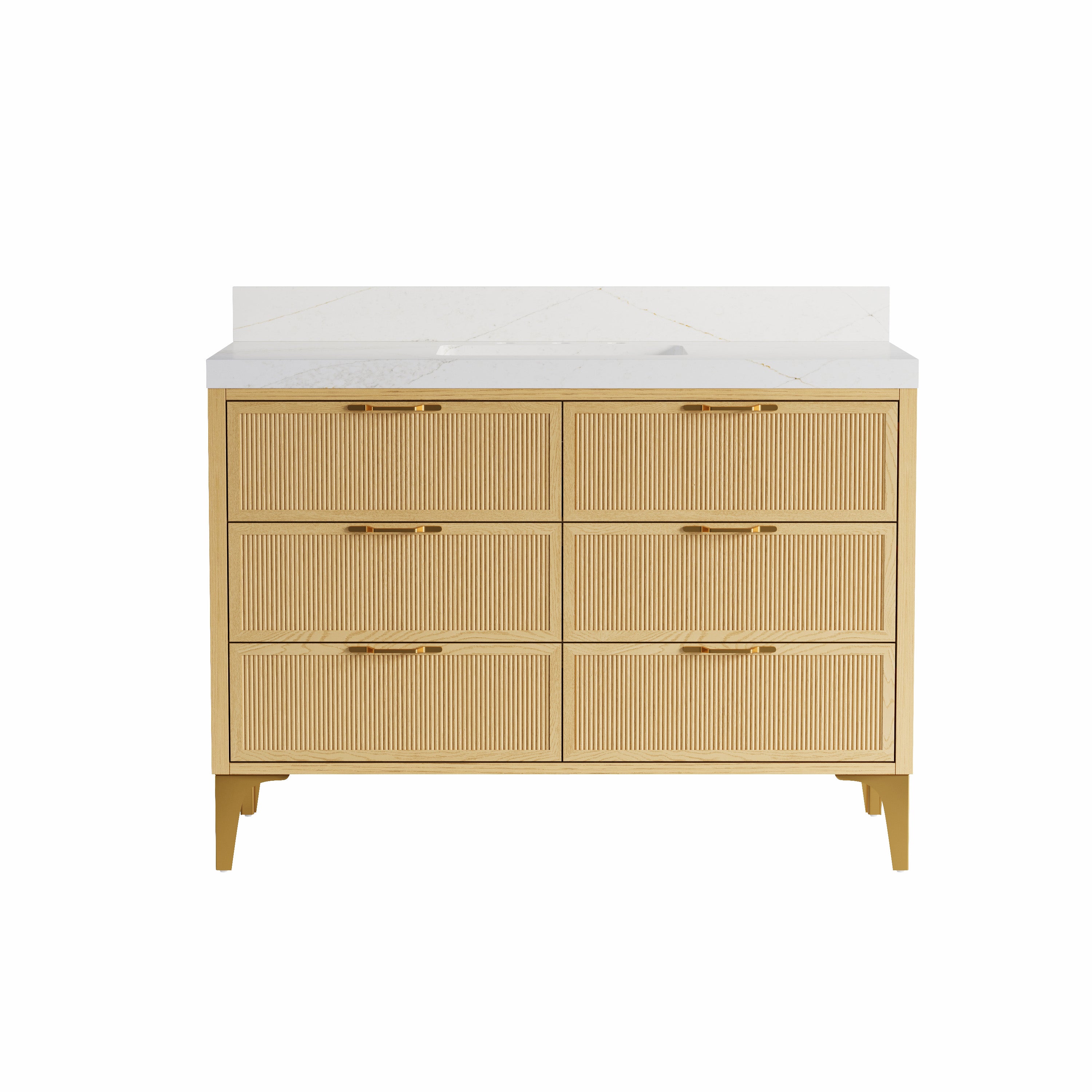


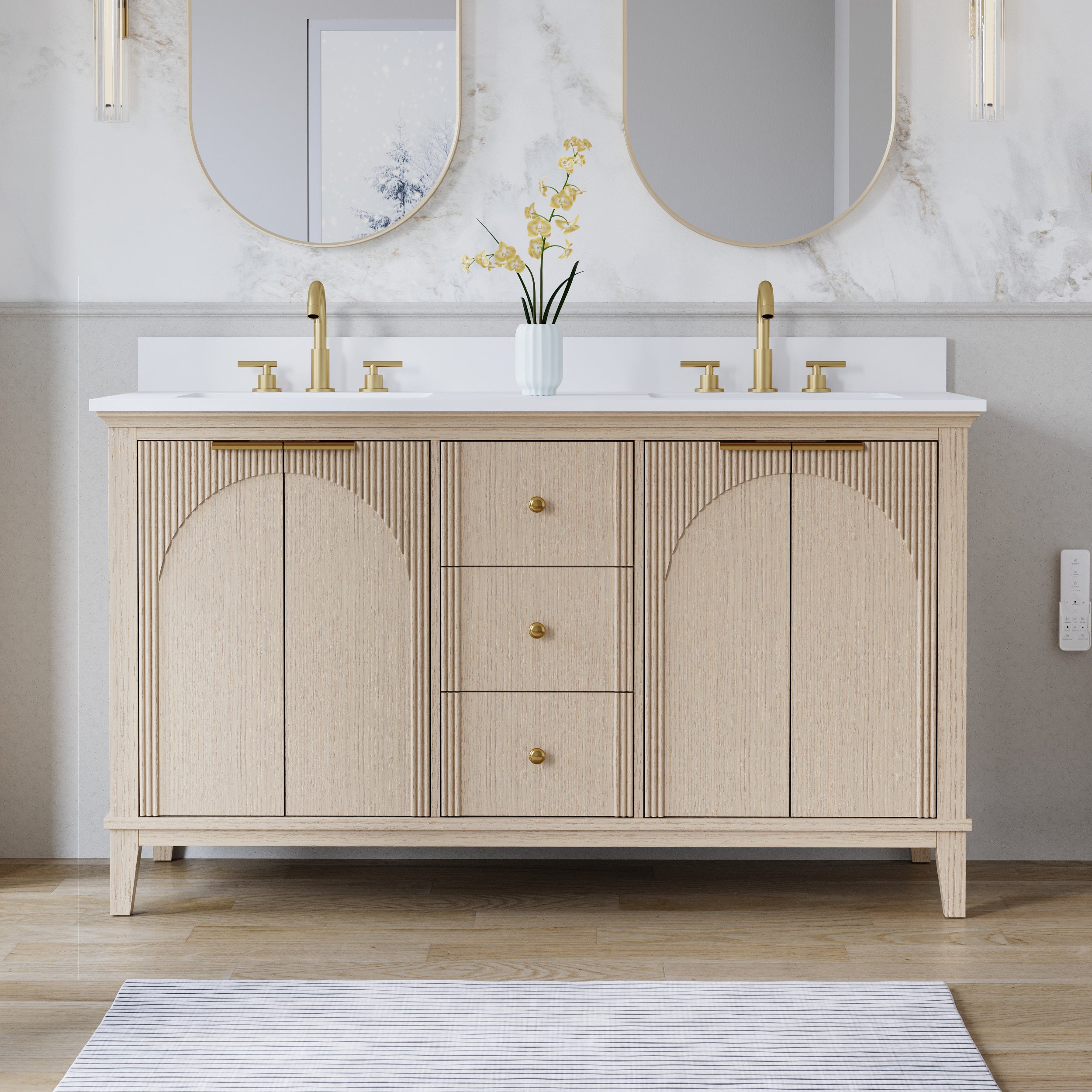
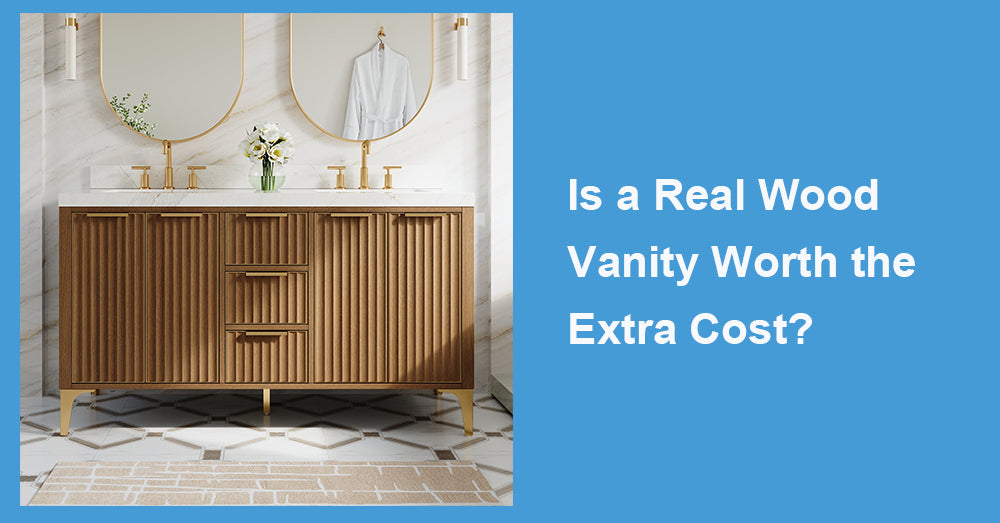
A real wood vanity can be worth the extra cost when you measure value the way bathrooms actually "spend"it: daily wear, moisture exposure, hardware stress, and how quickly a space looks tired when cabinet doors drift out of alignment. With overall homeowner improvement spending projected to reach $518 billion by the end of 2026, the conversation has shifted from "cheap vs. expensive"to "replace later vs. install once and live with it."
Why the “extra cost” question is getting louder in 2026
Vanities sit at the center of a remodel’s most scrutinized zone: the sink, mirror, and lighting wall. When budgets tighten, people still tend to protect high-visibility, high-touch items. At the same time, the cost environment has been pushing upward. A Verisk Repair and Remodeling Index report noted repair and remodeling costs were nearly 62% higher than a decade ago, making redo risk more expensive than it used to be.
That’s why “worth it” now often means “reduces the chance of a replacement cycle,” not just “looks nicer on install day.”
What you’re really paying for with real wood
The price premium on real wood typically bundles several things together:
l Material quality and thickness (stronger parts that feel more substantial).
l Improved fastener holding in rails, stiles, and mounting points for hinges and drawer slides.
l Higher-grade joinery and box construction (which helps the cabinet stay square).
l A more protective finish system (crucial in a wet room).
l Upgraded hardware that stays smooth under daily use.
So the decision isn’t purely “wood vs. not wood.” It’s often “better-built cabinet system vs. entry-level cabinet system,” and wood is usually the easiest signal customers recognize.
The strongest argument for real wood: it aligns with what renovators choose
If real wood were mostly a luxury niche, it would show up as a small slice of renovation choices. But renovation survey data suggests the opposite. In the 2025 Houzz Bathroom Trends Study, among homeowners renovating and selecting wood vanities, 74% chose solid wood, far ahead of MDF (10%), plywood (6%), particleboard (4%), and veneer (3%).
That doesn’t prove solid wood is always superior in every component, but it does show where “value perception” is landing: real wood reads as a safe long-term bet in a room that punishes materials.
Where real wood delivers practical durability advantages
Real wood tends to pay back in durability when the vanity is expected to handle:
l Frequent drawer cycles (morning and night routines, multiple users).
l Hardware stress (slamming, leaning, kids pulling on doors).
l Minor damage and repair (nicks can be sanded and resealed more often than lower-density substrates).
l Heavier tops (stone, engineered surfaces) where cabinet rigidity helps keep things aligned.
This is why “feel” matters. A vanity can look fine in photos but still feel flimsy when you open a drawer. If you’re designing listings, the durability story should emphasize what people actually touch: stable doors, smooth drawers, and tight tolerances.
The biggest downside: moisture movement and edge vulnerability
Bathrooms are not kind to wood. Not because wood is “bad,” but because wood responds to humidity changes. The risk usually shows up in the details: seams, cutouts, and unsealed edges near splash zones.
This is also where many “wood vanity failures” aren’t truly about wood; they’re about moisture management. EPA guidance on mold prevention is blunt: keep indoor humidity below 60%, ideally 30% to 50%, and dry wet surfaces quickly when you see condensation or moisture.
If a bathroom regularly runs damp with poor ventilation, the value equation can flip: a lower-cost vanity might be “fine” because any material will degrade without moisture control. In contrast, a premium wood vanity will feel like a painful loss if good habits and proper sealing do not protect it.

The hidden “worth it” factor: resale and condition sensitivity
Even if you’re not remodeling to sell, vanities influence perceived condition. The 2025 Remodeling Impact Report notes that 46% of buyers are less willing to compromise on home condition, which increases the importance of visible, well-executed bathrooms.
And bathrooms still show relatively strong value retention in mainstream scopes. The 2025 Cost vs. Value Report lists a midrange bath remodel with a job cost of $ 26,138, a resale value of $20,915, and 80% cost recouped.
A real wood vanity won’t guarantee a specific return. Still, it can reduce the risk of the bathroom presenting as “work needed,” especially when paired with a clean top, tight backsplash seams, and consistent hardware finishes.
When real wood is most likely worth it
A real wood vanity is usually worth the extra cost in these scenarios:
l Primary bathrooms where daily use is high, and the vanity is the room’s visual anchor.
l Long-term ownership (you benefit from durability and repairability over the years, not just at resale).
l Heavier countertops or wider sizes (48-inch, 60-inch, 72-inch) where cabinet stability matters more.
l Households with kids or multiple users, where hardware and drawer boxes are under constant stress.
l Design goals that depend on authentic grain (white oak, walnut looks), where imitation reads flat under bright lighting.
When real wood might not be worth it
It may not be worth paying the premium if:
l The bathroom has chronic humidity issues, and ventilation is unlikely to improve.
l The vanity is for a low-use powder room where durability demands are lighter.
l The budget forces you to compromise on the top, plumbing, or installation quality (a premium cabinet won’t save a bad install).
This is also where a smarter alternative often wins: a well-built vanity with solid-wood fronts and a stable cabinet structure can deliver most of the real-world benefits without paying for solid wood everywhere.
A buyer’s checklist that makes “worth it” measurable
Instead of asking only “is it solid wood,” evaluate these durability signals:
l Where is the real wood used? (frame, doors, drawer fronts, drawer boxes).
l Are key edges and cutouts sealed? Splash zones near sinks are where problems start.
l What hardware is included? Soft-close is now a mainstream expectation in many renovations, so don’t treat it as a luxury add-on.
l How is moisture handled? Plan to keep humidity within a safer range (ideally 30%–50%) and seal the wall-to-backsplash and backsplash-to-top seams to prevent water migration behind the cabinet.
l Does the finish match the lifestyle? A family bath needs more forgiveness than a guest bath.












Leave a comment
This site is protected by hCaptcha and the hCaptcha Privacy Policy and Terms of Service apply.