














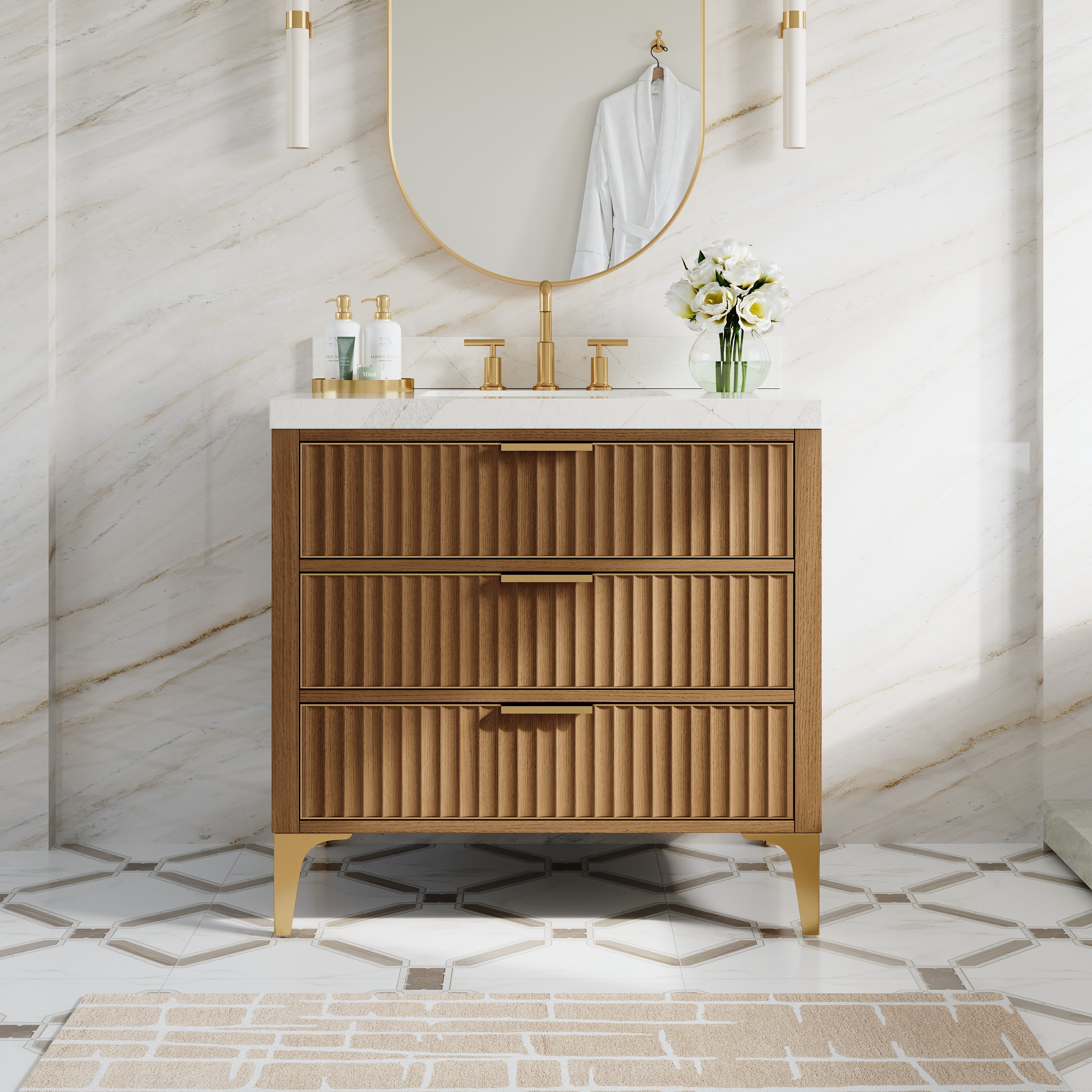
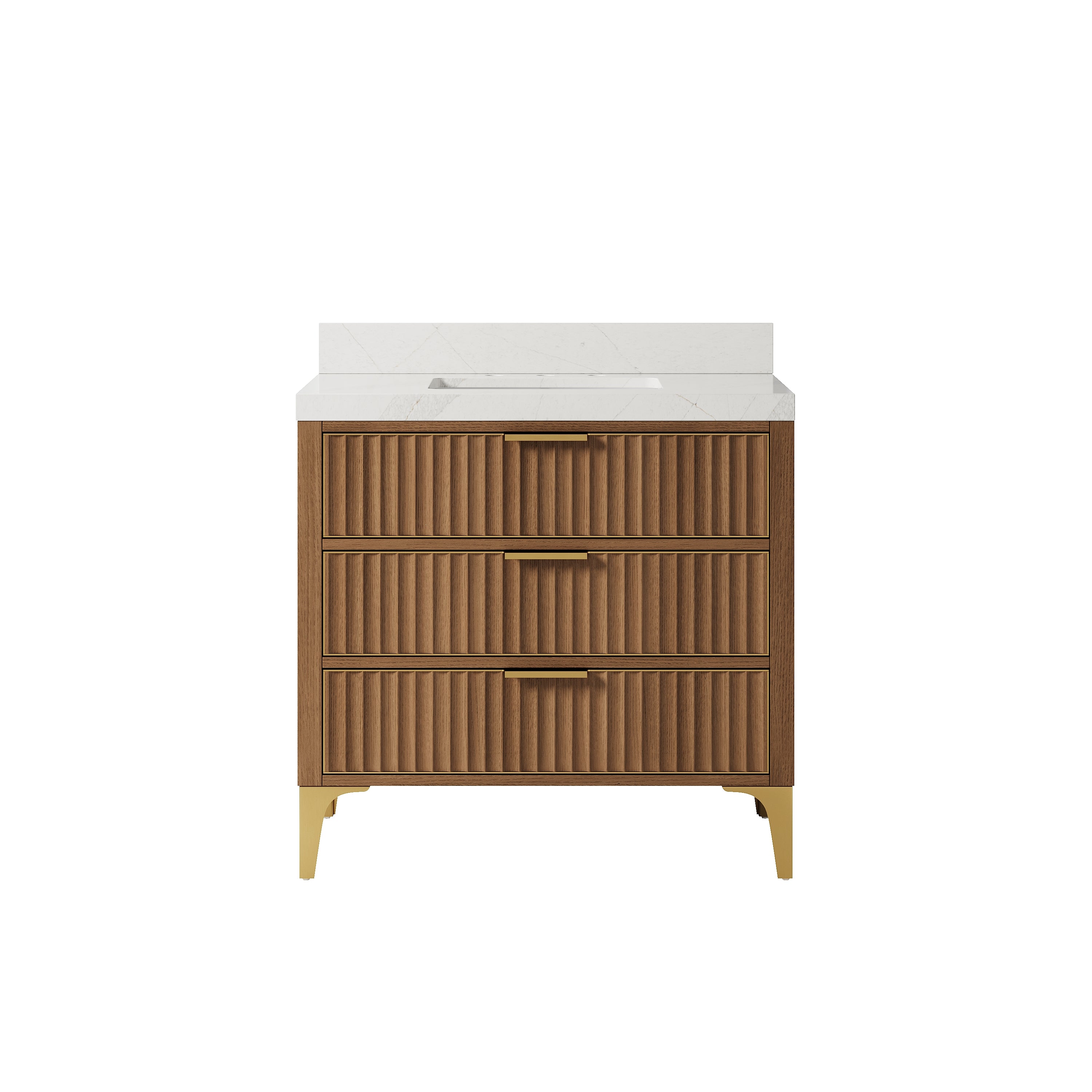
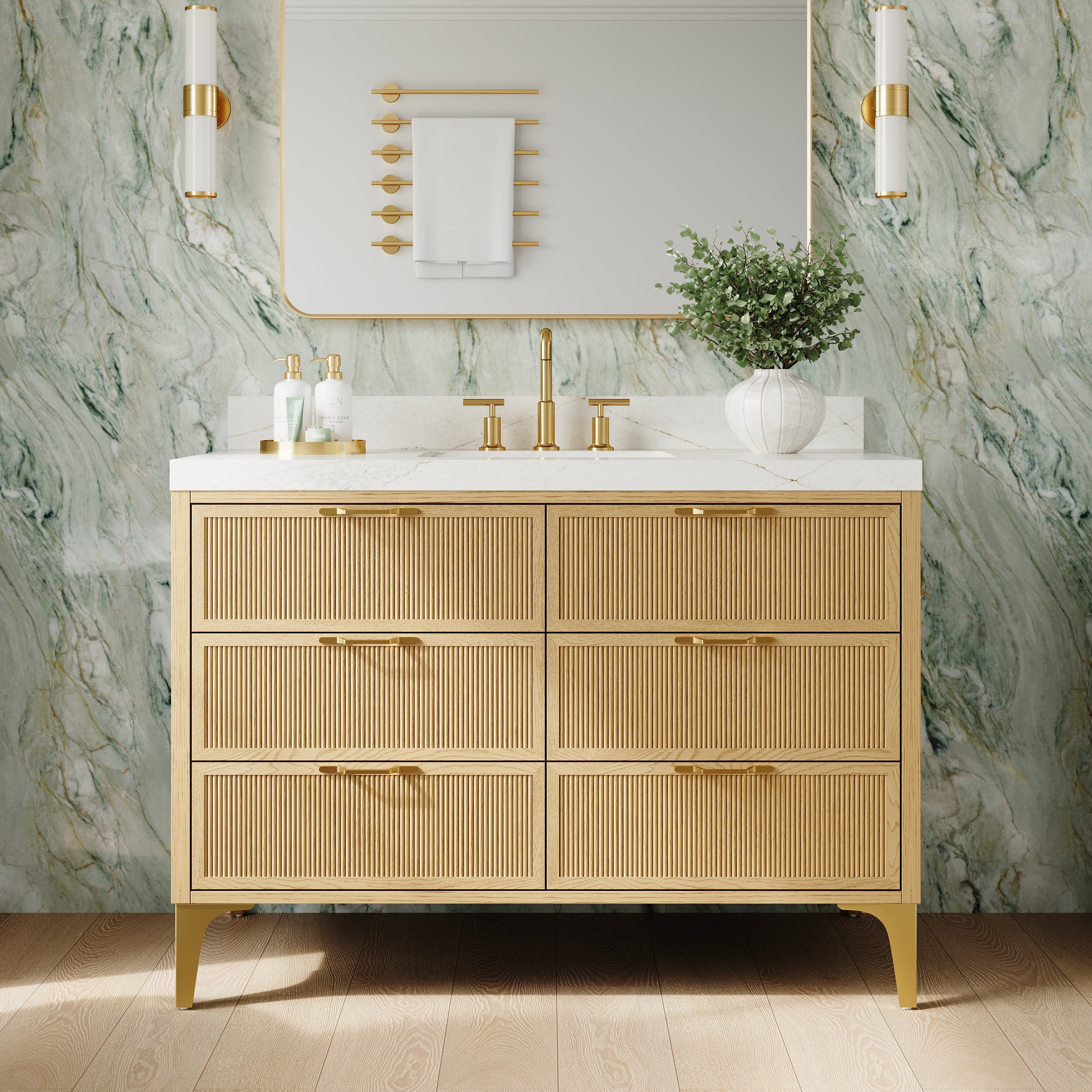
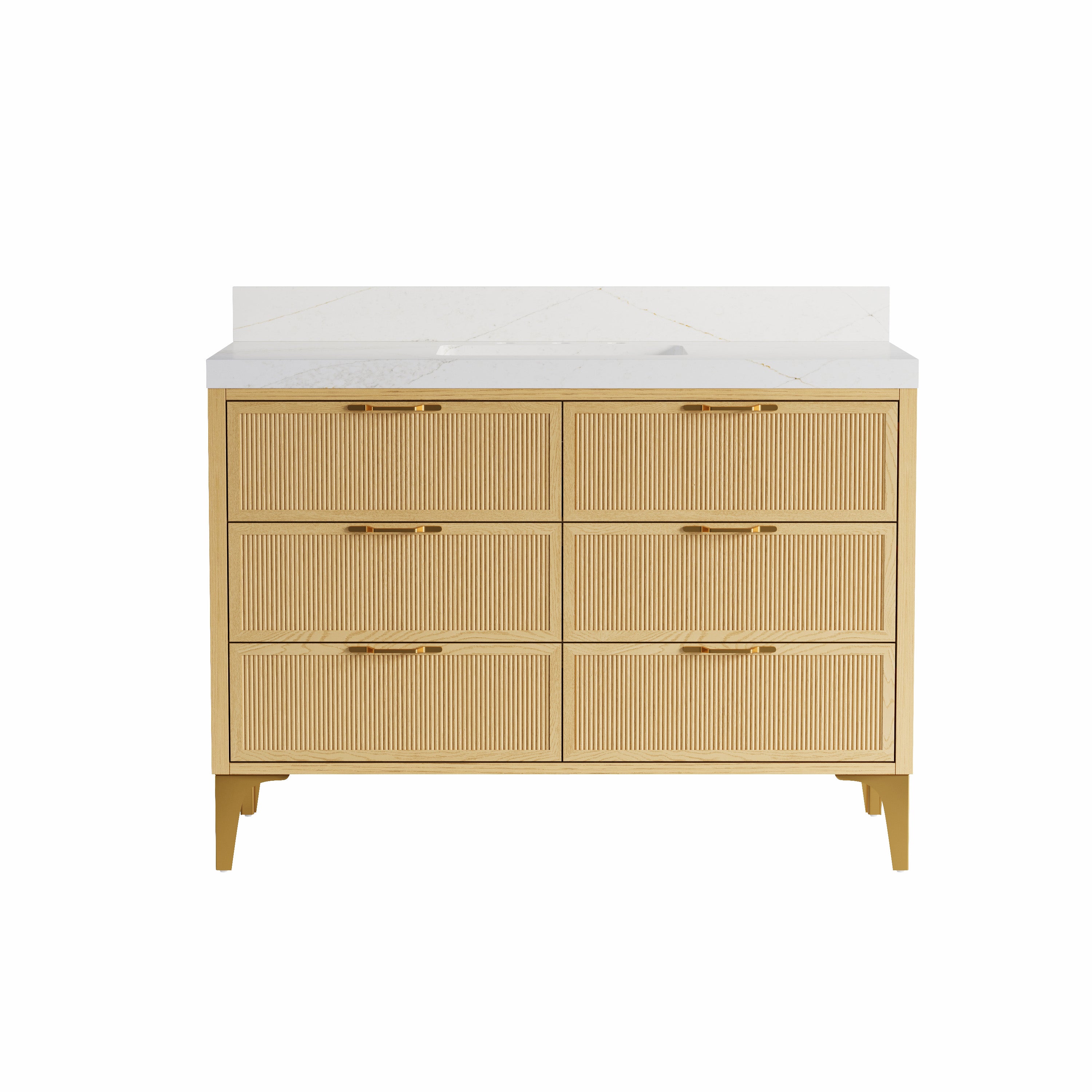


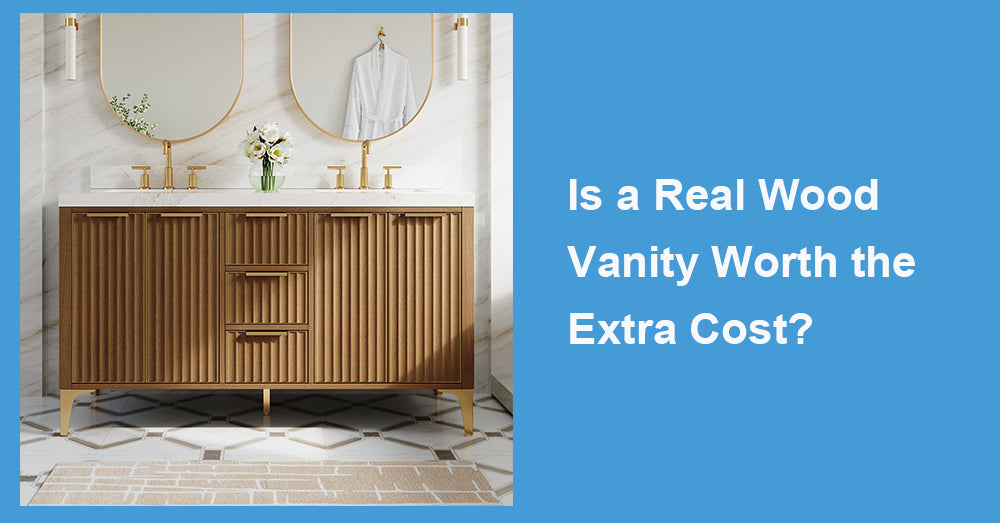
In today’s remodel conversations, solid wood vanities are often treated as the “premium default,” especially when homeowners want a bathroom that feels warm, substantial, and built to last. Renovation survey data back up that preference: among people who chose wood for their vanity material, nearly three-quarters (74%) selected solid wood, with other options like MDF, plywood, particleboard, and veneer far behind. At the same time, bathrooms remain a high-risk zone for moisture-related wear, and insurance statistics show that water damage and freezing are frequent causes of home insurance losses, reinforcing why material choices and construction details matter.
Why Solid Wood Vanities Keep Winning the “Premium” Label
A big driver is the broader shift toward natural materials in bath design. Industry trend reports indicate that wood finishes are gaining popularity, with wood-faced vanities outpacing painted options in forward-looking preferences. Solid wood also aligns with the “quiet luxury” direction: less shine, more texture, and a tactile surface that looks authentic under bright task lighting and close-up daily use.
Pro: Real Grain, Real Depth, and a More Custom Look
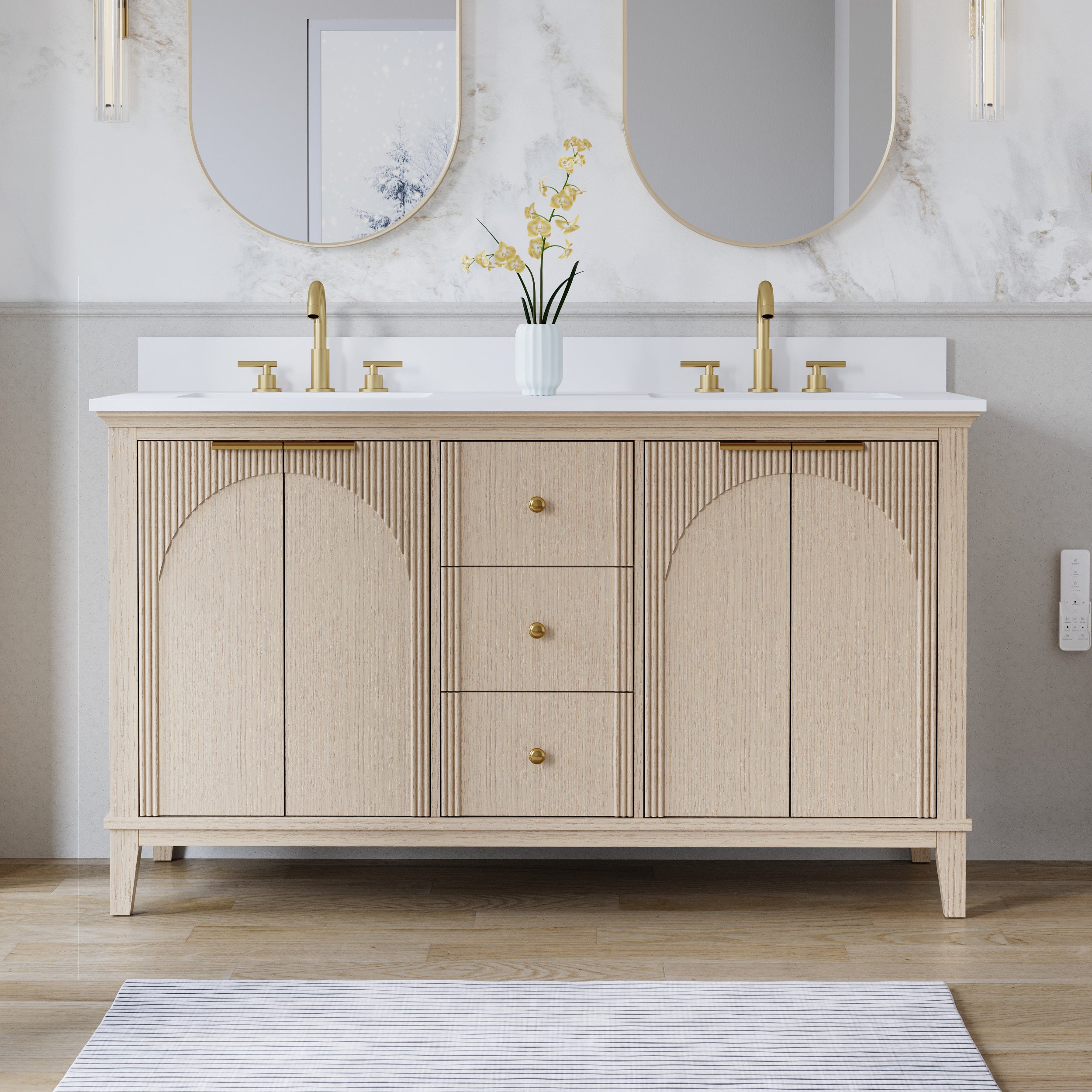
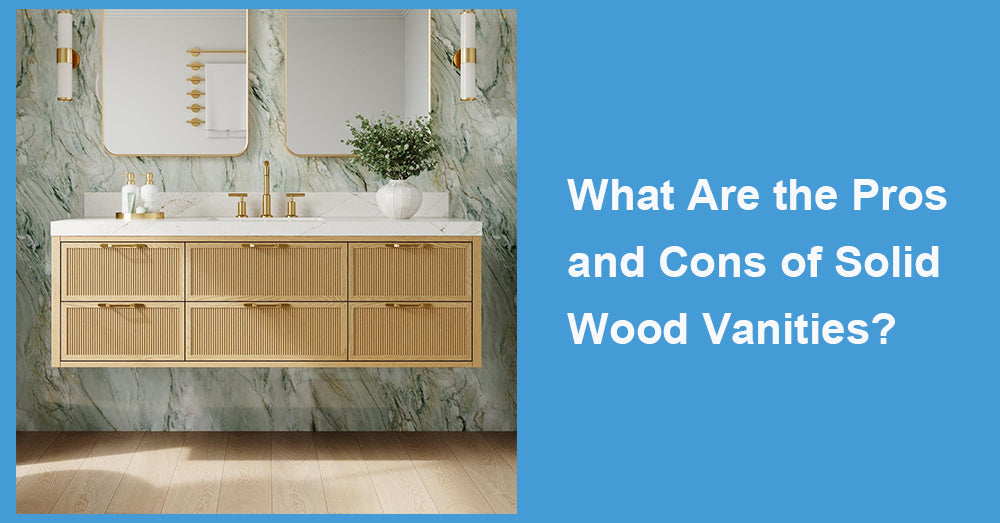
Solid wood’s biggest advantage is visual credibility. Natural grain, pore structure, and tone variation are difficult to replicate convincingly at arm’s length. That matters because the vanity is the visual anchor of the bathroom: it sits directly under the mirror and lighting, and it becomes the backdrop for daily routines. When paired with popular countertop choices (often quartz and natural stone), authentic wood can balance the room, making it feel less cold and more layered.
Pro: Stronger “Daily Touchpoint” Performance With Good Hardware
Durability isn’t only about a cabinet box surviving humidity; it’s also about how the vanity feels every day. Soft-close performance has become a mainstream expectation in renovations, with large shares of homeowners choosing soft-close drawers and doors in vanity upgrades. Solid wood construction often supports better long-term alignment for hinges and slides because fastening points remain stronger through repeated cycles of opening, closing, and incidental impacts.
Pro: Repairability and Refinish Potential
Solid wood is generally more repairable than many lower-cost substrates. Small dings, worn edges, or scuffed corners can often be sanded, touched up, and resealed rather than forcing a full replacement. That repairability is a practical advantage in bathrooms, where minor damage is common from hair tools, dropped items, cleaners, and repeated towel contact near corners and pulls.
Con: Wood Moves With Moisture, So Construction Matters More Than the Sticker
The main drawback is that wood is hygroscopic: it gains and loses moisture depending on ambient humidity, which can cause dimensional changes if not controlled. In a bathroom, that movement shows up as seasonal sticking drawers, slight door misalignment, or panel stress if the build does not accommodate expansion and contraction. This is why “solid wood” is not automatically the most stable choice unless the vanity uses smart construction methods (frame-and-panel doors, sealed edges, and balanced finishes).
Con: Not All-Solid Builds Can Be Less Stable Than a Smart Hybrid
A common misconception is that “more solid wood everywhere” always equals more durability. In real cabinetry, hybrid builds are often the performance sweet spot: solid wood where you touch and see it (frames, doors, drawer fronts), and engineered panels where dimensional stability matters most (cabinet boxes and large flat spans). Plywood, for example, is widely valued for its cross-laminated construction, which improves resistance to warping or buckling in the plane of the panel under moisture exposure.

Con: Composite Alternatives Can Perform Well, but They’re Less Forgiving at Edges
Engineered panels like MDF and particleboard can be consistent and smooth for painted finishes, but they are often less forgiving when moisture gets into edges, seams, or unsealed cutouts. Technical guidance on dimensional stability explains how moisture absorption can create gradients that lead to swelling and warp behavior, especially when exposure is uneven. That doesn’t mean these materials always fail, but it does mean they demand tighter moisture protection and faster leak response.
Pro: Solid Wood Pairs Well With the “Natural Materials” Direction in 2026 Baths
If you look at where bathrooms are headed stylistically, the advantage tilts back toward wood. Trend reporting emphasizes growing interest in natural material cues and softer, more organic looks—an environment where real wood grain has a natural edge in perceived value. This is especially relevant for vanities because they visually connect with mirrors, lighting, metals, and wall surfaces; wood can make the whole bathroom feel more composed rather than purely utilitarian.
Con: Cost and Weight Can Raise the Stakes of a Wrong Pick
Solid wood vanities often cost more than MDF-based options and can be heavier to handle during installation. That matters because bathroom installs are rarely “set it and forget it.” The real cost risk isn’t just the purchase price—it’s the price of a redo if water intrusion, poor leveling, or a bad wall fit leads to early failure. Water losses are common enough in home insurance data to justify treating moisture prevention as part of the buying decision rather than an afterthought.
Pro: With Moisture Control, Wood Holds Up Extremely Well
Bathrooms are harsh, but they’re manageable with the right environment. EPA guidance emphasizes that moisture control is the key to mold control and recommends keeping indoor humidity below 60% (ideally in the 30%–50% range) and drying wet areas quickly. In practical terms, good ventilation, quick drip fixes, and wiping standing water off countertops and seams can dramatically extend the life and appearance of a wood vanity.
Con: Installation Details Decide Whether “Durable” Stays Durable
Even the best material can be lost if the vanity is installed poorly. If the cabinet rocks, the floor is out of level, or the backsplash seam is left unsealed, water can migrate behind the vanity and first damage hidden areas. Layout clearances matter too: planning guidance recommends at least 30 inches of clear floor space in front of fixtures for comfort, with a 21-inch minimum often cited as a baseline. When clearances are tight, owners tend to bump corners, drip more often while moving, and create repeated minor wetting that accelerates wear.
A Simple Buying Framework: When Solid Wood Is a Great Choice (and When It Isn’t)
Use this quick decision framework to make the pros/cons practical:
l Choose solid wood (or solid wood fronts) when you want authentic grain, refinishing potential, and a luxury feel that reads high-end in bright light.
l Prioritize hybrid construction when long-term stability is the top concern: solid wood for doors/frames, plywood for the cabinet box to resist warping under humidity swings.
l Be cautious with MDF/particleboard in bathrooms that are humid or have a history of slow leaks unless edge sealing and moisture control are excellent, because moisture gradients can contribute to swelling and warping.










Leave a comment
This site is protected by hCaptcha and the hCaptcha Privacy Policy and Terms of Service apply.