














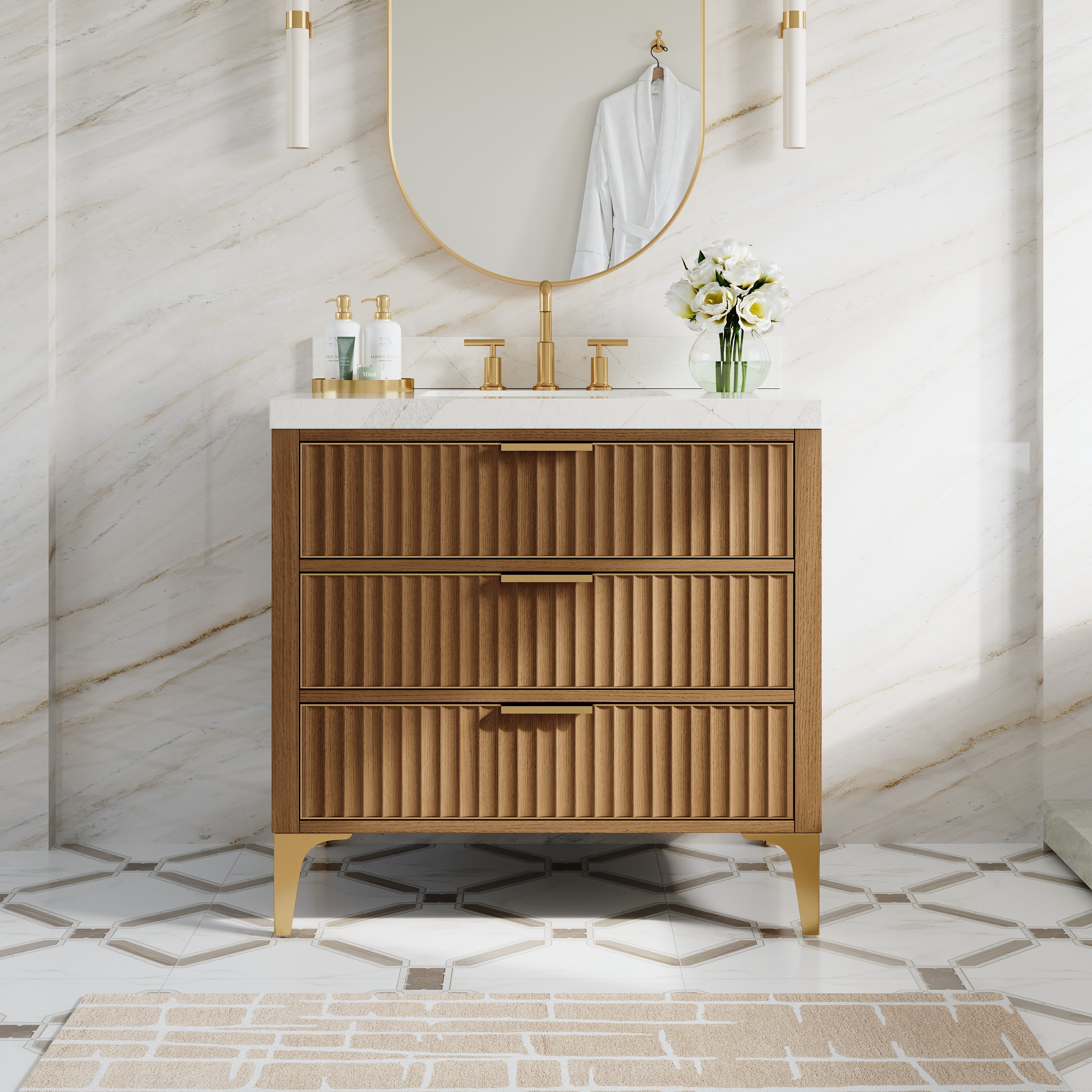
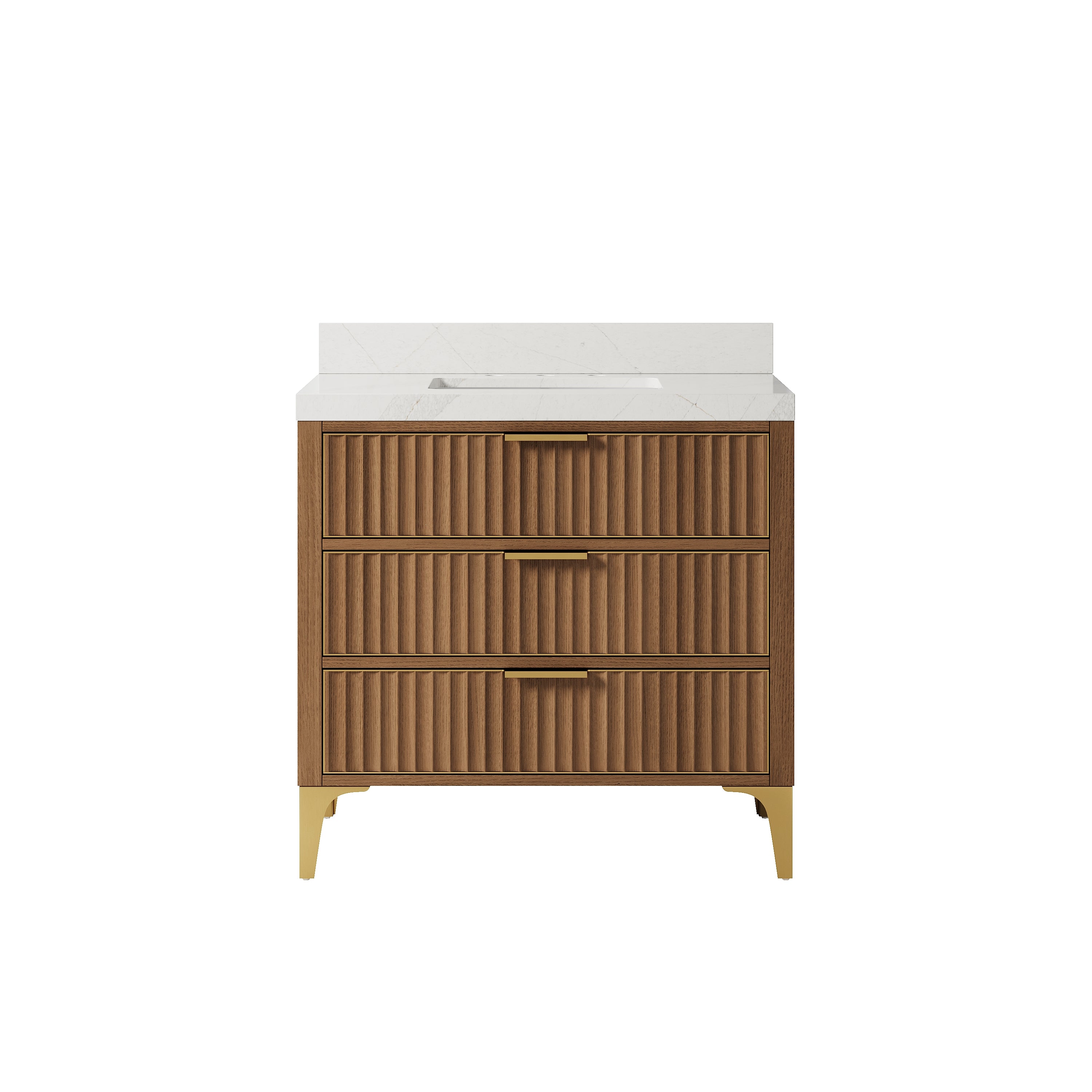
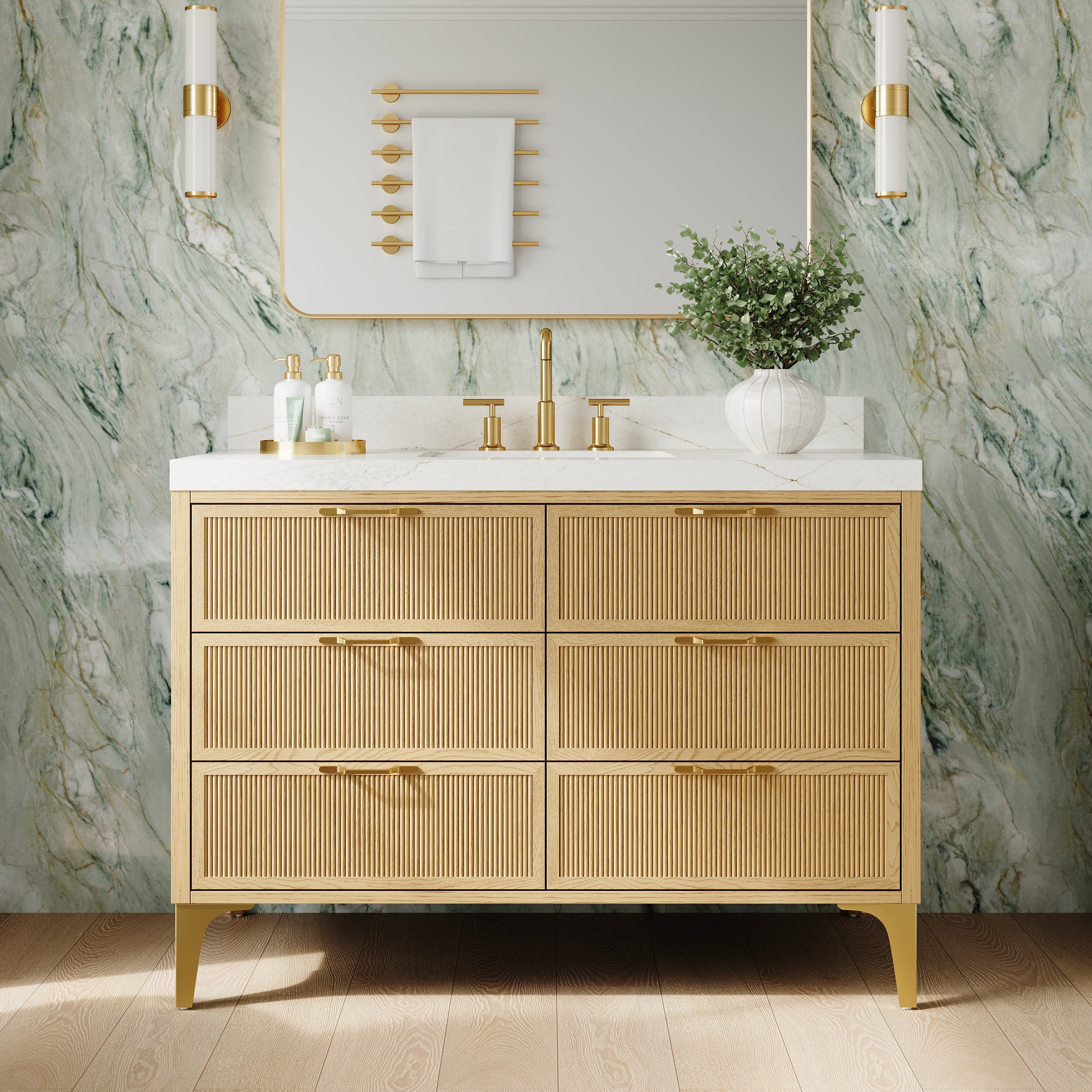
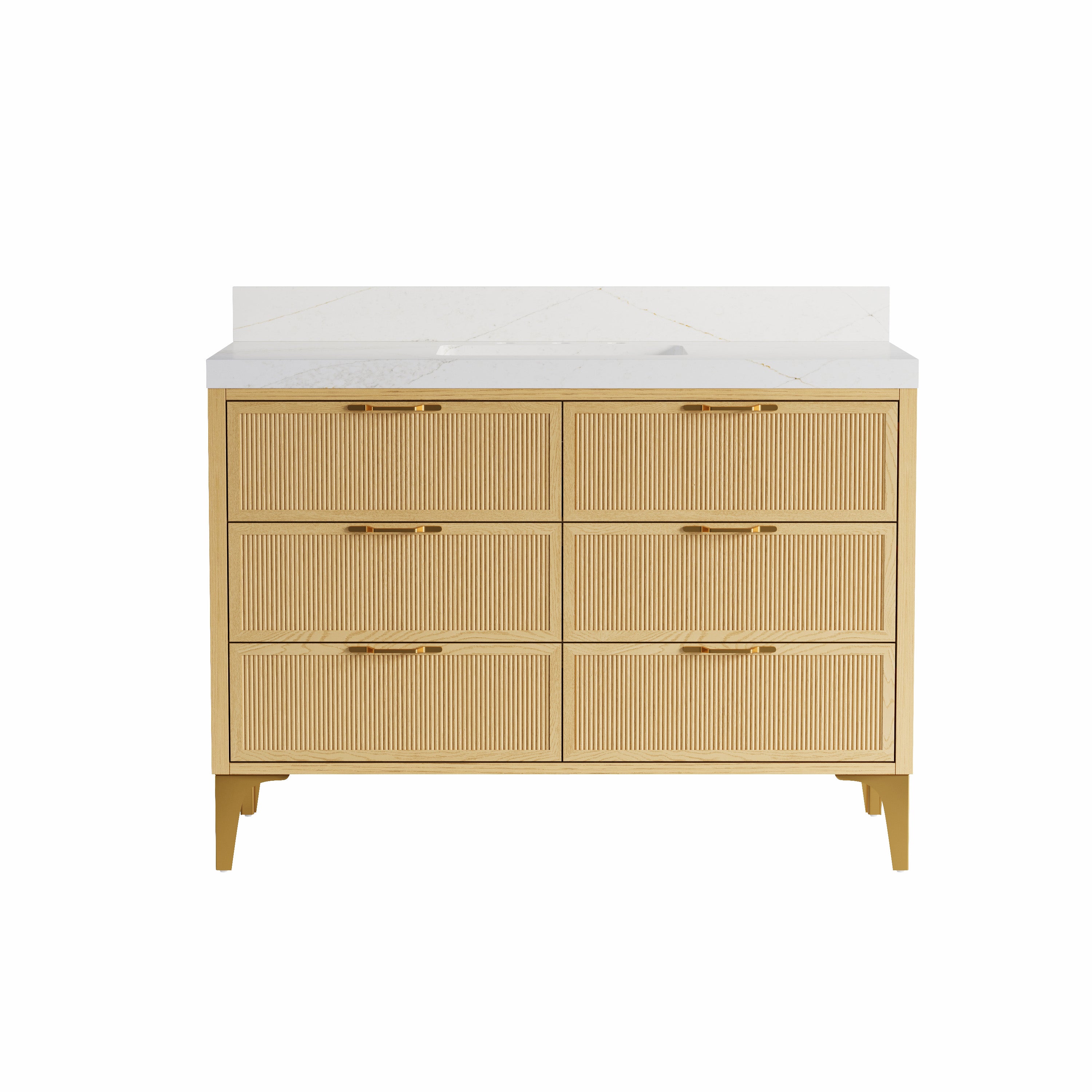


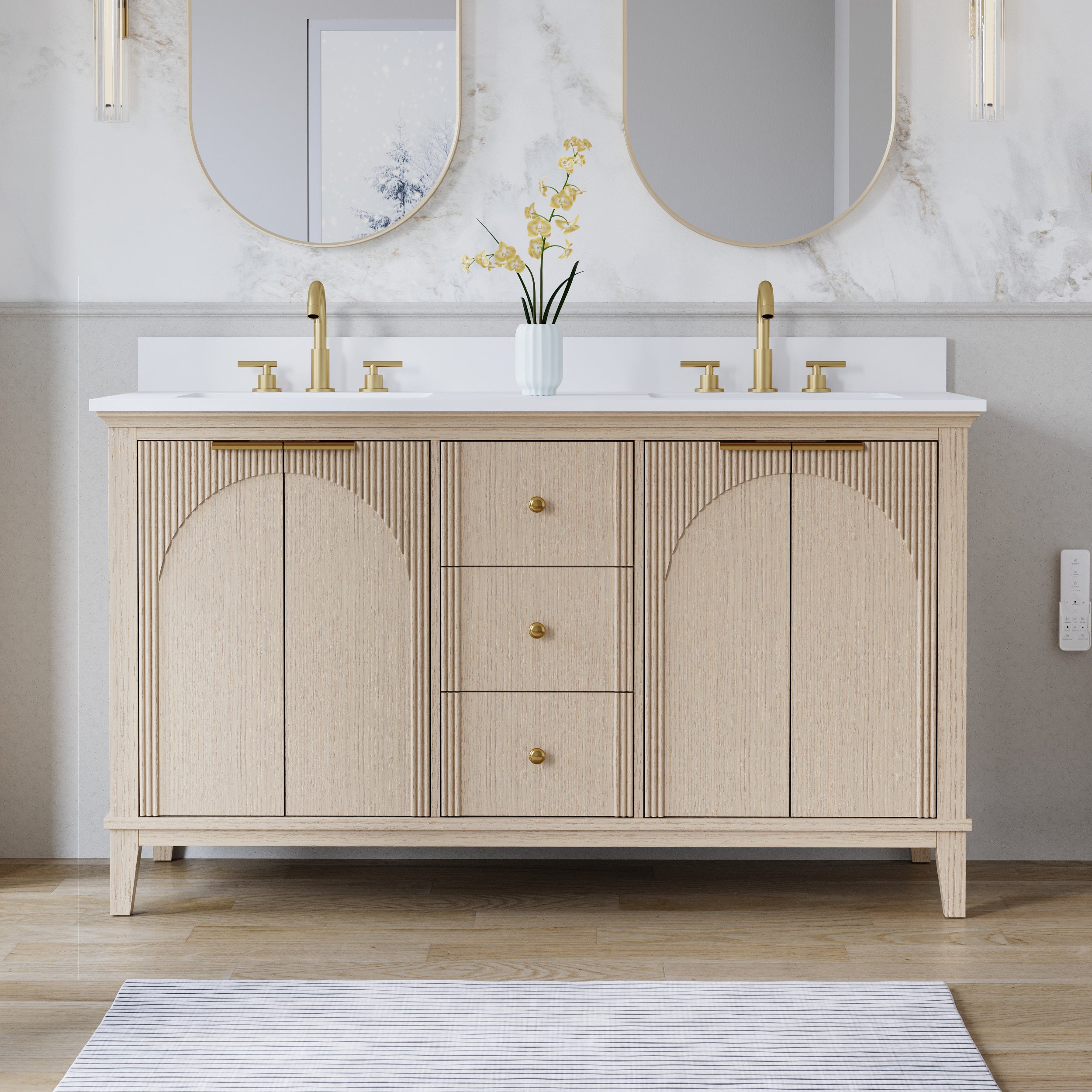
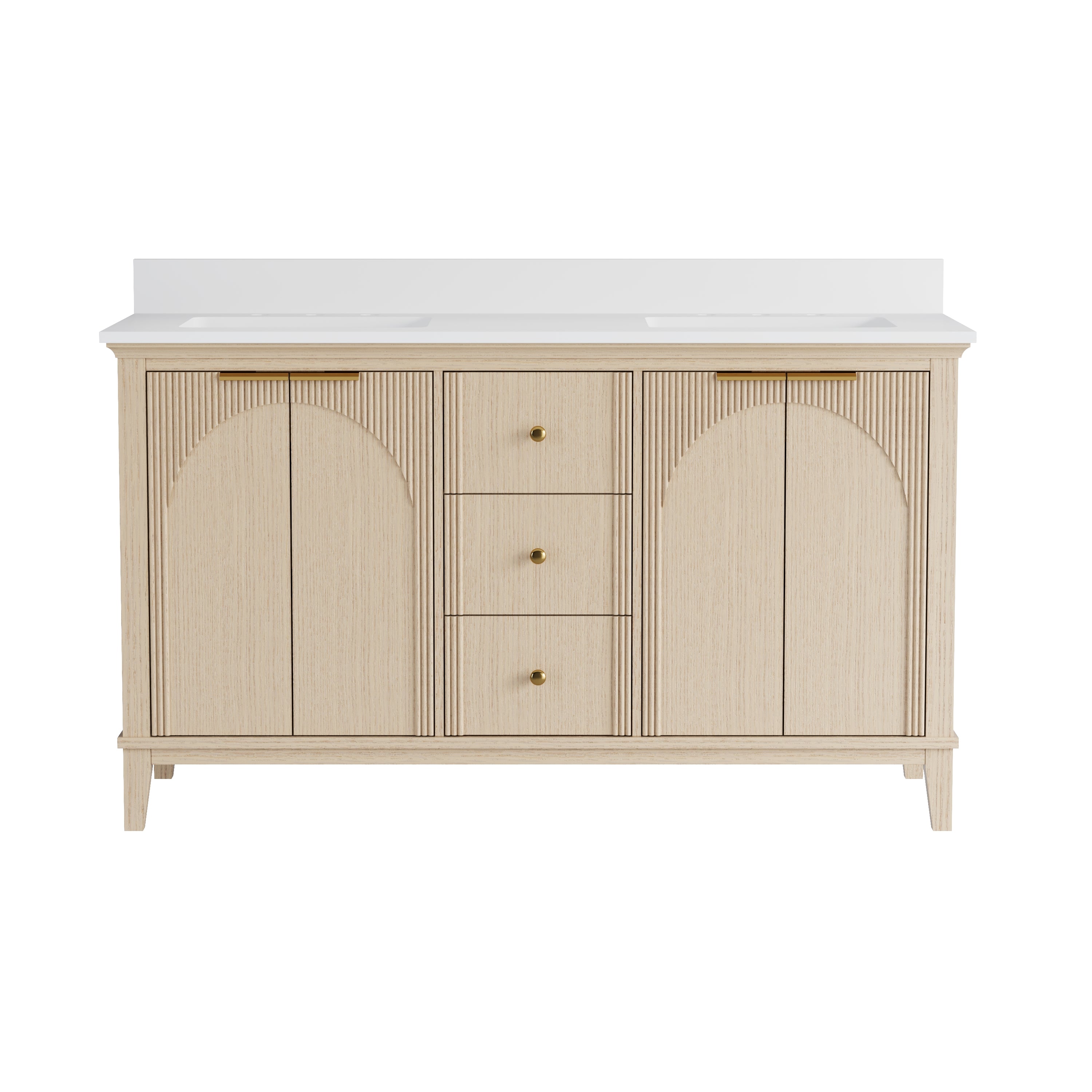
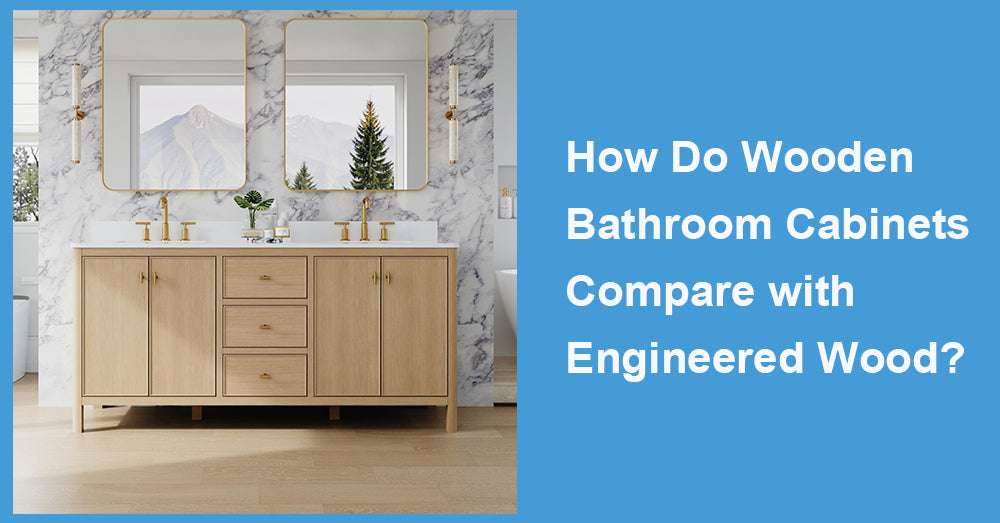
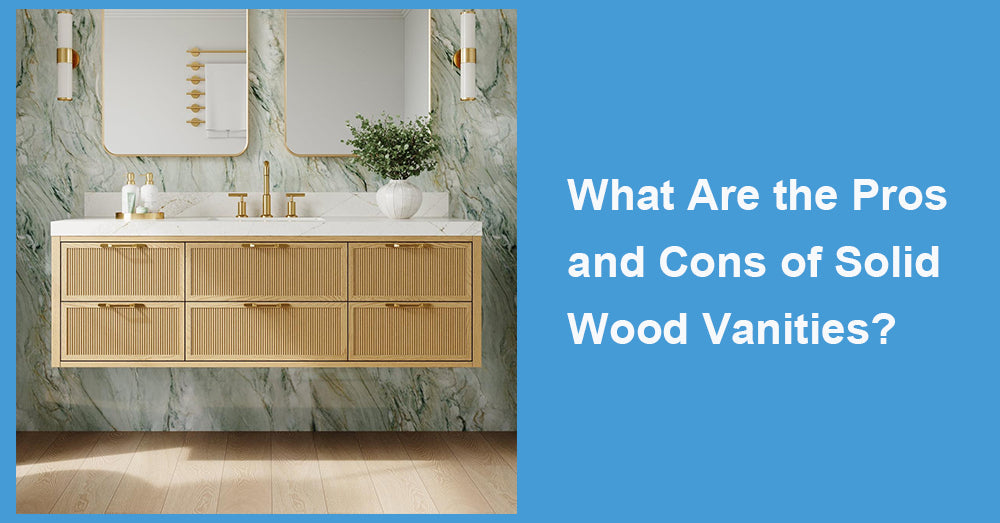
Wooden bathroom cabinets remain a go-to choice in remodel specs because they feel substantial, can be refinished, and fit the “furniture” direction bathrooms are taking. At the same time, engineered wood is appearing more often in cabinet boxes and panels because it solves a practical problem: bathrooms experience humidity spikes, and stability matters as much as looks.
1. What “solid wood” really means in cabinet builds
In cabinet language, “solid wood” typically describes the frame, doors, and face components made from lumber, not necessarily every panel in the box. A common construction is a solid-wood face frame paired with engineered panels (often plywood) for the side, bottom, and back panels. This hybrid approach is popular because solid wood brings strength and repairability where it is seen and touched, while engineered panels help keep the cabinet square and flat over time.
In spec sheets, you will often see common thicknesses like 3/4 inch for structural panels, 1/2 inch for secondary parts, and 1/4 inch for backs. These are not hard rules, but they are typical in mass-produced cabinetry.
2. Bathrooms punish materials with humidity swings
Bathrooms are not just “humid.” They are variable. A hot shower can cause the room to experience a short-term high-moisture event, and then the space dries back down. HVAC guidance commonly recommends maintaining habitable-space relative humidity between 30% and 60%, which reflects the range many interiors move through seasonally and daily.
Wood responds to that movement. A practical rule of thumb is that wood across the grain changes dimension by roughly 1% for each 4% change in moisture content, whereas along the grain the movement is much smaller. That is why cabinet makers care about grain direction, panel design, and finish coverage, especially near sinks and splash zones.
3. Solid wood advantages: repair, fasteners, and long-term service life
When properly built and sealed, solid wood components can be very forgiving over a long ownership cycle.
· Repairability and refinishing: Dents, scratches, and finish wear can often be sanded and refinished, which is harder to do cleanly on many foil-wrapped or melamine-faced engineered panels.
· Fastener strength in key areas: Hinges, pulls, and drawer hardware rely on screw holding. Solid wood face frames and doors tend to accept repeated hardware adjustments better than low-density cores.
· Aging aesthetics: Wood grain and color can develop character, which matches the current trend toward warmer, less clinical bathroom palettes.
The trade-off is movement. Solid wood expands and contracts more noticeably across the grain, and if door styles, joinery, or finishing are not done well, you can see warping, seasonal gaps, or sticking.
4. Engineered wood advantages: flatness and dimensional stability
Engineered wood is a category, not one material. For cabinets, it usually means plywood, MDF, and particleboard, each with different behavior.
Plywood is often the “premium engineered” choice for cabinet boxes because its cross-laminated construction improves dimensional stability and resistance to warping in the plane of the panel when exposed to moisture changes. It also tends to hold screws better than many particleboard cores, especially when it's adequately thick.
MDF is popular where a smooth paint-grade surface is needed. The risk is water exposure: published testing on 155-grade MDF showed thickness swelling ranging from roughly 5.3% to 10.8% after water exposure across sampled manufacturers. That does not mean MDF cannot be used in bathrooms, but it raises the bar on edge sealing, coating quality, and keeping standing water away from seams.
Particleboard is common in value-driven cabinets because it is flat and cost-effective, but edge durability and moisture performance depend heavily on grade and protection. The ANSI particleboard standard includes moisture-resistant categories (MR10 and MR50) with a thickness swell limit of 5.5% after 24-hour submersion testing, which is a useful benchmark when comparing “standard” vs “moisture-resistant” cores.

5. Indoor air and compliance: what engineered wood has improved
Engineered wood used to get broad criticism for formaldehyde emissions, but standards and labeling have changed how products are specified and verified.
Under TSCA Title VI, emission limits for regulated composite wood panels are set at 0.05 ppm for hardwood plywood, 0.11 ppm for MDF, 0.13 ppm for thin MDF (defined as 0.315 inches thick or less), and 0.09 ppm for particleboard.
For cabinet buyers and spec writers, the practical takeaway is simple: look for clear compliance labeling and documentation (for example, TSCA Title VI or equivalent low-emitting programs). This does not automatically make a cabinet “better,” but it reduces uncertainty about baseline emissions performance for finished goods containing composite wood panels.
6. Head-to-head comparison in real bathroom use
If you are choosing between “solid wood cabinets” and “engineered wood cabinets,” the decision is rarely absolute. It is about where each material is used.
· Best for wet-risk areas (sink base, floor-adjacent panels): A plywood box or plywood bottom panel often performs more predictably than MDF or standard particleboard when minor leaks happen. Plywood’s layered construction is designed for stability.
· Best for doors and high-touch parts: Solid wood doors and frames can be a long-life choice because hardware attachment and refinishing are easier over time.
· Best for smooth painted finishes: MDF doors and panels can look exceptionally smooth, but they require excellent sealing and careful bathroom ventilation, as the risk of swelling rises when water finds an unsealed edge.
In short, solid wood tends to win on serviceability and “furniture feel,” while engineered wood tends to win on flatness and repeatable stability, especially when humidity swings are unavoidable.
7. The current “best practice” build: a smart mix, not a purity test
The cabinet builds most often specified in mid-to-upper segments are hybrids: solid wood where structure and touch matter, plywood where the box needs to stay square, and careful moisture detailing everywhere.
If you want a practical checklist for comparing products, focus on:
· Box material (plywood vs MDF vs particleboard) and whether it is moisture-rated,
· Edge sealing and finish coverage around sink openings and lower panels,
· Hardware quality and adjustability (hinges and slides),
· Clear low-emitting documentation for composite wood components.
Wooden bathroom cabinets and engineered wood are not enemies. In today’s market, the best-performing cabinets usually combine them: solid wood for strength and longevity in the parts you interact with, and engineered panels for stability where bathrooms demand it.









Leave a comment
This site is protected by hCaptcha and the hCaptcha Privacy Policy and Terms of Service apply.