














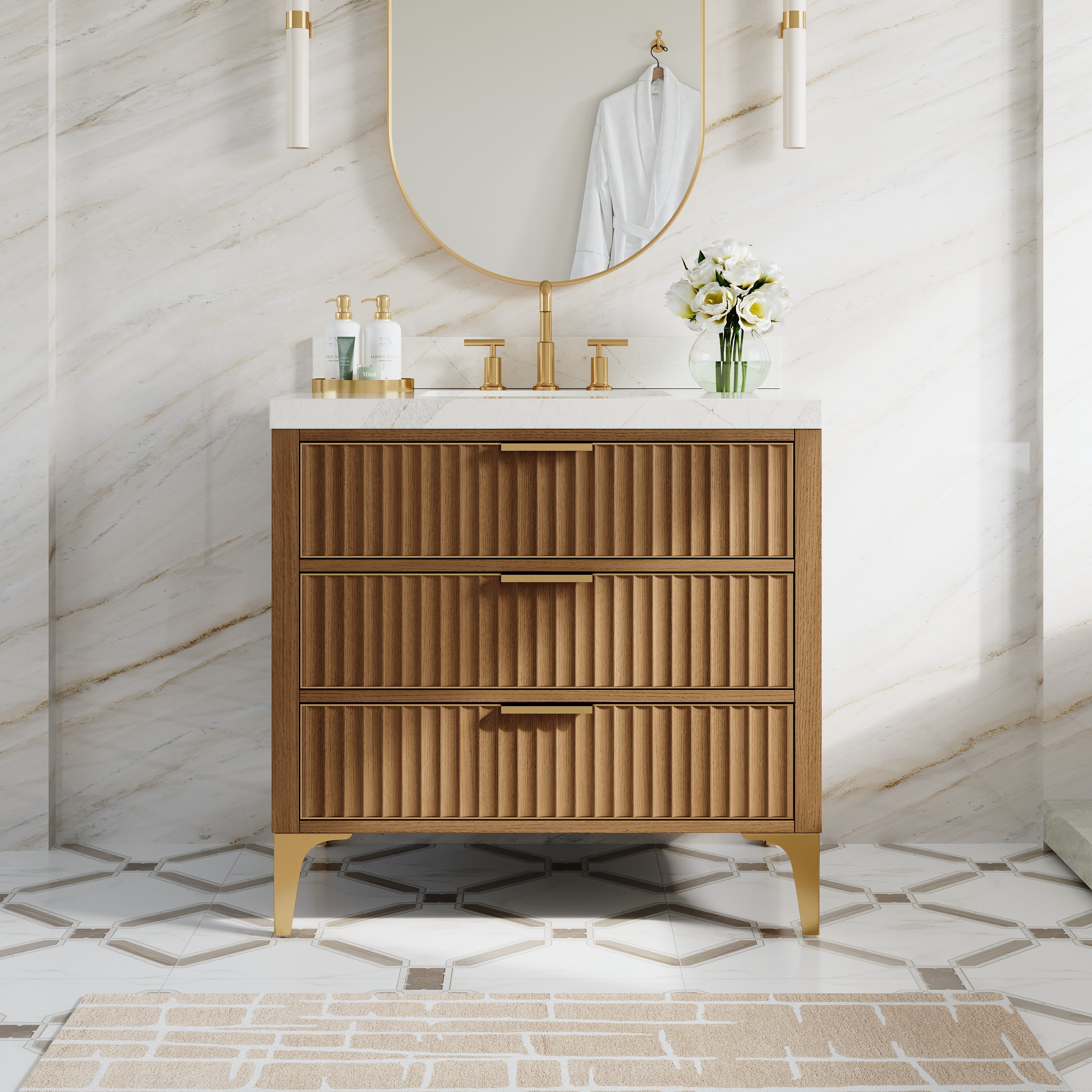
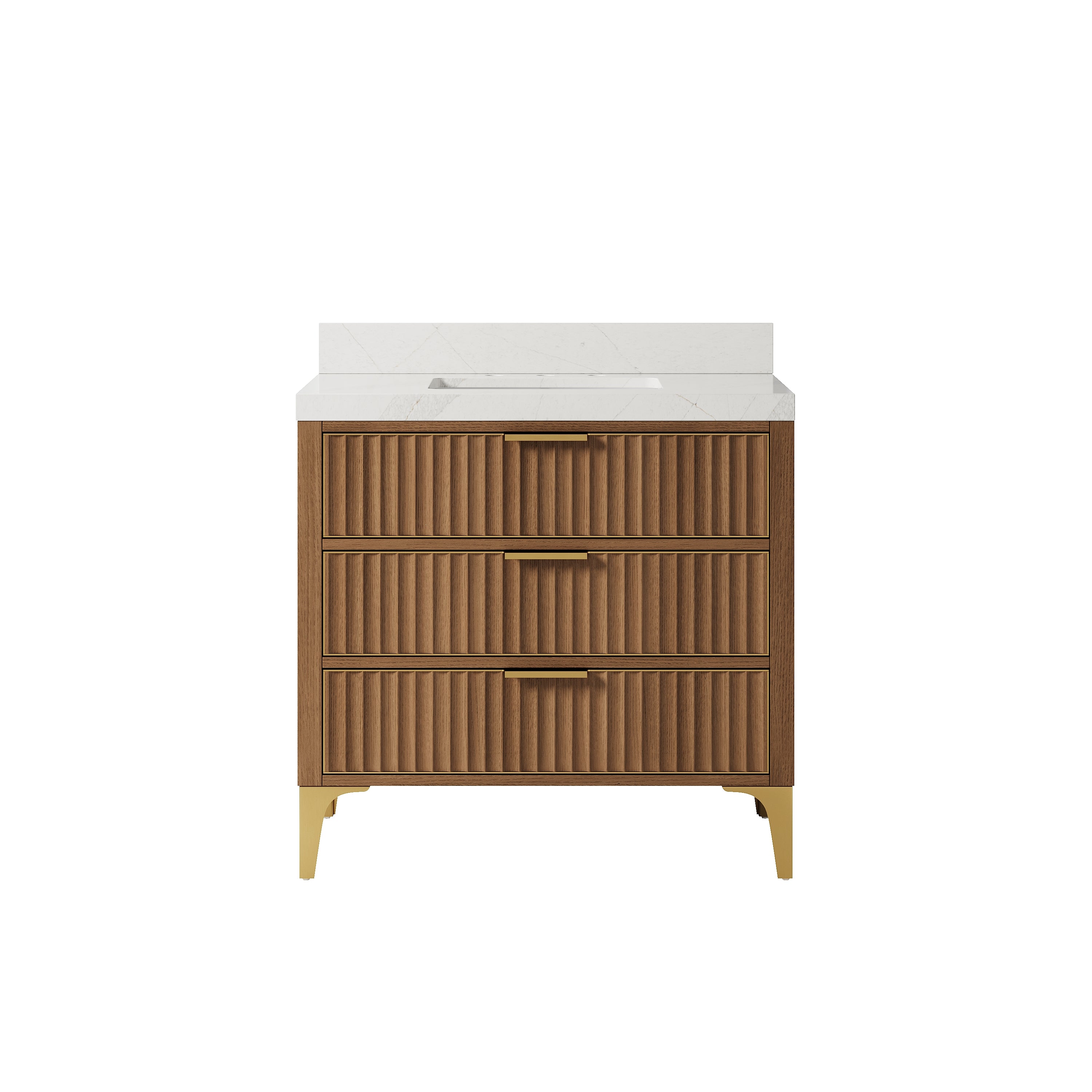
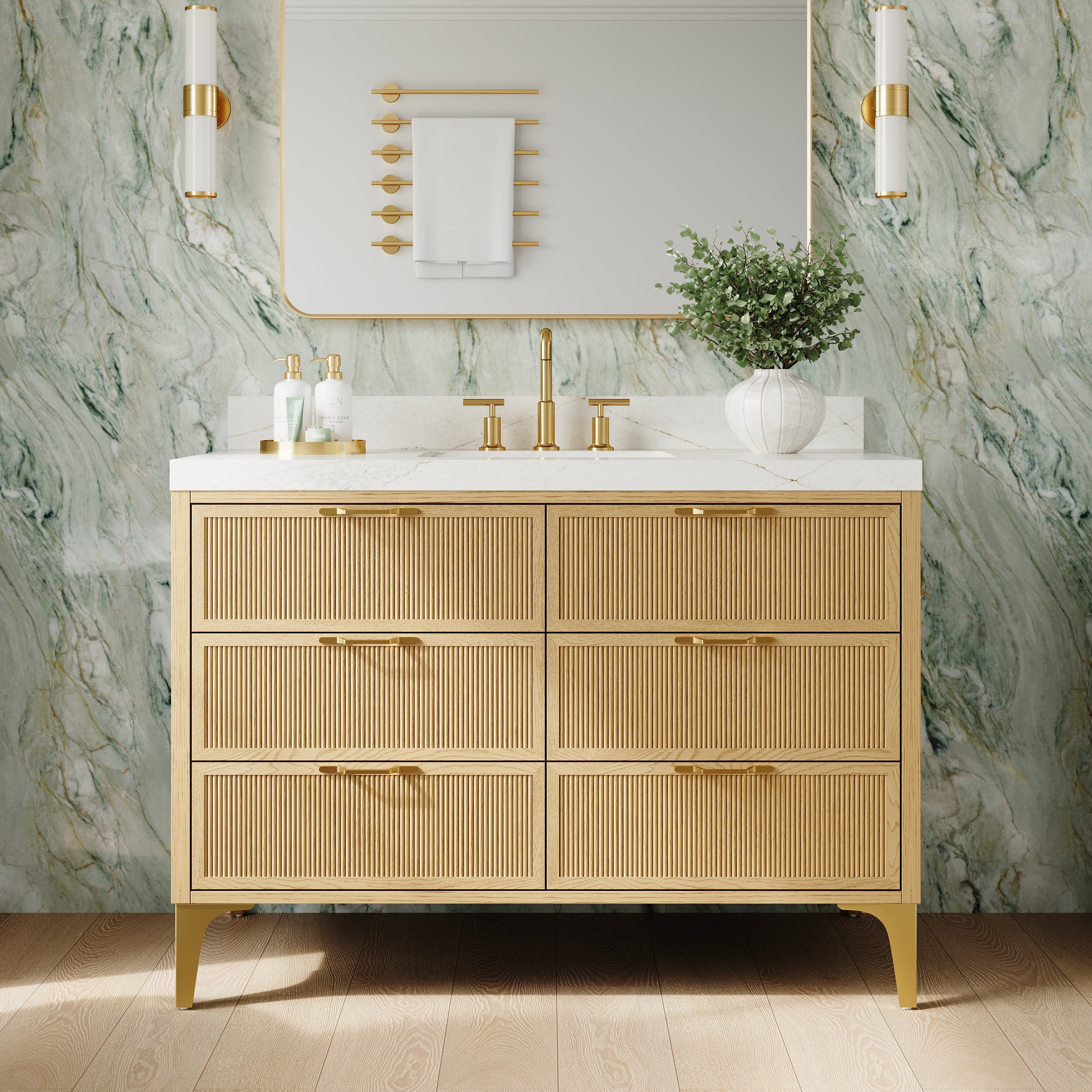
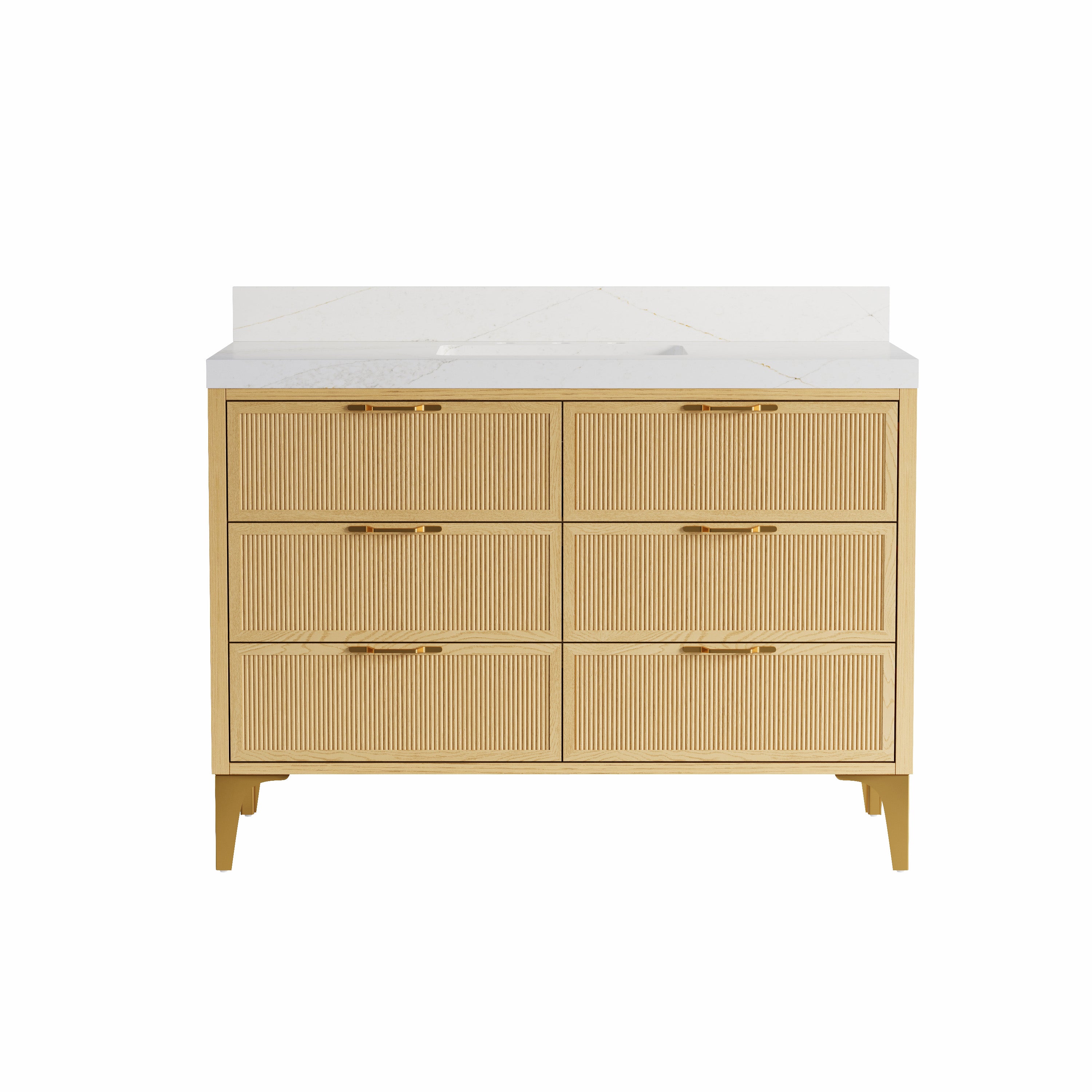


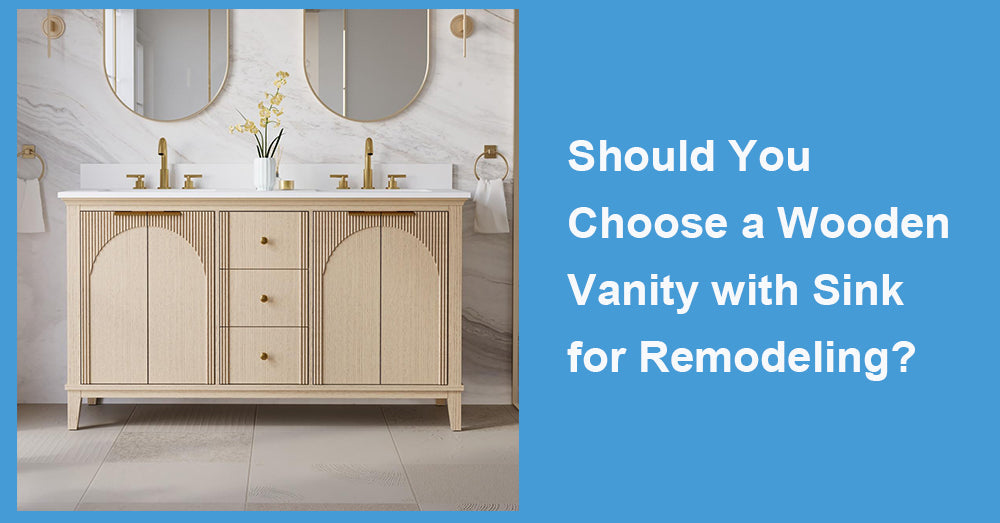
Against the backdrop of the ongoing heating up of the residential renovation market, optimizing bathroom space is becoming a key concern for consumers. For urban apartments, townhouses, and old residential buildings with limited space, enhancing spatial sense through design methods has become an important research direction in the decoration industry. Among them, the light wood bath vanity has quickly become popular in recent years and has been identified as a key trend by many design agencies for 2025 to 2026.

Industry insiders generally believe that light-colored wooden bathroom vanities not only conform to the current popular naturalistic design style but also visually enhance the sense of openness in the space. So, is this statement a marketing concept or is it based on real market evidence?
Light wood has become the new favorite of the industry.
The National Kitchen and Bathroom Association (NKBA) noted in its 2025 bathroom trend report that wooden-veneer bathroom vanities have surpassed traditional spray-painted vanities and are now among the fastest-growing product categories. Light oak, white oak, maple, and natural wood grain finishes are particularly popular.
Industry analysis suggests that there are two main reasons behind this change:
Firstly, consumers are moving away from the popular all-gray and pure white decoration styles of the past decade.
Secondly, people hope to create a more relaxing "family SPA" experience through natural materials.
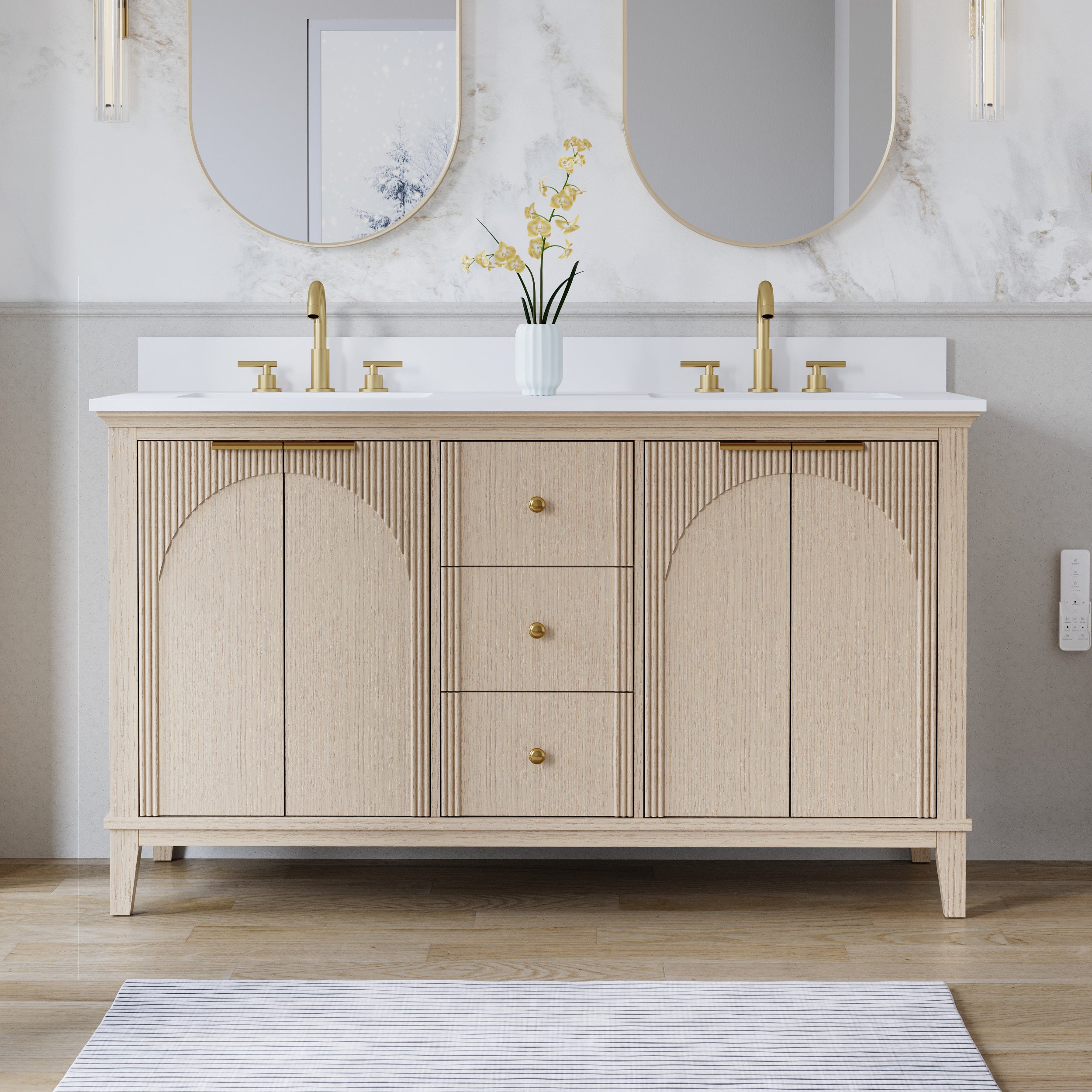
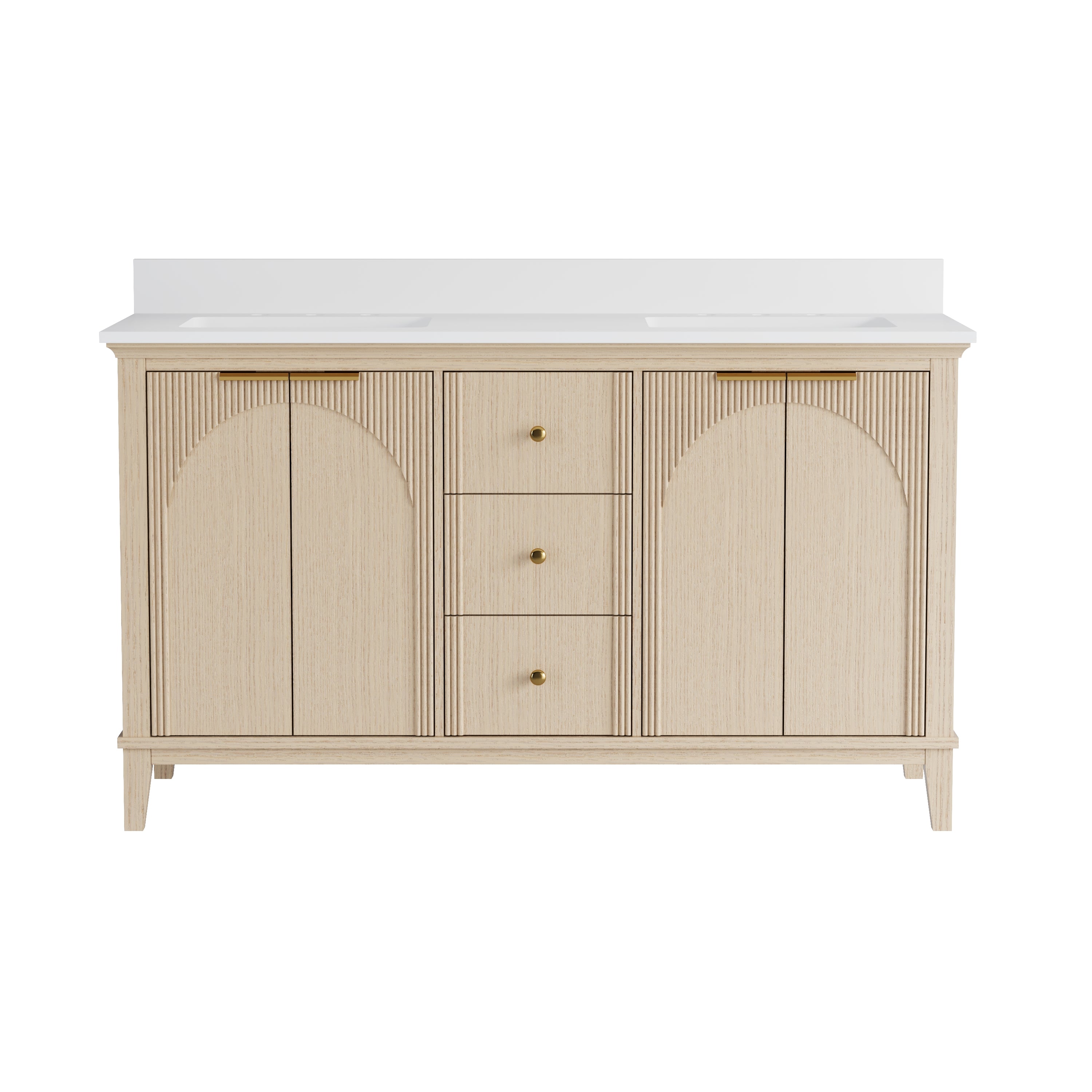
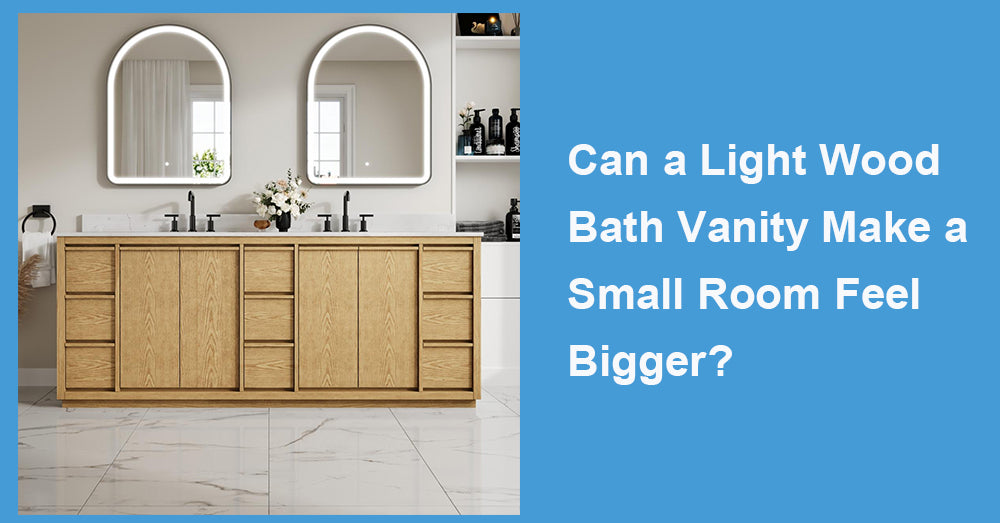
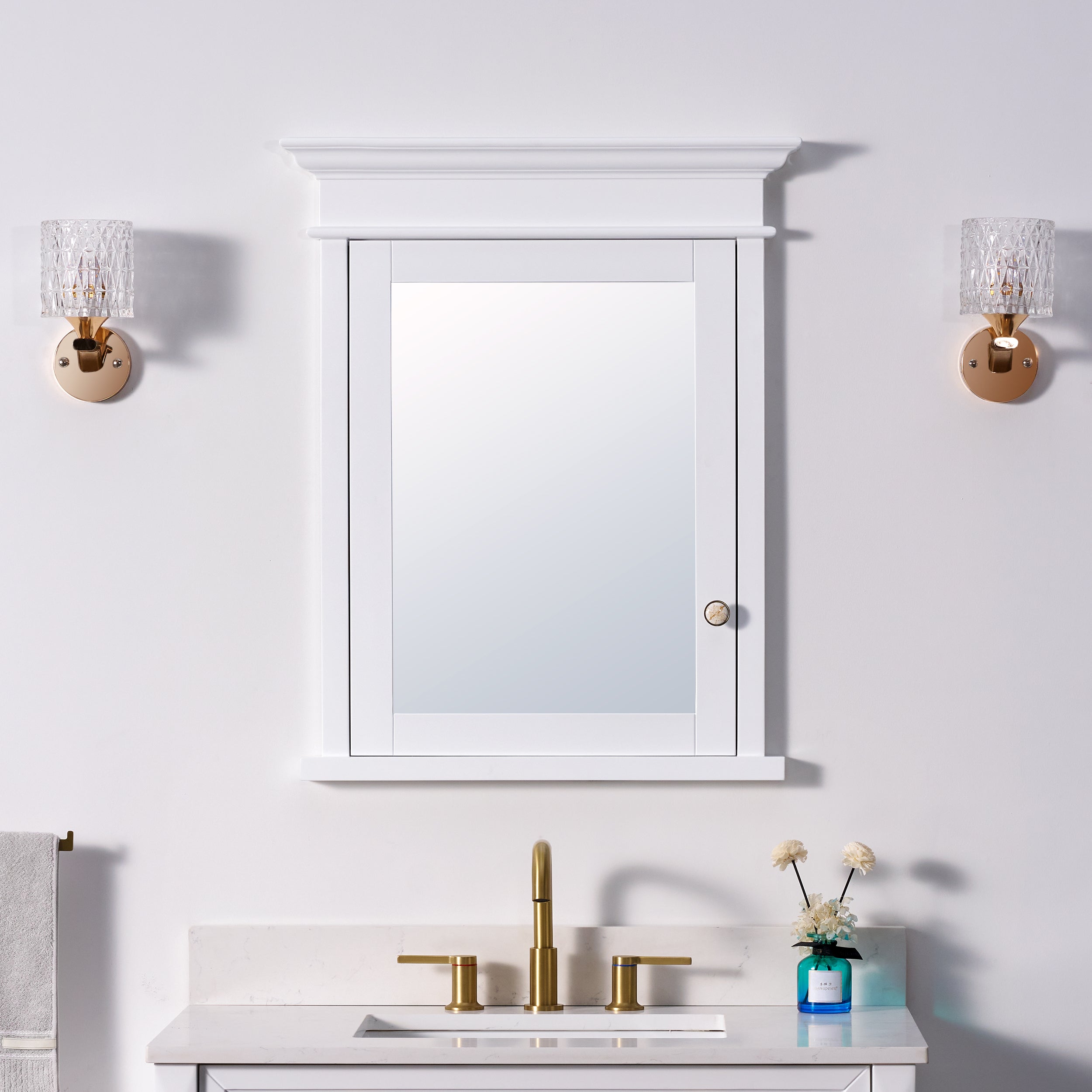
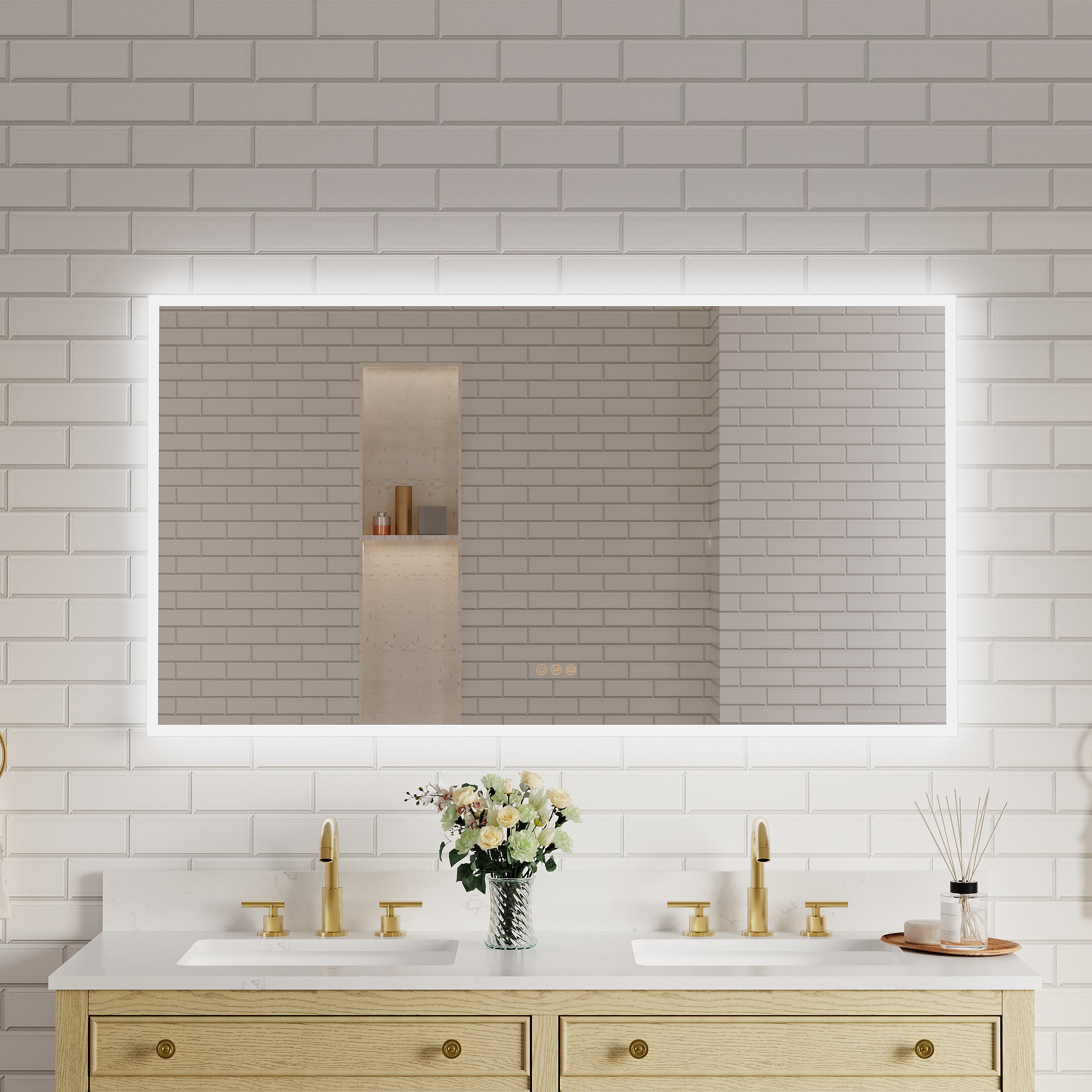
In terms of design trends, light-colored wood is often paired with natural stone, warm-colored lighting, and minimalist hardware. A large number of design cases have shown that a light wood color can reduce visual pressure, soften the boundary between the vanity and the wall, and enhance the space's sense of openness.
Why does a light wooden bathroom vanity produce an "enlarged space" effect?
From a design principles perspective, the improvement of spatial sense by light-colored wooden bathroom vanities mainly comes from three aspects.
Firstly, increase the reflectivity of light.
Members of the Interior Design Association (ASID) pointed out that light-colored surfaces have significantly higher reflection efficiency for both natural and artificial light than dark-colored materials.
When the bathroom area is less than 50 square feet, light transmission often determines the space's openness.
Light colored wood grain, such as oak and ash, can reflect more light to the ground and walls, thereby reducing the generation of shaded areas. Compared to dark walnut or dark coffee vanities, the overall space appears brighter.
Secondly, reduce visual weight.
In the field of interior design, dark furniture is often considered to have stronger "visual weight".
Dark vanities tend to create a noticeable sense of volume, causing the space's center of gravity to sink.
Light-colored wooden vanities can reduce this sense of oppression, making furniture seem to "blend" into the background.
This principle is similar to the logic behind making a room appear larger with light-colored walls.
Thirdly, strengthen continuity.
When the light wood vanity is paired with off-white walls, light gray tiles, or light colored stone countertops, the color difference is minimal.
This low contrast design can reduce visual segmentation.
Designers typically refer to it as' Visual Continuity '.
When the human eye finds it difficult to quickly recognize spatial boundaries, the room appears larger than its actual area.
Suspended shallow wooden bathroom vanities have the fastest growth rate.
It is worth noting that light colored wood and suspended design are forming a trend of combination.
Multiple home media outlets have noted in their 2026 trend forecasts that the floating vanity has become one of the fastest-growing bathroom furniture products. Its core advantage lies in exposing the floor space and visually expanding the bathroom area.
The designer believes that when light wood color is combined with suspended structures, the spatial amplification effect will be further enhanced.
The reason is that:
Ground continuity is stronger.
Light can pass through the bottom of the cabinet.
The spatial hierarchy is more lightweight.
Cleaning and maintenance are more convenient.
This design is particularly popular for urban residential bathrooms with an area between 40 and 70 square feet.
Data shows that consumers are increasingly valuing bathroom vanities.
Bathroom vanities are becoming a key investment project in bathroom decoration budgets.
Houzz survey found that about 63% of homeowners replace bathroom vanity products during bathroom renovation. At the same time, consumers' demand for customized and personalized vanities continues to grow.
Another Houzz study shows that more and more consumers view bathroom decoration as a way to improve their living experience, rather than simply increasing their homes' resale value. In 2024, the proportion of bathroom renovations aimed at improving comfort and convenience will increase to 27%, exceeding some investment-oriented demands.
This means that consumers are no longer solely concerned with storage capacity when choosing bathroom vanities, but are more focused on visual effects, comfort, and spatial experience.
Industry viewpoint: Light wood is not a universal solution
However, industry experts also remind that light colored wooden bathroom vanities are not suitable for all spaces.
For luxury bathrooms with large French windows and high floors, dark woods such as deep walnut and deep oak still have unique advantages.
Architectural Digest's 2025 design trend analysis indicates that dark wood is gaining renewed attention in the high-end residential market for its ability to add stronger texture and layering.
Therefore, it is not just the cabinet's color that determines the sense of space.
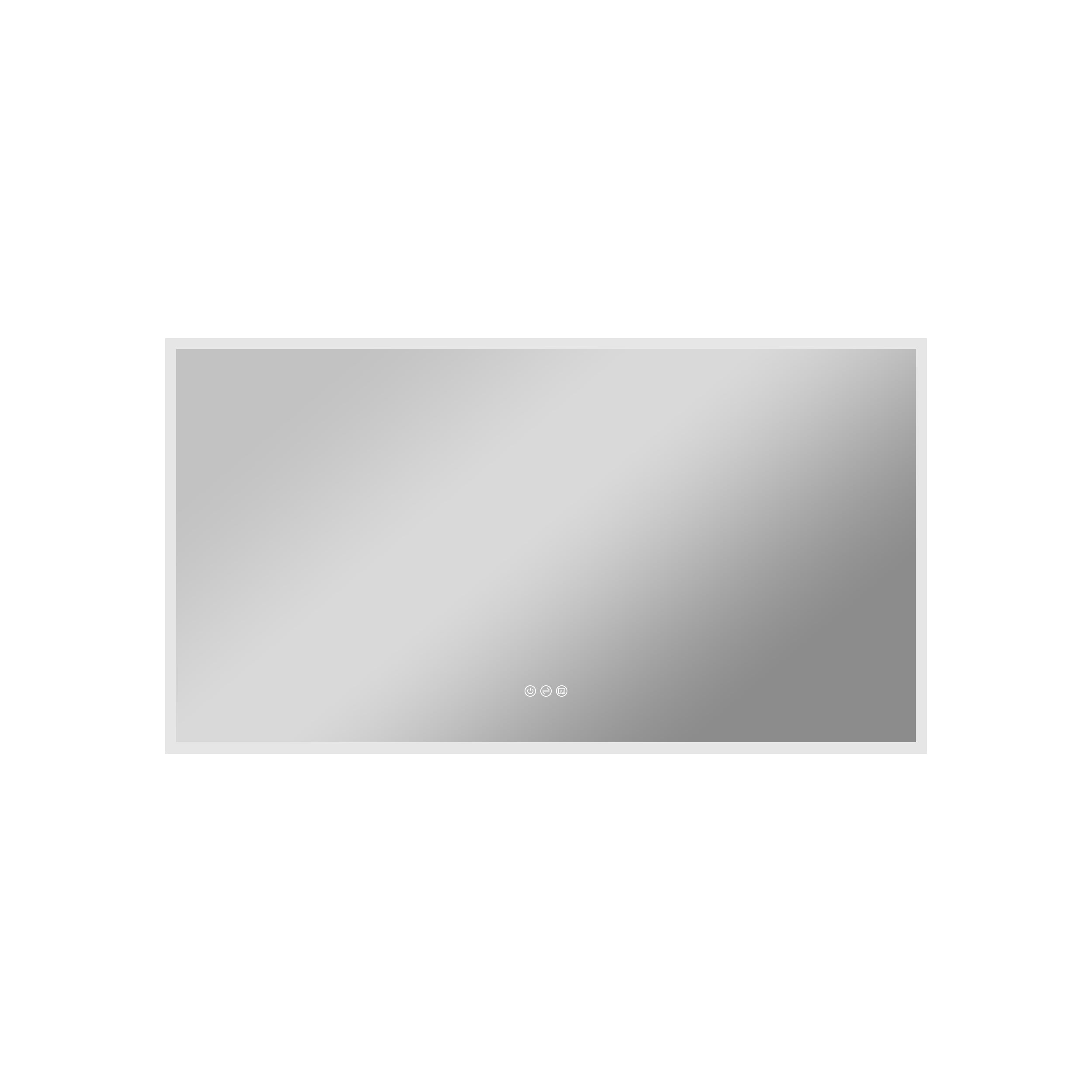
Lighting design, mirror size, tile specifications, storage layout, and wall color will all affect the final effect.
The industry generally believes that light-colored wood colored bathroom vanities are more suitable for:
Small-sized residential units;
Windowless bathroom;
Renovation projects for old residential buildings;
A master bathroom or guest bathroom with an area of less than 80 square feet.
The market outlook is promising.
As consumers continue to pursue natural, healthy, and minimalist living environments, light-colored wooden bathroom vanities are expected to grow in popularity in the coming years.
According to NKBA data, natural wood grain, warm neutral tones, and organic materials have become the core trends in bathroom design.
Based on Houzz's ongoing growth in bathroom renovation investment data, light-colored wooden bathroom vanities have become not only an aesthetic choice but also an important tool for enhancing spatial awareness and improving the living experience.
For residential buildings with limited space, the answer is becoming increasingly clear: light wood bathroom vanities may not necessarily expand the space, but they can indeed make small bathrooms look more spacious, bright, and comfortable through the combined effect of light, color, and visual continuity.









Leave a comment
This site is protected by hCaptcha and the hCaptcha Privacy Policy and Terms of Service apply.