














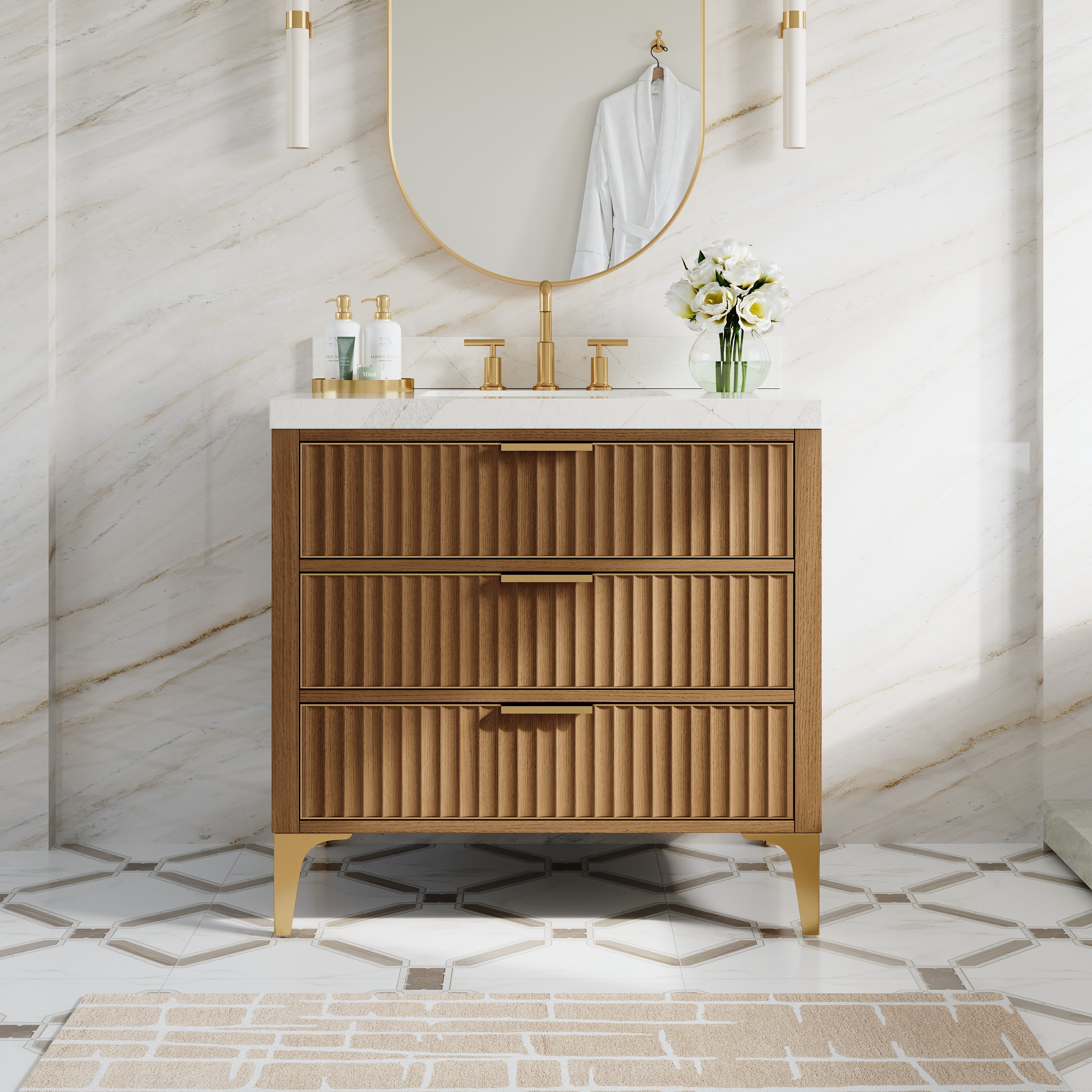
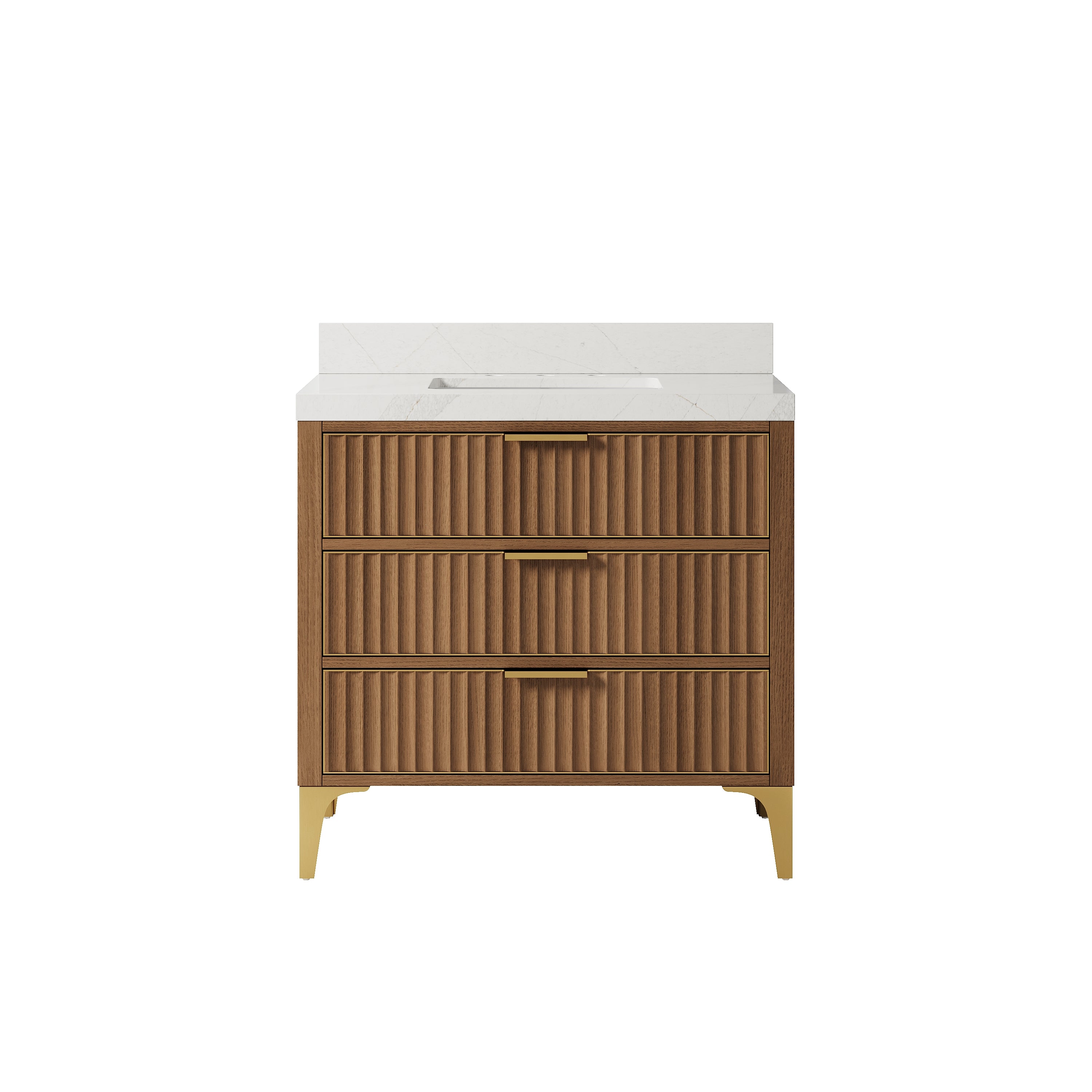
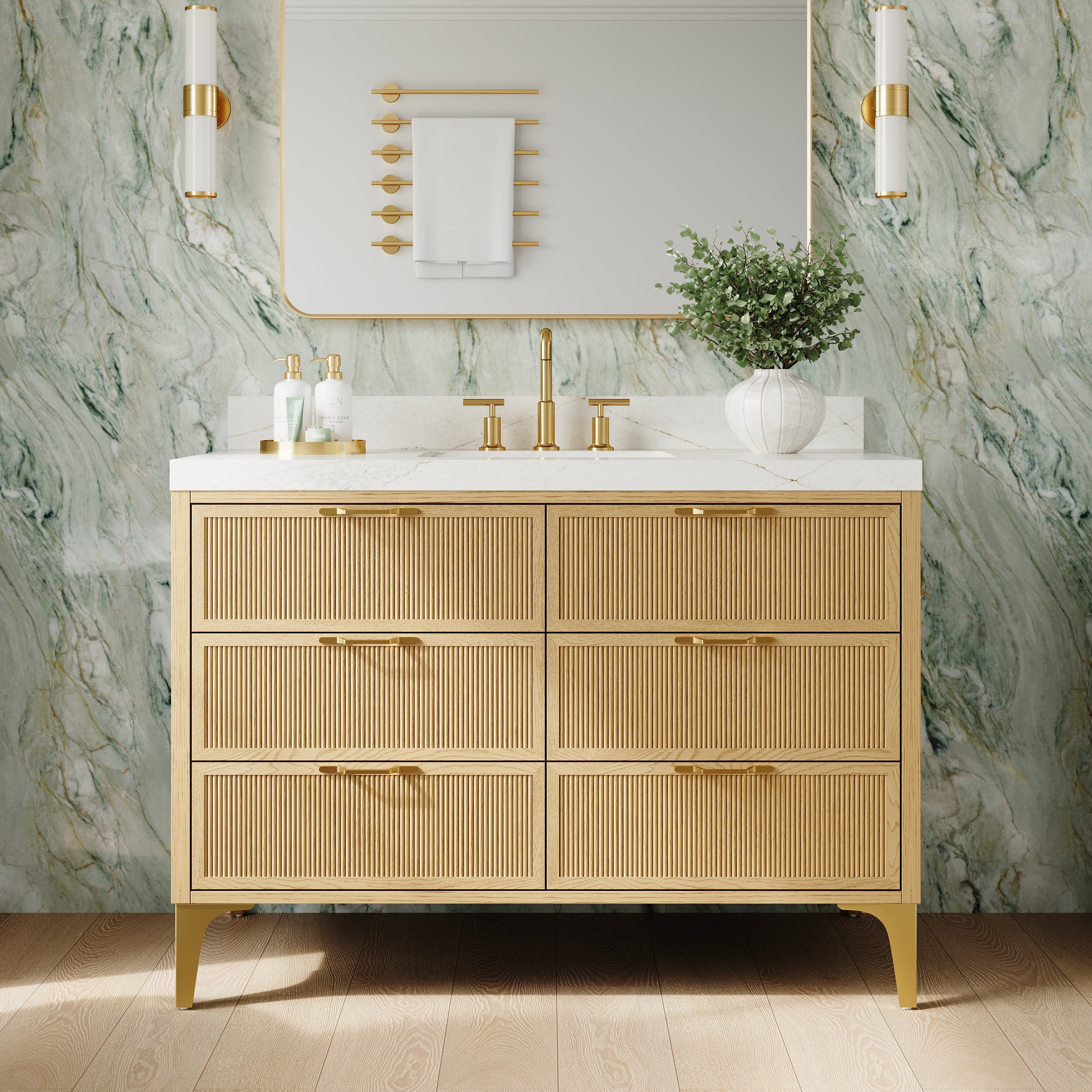
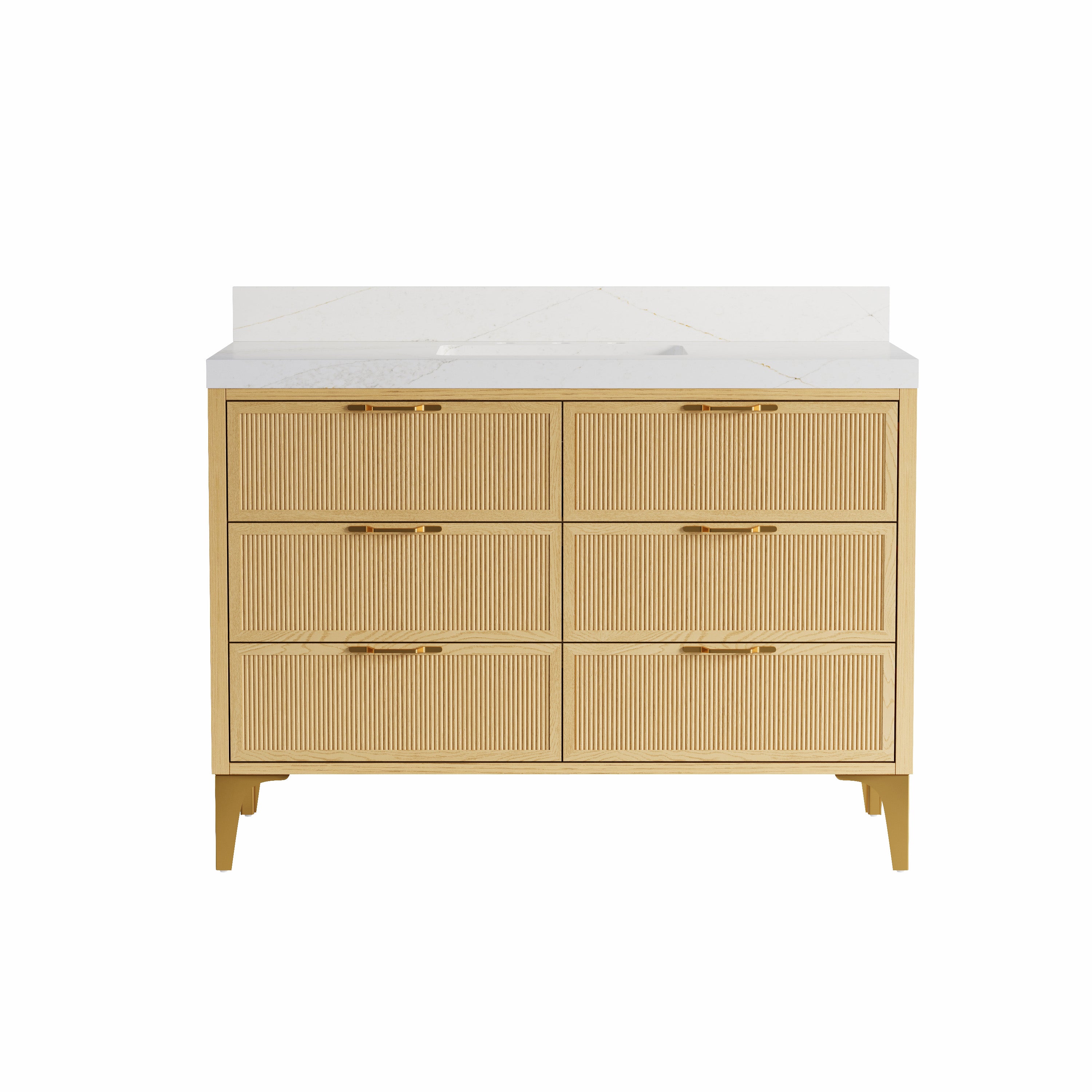


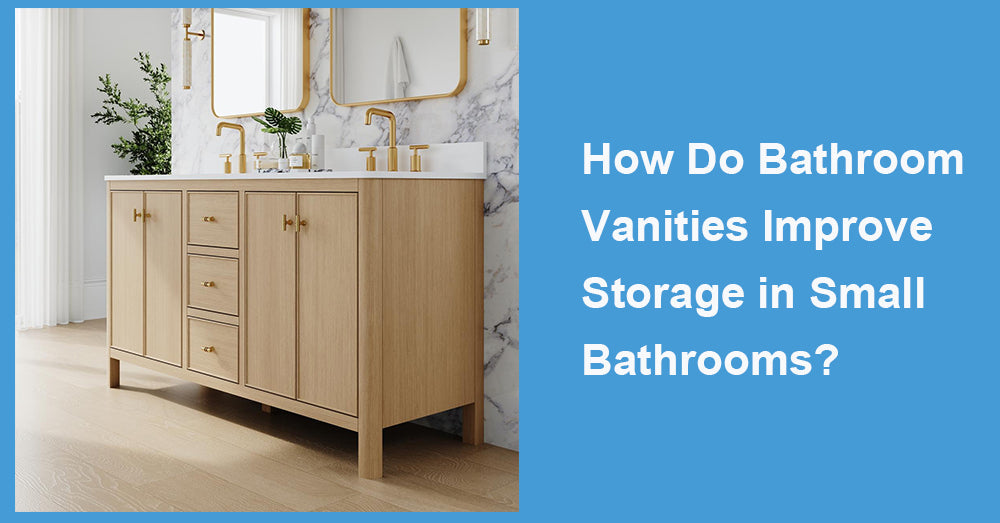
A humid bathroom can be tough on cabinetry, but a wood vanity can still be a smart, long-lasting choice when the build and moisture strategy are right. Wood brings warmth, hides daily wear better than many glossy surfaces, and (unlike many fiberboard cores) can often be repaired or refinished if life happens. The key is understanding how wood behaves in humidity, what construction details actually protect it, and how to manage moisture so the vanity stays square, smooth, and good-looking for years.
1. Wood Is Predictable in Humidity, and Designers Can Build Around That
Wood is hygroscopic, meaning it exchanges moisture with the surrounding air. The amount of moisture exchange depends on relative humidity, temperature, and the wood’s current moisture content, and this relationship influences wood performance (Source: USDA Forest Service, Forest Products Laboratory, “Moisture relations and physical properties of wood”).
That may sound like a downside, but it is actually why wood can work well in humid spaces: its movement is generally gradual and predictable. High-quality vanities are designed with joinery, panel construction, and finishes that account for this natural behavior rather than fighting it blindly.
2. Humidity Targets Make a Big Difference to Cabinet Lifespan
In humid spaces, “smart choice” is not only about material. It is also about moisture control.
EPA guidance recommends keeping indoor relative humidity below 60%, ideally between 30% and 50%, to reduce moisture problems and mold risk (Source: U.S. Environmental Protection Agency, Moisture Control; Source: U.S. EPA Mold Course Chapter 2).
Why that matters for a vanity:
· Finishes last longer when the air is not constantly saturated.
· Cabinet interiors dry out faster after showers.
· Musty odors and microbial growth become less likely.
· Hardware stays cleaner and less prone to corrosion over time.
If mirrors stay fogged for a long time after showers, your vanity is living in a harsher environment than it needs to.
3. Wood Often “Fails Gracefully,” While Some Alternatives Fail Permanently
Many lower-cost vanities use MDF or particleboard in the box, base, or panels. These can look smooth at first, but humidity and water exposure can cause swelling that does not truly “go back.”
A Composite Panel Association technical bulletin notes that when particleboard or MDF swells and expands beyond its original dimensions due to exposure to high humidity or water, that swelling is not reversible (not fully recovered upon re-drying) (Source: Composite Panel Association, “Dimensional Stability of Particleboard and MDF” Technical Bulletin).
This is a major reason a wood vanity can be a smarter long-term bet in humid bathrooms:
· Solid wood components can often be dried, stabilized, sanded, and refinished.
· MDF-heavy boxes may permanently puff at edges, toe-kicks, and seams after one slow leak.
Wood is not waterproof, but it is frequently more serviceable.
4. The “Smart” Wood Vanity Build: What to Look For
A wood vanity earns its reputation in humid spaces when it is built like a durable cabinet, not like lightweight furniture.
A. Strong cabinet box and stable structure
The cabinet box is what keeps doors aligned and drawers gliding smoothly. In humid rooms, a rigid, well-braced box helps the vanity stay square through seasonal changes.
B. Solid wood where stress concentrates
Face frames and door rails carry hinge stress and daily impacts. Solid wood in these zones tends to hold fasteners well and withstand repeated use.
C. Sealed interiors and protected edges
Most moisture damage starts where you do not look:
· Sink cutouts under the countertop
· Plumbing holes in the back
· Bottom edges and toe-kicks near wet floors
· Door and drawer edges where water sits after handwashing
A high-quality finish system that seals these areas is often more important than the wood species.
5. Soft-Close Hardware Reduces Wear in High-Use, High-Humidity Bathrooms
In humid spaces, hardware gets extra stress: more frequent cleaning, more condensation, and more daily cycles of opening and closing.
Renovation data shows soft-close is widely chosen: 78% opt for soft-close drawers and 75% select soft-close doors (Source: 2025 U.S. Houzz Bathroom Trends Study).
Soft-close matters because it:
· Reduces slamming forces that loosen screws and joints over time.
· Helps doors and drawers stay aligned longer.
· Keeps the cabinet “quiet,” which reads as quality every day.
A smart buy is a vanity where the hardware feels smooth and solid on day one, and the cabinet box is strong enough to keep it that way.
6. Wood Vanities Fit Humid Spaces Because Renovation Priorities Have Shifted
Humid bathrooms are often the same bathrooms people want to feel calm and spa-like. Wood plays directly into that goal by warming up a room dominated by tile, glass, and metal.
Renovation trends reflect this: for new vanities, homeowners choose wood tones most frequently (28%), with lighter wood shades making up 11% and medium/darker shades 17% (Source: 2025 U.S. Houzz Bathroom Trends Study).
Wood is not only a look. It is a way to make a steamy bathroom feel more comfortable and less clinical, without needing extra decor.
7. The Best Moisture Strategy Is Simple and Repeatable
A wood vanity performs best in humidity when moisture is removed quickly and water is kept away from vulnerable seams.
Daily habits that protect wood in humid bathrooms
· Run the exhaust fan during showers and for 15 to 30 minutes after.
· Wipe standing water from the countertop edge and around the faucet.
· Do not store dripping items inside the cabinet.
· Leave doors slightly open for a few minutes after a long hot shower if the room tends to trap moisture.
Twice-a-year checks that prevent “one leak, big damage”
· Inspect shutoff valves, supply lines, and the trap for slow leaks.
· Check the cabinet base and toe-kick for soft spots or discoloration.
· Re-caulk failing seams at the backsplash or sink edge.
Remember the humidity target: below 60%, ideally 30% to 50% (Source: U.S. EPA).
8. Practical Buying Checklist for Humid Spaces
Use this checklist when comparing options:
Construction
· Rigid cabinet box that does not flex.
· Solid wood doors and face frame.
· Reinforced mounting rails (especially important for floating vanities).
Finish and sealing
· Finished interior surfaces (not raw wood).
· Sealed cutouts and edge protection near plumbing and sink areas.
· Bottom edges protected against wet floors.
Hardware
· Soft-close drawers and doors (Source: Houzz Bathroom Trends Study).
· Smooth drawer travel with minimal wobble.
· Corrosion-resistant hardware where possible.
Risk awareness
· Avoid MDF-heavy boxes in bathrooms that frequently run damp, since swelling can be non-reversible after humidity or water exposure (Source: Composite Panel Association).

Conclusion
A wood vanity is a smart choice for humid spaces because wood’s moisture response is predictable and can be engineered around, and because solid wood components are often repairable when wear or minor damage occurs (Source: USDA Forest Service, Forest Products Laboratory). The smartest results come from pairing a well-built, well-sealed vanity with a simple moisture plan: keep indoor relative humidity below 60%, ideally 30% to 50% (Source: U.S. EPA). And when you compare materials, remember that MDF or particleboard swelling after high humidity exposure may not be reversible once expansion occurs (Source: Composite Panel Association).










Leave a comment
This site is protected by hCaptcha and the hCaptcha Privacy Policy and Terms of Service apply.