














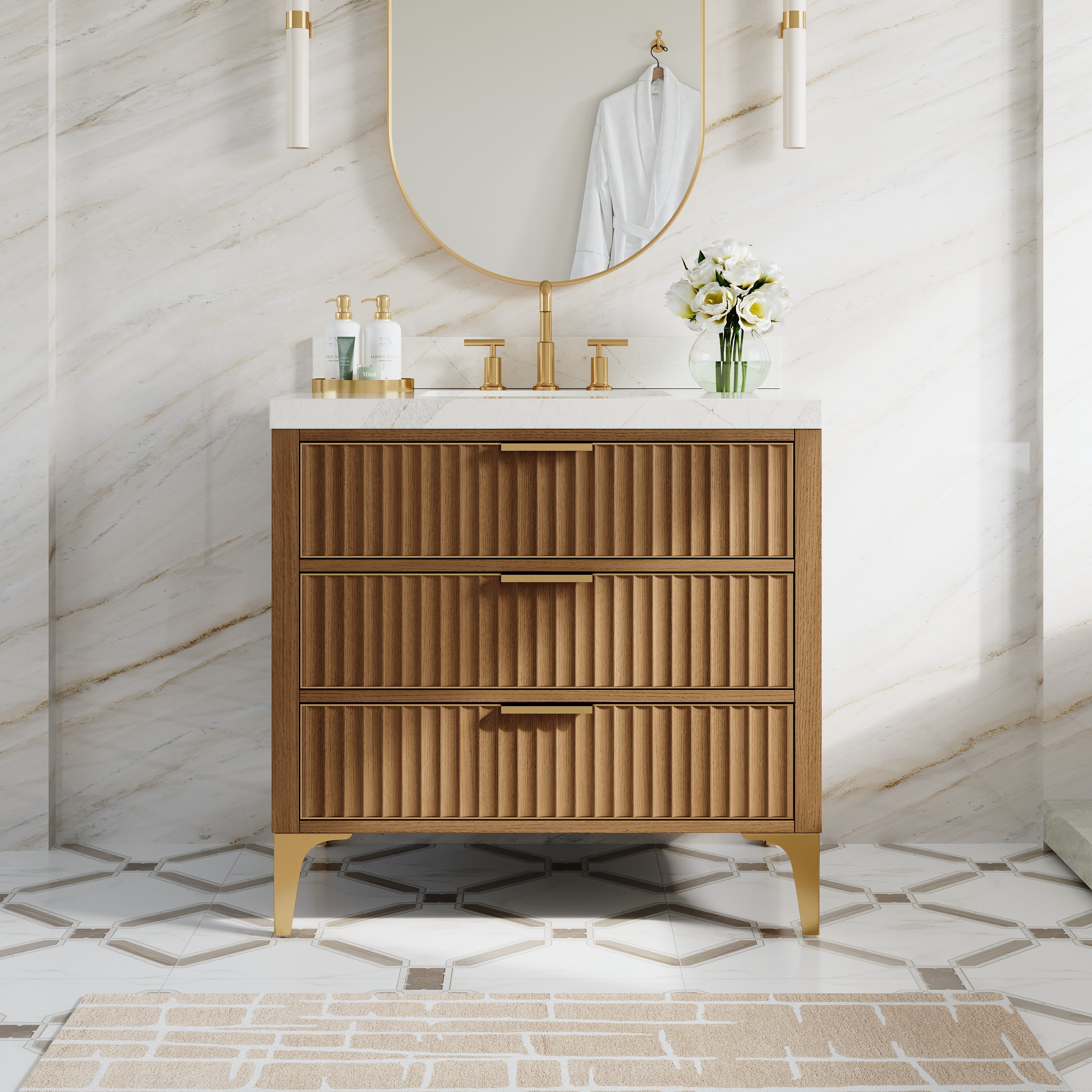
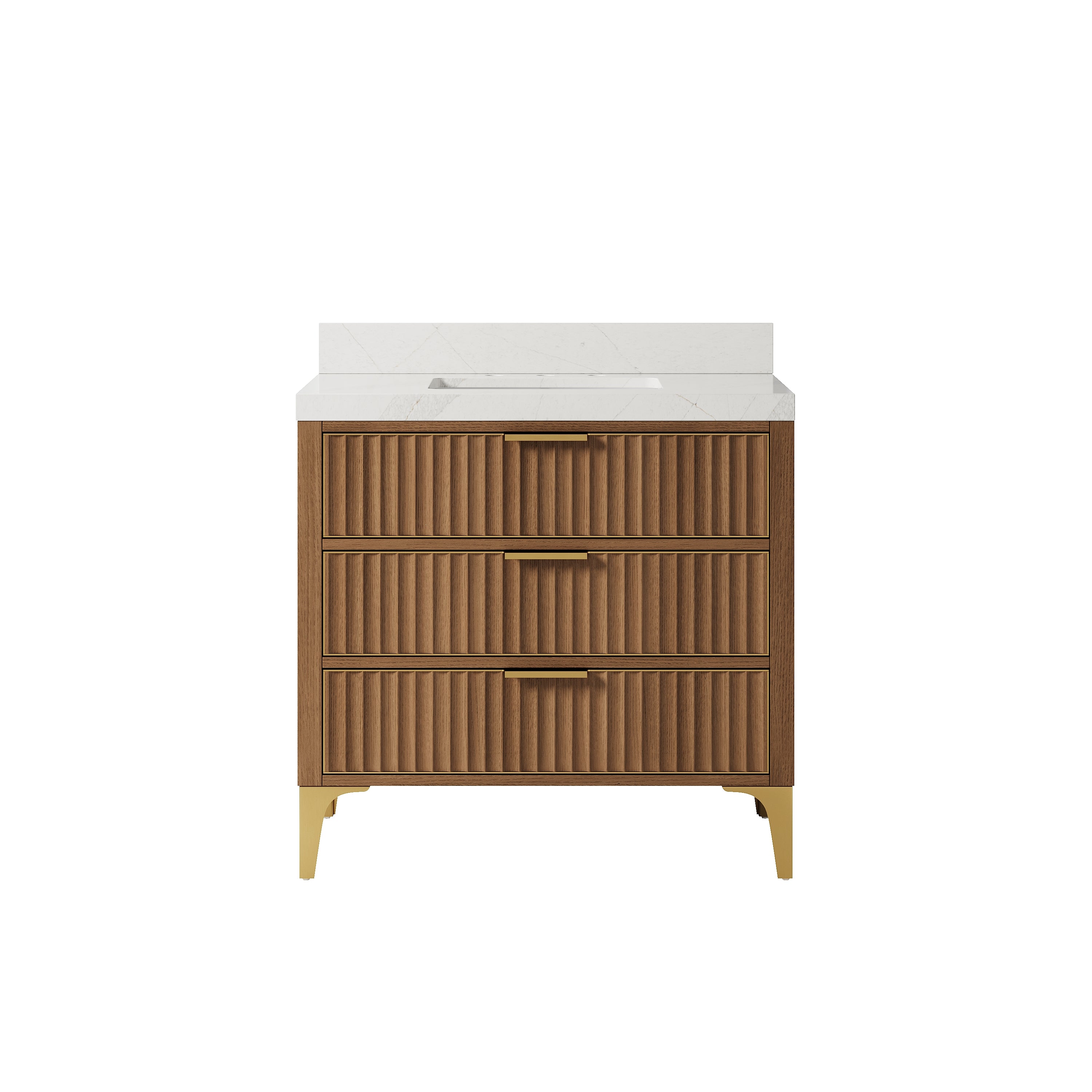
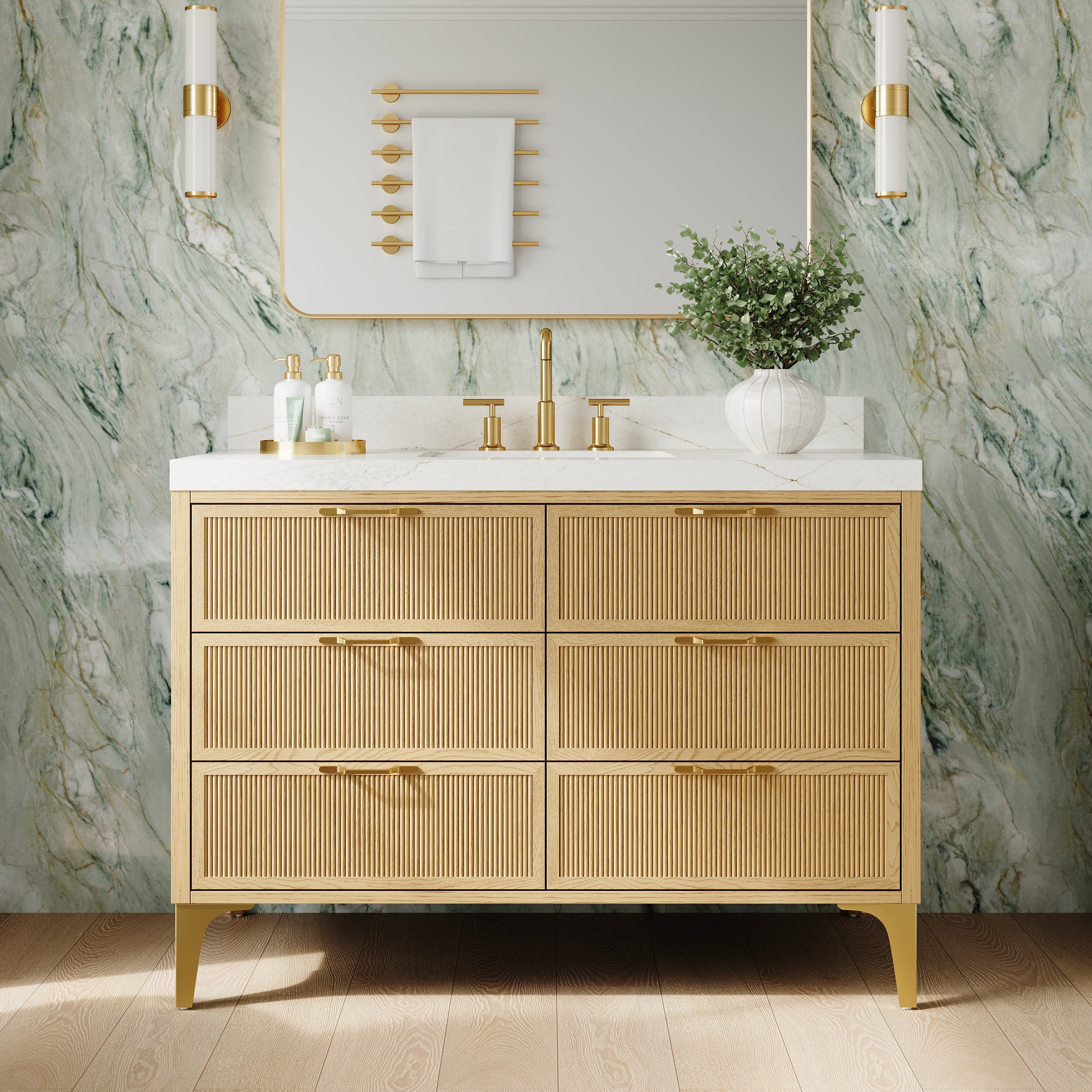
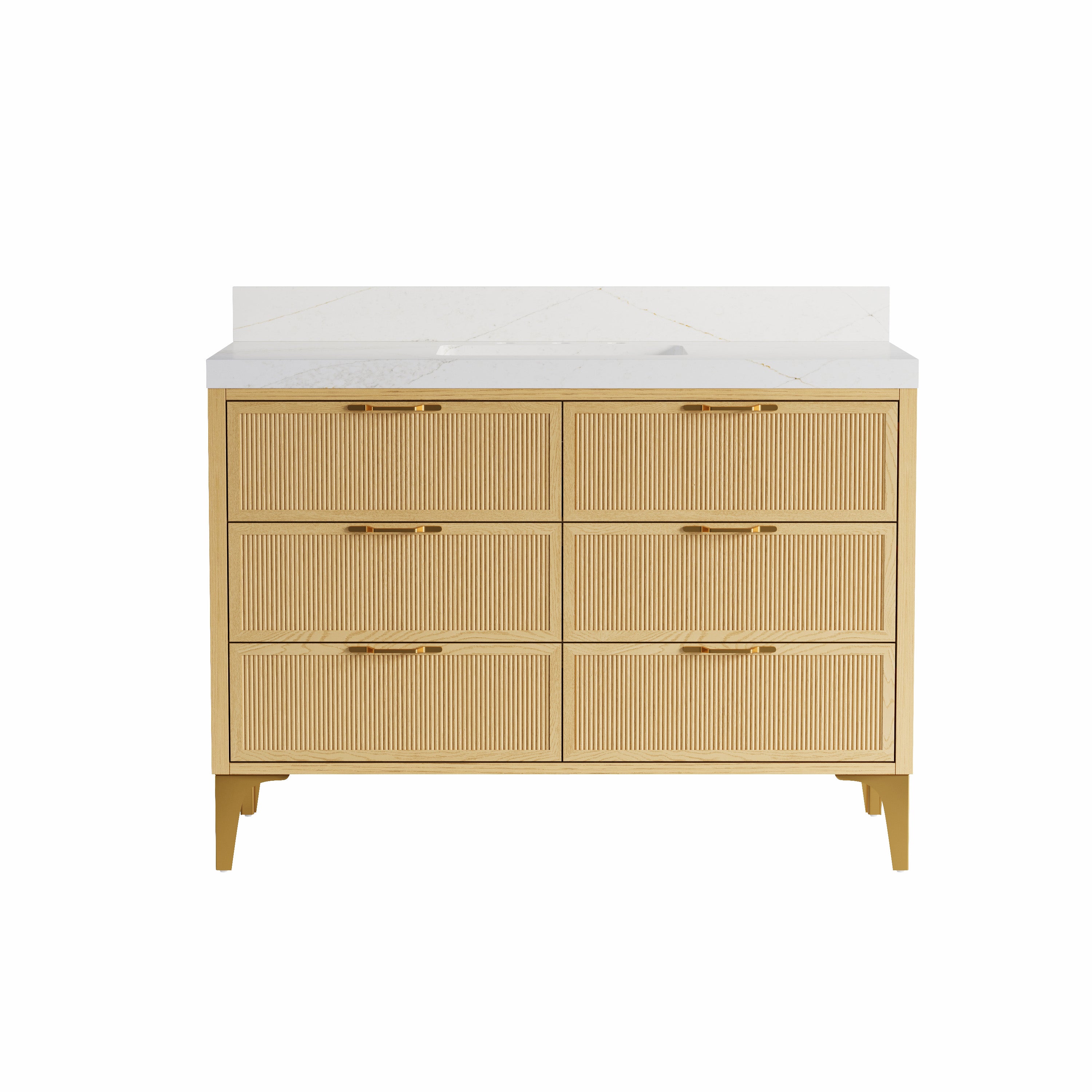


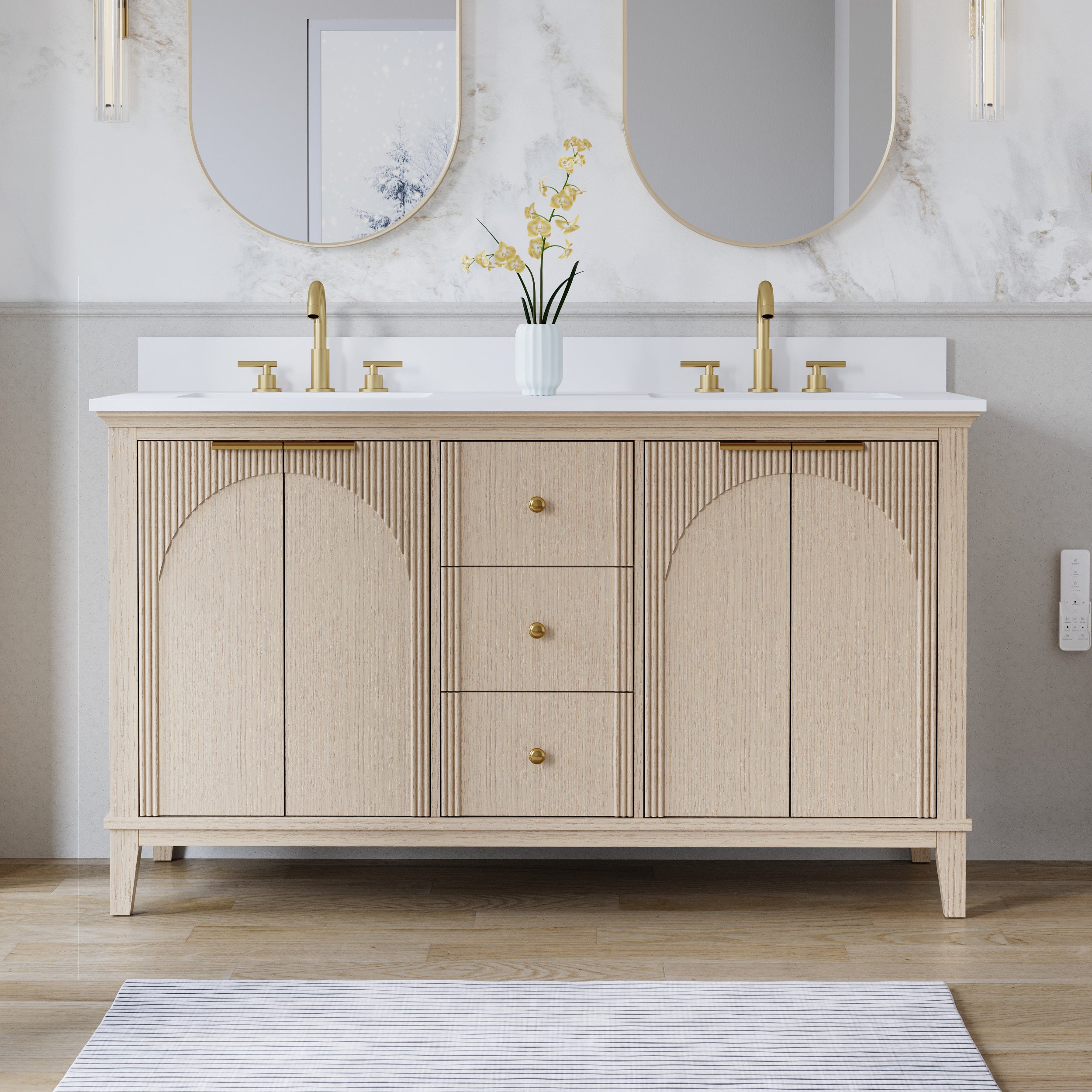
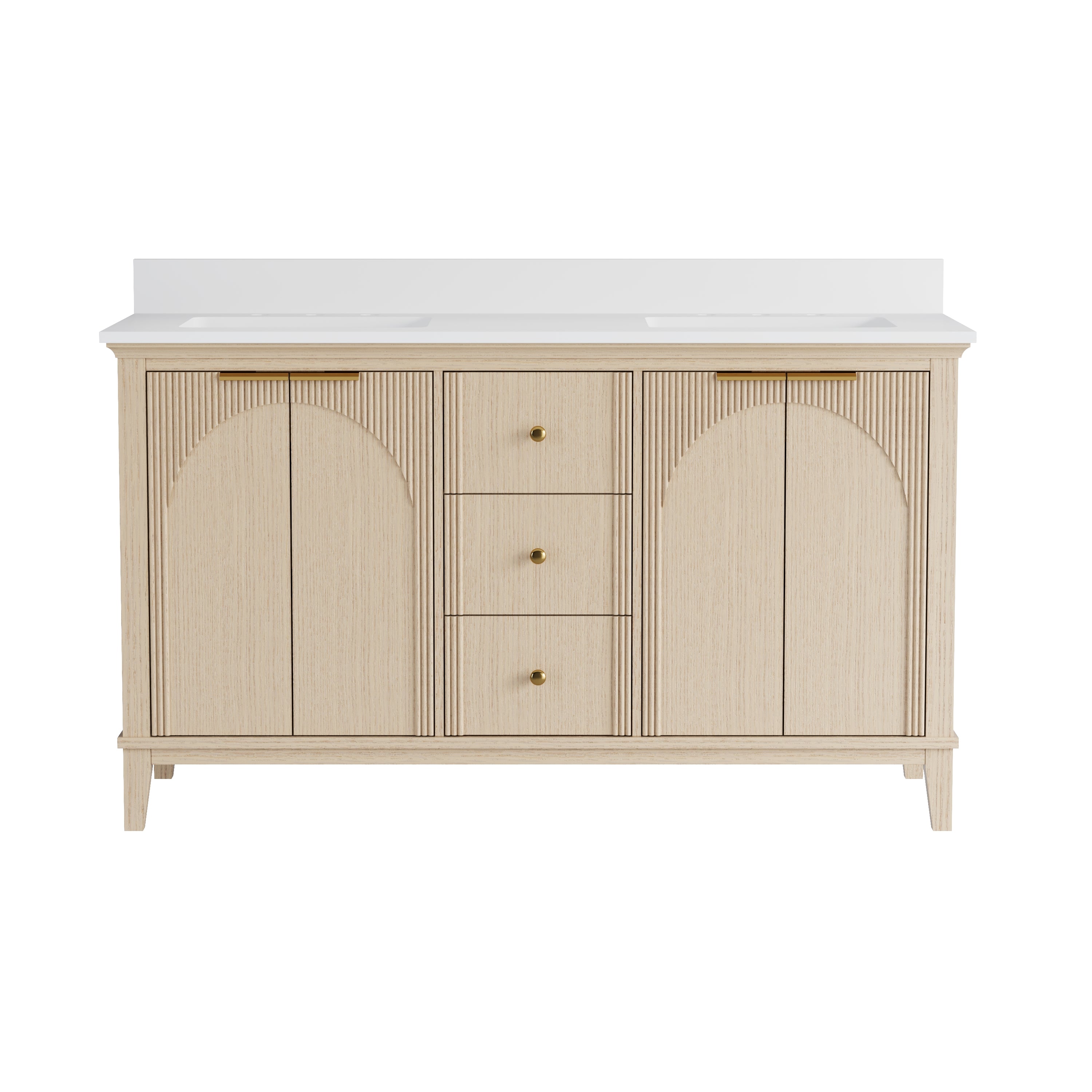
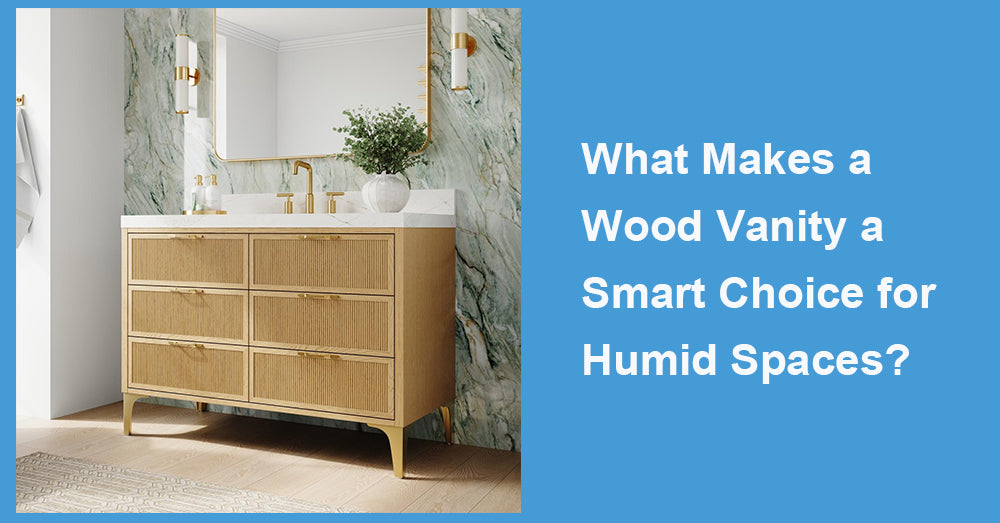
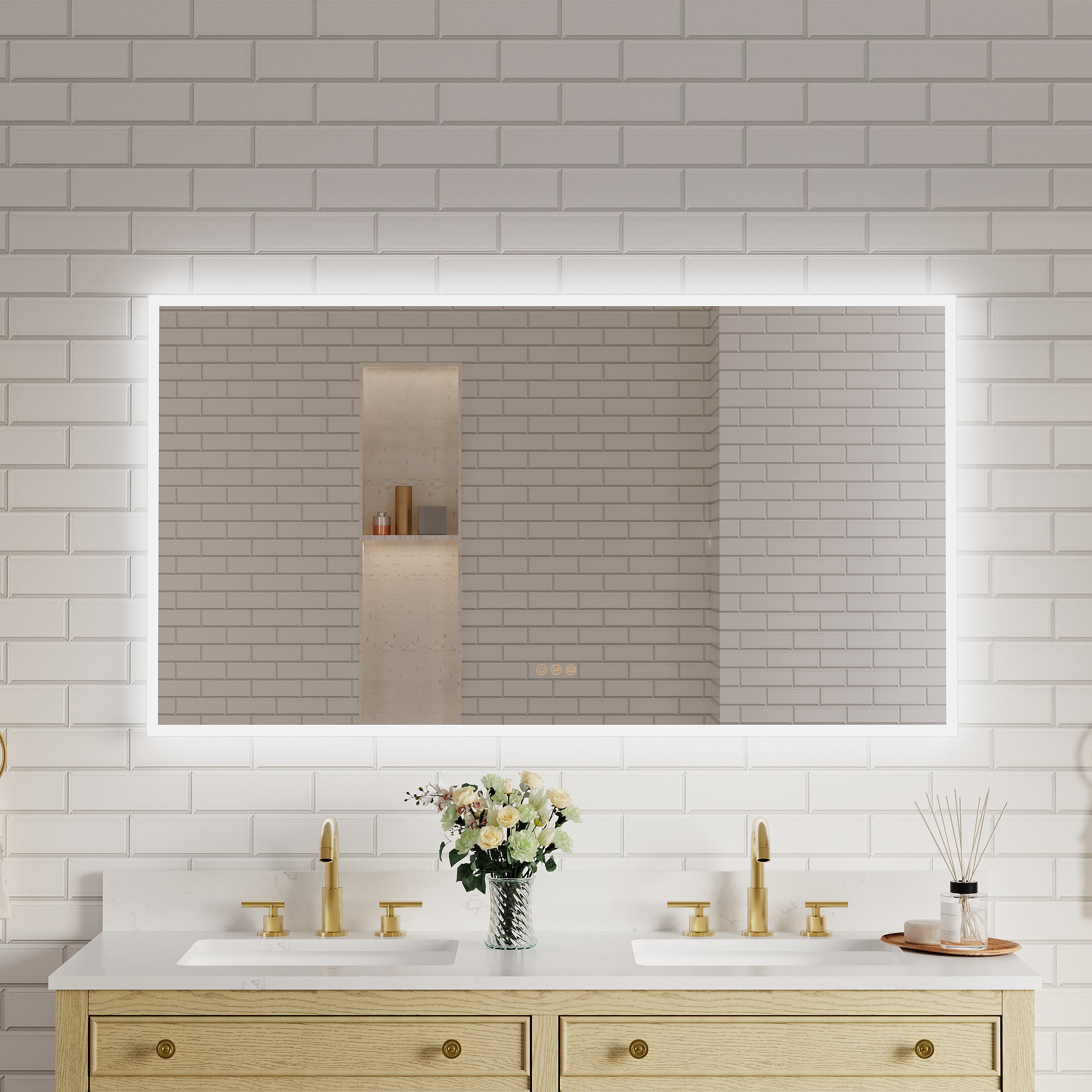
In today’s remodels, wooden vanities are popular because they solve two goals that rarely align: they add warmth and character while still holding up to daily splashes, steam, and constant use. The trick is that durability does not come from “wood” as a label, it comes from construction, sealing, and hardware choices that protect the cabinet in a humid room. When those elements are done right, wood becomes both a design feature and a long-term workhorse.
1. Why Wood Looks “Right” in So Many Bathroom Styles
Bathrooms are dominated by hard, reflective materials: tile, glass, metal, and stone. Wood introduces grain and softness, which visually balances those surfaces without adding clutter.
Renovation research consistently shows that wood tones are a leading choice for vanity color, helping explain why so many designers use wood as the “anchor” piece in the room (Source: 2025 Houzz Bathroom Trends Study; Source: Houzz bathroom features roundup).
Wood also works across multiple style directions with minor changes:
· Modern: flat-panel fronts, minimal hardware, pale oak or walnut tones.
· Transitional: simple shaker doors, brushed hardware, warm neutral countertops.
· Classic: richer stains, furniture legs, more detailed door profiles.
· Spa-inspired: light wood, soft whites, warm lighting, fewer visual “edges.”
That flexibility is a big reason wood stays relevant even when trends shift.
2. The Durability Side: Wood’s Behavior Is Predictable
Wood is hygroscopic, meaning it exchanges moisture with the surrounding air. Changes in relative humidity influence wood moisture content, which can affect performance and dimensional movement (Source: USDA Forest Service, Forest Products Laboratory, Wood Handbook; “Moisture relations and physical properties of wood”).
This is not a flaw, it is a known behavior. High-quality vanities are designed around it with:
· Joinery that stays tight through humidity cycles.
· Panel construction that accommodates minor movement.
· Finish systems that slow moisture entry at vulnerable points.
In other words, wood can be durable because builders can plan for how it responds over time.
3. Humidity Control Is Part of “Durability,” Not a Separate Topic
Even the best vanity struggles in a bathroom that stays damp for hours. A practical target used in many building and indoor-air guides is keeping indoor humidity in a safer band to reduce moisture problems and mold risk (Source: U.S. Environmental Protection Agency guidance and mold education resources).
Why this matters for a vanity:
· Finishes last longer when the air is not constantly saturated.
· Cabinet interiors dry faster after showers.
· Hinges and slides are less exposed to constant condensation.
· Musty odors are less likely to build up inside cabinets.
A simple reality check: if mirrors stay fogged long after showers, the vanity is living in tougher conditions than it needs to.
4. Where Wood Vanities Actually Fail (and How Good Designs Prevent It)
Most bathroom cabinet damage starts at “weak zones,” not on the middle of a door panel:
· Sink cutouts under the countertop edge.
· Plumbing holes and back panel openings.
· Toe-kicks and bottom edges near wet floors.
· Door and drawer edges where water sits after handwashing.
High-quality wooden vanities protect these zones with sealing and smart detailing:
· Finished interiors (not raw surfaces inside).
· Sealed cutouts and protected edges.
· A base design that resists occasional floor moisture.
This is how wood balances beauty with real-world durability: the cabinet is designed to handle bathroom-specific stress points.
5. Wood vs. MDF: Why Construction Choices Matter More Than Color
Many vanities that look like wood are actually veneers over engineered cores. Veneer is not automatically bad, but the core material matters in bathrooms.
A key durability difference: particleboard and MDF can swell after exposure to high humidity or water, and industry guidance notes that once swelling and expansion occur beyond original dimensions, it is not reversible upon re-drying (Source: Composite Panel Association, dimensional stability guidance).
That matters because one slow leak can permanently distort a cabinet base, throwing the whole vanity out of square. Wood components, by contrast, are often more serviceable: they can sometimes be dried, stabilized, touched up, or refinished depending on the situation.
Practical takeaway: the “durable” part of a wooden vanity is usually strongest when you get:
· Solid wood doors and face frame (hinge stress and daily contact).
· A stable cabinet box material (often plywood in higher-quality builds).
· Thorough edge sealing and a finished interior.
6. Hardware Is Where Everyday Durability Becomes Obvious
A vanity can look premium but feel cheap if drawers slam and doors drift out of alignment. Hardware quality and installation precision matter as much as the material.
Renovation data shows soft-close features are widely adopted: 78% choose soft-close drawers and 75% choose soft-close doors (Source: 2025 Houzz Bathroom Trends Study).
Why soft-close supports durability:
· Less impact stress on joints and fasteners.
· Less hinge loosening over time.
· Better long-term alignment for doors and drawers.
· A “quiet quality” feel that lasts.
For daily use, also look for:
· Full-extension drawer slides (you can reach the back without digging).
· Stable drawer boxes that do not wobble.
· Consistent door gaps (a sign the box is square).
7. Style Choices That Improve Durability (Yes, Style Can Help)
Some style decisions are secretly durability decisions:
Light and medium wood tones
These often hide dust, fingerprints, and minor spotting better than glossy dark finishes. They also keep small rooms feeling open, which reduces the urge to add extra shelves and decor that create clutter.
Simpler door profiles
Shaker and flat-panel fronts tend to stay timeless and are easier to keep clean than heavily detailed doors. Less detailing also means fewer crevices where moisture and grime linger.
Practical countertop pairing
Renovation reporting shows white countertops are a dominant choice in updated bathrooms, and wood plus white is a classic pairing that looks clean while keeping the room bright (Source: Houzz bathroom features roundup).
8. A “Best of Both Worlds” Buying Checklist
If you want wooden-vanity style without sacrificing durability, use this checklist:
Construction
· Clear materials breakdown for doors, frame, and cabinet box.
· Rigid cabinet box that stays square.
· Reinforced mounting points (especially for floating vanities).
Finish and sealing
· Finished interior surfaces.
· Sealed sink and plumbing cutouts.
· Protected bottom edges and toe-kick.
Hardware and function
· Soft-close doors and drawers (Source: 2025 Houzz Bathroom Trends Study).
· Full-extension drawers when possible.
· Smooth drawer travel with minimal wobble.
Moisture plan
· Use ventilation consistently and avoid letting steam linger.
· Fix slow leaks quickly.
· Wipe standing water at the sink edge.
9. How to Keep Wooden Vanities Looking Good for Years
You do not need complicated routines, just consistent habits:
· Run the exhaust fan during showers and for a period afterward.
· Wipe water from the countertop edge and around the faucet.
· Re-caulk failing seams at the backsplash or sink edge.
· Check supply lines and traps periodically for slow leaks.
These small actions protect finishes and prevent the kind of moisture intrusion that shortens the life of any cabinet.

Conclusion
Wooden vanities balance style and durability because wood brings natural warmth and design flexibility, while well-built cabinetry protects the vanity against bathroom realities: humidity cycles, splashes, and heavy daily use. Wood’s moisture behavior is well documented and predictable, which allows quality construction and finishes to manage it effectively (Source: USDA Forest Service, Forest Products Laboratory). And renovation data confirms that everyday-friendly features like soft-close drawers and doors are widely chosen, reinforcing how much people value quiet, durable function (Source: 2025 Houzz Bathroom Trends Study).
If you buy based on construction, sealing, and hardware, a wooden vanity is not just a beautiful centerpiece. It is a practical, long-term cabinet built for real life.











Leave a comment
This site is protected by hCaptcha and the hCaptcha Privacy Policy and Terms of Service apply.