














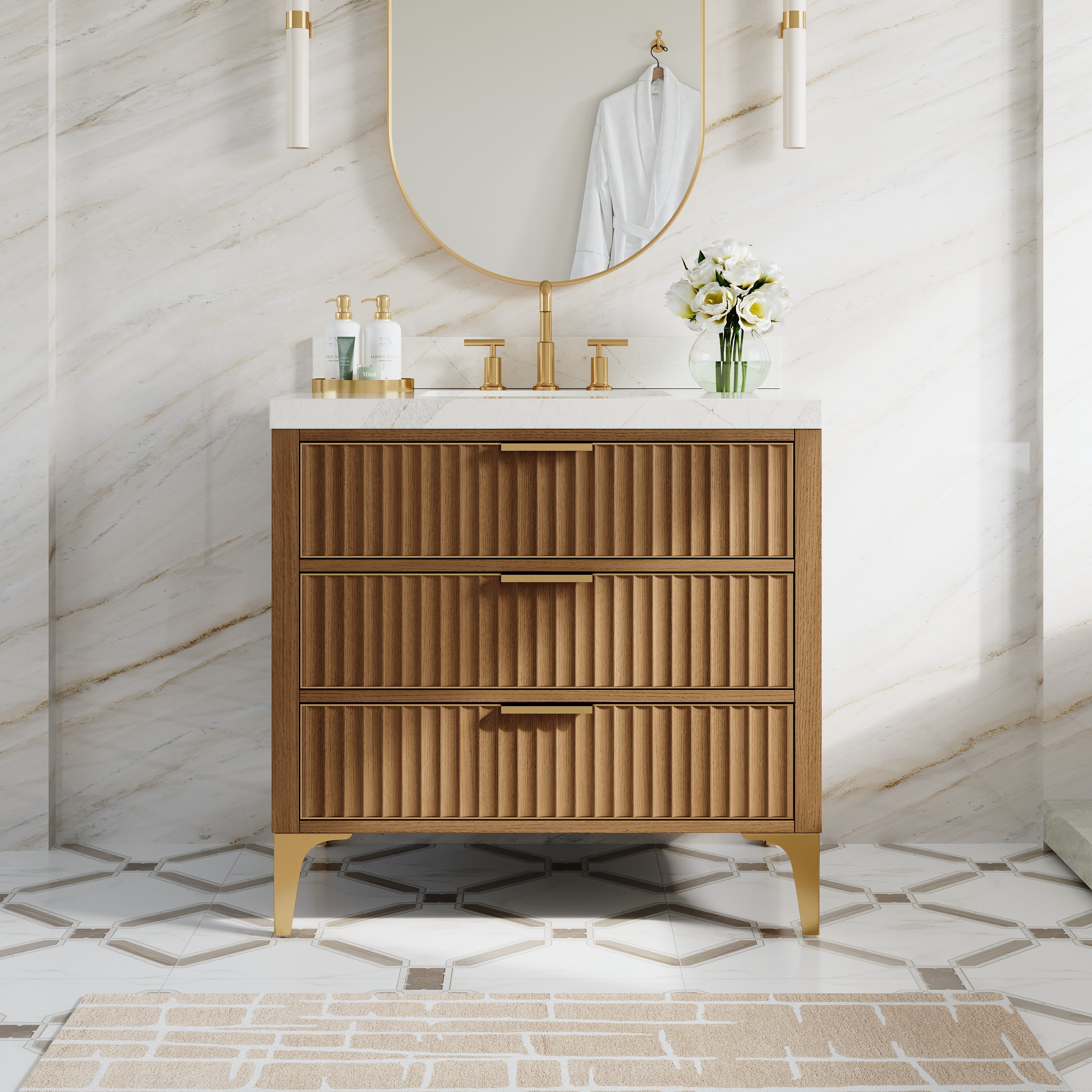
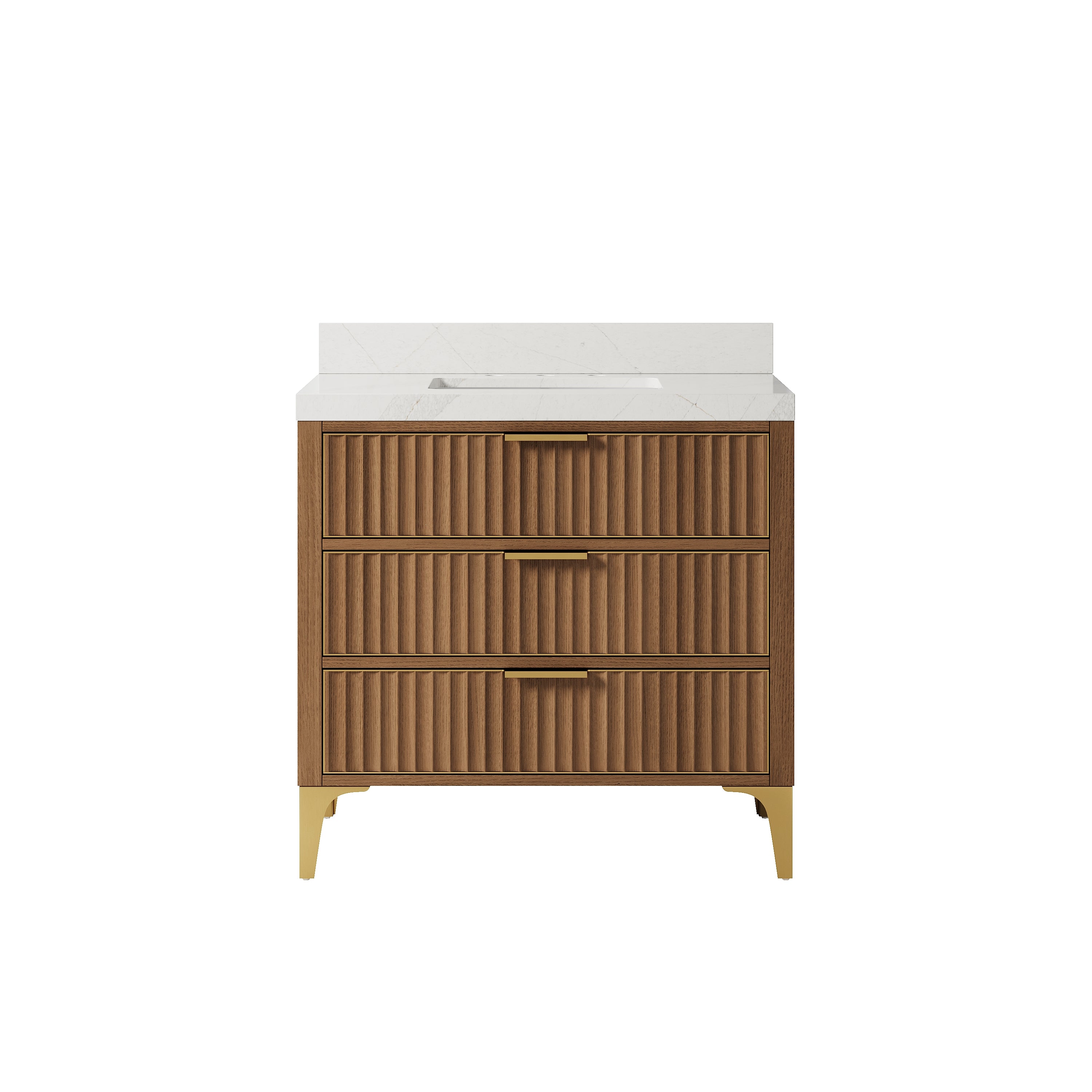
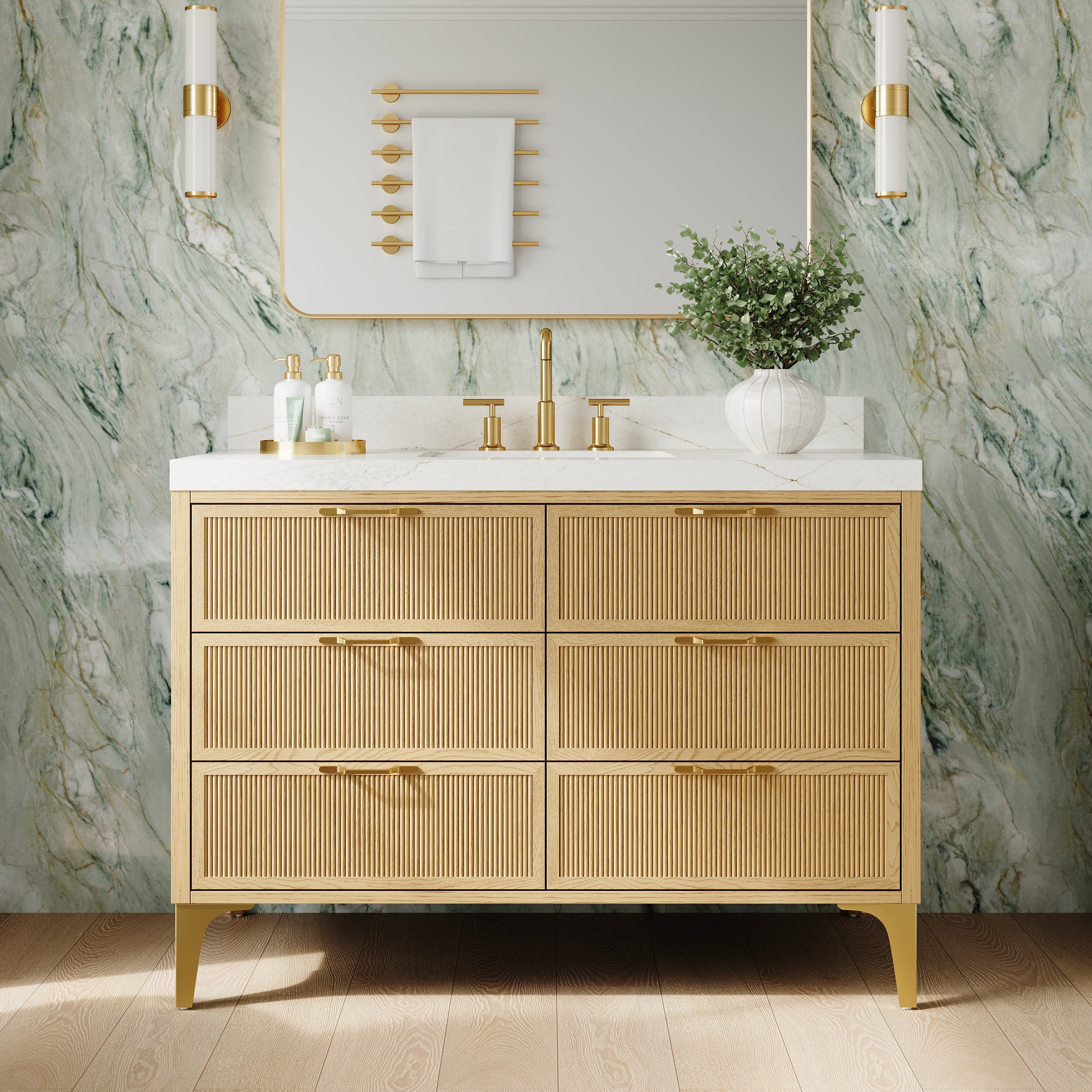
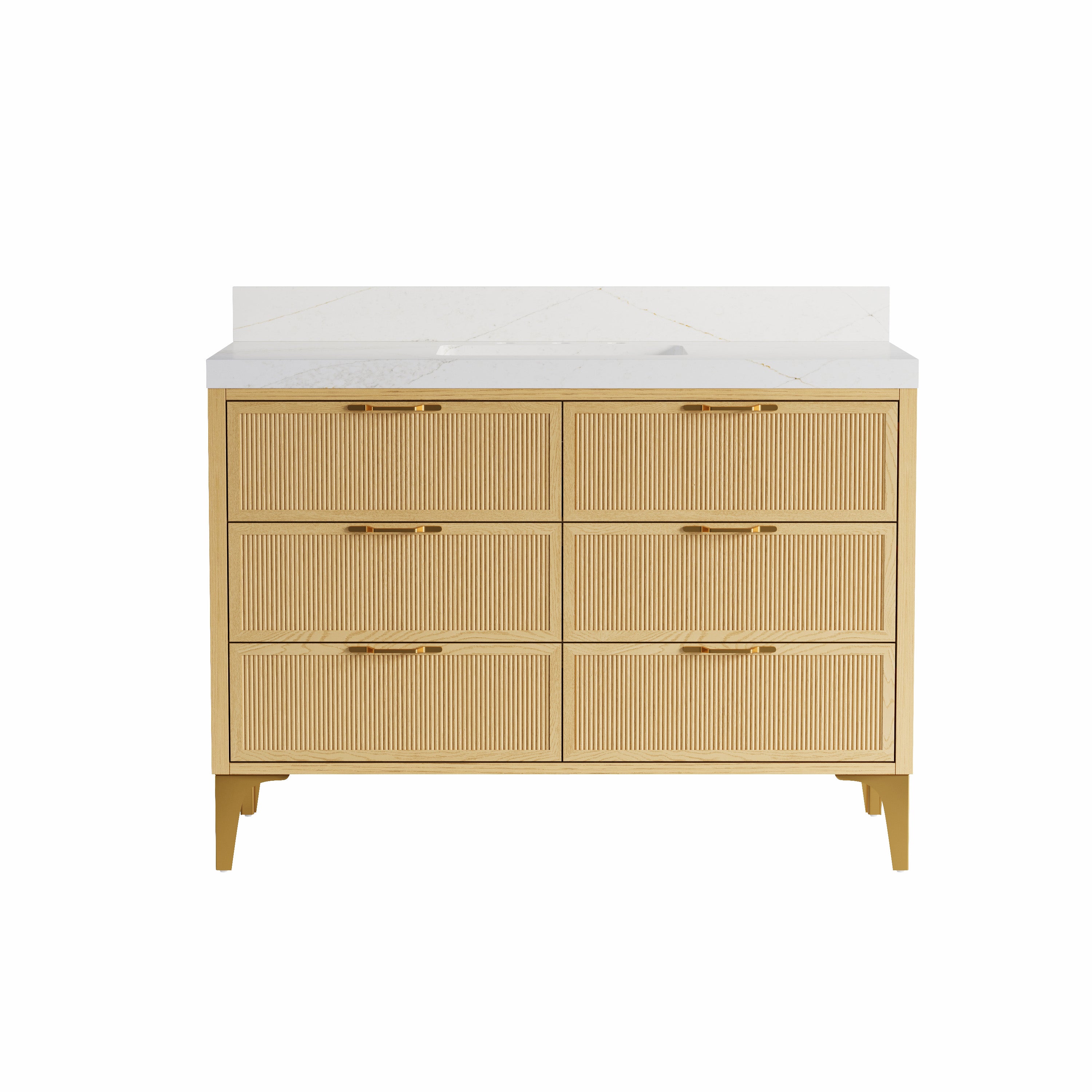


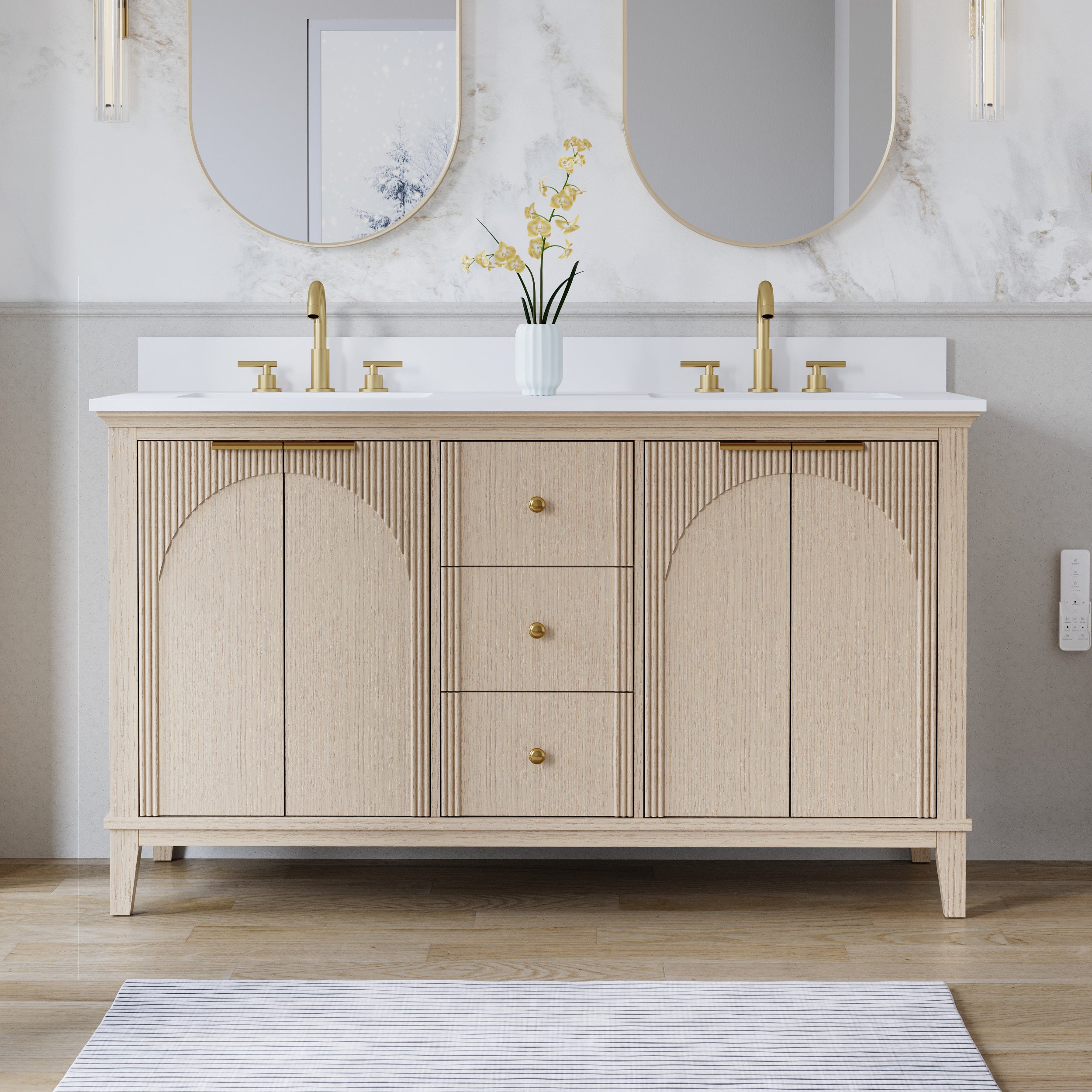
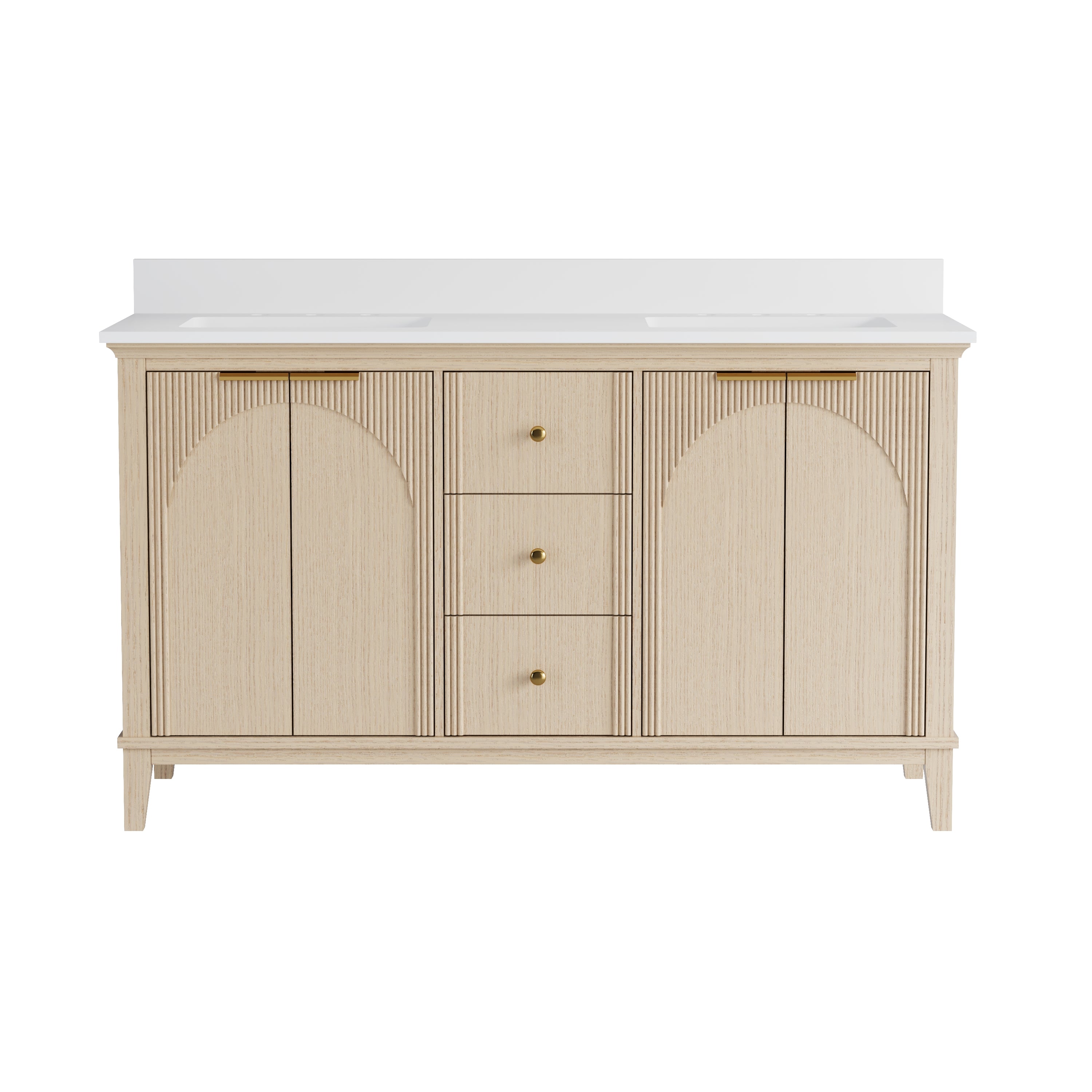
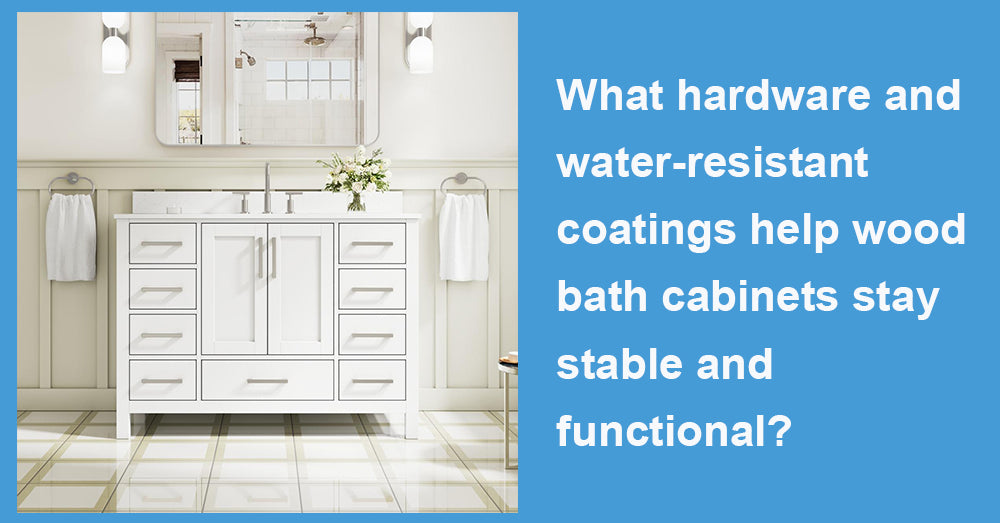
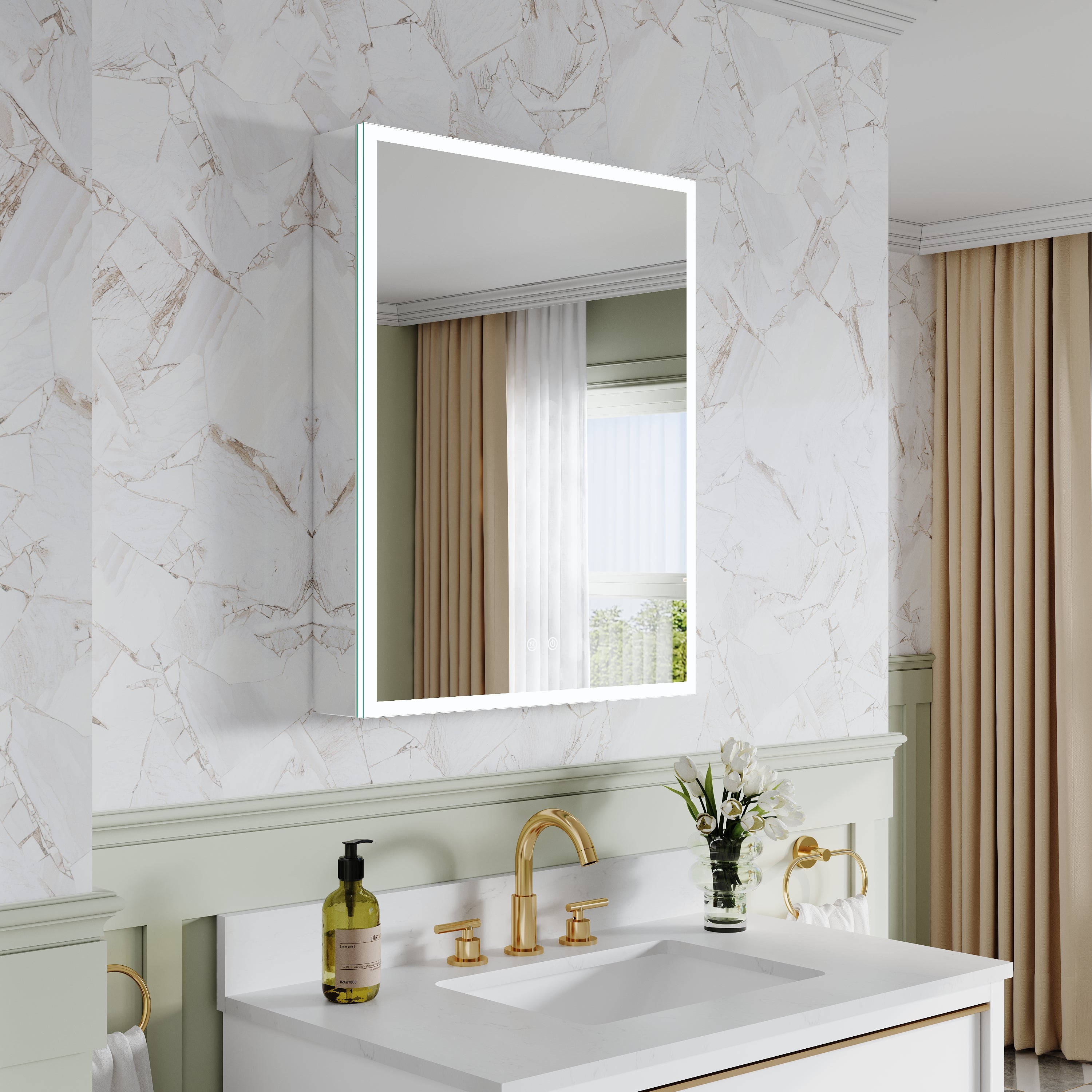
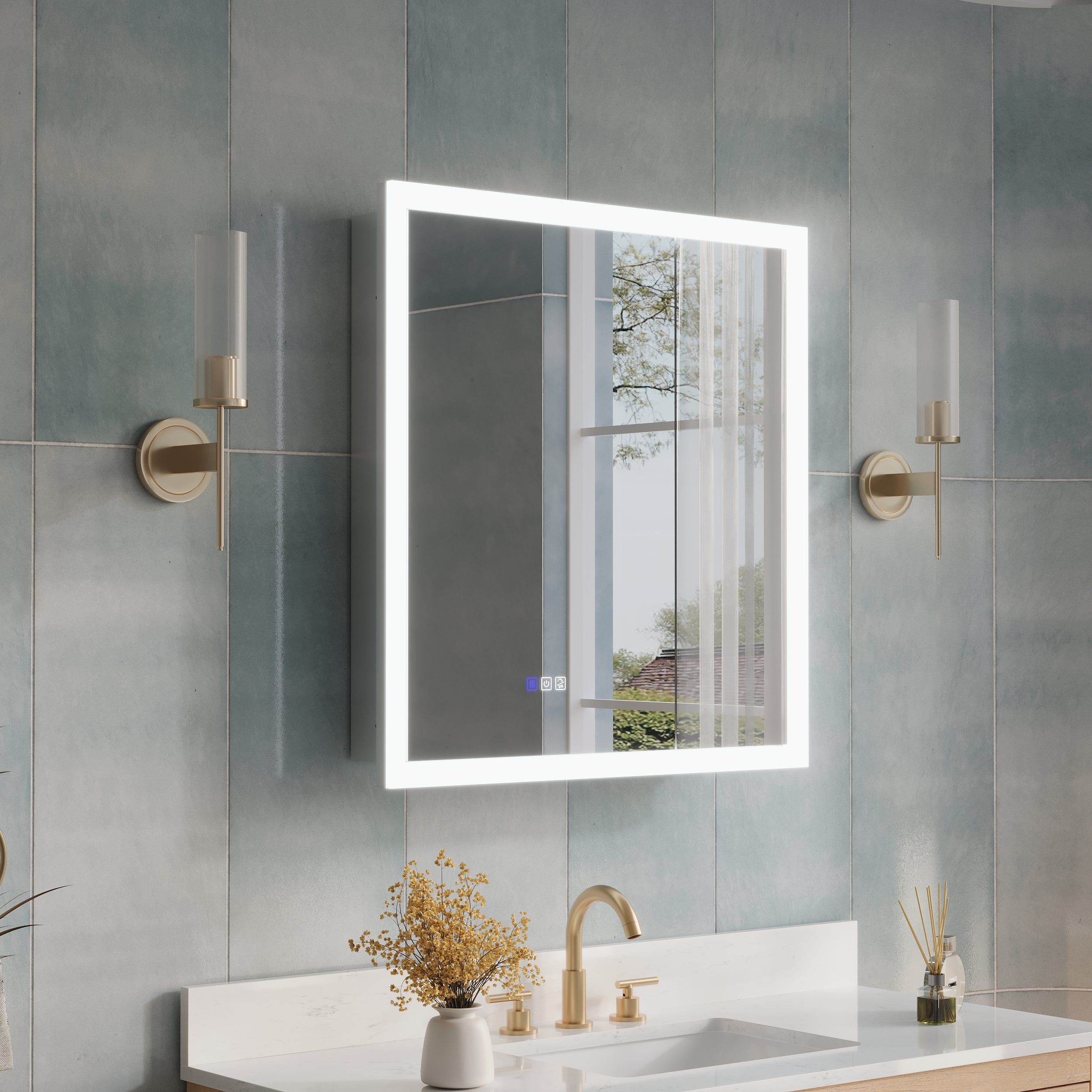
In today’s renovation pipeline, wood bath cabinets are being asked to do more than look good: they have to stay square, keep doors aligned, and survive daily steam, splashes, and harsh cleaners. The most durable builds are no longer just “better wood.” Still, a coordinated system of adjustable hardware, corrosion-resistant finishes, and moisture-smart coating stacks that protect the places cabinets fail first—edges, joints, and cutouts.
1. Moisture is the real stress test, because wood never stops moving
Wood doesn’t “warp” randomly; it moves because moisture content changes with humidity and wetting events. Even small swings matter. A Purdue Extension bulletin notes that a 6% change in moisture content can produce about a 2-1/2% dimensional change in a wood part and gives a concrete example: a 32-inch-wide top can change width by about 0.63 inch with that kind of swing.
It also explains why movement is directional: wood shrinks and swells most tangentially, about half as much radially, and very little along the grain. That’s the reason bath vanities often show seasonal door rubbing, drawer misalignment, or hairline cracks near rigid joints—especially when humidity spikes during showers and drying cycles afterward.
2. Hardware that “absorbs” movement keeps cabinets usable longer
Because movement can’t be eliminated, the best hardware choices are those that keep a cabinet adjustable over time. One signal to look for is whether the hardware aligns with recognized performance testing. The ANSI/BHMA A156.9 Cabinet Hardware standard covers cabinet hinges, drawer slides, pulls, and shelf supports, and includes performance tests for operation and finish criteria.
In practical spec terms, that points you toward:
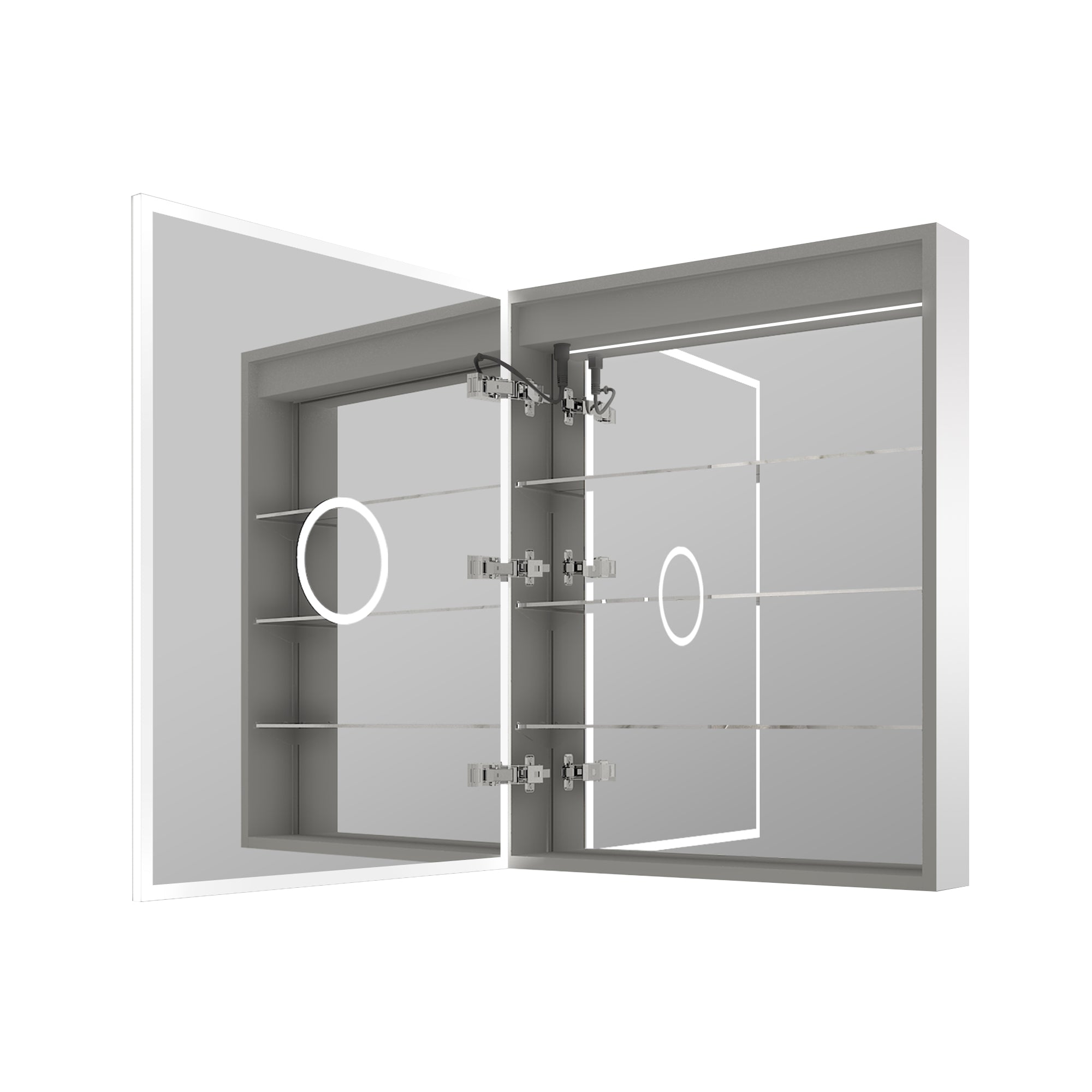
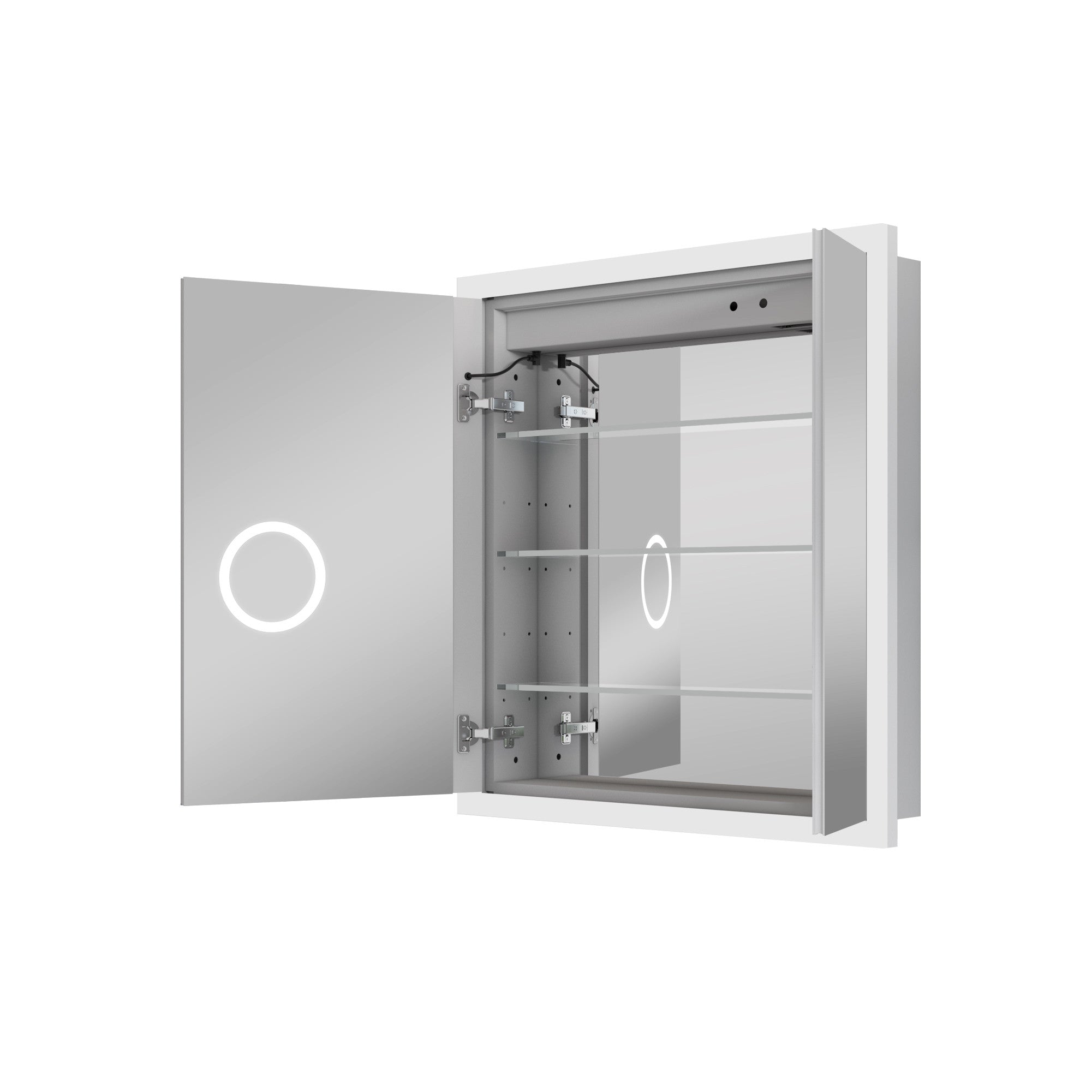
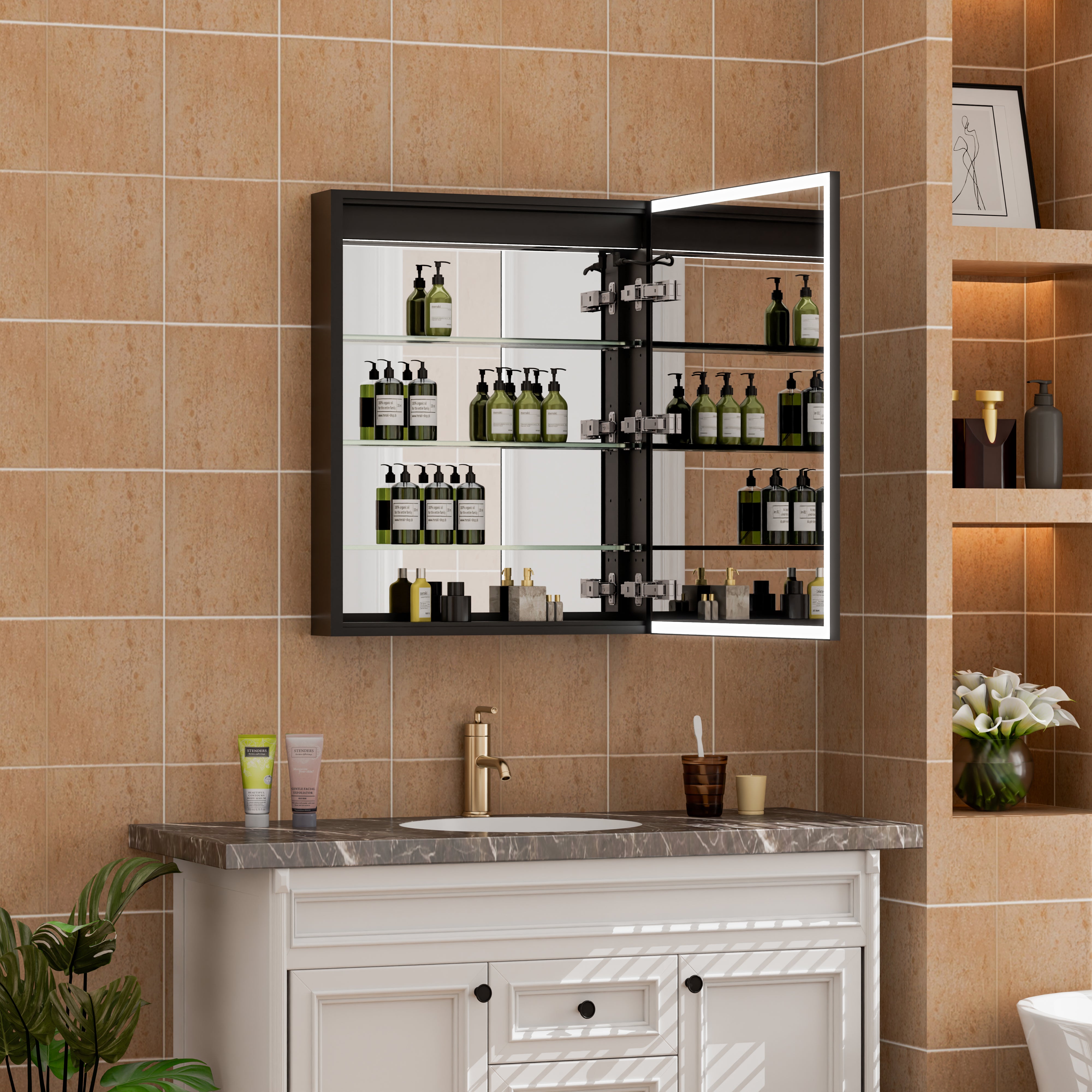
· Multi-way adjustable concealed hinges (depth, side-to-side, and height adjustment). When doors drift as panels move, you can re-square reveals instead of planing edges.
· Full-extension slides with stable travel and tight tolerances. A slide that stays smooth under minor cabinet racking prevents “sticky drawer” complaints as humidity cycles.
· Shelf support systems that resist wallow-out. Stronger pins and brackets help prevent sag or tear-out when a shelf is repeatedly loaded in a damp environment.
This isn’t about chasing luxury—adjustability is cheaper than field repair.
3. Corrosion resistance matters, even when the cabinet is “dry.”
Bathrooms are not coastal salt labs, but they do produce frequent condensation and chemical exposure. Hardware that looks fine in a kitchen can start to spot or rust when steam and cleaning residues are routine. BHMA’s hinge standard overview notes that corrosion resistance is evaluated through a salt spray test to ASTM B117, a widely referenced method for testing how finishes hold up.
In real cabinet builds, that translates into a few safer bets:
· Stainless steel fasteners in wet-risk areas (around sink decks, toe kicks, and any region that could see mop water).
· High-quality plated or PVD-style hardware finishes that resist tarnish and spotting better than thin decorative coatings.
· Soft-close mechanisms that stay protected. Steam plus residue can gum up dampers; better sealing and finish quality keep them consistent.
4. Coatings: water-repellent is not the same as moisture-excluding
A lot of product copy collapses coatings into “waterproof,” but wood science doesn’t. The Forest Products Laboratory explains a key distinction: water-repellent treatments mainly repel liquid water, while moisture-excluding coatings slow the diffusion of water vapor into or out of wood.
Why that matters for bath cabinets:
· If a finish only beads splashes but doesn’t slow vapor exchange, panels can still swell and shrink aggressively with humid air.
· If a finish slows vapor movement (and is properly applied), it reduces vapor movement—buying time and stability during daily humidity spikes.
This is also why edges are the weak point. Flat faces may be well coated, but end grain and seams act like moisture highways unless they’re sealed properly.

5. “Bathroom-ready” finishes map to test-driven cabinet standards increasingly
If you want a shortcut to durable finishing expectations, look at how performance standards stress finishes. KCMA’s A161.1 standard describes finish tests as accelerated simulations of years of normal kitchen and bath conditions, not just quick splash tests.
A few standout examples from the standard show what strong finishes are designed to survive:
· Heat and humidity exposure: a door is placed in a hotbox at 120°F (±5°F) and 70% (±5%) relative humidity for 24 hours, with no blistering or checking allowed.
· Hot/cold cycling: repeated cycles between 120°F heat and -5°F cold are used to screen for cracking and finish failure.
· Chemical resistance: finishes are tested against common substances (including juices, ketchup, coffee served around 115°F, vinegar, olive oil, 100-proof alcohol, and detergent solution).
· Detergent and water resistance at the edge: a door edge is exposed to a detergent solution (0.5% dishwashing detergent by weight) using a sponge-based setup, because edges and seams are where finishes often fail first.
KCMA also explicitly ties exposed cabinet hardware finishing expectations to ANSI/BHMA A156.9, reinforcing that hardware finish quality is part of the durability picture.
6. The overlooked partner: moisture control makes hardware and coatings “work.”
Even the best cabinet build will struggle if moisture isn’t being removed. Building America guidance on residential ventilation notes the common practice of 50 cfm bath exhaust in many bathrooms and references ASHRAE 62.2, which recommends 50 cfm intermittent or 20 cfm continuous for bathrooms.
It also warns that fans rated at 0.1 inches of water gauge can deliver far less airflow under real installed conditions (often closer to typical static pressures like 0.25 inches w.g.), which can leave steam lingering long enough to penetrate joints and edges.
That’s the practical takeaway: the “hardware + coating” solution is strongest when paired with reliable exhaust performance and a habit of clearing humidity after showers.
Please let me know your cabinet construction (solid wood frame + plywood panels, MDF, thermofoil, etc.) and the finish type your factory uses (paint, stained clearcoat, UV-cured, catalyzed). I’ll translate this into a tight spec checklist you can give to your supplier (hardware grade, coating stack, and the specific edge/cutout sealing details to confirm).










Leave a comment
This site is protected by hCaptcha and the hCaptcha Privacy Policy and Terms of Service apply.