














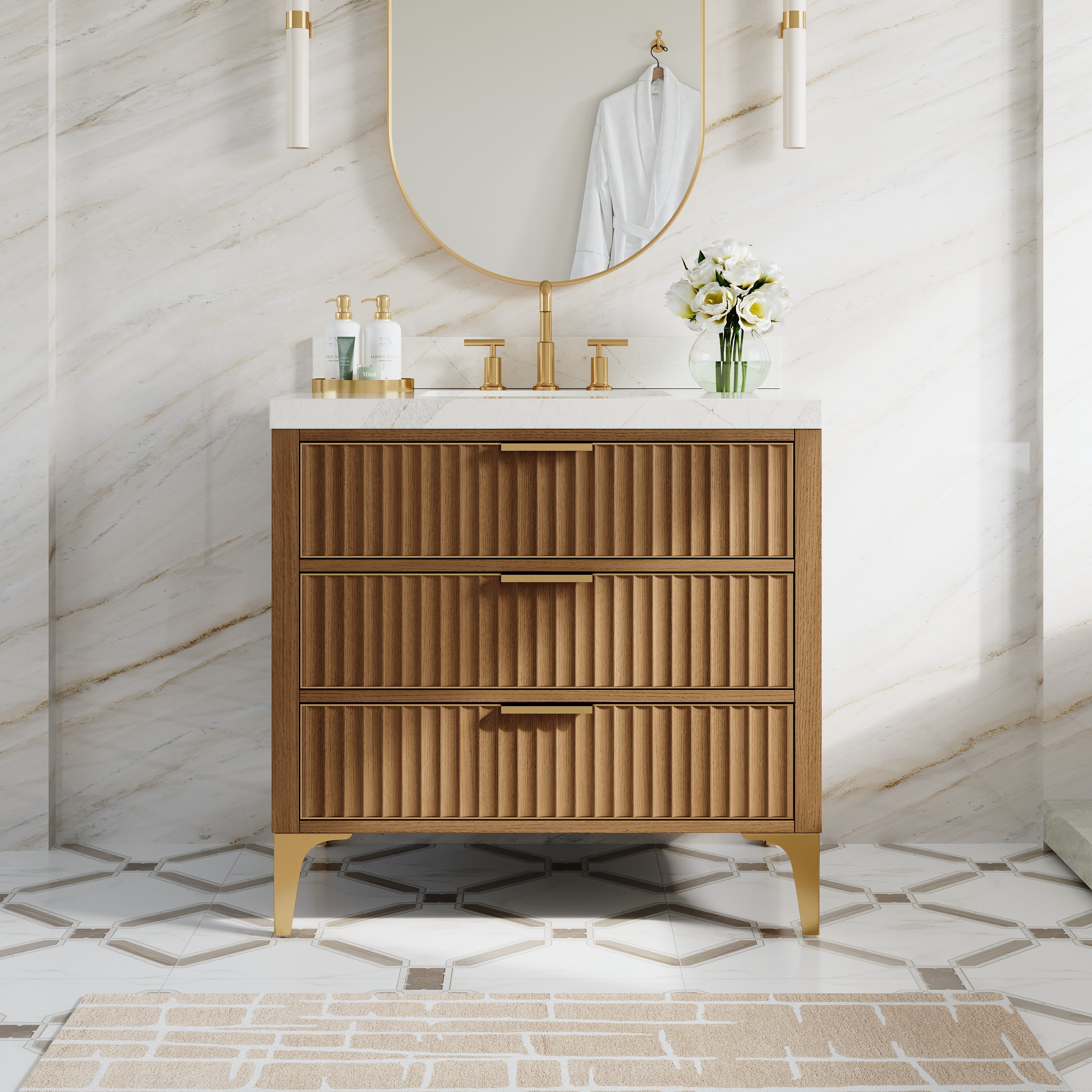
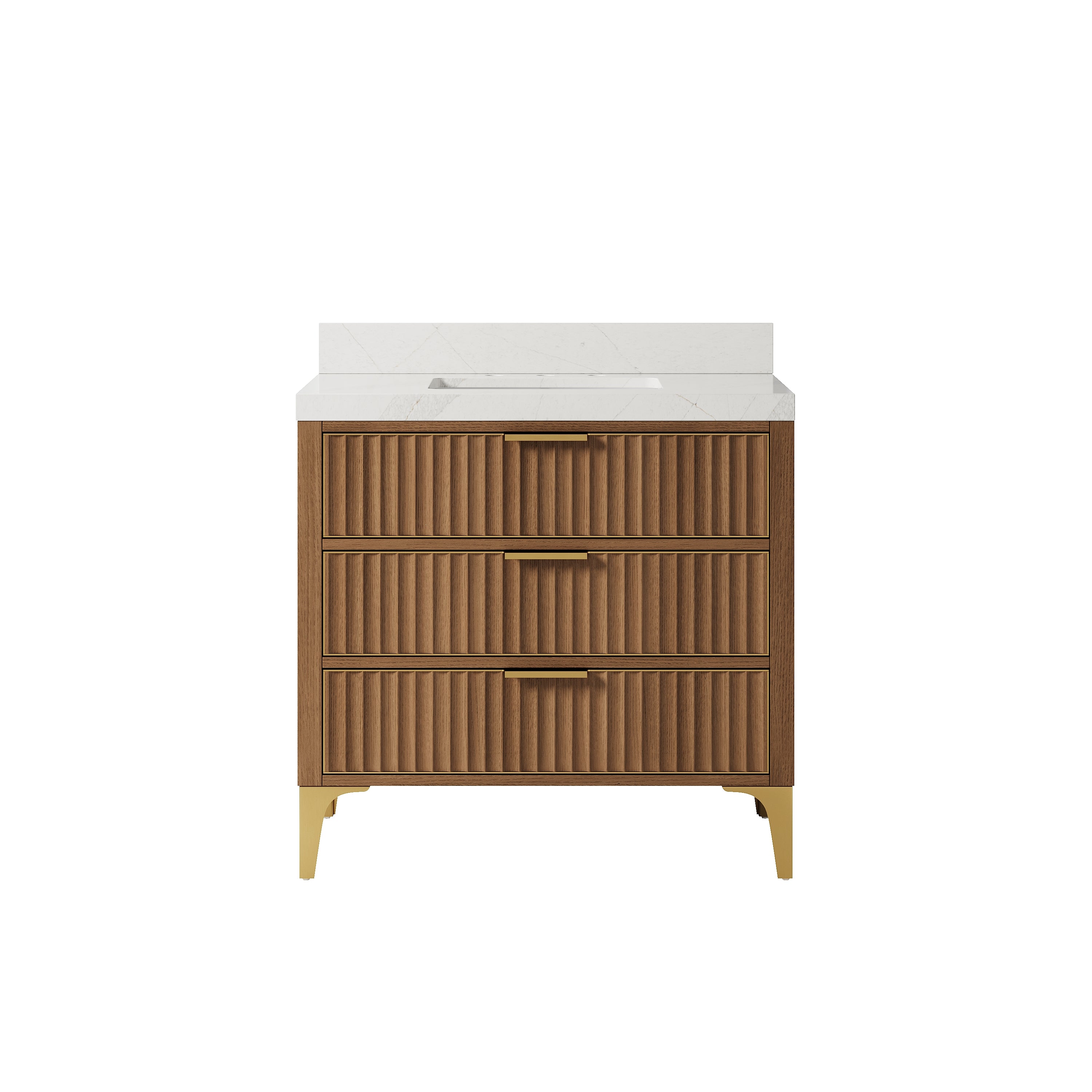

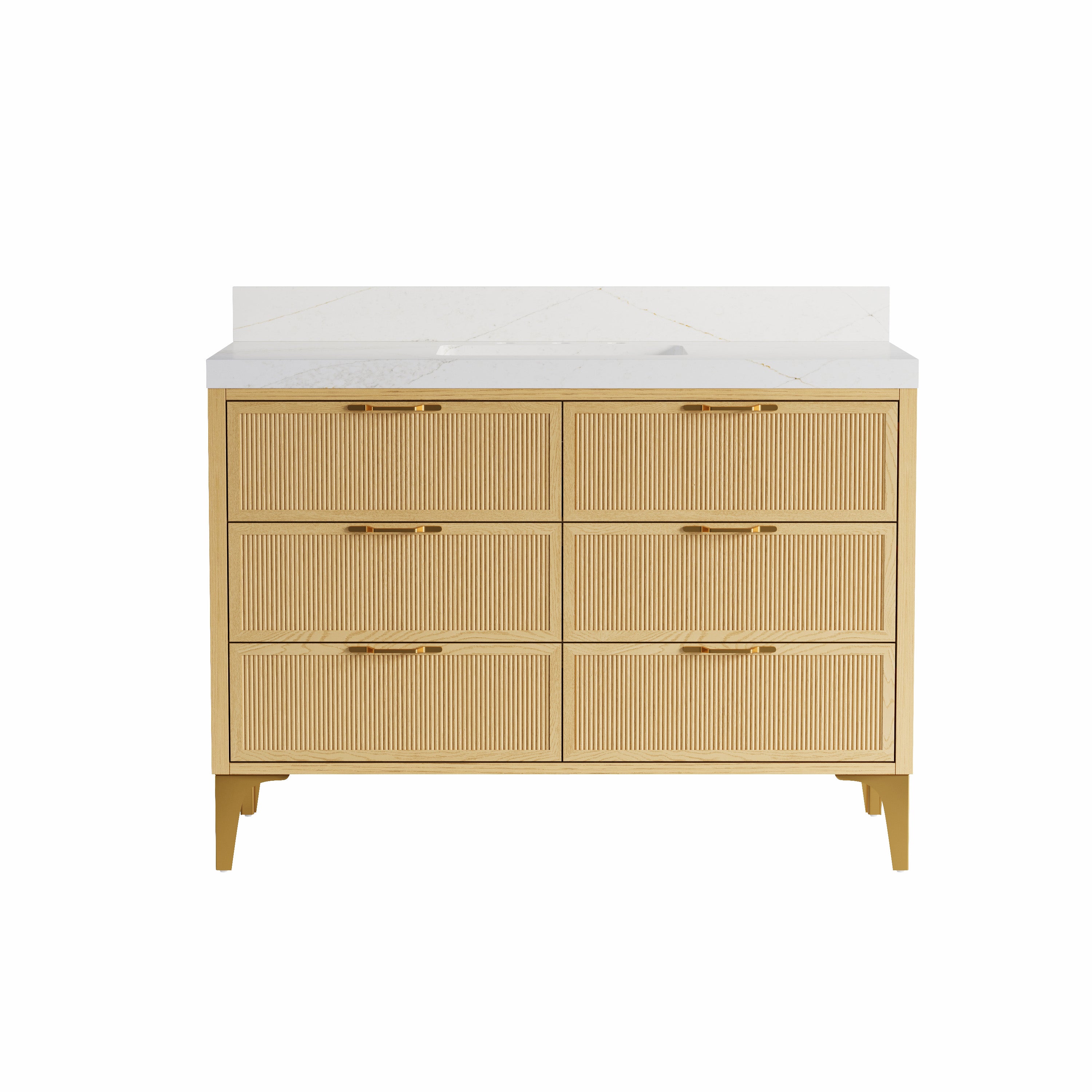


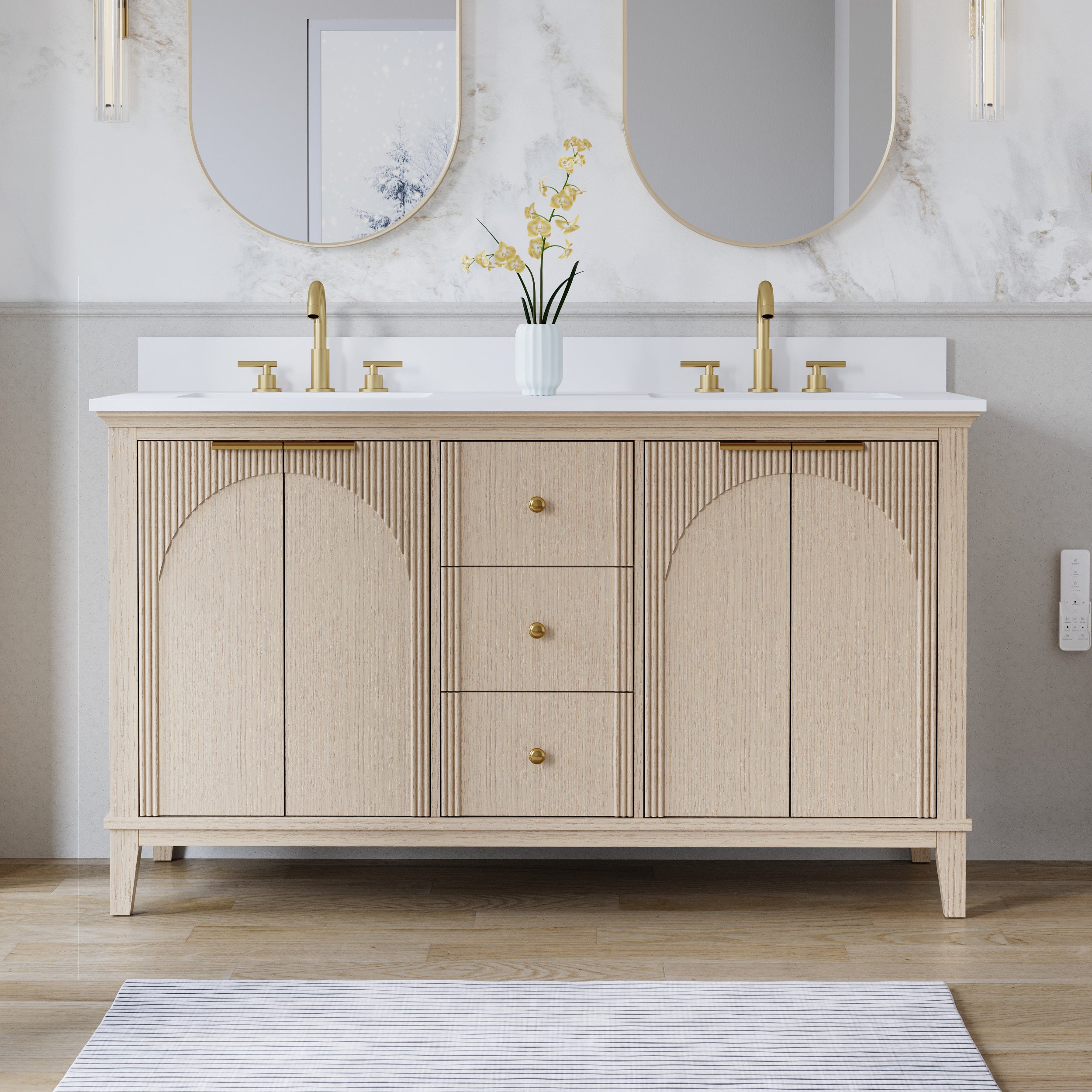
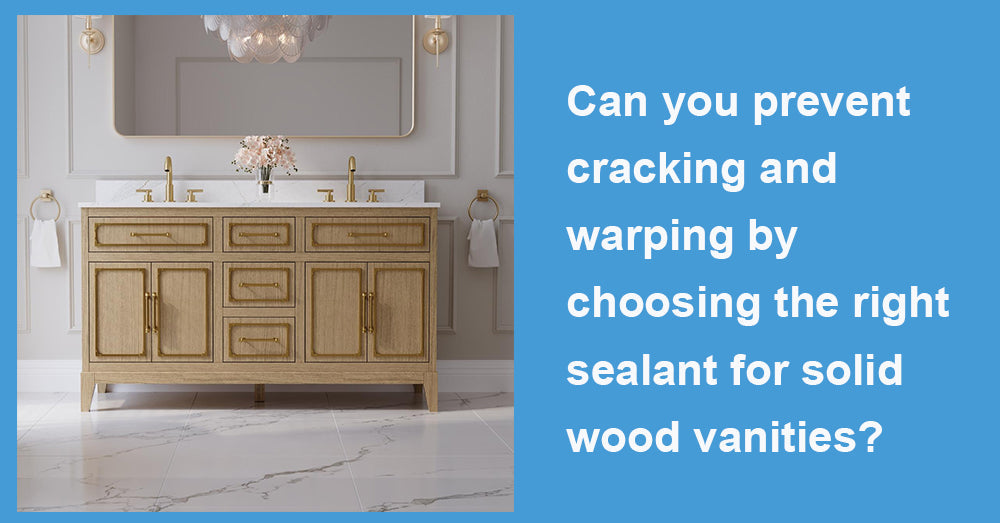
If you own or are buying solid wood vanities, it is smart to think about cracking and warping as a moisture-management problem, not just a “wood quality” problem. The right sealant (and the right finishing method) can dramatically reduce how fast wood absorbs and releases moisture, which lowers stress and helps the vanity stay flatter and more stable. But sealants do not “freeze” wood in place. Wood will still move as humidity changes, so the goal is control, balance, and protection in the spots that get wet the most.
1. Why solid wood cracks or warps in the first place
Wood is hygroscopic, meaning it gains or loses moisture until it reaches an equilibrium with the surrounding air. That equilibrium moisture content changes with relative humidity and temperature. At typical indoor temperatures, moving from drier air to more humid air can shift wood moisture content by several percentage points, and that change can translate into measurable swelling and shrinking across the grain. (Source: USDA Forest Products Laboratory, Wood Handbook, Chapter 4 “Moisture Relations and Physical Properties of Wood.”)
Cracking often happens when stress builds faster than the wood can relieve it, such as:
· One face gets wet or humid repeatedly (sink splashes, damp towels), while the back side stays drier.
· End grain is exposed (it exchanges moisture faster than long grain).
· A thick top coat slows moisture exchange on one side more than the other, causing uneven movement.
· The wood was not properly dried or acclimated before finishing.
Warping is usually the result of uneven moisture gain or loss. If one side of a panel expands and the other does not, the panel cups. The same logic applies to door panels, rails and stiles, and even thick vanity tops.
1. What a “sealant” can and cannot do
A finish system can:
· Slow down moisture exchange so the wood changes more gradually.
· Reduce water absorption from splashes and brief puddles.
· Add resistance to cleaners, soaps, and temperature swings (depending on the system).
A finish system cannot:
· Stop wood movement entirely.
· Fix structural design issues (like rigidly glued cross-grain parts that should float).
· Compensate for wet installation conditions (for example, repeated standing water inside the sink base).
A good way to anchor your expectations is to look at cabinet performance standards. KCMA A161.1 requires wood and composite wood materials to be dried to a moisture content of 10% or less at fabrication, and it includes finish testing intended for kitchen and bath exposures. That is an important clue: moisture control starts before the finish ever goes on. (Source: KCMA A161.1-2022 Performance and Construction Standard for Kitchen and Vanity Cabinets.)
1. The humidity range that drives real-world movement
Even in well-managed homes, relative humidity changes seasonally and daily. A common guidance range for habitable spaces is roughly 30% to 60% relative humidity, which is a wide enough swing to change wood’s equilibrium moisture content meaningfully over time. (Source: ASHRAE guidance on indoor relative humidity.)
Practical takeaway: if your bathroom routinely spikes with hot showers and poor ventilation, the wood is being pushed outside “steady” conditions. In that situation, finish selection matters more, but ventilation habits matter even more.
1. Choosing the right sealant type for a bathroom vanity
Think in two buckets: penetrating sealers and film-forming finishes. Many high-performing systems combine both ideas (a sealer coat plus a durable topcoat).
A. Penetrating sealers (oil-based, resin-sealer, some penetrating epoxies)
· Pros: soak into fibers, help reduce water uptake, good for end grain and joints, can be a strong first line of defense.
· Cons: alone, they may not provide enough chemical and water resistance for constant bathroom use; they often need a topcoat.
Best use: as a first coat or for sealing vulnerable edges and end grain before topcoating.
B. Film-forming finishes (varnish, catalyzed systems, 2K urethane, conversion varnish)
· Pros: create a continuous barrier that resists water and household chemicals better than most penetrating-only approaches.
· Cons: if applied unevenly (or only on the visible side), they can increase imbalance and cupping risk. Repairs may require sanding and refinishing.
Best use: on doors, drawer fronts, face frames, and exposed surfaces, with consistent coverage on all sides.
If you are comparing vanity brands, ask whether they reference recognized finish performance testing for kitchen and bath cabinets. KCMA A161.1 includes multiple finish tests (such as water resistance, detergent resistance, and other durability evaluations), which is exactly the risk profile a bathroom vanity faces. (Source: KCMA A161.1-2022, finish testing requirements.)
1. The single most important rule: seal all sides as evenly as possible
If you remember one thing, make it this: the best way to reduce warping risk is not just picking a “strong” sealant, it is applying the finish system in a balanced way.
Checklist you can use when evaluating a finished vanity:
· Door and drawer fronts: finished on the back side too, not just the face.
· Sink base interior: coated and sealed at seams, not raw or patchy.
· Edges and cutouts: the underside edges and any drilled holes should be sealed.
· End grain: especially at lower edges, toe-kick transitions, and anywhere water can wick.
Why end grain matters: it exchanges moisture faster than face grain, so it is a common entry point for swelling and subsequent cracking around joints.
1. Where cracking really starts and how a sealant strategy helps
A. Joints and glue lines
Cracks often appear where two pieces meet and move differently. A finish that reduces moisture cycling helps lower the repeated expansion-shrink stress at those joints. But if the underlying joint design is weak or the wood was too wet at assembly, no sealant will “save” it long-term.
B. Wide solid-wood panels
The wider the panel across the grain, the more total movement you can expect as humidity changes. A good sealant system slows moisture exchange, but design still matters. If a vanity uses frame-and-panel construction, the center panel should be allowed to float, not glued rigidly to the frame.
C. Sink cutouts and countertop contact points
These areas see the most water. Even a great topcoat can fail if water sits in seams repeatedly. Sealing exposed edges and keeping joints caulked where appropriate is part of the prevention plan, not an optional detail.
1. Installation and maintenance: the “hidden half” of prevention
Even the best finish fails faster under standing water and constant steam. A few habits make a measurable difference:
· Run the exhaust fan during showers and for 15 to 20 minutes afterward to bring humidity down faster.
· Wipe puddles inside the sink base immediately. Do not store wet towels against the vanity side panels.
· Avoid harsh solvents and abrasive pads that can micro-scratch the film and let water in.
· Keep plumbing leaks from becoming “slow humidity exposure” inside the cabinet.

If indoor relative humidity is kept closer to the middle of the typical 30% to 60% band, wood moisture swings are smaller and the stress that causes cracking is reduced. (Source: ASHRAE guidance on indoor relative humidity.)
1. A practical buying question set (use this to filter options fast)
Ask the seller or manufacturer:
· “Is the wood dried to 10% moisture content or less before fabrication?” (This is a meaningful quality marker in cabinet standards.) (Source: KCMA A161.1-2022.)
· “What finish system is used, and is it designed for kitchen and bath exposure?”
· “Are cabinet interiors, door backs, and edges sealed, or only the visible faces?”
· “How are sink-base seams protected against water intrusion?”
Bottom line: choosing the right sealant absolutely helps prevent cracking and warping in solid wood vanities, mainly by slowing moisture exchange and improving water resistance. The biggest wins come from balanced sealing on all sides, careful protection of end grain and sink-base interiors, and humidity control in daily use.











Leave a comment
This site is protected by hCaptcha and the hCaptcha Privacy Policy and Terms of Service apply.