














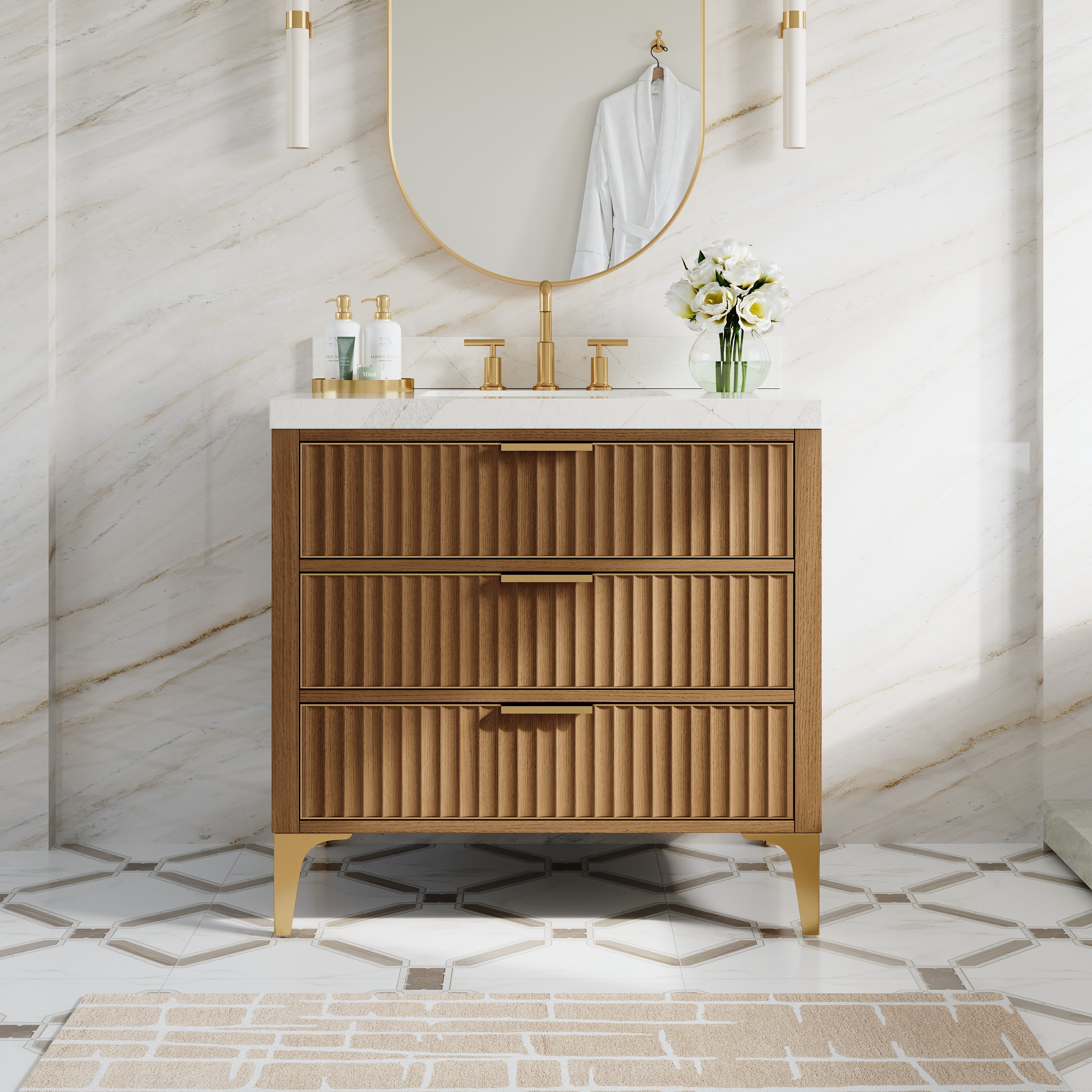
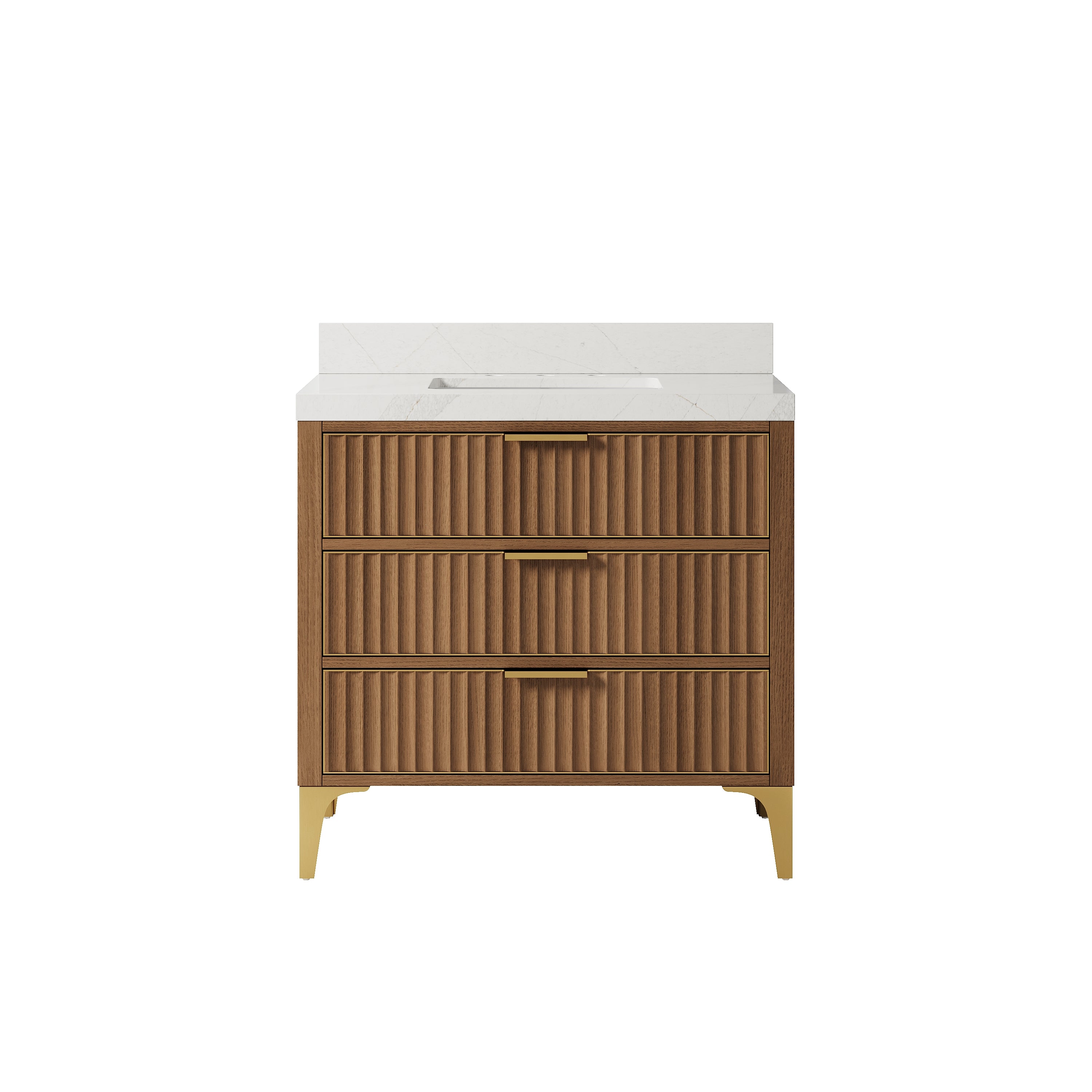
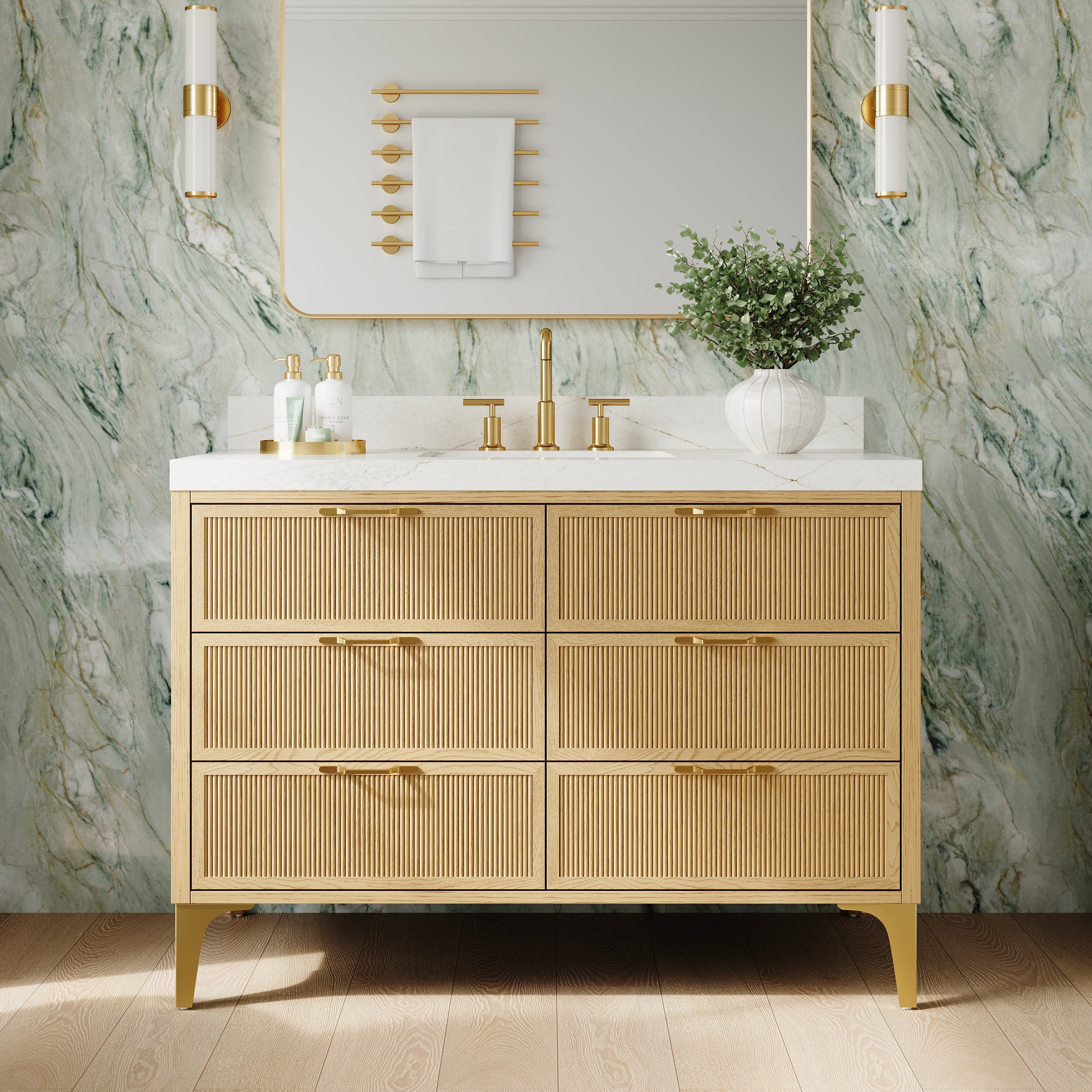
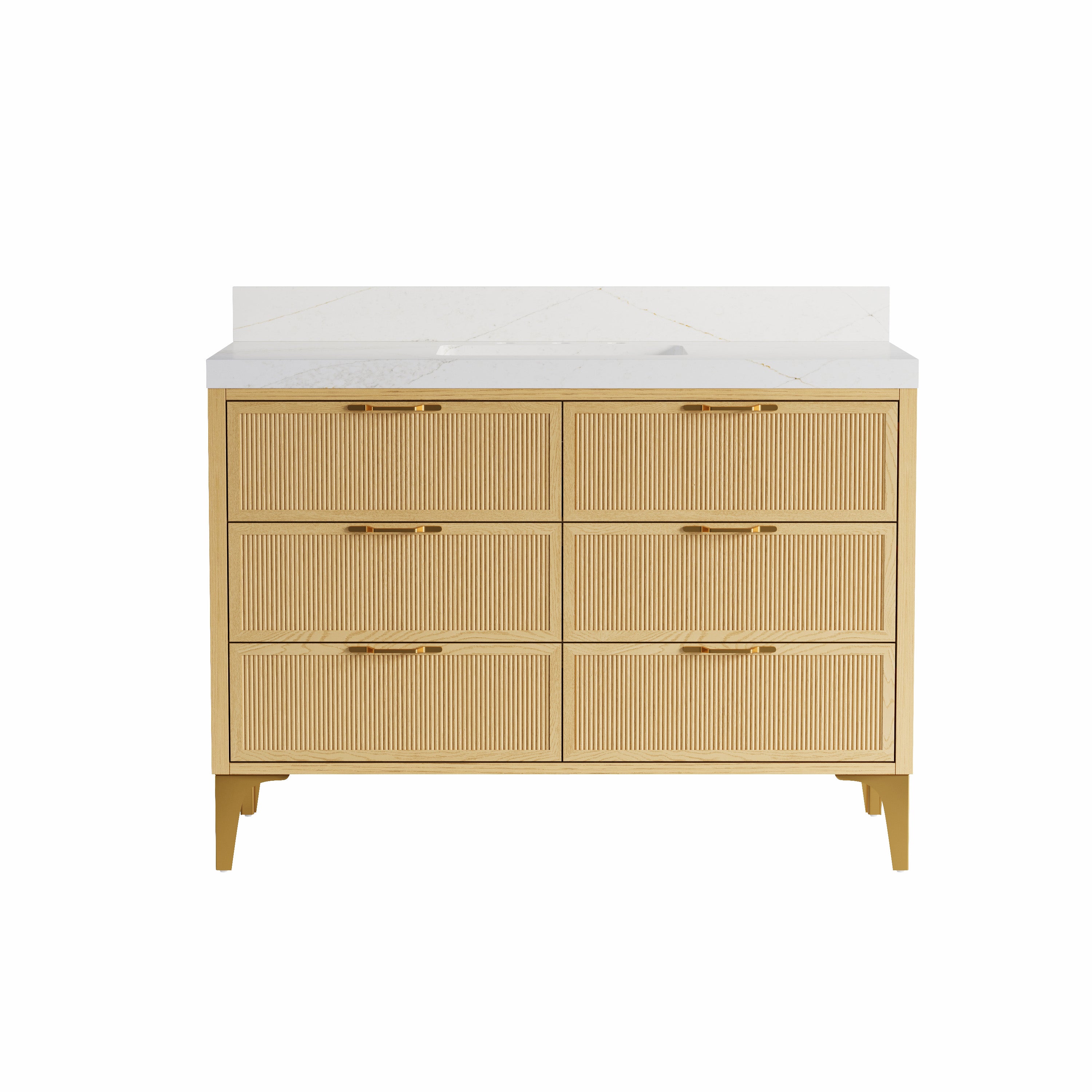


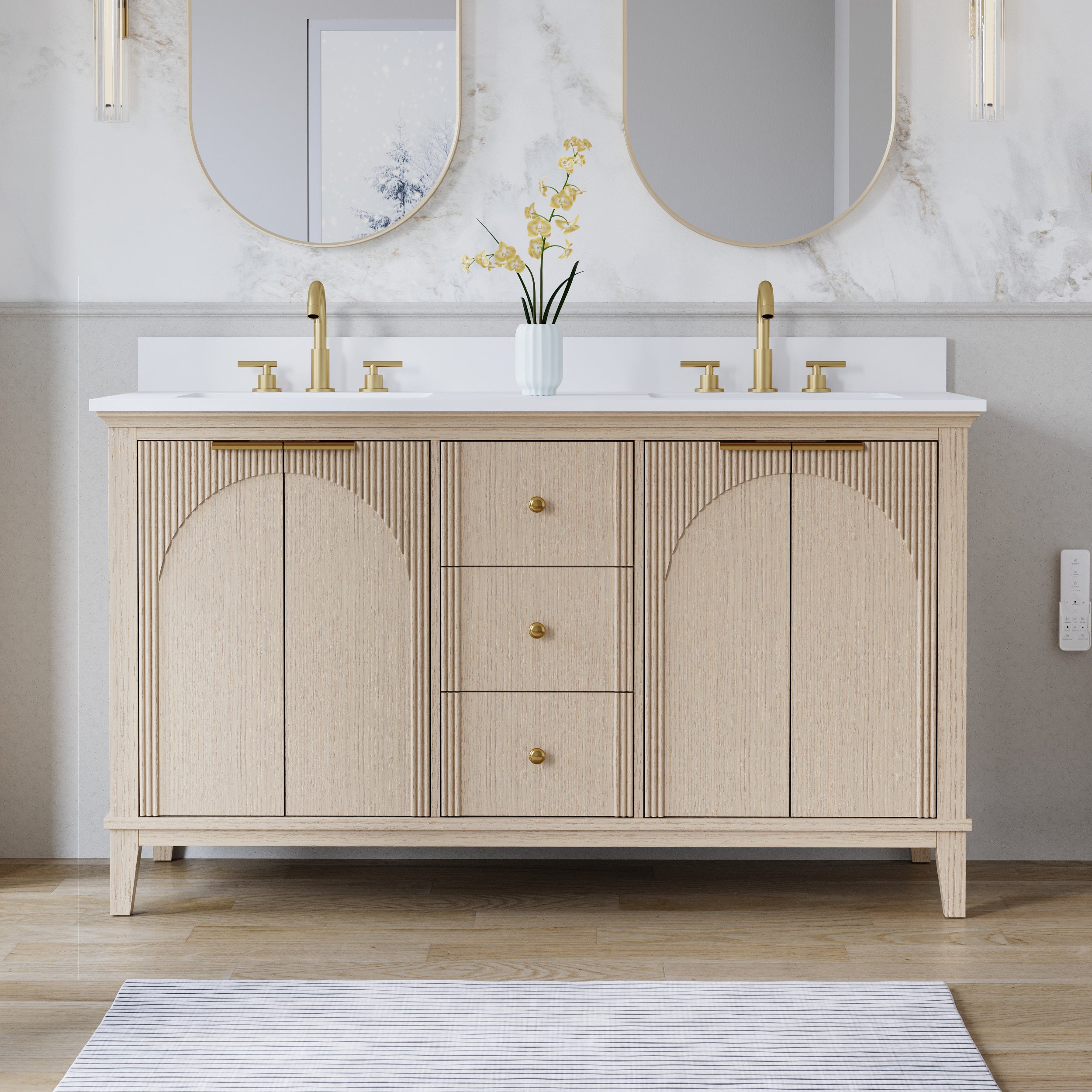
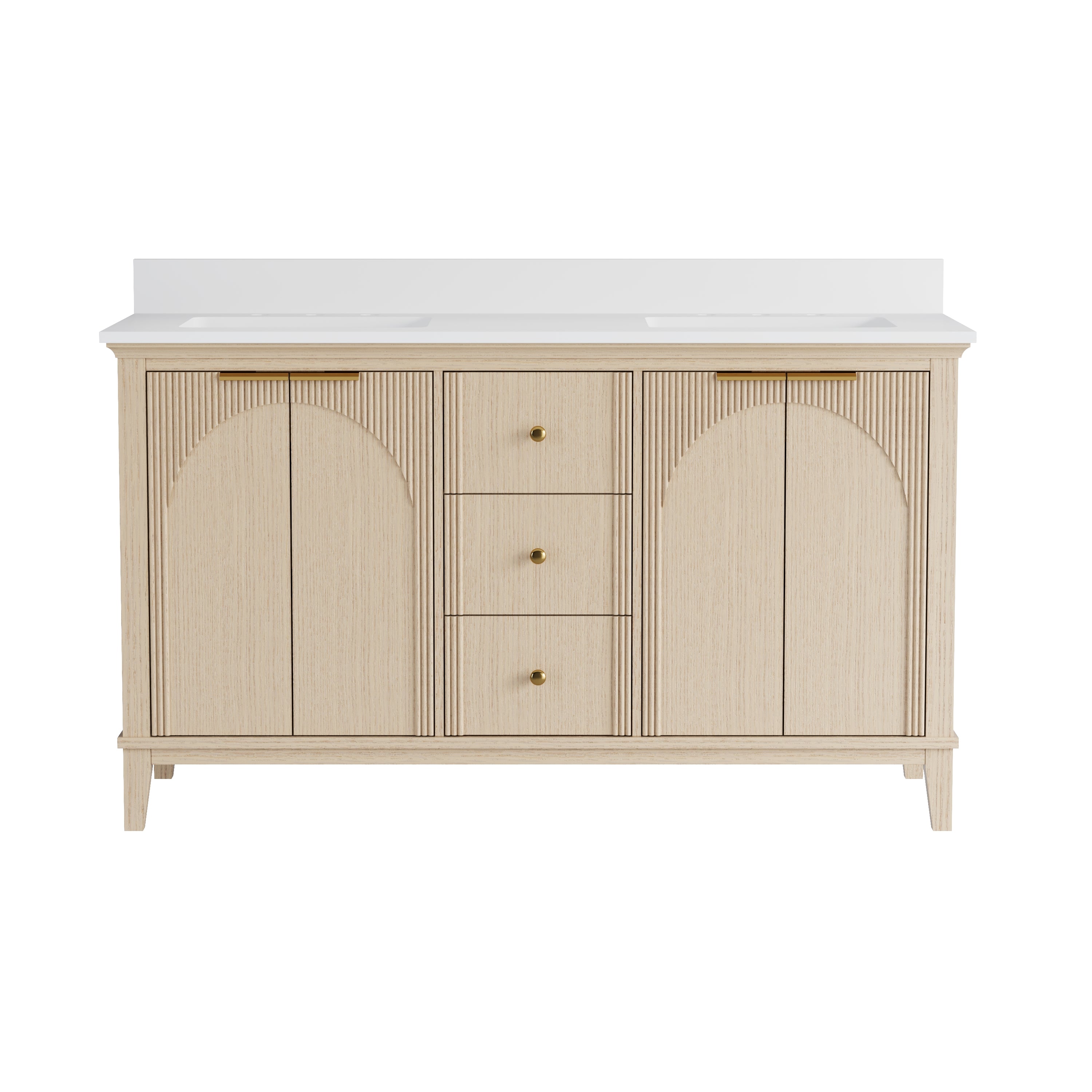
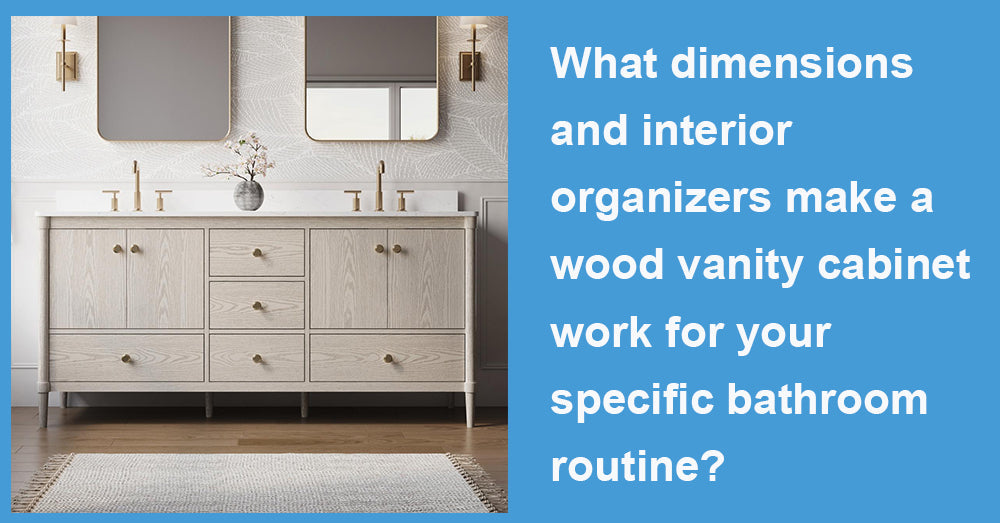
A wood vanity cabinet only feels “right” when its dimensions match the way you move through the room and the way you actually get ready, not the way a product photo looks. The best setup usually comes down to two decisions: choosing dimensions that protect daily clearance, and choosing organizers that turn messy, mixed-use storage into predictable zones.
1. Start with clearance, because it decides comfort every single day
Before you pick a width, confirm how much standing space you have in front of the vanity. A widely used planning guideline recommends 30 in. of clear floor space from the front edge of fixtures to the next obstacle, and many codes require at least 21 in. in front of a lavatory. (Source: NKBA Bath Planning Guidelines; IRC references are listed within the guideline.)
Quick routine-based test:
Stand where your toes would be when brushing your teeth. Now imagine someone walking behind you or opening a door. If it feels tight now, it will feel tight forever. When space is limited, a slightly smaller vanity that preserves clearance often feels more “luxury” than a larger vanity that crowds the room.
2. Choose depth first in tight bathrooms
Depth is the dimension most likely to steal walking space, especially in narrow baths. Many common vanities are around 21 in. deep, while compact models can be around 18 in. deep, which can noticeably improve circulation and door swing conflicts. (Source: Home Depot measuring and planning guidance for vanities.)
Rule of thumb:
· If your bathroom feels cramped, prioritize a shallower depth first.
· If you have comfortable clearance, keep standard depth and invest in better drawers and organizers.
3. Dial in width based on your “counter behavior”
Ask one honest question: are you a “clear counter” person or a “counter collector” person?
· If you like a clear counter, you can go narrower and rely on drawers.
· If you always keep items out (skincare lineup, hair tools, daily products), extra width helps because you need “landing zones” on both sides of the sink.
Common widths often seen in shopping filters are 24, 30, 36, 48, 60, 72 in., which makes it easy to plan around standard increments. (Source: Home Depot vanity sizing guidance.)
A routine-based way to choose width:
· Solo, minimalist routine: 24 to 30 in. with 2 to 3 drawers.
· Solo, product-heavy routine: 30 to 36 in. with a wide top drawer organizer.
· Shared bathroom: 36 to 60 in., but only if clearance stays comfortable (see the 21 in. minimum and 30 in. recommended front clearance). (Source: NKBA Bath Planning Guidelines.)
4. Height matters more if you use the vanity for grooming
Vanity height affects posture. Many “traditional” vanities are around the low 30-inch range, while comfort-height styles are taller. Instead of chasing a trend, match how you use the space.
Pick height based on routine:
· If you lean in close for shaving, makeup, or skincare, a slightly taller vanity can reduce bending fatigue.
· If kids use the sink daily, a lower height can be practical.
If you are unsure, measure your current sink height and write down what you love or hate about it. That feedback is more valuable than any generic recommendation.
5. Interior layout: drawers beat doors for most daily routines
If your routine involves small items, drawers are the difference between “organized” and “everything stacked behind everything.”
To sanity-check drawer durability and daily usability, it helps to know what serious cabinet testing looks like. KCMA’s quality certification describes drawer testing where drawers are loaded at 15 lb per sq. ft. and cycled 25,000 times to confirm they remain operable. (Source: KCMA Quality Cabinet Certification.)
You do not need certification to benefit from the lesson: drawers should be designed for repetitive daily use under load, not just a soft-close demo in a quiet showroom.
Best drawer mix for real life:
· Top drawer (shallow): daily essentials, dental, skincare, makeup.
· Middle drawer (medium): grooming tools, hair products, backup soaps.
· Bottom drawer (deep): bulk refills, towels, larger bottles.
6. Choose a sink placement that matches storage priorities
Sink location controls where your biggest uninterrupted storage cavity exists.
Centered sink: balanced look, but plumbing often eats the center storage volume.
Offset sink: creates a larger drawer stack or cabinet bay on one side, which is excellent for people with many products or for shared bathrooms.
If your routine includes hair tools, an offset sink often makes it easier to dedicate one full drawer column to grooming without fighting plumbing pipes.
7. The organizers that actually change your day-to-day
Buying a bigger vanity does not automatically fix clutter. Organizers do, because they reduce decisions and prevent “pile drift.”
A. Drawer dividers for “fast morning” routines
Use dividers to create fixed zones:
· Teeth and dental.
· Face and skincare.
· Hair and grooming.
· Meds and first aid.
This is not about aesthetics. It is about reducing the daily micro-stress of searching.
B. A shallow top tray for small items
A removable top tray (or built-in tray drawer) is perfect for:
· Tweezers, nail tools, razors.
· Contacts case and solution.
· Makeup brushes.
Small items are what turn drawers into chaos, so they deserve their own “container layer.”
C. Vertical hair-tool storage (protects space and prevents heat damage)
If you use a dryer, straightener, or curling iron, choose one of these:
· A heat-safe insert inside a lower drawer.
· A vertical bin at the side of a cabinet bay.
This prevents cords from tangling and keeps hot tools from touching finished wood surfaces.
D. Under-sink U-shaped pull-out organizers
Plumbing creates awkward dead space. A U-shaped pull-out or two-tier slide organizer lets you use the sides efficiently without banging into pipes.
E. A leak tray or removable liner for the sink base
This is routine insurance. It catches slow drips before they stain or swell the cabinet bottom.
8. Protect your wood vanity cabinet by controlling moisture, not just cleaning
Even the best organizer plan fails if the cabinet interior stays damp. Ventilation is part of “storage performance.”
HVI recommends bathroom ventilation rates such as 50 CFM minimum for small bathrooms and about 1 CFM per sq. ft. for many standard bathroom sizes, as a baseline. (Source: Home Ventilating Institute bathroom exhaust fan guidance.)
Better ventilation shortens “damp time,” which helps finishes last and keeps drawers from smelling musty.
9. A simple routine-to-vanity matching map
Use this as a quick decision guide:
Routine: minimal products, quick mornings
· Prioritize clearance and a compact depth.
· Choose 2 to 3 drawers plus a simple divider set.
Routine: skincare-heavy, lots of small items
· Prioritize a wide top drawer and tray.
· Add dividers and a shallow organizer layer.
Routine: shared bathroom, two people, busy mornings
· Prioritize width only after clearance is confirmed (21 in. minimum, 30 in. recommended). (Source: NKBA Bath Planning Guidelines.)
· Create “left person, right person” drawer zones to prevent mix-ups.
Routine: hair tools daily
· Prioritize vertical storage and a heat-safe insert.
· Prefer offset sink layouts for a dedicated grooming column.

Bottom line
The right wood vanity cabinet is not just a style choice. It is a fit between movement space and storage behavior. Start by protecting clearance (30 in. recommended, 21 in. minimum in many cases). (Source: NKBA Bath Planning Guidelines.) Then choose depth and width based on how your counter and products behave. Finally, invest in organizers that create zones, especially drawer dividers, a top tray, and under-sink solutions. If you combine that with adequate ventilation capacity (50 CFM minimum and roughly 1 CFM per sq. ft. as a baseline guideline), your vanity will stay functional, dry, and easy to maintain for the long haul. (Source: Home Ventilating Institute.)















Leave a comment
This site is protected by hCaptcha and the hCaptcha Privacy Policy and Terms of Service apply.