















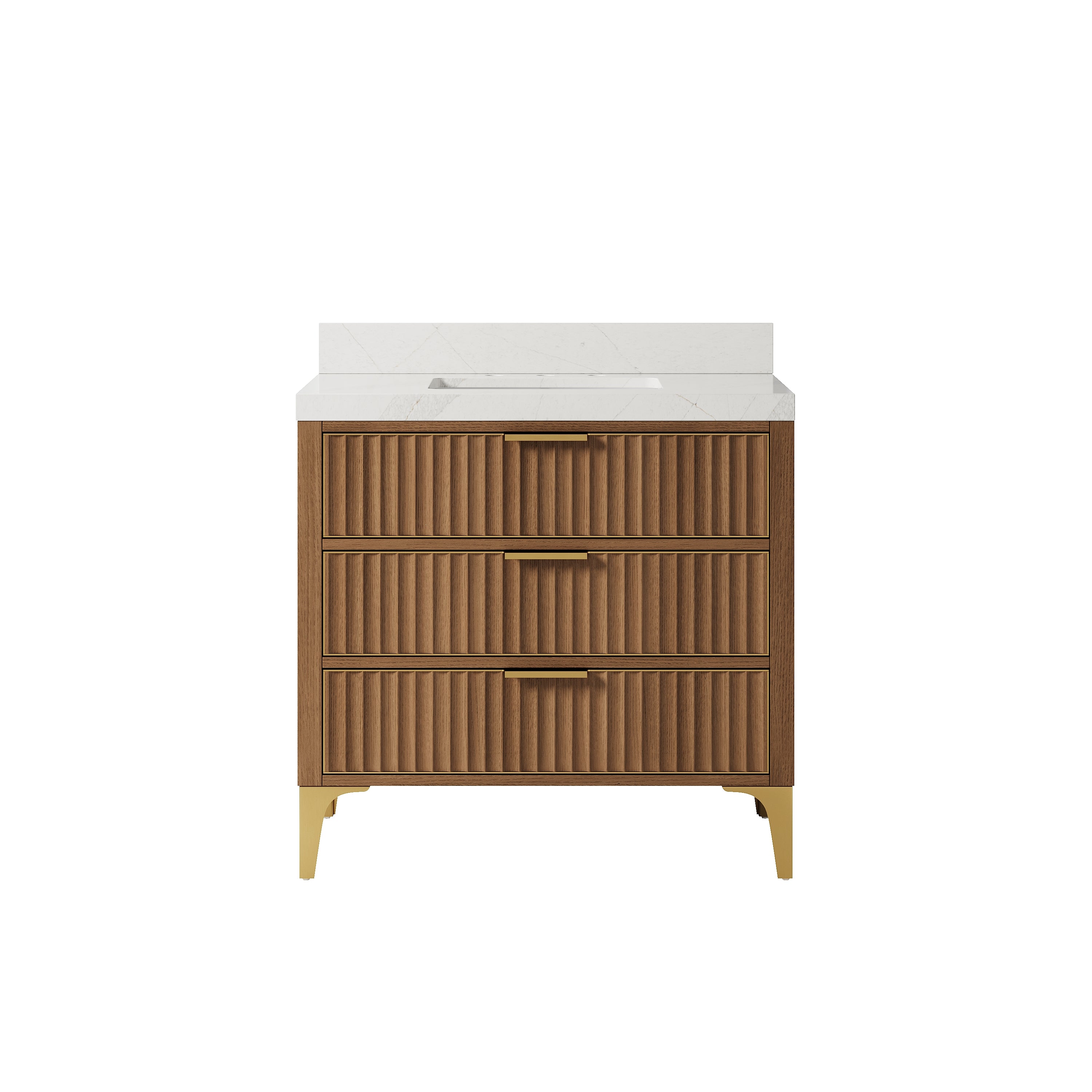

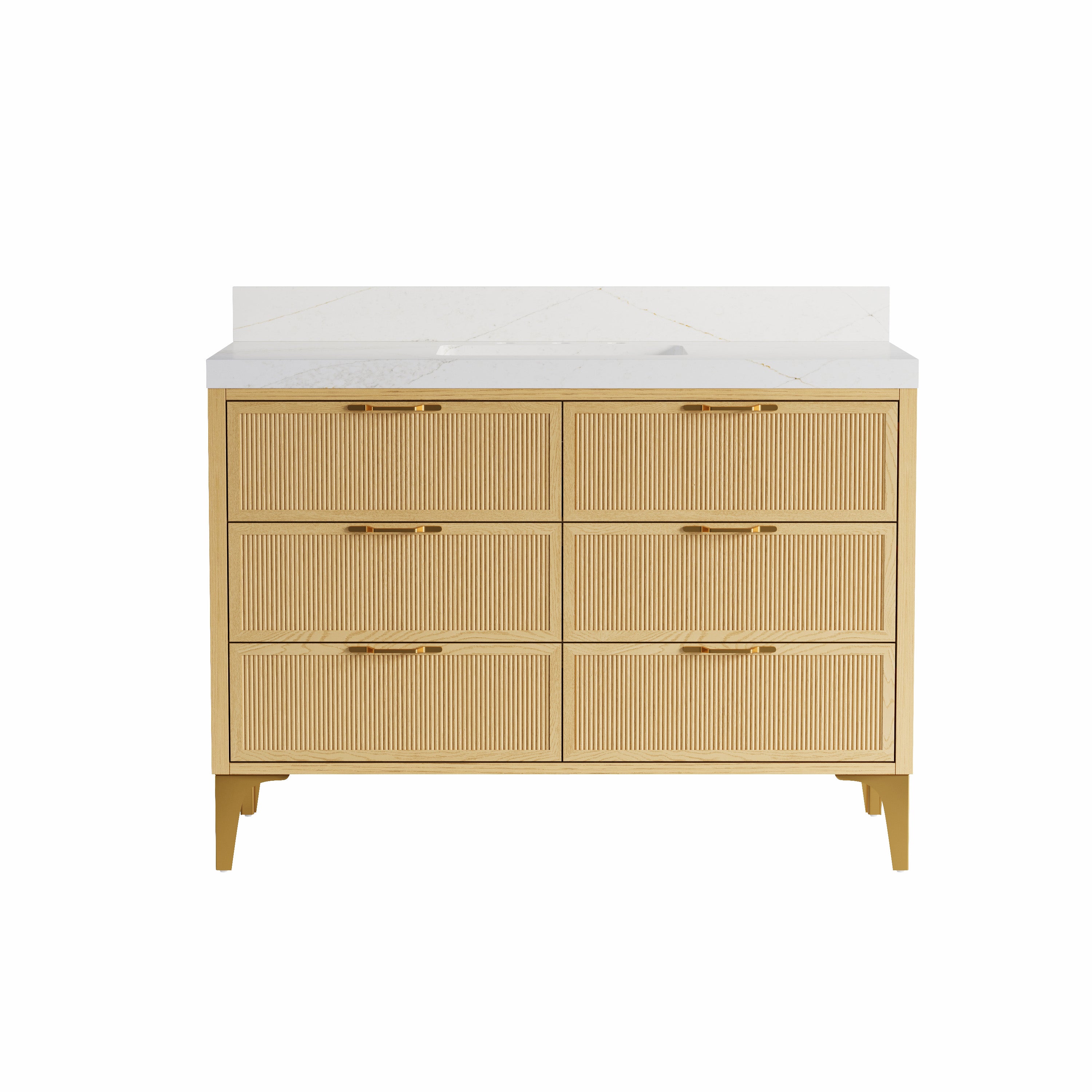



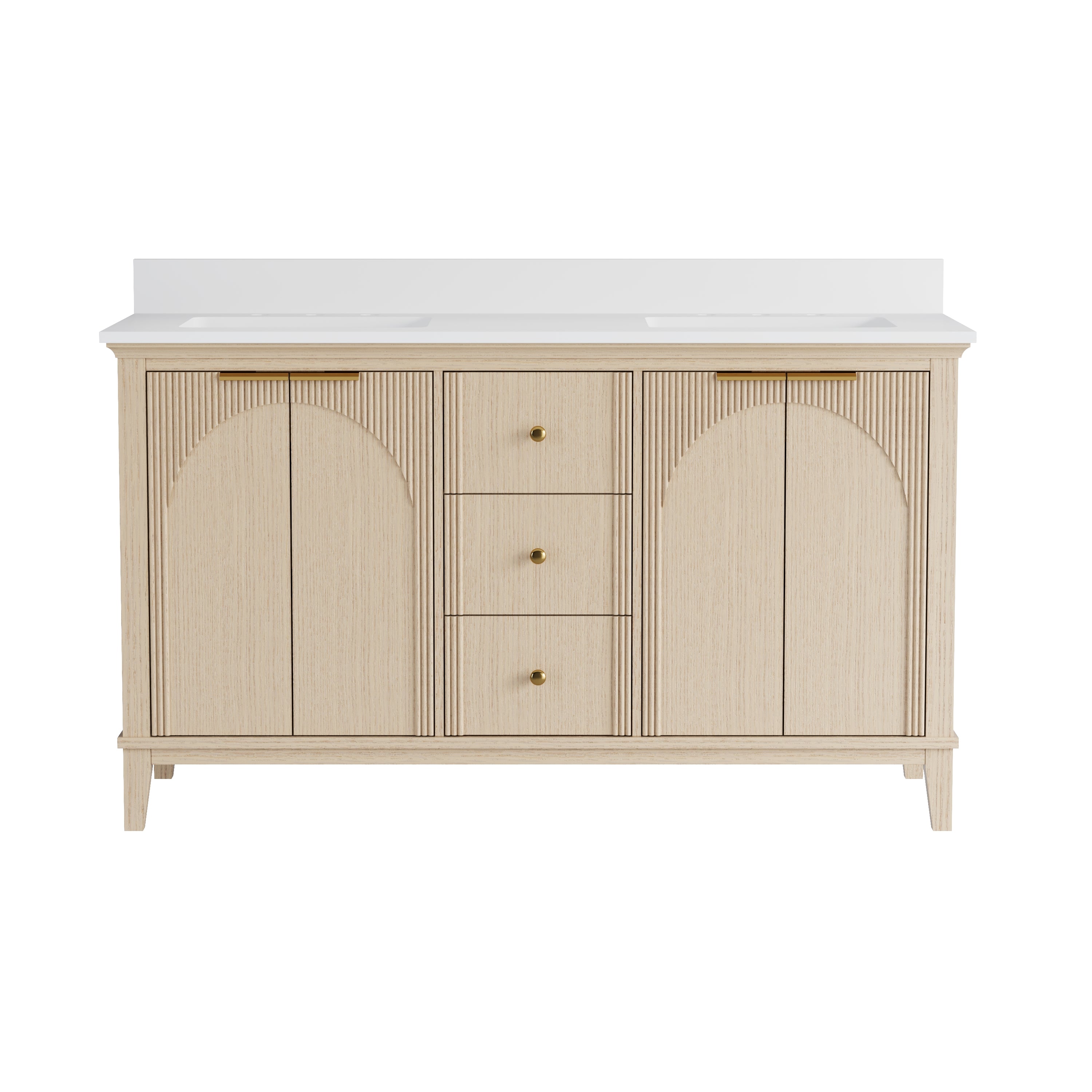
Real wood vanities look and feel premium, but keeping that “natural finish” beautiful is less about special cleaners and more about controlling moisture, cleaning gently, and responding fast to small problems. Bathrooms are tough environments for wood because humidity can rise and fall quickly, and even tiny splashes can sit in hidden seams. The good news is that a few consistent habits can protect the finish and keep doors and drawers working smoothly for years.
1. Know what you are protecting: wood moves, finishes slow it down
Wood is always exchanging moisture with the air, so it expands and contracts as humidity changes. That movement can be surprisingly large. One Purdue Extension example shows a 32-inch-wide panel changing by about 0.63 inches in width from a 6% moisture-content change. This is why “natural finish care” is really about limiting rapid swings and preventing water from getting into vulnerable edges.
Finishes help in two ways: they resist liquid water, and they slow water-vapor exchange. Forest Products Laboratory research notes that moisture movement and vapor diffusion resistance depend on the wood’s moisture content and gradients, and that finishes affect how quickly wood adsorbs and desorbs moisture. The takeaway: even a great finish is not a force field. It needs support from good daily habits.
2. Daily and weekly cleaning that will not dull the finish
The safest routine is boring on purpose: soft cloth, mild solution, and immediate drying.
1. Daily quick wipe (30 seconds): Use a clean, soft microfiber cloth to remove splashes and toothpaste residue, then dry the surface.
2. Weekly gentle clean: A damp cloth with mild soap is usually enough, followed by a clean-water wipe and a dry buff.
What to avoid is consistent across reputable cabinet-care guides:
· Abrasives (scouring powders, abrasive pads, steel wool, and even some “magic eraser” style products) can micro-scratch and dull finishes.
· Harsh chemicals such as ammonia or bleach can damage or dull finishes over time.
· Wax polishes and silicone sprays can leave buildup that attracts dirt and can complicate future touch-ups.
A simple rule that prevents most finish problems: use the mildest cleaner that works, and always dry after wiping.
3. Moisture control: the real “secret” to a long-lasting natural look
Most finish failures start with moisture sitting too long at seams, edges, or cutouts. Focus on these risk points:
· Around the sink rim and faucet base
· The front edge of the countertop overhangs
· Plumbing cutouts inside the cabinet
· Toe-kick corners and the back panel near supply lines
Ventilation matters more than people think. A common benchmark in residential ventilation guidance is 50 cfm for intermittent bathroom exhaust or 20 cfm for continuous exhaust. If the vanity area often feels damp, upgrading the fan or running it longer after showers can reduce wood movement cycles and protect the finish.
When water does get where it should not, speed is everything. EPA training guidance notes that wet areas should be completely dried within 48 hours to help prevent mold growth. Even before mold is visible, prolonged dampness can stain wood and soften finishes.

4. Match maintenance to the finish type: oil vs film finishes
“Natural finish” can mean very different coatings, and the maintenance strategy changes with it.
If it is an oil or hardwax-oil style finish:
These finishes often look matte and “in the wood.” They can be easier to refresh, but they require periodic maintenance. The most reliable approach is to use the manufacturer-recommended maintenance oil and apply it lightly, focusing on high-touch areas. Do not guess with random furniture oils; some can cause uneven darkening.
If it is a film finish (lacquer, conversion varnish, polyurethane):
This creates a protective film on the wood's surface. Maintenance is mostly about keeping it clean and avoiding abrasion. If you see a chip or deep scratch, touch it up quickly so water cannot reach bare wood. Forest Products Laboratory references explain the difference between water-repellent behavior (repels liquid) and moisture-excluding performance (slows vapor exchange), which is why chips at edges are more dangerous than small scuffs on flat faces.
One important warning: avoid wax or silicone polishes on film finishes if you ever expect to repair or refinish later, because they can interfere with adhesion and create uneven sheen.
5. Hardware zones: where finishes wear first
Natural finishes often fail first at the “touch points,” not the big panels. Think: drawer pulls, door edges, and the area near handles where skin oils accumulate. A few habits help:
· Clean around pulls and knobs with a soft cloth more frequently than the rest of the vanity.
· Retighten hardware periodically to prevent it from wiggling and grinding through the finish.
· Use drawer liners or organizers to prevent moisture from bottles collecting on the wood base.
When comparing vanities, it is useful to know whether the finish has been tested to recognized cabinet standards. KCMA’s certification program describes a final “heat test” where a cabinet door is placed in a hotbox at 120°F and 70% relative humidity for 24 hours. That kind of test does not guarantee zero wear, but it signals that the finish system is designed to handle heat and humidity stress without obvious film failure.
6. A quick “stay-looking-new” checklist
1. Wipe splashes immediately and dry the surface.
2. Use mild soap and water, then dry.
3. Avoid abrasives, ammonia, bleach, wax, and silicone sprays.
4. Run the bathroom fan long enough to clear humidity (use 50 cfm intermittent or 20 cfm continuous as a practical target).
5. Dry any hidden moisture within 48 hours.
6. Touch up chips fast, especially at edges and cutouts.
If you tell me which finish your real wood vanity uses (oil/hardwax oil vs sealed lacquer/urethane). Whether it’s wall-mount or freestanding, I can give you a “maintenance schedule” you can paste into your product page FAQ (daily, weekly, seasonal touch-up).





























Leave a comment
This site is protected by hCaptcha and the hCaptcha Privacy Policy and Terms of Service apply.