














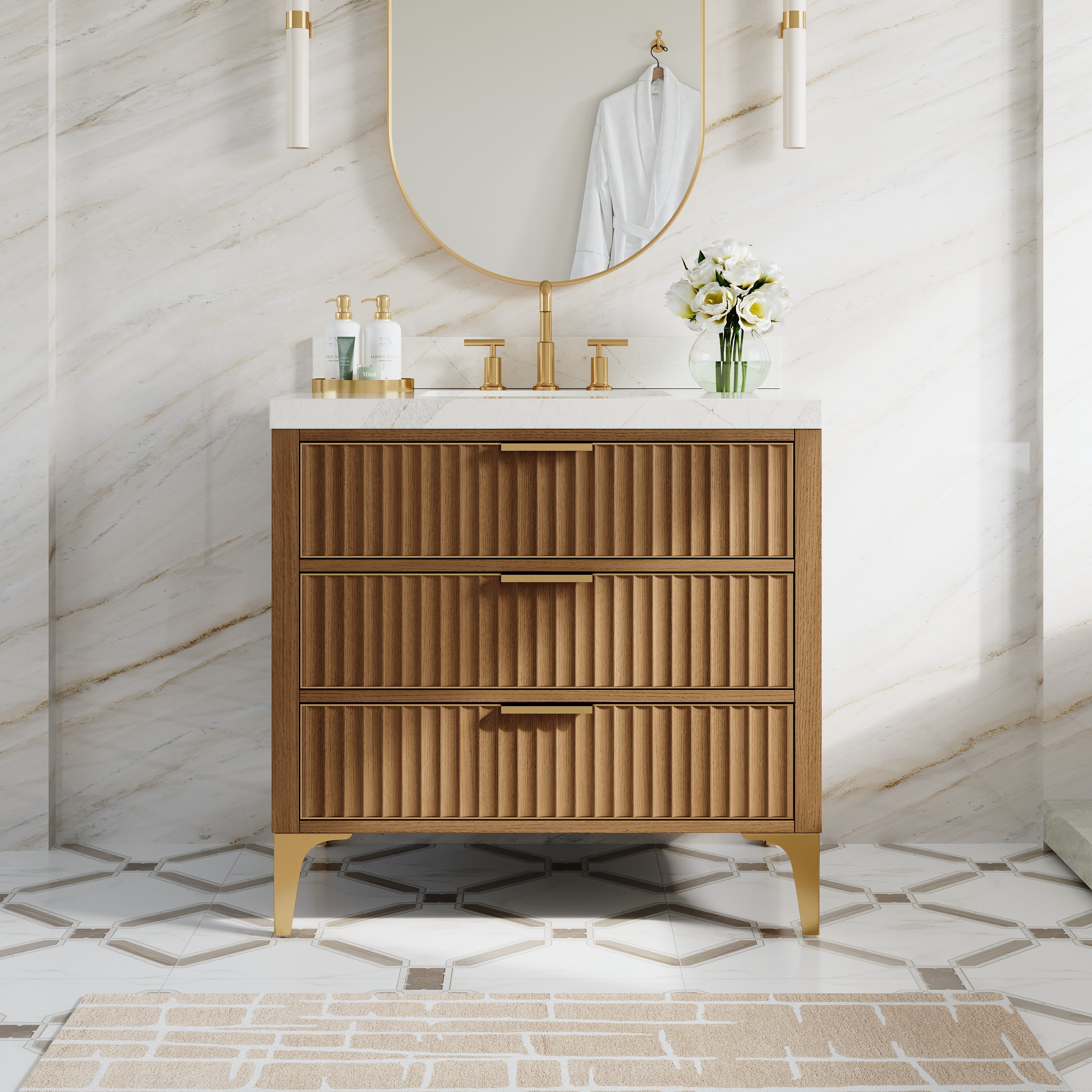
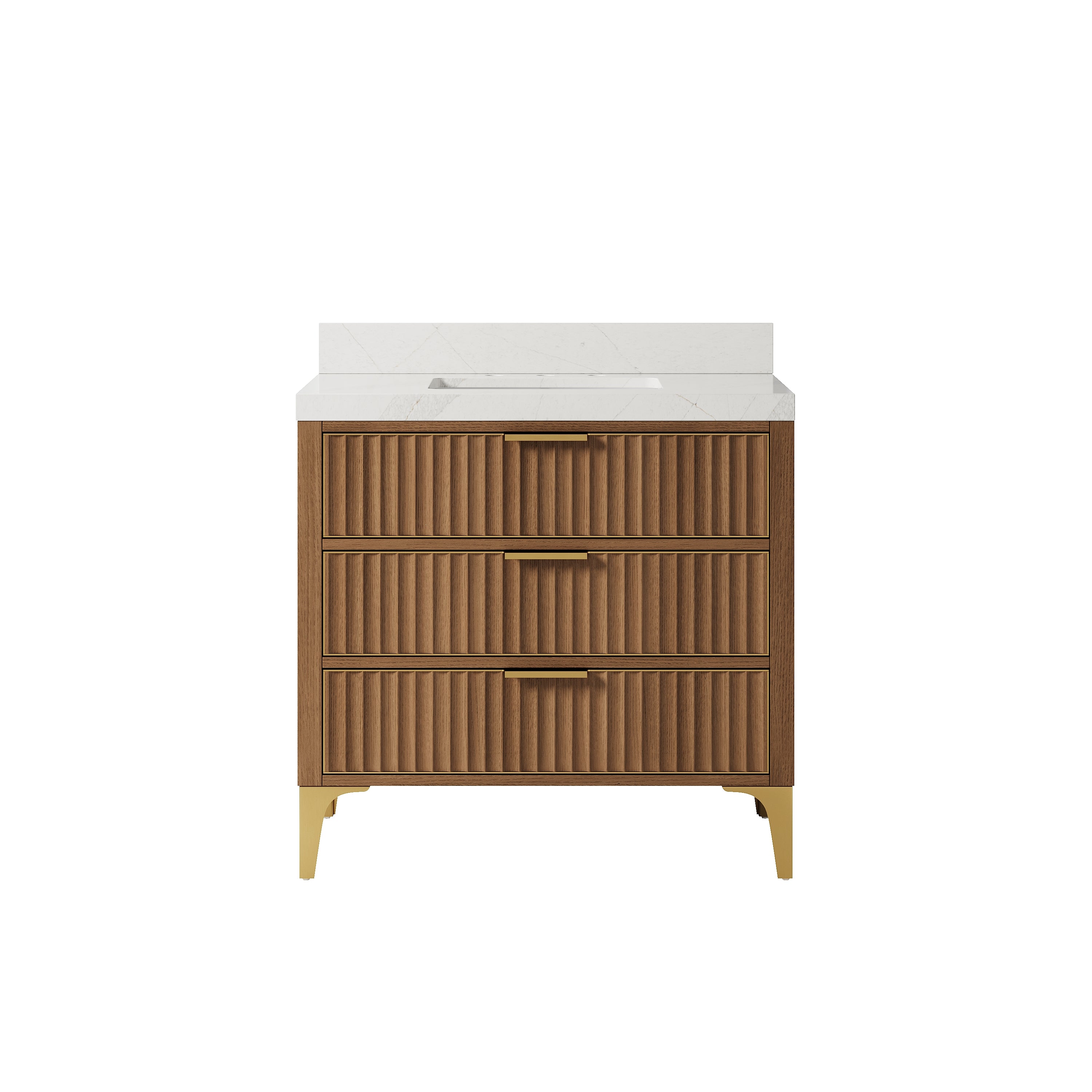
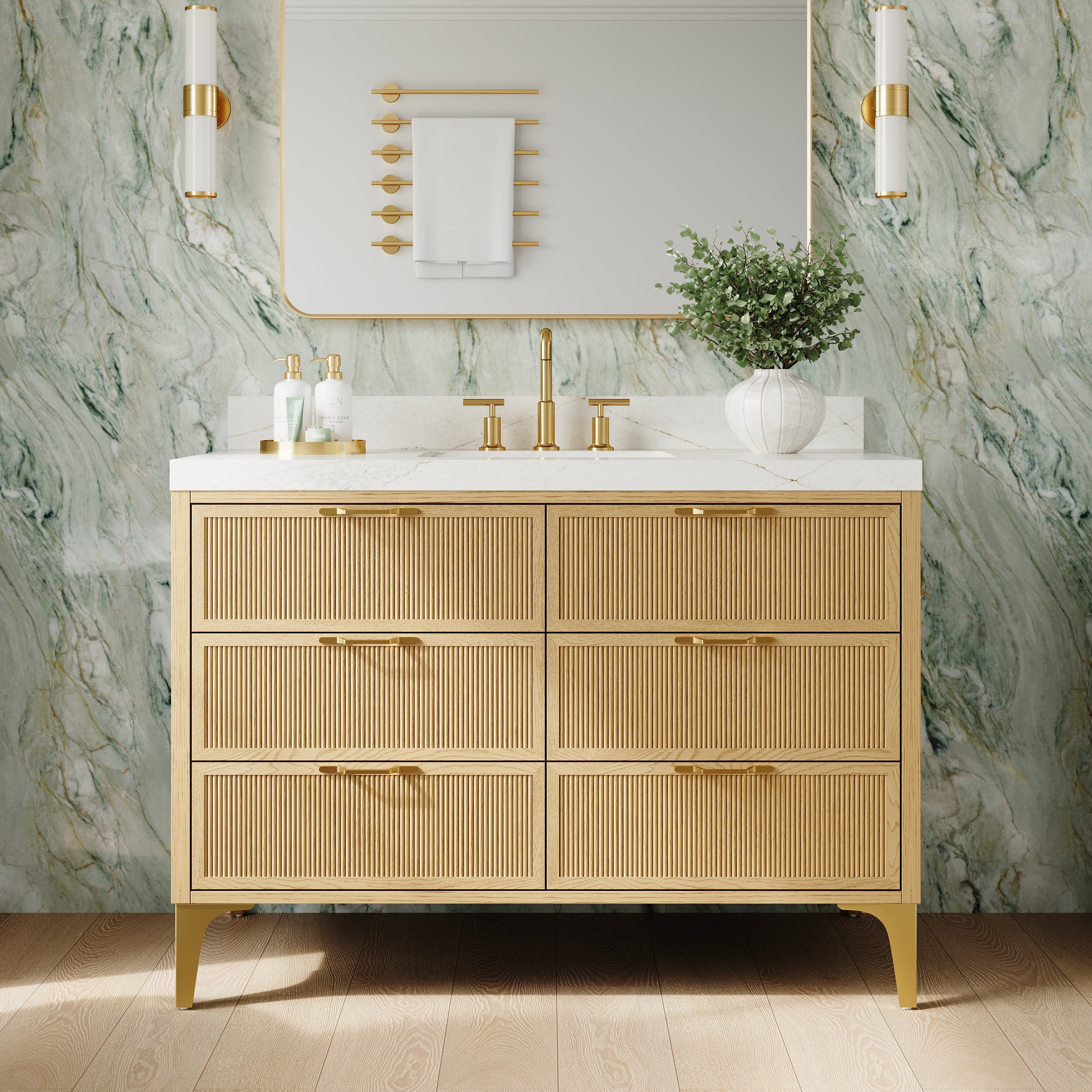
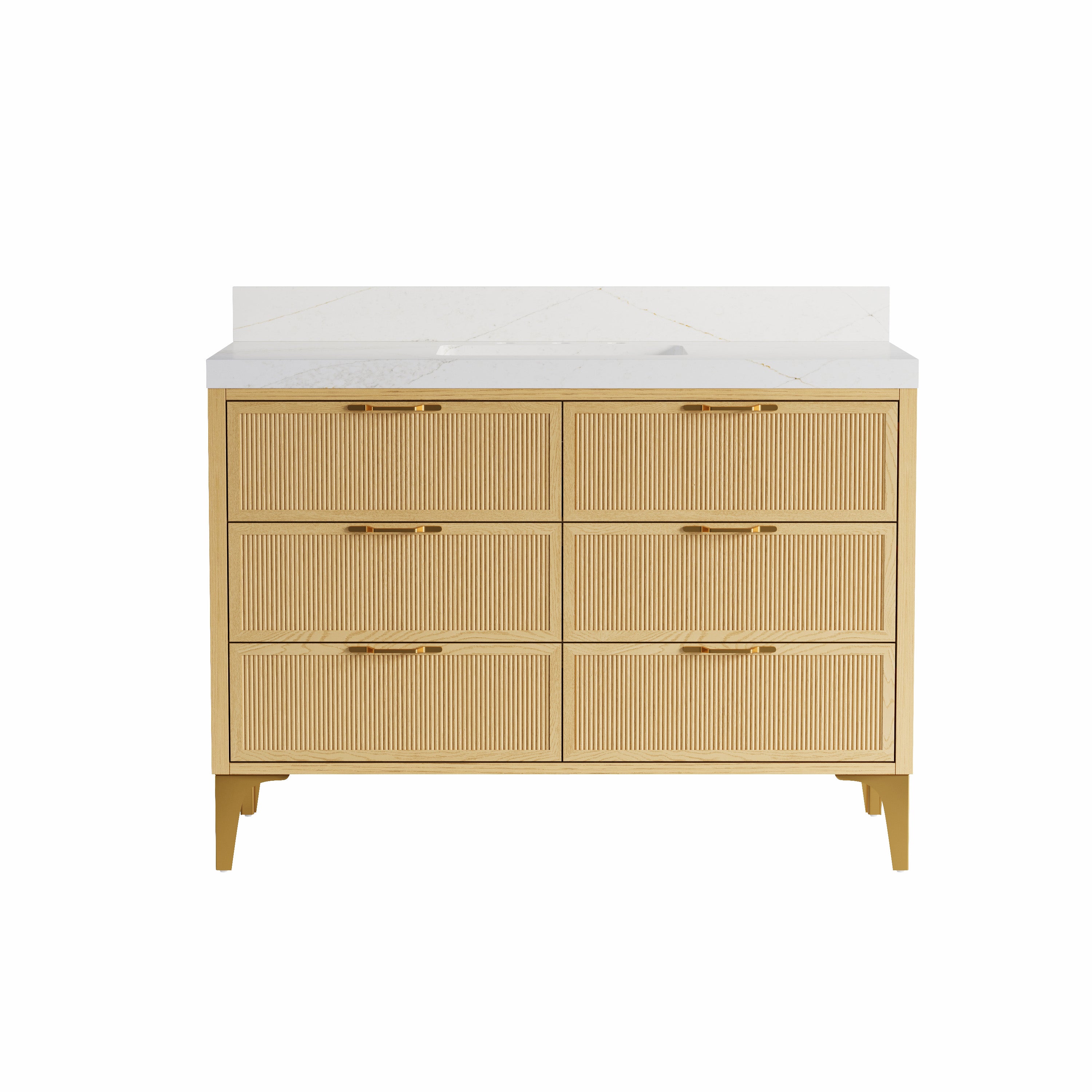


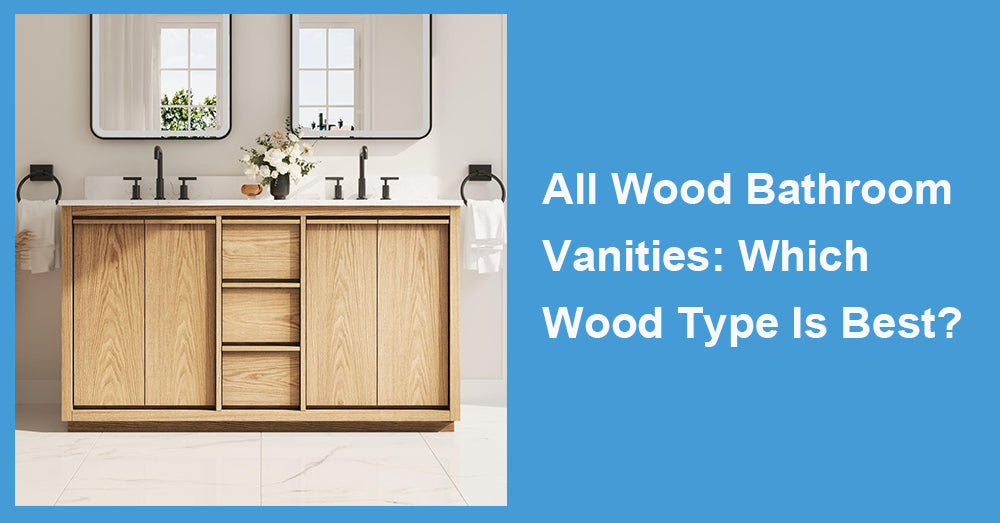
All wood bathroom vanities are having a moment, but the “best wood” question is rarely about the name on the species list. In a room where humidity swings, splashes happen, and plumbing cutouts invite moisture, the winner is usually the wood-and-build combination that stays stable, holds hardware, and keeps a finish looking clean over years of daily use.
1. Why bathrooms are harder on wood than people expect
Bathrooms push wood in two ways: moisture cycling and localized wetting. Even when wood never comes into contact with liquid water, it constantly exchanges moisture with the air until it reaches an equilibrium moisture content (EMC). A Purdue Extension note gives a practical reference point: at 70°F and 35% relative humidity, wood equilibrates at about 6.9% moisture content. When humidity climbs after showers and then drops as the room dries, wood swells and shrinks across the grain. That movement is the root cause behind stuck doors, drifting reveals, hairline finish cracks, and joint stress.
The scale can surprise buyers. Another Purdue Extension piece shows that a 32-inch-wide sugar maple panel can change in width by about 0.63 inches with only a 6% change in moisture content. A vanity side or door panel in the 24–36-inch range can experience significant movement unless the construction and finish are designed to manage it.
2. “Best wood” starts with stability, not hardness
Hardness matters, but stability is the first filter. A wood species can be tough yet still move significantly if the design ignores grain direction. Look for three stability signals:
· Engineered construction that respects movement. Frame-and-panel doors, floating panels, and properly designed rails and stiles let wood expand without splitting the finish lines.
· Finish performance under heat and humidity. The cabinet industry uses severe finish tests as a proxy for long-term durability. ANSI/KCMA A161.1 includes a “hotbox” exposure of 120°F ± 5°F and 70% ± 5% RH for 24 hours to evaluate shrinkage and heat resistance. If a vanity is built to similar expectations, it is more likely to keep its appearance when the bathroom runs warm and damp.
· Moisture control at vulnerable edges. Any raw wood at sink cutouts, back panels, and toe kicks should be sealed. Even the best species can discolor or swell if the end grain stays unprotected.
3. Comparing the common “all wood” species for vanities
Here is the practical way to think about popular woods used in vanity frames and doors, using hardness and shrinkage as directional clues.
White Oak: the balanced choice for stained looks
White oak is a go-to for stained vanities because it combines a strong grain pattern with solid dent resistance. Its Janka hardness is listed at 1,350 lbf. It is a good “middle ground” when you want a natural wood look that can handle everyday bumps without feeling overly delicate.
Hard Maple: high hardness, crisp lines, great for clean profiles
Hard Maple is prized for its smooth, tight grain and ability to take a modern profile. It is also very hard: 1,450 lbf on the Janka scale. That dent resistance helps around drawer edges and door corners that frequently come into contact. The tradeoff is that Maple can move noticeably with humidity, so the construction and finish system matter as much as the species.
Rubberwood: stable, consistent, and underrated for vanities
Rubberwood often performs well in real-world cabinetry because it is relatively stable and uniform. Its Janka hardness is about 960 lbf, and its shrinkage values are comparatively modest (the radial and tangential figures on the Wood Database page are lower than those of many dense hardwoods). If you want a predictable substrate for painted or lightly stained finishes, rubberwood can be a smart value choice when the build quality is there.

Yellow Poplar: excellent for painted vanities, not for heavy abuse
Poplar is common in painted cabinetry because it machines cleanly and paints smoothly. The downside is softness: yellow poplar’s Janka hardness is about 540 lbf. That means it will dent and ding more easily than oak or Maple, especially at high-touch edges. For painted vanities, poplar can still be “best” when the finish is tough, and the design protects corners.
Teak: naturally stable, premium feel, premium cost
Teak is known for dimensional stability and a refined, warm look. The Wood Database lists teak with a Janka hardness of 1,070 lbf and relatively low shrinkage values. In vanity terms, teak can be excellent when you want stability and a spa-like aesthetic. Still, it typically sits in a higher cost tier, so it is best reserved for designs where the material story matters.
4. What “all wood” should mean on a vanity spec sheet
In bathroom vanities, “all wood” is often used loosely. The most durable interpretation is usually solid wood for the frame (rails, stiles, face frame) paired with stable panel materials, where it makes sense. High-quality plywood panels can be very stable across humidity cycles, while still qualifying as wood-based construction. The key is transparency: a well-built vanity will specify where solid wood is used and how panels are constructed, rather than relying on a single marketing phrase.
If you are choosing between two “all wood” options, prioritize the one that provides more details about the build: joinery type, door construction, and what protects exposed edges.
5. So which wood is “best” for all wood bathroom vanities?
If you want a clean, long-lasting answer:
· Best overall for stained looks: White oak, because it balances hardness and appearance.
· Best for crisp modern profiles and dent resistance: Hard Maple, when paired with good construction and finish.
· Best value stability pick: Rubberwood, especially when you want consistent performance at a practical price point.
· Best for painted vanities: Poplar, if you accept it is softer and relies on a durable finish system.
· Best premium stability story: Teak, when the design and budget support it.
The real headline is that bathroom reward systems, not single materials, are the key. A stable design that anticipates movement, backed by a finish proven under heat and humidity stress, will outperform a “better” species used in the wrong construction.











Leave a comment
This site is protected by hCaptcha and the hCaptcha Privacy Policy and Terms of Service apply.