
















1. Mold usually starts before you can see it
Most mold problems on bathroom vanities don’t begin with visible spots. It usually starts much earlier—when moisture stays trapped under sinks, inside corners, or on surfaces that never fully dry.
Once black marks appear, it’s rarely a “new” problem. In most cases, moisture has already been sitting there for a while.
The EPA points out that when indoor humidity stays above 60%, mold risk increases sharply, especially in closed or poorly ventilated spaces. Bathrooms naturally hit that level after showers, sometimes for long enough that the cabinet never fully recovers before the next use. Source: EPA
It’s less about one wet moment, more about repeated damp cycles that never really reset.
2. The real problem is often hidden, not obvious
Most mold inside bathroom vanities doesn’t come from major leaks. It comes from small things that go unnoticed.
Things like:
· a slow drip under the sink that’s easy to ignore
· condensation forming on cold pipes
· damp bottles sitting directly against cabinet walls
· old silicone seams that no longer fully seal
· wet towels stored inside the cabinet
Individually, none of these seem serious. But together, they create a steady damp environment.
Once moisture gets trapped in corners or behind plumbing, airflow usually can’t clear it fast enough.
3. Airflow does more than any cleaner
People often reach for sprays or mold cleaners first, but in real use, ventilation is what actually prevents the issue.
Even if a fan is installed, running it only during the shower usually isn’t enough. Moisture stays in the air and slowly settles into cabinets. Leaving the fan on a bit longer—around 20–30 minutes—helps more than most people expect.
Wood and engineered boards don’t just “get wet and dry.” They constantly exchange moisture with the air. The USDA Forest Service describes this as a continuous process, which is why humidity control directly affects how stable bathroom cabinets stay over time. Source: USDA Forest Service
If the room air stays damp, the cabinet basically stays in a moisture cycle.
4. Inside-cabinet airflow is often ignored
Even if the bathroom itself is well ventilated, the inside of a vanity cabinet behaves differently.
It’s a closed space. Air doesn’t move much, especially under the sink where pipes block circulation. Moisture tends to stay there longer than expected.
A few small habits help more than people think:
· letting cabinet doors open occasionally
· keeping storage from blocking airflow completely
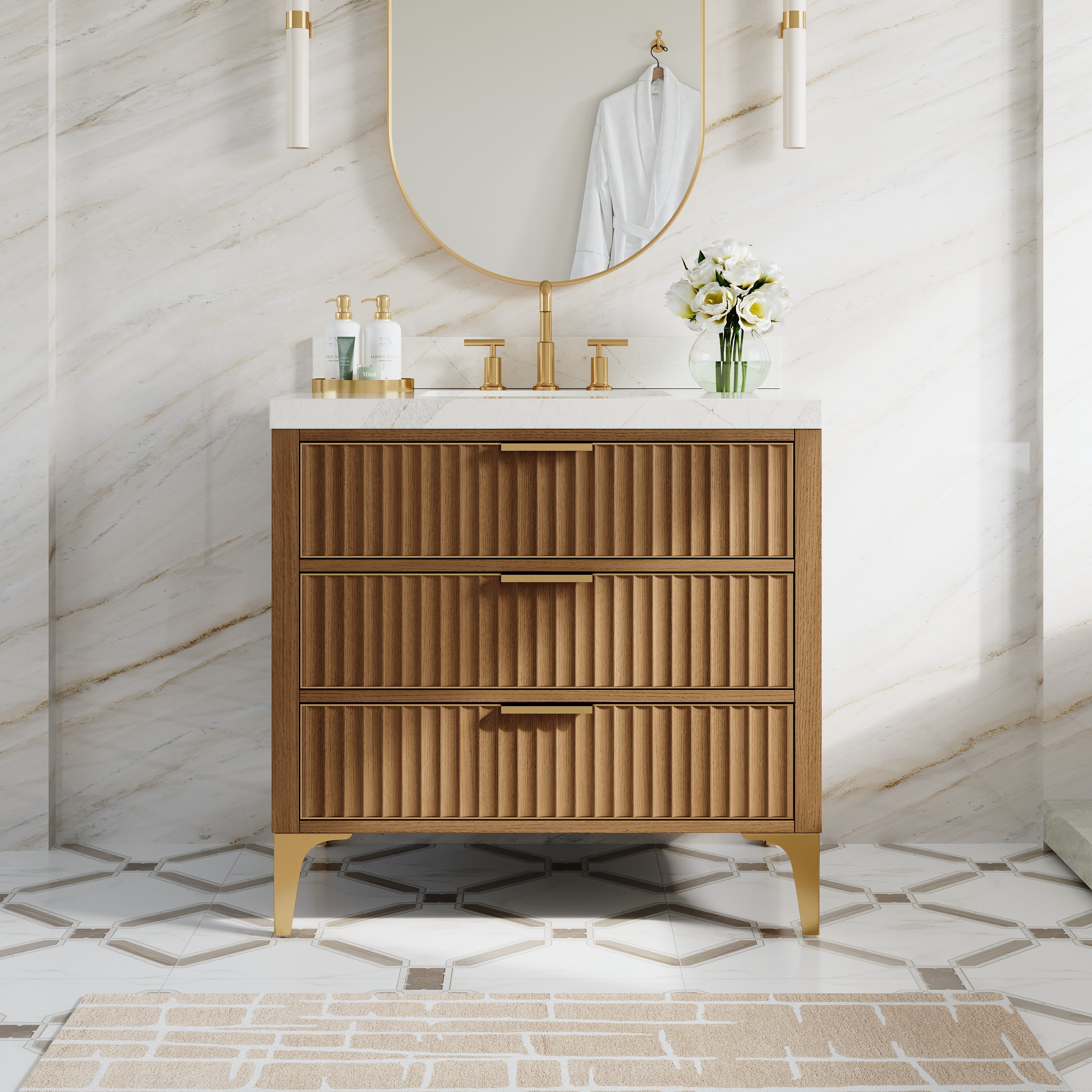
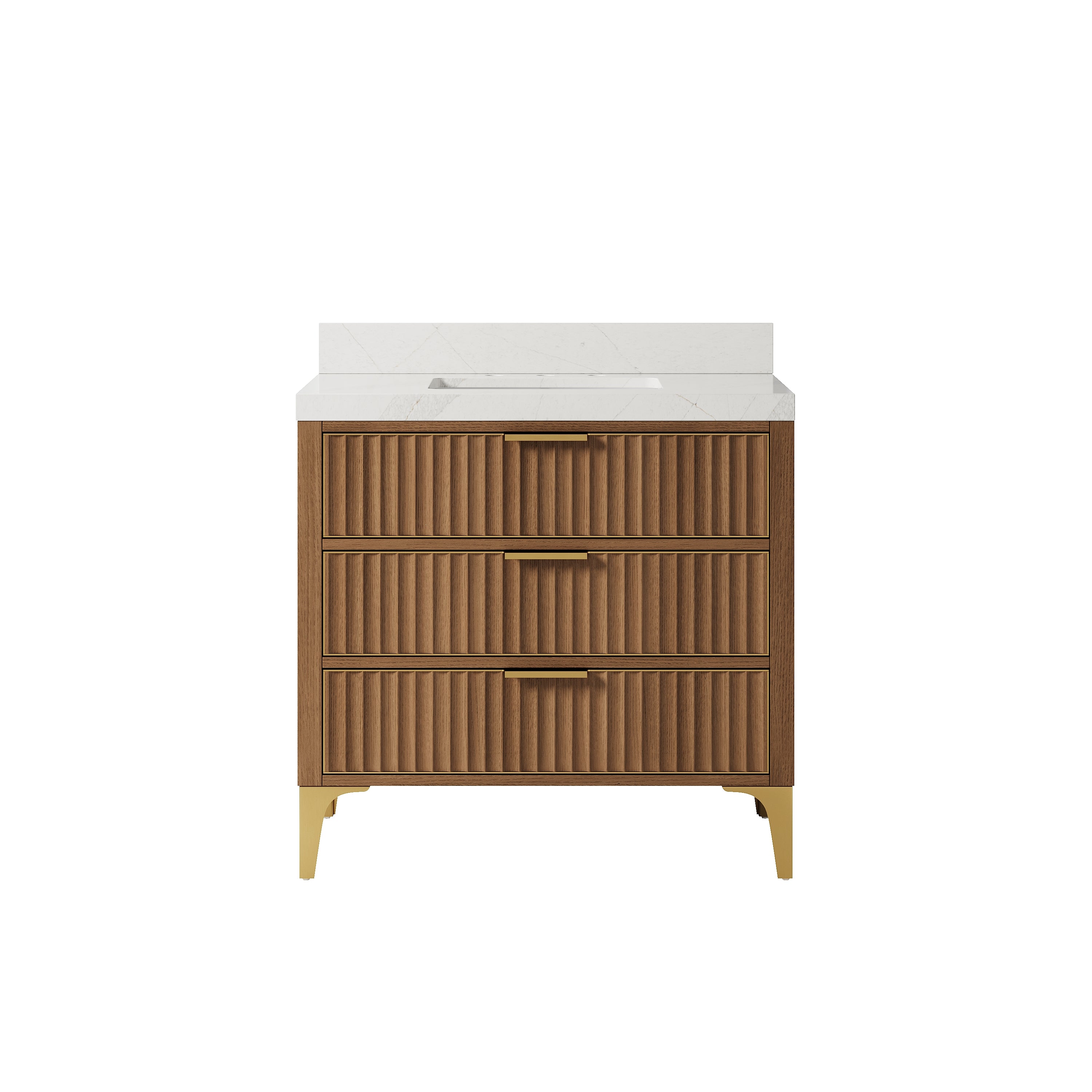
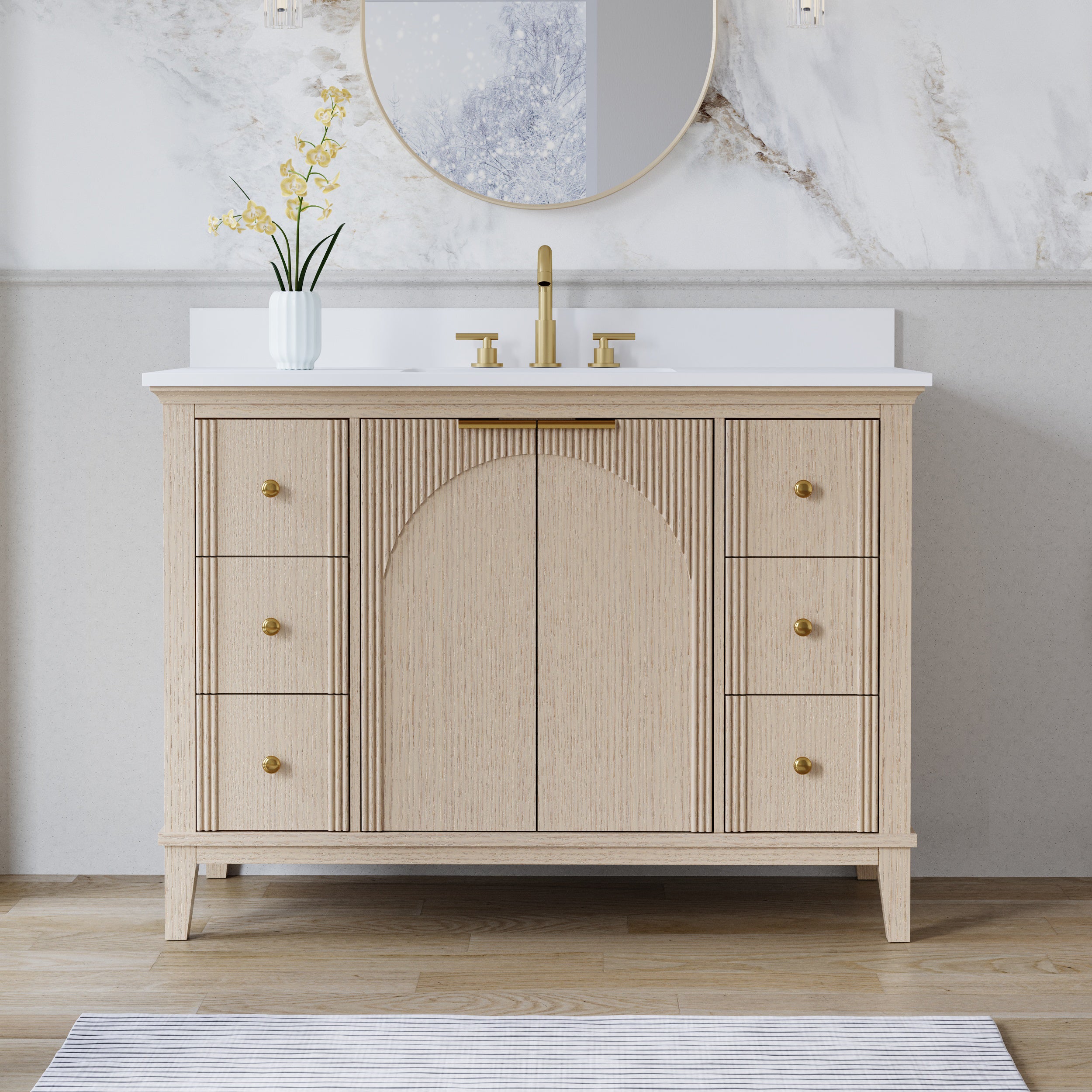
· using raised legs or space under the cabinet to improve drying
These don’t feel like “maintenance,” but they change long-term results.
5. Material choice affects how fast mold spreads
Not all vanity materials react the same way to moisture.
Solid wood tends to absorb and release moisture gradually. It can still grow mold on the surface, but it’s often easier to clean and refinish if caught early.
Plywood is more stable, but edges matter a lot. If water reaches unsealed layers, moisture can sit between veneers and stay hidden.
MDF and particleboard are the most sensitive. Once they absorb water, the material tends to hold it longer, which gives mold an easier environment.
Even moisture-resistant particleboard like MR10 or MR50 (under ANSI A208.1) only limits swelling in testing conditions. It doesn’t make the material waterproof in real bathroom use. Source: ANSI A208.1
So “moisture-resistant” helps, but it doesn’t eliminate risk.
6. Small mold spots can sometimes be handled early
If mold is still light and surface-level, it can usually be cleaned without major work.
CDC guidance suggests using simple detergent and water for small mold areas, followed by thorough drying. It also warns against mixing cleaning chemicals like bleach and ammonia. Source: CDC
In practice, gentle cleaning often works better than strong chemicals, especially on finished wood or coated surfaces.
But if the area feels soft, smells damp, or keeps coming back, cleaning is no longer solving the real issue.
7. When mold keeps coming back, something is still wrong

If mold returns in the same spot, it’s usually not a cleaning issue anymore.
It often points to:
· a small ongoing leak
· moisture trapped inside the material
· or airflow that never fully reaches that area
At that point, surface cleaning only resets the look, not the condition.
The real fix is usually stopping the moisture source first, then dealing with the surface after.
8. EXTRA PRACTICAL NOTE (added insight)
One detail that often gets overlooked is how seasonal changes affect bathroom vanities. In colder months, indoor heating dries the air quickly, but bathrooms still generate heavy short bursts of humidity. That contrast creates repeated expansion and contraction inside cabinet materials, especially around sink cutouts and edge seals.
In warmer or more humid seasons, the issue flips. The cabinet may never fully dry between uses, especially if airflow is weak or the bathroom is used frequently throughout the day. Over time, this uneven cycle is what accelerates surface staining and early mold growth.
Even small monitoring habits can make a difference. A basic humidity meter placed inside or near the vanity area helps identify patterns people usually don’t notice—like humidity staying above 60% for hours after showers or slow recovery overnight. Once these patterns are visible, it becomes easier to adjust ventilation timing or storage habits before visible damage appears.
This is also where installation details matter more than most people expect. Cabinets installed too tightly against walls, or without any clearance underneath, tend to trap moisture longer. A small design gap or airflow path often performs better than heavy sealing alone.
Final takeaway
Preventing mold on bathroom vanities is less about occasional cleaning and more about controlling moisture conditions over time.
Humidity control, airflow, and early leak detection matter more than any cleaning product. Once a cabinet stays consistently dry between uses, mold rarely becomes a serious issue.
In most real cases, the difference between a clean cabinet and a mold-prone one is not the material alone, but how moisture is allowed to sit long enough to become a pattern.




















Leave a comment
This site is protected by hCaptcha and the hCaptcha Privacy Policy and Terms of Service apply.