
















1. Quartz is quietly becoming the default choice
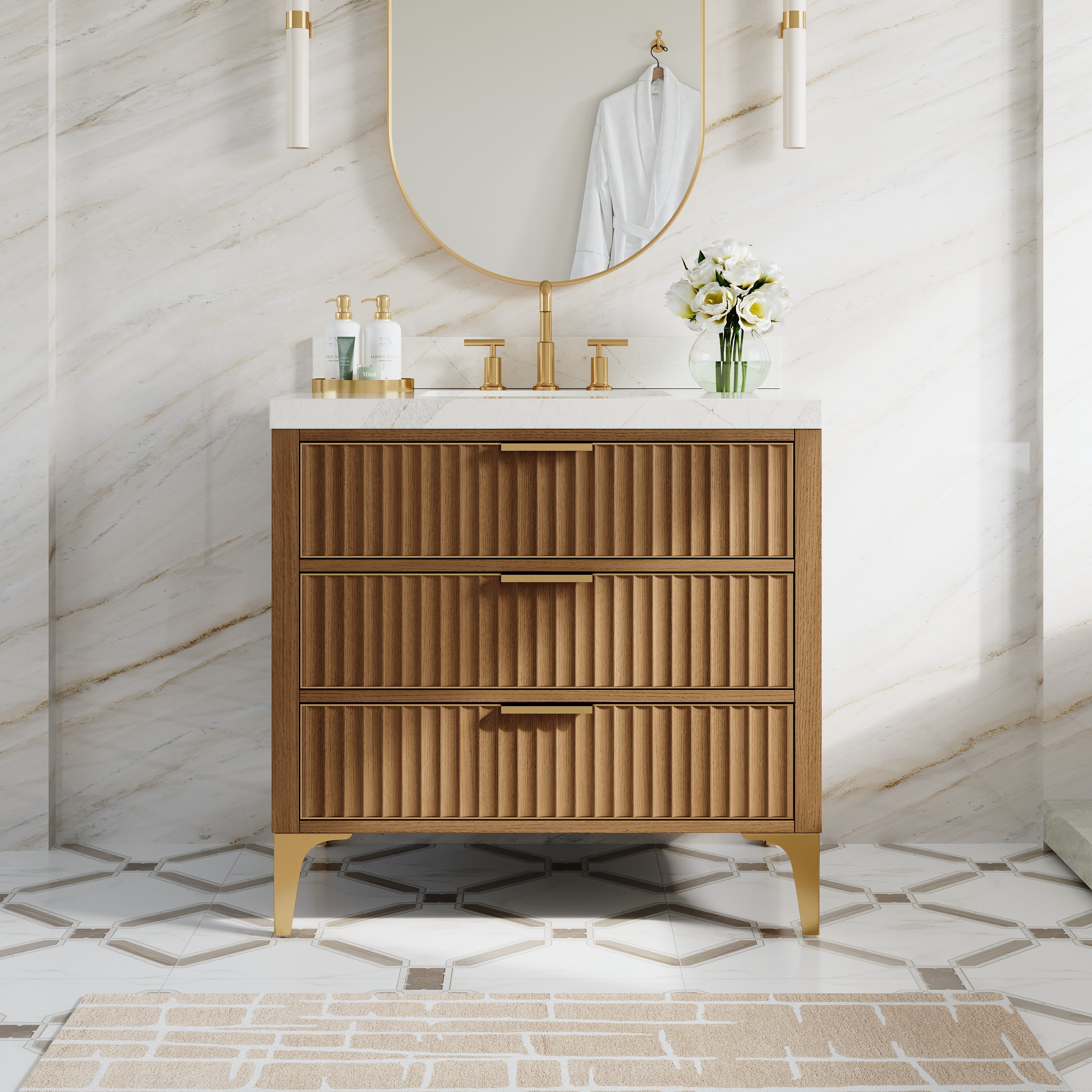
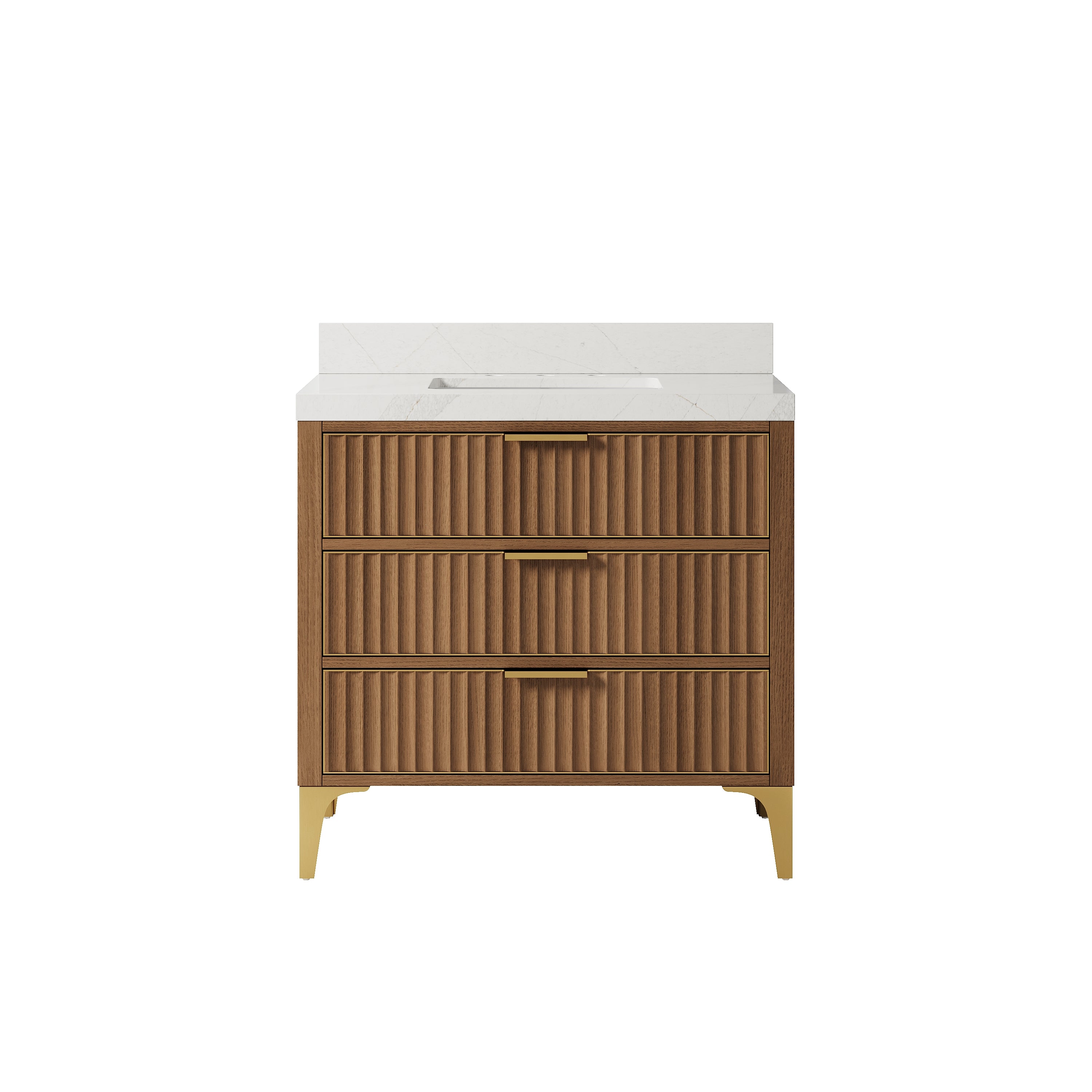
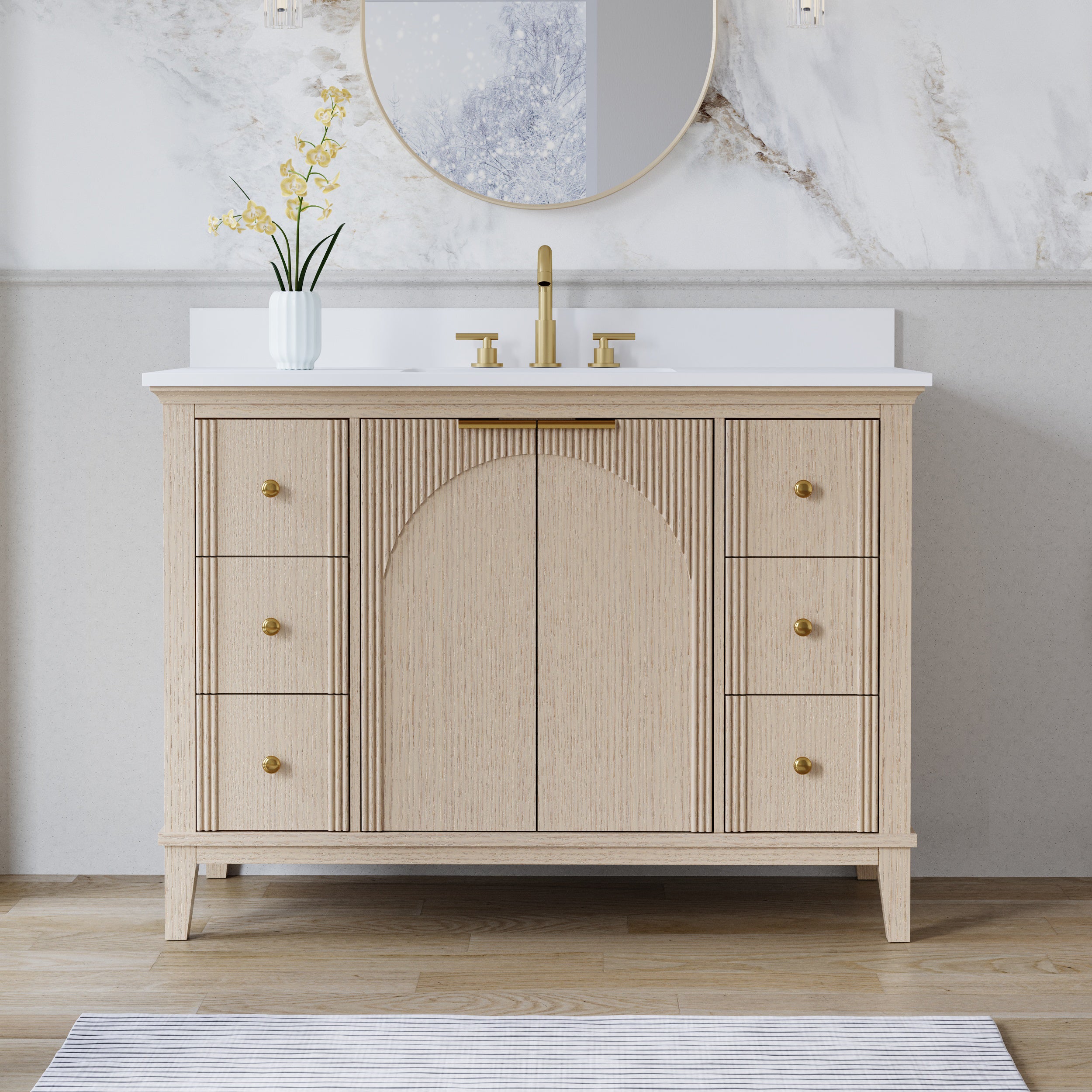
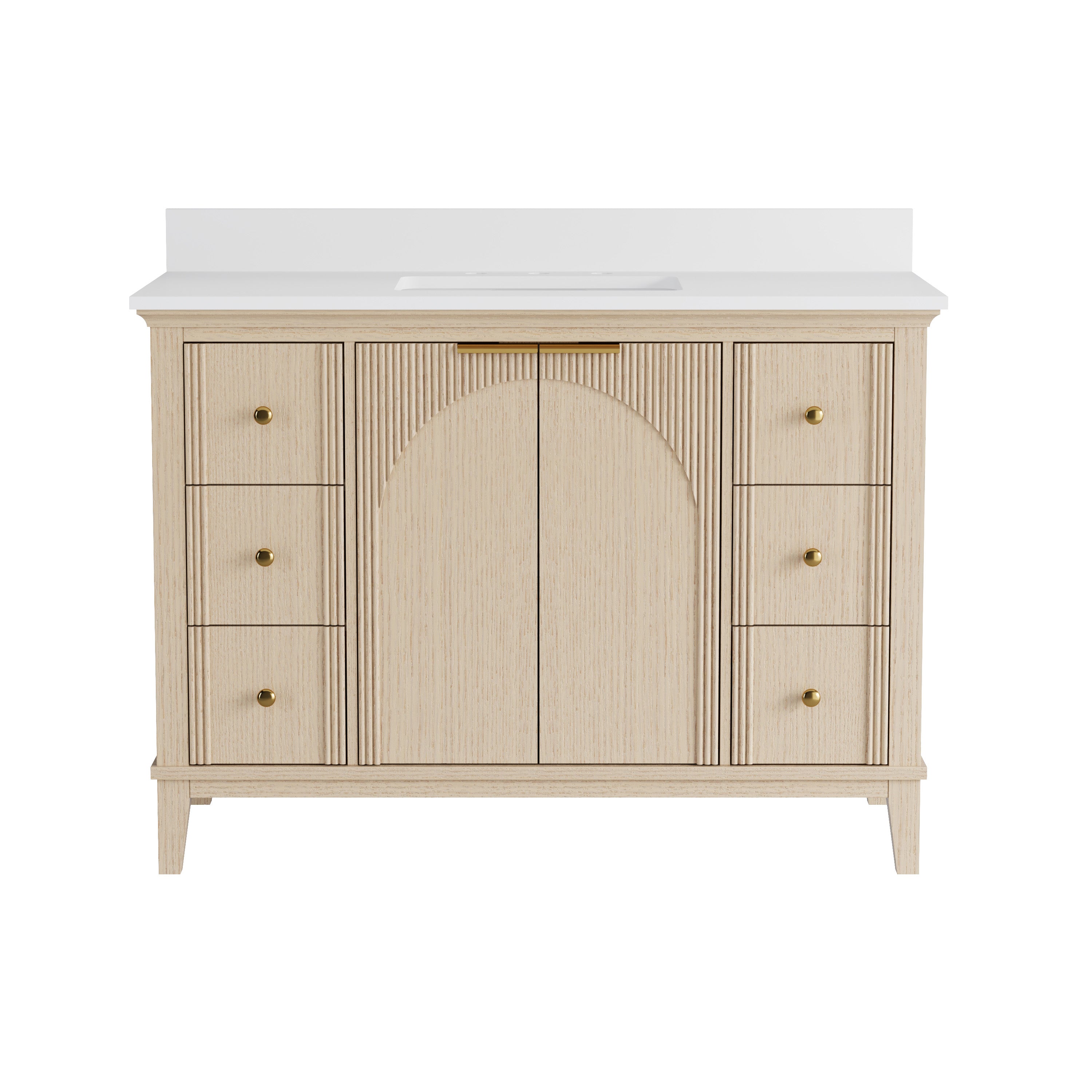
In bathroom renovations, countertop material choices have shifted noticeably toward engineered quartz. Recent Houzz trend data show that quartz accounts for about 45% of vanity top selections, while marble accounts for about 13%. That gap is no longer subtle—it reflects a steady move toward low-maintenance surfaces in everyday bathroom design.
What’s interesting is not just the numbers, but the direction. Quartz is no longer seen as a “marble alternative.” It is now the baseline for most projects where practicality matters.
2. Marble still wins on first impression
Marble continues to hold a strong position for one simple reason: it looks natural in a way engineered materials still try to replicate.
Each slab has unique veining, and that randomness gives bathrooms a softer, more architectural feel. In higher-end interior design, marble is still often used as a visual anchor—especially in bathrooms that aim for a spa-like or classic aesthetic.
But that appeal comes with trade-offs that show up quickly in daily use.
3. The real difference shows up after installation
Once installed, the gap between marble and quartz becomes less about design and more about maintenance behavior.
Marble is porous and reactive. That means water spots, soap residue, and even some skincare products can leave marks over time if not cleaned quickly. Even sealed marble typically needs re-sealing every 6–12 months, depending on use.
Quartz behaves differently. It is non-porous, which means liquids stay on the surface rather than being absorbed into it. For most households, that translates into a simple routine: wipe and move on.
This difference is one of the main reasons quartz continues to gain share in bathroom applications.
In real usage scenarios, this also affects how the bathroom feels over time. Marble often develops a lived-in patina that some homeowners appreciate, while others see it as uneven aging. Quartz tends to maintain a more uniform appearance, even after years of daily exposure to water, cleaning agents, and cosmetics.
4. Durability is not just about hardness
On paper, quartz is harder than marble. Quartz sits around 7 on the Mohs scale, while marble is closer to 3. That affects scratch resistance, especially in bathrooms where items like razors, bottles, and metal tools are frequently placed on the surface.
But durability in real use is more about retaining appearance than about raw hardness.
· Marble develops patina, etching, and surface softening over time
· Quartz is designed to stay visually stable for years with minimal change
Neither is “wrong”—they age differently.
5. Cleaning habits decide more than material choice
A lot of countertop issues come down to cleaning behavior, not material failure.
Marble requires more controlled cleaning:
· pH-neutral products only
· No acidic cleaners
· quick response to spills
Quartz is more forgiving:
· Standard household cleaners are usually fine
· No sealing required
· less risk from accidental spills
For busy bathrooms, especially shared spaces, this difference often becomes the deciding factor.

6. Cost is closer than most people expect
There is a common assumption that marble is always more expensive, but that is not consistently true.
Entry-level marble can fall into a similar range as mid-tier quartz. However, high-end marble slabs can scale significantly in price depending on rarity and veining quality. Quartz pricing tends to be more stable because it is manufactured rather than quarried.
In practical terms, quartz often becomes the more predictable budgeting option, especially for larger vanity sizes like 60-in or 72-in double-sink setups.
Installation costs also tend to favor quartz in many projects, since the consistency of slabs reduces fabrication complexity and cutting and fitting waste.
One often-overlooked factor is the long-term replacement cost. Marble tops that stain or etch heavily may require resurfacing or even full replacement earlier than expected. At the same time, quartz typically avoids that cycle, which changes total lifecycle value in long-term renovations.
7. Design flexibility and bathroom styling impact
Beyond performance, the two materials influence the overall design of the bathroom.
Marble tends to dictate the rest of the palette. Once a strong-veined marble slab is chosen, the tile, wall color, and fixtures often need to be adjusted to suit it. It becomes the “center of gravity” in the space.
Quartz is more adaptable. Because patterns are controlled and repeatable, it allows more freedom in mixing textures—wood vanities, matte tiles, metal finishes, or even bolder wall colors can coexist without visual conflict.
This is one reason quartz is often chosen for modern, minimalist bathrooms where flexibility matters more than focal drama.
8. Which one actually makes more sense?
There is no universal winner, but there is a clear usage pattern:
Marble works best when:
· Visual uniqueness is the priority
· Maintenance is not a concern
· The bathroom is lower traffic
Quartz works best when:
· Daily use is heavy or shared
· low maintenance matters
· long-term consistency is important
Final takeaway
The decision between marble and quartz is no longer about luxury vs budget. It is really about lifestyle.
Marble delivers a natural character that cannot be fully replicated. Quartz delivers stability that fits modern bathroom routines.
Most renovation projects today are not choosing between good and bad materials—they are choosing between two different definitions of “easy living.” Over time, quartz continues to expand its role because it removes daily friction, while marble remains a deliberate design choice where visual identity matters more than maintenance simplicity.
In many cases, the best choice is not about preference alone, but about how the space is actually used day after day.












Leave a comment
This site is protected by hCaptcha and the hCaptcha Privacy Policy and Terms of Service apply.