














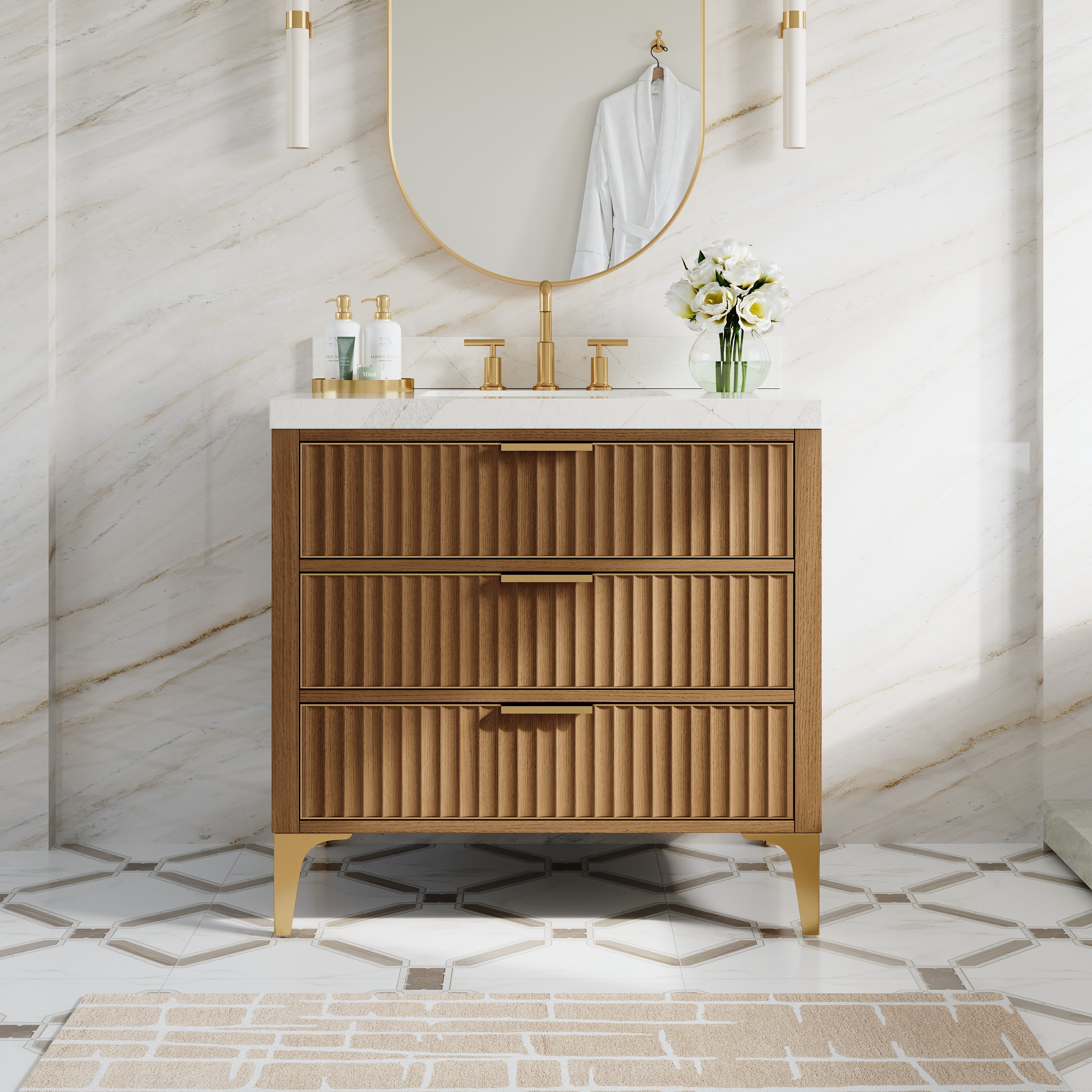
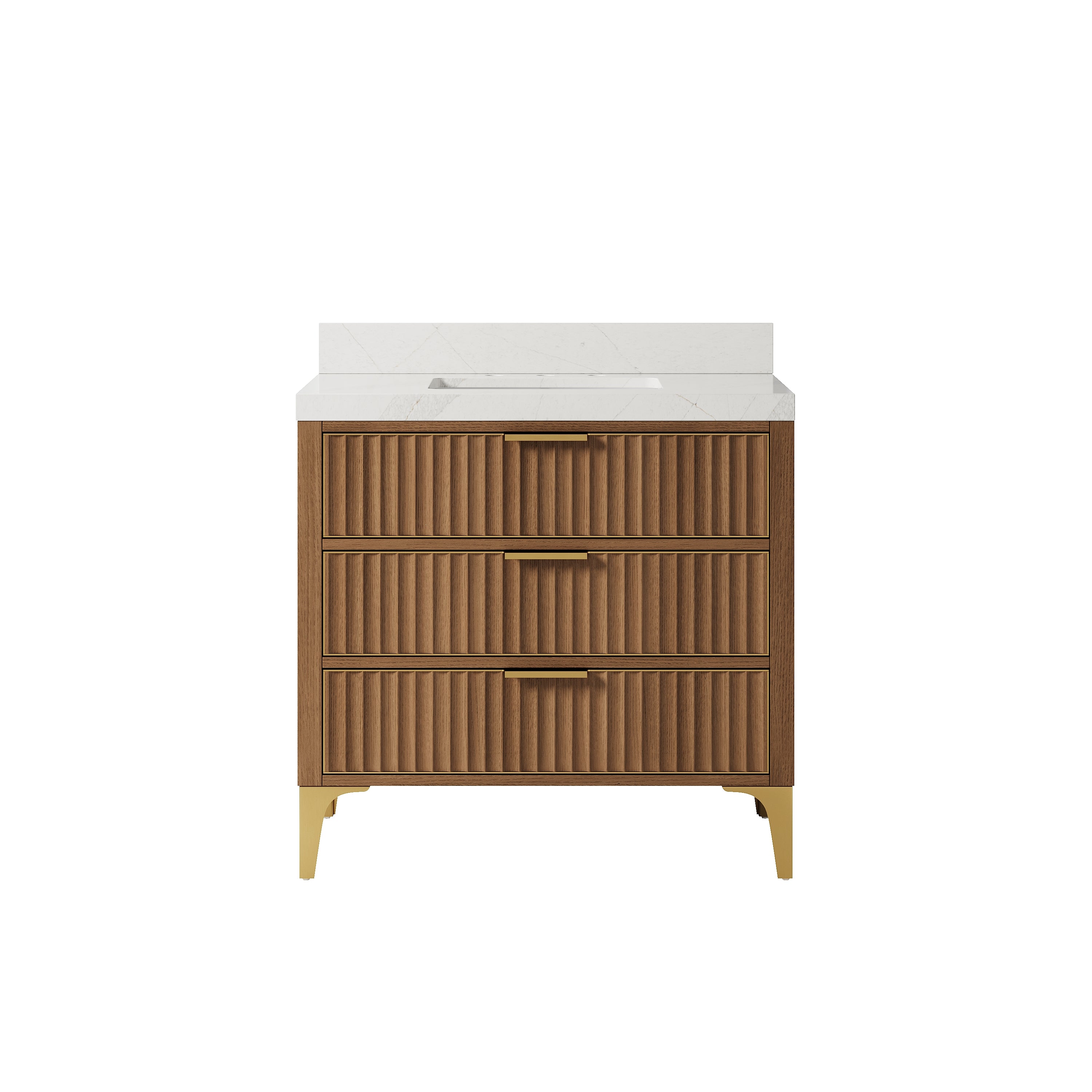
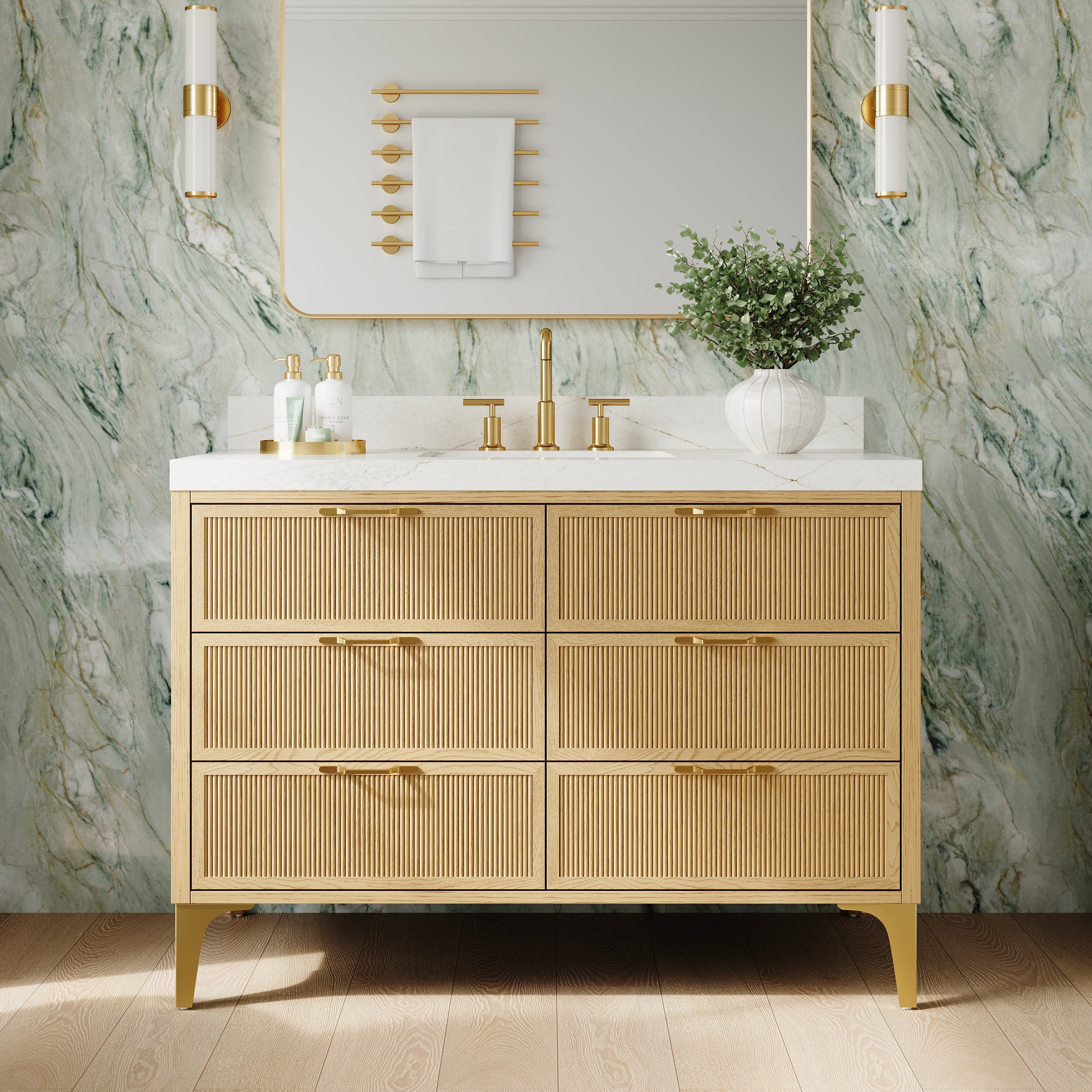
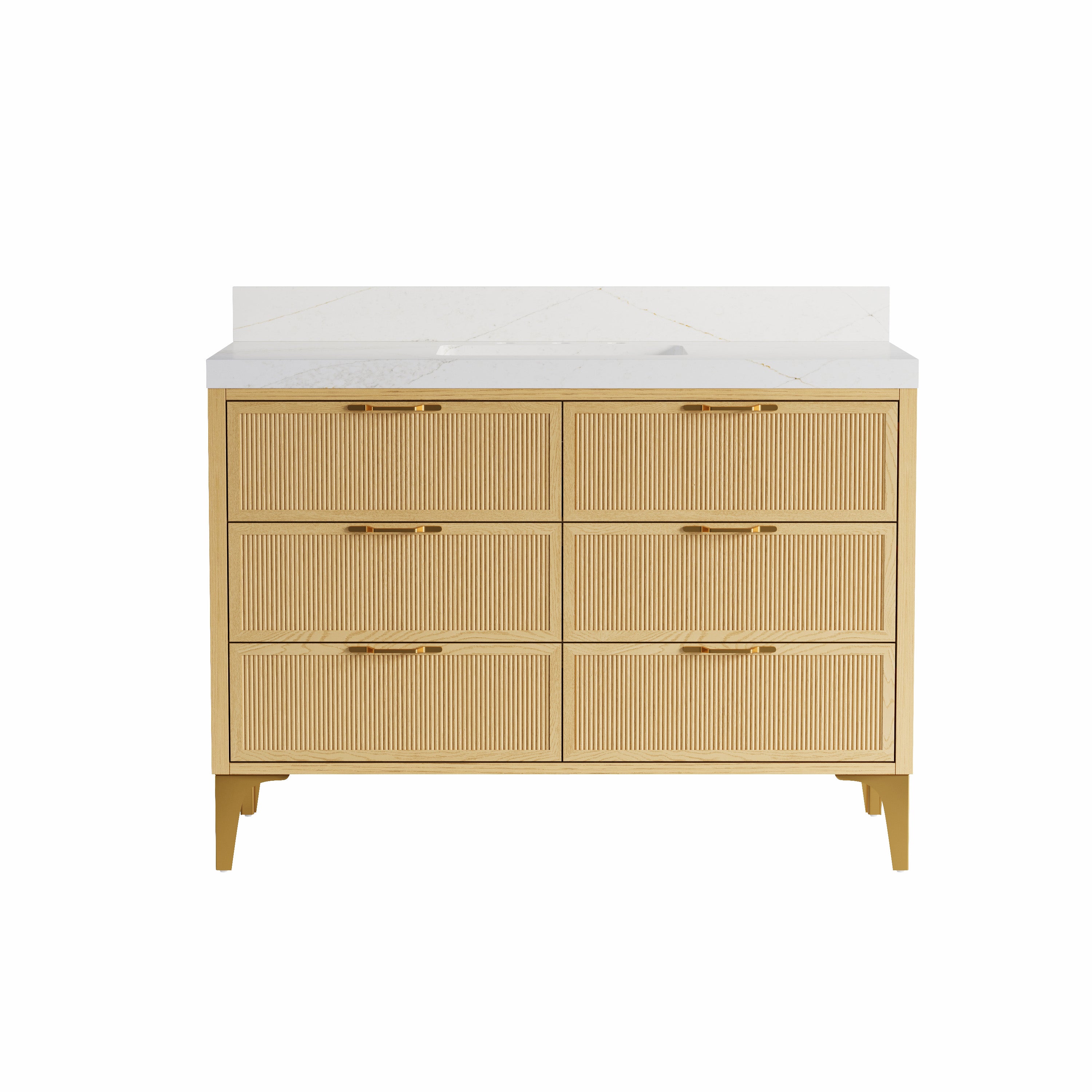


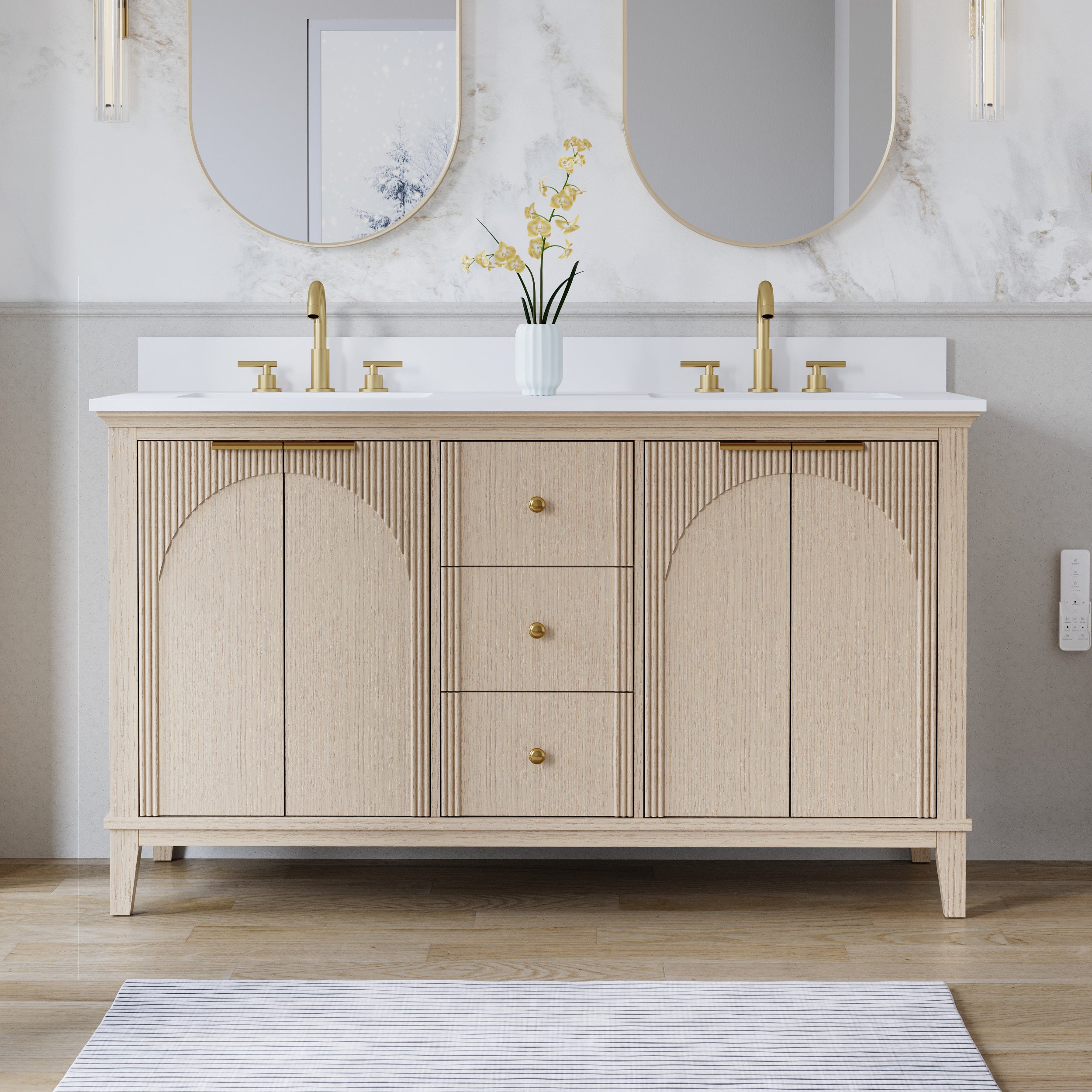
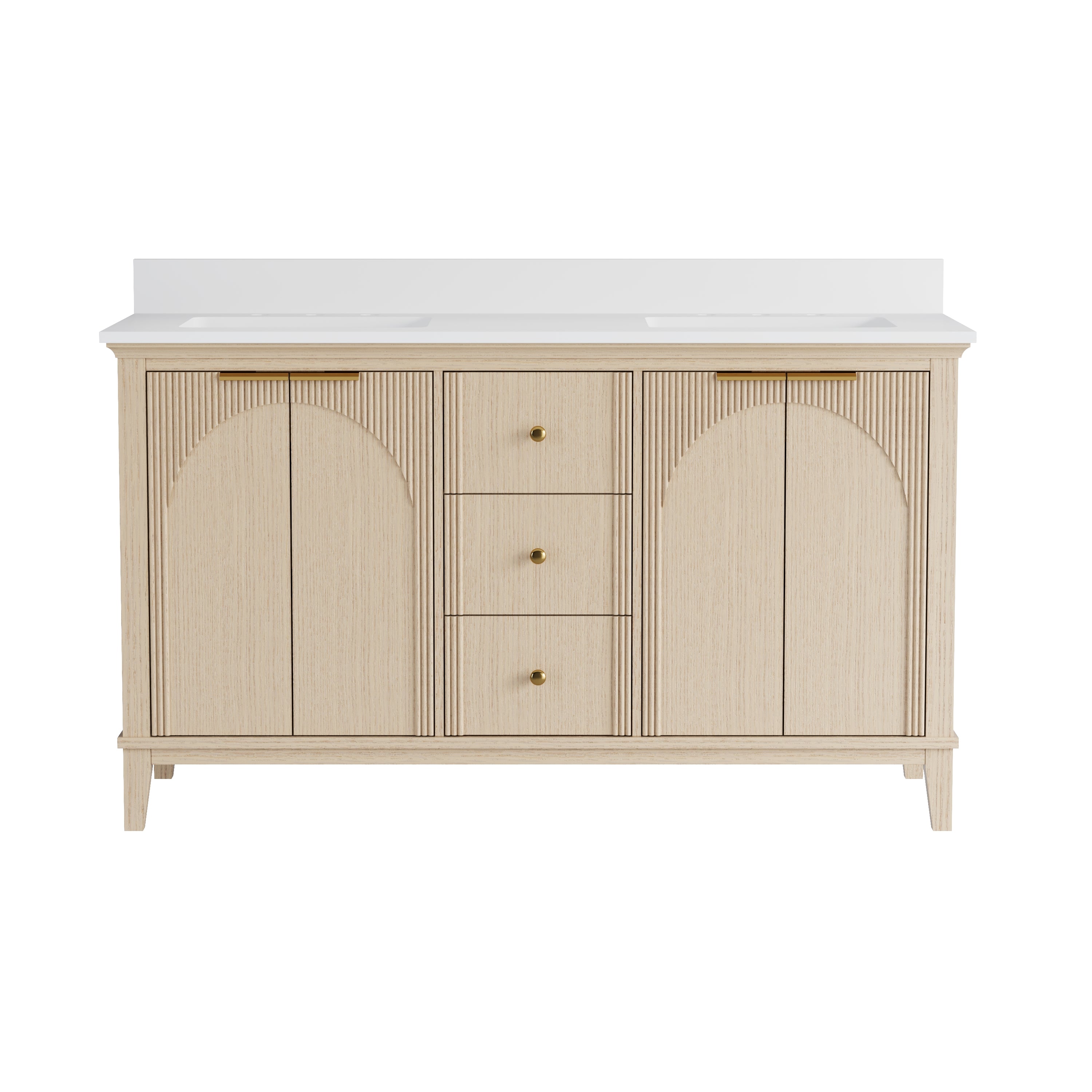
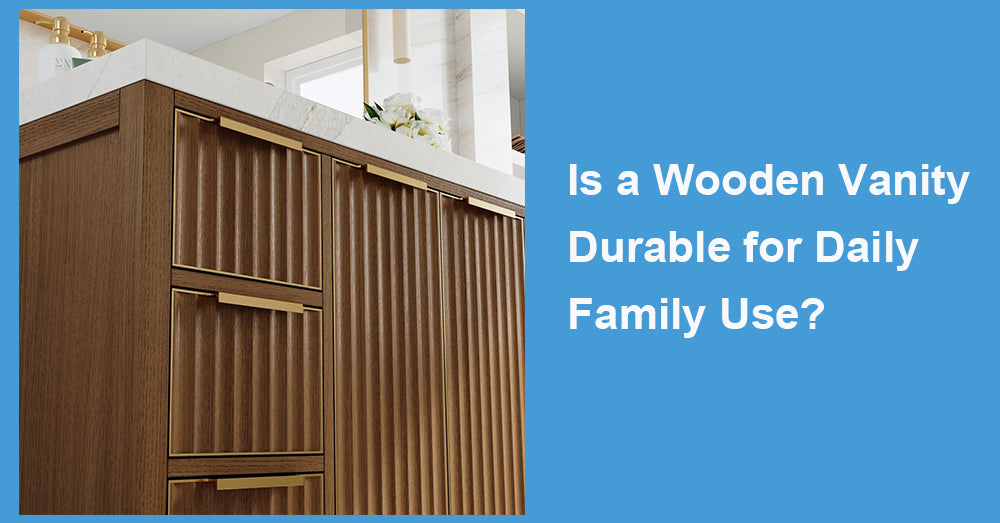
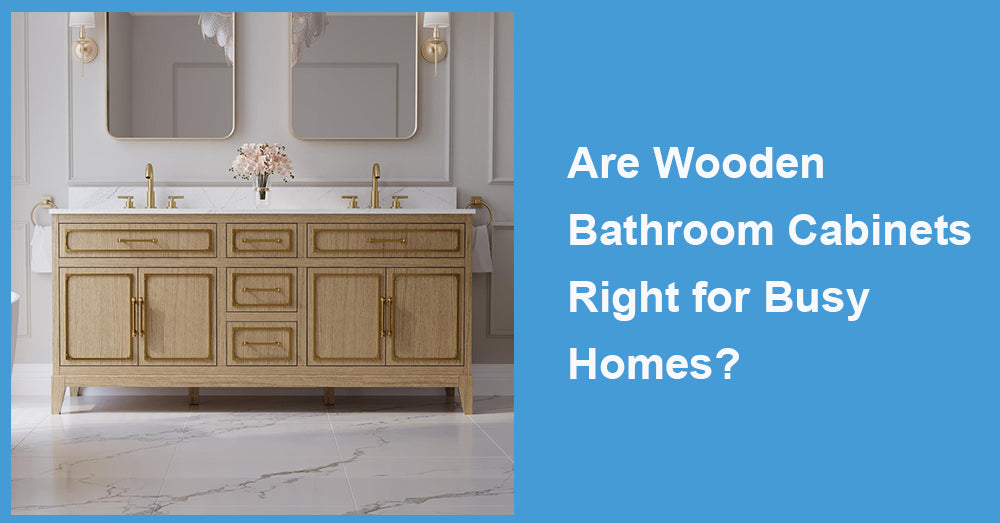
A busy household can be rough on a bathroom, which is why many people ask whether a wooden vanity can truly handle daily family use. The short answer is yes, a well-built wooden vanity can be very durable, especially when it uses solid wood in high-stress areas, a stable cabinet box, and a protective finish that seals edges and cutouts. Durability, however, is not just about the material label. It comes from smart construction, quality hardware, and simple moisture habits that keep the bathroom from staying damp for hours.
What “Durable” Means in a Family Bathroom
Family use creates repeated stress in a few predictable ways:
· Constant opening and closing of doors and drawers.
· Water splashes around the sink, toothpaste drips, wet hands on drawer pulls.
· Steam from back-to-back showers.
· Cleaning sprays and frequent wipe-downs.
· Occasional “life happens” events like a slow leak or an overflowing sink.
A vanity that survives family life needs to stay square, keep hardware tight, and keep its finish intact where water tends to sit.
Why Wood Can Be a Strong Long-Term Material
Wood is hygroscopic, which means it naturally exchanges moisture with the surrounding air. That moisture relationship can influence performance and dimensional movement, especially in humid rooms (Source: USDA Forest Service, Forest Products Laboratory, “Moisture relations and physical properties of wood”). The key point is that wood’s response is generally predictable, so good cabinet design can plan for it through joinery, panel construction, and finish systems.
In practical terms, wood can be durable because it tends to “age gracefully”:
· Minor scratches and finish wear can often be touched up or refinished.
· Solid wood components can be repaired rather than forcing full replacement.
· Strong wood frames can hold fasteners for hinges and slides more reliably over time.
The Biggest Durability Factor Is Not Wood Species. It Is Moisture Control.
A family bathroom is often a high-humidity space, and humidity affects everything: the vanity, the walls, and what you store inside the cabinet.
EPA guidance recommends keeping indoor relative humidity below 60%, ideally between 30% and 50%, to reduce moisture problems and mold risk (Source: U.S. Environmental Protection Agency, “Mold Course Chapter 2”; Source: U.S. EPA, “A Brief Guide to Mold, Moisture and Your Home”; Source: U.S. EPA, “Care for Your Air”). If the bathroom stays above these levels for long periods, cabinet interiors dry slowly, finishes break down faster, and musty odors become more likely.
Family-friendly tip: if mirrors stay fogged for a long time after showers, your vanity is living in a tougher environment than it needs to.
Wood vs. MDF in Real Family Life: Why “One Leak” Matters
Many lower-cost vanities use MDF or particleboard in the cabinet box, shelves, or base. These materials can look smooth at first, but moisture is where the difference shows up.
A Composite Panel Association technical bulletin notes that when particleboard or MDF swells and expands beyond its original dimensions due to high humidity or water exposure, that swelling is not reversible upon re-drying (Source: Composite Panel Association, “Dimensional Stability of Particleboard and MDF” Technical Bulletin). That is a major reason wood-based construction is often considered more resilient for daily family use: if a slow leak happens, solid wood parts are often more repairable, while swollen fiberboard edges and toe-kicks can become permanently distorted.
Wood is not waterproof, but it is often more serviceable when accidents happen.
The “Durable Wooden Vanity” Blueprint: What to Look For
If you want a wooden vanity that holds up to kids, guests, and busy mornings, focus on these build details.
1. A Rigid Cabinet Box That Stays Square
Durability starts with the box. If the cabinet twists out of square, drawers rub and doors stop aligning. Look for a vanity that feels stiff when you gently press the side panels and base.
A common high-performance construction is solid wood doors and face frame paired with a stable cabinet box material. What matters most is that the box is rigid and well-supported.
2. Fully Sealed Edges and Cutouts
In family bathrooms, water damage usually begins at:
· Sink cutout underside and countertop edge.
· Plumbing holes in the back panel.
· Toe-kick and bottom edges near wet floors.
· Door and drawer edges where water sits after handwashing.
A durable vanity is sealed in these invisible zones, not just finished on the front. If you can open the doors and see raw, uncoated wood around cutouts or corners, that is a red flag for long-term family use.
3. Soft-Close Hardware That Reduces Daily Wear
A family bathroom sees constant slamming unless the cabinet prevents it. Renovation data shows soft-close is now the norm: 78% choose soft-close drawers and 75% choose soft-close doors (Source: 2025 U.S. Houzz Bathroom Trends Study). Those features help with durability because they reduce impact stress on hinges, slides, and joints.
Soft-close is not only “nice.” It is a mechanical wear reducer.
4. Storage That Prevents Overloading
Overloaded shelves and jam-packed drawers cause racking and sagging over time. A family-friendly vanity typically has:
· A mix of shallow top storage for daily items and deeper storage for bulk items.
· Full-extension drawers, so you do not yank and twist to reach the back.
· Simple organizers to prevent items from shifting and jamming.
How Long Can a Wooden Vanity Last With Family Use?
Lifespan depends on build quality, humidity habits, and maintenance. A commonly cited baseline is that bathroom vanities typically last 10 to 20 years, with good materials and upkeep supporting longer service life (Source: Edward Martin, “How Long Do Bathroom Vanities Last?”, 2025). In real homes, a well-sealed wooden vanity with strong hardware often stays solid within that range and can exceed it when moisture is managed consistently.
Think of it this way: the vanity does not usually “wear out” first. Poor ventilation, leaks, and edge exposure often shorten its life more than normal use.
Daily Habits That Make a Wooden Vanity Family-Proof
You do not need complicated routines. You need a few repeatable habits.
After showers
· Run the exhaust fan during showers and for 15 to 30 minutes after.
· If the bathroom tends to trap steam, leave the vanity doors slightly open for a short time so the interior can dry.
These habits support the humidity targets of keeping RH below 60%, ideally 30% to 50% (Source: U.S. EPA).
At the sink
· Wipe standing water from the countertop edge and around the faucet.
· Teach kids a simple rule: “No puddles left behind.”
Twice a year
· Check shutoff valves, supply lines, and the trap for slow leaks.
· Look at the cabinet base and corners for soft spots or discoloration.
This one step can prevent the “non-reversible swelling” scenario that affects MDF and particleboard when exposed to moisture (Source: Composite Panel Association).
Signs Your Wooden Vanity Is Handling Family Use Well
Good signs:
· Doors stay aligned and close evenly.
· Drawers glide smoothly without rubbing.
· The base stays firm with no spongy toe-kick.
· No persistent musty smell inside the cabinet.
· Finish remains intact on edges and around the sink.
Early warning signs:
· Peeling or whitening finish near edges.
· Slight swelling at bottom corners.
· Hinges loosening repeatedly despite adjustments.
· A cabinet interior that always feels damp.
If you catch these early, many issues can be corrected with sealing, ventilation improvements, and minor repairs.

Conclusion
A wooden vanity can be very durable for daily family use when it is built with a rigid cabinet structure, sealed finishes at edges and cutouts, and quality hardware like soft-close drawers and doors. Real-world data shows soft-close features are widely adopted (78% drawers, 75% doors), reflecting how important this is for long-term performance (Source: 2025 U.S. Houzz Bathroom Trends Study). Humidity control is the other half of the durability equation: keeping indoor RH below 60%, ideally 30% to 50%, helps protect both the vanity and the room (Source: U.S. EPA). And if you are comparing materials, remember that MDF or particleboard swelling after moisture exposure may not be reversible once it expands (Source: Composite Panel Association). With those factors in place, a family bathroom does not have to be the enemy of wood, it can be the reason you choose it.










Leave a comment
This site is protected by hCaptcha and the hCaptcha Privacy Policy and Terms of Service apply.