














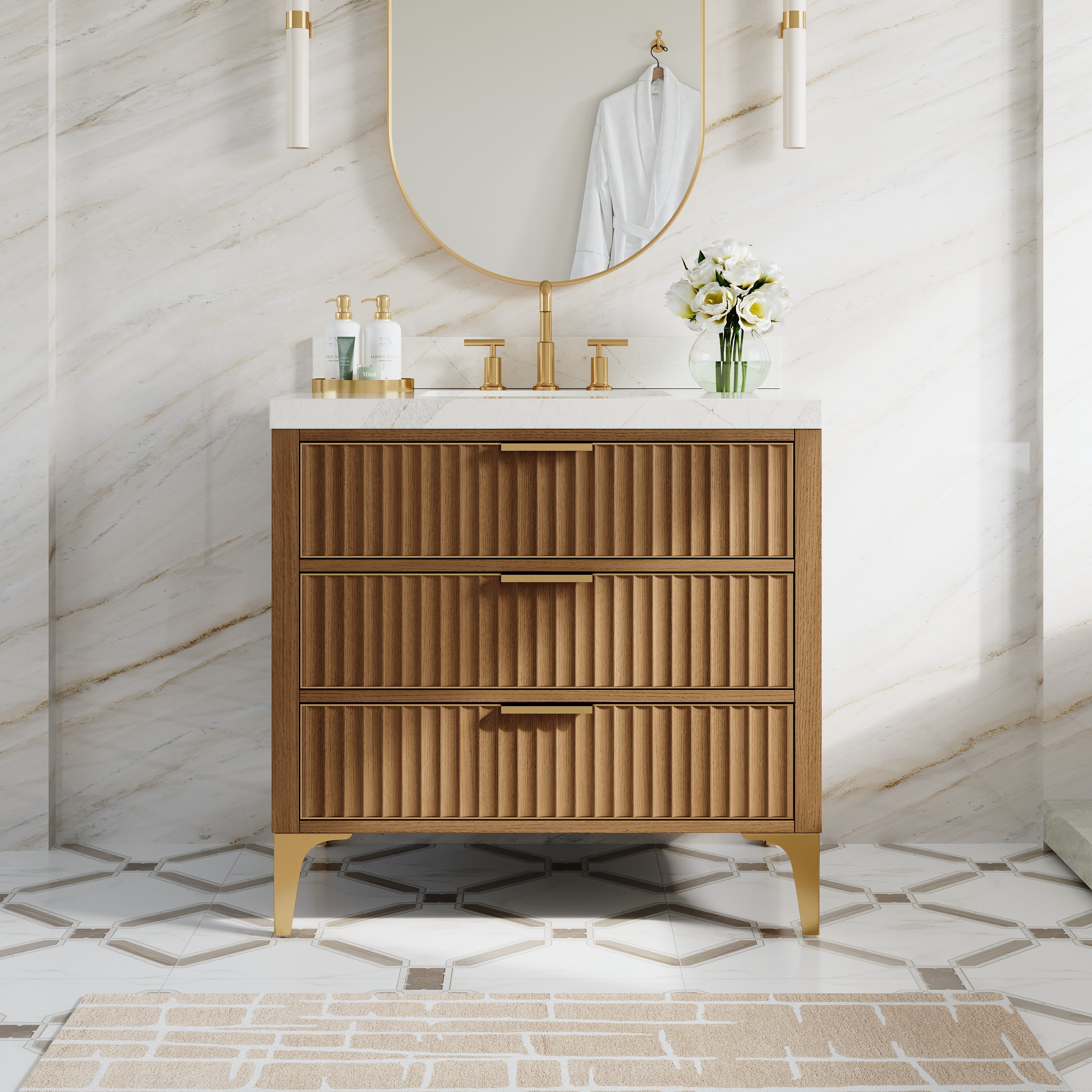
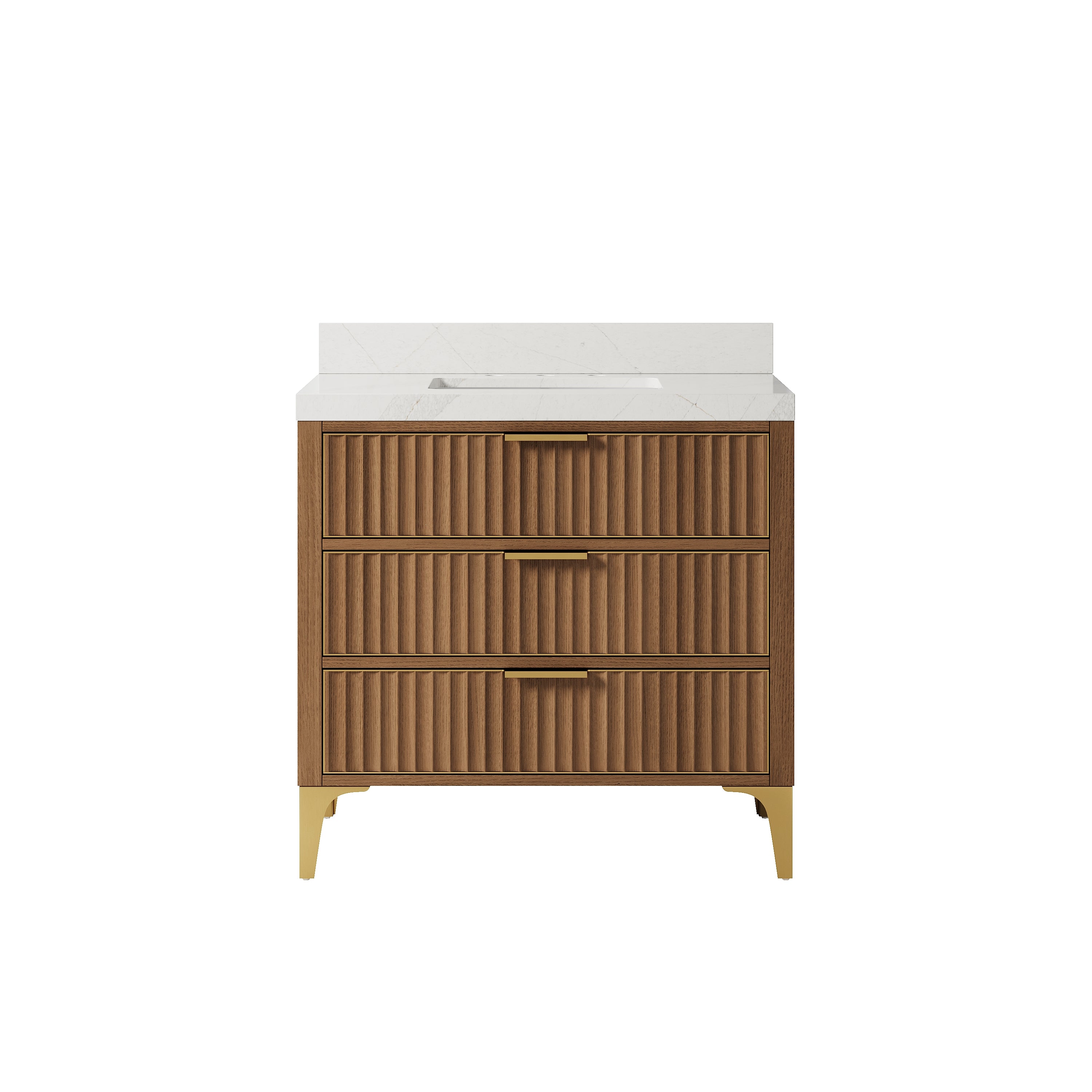
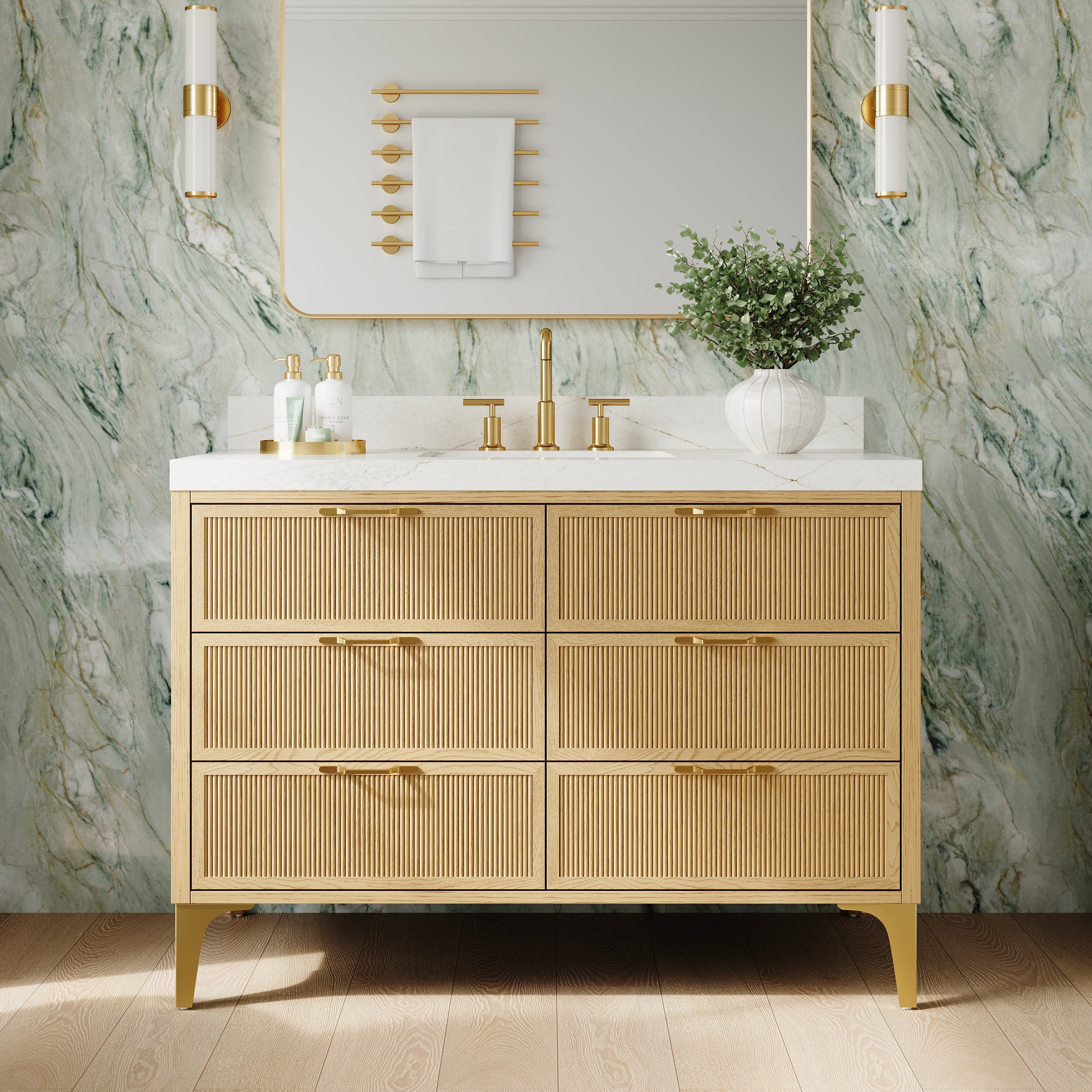
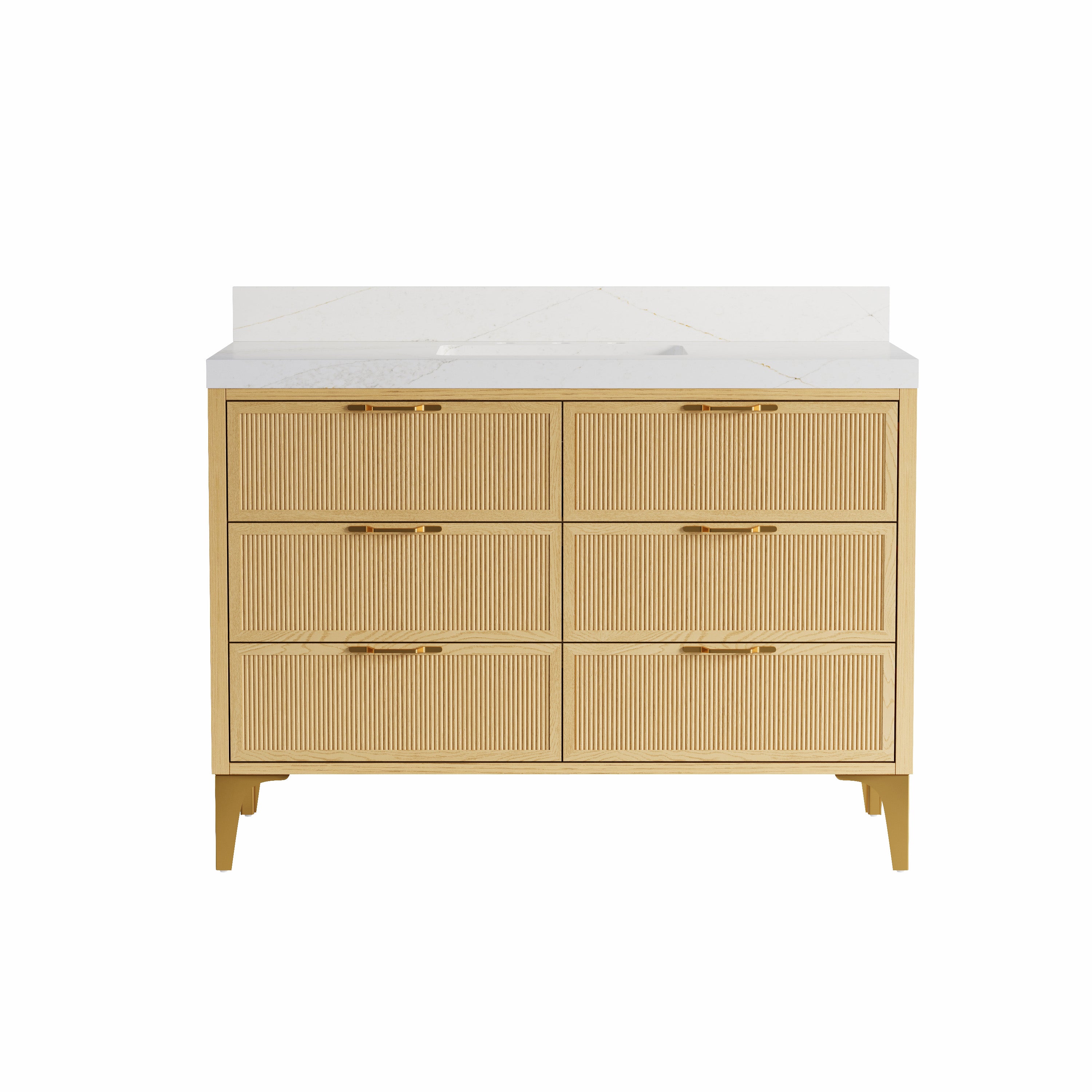


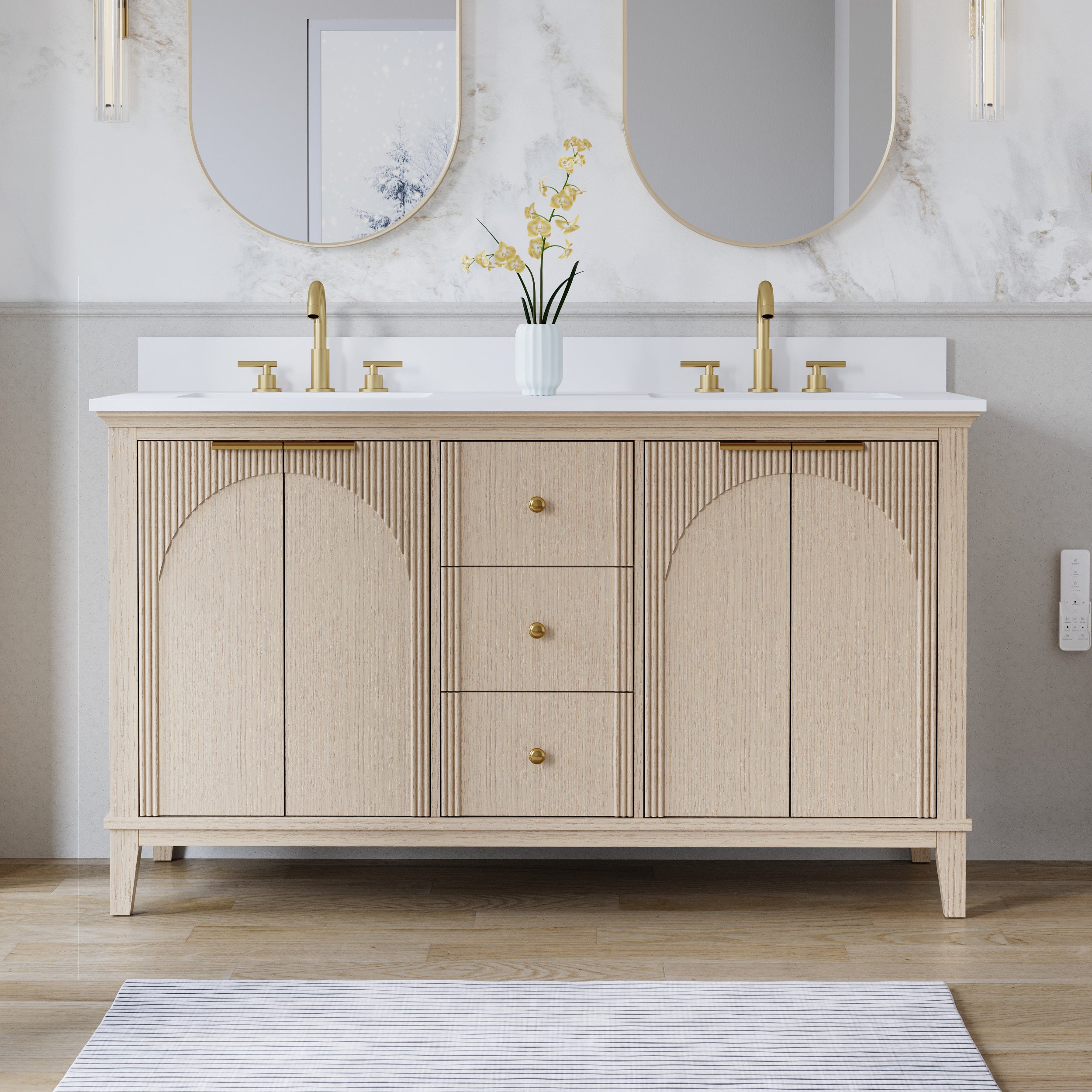
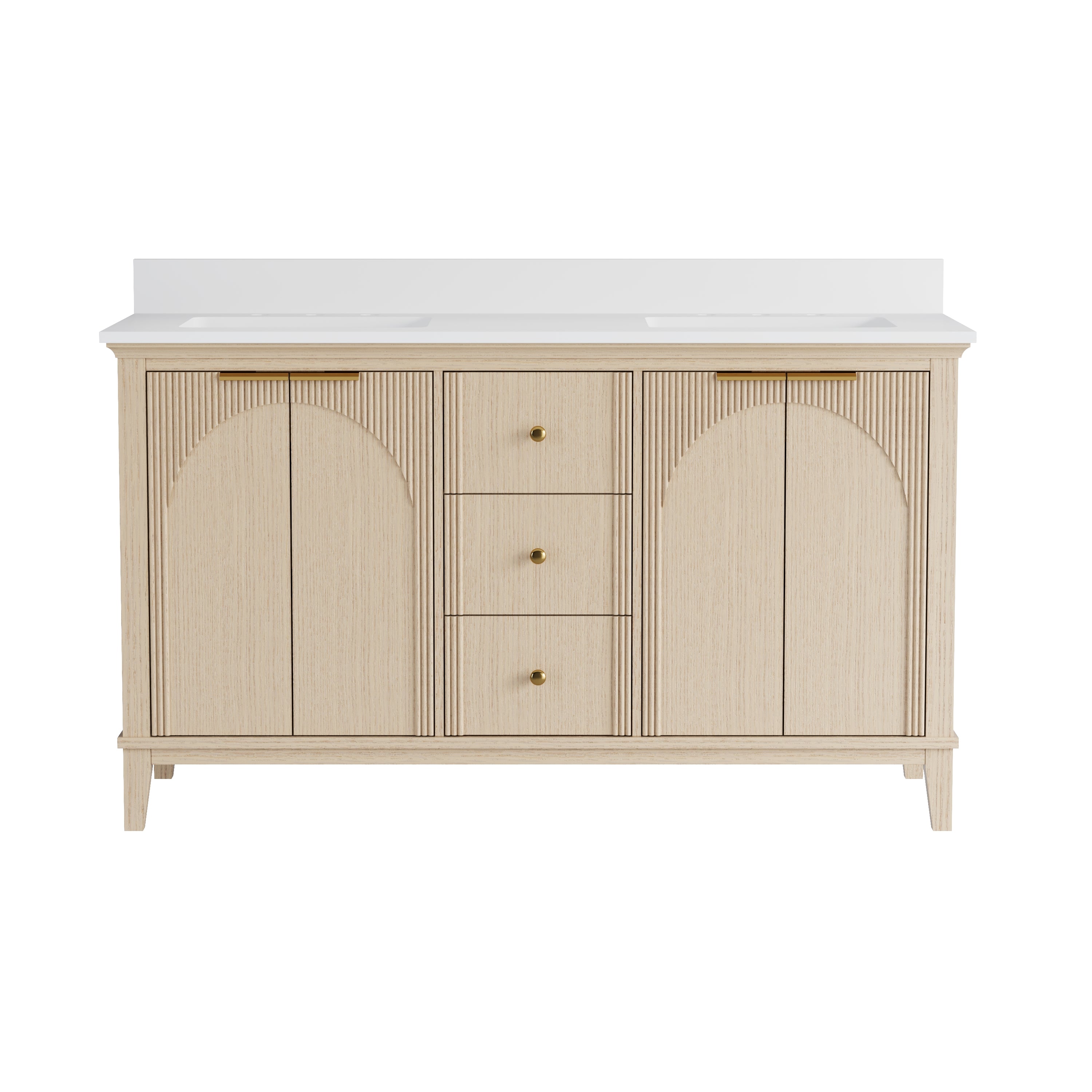
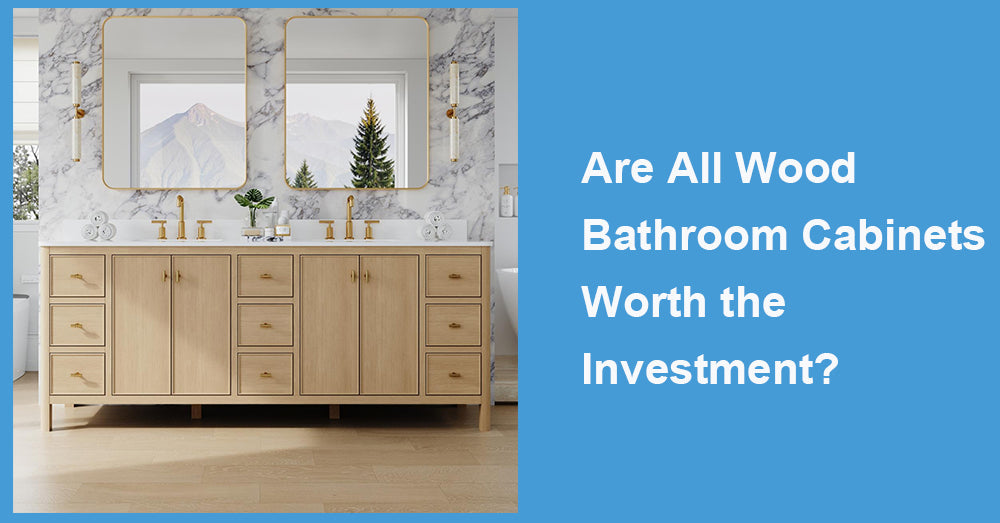
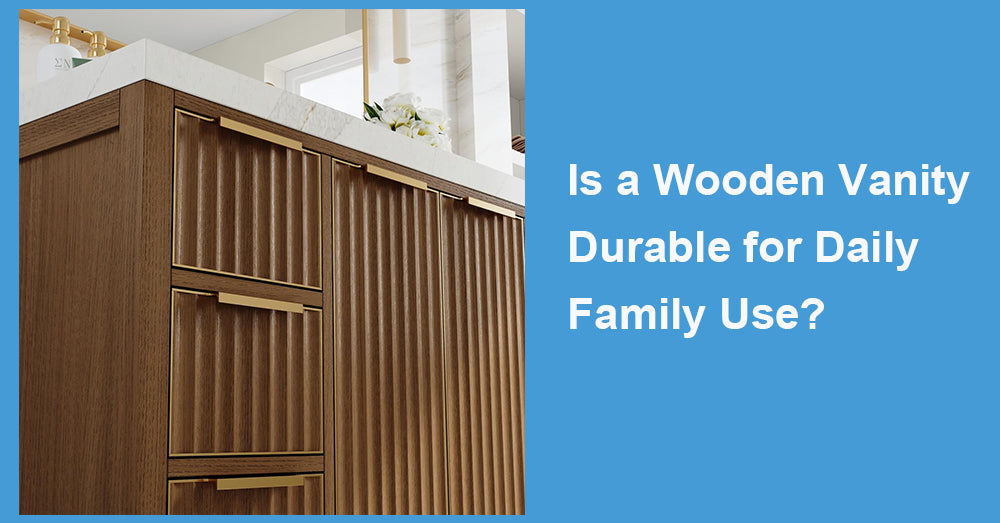
When planning a bathroom upgrade, all wood bathroom cabinets often look like the “premium” option, but the real question is whether they deliver measurable value over time. In many cases, they do, especially in busy bathrooms where humidity, splashes, and daily wear expose weak materials fast. The investment can pay off through longer service life, easier repairs, and fewer headaches with hinges, drawers, and finish damage. That said, “worth it” depends on construction quality, moisture control, and how long you plan to keep the space.
What Counts as “All Wood,” and Why Definitions Matter
The phrase “all wood” is used loosely. Some cabinets are solid wood for doors and face frames but use plywood for the box, shelves, or drawer bottoms. Others may include fiberboard panels hidden in less visible areas. For durability, the best-performing builds are often:
· Solid wood doors and face frame for strength and repairability.
· Plywood cabinet box for stability and strong screw holding.
· Quality hardware and a sealed finish system.
The label matters less than the structure, the finish, and how well the cabinet handles moisture.
The Bathroom Reality: Moisture Is the Main Stress Test
Wood is a natural material and it responds to humidity. Authoritative wood science references describe wood as hygroscopic, meaning it exchanges moisture with the surrounding environment, which can influence performance if moisture is excessive or unmanaged (Source: USDA Forest Service, Forest Products Laboratory, “Moisture relations and physical properties of wood”). In plain terms, bathrooms constantly challenge cabinetry with steam, condensation, wet hands, and cleaning routines.
If a bathroom regularly stays damp for long periods, any cabinet will suffer. EPA guidance recommends keeping indoor relative humidity below 60%, ideally between 30% and 50%, to protect both building materials and comfort (Source: U.S. Environmental Protection Agency, Moisture Control guidance; Source: U.S. EPA Mold Course, Chapter 2).
This is why ventilation and humidity control are not “extras.” They directly influence whether your cabinet investment lasts 8 years or 18 years.
Wood vs. MDF and Particleboard: The Difference Shows Up After Water Exposure
Many lower-cost cabinets rely heavily on MDF or particleboard. These materials can look smooth and stable in dry conditions, but they are far less forgiving once moisture enters seams or edges.
A Composite Panel Association technical bulletin explains that when particleboard or MDF swells and expands beyond its original dimensions due to high humidity or water exposure, that change is not reversible (Source: Composite Panel Association, “Dimensional Stability of Particleboard and MDF” Technical Bulletin). That single point is critical for durability planning: one slow leak or repeated splashing at the toe-kick can permanently distort a cabinet box made from moisture-vulnerable panels.
Wood can also swell, but solid wood components are often more serviceable. They can be dried, sanded, refinished, or repaired in targeted sections rather than requiring full replacement.
Where the Investment Value Actually Comes From
1. Longer Useful Life
Well-built wood cabinets tend to stay structurally sound longer because the frame and fastening points hold up under daily use. Doors stay aligned, drawers track better, and the cabinet remains square.
2. Repairability Instead of Replacement
With solid wood, scratches, small dents, and finish wear can often be repaired. Even if you never refinish the entire cabinet, spot repairs can extend the “looks good” phase of ownership.
3. Better Hardware Performance Over Time
Hardware problems are a common reason people feel a vanity is “worn out,” even when the cabinet body is still fine. Stronger frames and better screw holding help hinges and slides stay tight and adjustable.
4. Reduced Risk in Moisture-Prone Bathrooms
If a bathroom is heavily used, the cabinet material becomes a form of risk management. Moisture incidents are not rare. All-wood builds, especially with plywood boxes and sealed finishes, generally tolerate real-life conditions better than MDF-heavy builds.
Resale and Remodel Economics: What the Data Suggests
If resale value is part of your decision, broader remodeling data can help frame “investment.” The 2025 Cost vs. Value report shows a midrange bathroom remodel recouping about 80% of its cost on average (Source: Journal of Light Construction, 2025 Cost vs. Value Report). That does not mean every dollar spent on cabinets returns directly, but it does show that bathroom improvements tend to hold value better than many other upgrades.
Also, the National Association of Realtors references Cost vs. Value data in its remodeling research, reinforcing that bathroom remodeling can be a strong-performing project category (Source: National Association of Realtors, Remodeling research page referencing Cost vs. Value).
In other words, investing in quality in the bathroom is less likely to feel “wasted” compared with upgrades that buyers barely notice.
When All Wood Bathroom Cabinets Are Worth It
All wood cabinets are usually worth the investment when:
· The bathroom is used daily by multiple people.
· The room runs humid or stays steamy after showers.
· You want long-term reliability from drawers and doors.
· You plan to keep the home or the remodel for many years.
· You prefer a cabinet that can be repaired or refinished instead of replaced.
If your household routine is busy, the durability gap tends to show up sooner, which makes the higher upfront cost easier to justify.
When They Might Not Be Worth It
All wood cabinets may not be the best value when:
· It is a low-use guest bath with strong ventilation and minimal moisture stress.
· The upgrade is purely short-term and you will not benefit from long lifespan.
· The “all wood” option is poorly sealed or poorly built. A weak finish system can erase material advantages quickly.
Also, if the room has chronic moisture problems, the best first investment may be fixing ventilation and humidity. EPA guidance on humidity targets (30% to 50% ideal, below 60%) is a useful benchmark for protecting any cabinet choice (Source: U.S. Environmental Protection Agency; Source: U.S. EPA Mold Course).
A Practical Checklist to Protect Your Cabinet Investment
Before buying, check for these durability signals:
· Sealed edges and cutouts: especially around sink and plumbing openings.
· Cabinet box material: plywood is typically a strong choice for stability and fastening.
· Hardware quality: soft-close hinges and slides reduce impact stress over time.
· Finish coverage: look for consistent coating inside the cabinet, not just on the face.
· Moisture plan: run the exhaust fan during showers and afterward, and aim to keep humidity in the recommended range (Source: U.S. Environmental Protection Agency).
After installation, do a simple leak check twice a year. Catching a slow drip early protects any cabinet, but it is especially important for materials that do not recover after swelling (Source: Composite Panel Association).

Bottom Line
All wood bathroom cabinets are often worth the investment when you care about long-term durability, repairability, and performance under real bathroom conditions. The value is highest in humid, high-use spaces where weaker materials are more likely to fail, and where the ability to repair and refinish matters. Keep humidity in check (below 60%, ideally 30% to 50%), prioritize sealed construction, and choose strong cabinet box materials and hardware, and the “all wood” upgrade becomes a practical decision, not just a style preference (Source: U.S. Environmental Protection Agency; Source: Composite Panel Association; Source: USDA Forest Service, Forest Products Laboratory; Source: Journal of Light Construction, 2025 Cost vs. Value Report).












Leave a comment
This site is protected by hCaptcha and the hCaptcha Privacy Policy and Terms of Service apply.