
















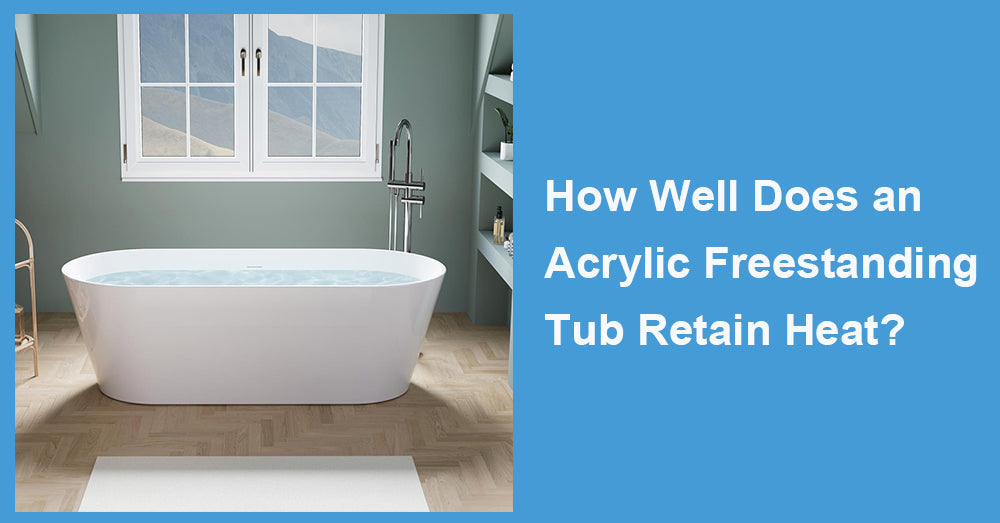
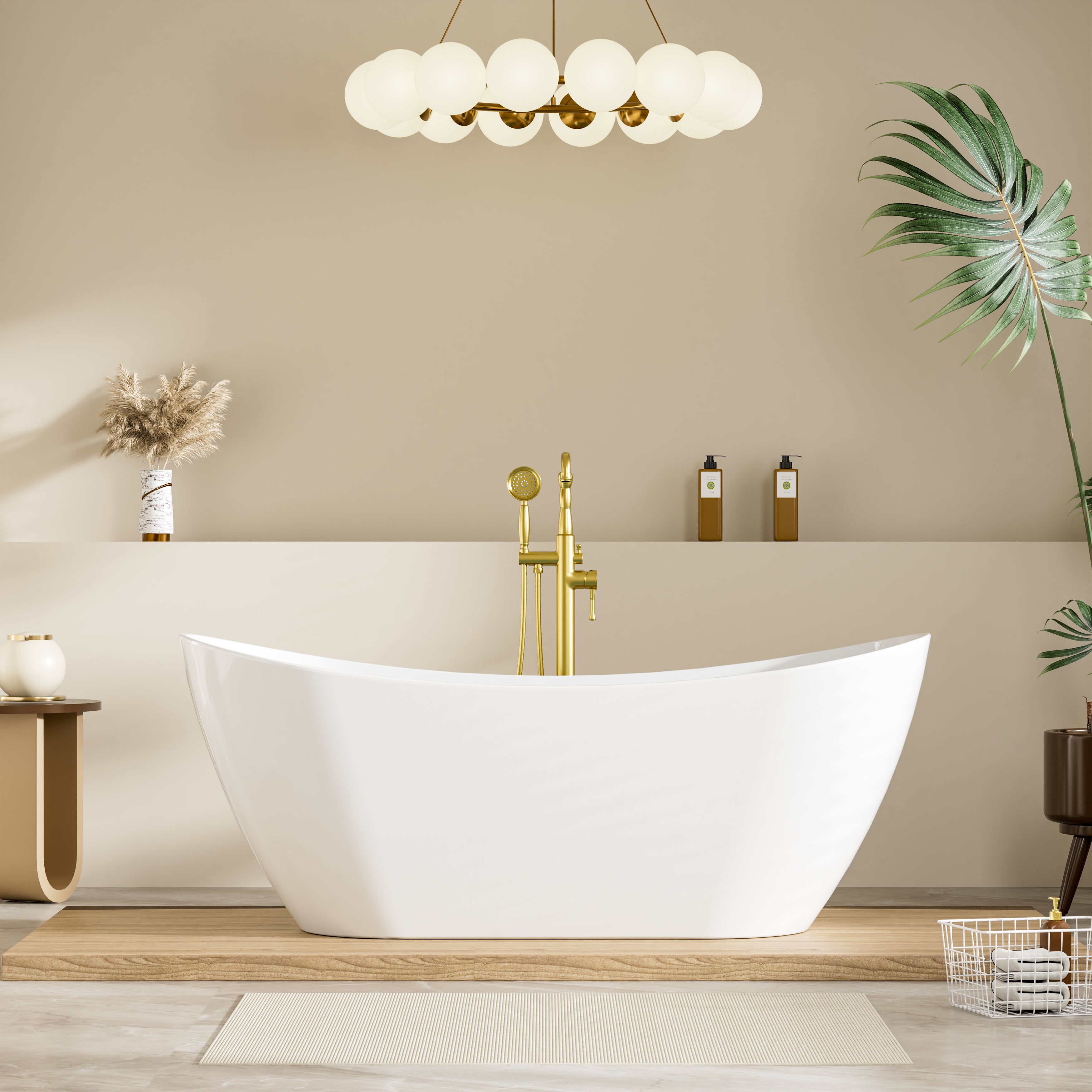
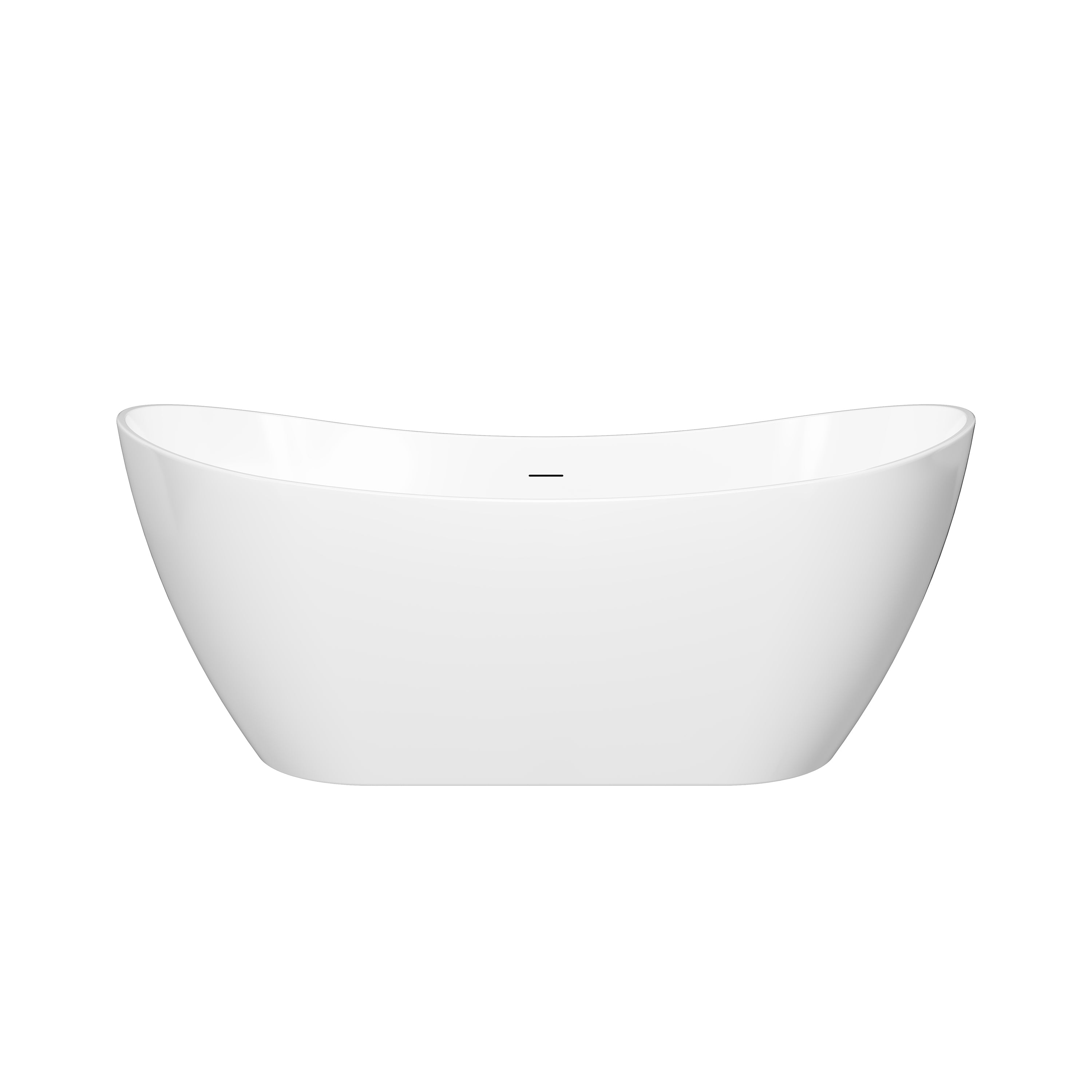
In the trend of contemporary bathroom upgrades, the acrylic freestanding tub has rapidly become popular due to its lightweight design and modern aesthetics. Still, discussions about its insulation performance have always existed: can this material's freestanding bathtub really maintain water temperature for a long time? Industry material testing and long-term feedback indicate that acrylic bathtubs are not inferior to traditional heavy-duty bathtubs in terms of insulation, and often offer more stable heat retention in most household use scenarios.
1. What determines the thermal insulation ability of a bathtub
Many people may intuitively believe that 'the heavier, the more insulated', but industry thermal tests show that the insulation effect of a bathtub is not only determined by weight, but mainly influenced by the following factors:
Material thermal conductivity
Wall thickness and multi-layer structure design;
The heat exchange rate between the outside of the bathtub and the air.
The contact area between the water body and the cylinder body.
Among these factors, the material's thermal conductivity plays a decisive role.
2. Thermal advantages of acrylic material
Acrylic acid is a low-thermal-conductivity material, which means that the rate of heat transfer from the water body to the outer wall of the bathtub is relatively slow.
According to industry-comparison tests, under identical water temperature and environmental conditions, the rate of drop in water temperature for acrylic bathtubs is significantly slower than that of metal bathtubs. At the same time, it is similar to that of some thick composite bathtubs.
This is also why many users feel that the water temperature in acrylic bathtubs stays higher and the frequency of reheating is lower during the actual bathing process.
3. The amplification effect of the multi-layer structure on insulation capacity
High-quality acrylic freestanding tubes are usually not single-layer thin-walled structures, but are composed of an acrylic surface layer combined with glass fiber or resin reinforcement layers.
This multi-layer design not only enhances the structural strength, but also creates a thermal performance similar to that of an "insulation layer". Industry heat-attenuation tests have shown that bathtubs with reinforced layers exhibit significantly lower heat loss rates than single-layer bathtubs.
Among the standard 60-67-inch length range of freestanding bathtubs, this structural difference has a particularly significant impact on insulation time.
4. Temperature retention performance in actual use
From a large amount of long-term feedback, it can be seen that acrylic freestanding bathtubs usually have a comfortable range of water temperature drop during regular bathing, and there is no significant cooling over a short period.
Under standard immersion depths of approximately 14-16 inches, acrylic bathtubs are often able to maintain a comfortable and relaxing temperature for extended periods of time without the need for frequent hot water refills.
In contrast, materials with higher thermal conductivity are more likely to experience significant temperature drops within the first 10-15 minutes.
5. The influence of environment and bathtub shape on insulation
The temperature of the bathroom environment and air flow also affect heat retention.
Because it is exposed to the air around it, a freestanding bathtub theoretically has a larger heat exchange area. Still, the low thermal conductivity of acrylic material, to some extent, compensates for this structural disadvantage.
Industry tests show that, under the same environmental conditions, the comprehensive insulation performance of acrylic independent bathtubs remains in the excellent range.
6. The importance of wall thickness and quality grade
Not all acrylic bathtubs have the same level of insulation.
Industry experience shows that bathtubs with thicker walls and complete structural layers have significantly better heat retention than lightweight, economical products.
When making a purchase, paying attention to the weight and structural description of the bathtub is often more effective for determining its actual insulation performance than focusing solely on its shape.
7. Comparison with the reality of the cast iron bathtub
Cast iron bathtubs are known for their heat storage capacity, but their main advantage lies in maintaining water temperature after the cylinder body is preheated.
However, in practice, cast iron absorbs a large amount of heat in the initial stage, which can cause the water temperature to drop more quickly when entering the bath. Acrylic acid, on the other hand, can reach a stable, comfortable state more rapidly due to its low heat absorption.
From a comprehensive experience perspective, the difference in long-term insulation effect between the two is not as significant as traditional knowledge suggests.
8. How to further enhance the bath insulation experience
Industry recommendations include:
Preheat the inner walls of the bathtub with hot water for a short time before taking a bath.
Appropriately increase the initial water temperature (within a safe range);
Choose high-quality models with more complete wall thickness and structure.
Reduce water surface disturbance during bathing.
These methods can effectively prolong the comfortable soaking time.
9. The role of bathtub covers and water surface insulation in heat retention
In practical bathing scenarios, heat loss does not only occur through the bathtub walls, but also rapidly through the exposed water surface.
Industry thermal studies indicate that reducing direct air contact—such as using partial tub covers or minimizing water disturbance—can noticeably slow temperature decline. Still water retains heat far more effectively than constantly moving water, which accelerates heat exchange.
By controlling surface exposure and airflow, users can further extend the comfortable soaking duration even without changing bathtub material.

10. Conclusion: The insulation ability of acrylic independent bathtubs is far better than imagined
Acrylic freestanding tubing exhibits stable, reliable heat retention. Its low thermal conductivity and multi-layer structural design make it fully capable of meeting the needs of long-term relaxation baths.
When the size ratio (accurately planned in inches), structural thickness, and bathroom environmental conditions are reasonably matched, acrylic independent bathtubs not only offer advantages in aesthetics and installation flexibility but also excel in insulation performance.
For modern families seeking a comfortable bathing experience, it is not a compromise but a mature choice that balances practicality and enjoyment.











Leave a comment
This site is protected by hCaptcha and the hCaptcha Privacy Policy and Terms of Service apply.