

















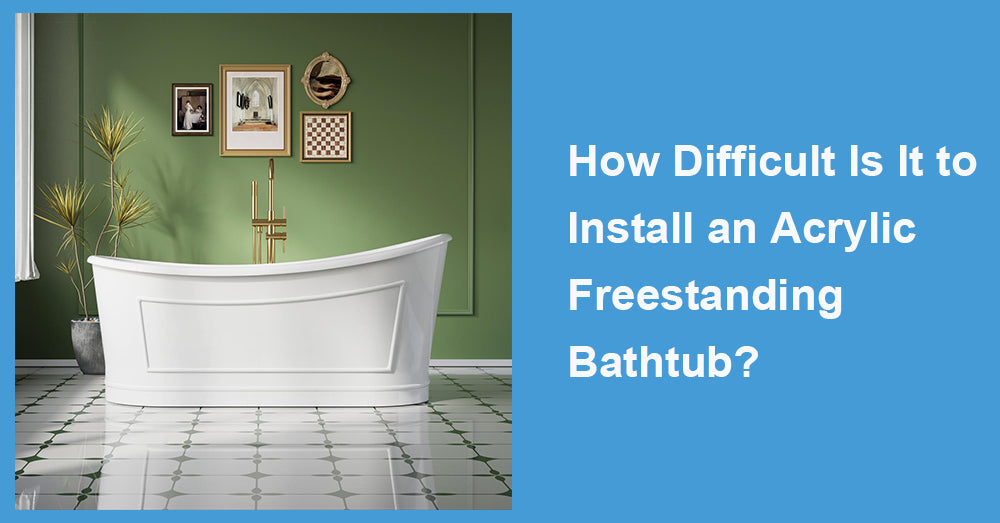
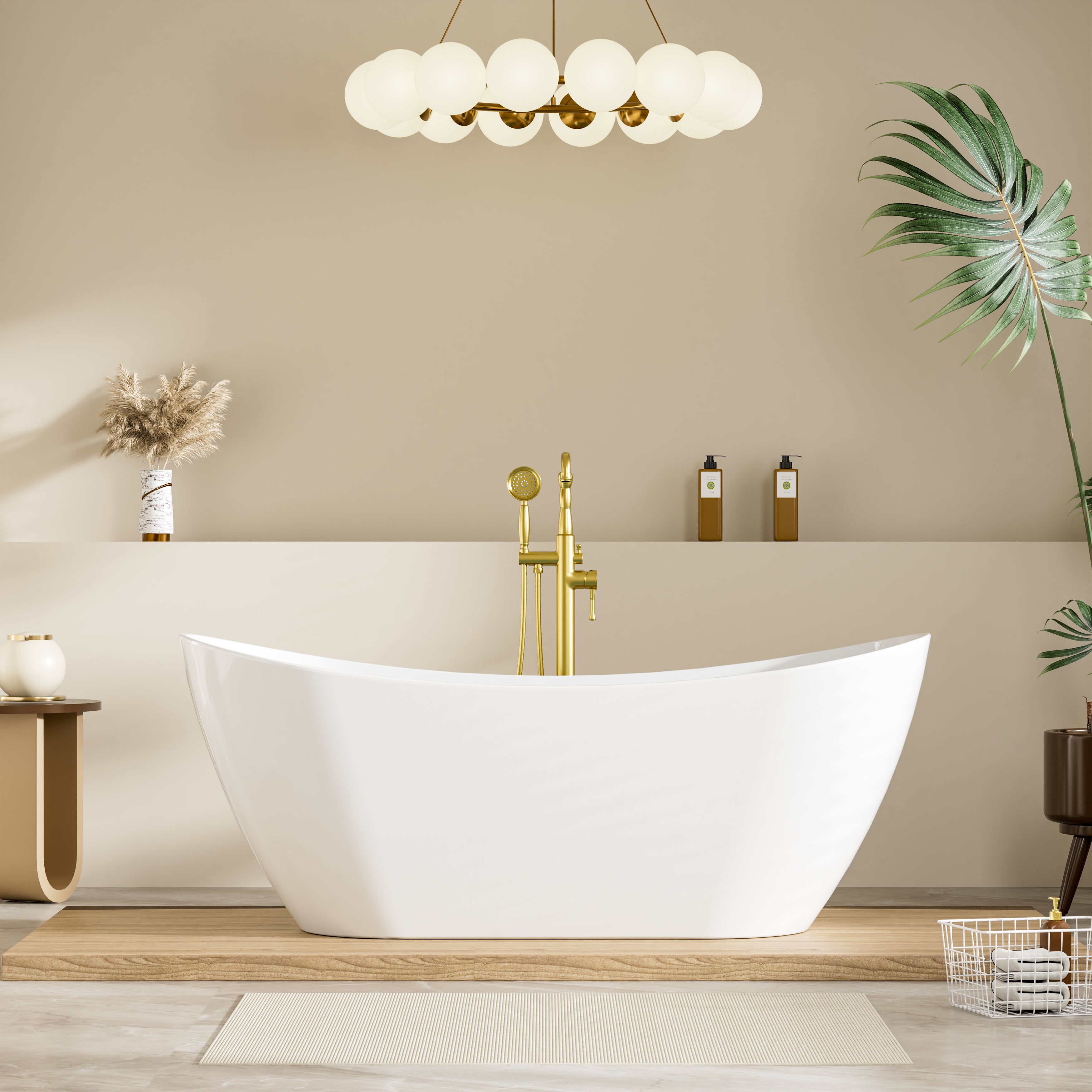
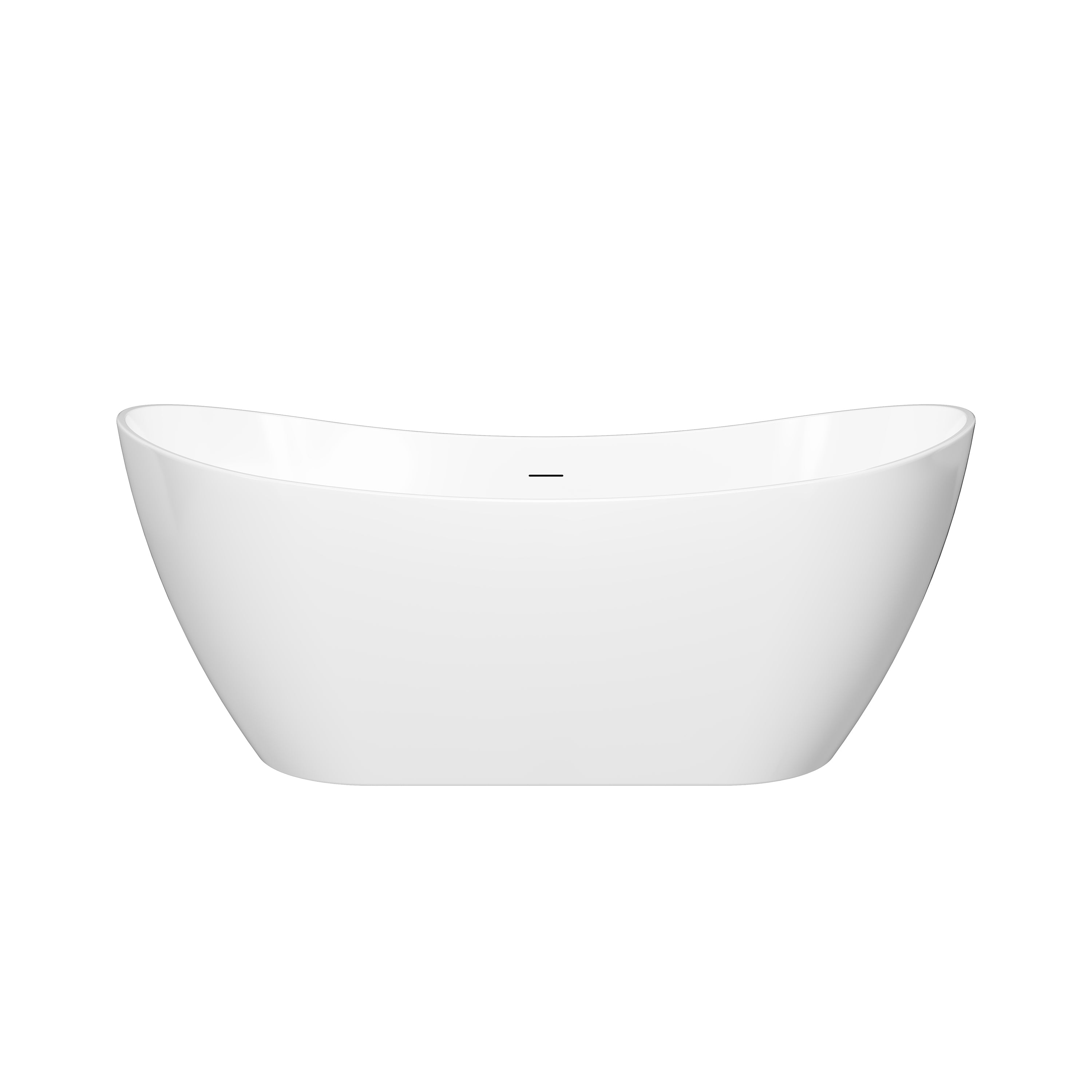
In recent years, the acrylic freestanding bathtub has gradually become a symbol of high-end and modern design in bathroom decoration trends. It is becoming increasingly common in new residential and renovation projects due to its simple design, lightweight visual appeal, and relatively flexible installation methods. However, for many homeowners and contractors, a practical question remains - is it difficult to install such bathtubs?
From an industry perspective, installation difficulty is not determined by a single variable, but depends on structural conditions, drainage layout, ground load-bearing capacity, construction experience, and level of detail processing. This article will conduct a systematic analysis from multiple dimensions.
1. Whether the structural conditions are allowed is the primary prerequisite
Before installing the Acrylic Freestanding Bathtub, confirm the structural conditions of the bathroom space.
Unlike embedded bathtubs, freestanding bathtubs do not rely on wall support, and their weight is concentrated at the bottom support point. Therefore, the ground must have sufficient load-bearing capacity. Especially in the renovation of old houses, structural evaluation is particularly important.
Although acrylic material itself is relatively light, when the bathtub is filled with water and carries the user's weight, the overall load increases significantly. If the ground structure is not evaluated, it may affect long-term safety.
From the perspective of construction difficulty, the structural confirmation stage often determines the complexity of the project.
2. The layout of the drainage system is a key factor determining the difficulty
Compared to traditional wall-mounted bathtubs, the drainage pipes of Acrylic Freestanding Bathtubs are typically located in the center of the floor or at designated locations.
If drainage points are reserved in the new project, the installation process is relatively simple. But in renovation projects, the original drainage position is often close to the wall, and it is necessary to re-grout or adjust the pipeline direction.
The renovation of the drainage system involves waterproof layer treatment, ground backfilling, and slope adjustment, which will increase the construction complexity in the renovation of old houses. Industry experience shows that drainage renovation is often the primary factor affecting installation difficulty.
3. Ground leveling and waterproofing treatment cannot be ignored
The stability of the Acrylic Freestanding Bathtub depends on the accuracy of ground leveling.
If there is a height difference on the ground, the bathtub may experience slight shaking, which can affect the long-term user experience. Therefore, before formal installation, the construction party usually conducts fine leveling treatment.
At the same time, the waterproof layer on the ground must be complete and continuous. Especially after opening holes in the drainage position, it is necessary to redo the local waterproof reinforcement layer.
From the perspective of industry standards, the degree of standardization in waterproofing treatment often determines whether the installation project is truly "simple".
4. Entry handling and space limitations
Many homeowners overlook a practical issue - how to enter the bathtub indoors.
Although the Acrylic Freestanding Bathtub is lightweight, it has a larger volume. If the door frame size is limited or the corridor corner is narrow, the handling process may become a challenge.
It is necessary to measure the channel size in advance in high-rise residential buildings or projects with limited space. In some cases, it is even necessary to remove the door frame or use special handling methods.
Therefore, from a construction perspective, early planning can significantly reduce installation difficulties.
5. Matching problem between the faucet and the water supply system
Independent bathtubs are often paired with floor-standing faucets or wall-mounted water outlet systems.
If a floor-mounted faucet is chosen, the water supply pipeline must be pre-embedded in the ground structure. This is easier to achieve in new construction projects, but may increase construction complexity in renovation projects.
When choosing a wall water outlet, ensure the outlet height matches the edge of the bathtub to avoid unreasonably steep water flow angles.
Industry practice has shown that planning the water supply system should be synchronized with the bathtub model rather than making temporary adjustments later.

6. The installation technology itself is not complicated
The installation process for the Acrylic Freestanding Bathtub is relatively simple.
Most products are equipped with adjustable feet, and construction personnel can complete positioning by adjusting with a level. Subsequently, connect the drainage components and conduct a sealing test.
Compared to tile masonry or embedded structures, freestanding bathtubs have a more direct installation process. As long as the preliminary conditions are well prepared, the installation process can usually be completed within a few hours.
Therefore, from a professional perspective, its "difficulty" lies more in the preliminary preparation than in the final installation steps.
7. DIY or professional installation?
For users with certain construction experience, the Acrylic Freestanding Bathtub is not completely impossible to install on their own. But when it comes to drainage renovation, waterproofing rework, or water supply pre-embedding, it is recommended to have a professional plumber handle the operation.
The industry generally believes that the standalone bathtub itself is not complicated, but the water and electrical systems that come with it are the real technical part.
In high-standard decoration projects, professional installation is more helpful in ensuring long-term safety.
8. Long-term maintenance and stability considerations
After installation, it is necessary to pay attention to post-installation maintenance.
Acrylic is easy to clean, but avoid scratching it with hard objects. Regularly checking the drainage interface and sealing ring status can reduce the risk of leakage.
Due to not being attached to walls, the long-term stability of a freestanding bathtub mainly relies on bottom support and ground flatness. Therefore, the initial installation accuracy is particularly critical.
Conclusion
From an industry perspective, installing an Acrylic Freestanding Bathtub is not a technically challenging project, but it does require for early planning. Insufficient preparation in any aspect of structural load-bearing, drainage location, ground waterproofing, water supply system, and spatial dimensions may increase construction complexity. On the contrary, in new construction or fully designed renovation projects, installing independent bathtubs is more efficient than traditional embedded solutions.
Therefore, instead of simply asking "difficult", it is better to understand more accurately whether it has been planned reasonably in advance. When the structural conditions and construction preparation are in place, the Acrylic Freestanding Bathtub not only has a clear and controllable installation process but also brings significant improvements to the bathroom space in terms of visual and user experience.












Leave a comment
This site is protected by hCaptcha and the hCaptcha Privacy Policy and Terms of Service apply.