














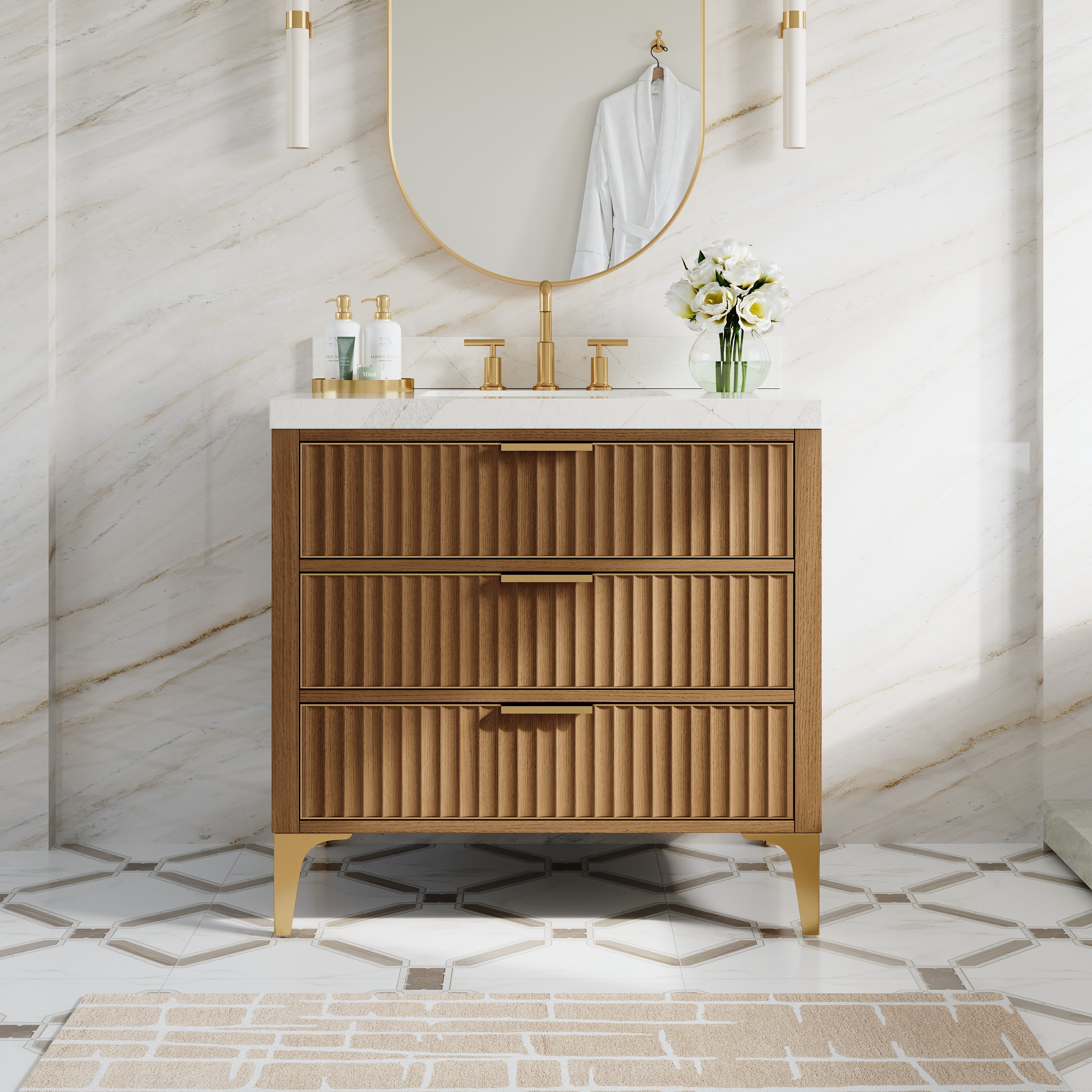
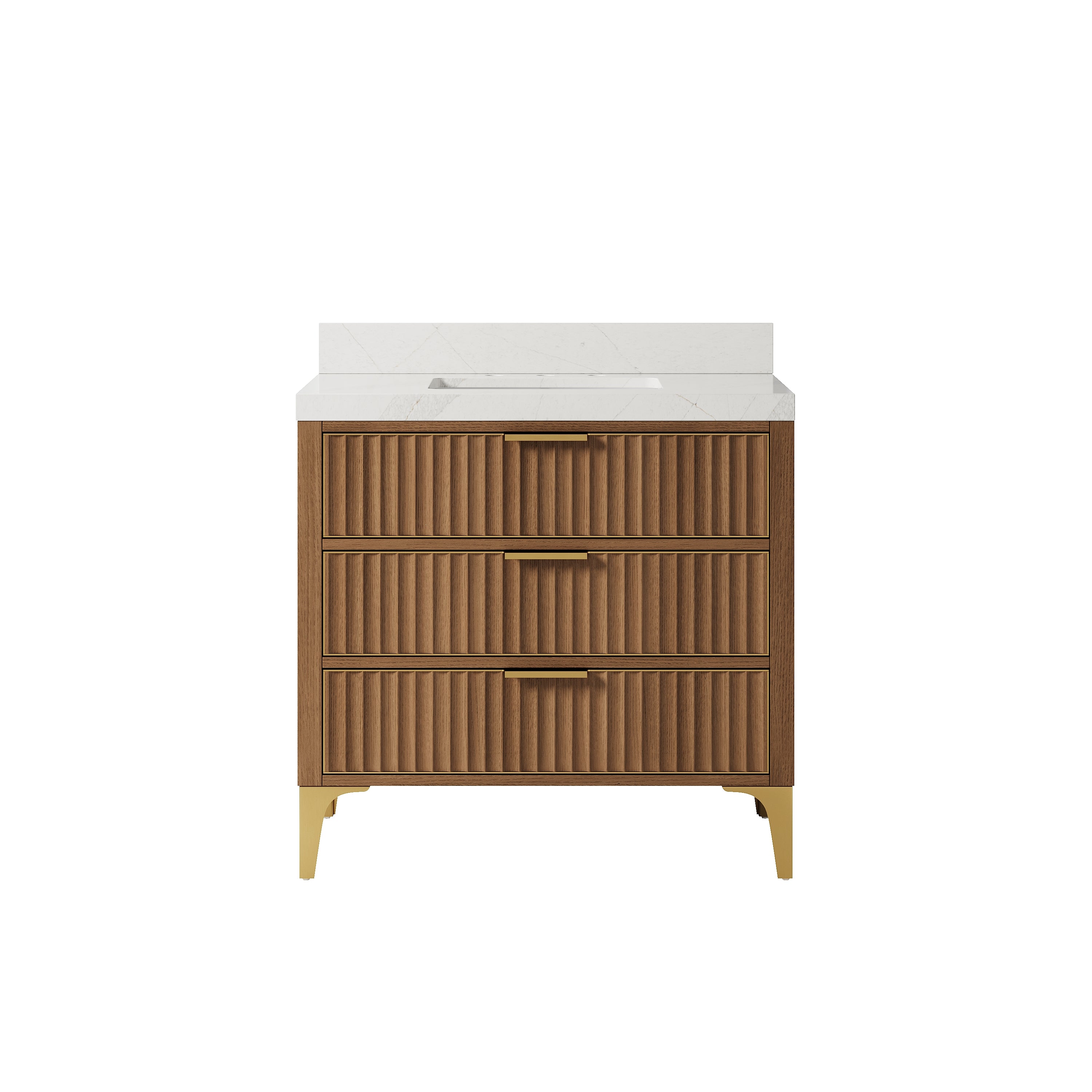
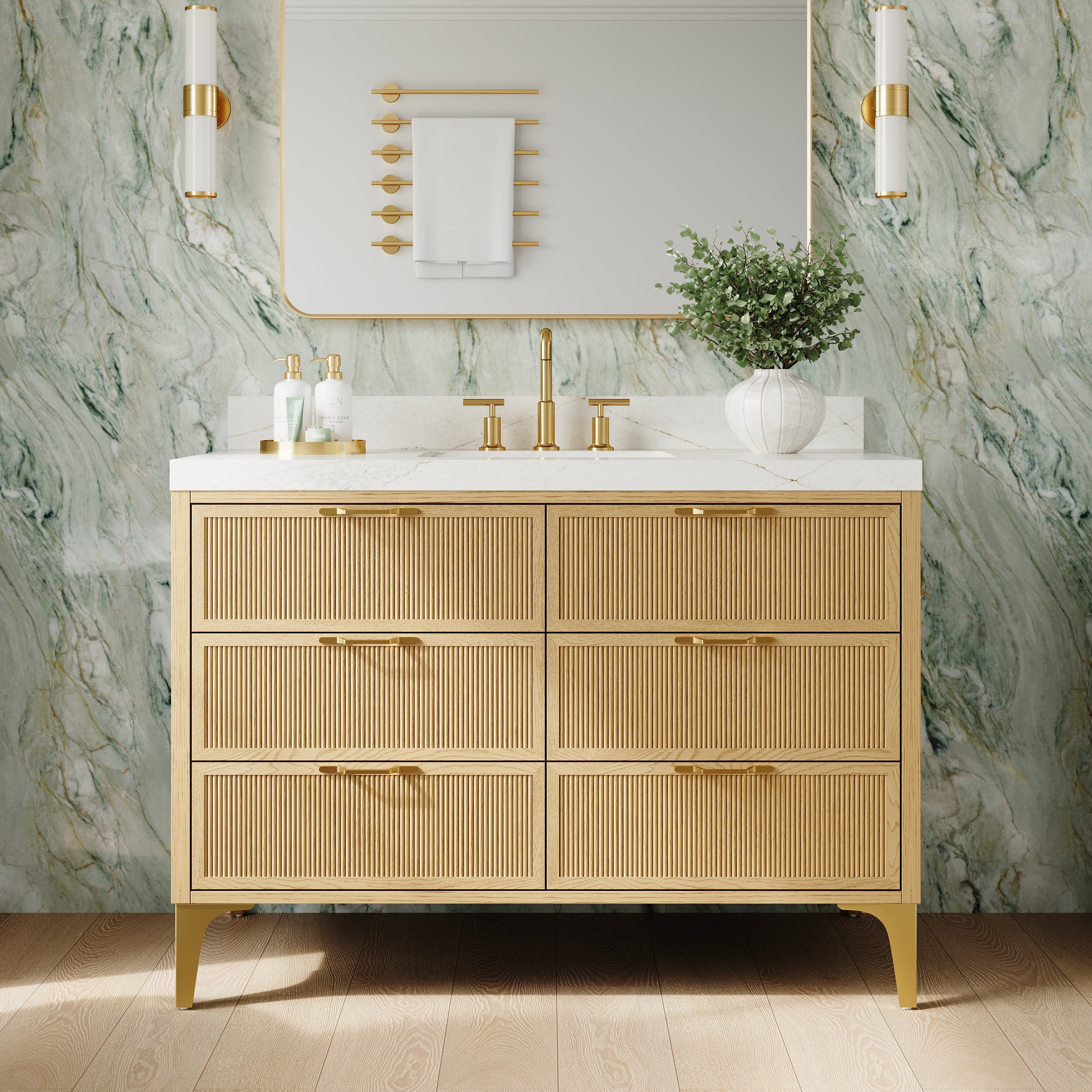
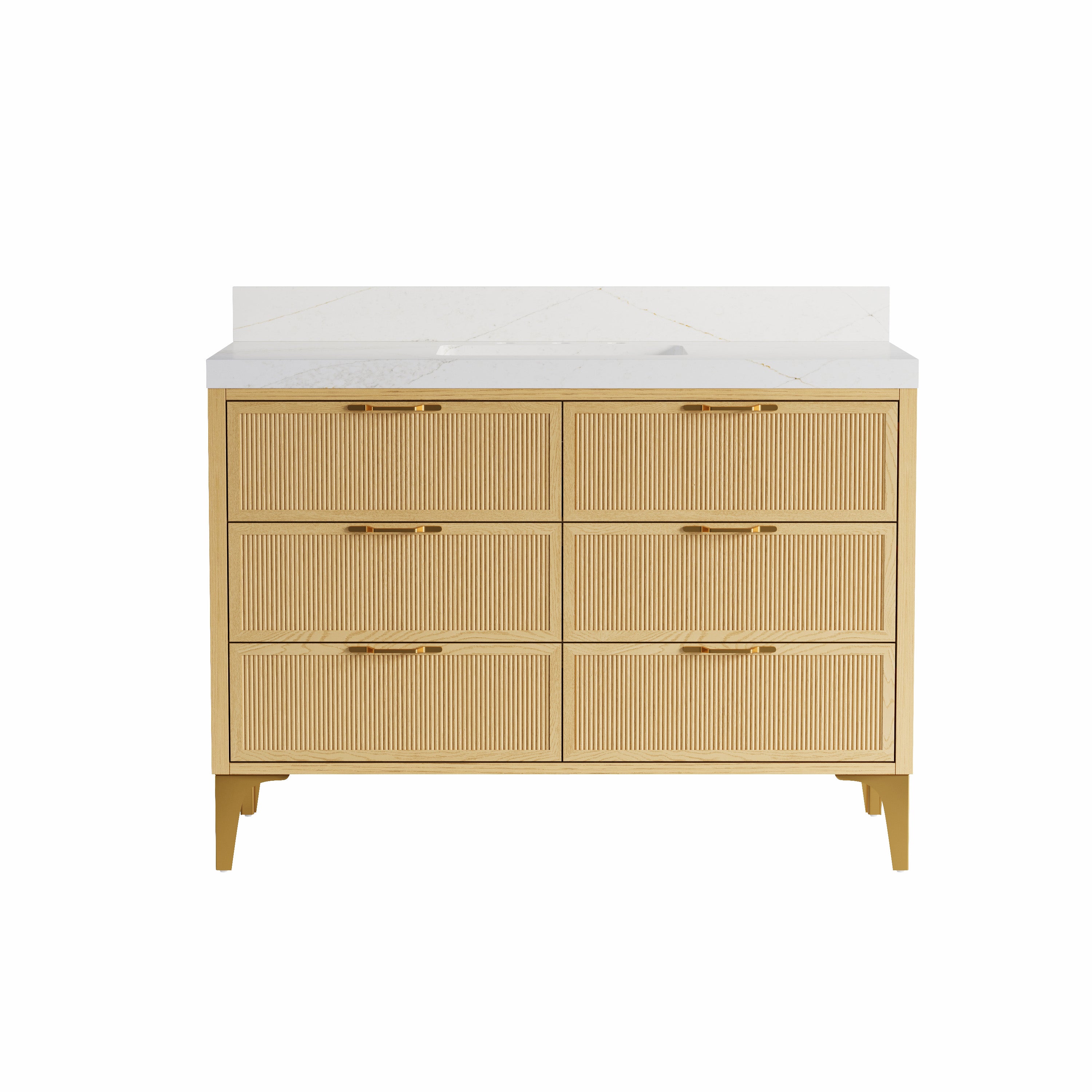


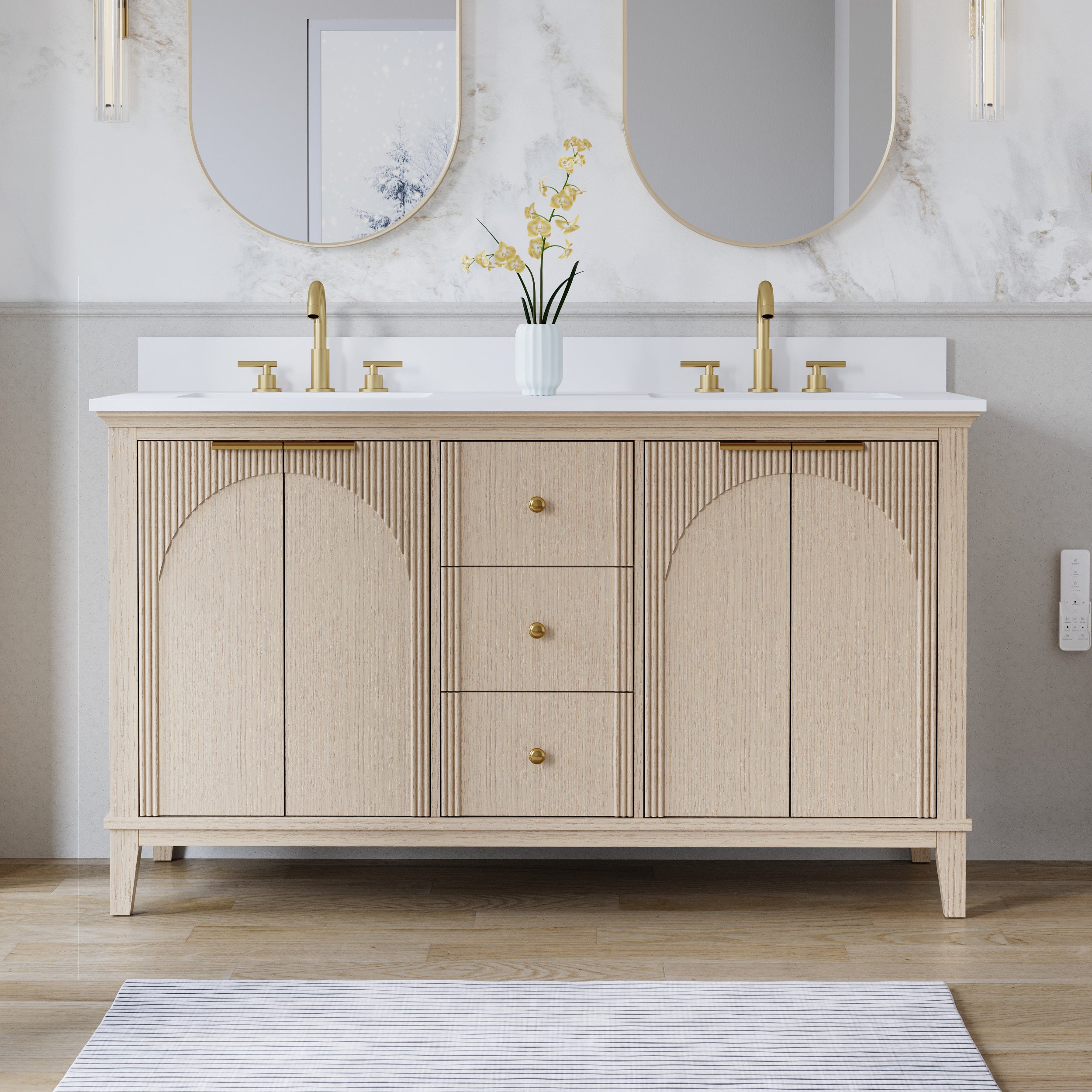
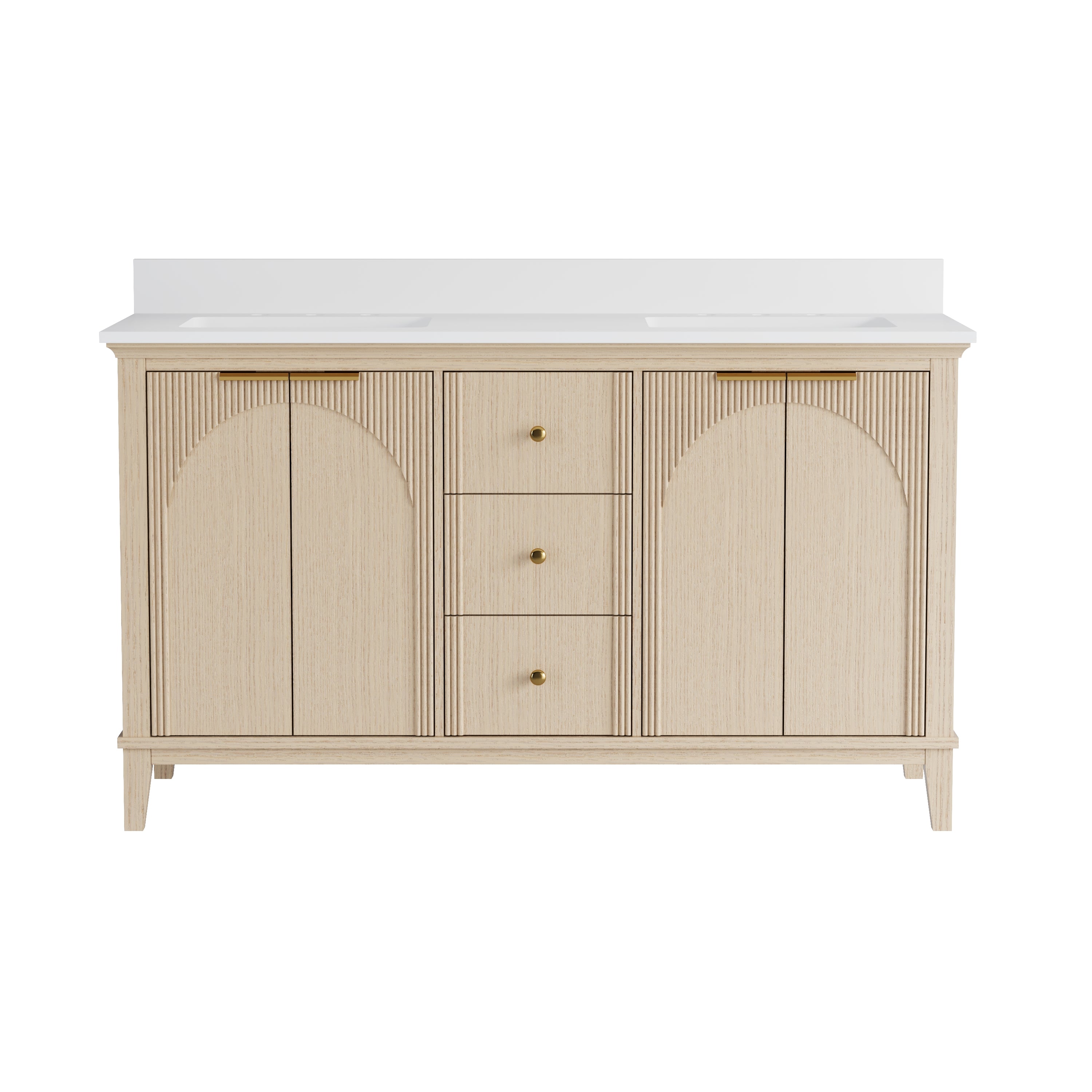

Solid wood bath vanity cabinets can look impressive in a showroom photo, but the real quality is often hidden in the small construction details. A buyer may notice the wood color, countertop, sink shape, or hardware first, yet the parts that decide long-term performance are usually less obvious: the joinery, the sealed edges, the drawer box, the back panel, and the topcoat. In a damp bath environment, these details matter more than decorative styling. A cabinet that is poorly joined or weakly sealed can develop gaps, swelling, finish cracks, or drawer movement long before the room itself feels dated.
1. Why Inspection Matters Before Purchase
A bath cabinet has to work harder than ordinary furniture. It is placed near running water, steam, wet towels, cleaning products, and plumbing connections. The cabinet also supports a countertop, sink, faucet, and sometimes a backsplash. If the structure is weak, problems may appear around drawer fronts, door frames, sink cutouts, and side panels.
Recent renovation data shows why buyers are paying closer attention to cabinet construction. Houzz reported that 74% of renovating homeowners who selected wood vanities chose solid wood, making it the leading wood material choice in its 2025 bath study. Source: Houzz 2025 U.S. Bathroom Trends Study.
That preference makes sense, but “solid wood” alone is not a complete quality guarantee. The species, drying, joinery, finish, and moisture protection all affect how well the cabinet performs after installation.
2. Start With the Joinery, Not the Finish Color
The first inspection point should be joinery. Good joinery keeps doors square, drawers stable, and cabinet boxes aligned. Poor joinery may be hidden by paint or stain at first, but it often shows up later as uneven gaps, loose drawer fronts, or doors that no longer sit level.
For drawer boxes, dovetail joints are a strong signal of better construction. They interlock mechanically, which gives the drawer better resistance against pulling and daily stress. Box joints and well-made dowel joints can also perform well when they are clean, tight, and properly glued. Staples alone, especially on heavy drawers, are less reassuring.
Look at the drawer from the side and underneath. The corners should sit tight without visible separation. The bottom panel should feel secure, not thin or flexible. If the drawer is full-extension, pull it out completely and check whether it moves smoothly without twisting.
Cabinet performance testing also shows why joints matter. KCMA describes structural tests in which cabinet base-front joints are stressed with loads up to 250 pounds for cabinets with drawer rails, or 200 pounds for certain cabinets without drawer rails. Source: KCMA A161.1 Quality Certification information.
3. Check Door Frames and Face Frames Carefully
Door construction deserves the same attention as drawers. On framed doors, inspect the joint where the rail and stile meet. The connection should look tight and flush. If there is a small crack in the finish at the corner, it may grow after seasonal humidity changes.
For shaker-style doors, check the inner panel. Wood naturally expands and contracts, so a center panel should be built to handle movement without cracking the frame. If the panel already looks uneven, bowed, or loose before purchase, that is not a good sign.
On flat-panel doors, check whether the surface feels stable and balanced. A solid wood slab door can move more than an engineered panel, especially across wider widths. For larger doors, ask whether the construction includes measures to control warping.
Open and close every door if a sample is available. The reveal, meaning the visible gap around the door, should be even. Hinges should not pull away from the frame, and screws should sit straight. Soft-close hinges should slow the door smoothly, not catch suddenly at the end.
4. Inspect Edges Because Water Finds Weak Spots
Edges are one of the most important details on a bath cabinet. Water rarely damages the middle of a sealed surface first. It usually enters through edges, seams, sink openings, screw holes, and unfinished backs.
Run your hand along the top edges, door edges, drawer fronts, side panels, and lower base. They should feel smooth and sealed. Rough, sharp, or absorbent edges suggest weak finishing. Pay special attention to the area near the sink and countertop. If there is a backsplash, check where the back panel meets the top.
The cabinet back matters too. Plumbing cutouts should not expose raw, untreated material. If the back panel has a large opening, the inside edges should still be sealed. In a bath, the inside of the cabinet may face occasional leaks or condensation, so unfinished interiors are a risk.
Wood science explains why these details matter. The USDA Forest Products Laboratory notes that wood gains and releases moisture depending on surrounding air conditions, especially humidity and temperature. That moisture movement can affect wood size and performance over time. Source: USDA Forest Products Laboratory, Wood Handbook, Chapter 4.

5. Examine the Topcoat Under Real Light
A topcoat is not just a cosmetic layer. It helps protect the wood from moisture, stains, soaps, and cleaning products. A good topcoat should look even across doors, drawer fronts, side panels, and trim. It should not appear cloudy, streaky, sticky, or overly thin around corners.
Use side lighting if possible. Look across the finish at an angle. This makes scratches, orange peel texture, uneven sheen, dust particles, and missed areas easier to see. On stained wood, the grain should look natural, but the finish should still feel protected. On painted wood, the surface should be smooth and consistent without exposed edges.
Matte and satin finishes are popular because they look calm and modern, but they still need enough protective coating. A low-sheen finish should not feel raw. If it absorbs fingerprints immediately or feels dry like unfinished wood, it may be difficult to maintain around water.
6. Look Inside the Cabinet, Not Only at the Front
Many quality differences are easier to see inside the cabinet. Open the doors and drawers. The interior panels should be finished cleanly. Shelves should fit securely and should not sag under light hand pressure. Adjustable shelf holes should be clean and evenly spaced.
Check drawer slides. Full-extension slides make storage more usable because the drawer opens far enough to reach items at the back. Soft-close slides should move quietly and evenly. If the drawer leans, rubs, or stops halfway, the hardware or installation may be weak.
Also check the bottom area. A cabinet with legs should feel stable, not decorative only. For a freestanding design, the legs and lower frame should support the cabinet evenly. For floating models, wall-mounting structure and hardware become even more important.
7. Connect Quality Checks to Current Bath Trends
Bath layouts are becoming more storage-focused, which puts more pressure on cabinet construction. NKBA reported that 89% of surveyed professionals view primary bath space planning as a major priority, while 72% expect bath footprints to grow to support wellness features, universal design, and better storage. Source: NKBA 2026 Bath Trends Report release.
This means the cabinet is no longer just a sink base. It is part of the daily routine: grooming, storage, cleaning, charging tools, organizing towels, and managing shared space. Strong joinery and sealed construction help the product keep up with that role.
8. Use a Simple Final Checklist Before Buying
Before purchase, inspect the cabinet in a practical order. First, check whether the frame is square and stable. Second, open every door and drawer. Third, inspect the joinery at drawer corners, door frames, and face frames. Fourth, run your hand along exposed edges and plumbing cutouts. Fifth, check the topcoat under angled light. Sixth, confirm that hardware, hinges, slides, shelves, and legs feel solid.
The best cabinet is not just the one with the richest wood tone or the most stylish hardware. It is the one built to handle daily use in a wet room. When the joinery is tight, the edges are sealed, and the topcoat is even, a solid wood cabinet has a much better chance of staying beautiful and functional for years.












Leave a comment
This site is protected by hCaptcha and the hCaptcha Privacy Policy and Terms of Service apply.