














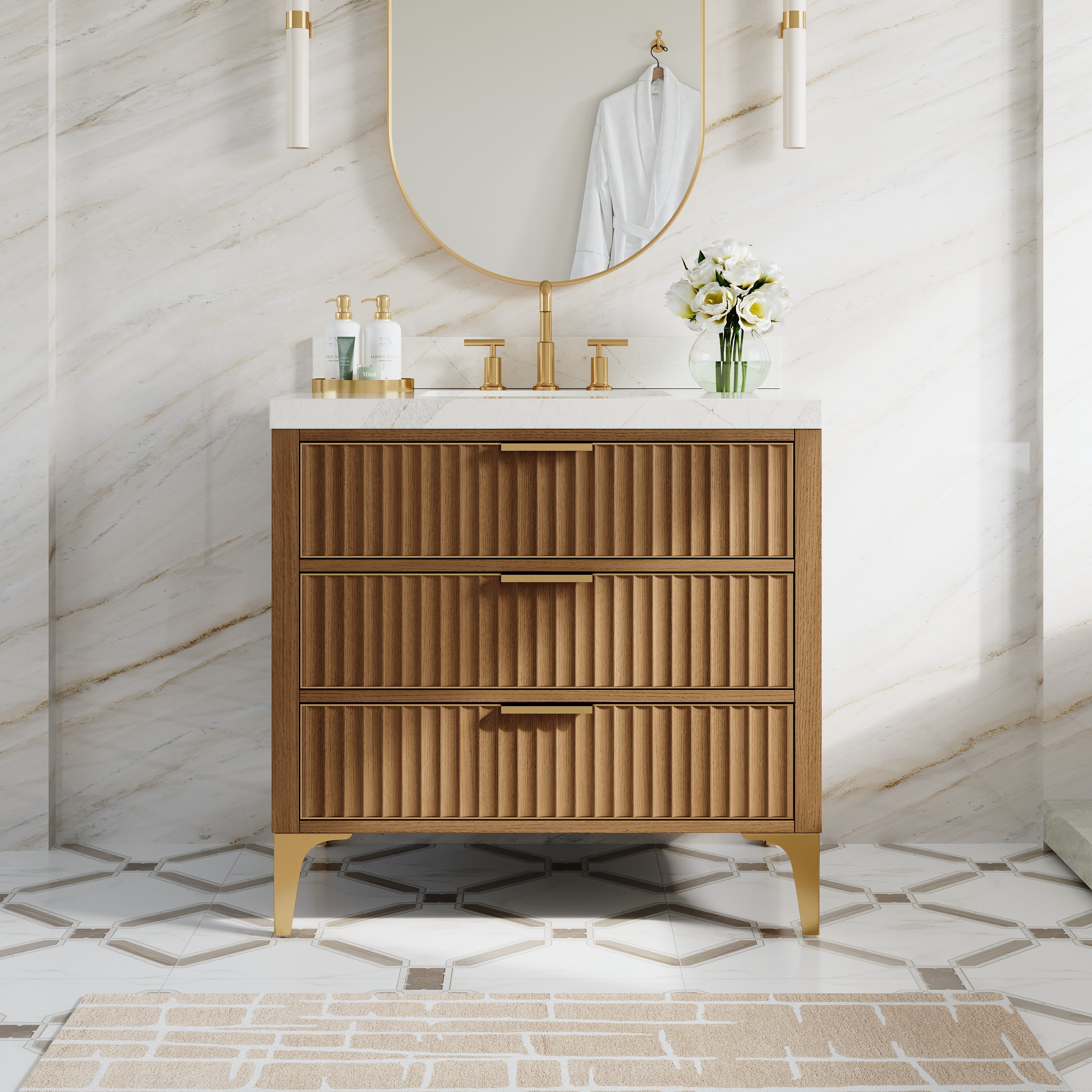
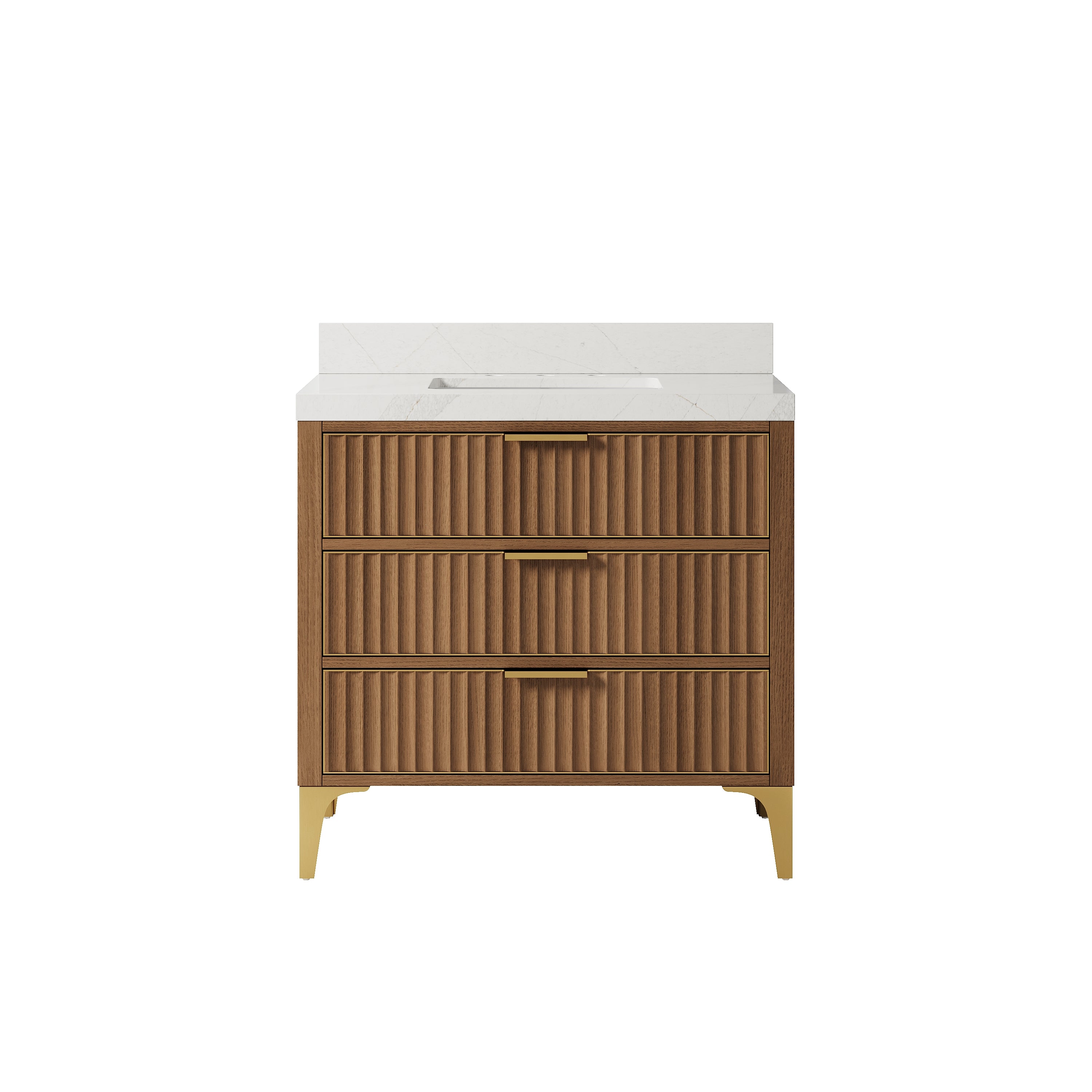
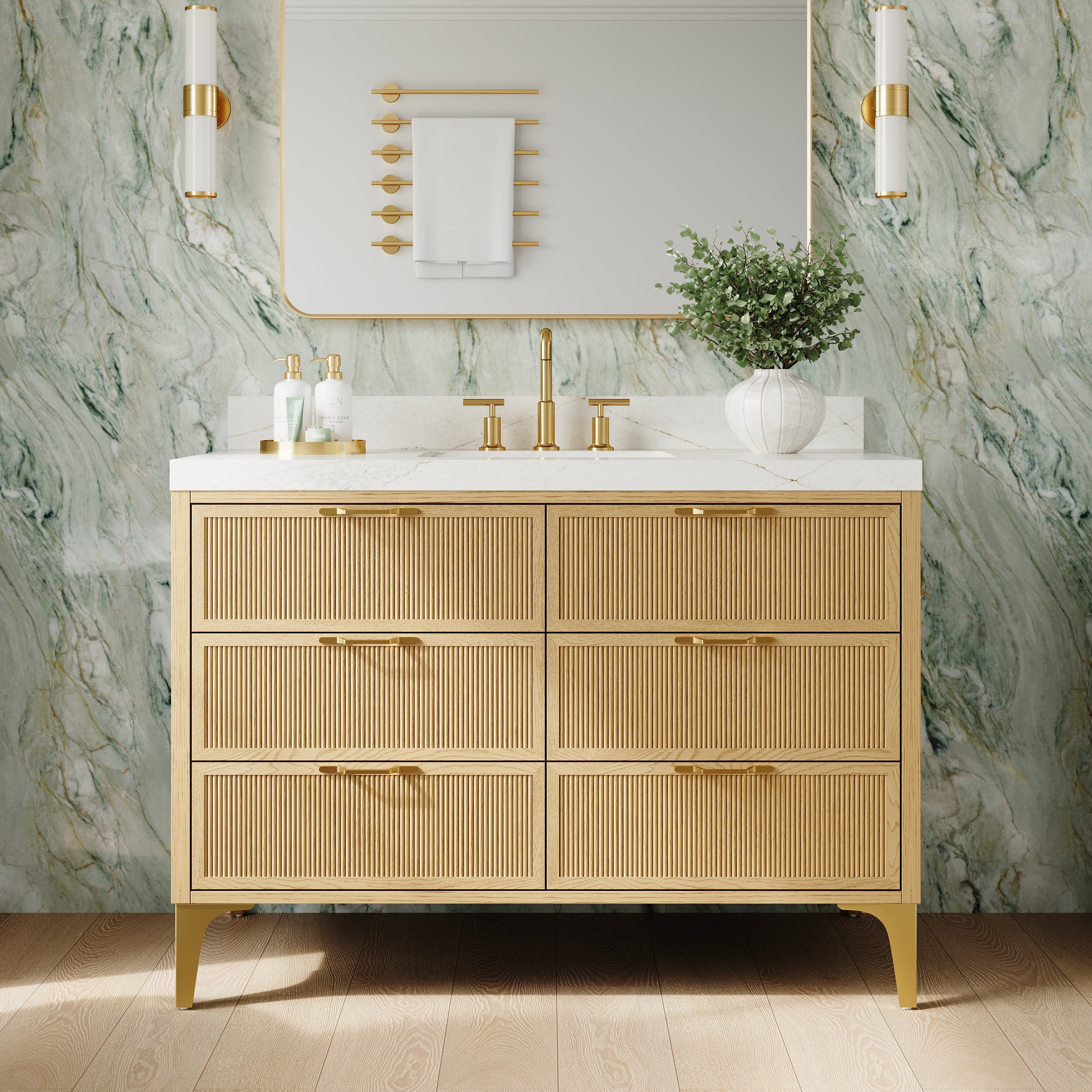
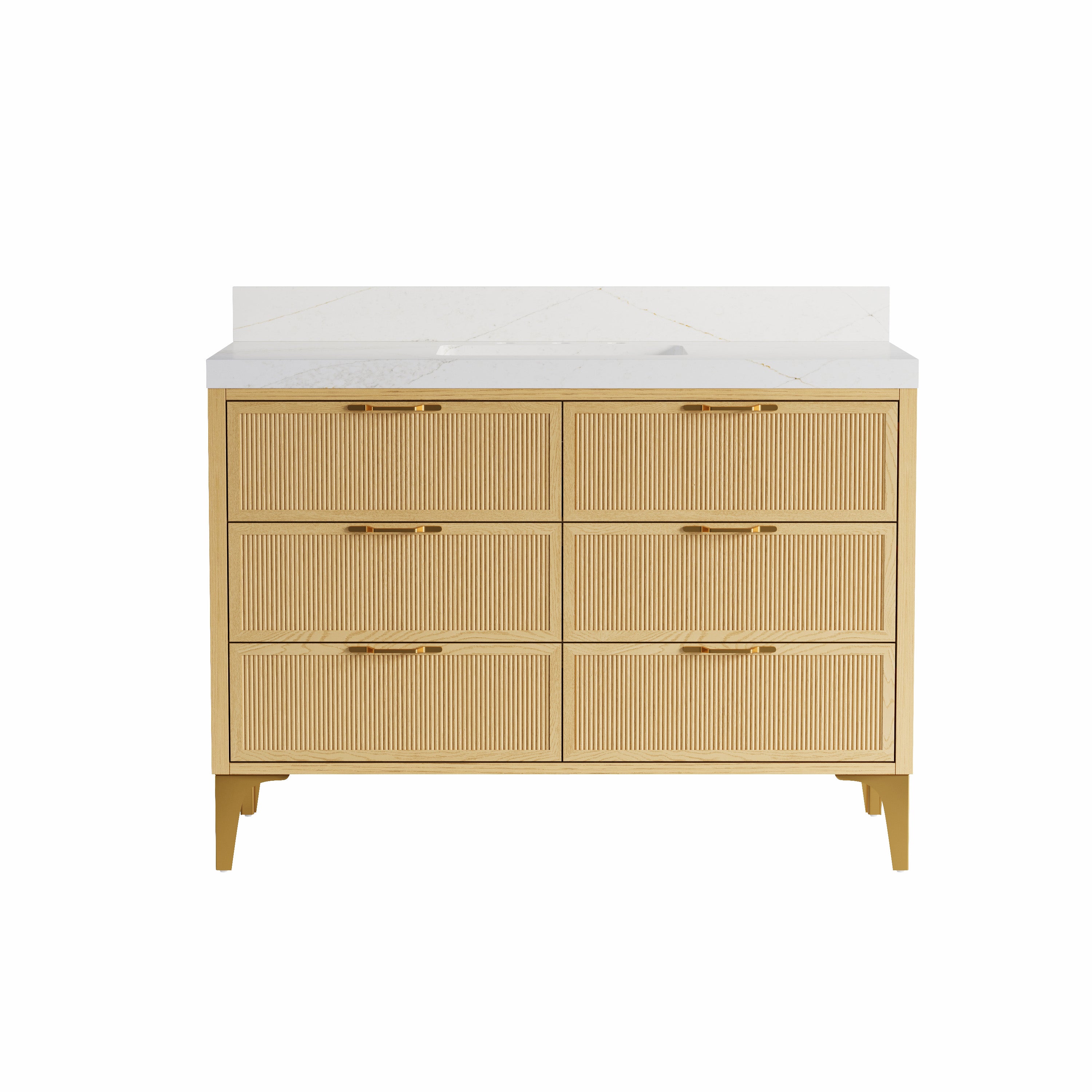


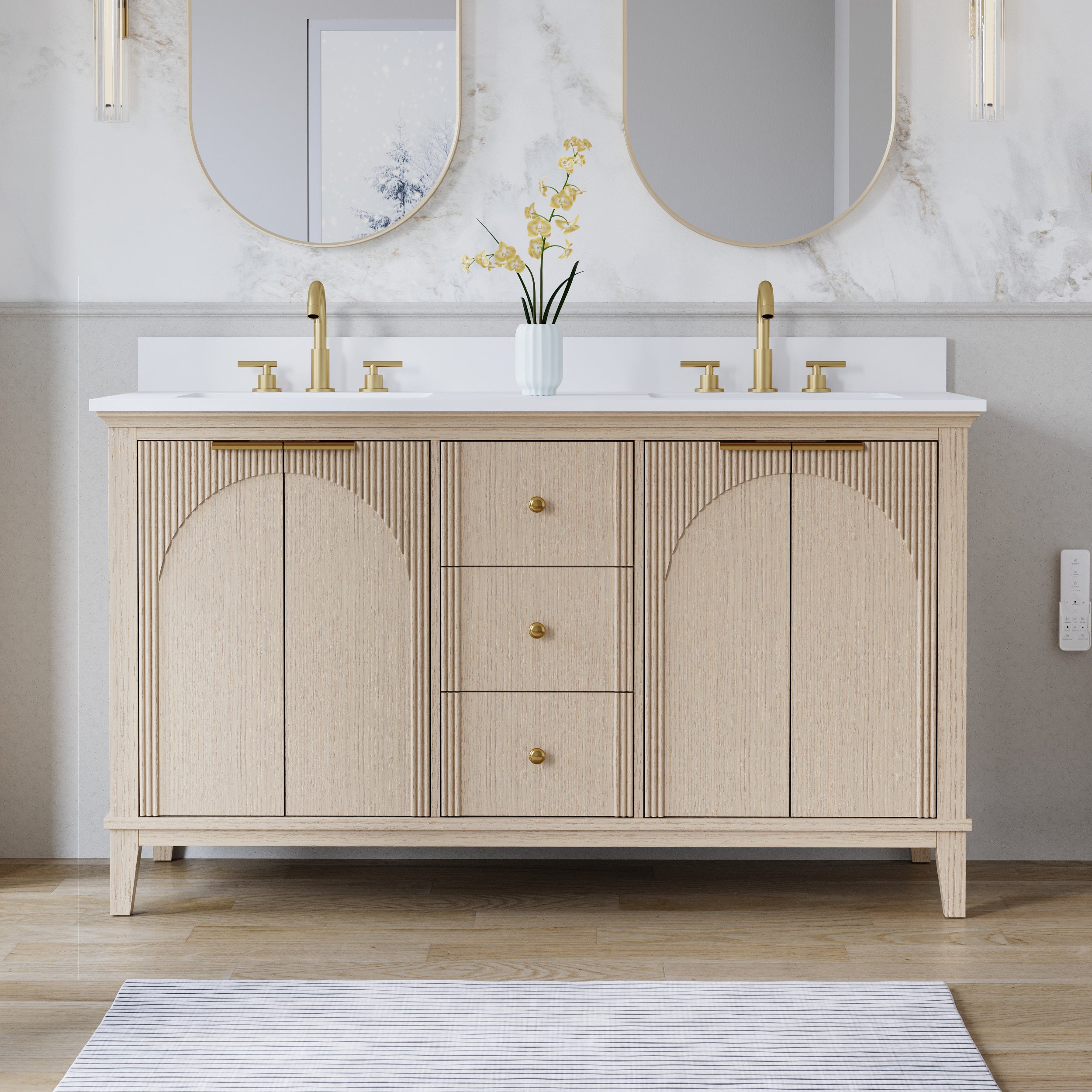
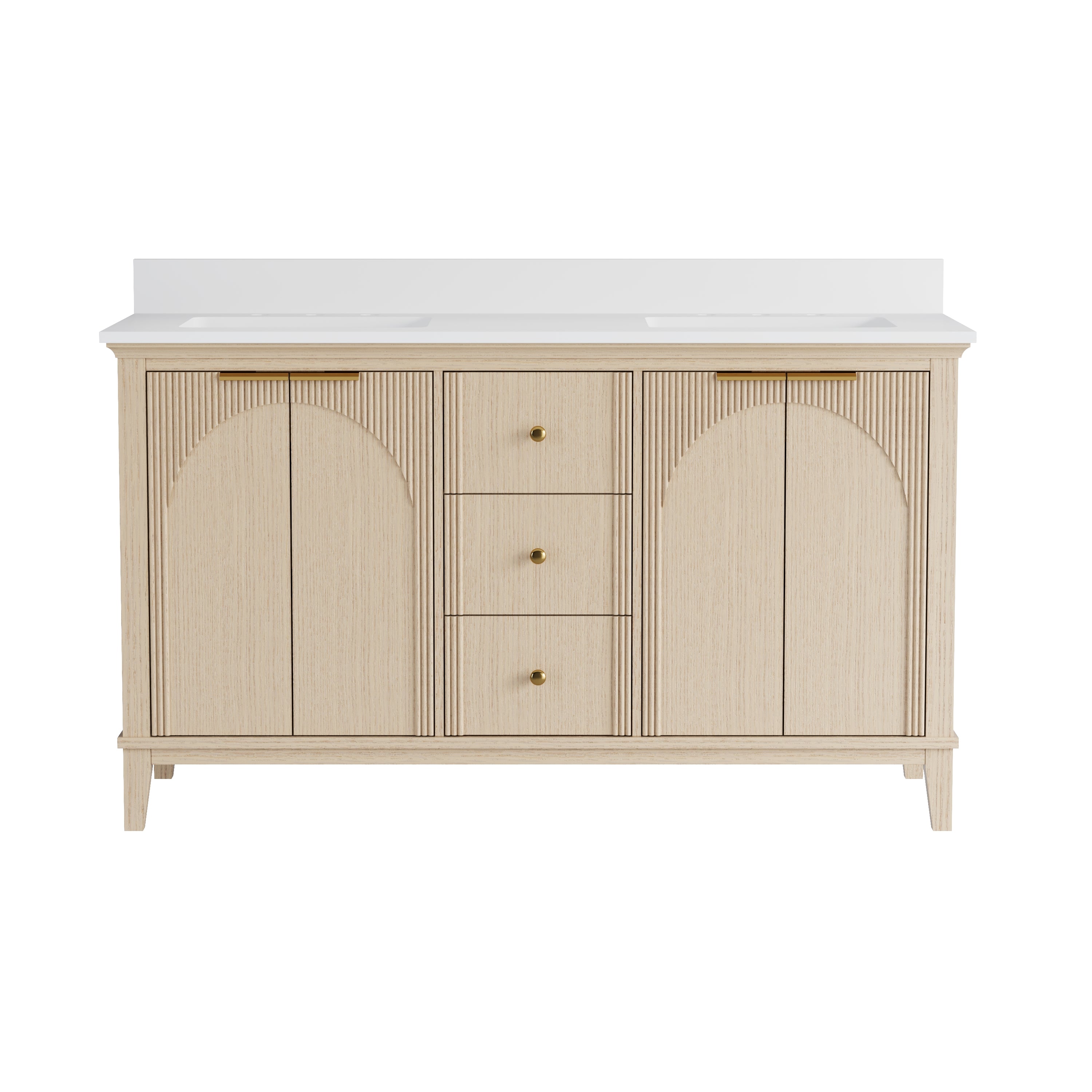
A wood vanity can bring warmth, storage, and a more finished look to a bathroom, but it also needs the right care to stay stable over time. Warping usually does not happen because wood is “bad.” It happens when moisture, heat, poor ventilation, weak sealing, or uneven exposure causes the wood to move more than the cabinet construction can handle. Since bathrooms deal with steam, splashes, plumbing, and frequent cleaning, keeping a vanity warp-free depends on both product quality and everyday maintenance.
1. Understand Why Wood Moves
Wood is a natural material, and it reacts to the air around it. When the air is damp, wood can absorb moisture. When the air becomes dry, it can release moisture. This cycle can lead to small dimensional changes. If the changes are uneven, doors may twist, drawer fronts may shift, and panels may bow.
The USDA Forest Products Laboratory explains that wood is hygroscopic, meaning it exchanges moisture with surrounding air depending on relative humidity, temperature, and the wood’s current moisture level. This moisture relationship has a direct effect on wood performance. For bathroom furniture, that means humidity control is not a small detail. It is one of the main ways to reduce warping risk.
Solid wood parts such as doors, frames, drawer fronts, and legs can be strong and beautiful, but they still need a stable environment. Plywood cabinet boxes can also help with dimensional stability, especially when edges are sealed properly. The best long-term performance usually comes from a combination of strong construction, moisture-resistant finishing, and steady room conditions.
2. Keep Bathroom Humidity Under Control
Humidity is the biggest daily threat to a bath cabinet. Long hot showers, poor airflow, damp towels, and closed doors can all trap moisture in the room. Over time, that moisture can reach the cabinet surface, edges, drawer interiors, and back panel.
EPA indoor air guidance recommends keeping indoor relative humidity below 60% when possible, with 30% to 50% considered a better target range. For a bathroom with a wood cabinet, that range is especially useful because it helps reduce both mold risk and wood movement.
The practical step is simple: use the exhaust fan every time the shower or tub creates steam. If the room has a window, opening it after bathing can also help, as long as outdoor humidity is not high. In a bathroom without good airflow, a small humidity gauge can make the problem easier to see. If the room regularly stays above 60%, the cabinet is being exposed to conditions that can shorten its life.
3. Choose a Properly Sealed Cabinet
A warp-free cabinet starts before installation. Buyers should inspect the cabinet finish, especially around edges and hidden areas. A smooth front surface is not enough. The most vulnerable spots are usually the door edges, drawer fronts, sink cutouts, side panels, back panel, toe-kick area, and lower rails.
A good topcoat should feel consistent across the surface. It should not feel raw, rough, sticky, or thin at the corners. Matte and satin finishes can look natural and modern, but they still need enough protection to resist steam, soap, toothpaste, water spots, and routine cleaning.
Edges matter because water often enters through unfinished or poorly sealed areas. If moisture gets into exposed wood fibers, swelling may start before the front surface shows a problem. Once a panel swells unevenly, it can become difficult to return it to its original shape.
4. Install the Vanity Away From Standing Water

Installation has a major impact on cabinet life. A wood cabinet should not sit in standing water or against a constantly damp surface. Check the floor before installation. If the floor is uneven, water may collect near the cabinet legs, toe-kick, or base. That can slowly affect the lower structure.
If the vanity has legs, make sure all legs sit firmly and evenly. If the cabinet rests on a full base, the base should not have raw wood touching a wet floor. For floating designs, the wall structure and mounting hardware must support the cabinet securely, especially when a heavy countertop and sink are installed.
Plumbing should also be checked carefully. A slow leak below the sink can cause more damage than occasional surface splashes because it may stay hidden for weeks. After installation, inspect supply lines, shutoff valves, drain connections, and the cabinet floor. A dry cabinet interior is one of the best protections against warping.
5. Wipe Splashes Before They Sit
Daily habits matter. A properly finished wood cabinet can handle normal bathroom use, but it should not be treated like tile. Water left around the sink, on drawer fronts, or along the cabinet edges can slowly stress the finish.
After handwashing, shaving, or cleaning, wipe visible water from the countertop edge, door fronts, and drawer areas. Pay attention to the line where the countertop meets the cabinet. If the sink has an overflow, check that it works properly and does not let water sit inside the cabinet.
Cleaning products should also be chosen carefully. Harsh chemicals, abrasive pads, and soaking-wet cloths can damage the topcoat. A soft cloth and mild cleaner are usually safer. The goal is to clean the surface without stripping the finish that protects the wood underneath.
6. Leave Room for Airflow Around the Cabinet
Airflow helps wood stay stable. A vanity packed tightly against wet towels, storage bins, or cleaning products may dry more slowly after exposure to moisture. Inside the cabinet, leave enough space for air to move around plumbing and stored items.
Do not store wet towels inside the cabinet. Do not place damp bathmats directly against the base. If cleaning products leak or spill, wipe the area immediately. Adjustable shelves and drawer organizers can help keep items from pressing against cabinet walls and trapping moisture.
Airflow also matters after deep cleaning. If the cabinet interior is wiped down, leave doors or drawers open for a short period so the inside can dry fully. This small habit helps prevent moisture from staying trapped in corners.
7. Watch for Early Warning Signs
Warping often starts with small signals. A door may stop lining up evenly. A drawer front may look slightly tilted. The reveal around a door may become wider on one side. A panel may feel raised near an edge. Paint or clear coat may crack at a corner joint.
These signs should not be ignored. Sometimes the solution is simple, such as improving ventilation, tightening hardware, adjusting hinges, or wiping hidden moisture. If the problem is caused by a plumbing leak, early action can prevent more serious damage.
Seasonal changes can also affect wood. In very dry months, wood may shrink slightly. In humid months, it may expand. A small amount of movement is normal, but visible twisting, swelling, or cracking usually means the cabinet is facing too much moisture or uneven exposure.
8. Choose Better Construction for Long-Term Stability
The best way to prevent warping is to buy a cabinet built for bathroom conditions. Look for solid joinery, sealed edges, stable panels, quality hinges, and a durable finish. Dovetail drawer boxes, full-extension slides, and soft-close hardware do not directly stop moisture, but they often indicate better overall construction.
Houzz’s 2025 bathroom trends research found that 78% of renovating homeowners selected soft-close drawers and 75% selected soft-close doors. These features are popular because they make daily use smoother, but they also help reduce slamming and unnecessary stress on cabinet parts.
Wood choice and panel design matter too. Wide solid wood panels need proper construction to reduce movement. Framed doors should have tight rail-and-stile joints. Flat-panel doors should feel stable, not thin or flexible. Drawer fronts should sit square and should not twist when gently pulled.
9. Make Moisture Control a Routine
Keeping a wood vanity warp-free is not about one big repair. It is about steady prevention. Use the fan. Keep humidity in a reasonable range. Wipe standing water. Fix leaks quickly. Avoid harsh cleaners. Keep edges sealed. Let the cabinet dry after cleaning. These habits protect the finish and reduce the moisture swings that cause wood movement.
A good vanity should be able to handle normal bathroom life, but no wood cabinet performs well when it is constantly wet, poorly ventilated, or neglected. When strong construction is paired with smart care, a wood cabinet can stay straight, smooth, and beautiful for many years.











Leave a comment
This site is protected by hCaptcha and the hCaptcha Privacy Policy and Terms of Service apply.