














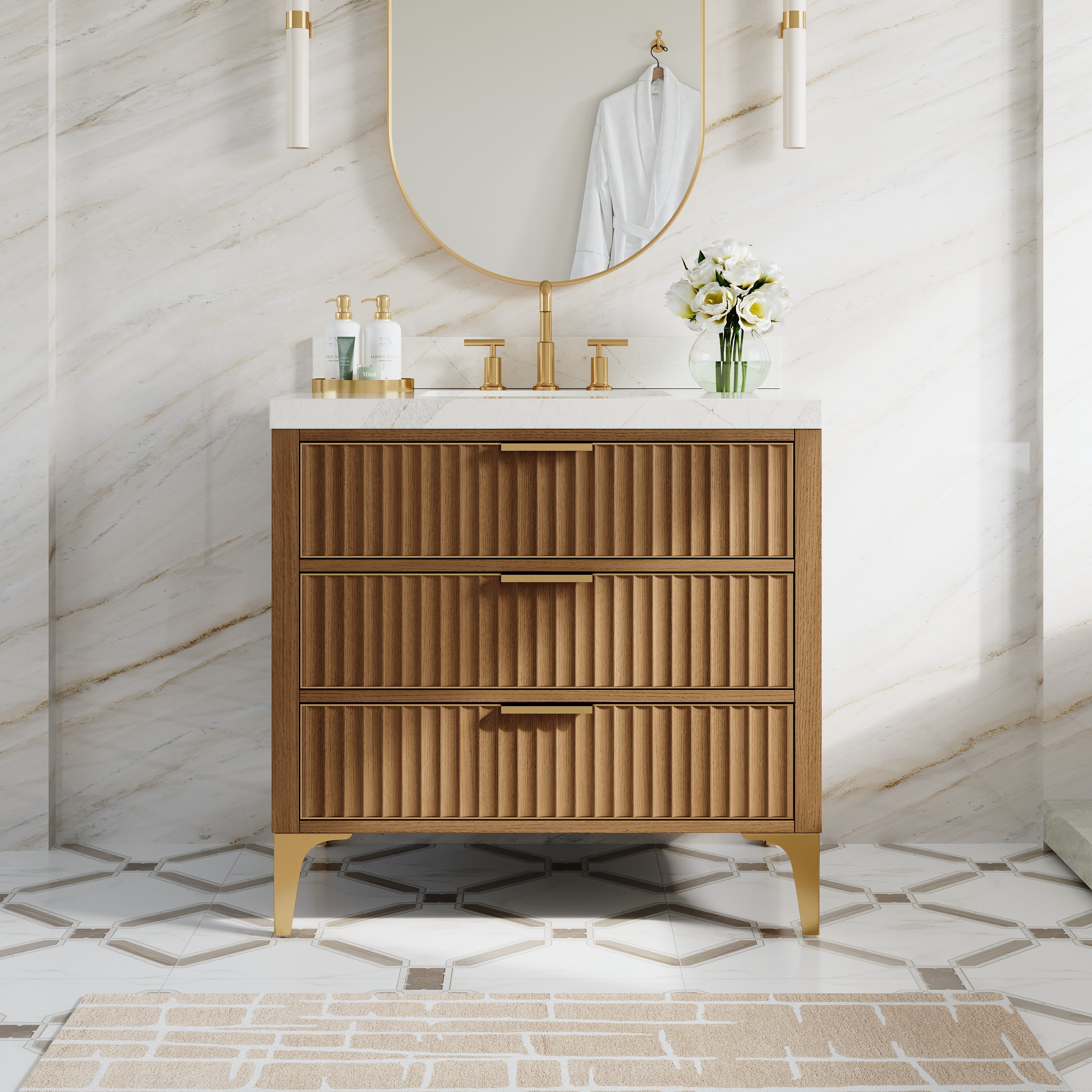
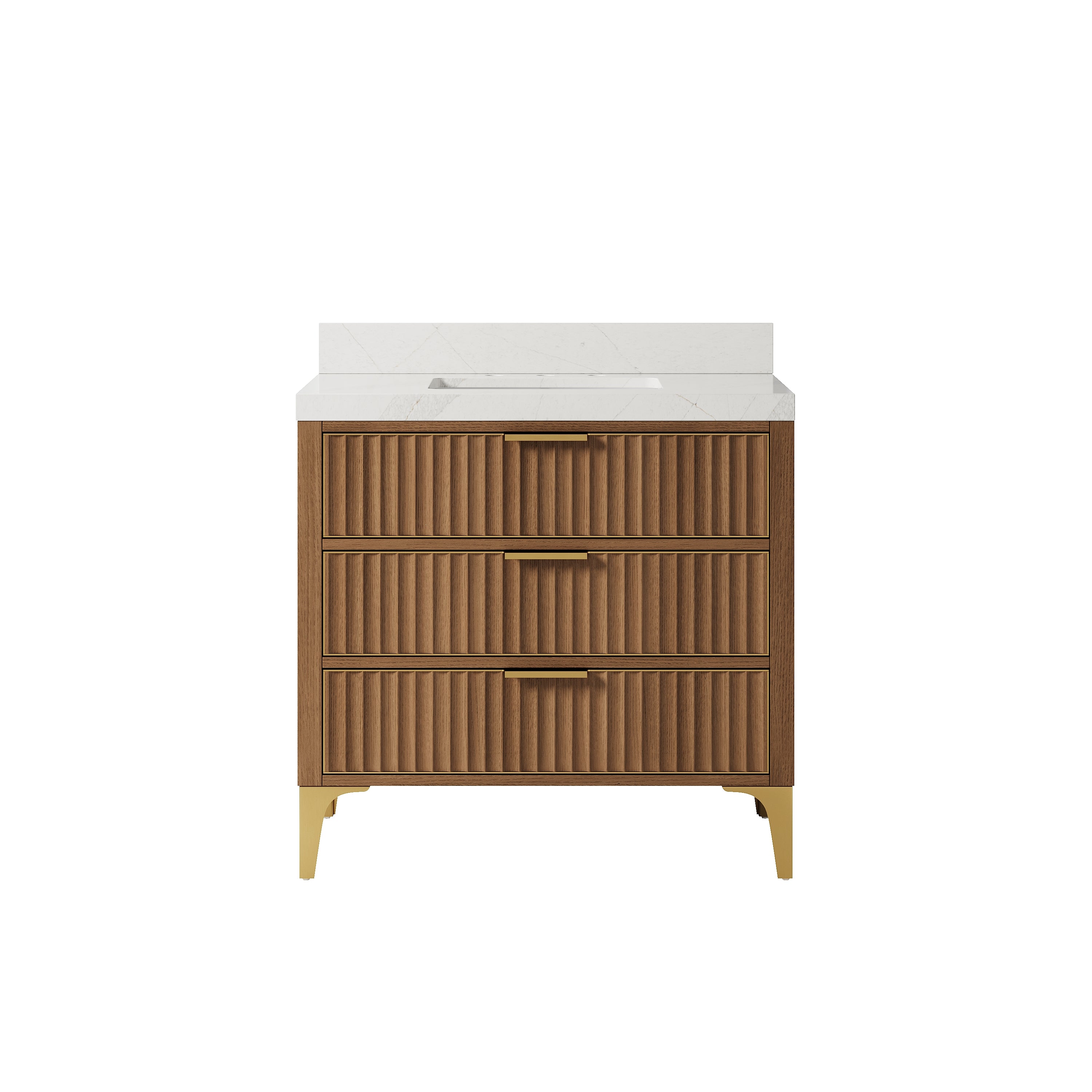
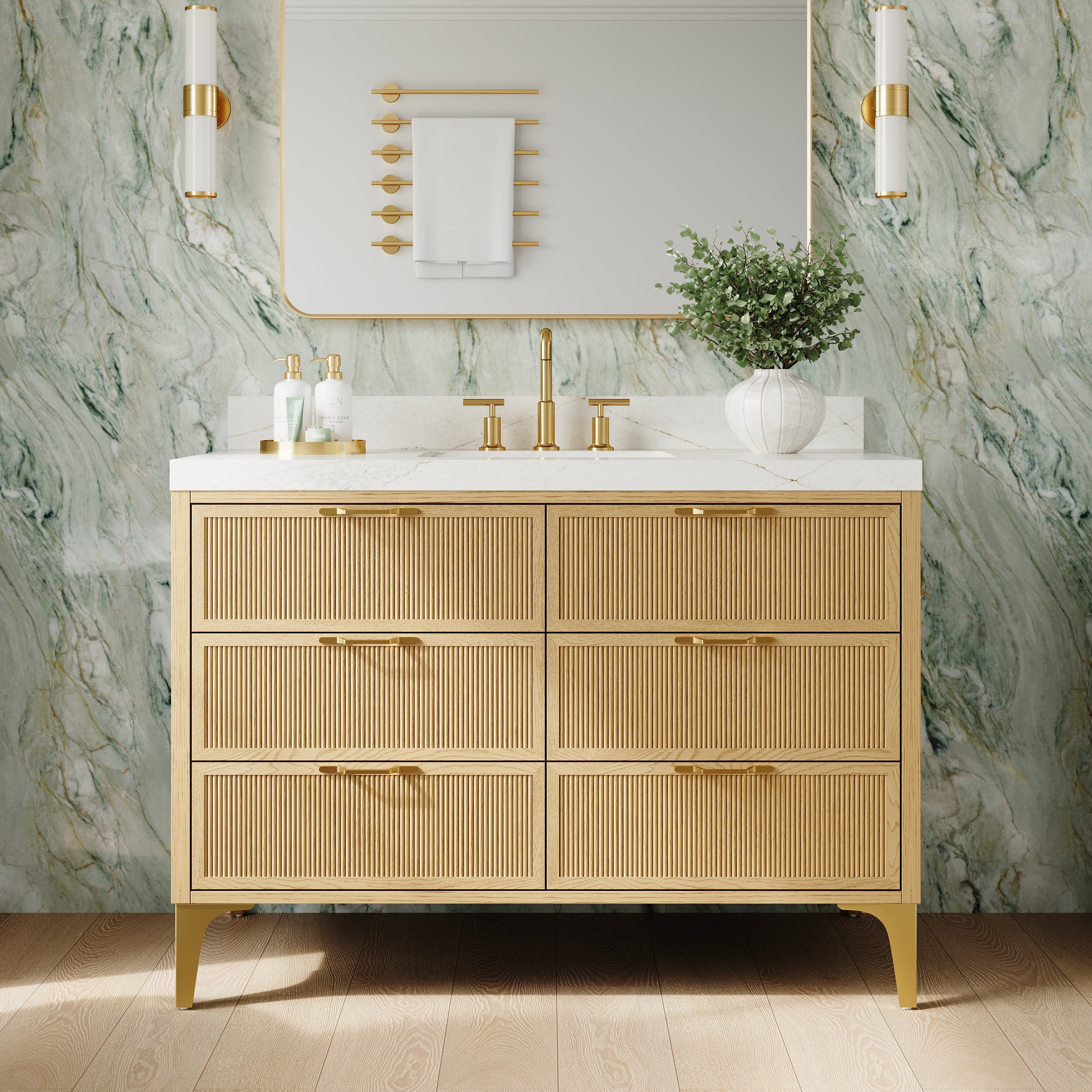
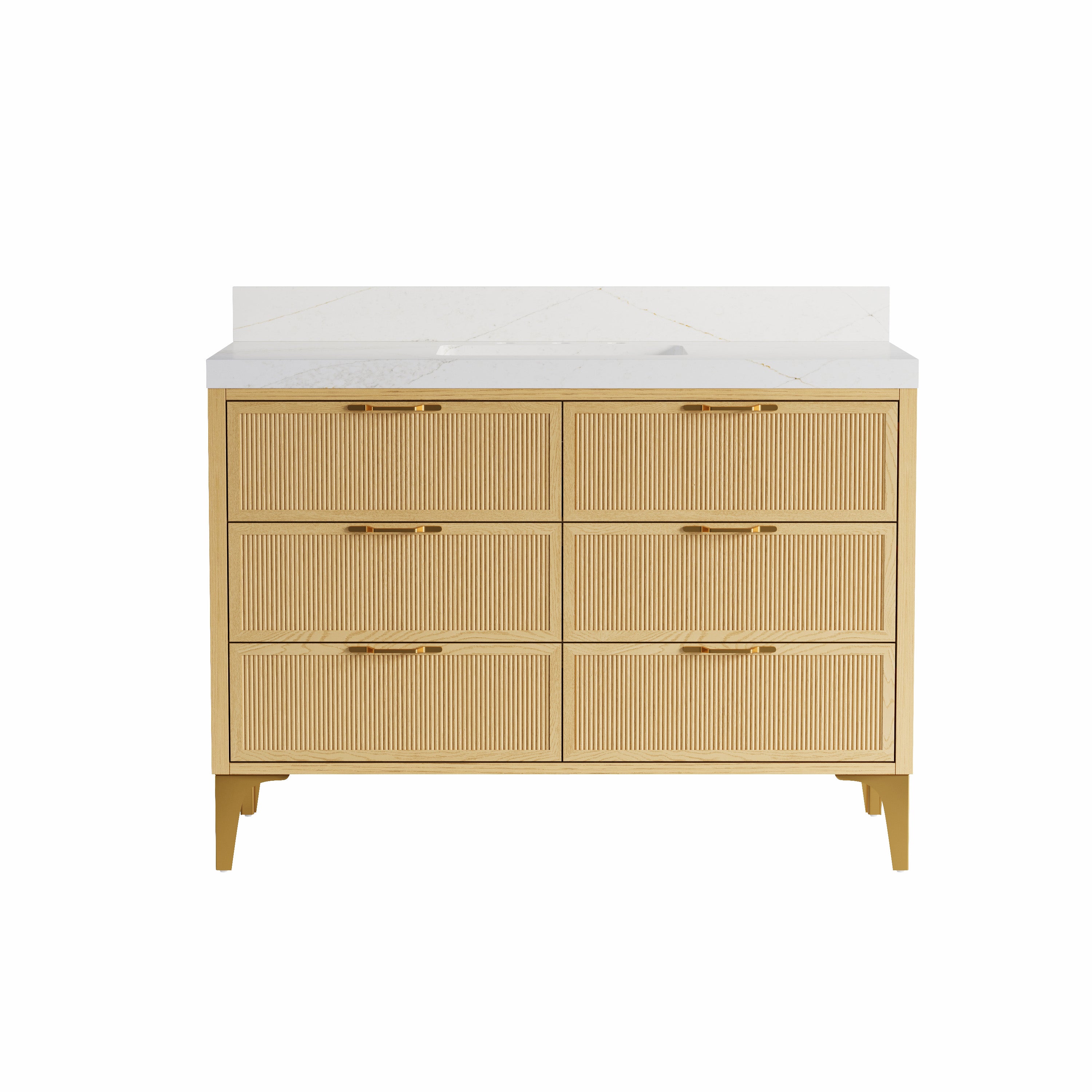


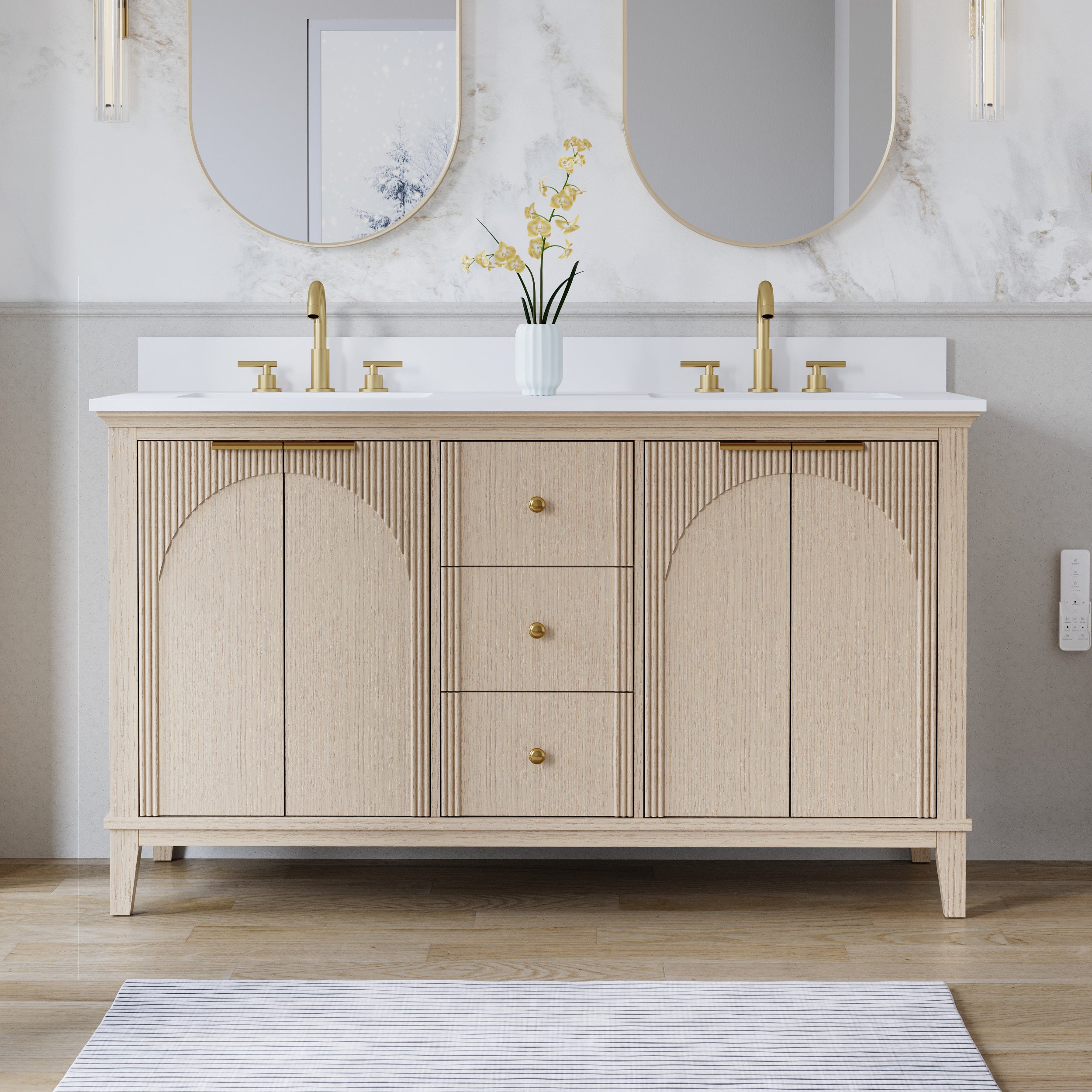
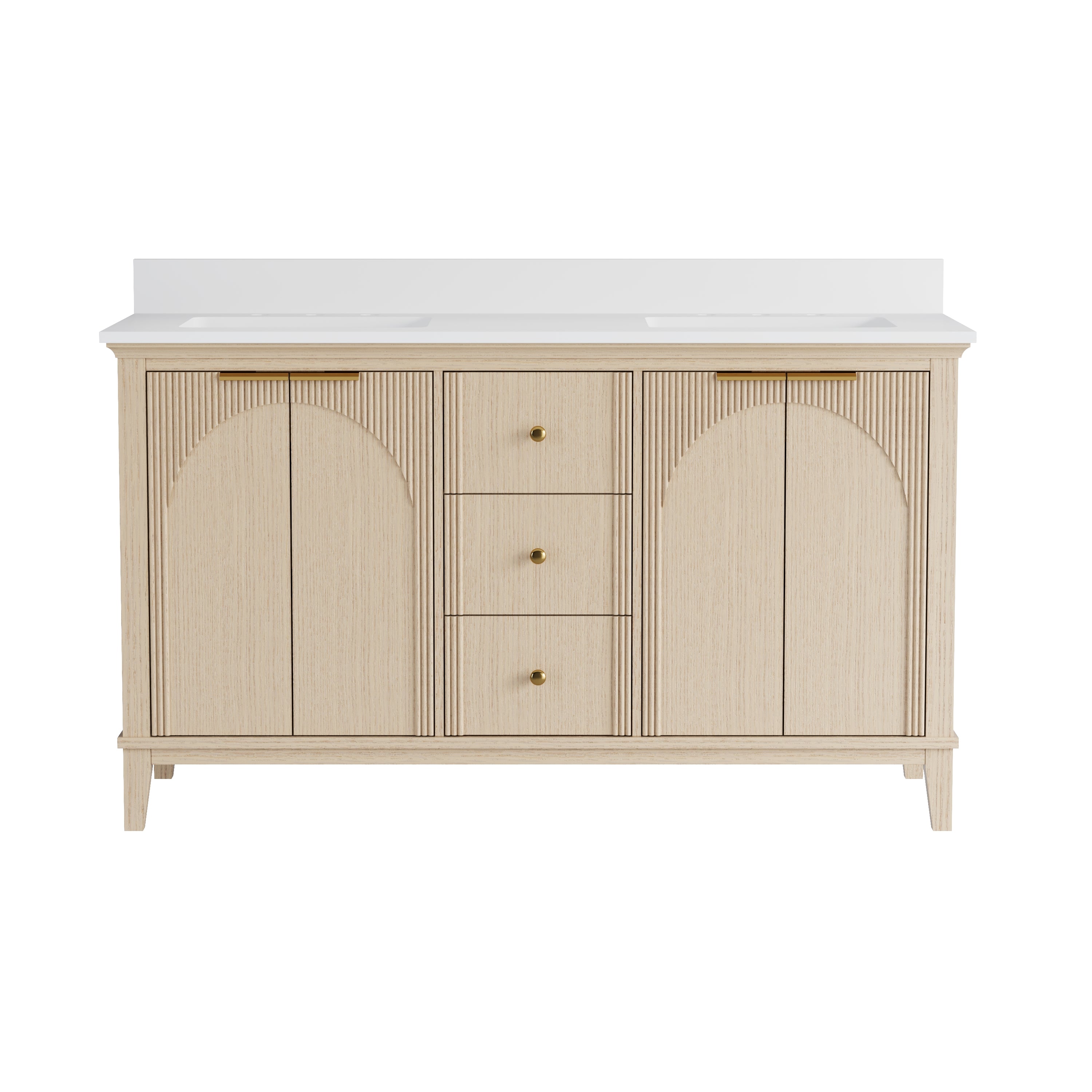
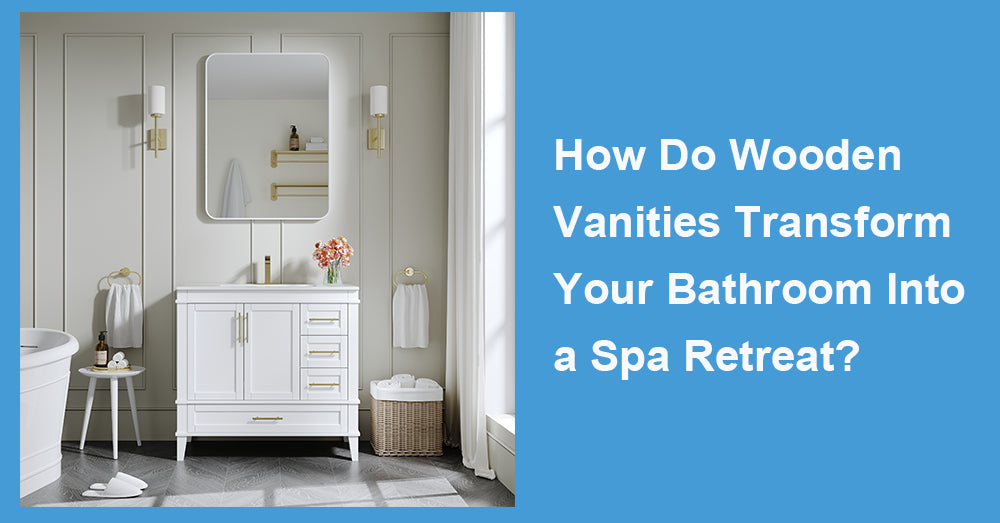
A wooden vanity can be the single upgrade that makes a bathroom feel calmer, warmer, and more “spa-like” without changing the entire layout. Wood adds natural texture, softens hard surfaces like tile and stone, and creates a grounded focal point that makes the room feel intentional rather than purely functional. When you pair the right wood construction with smart storage, moisture-aware finishing, and gentle lighting, a bathroom starts to behave like a retreat: less clutter, fewer visual distractions, and a more comfortable daily routine.
1. Wood Creates a Spa Mood Through Natural Warmth and Visual “Quiet”
Spa design is rarely about adding more—it's about removing noise. Bathrooms often have a lot of reflective materials (glass, polished tile, chrome), which can feel bright but also sterile. Wood balances that with warmth and organic grain variation, creating a softer visual rhythm that reads as restful.
This effect is often described as “biophilic” in design—using natural materials to make spaces feel more restorative. In a bathroom, wood is especially powerful because it contrasts with the coldness of porcelain and stone and gives the eye a place to settle. Even a modern minimalist bathroom feels more welcoming when the vanity is wood rather than an all-white slab.
2. A Spa Bathroom Feels Calm Because It Stays Organized
Luxury spas feel relaxing partly because the surfaces are clear. A well-chosen wooden vanity supports that by offering better, more functional storage—so your countertop doesn’t become a permanent staging area for bottles and tools.
Storage features that create “spa calm”
· Deep drawers for tall bottles and hair tools
· Full-extension slides so you can actually see and reach items in the back
· Dividers or trays that prevent clutter piles
· A layout that supports a simple system: daily items, weekly items, backups
When storage works, the vanity top becomes a calm zone instead of a busy one—one of the biggest differences between “nice bathroom” and “spa retreat.”
3. Wood Feels Luxurious Because It Stays Solid When Chosen Correctly
Not all wood vanities perform the same. Spa-like luxury isn’t just about the look—it’s about how it holds up after thousands of drawer pulls and constant wiping.
A practical durability metric is the Janka hardness rating, which measures the force required to embed a steel ball into wood (Source: PreciseBits, Janka hardness test explanation). Common benchmarks include Hard Maple (1,450 lbf), White Oak (1,360 lbf), and Red Oak (1,290 lbf) (Source: Bruce Hardwood, Janka hardness chart).
Why this matters: harder woods generally resist dents and wear better. In a bathroom, that means fewer edge dings, fewer door-face dents, and a cleaner look over time.
Smart approach in premium cabinetry: hardwood where you see and touch it (door fronts, drawer fronts, face frames), and stable engineered panels where large flat surfaces need to resist warping.
4. A True Spa Vanity Must Respect Humidity Physics
Bathrooms are moisture environments, and wood is a living material. The best wooden vanities don’t “ignore” wood movement—they’re built to accommodate it.
Wood movement varies by direction. Furniture engineering guidance explains wood tends to shrink and swell most tangentially, about half as much radially, and very little longitudinally (Source: Purdue Extension, FNR-163 “The Shrinking and Swelling of Wood and Its Effect on Furniture”). That’s why quality cabinet doors often use frame-and-panel construction: the panel can move slightly without cracking the frame.
Humidity targets matter, too. The EPA recommends keeping indoor relative humidity below 60%, ideally between 30% and 50%, to reduce moisture-related problems (Source: U.S. EPA, Mold Course Chapter 2). A bathroom will spike higher during showers, but the goal is to return to a stable baseline with ventilation.
Spa-level habit: run the exhaust fan during showers and for a period afterward so moisture doesn’t linger on wood finishes and metal hardware.
5. Finish Quality Is What Makes Wood “Spa-Proof”
A spa bathroom looks effortless because surfaces stay clean and consistent. In a bathroom, the finish system is your wood vanity’s first line of defense against water splashes, cleaning routines, and humidity cycles.
What to look for in a long-lasting finish strategy:
· A sealed finish designed for moisture resistance
· Clear maintenance instructions (what cleaners are safe)
· Good edge protection, especially near sink cutouts and corners
Everyday care that preserves the spa look: wipe standing water near the faucet and sink edge. Repeated pooling is one of the fastest ways to degrade finishes—no matter how premium the vanity is.
6. Wood Vanities Pair Beautifully With Spa Materials
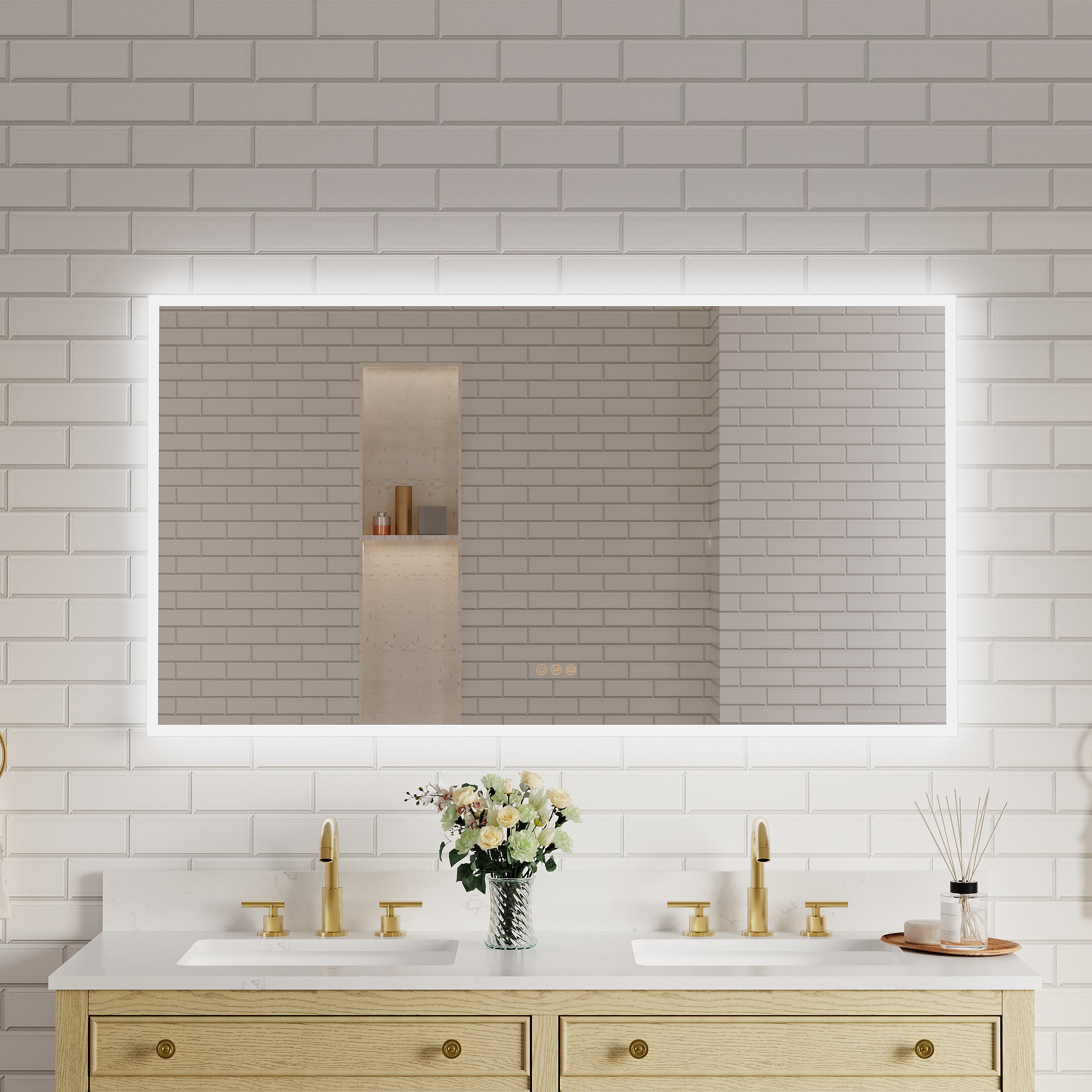
Spas feel upscale because materials are balanced: warm + cool, matte + reflective, soft + structured. Wooden vanities are ideal partners for spa staples such as:
· Stone or stone-look tops (quartz, marble-inspired patterns, granite)
· Matte hardware (matte black, brushed nickel) or warm metallics
· Linen textures, neutral paint, and soft lighting
A simple rule: let wood be the warmth and keep the surrounding palette calm. If everything competes, the room feels busy. If wood is the main organic note, it reads intentional and soothing.
7. Wooden Vanities Support Value-Oriented Makeovers
A spa retreat bathroom is emotional—but renovations also come with budget reality. Bathroom projects often retain meaningful value depending on scope. The 2025 Cost vs. Value Report lists “Bath Remodel | Universal Design” at about 61% average cost recouped (Source: JLC, 2025 Cost vs. Value Report).
A vanity alone isn’t a full remodel, but a high-quality wooden vanity can be a “high-impact, daily-use” centerpiece that supports both lifestyle enjoyment and the overall impression of a renovated bathroom.
8. A Spa-Retreat Checklist for Choosing a Wooden Vanity
Use this list when comparing options:
Material and durability
· Ask what is hardwood vs. engineered panel
· Consider hardness benchmarks (Maple/Oak) if dent resistance matters (Source: Bruce Hardwood; PreciseBits)
Construction
· Frame-and-panel doors for movement-friendly stability (Source: Purdue Extension FNR-163)
· Solid drawer construction and reliable slides
· Soft-close hinges/slides for daily comfort
Finish and moisture strategy
· Sealed, moisture-resistant finish with clear care instructions
· Ventilation plan to keep RH below 60% and ideally 30–50% outside shower spikes (Source: EPA Mold Course Chapter 2)
Storage that creates calm
· Deep drawers and organizers that keep counters clear
· Full-extension slides for easy access
Design balance
· Pair with calm finishes and soft lighting so the wood reads like a spa element, not just cabinetry

Conclusion
A wooden vanity transforms a bathroom into a spa retreat by changing how the space feels and how it functions. The natural warmth of wood softens hard materials, better storage reduces visual clutter, and high-quality construction keeps the vanity stable through humidity swings. When you choose a durable species, movement-friendly build, and moisture-resistant finish—and support it with ventilation that keeps humidity in a healthier range (Source: EPA Mold Course Chapter 2)—the bathroom becomes calmer, more organized, and more restorative every day.












Leave a comment
This site is protected by hCaptcha and the hCaptcha Privacy Policy and Terms of Service apply.