



















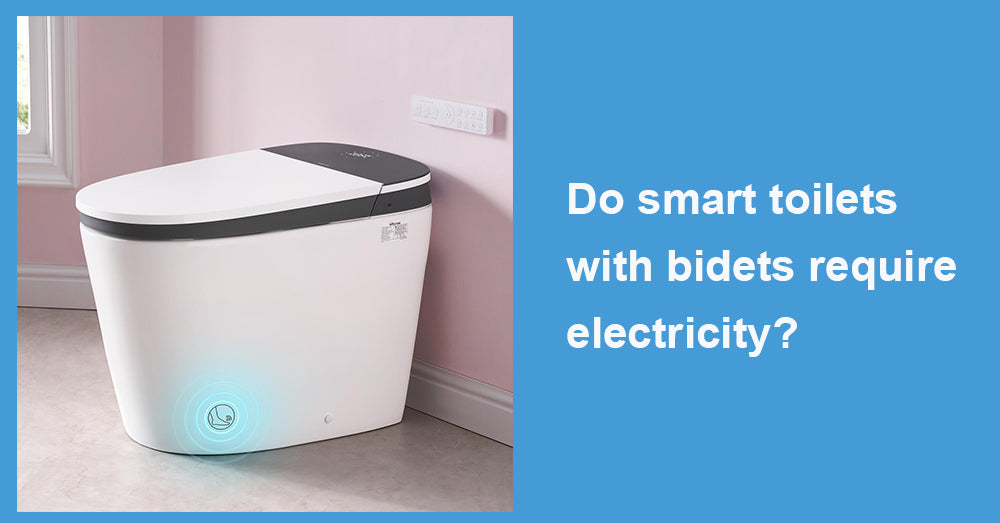
With the popularization of the concept of smart homes, bidet-equipped smart toilets are gradually moving from high-end bathroom products to the mass market. However, in the actual consultation and sales process, a frequently asked question arises: Does a smart toilet necessarily require electricity?
This question may seem simple, but it actually involves multiple factors, including product structure, functional configuration, security standards, and user usage habits. It is worth systematically reviewing from an industry perspective.
1. Starting from the definition: What is a smart toilet with bidet?
In the industry context, a smart toilet with a bidet typically refers to toilet products that integrate cleaning, heating, sensing, and control systems. Unlike traditional toilets or simple mechanical flushing devices, its core value lies in improving the hygiene experience and user comfort through technological means.
It should be emphasized that not all toilets with a flushing mechanism are "smart toilets". The industry generally considers the presence of an electronic control system an essential criterion for distinguishing smart toilets from non-smart products.
2. What is the core role of electricity in smart toilets?
From a technical perspective, electricity is the fundamental source of energy for most smart toilets with a bidet.
Its main functions are reflected in the following aspects:
Drive the electronic cleaning system to achieve stable water pressure and multiple modes
Heating seat ring to enhance comfort during cold seasons
Instant or hot water storage system, ensuring warm water flushing
Operation of the control panel, remote control, or sensing module
Additional features such as intelligent deodorization, night light, and automatic flushing
It can be said that the introduction of electricity has upgraded the Bidet function from a "passive structure" to an "active control system", which is the key difference between smart toilets and traditional products.
3. Does a non-plugged-in bidet exist? How to distinguish industries?
There are indeed bidet products on the market that do not require electricity, but strictly speaking, they do not belong to the category of smart toilets.
These types of products usually rely on tap water pressure to operate and only provide basic cold water or simple temperature-controlled cleaning, lacking intelligent sensing and automatic adjustment functions.
From the perspective of industry classification:
Unplugged products: closer to a mechanical bidet or additional flushing devices
Plug-in products: defined as brilliant toilets with a bidet
Therefore, when consumers ask whether they need electricity, they are actually unintentionally touching on the essential difference of smart toilets.
4.Why do mainstream smart toilets choose an electric design?
From the perspective of industry development, electricity consumption is not an "additional burden", but an inevitable choice for technological upgrading.
On the one hand, modern users' demands for comfort, stability, and controllability are constantly increasing; On the other hand, regulations and market demands for product safety, water conservation, and energy efficiency are becoming increasingly stringent.
Through the electronic control system, manufacturers can:
Accurately control water temperature and volume to avoid energy waste
Improve cleaning consistency and reduce user adjustment errors
Introduce security protection mechanisms, such as leakage protection and temperature control restrictions
Meet the usage standards of different countries and regions
These factors have collectively driven plug-in smart toilets to become mainstream.
5.Does using electricity mean higher usage risks?
This is another core issue that consumers are generally concerned about.
From industry practice, formal smart toilets with a bidet have fully considered the special characteristics of high-humidity environments in bathrooms during the design phase.
Mainstream products typically have:
Waterproof and moisture-proof structure design
Leakage protection device (GFCI)
Low-power operation mechanism
Obtained multiple international electrical safety certifications
On the condition of complying with installation specifications and usage instructions, the electrical safety of smart toilets has been widely verified in the industry, and its risk level is essentially the same as that of other bathroom appliances.

6. Changes in acceptance of "electric smart toilets" in different markets
From a global market perspective, the acceptance of electricity for smart toilets with a bidet is significantly increasing.
In mature markets such as Japan and South Korea, plug-in smart toilets have almost become a standard for residential use; In North America and Europe, electricity demand is gradually shifting from a "concern point" to a "part of functional value".
Behind this change is not only the upgrading of consumer awareness but also the increasingly mature product design. Industry data shows that smart toilets with comprehensive features and transparent energy consumption are more likely to build long-term trust.
7. Industry Conclusion: Does a smart toilet with a bidet require electricity?
From the perspective of comprehensive technical definition, market classification, and user demand, a brilliant toilet with a bidet basically requires electricity.
Electricity is not a redundant configuration but a key foundation for improving the cleaning experience, enhancing safety controls, and expanding functions.
Of course, whether to choose plug-in products ultimately depends on the user's careful consideration of comfort, functional depth, and usage habits. However, judging by industry trends, electric smart toilets are an irreversible development direction.
Conclusion: Only by taking a rational view of "electricity" can we understand the value of intelligence
The question of whether electricity is needed essentially reflects the transitional stage of consumers' understanding of smart toilets.
When the industry continues to reduce energy consumption and improve safety through technological optimization, electricity is no longer a barrier, but a prerequisite for the establishment of intelligent experiences.
In the future, as the global market for smart toilets with bidets continues to grow, discussions about electricity will gradually shift from "whether it is needed" to "how to use it more efficiently and safely".



























Leave a comment
This site is protected by hCaptcha and the hCaptcha Privacy Policy and Terms of Service apply.