
















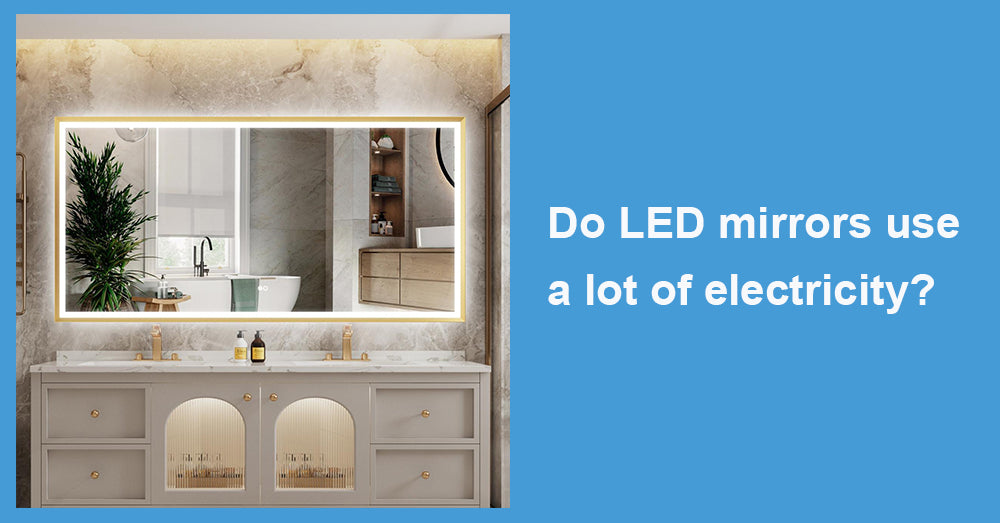
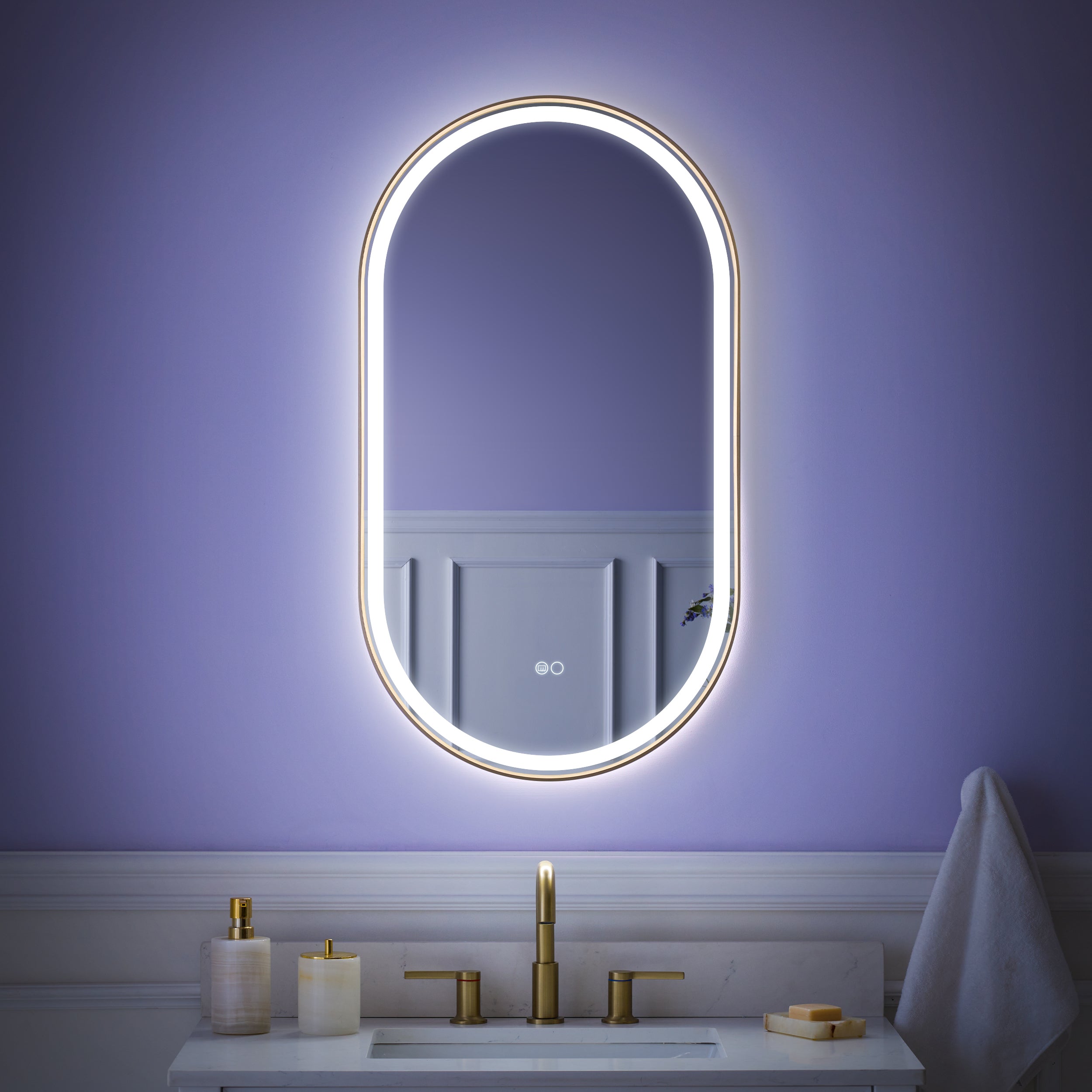
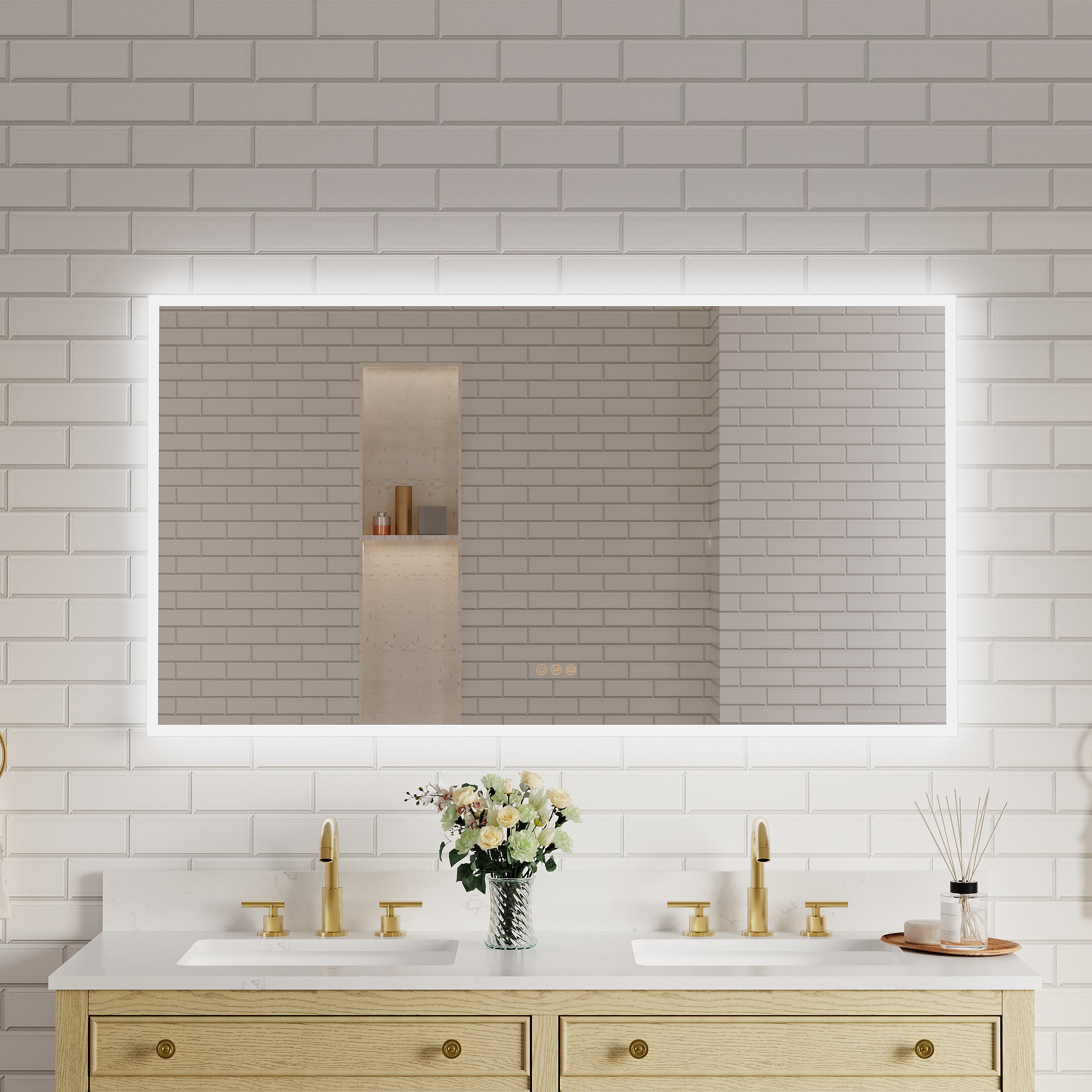
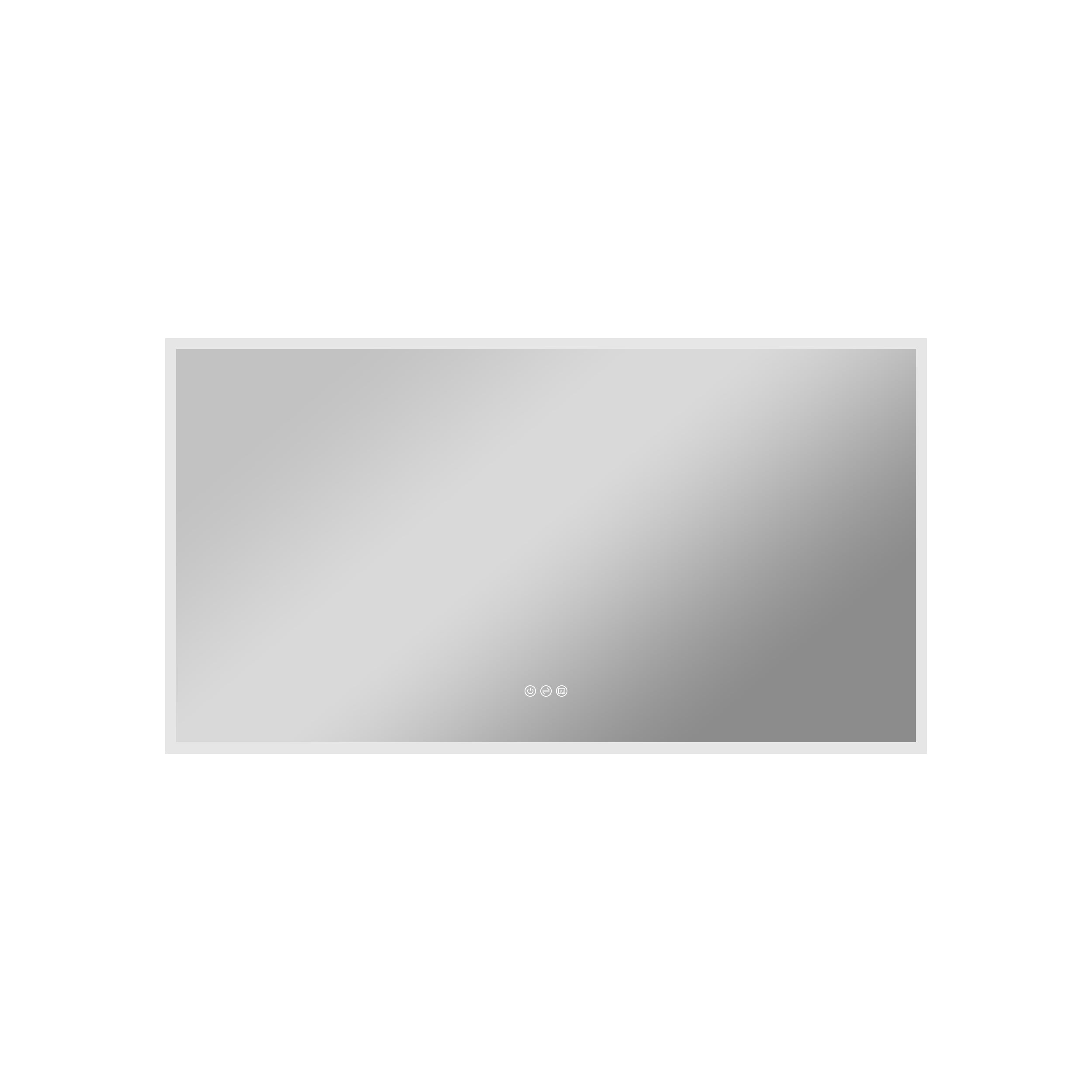
When shopping for LED mirrors, many people worry about two things: whether turning on the light will consume too much electricity, and whether the anti-fog feature will cause electricity bills to skyrocket. The reality is: the “lighting” function itself in most LED mirrors isn't power-hungry, with common wattages ranging from 10 to 60 watts. What truly drives up electricity usage are additional features like anti-fog/defog heating films. Used correctly, LED mirrors generally won't add to household electricity bills.
How Electricity Bills Work: Don't Be Intimidated by “Watts.”
Your electricity bill isn't based on “watts,” but on “kilowatt-hours.”
Watts (W): Measures how much power is being used at any given moment.
Kilowatt-hours (kWh): Measures the total electricity used over a period of time—this is what your bill is calculated based on.
Simple formula:
Electricity consumption (kWh) = Power (kW) × Usage time (hours)
Example: 40 watts = 0.04 kilowatts.
If used for 1 hour daily: 0.04 × 1 = 0.04 kWh; over 30 days, that's 1.2 kWh. You'll find the numbers are often smaller than expected.
Why are LED mirror lights relatively energy-efficient?
LEDs are characterized by high efficiency: they typically consume less electricity than traditional bulbs while providing equivalent brightness. For LED mirrors, lighting power consumption is primarily influenced by these factors:
Mirror size and light strip length: Larger mirrors and longer light strips require higher power.
Brightness setting: Significant power difference between 100% and 30% brightness.
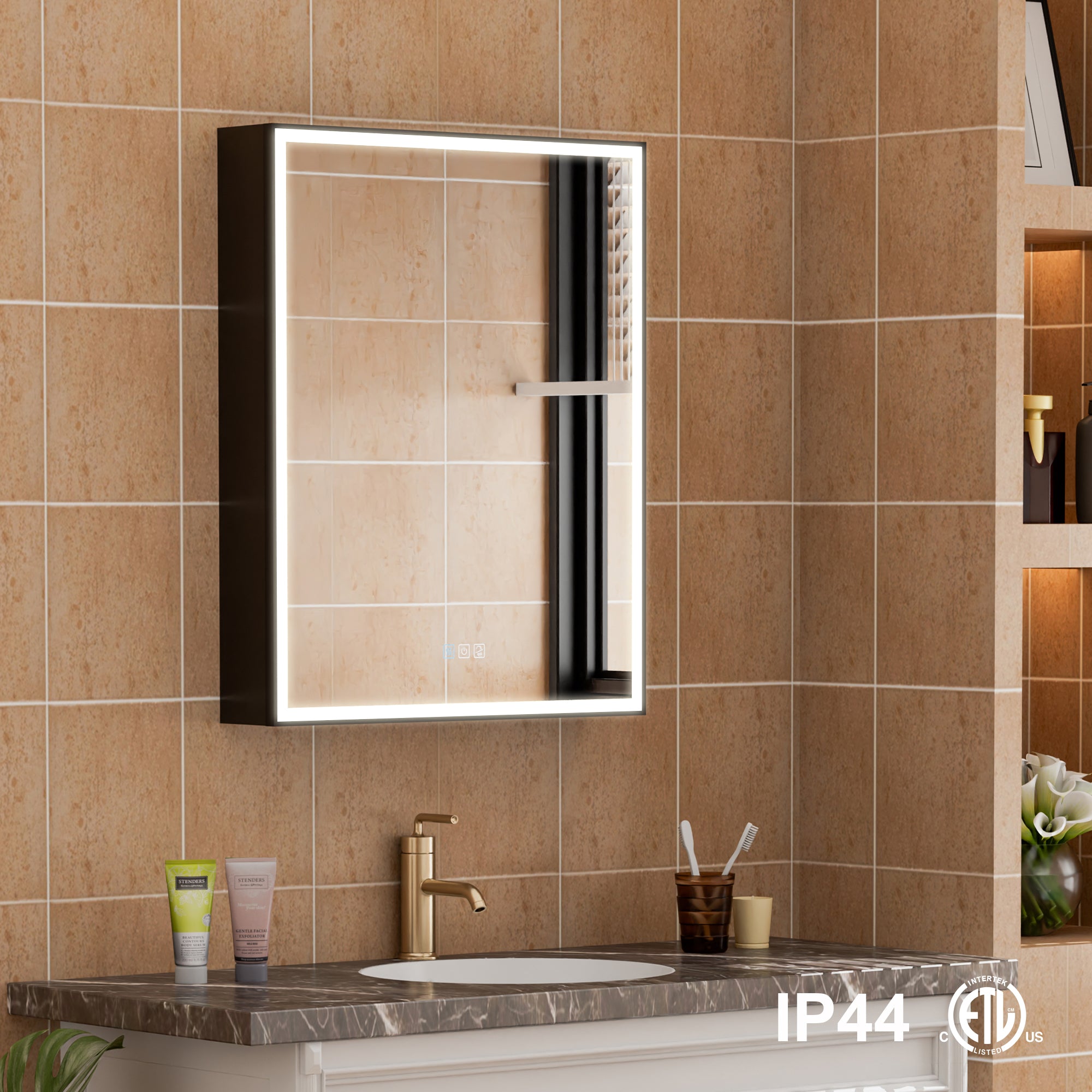
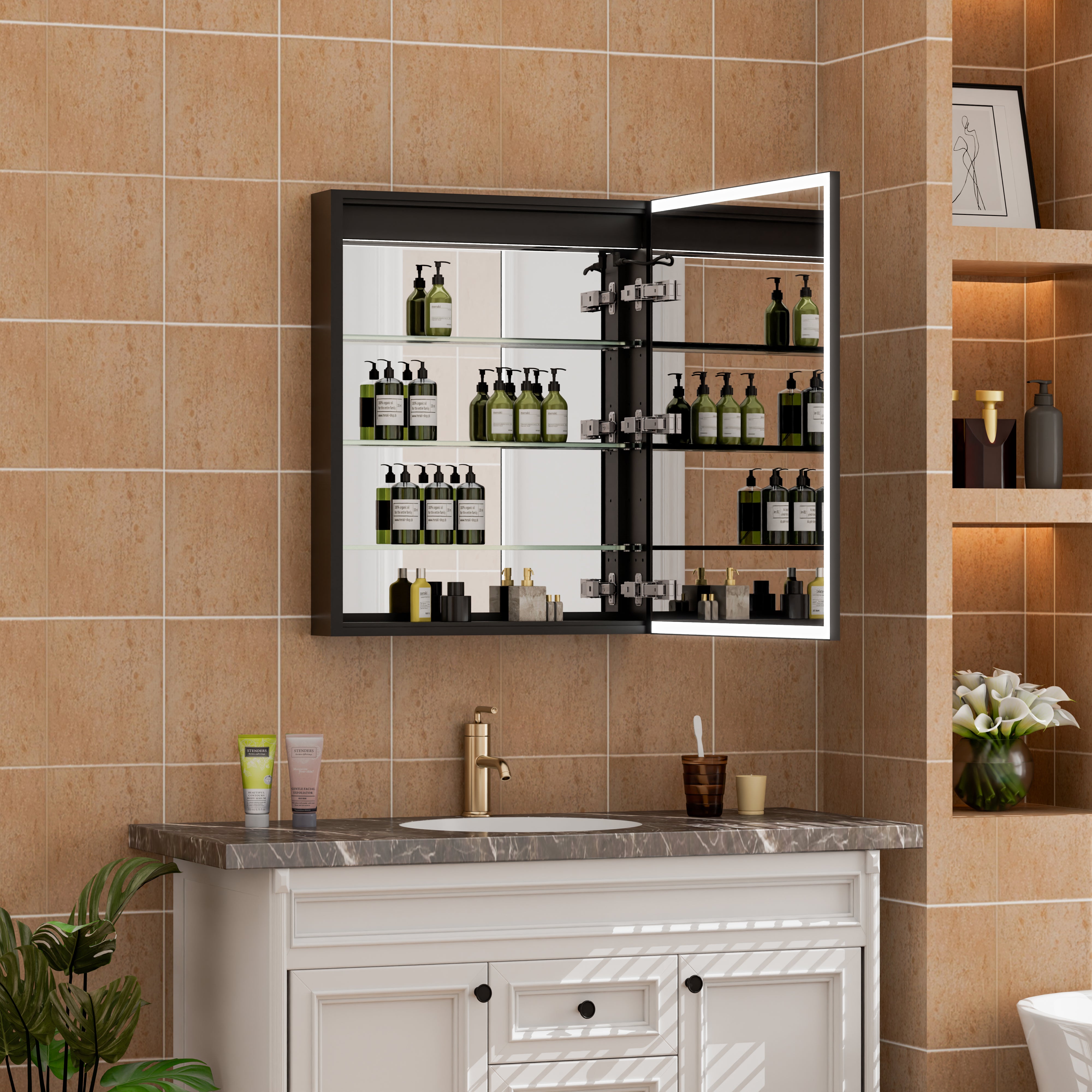
Front/backlight configuration: Backlight-only mode is usually more efficient; frontlight emphasizes facial illumination and may consume more power; dual front/backlight operation combines power consumption.
Driver and strip quality: Similar wattage can yield vastly different brightness levels. High-quality products often “shine more efficiently” rather than “relying on higher wattage to force brightness.”
The conclusion is straightforward: Focusing solely on “illumination,” most LED mirrors fall within energy-efficient lighting categories and won't inflate electricity bills excessively during daily use.
The real concern: Anti-fog/Defogging Heating
Many perceive LED mirrors as power-hungry, but this confusion stems from mixing “lighting” with “heating/defogging.”
Anti-fog/defogging functions rely on heating films on the mirror's back, which add extra power consumption and operate more like “electric heating” than “lighting.”
For scale reference: Some defogging heating panels cover areas roughly equivalent to 15.7 inches × 17.7 inches, with power ratings around several dozen watts. Specifications vary significantly across brands, defogging areas, and control methods:
Larger defogging area → Higher power consumption
Timers/independent switches → More energy-efficient
Defogging and lighting are tied together → More prone to energy waste.
The only practical advice is this: Always turn defogging on only when needed and off when finished. Timers are ideal. After showering, a brief activation when the mirror fogs is sufficient—no need for prolonged heating.

Calculating with U.S. Electricity Rates: How Much Does It Cost Per Month?
To give you a tangible sense of the cost, we'll use an easily understandable electricity rate for demonstration purposes. Residential electricity rates in the U.S. vary by state, tiered pricing plans, and service packages. Here, we'll use $0.17 per kWh as an example (many regions fluctuate around this range).
Scenario A: Lighting Only (40 watts, 1 hour daily)
Power consumption: 40 watts = 0.04 kW
Monthly usage: 0.04 × 1 × 30 = 1.2 kWh
Monthly cost: 1.2 × 0.17 ≈ × $0.20
Scenario B: Lighting + Defogging (Lighting: 40 watts, 1 hour daily; Defogging: 36 watts, 0.5 hours daily)
Defogging power: 36 watts = 0.036 kW
Monthly defogging electricity consumption: 0.036 × 0.5 × 30 = 0.54 kWh
Monthly defogging cost: 0.54 × 0.17 = approximately $0.09
Total: Approximately $0.29/month
You'll notice: Under “reasonable usage,” the increase is more like “a few cents” rather than “a significant extra charge each month.”
When might it feel “power-hungry”? Typically, in these 3 scenarios
1. Leaving defogging on constantly: Treating it like a nightlight will accumulate significant power usage.
2. Keeping dual front/back lights at high brightness long-term: Full brightness + extended use naturally increases consumption, though it remains more manageable than many traditional lighting setups.
3. Using the mirror light as primary lighting: If the bathroom's main lighting is insufficient, you might unconsciously keep the mirror light on brighter and longer, making it “feel more power-hungry.”
How to craft authentic and persuasive product features and copy
When positioning LED mirrors as standalone product features, frame “energy savings” professionally and verifiably:
Low-power lighting: Highlight the wattage range of the lighting component, emphasizing “bright yet not excessively power-hungry.”
Dimmable for greater savings: Tell users “use only what you need,” which is more credible than a generic “energy-efficient” claim.
Independent defogging control/timer: This addresses users' genuine “power consumption concerns.” Being clear about it actually builds trust.
Memory function: Automatically recalls the last brightness setting, avoiding defaulting to maximum brightness each time.
Bathroom-Ready: Emphasize safety and stability (critical for moisture-resistant operation and electrical safety in humid environments).
You can also use more consumer-friendly phrasing:
“Lighting power consumption is comparable to an energy-saving bulb; use the defogging feature only when needed—its impact on daily electricity bills is minimal.”
Most Energy-Efficient Usage Habits: Just Follow These Steps
Use 30%–60% brightness for daily grooming; switch to high brightness only for makeup application or shaving.
Activate defogging only when fogging occurs, and turn it off after 10–20 minutes.
Prioritize models with timed defogging or separate buttons for defogging and lighting.
Turn off the light when leaving the bathroom; avoid leaving the mirror light on as ambient lighting.








Leave a comment
This site is protected by hCaptcha and the hCaptcha Privacy Policy and Terms of Service apply.