
















1. Drawers are becoming the real storage upgrade
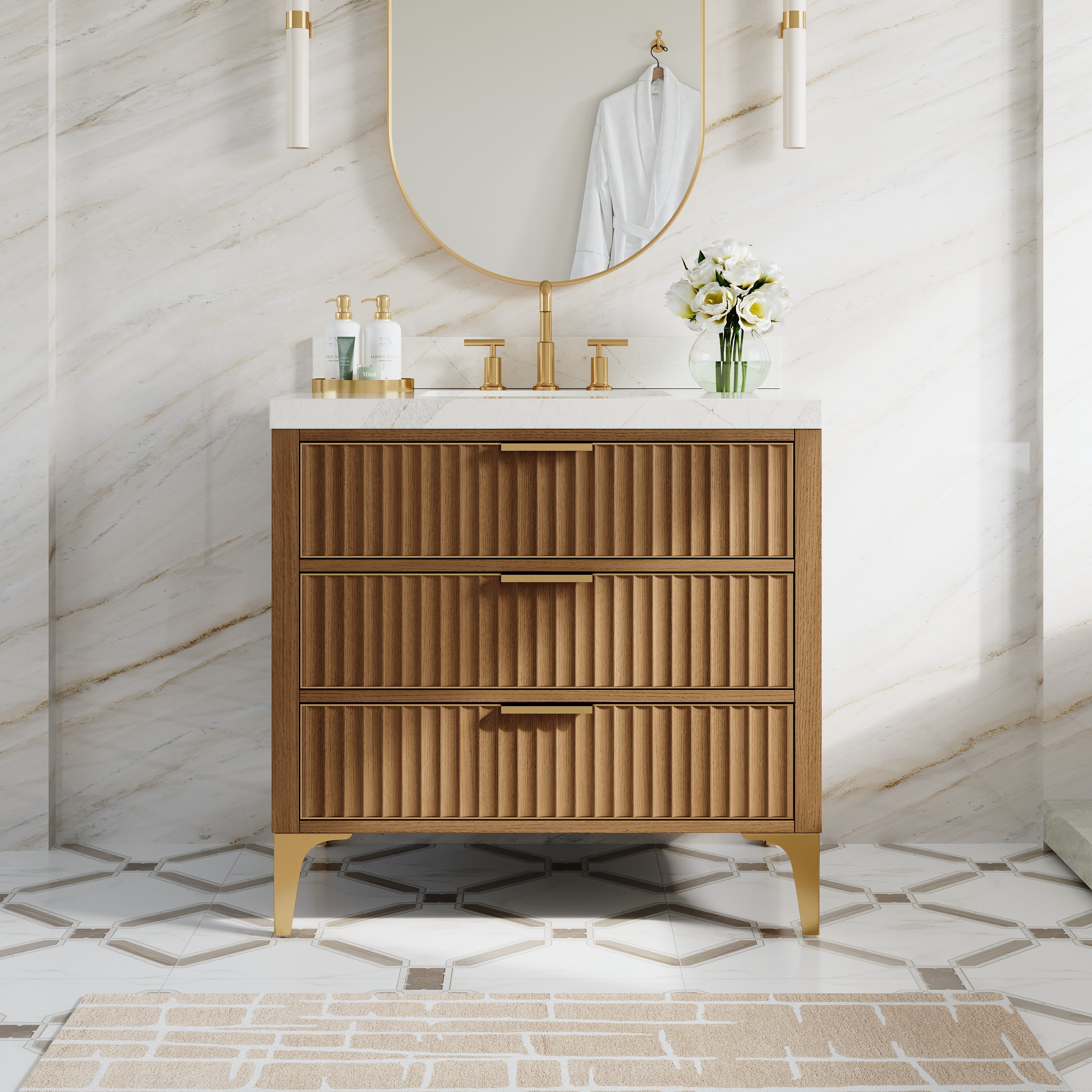
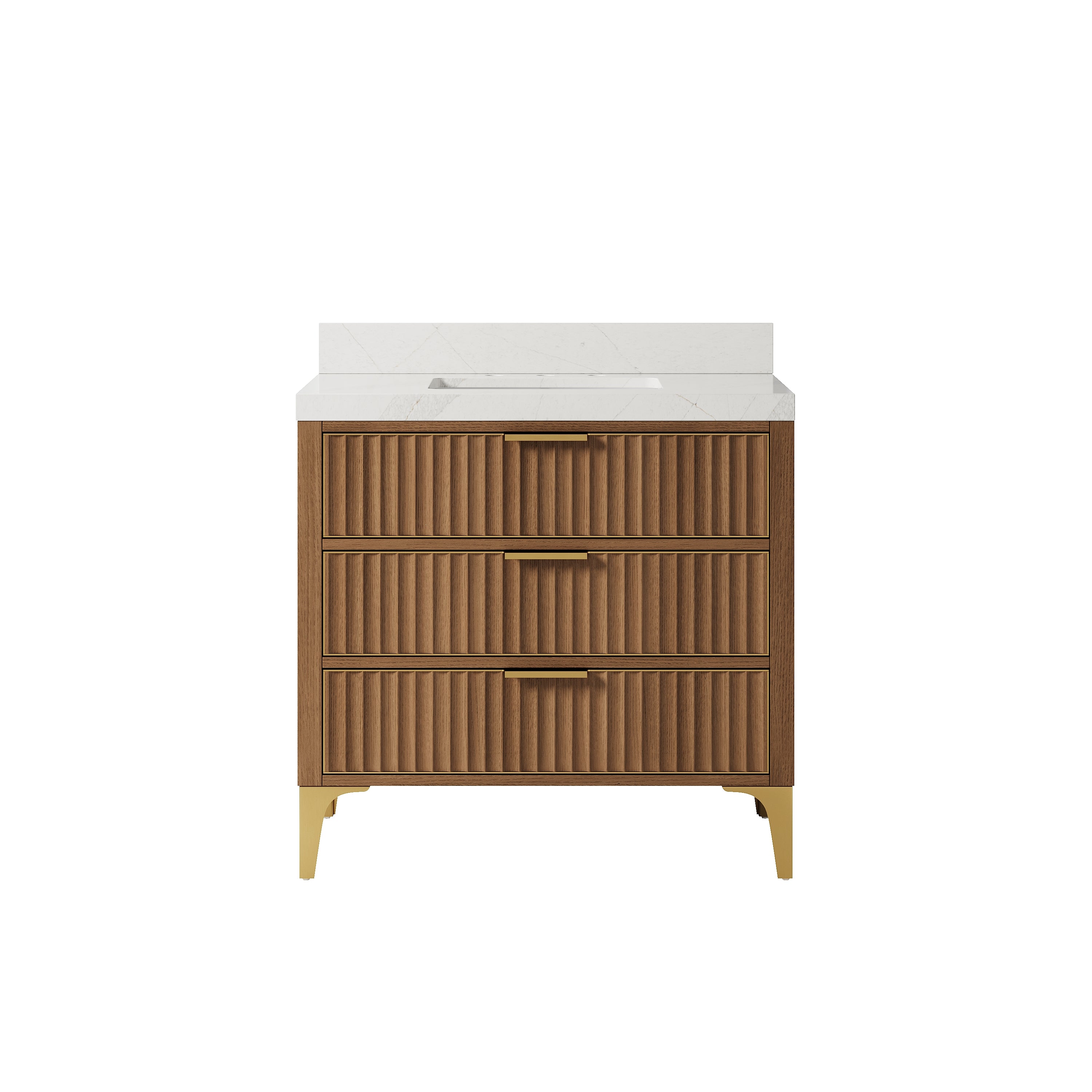
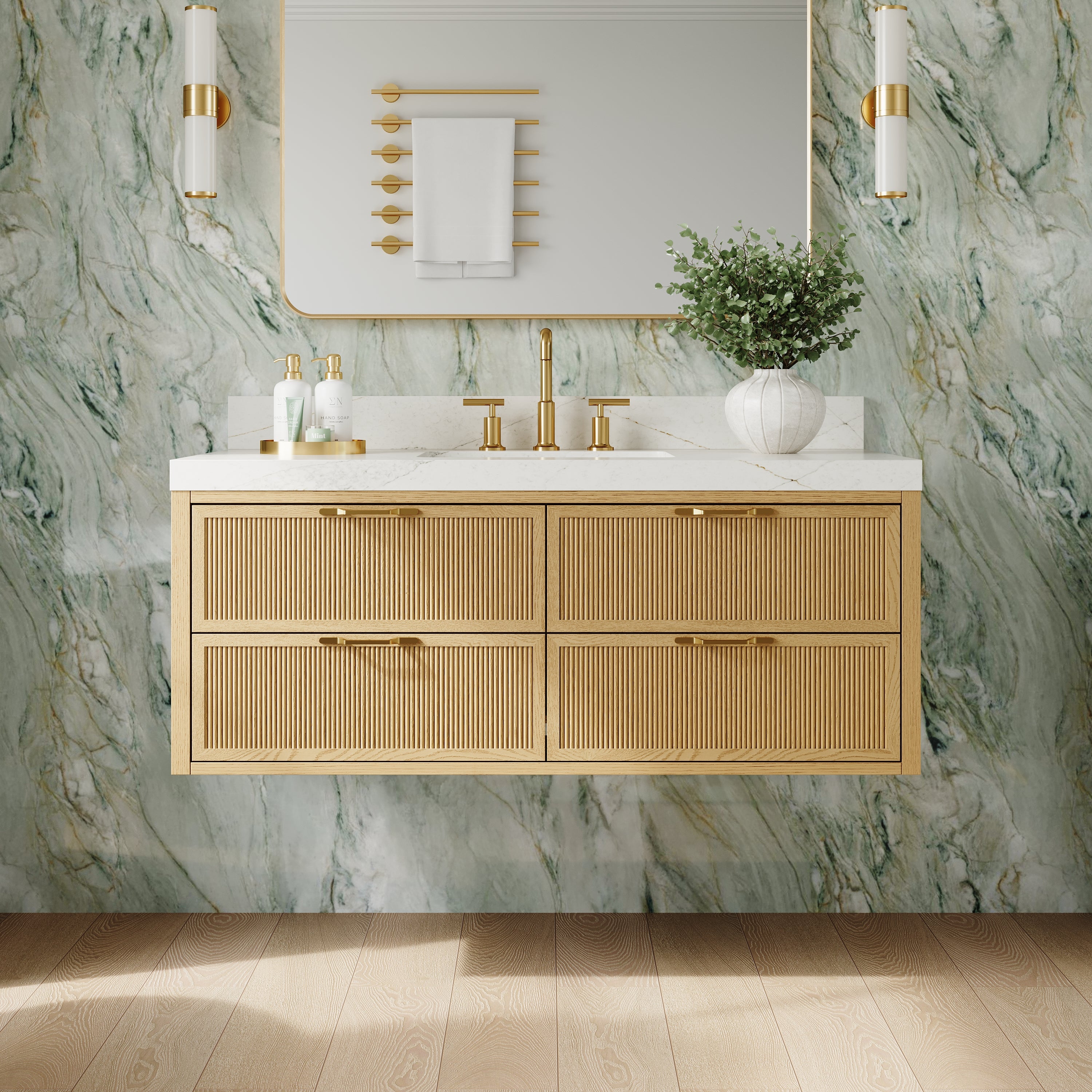
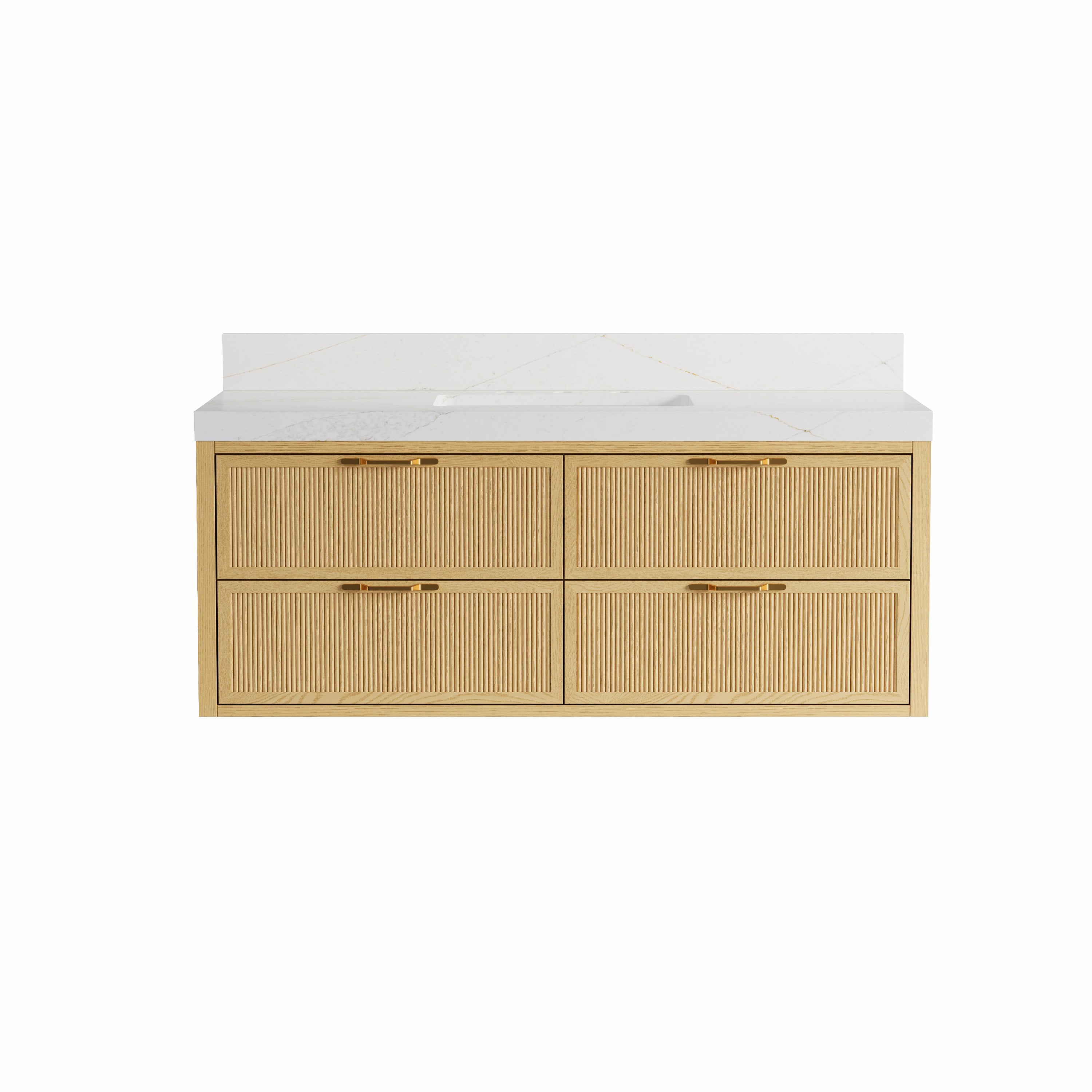
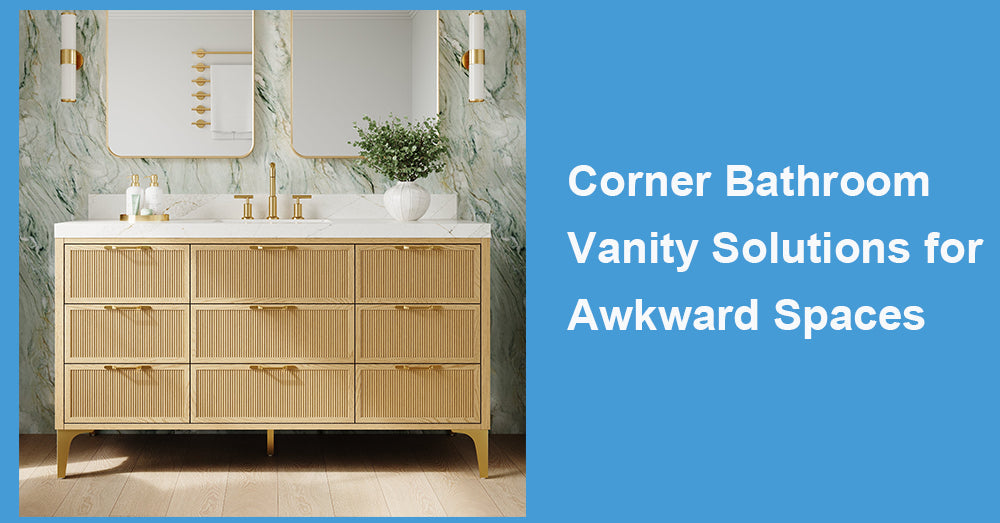
Bathroom vanities with drawers are no longer just a nice bonus. They are becoming the center of bathroom organization day after day. The shift is easy to understand: most bathroom clutter is small. Toothpaste, razors, skincare bottles, brushes, hair ties, makeup, medicine, and charging cords rarely belong in one large open cabinet.
Recent Houzz bathroom trend data shows how strongly this direction has taken hold. Among upgraded vanity features, soft-close drawers were selected by 78% of renovating homeowners, while soft-close doors followed at 75%. Built-in electrical outlets and drawer organizers were also among the most noted features—source: Houzz.
That tells a clear story. People are not just buying vanities for looks. They are buying better daily behavior.
2. The best drawer layout depends on what you actually store
A good vanity is not the one with the most drawers. It is the one with the right mix of drawer sizes.
Shallow top drawers are best for daily items: toothbrush heads, floss, contact lens cases, makeup pencils, nail tools, and small grooming products. Mid-depth drawers handle folded towels, skincare bins, hairbrushes, and backup toiletries. Deep drawers are useful for larger bottles, hair dryers, curling irons, and bulk supplies.
This is where many older vanities fall short. A large two-door cabinet under the sink looks roomy, but most of the vertical space becomes awkward. Items get pushed to the back, pipes interrupt the layout, and small products disappear behind taller bottles.
Drawer-forward vanities solve that problem by making storage visible, reachable, and divided.
3. For small bathrooms, choose fewer but smarter drawers
In a 24-in or 30-in vanity, every inch matters. A narrow vanity packed with too many tiny drawers may look organized online, but it can become frustrating in real use.
For compact bathrooms, the better setup is usually one functional drawer plus a lower open or enclosed zone. If plumbing allows, a U-shaped drawer around the sink can reclaim space that would otherwise be wasted. Another smart option is a vanity with one deep bottom drawer and one smaller top drawer for daily items.
A shallower depth, often around 18 in, can also help in tight bathrooms. It keeps the walkway open while still offering more order than a pedestal sink or open shelf.
The goal is not to store the whole household in a small vanity. The goal is to keep the counter clear.
4. The 36 in to 48 in range is the sweet spot
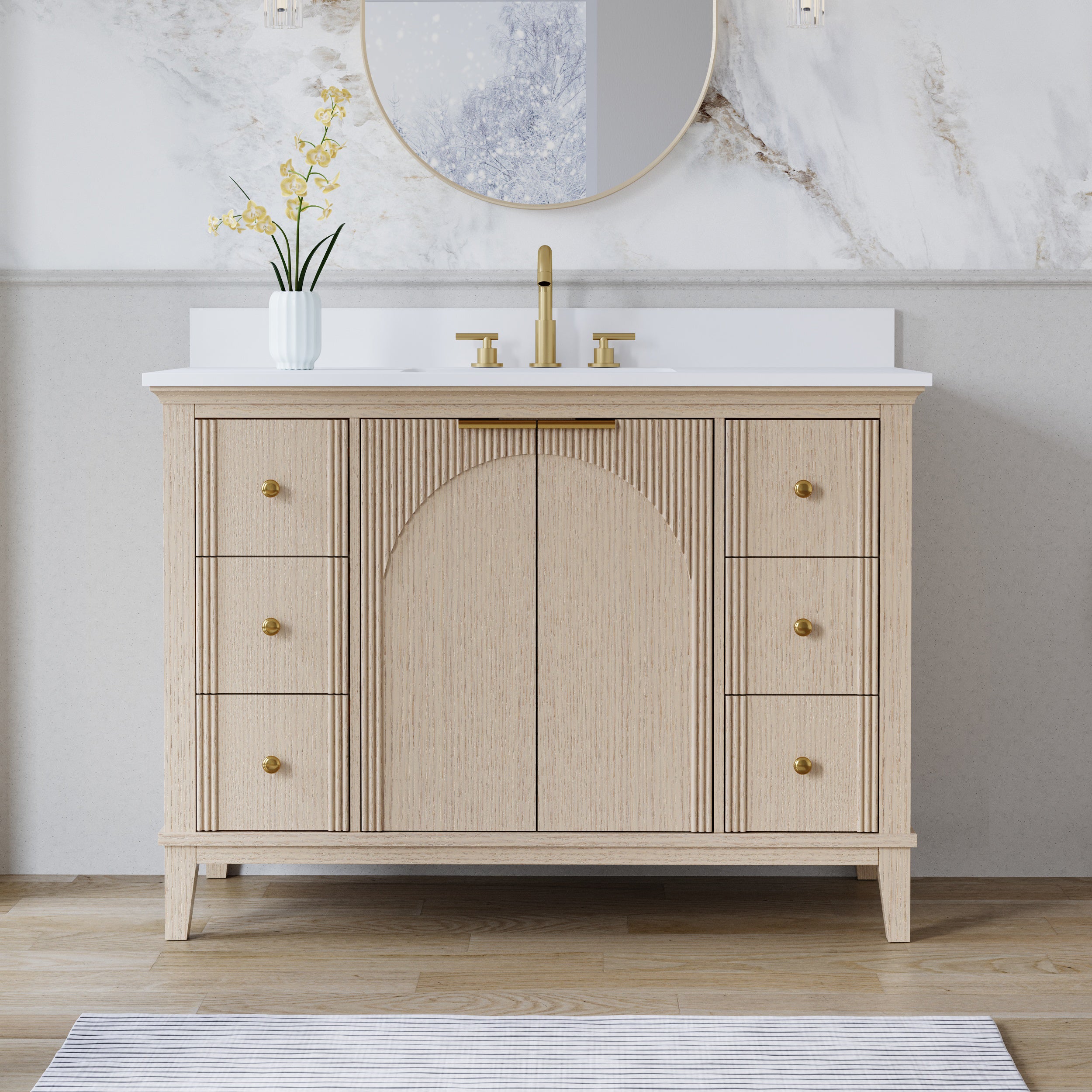
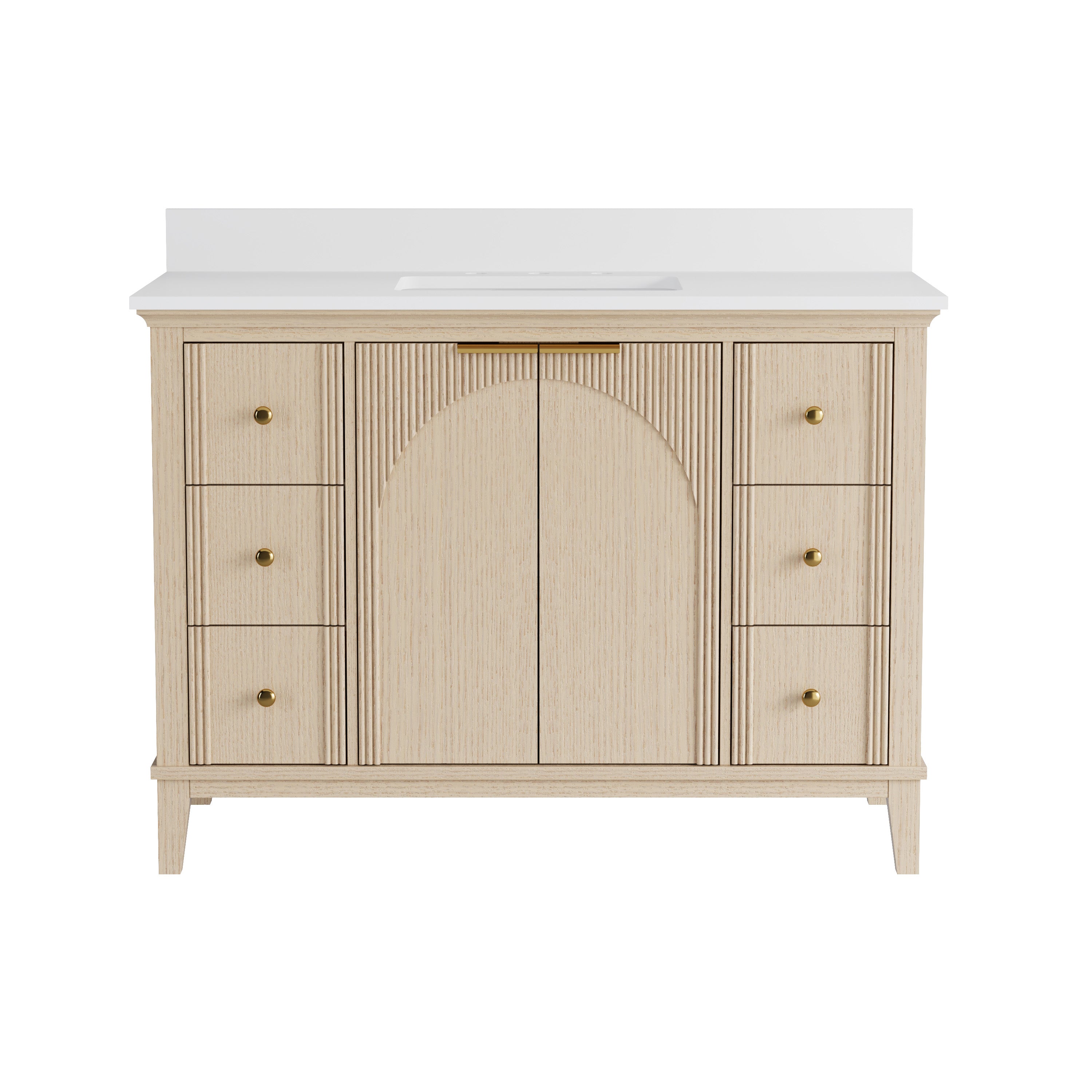
For many bathrooms, the best organizational value sits between 36 in and 48 in wide. This size range is large enough to allow real drawer banks without overwhelming the room.
A strong layout usually includes one sink zone and one side drawer stack. That simple arrangement works because it separates plumbing from storage. The sink base can hold taller items or cleaning supplies, while drawers handle the smaller products used every morning and night.
At 48 in, look for full-extension drawers. This matters more than people realize. A drawer that only opens halfway turns the back 6 in into a dark storage cave. Full-extension hardware makes the entire drawer usable.
5. Double vanities need personal zones
At 60 in or 72 in wide, storage problems change. The issue is no longer a lack of space. It is shared-space confusion.
The best double vanities give each user a defined drawer zone. That might mean drawer stacks on both sides with sink cabinets in the middle, or two sink areas separated by a center bank of drawers. Either way, the layout should reduce mixing, not encourage it.
NKBA trend reporting points in the same direction. Storage modules that can be customized to personal needs are becoming a major priority, and integrated power outlets are increasingly expected in vanity design—source: NKBA.
That matters because modern bathroom storage is no longer just towels and soap. It now has to manage skincare routines, grooming tools, medication, electric toothbrushes, and charging cables.

6. Built-in organizers are useful, but flexibility matters more
Built-in drawer dividers can make a vanity feel polished. They are especially helpful for makeup, razors, small tubes, and jewelry. Still, fixed organizers are not always better.
Bathroom routines change. A drawer designed only for makeup may not work two years later if the user needs more space for hair tools or medicine. Adjustable trays, removable bins, and open drawer interiors often age better than overly specific built-ins.
The best vanity drawers are not packed with permanent compartments. They provide structure without locking the user into a single routine.
7. Hidden power is becoming part of the organization
A drawer with an outlet may sound like a small feature, but it changes the counter. Electric toothbrushes, shavers, facial tools, and hair devices can charge out of sight rather than sit around the sink.
NKBA’s 2026 bath trend reporting also highlights item-specific storage for hair tools, makeup, medications, electrical integration, custom dividers, and charging stations inside vanity cabinetry—source: NKBA.
That is the next stage of bathroom organization: fewer things on the counter, fewer cords in view, and fewer daily items competing for sink space.
8. What the best drawer vanity should include
The strongest bathroom vanities with drawers usually have three things in common: full-extension hardware, a balanced mix of shallow and deep storage, and enough flexibility to adjust over time.
Soft-close slides are worth choosing because drawers get used constantly. A quartz or solid-surface top helps keep the vanity easier to clean. A 21 in to 22 in depth gives better storage capacity, while an 18 in depth can work better for narrow layouts.
For most homes, the best choice is not the flashiest vanity. It is the one that removes friction from the routine. The counter stays cleaner. Products are easier to find. Morning traffic moves faster.
That is why drawer-forward vanities are gaining ground. They do not just add storage. They make the bathroom behave better.










Leave a comment
This site is protected by hCaptcha and the hCaptcha Privacy Policy and Terms of Service apply.