














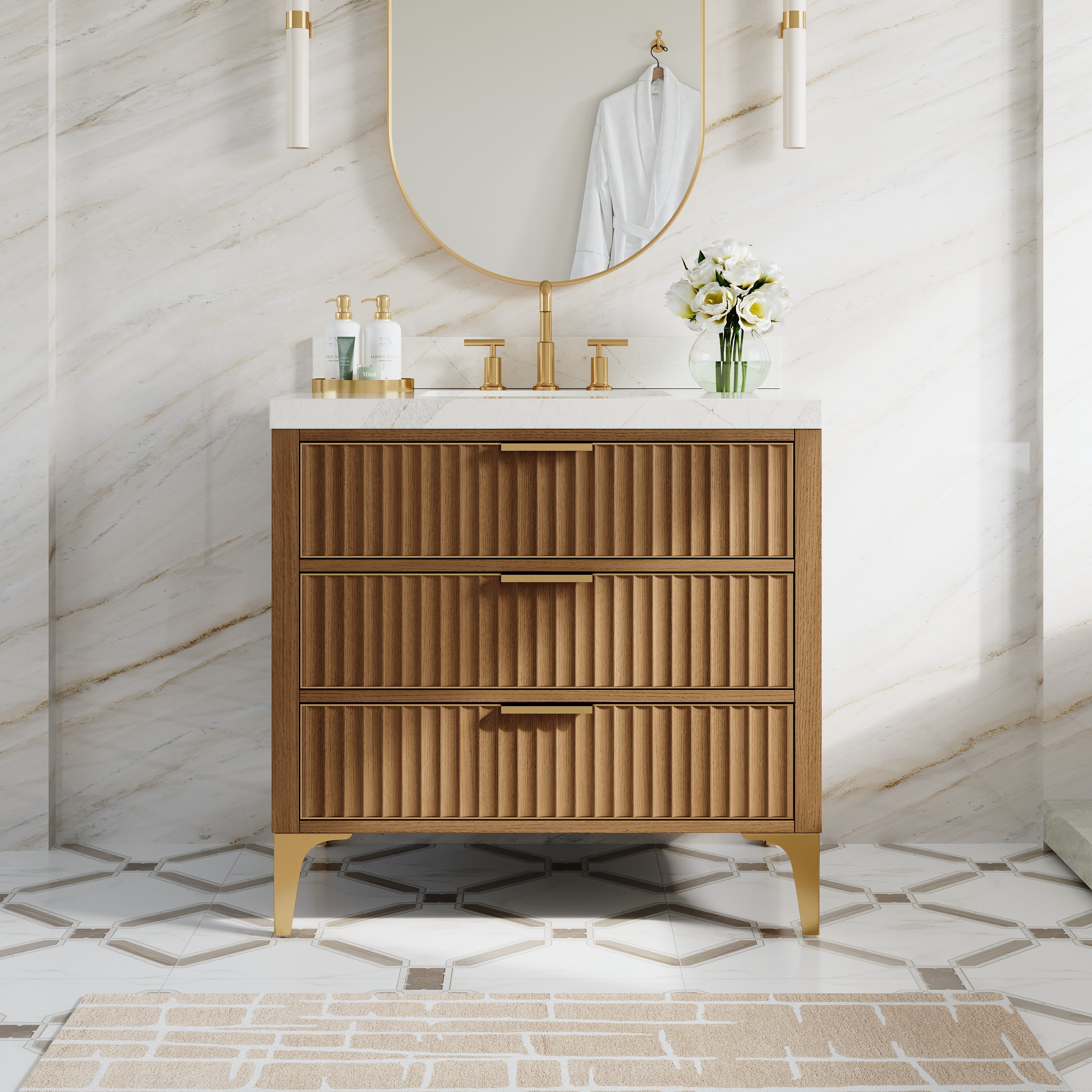
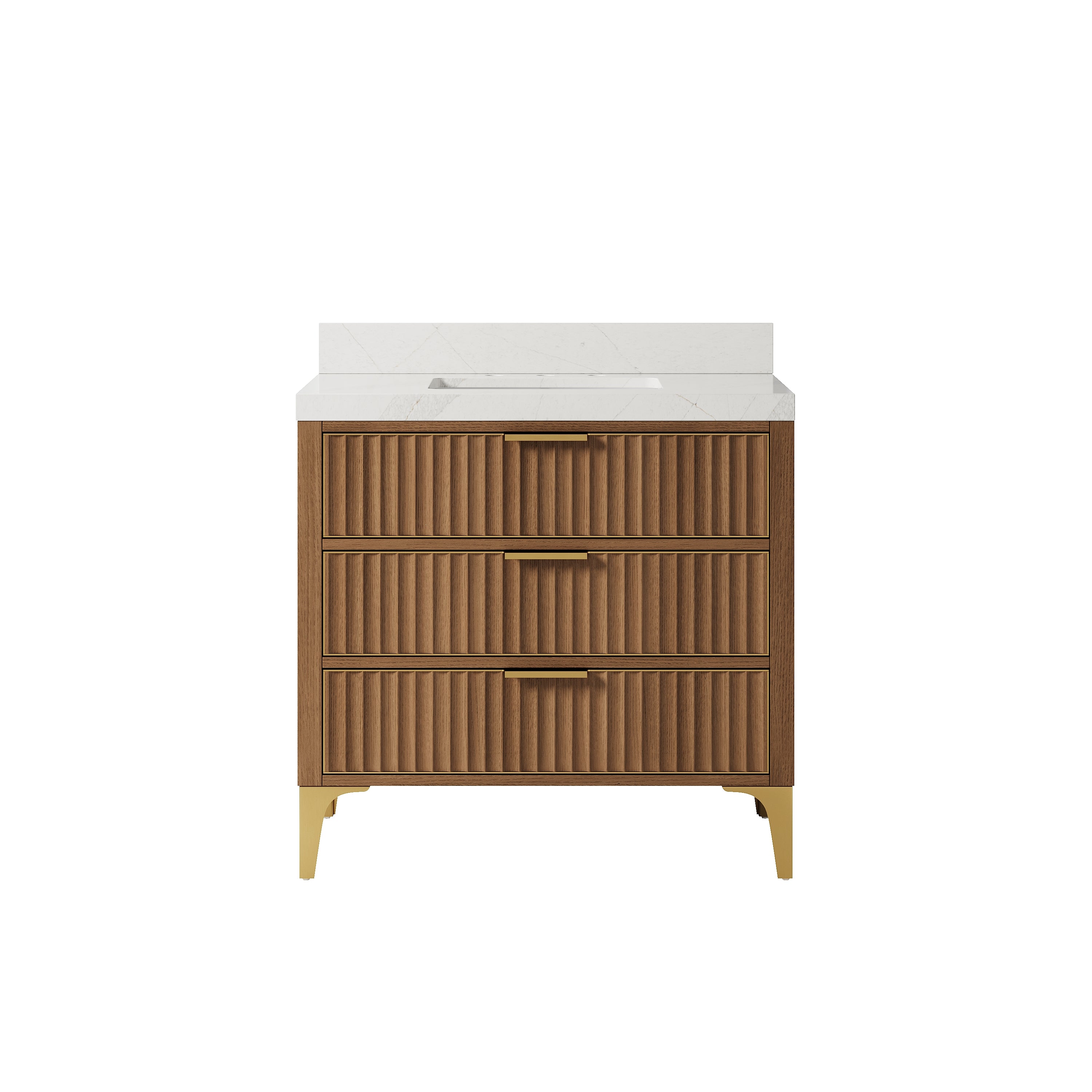

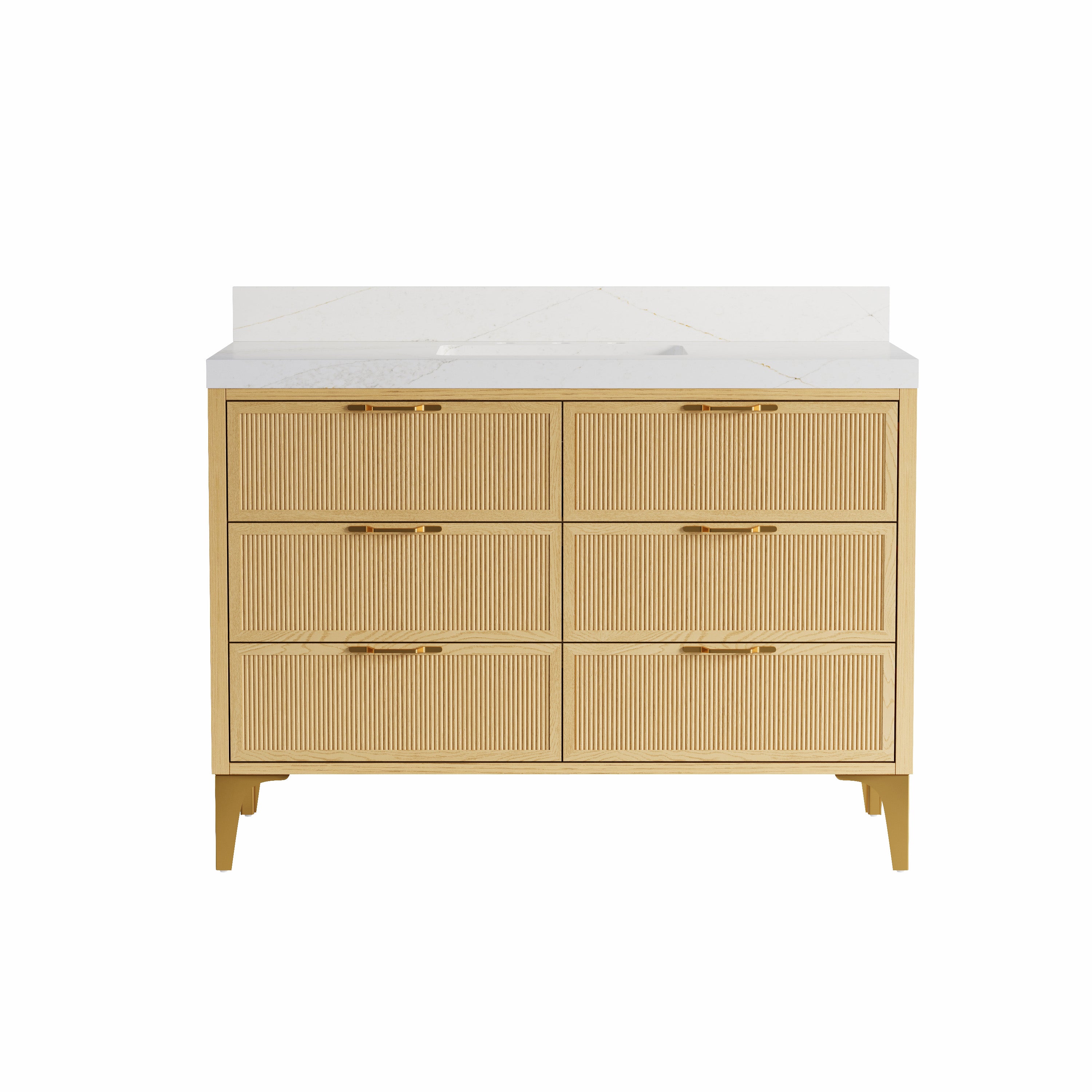


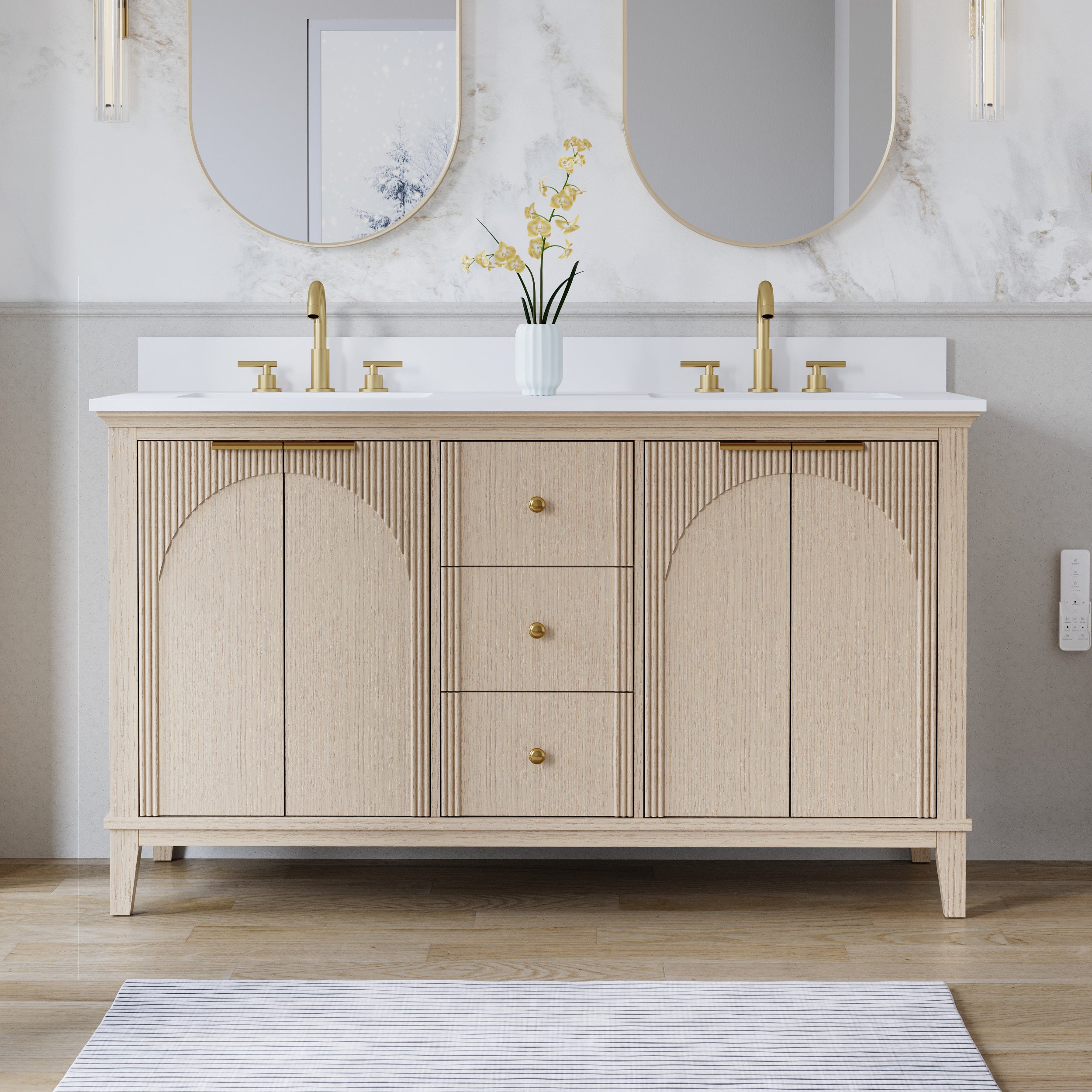
Wooden vanities can be worth it, but not automatically. The better question is: what parts are actually solid wood, how the cabinet box is built, and whether the finish and hardware can survive years of humidity, splashes, and daily cycles. MDF can deliver excellent value in the right build, especially for painted styles, but it is less forgiving if water repeatedly reaches exposed edges. If you judge value beyond price using durability signals, repairability, and documented performance benchmarks, you can make a confident choice either way.
1. Understand what you are really comparing
Most bathroom vanities are not “all one material.” Common constructions include:
· Solid wood face frame and door frames, plus plywood or MDF panels.
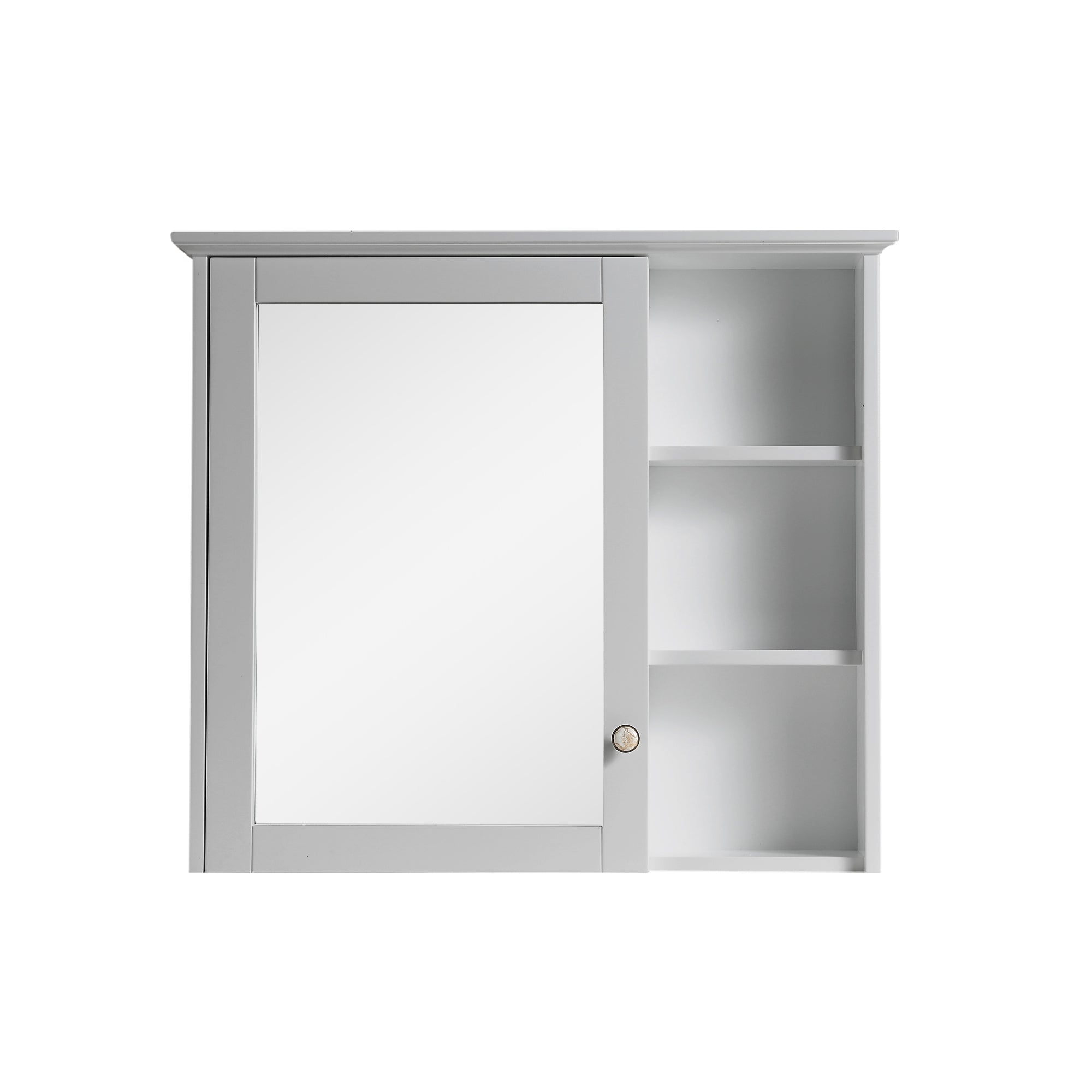
· MDF door panels with a painted finish, plus wood trim.
· MDF cabinet box with edge banding and a strong coating system.
· Plywood box with solid wood doors and drawer fronts.
So “wood vs MDF” is usually “wood in the visible parts vs MDF in the panels or box.” The best value comes from choosing the right material for the job, then verifying that weak points are protected.
2. Where wooden vanities usually win
A. Repairability and long-term refresh
Solid wood doors and drawer fronts can often be sanded, refinished, or touched up more easily than a thin painted film over MDF. If you plan to keep the vanity for a long time, repairability is a real form of value, even if the upfront price is higher.
B. Edge durability in real bathrooms
Bathroom damage often starts at edges, seams, and corners. Solid wood edges can still swell if neglected, but they tend to be more forgiving than MDF edges once water gets past the finish.
C. Structural confidence when the build is right
Cabinet durability is not only “material,” it is joinery, fastener strategy, back panel capture, and drawer system quality. A useful reference benchmark is the KCMA quality testing logic for cabinets. KCMA describes drawer testing where drawers are loaded at 15 lb per sq ft and operated through 25,000 cycles, and they must remain operable without failure. (Source: KCMA, “Cabinets Certified to Last.”)
That kind of performance focus often correlates with better engineering overall, and many better “wood” vanities are built in that mindset.
3. Where MDF often wins, and why it can still be the smart choice
A. Smooth paint finish and consistent look
MDF is commonly used under painted finishes because it is dimensionally uniform and can look very clean when sealed and coated properly. For modern, flat-panel painted styles, MDF can look more consistent than wood that shows grain telegraphing.
B. Value when water exposure is managed
MDF is not automatically “bad,” but it is sensitive to moisture at exposed edges. One industry guide notes that the most significant effect of moisture absorption in MDF is thickness swelling, and standard MDF should not be used where there is a risk of contact with water; moisture-resistant (MR) grades are intended for higher moisture conditions. (Source: EWPAA, “Facts About Particleboard and MDF,” absorption and swelling section.)
Translation into buying reality: MDF can be excellent for bathrooms if the cabinet is well-sealed, edges are protected, and the sink base is designed to avoid standing water.
C. Health and compliance clarity
If MDF or other composite panels are used, you can ask about formaldehyde emissions compliance. EPA TSCA Title VI regulates composite wood products and lists emissions limits such as 0.11 ppm for MDF, along with limits for hardwood plywood and particleboard. (Source: U.S. EPA, TSCA Title VI formaldehyde standards FAQ.)
This does not tell you “good or bad,” but it is a strong transparency and compliance signal, which is part of value.
4. The real value test: how to judge beyond price
Instead of asking “wood or MDF,” score the vanity on these value drivers.
A. Water-risk engineering
Ask and inspect:
· Are sink base corners and seams sealed and easy to wipe?
· Are cutouts and drill holes finished, not raw?
· Are door bottoms and cabinet edges protected?
If the sink base interior looks unfinished or seams look like open pathways, value drops fast, regardless of material.
B. Finish performance signals
A vanity can have solid wood and still fail if the finish is weak. Look for evidence of finish performance testing or at least clear guidance on resistance and care. KCMA’s standard and program descriptions include finish-related testing concepts intended to simulate real cabinet environments. (Source: KCMA A161.1 quality certification overview and standard references.)
If the brand can explain how their finish resists water exposure and cleaners, that is stronger than vague “premium coating” language.
C. Drawer and door durability
A vanity that feels solid every day usually has:
· Full-extension slides that stay stable when loaded.
· Soft-close that works consistently at different closing speeds.
· Drawer boxes with solid corner joinery and bottoms captured in grooves.
Again, use a benchmark mindset: KCMA describes drawers cycled 25,000 times under load. (Source: KCMA, “Cabinets Certified to Last.”) You may not need certified cabinets, but you want the same seriousness.
D. Serviceability and spare parts
Value includes how easily you can maintain it:
· Are hinges and slides standard types you can replace?
· Are finishes touch-up friendly?
· Does the seller offer replacement doors, drawer fronts, or hardware?
A cheaper vanity that cannot be repaired becomes expensive if one drawer system fails.
5. A simple “value beyond price” scoring checklist
Use a 0 to 2 score per category.
1) Moisture defense (0 to 2)
· Sink base looks sealed, seams protected, edges finished.
2) Hardware durability (0 to 2)
· Slides feel stable at full extension, soft-close consistent, doors align well.
3) Finish and cleanability (0 to 2)
· Finish coverage looks consistent on edges and interior faces, easy to wipe, no rough thin spots.
4) Material transparency (0 to 2)
· Component-level material list, and TSCA Title VI compliance for composite panels when applicable. (Source: U.S. EPA TSCA Title VI FAQ.)
5) Repairability (0 to 2)
· Replaceable parts, touch-up path, standard hardware.
Total it up. A well-built MDF vanity can beat a poorly built “solid wood” vanity on total value.
6. Practical buying guidance by situation
Choose wood-forward construction if:
· You want long-term refinish or repair potential.
· The bathroom sees heavy daily use and frequent splashes.
· You care about natural grain and warm texture.
Choose MDF-forward construction if:
· You want a clean painted look and consistent surface.
· The build shows strong sealing and edge protection.
· You are confident humidity and water habits are controlled.
And in either case, prioritize the same fundamentals: sealed sink base, protected edges, and durable drawers.

Bottom line
Wooden vanities are often worth it when they deliver real long-term advantages: repairability, edge resilience, and strong build quality. MDF can be a smart value choice when it is moisture-appropriate, well-sealed, and paired with durable hardware. To judge value beyond price, look for measurable durability signals like KCMA-style drawer testing references (15 lb per sq ft and 25,000 cycles) (Source: KCMA, “Cabinets Certified to Last.”), confirm composite panel compliance when MDF is used (0.11 ppm MDF limit under TSCA Title VI) (Source: U.S. EPA, TSCA Title VI FAQ.), and inspect the moisture-risk areas that decide real lifespan.












Leave a comment
This site is protected by hCaptcha and the hCaptcha Privacy Policy and Terms of Service apply.