














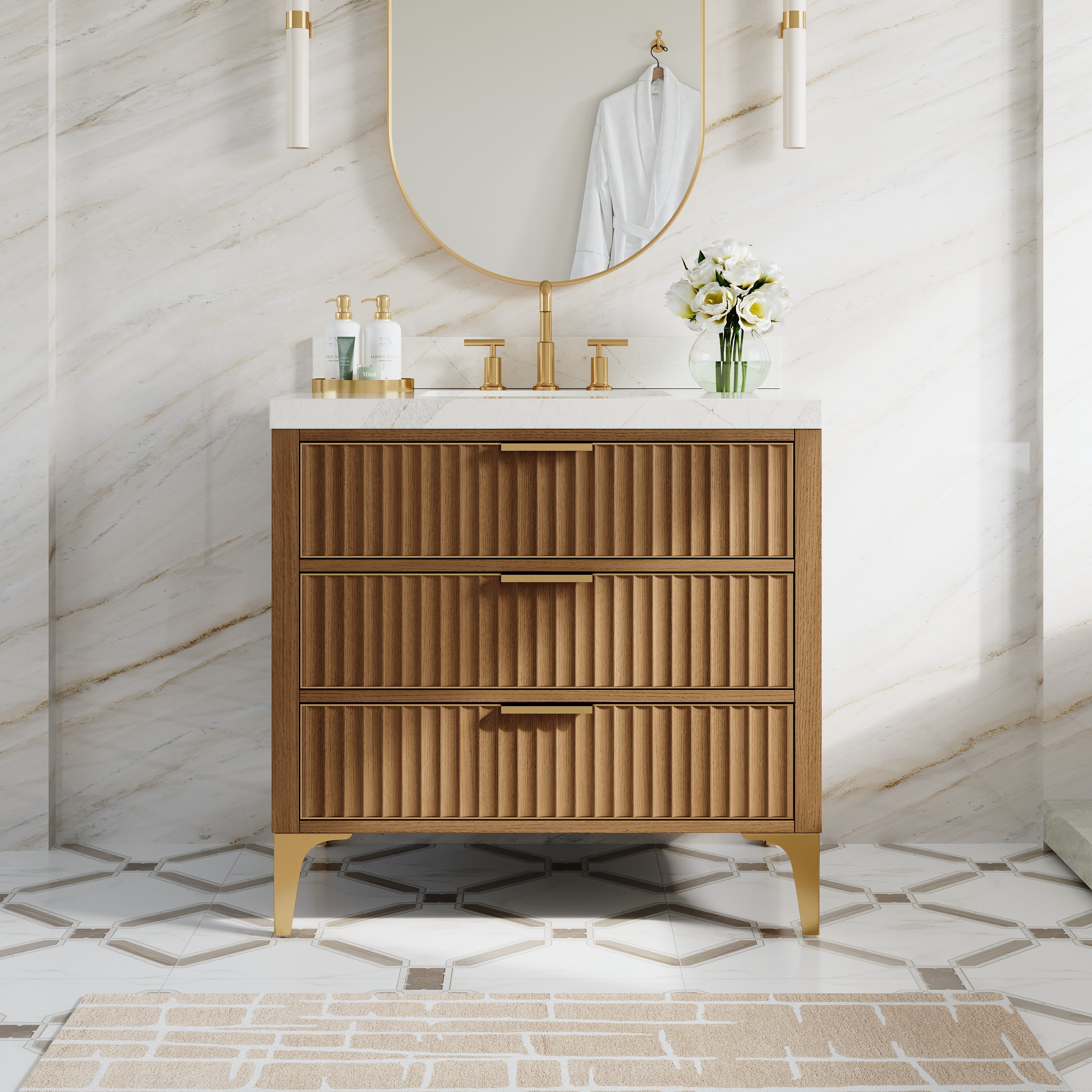
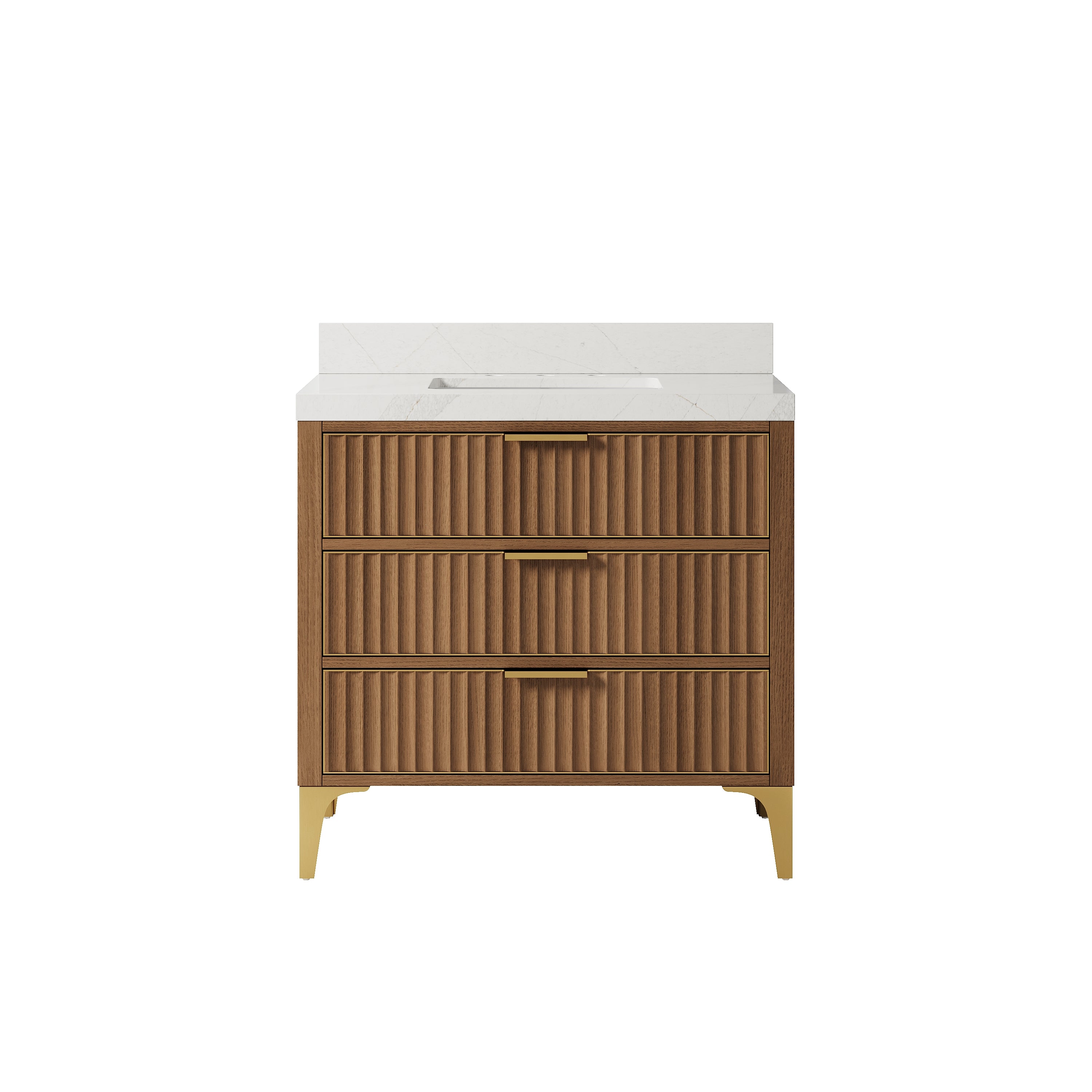
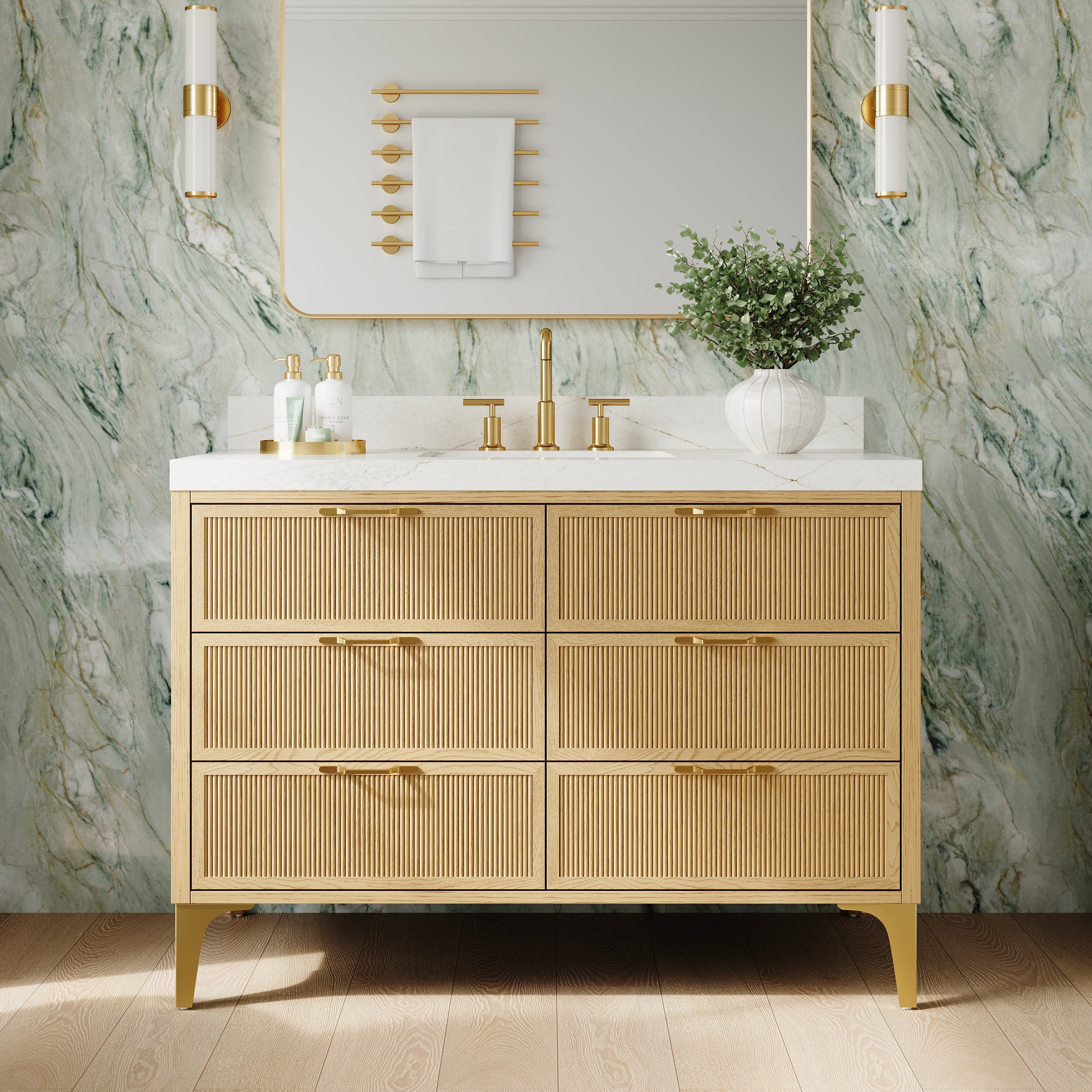
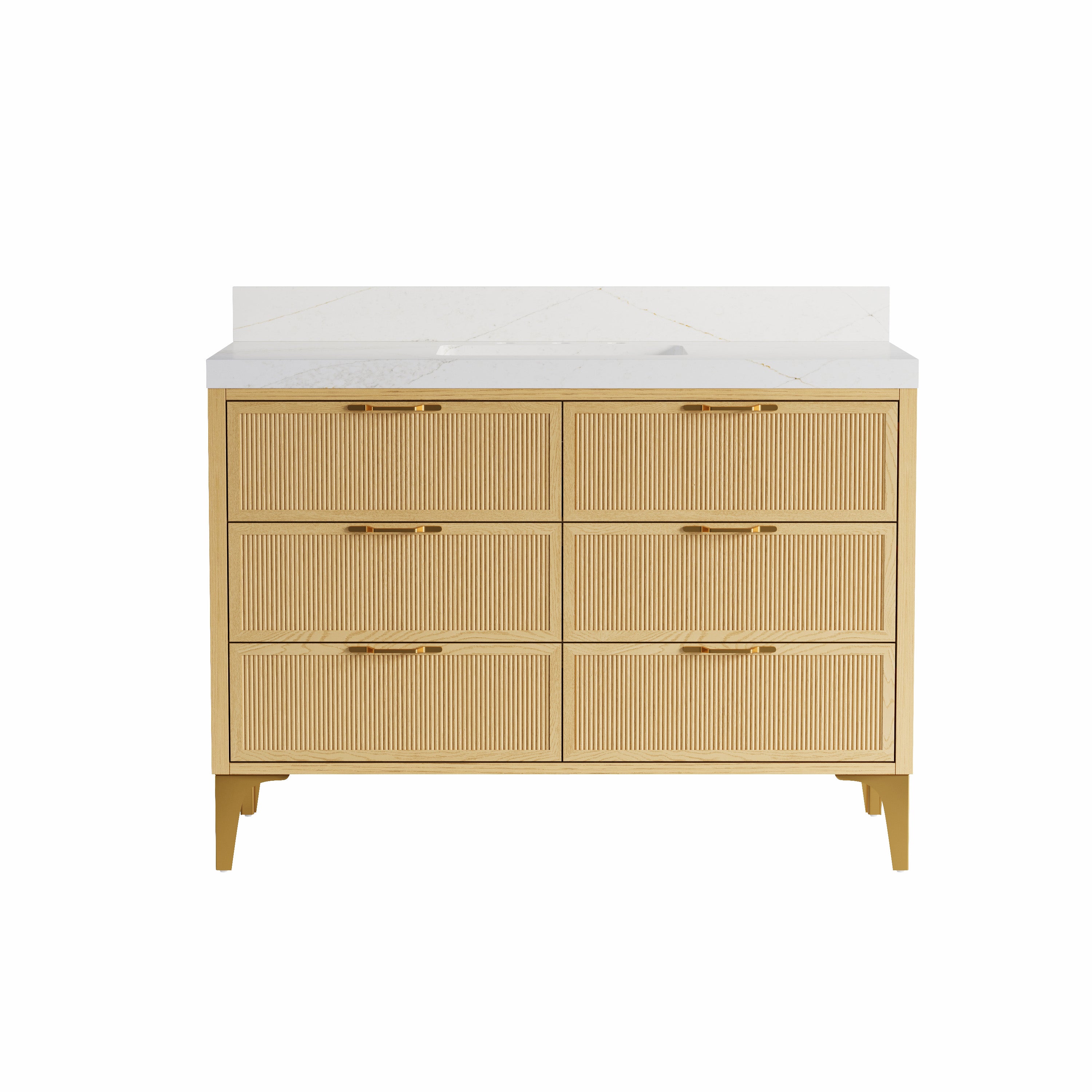


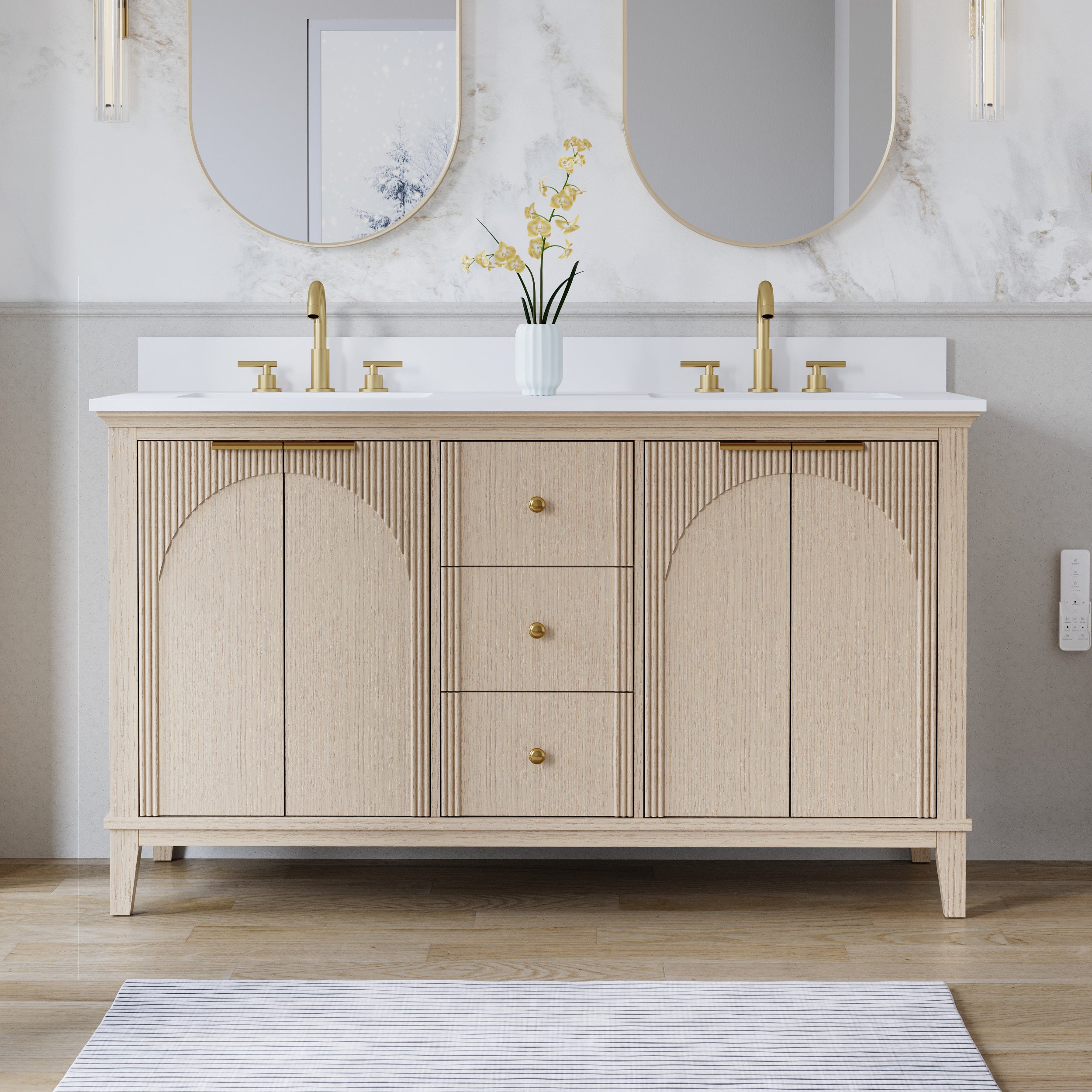
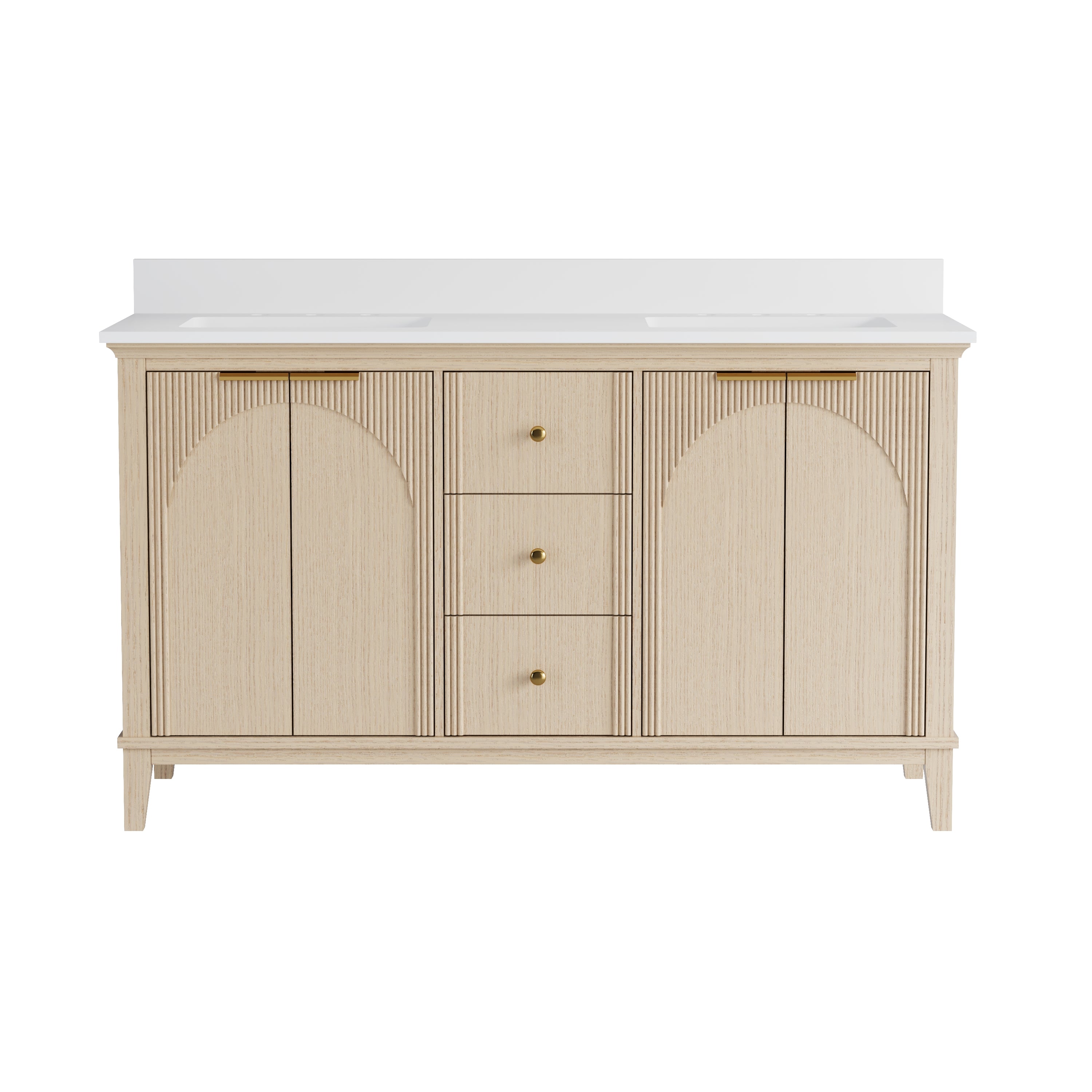
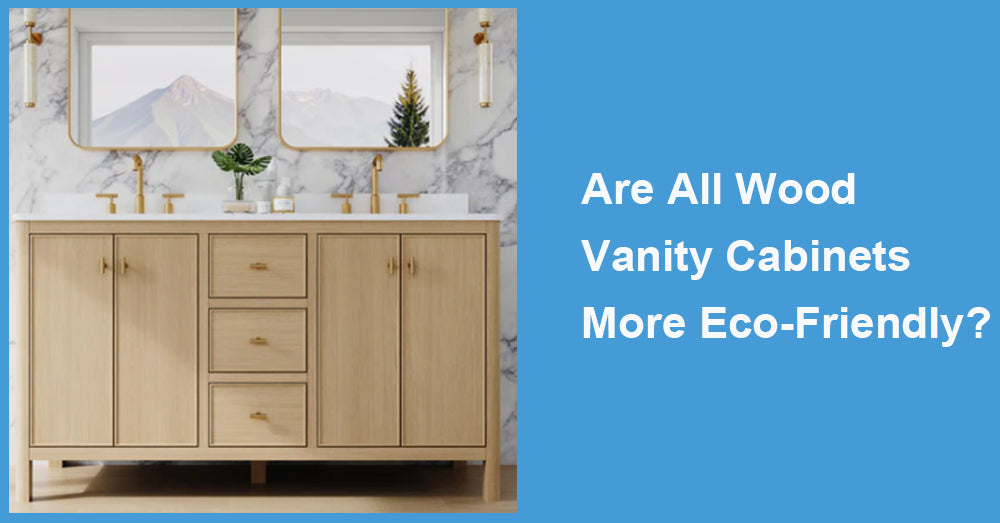
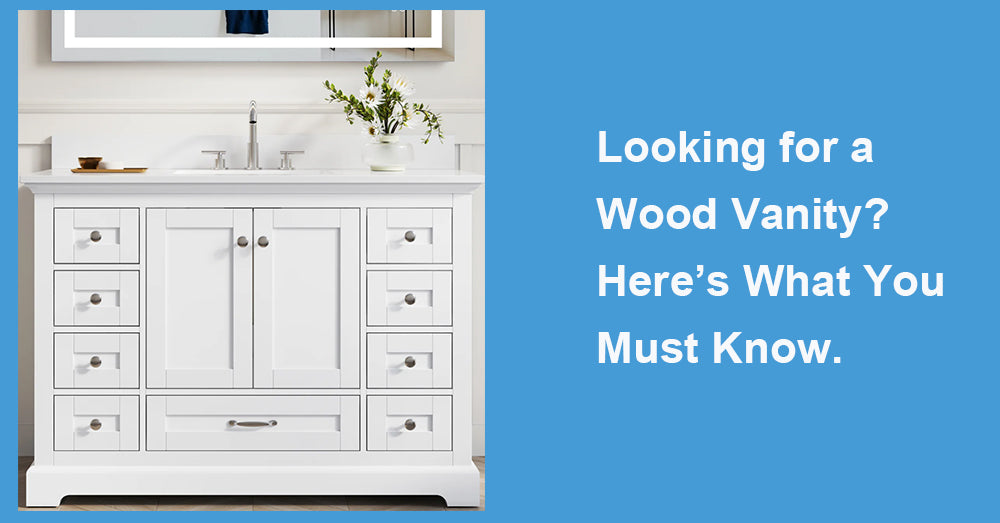
All wood vanity cabinets are often promoted as a greener choice for bathroom remodeling, but the answer is not as simple as “wood equals eco-friendly.” Wood can be renewable, repairable, and long-lasting, giving it real environmental value when responsibly sourced and properly built. At the same time, the final impact depends on the forest source, cabinet construction, adhesives, surface finish, shipping distance, and the number of years the product is in use. An all-wood label can be a good starting point, but it should not be treated as a full sustainability guarantee.
1. Why Wood Has a Strong Environmental Argument
Wood has one natural advantage over many synthetic materials: it comes from a renewable resource. Trees absorb carbon as they grow, and finished wood products can continue storing part of that carbon throughout their service life. The U.S. Forest Service has also noted that wood products may require less fossil fuel energy to manufacture than some nonwood alternatives, depending on the product and production method.
This is one reason wood remains popular in bathroom furniture. It adds warmth to spaces filled with tile, stone, glass, metal, and ceramic surfaces. It also fits the design shift toward softer, more natural interiors. Houzz reported in its 2025 bathroom trends research that 74% of renovating homeowners who chose wood vanities selected solid wood. Wood tones were also the leading vanity color choice at 28%, ahead of white at 20%.
However, popularity does not automatically prove sustainability. A cabinet may be made from real wood and still carry a weak environmental story if the timber source is unclear, the finish is low quality, or the product fails early in a wet room.
2. “All Wood” Needs a Clear Definition
The phrase “all wood” can mean different things from one manufacturer to another. Some cabinets use solid wood for the face frame, doors, drawer fronts, and legs, while plywood is used for the cabinet box. Other designs may use wood veneer over plywood for better stability. Some brands use the term to mean “no particleboard,” while others may still include engineered wood panels in less visible areas.
From an environmental perspective, these differences matter. Solid wood can be strong, repairable, and long-lasting, but it may use more raw lumber. Plywood can be very practical in bathroom cabinetry because it is stable and holds fasteners well, but buyers should still check whether it meets formaldehyde emission requirements. MDF and particleboard are not inherently poor materials; they just need compliant resins, proper sealing, and honest labeling.
The EPA regulates certain composite wood products under TSCA Title VI formaldehyde standards. This includes hardwood plywood, medium-density fiberboard, particleboard, and finished goods that contain these materials. For bathroom cabinets, this is especially relevant because warm showers, limited ventilation, and enclosed rooms can make indoor air quality a significant factor in the buying decision.
3. Responsible Sourcing Matters More Than the Label
A wood cabinet is only as responsible as the supply chain behind it. Wood from well-managed forests can be renewed over time. Wood from poorly managed or illegal harvesting can contribute to habitat loss, unnecessary waste, and long-term environmental damage.
Certification can help buyers distinguish between vague and stronger claims. The Forest Stewardship Council (FSC) focuses on responsible forest management and chain-of-custody tracking. While certification is not the only way to judge a product, it provides buyers with a clearer signal than a general phrase like “eco-friendly wood.”
The practical advice is simple: do not stop at the word “wood.” Look for the wood species, sourcing statement, certification details, or supplier documentation. A specific claim is always more useful than a broad, green message with no proof.
4. Durability Is a Major Part of Sustainability
5.

A cabinet that lasts for many years is usually a better environmental choice than one that has to be replaced quickly. Longevity reduces the need for new raw materials, packaging, shipping, disposal, and repeated installation. In the bathroom, this matters even more because moisture can quickly expose weak construction.
Before purchase, buyers should inspect the frame, drawer boxes, edges, finish, and hardware. Dovetail drawer boxes, tight corner joints, full-extension slides, sealed edges, and moisture-resistant topcoats can all help extend service life. A cabinet made with real wood but finished poorly may still warp, crack, swell, or discolor. On the other hand, a well-built cabinet with strong joinery and sealed construction can remain useful through years of daily use.
Building and remodeling projects create a large amount of discarded material each year, and EPA waste reporting shows that construction-related debris is a much larger category than many homeowners realize. For bath furniture, this makes product life span an environmental issue, not just a quality issue. A cabinet that can stay in service for years through strong joinery, sealed edges, and repairable hardware is usually a better choice than one that looks attractive at first but needs to be removed after a short period of use.
5. Finishes and Adhesives Can Change the Environmental Story
A natural-looking wood cabinet may still contain coatings, stains, glues, sealants, and protective layers. These materials affect indoor air quality, maintenance, durability, and future repair. A low-VOC finish can help reduce unnecessary chemical exposure while still protecting the wood surface. A weak finish may break down early, leading to peeling, water marks, swelling, and replacement.
Bathrooms need protected surfaces. The goal is not raw wood; it is well-sealed wood. Edges around sink cutouts, drawer fronts, door panels, lower rails, and side panels should be coated properly. If water enters exposed fibers, the cabinet can swell or split. Once that happens, repair becomes more difficult, and the product's environmental value declines.
This is why buyers should ask about the topcoat, not just the wood species. A matte oak cabinet may look natural and responsible, but the real test is whether the finish can resist splashes, steam, soap residue, and routine cleaning.
6. Repairability Gives Wood an Advantage
One of wood’s strongest environmental advantages is repairability. Small scratches can sometimes be touched up. Hardware can be replaced. Drawer slides can be serviced or upgraded. Doors can sometimes be refinished. A worn wood surface can often be restored more easily than a damaged plastic laminate or low-end composite surface.
Repairability is especially valuable for larger sizes such as 48-inch, 60-inch, and 72-inch cabinets, where replacement costs, freight impact, packaging, and labor are higher. A well-built cabinet with replaceable hinges, adjustable shelves, and serviceable drawer hardware can remain useful even if the bathroom design changes later.
This also gives homeowners more flexibility. A cabinet may be updated with new pulls, a new faucet, a different mirror, or a replacement countertop without removing the entire unit. That longer product life supports a more practical approach to sustainability.
7. Shipping, Packaging, and Returns Also Count
Eco-friendliness does not stop at the factory. A heavy cabinet shipped long distances, packed with excessive foam, or returned due to poor quality creates additional impact. A durable product that arrives well-protected and installs correctly the first time is usually better than a cheaper product that needs replacement parts, return shipping, or early removal.
Accurate measurement helps reduce waste, too. Choosing the correct 30-inch, 36-inch, 48-inch, 60-inch, or 72-inch size before ordering can prevent unnecessary returns. Buyers should also check plumbing location, cabinet depth, drawer clearance, door swing, wall condition, and countertop fit. A cabinet that fits the room correctly is less likely to cause installation problems or result in wasted materials.
Packaging is another practical detail. Protective packaging is necessary for heavy bath furniture, but smarter packaging uses enough material to prevent damage without creating unnecessary waste. Damage prevention is part of sustainability because a broken product often creates more packaging, more transportation, and more replacement material.
8. The Better Question Is Not “Wood or Not Wood.”
The better question is whether the cabinet is responsibly sourced, well built, safely finished, and designed to last. All wood vanity cabinets can be more eco-friendly when they use responsibly harvested materials, compliant panels, durable finishes, repairable hardware, and moisture-safe construction. They are less convincing when the claim is only decorative or when the cabinet is vague about sourcing, poorly sealed, or likely to fail early.
For buyers, the smartest approach is to look beyond the label. Ask what wood species are used. Check whether plywood or other engineered panels are included. Look for formaldehyde compliance. Review sourcing claims. Inspect edges, joints, drawer boxes, and finishes. Choose a cabinet that can handle steam, splashes, and daily cleaning.
A truly better cabinet is not just made of wood. It is made to stay in use, resist moisture, support repair, and avoid unnecessary replacement. That is where real environmental value begins.













Leave a comment
This site is protected by hCaptcha and the hCaptcha Privacy Policy and Terms of Service apply.