














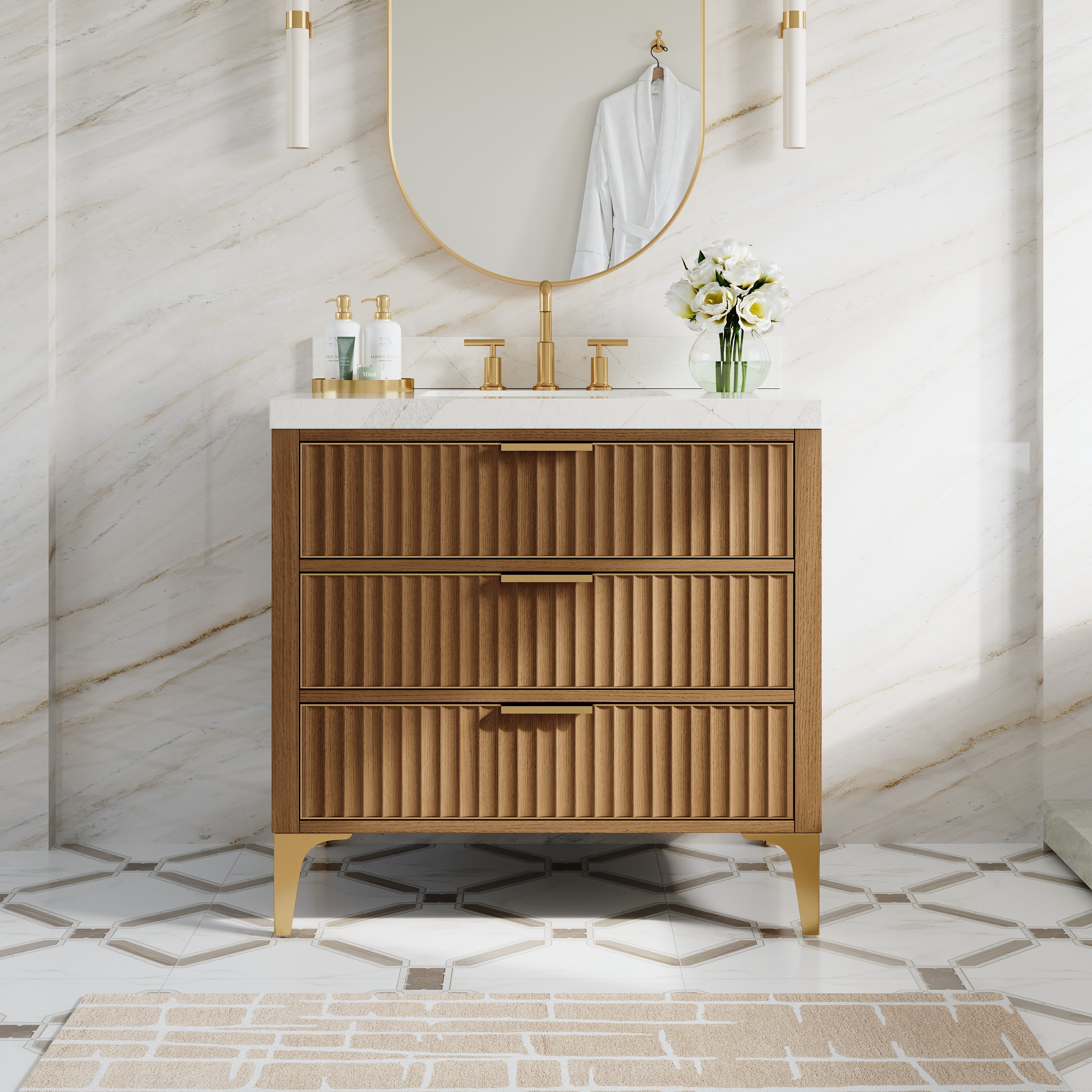
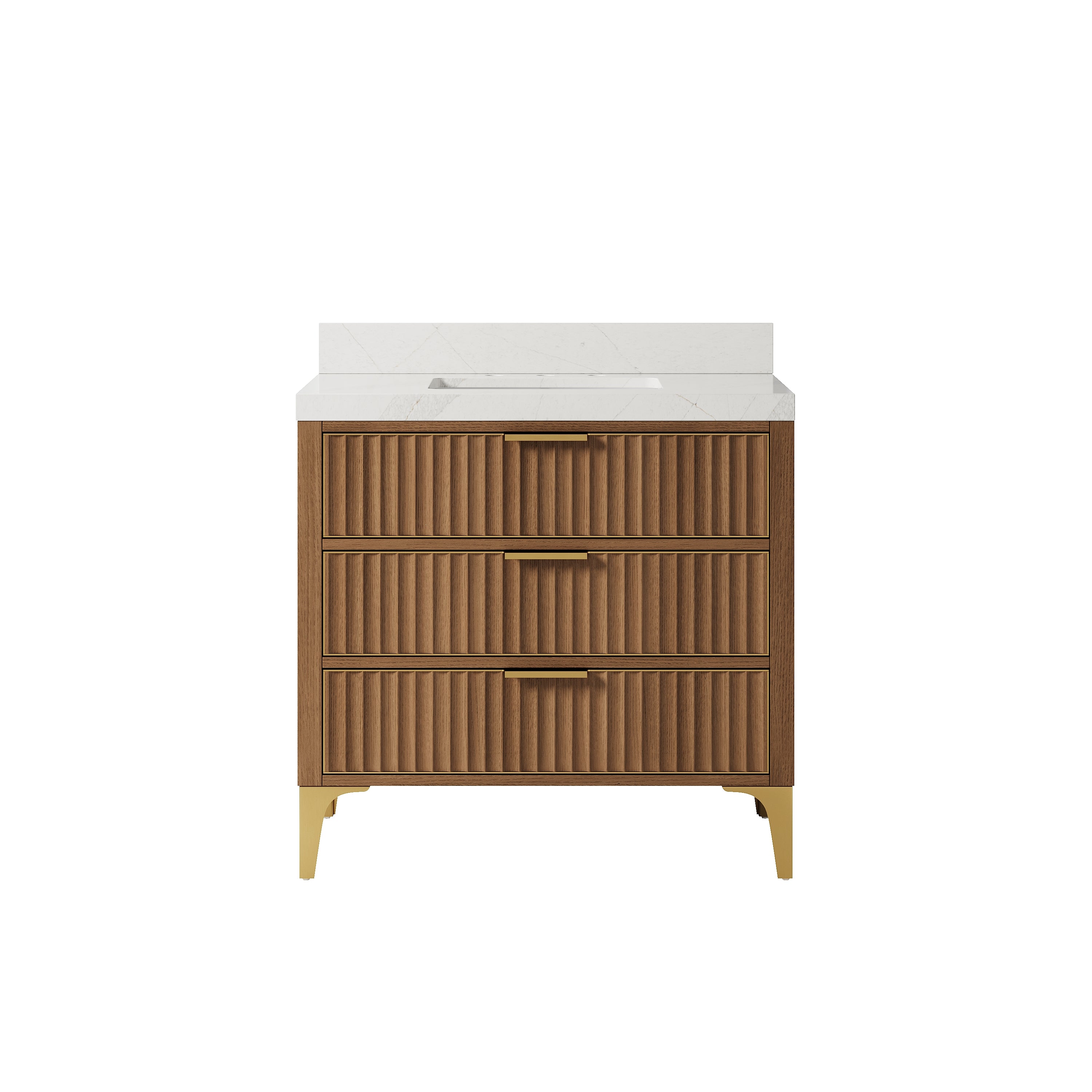
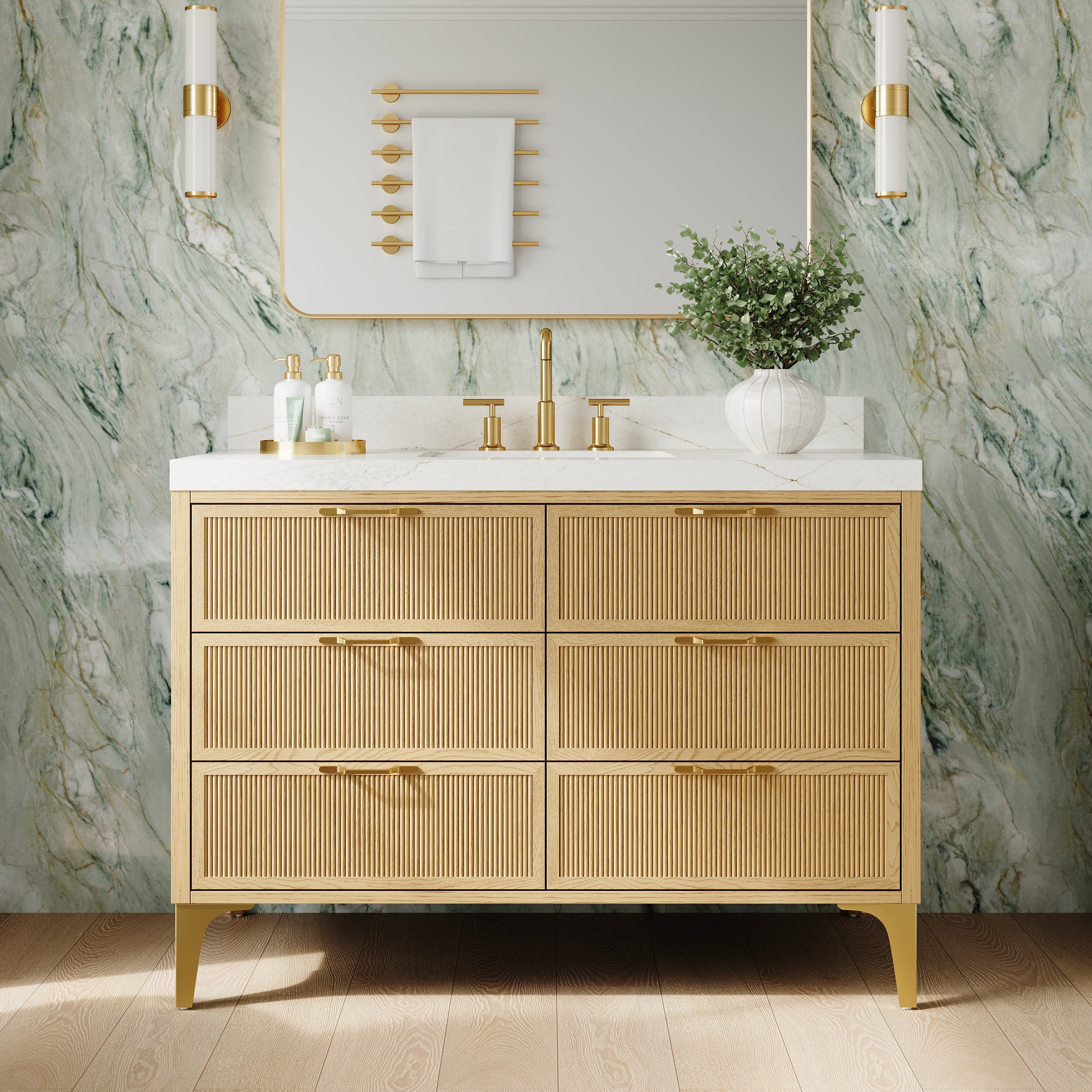
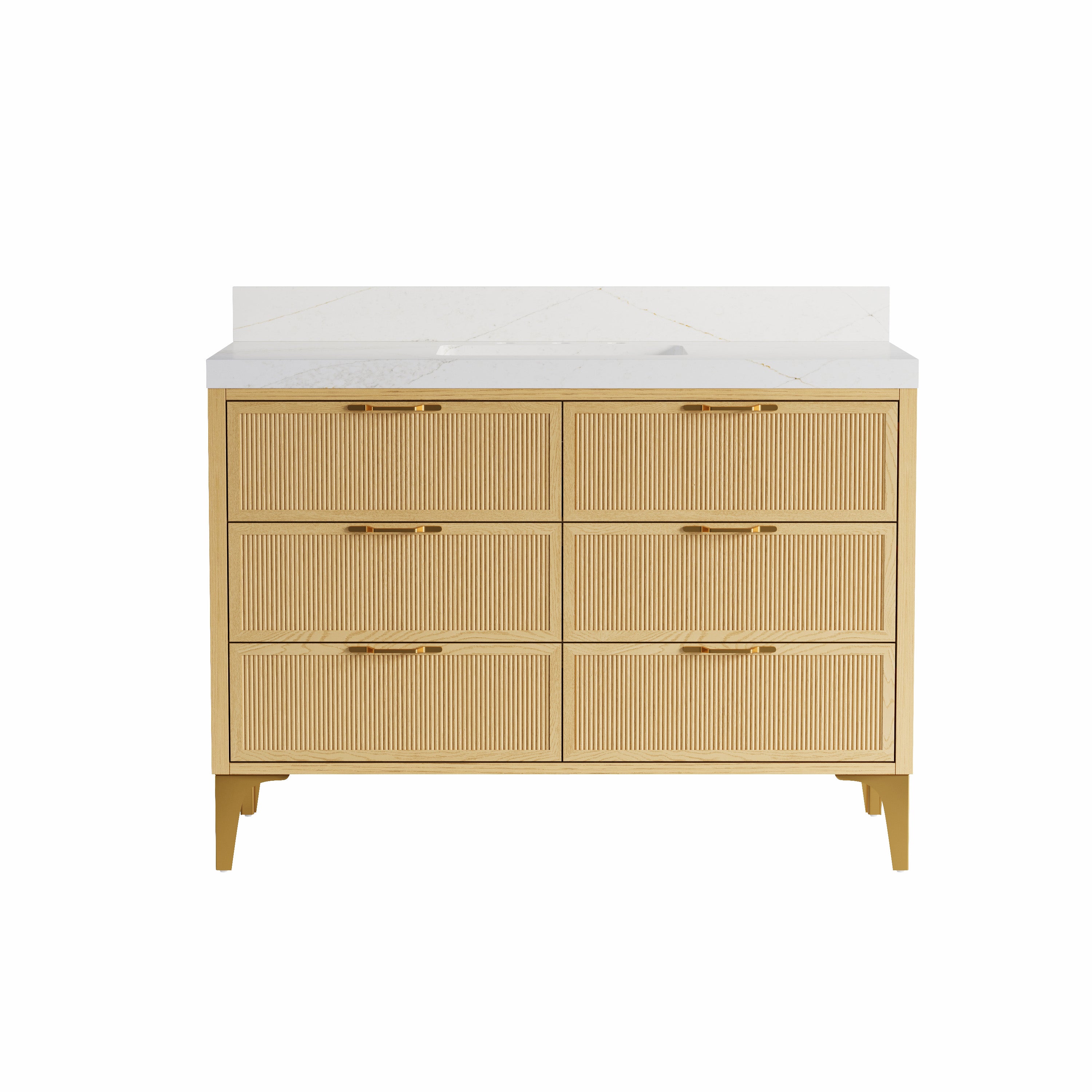


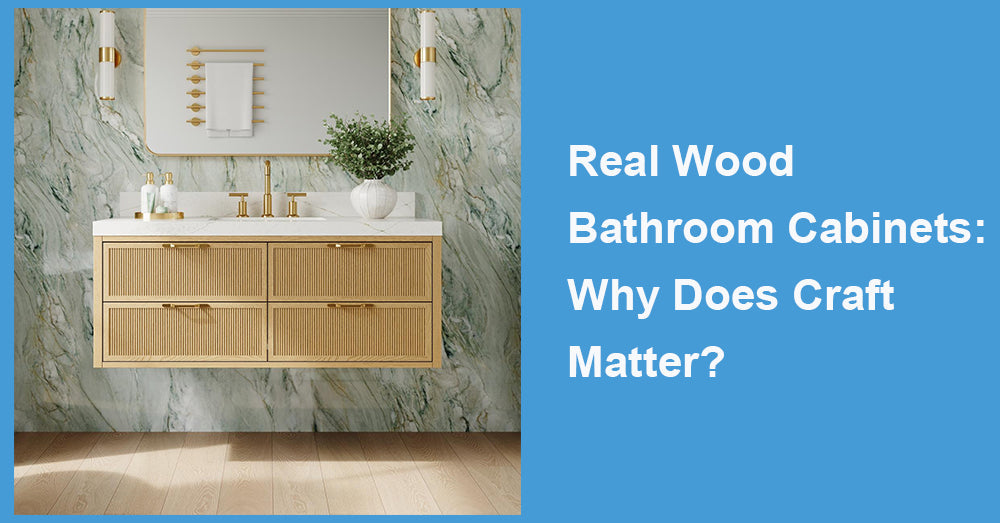
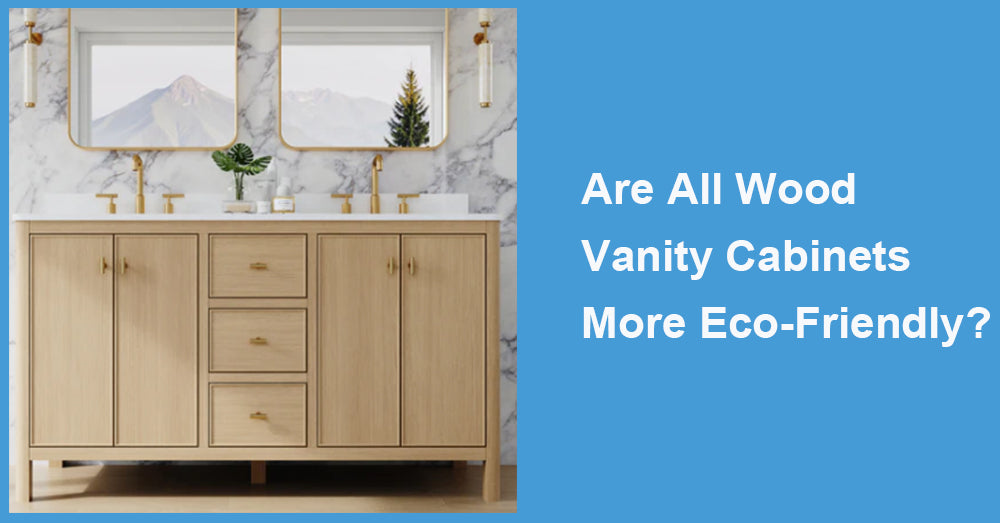
If you are investing in real wood bathroom cabinets, the “craft” behind the build matters as much as the wood species itself. Bathrooms push cabinetry harder than most rooms: daily steam, quick temperature swings, splashes around the sink, cleaning chemicals, and the occasional slow leak. A cabinet can be made from real wood and still fail early if the joinery is weak, the box is flimsy, or edges are not sealed. That is why craftsmanship is the difference between a cabinet that still feels tight after years of use and one that starts swelling, peeling, or going out of square.
1. Craft Is What Turns “Wood” Into Long-Term Durability
In cabinet terms, “craft” is not a vague compliment. It is a set of engineering and finishing decisions that determine whether a cabinet stays stable under humidity cycles and daily wear. High-craft bathroom cabinets consistently get five areas right:
· Material selection and moisture conditioning before assembly
· Structural design of the cabinet box and mounting rails
· Joinery (how parts lock together)
· Finish system and edge sealing
· Hardware quality and installation precision
Skip any one of these, and the cabinet’s lifespan becomes a gamble.
2. Bathrooms Are Humidity Environments, and Wood Reacts to Humidity
Wood is hygroscopic, meaning it naturally exchanges moisture with the surrounding air, and that moisture relationship has a direct influence on performance (Source: USDA Forest Service, Forest Products Laboratory, “Moisture relations and physical properties of wood”).
This is not a flaw. It is simply how wood behaves. Good craft anticipates it by using stable construction, allowing controlled movement where appropriate, and sealing the surfaces that are most exposed.
A practical benchmark helps: indoor relative humidity should be kept below 60%, ideally between 30% and 50% when possible (Source: U.S. Environmental Protection Agency, “Mold Course Chapter 2”; Source: U.S. EPA, “A Brief Guide to Mold, Moisture and Your Home”).
When humidity stays high for long periods, cabinet interiors dry slowly, finishes break down faster, and the risk of swelling at seams and edges increases. Craft is the defense.
3. The Cabinet Box Is the Hidden Backbone of Quality
Most people judge cabinets by the door front. Pros judge the box first.
A well-crafted cabinet box should resist racking (twisting out of square), support the countertop load, and provide solid anchoring points. When the box goes out of square, everything else follows: doors stop aligning, drawers rub, and hardware loosens prematurely.
What “good craft” looks like in the box:
· Rigid side panels and a solid back or reinforced mounting rails
· Strong corner construction and consistent fastener placement
· A base or toe-kick designed to resist wet-floor exposure
If you ever see a vanity where the bottom edge puffs up or corners soften, that is often a box-material and edge-sealing failure rather than a “wood problem.”
4. Why Craft Matters Even More When Engineered Panels Are Involved
Many “wood” cabinets include MDF or particleboard somewhere (shelves, back panels, drawer bottoms, or even the cabinet box). These materials can be fine in dry zones, but bathrooms are not dry zones.
A Composite Panel Association technical bulletin explains that when particleboard or MDF swells and expands beyond its original dimensions due to exposure to high humidity or water, the swelling is not reversible upon re-drying (Source: Composite Panel Association, “Dimensional Stability of Particleboard and MDF” Technical Bulletin).
This single point is why craftsmanship matters so much. If a cabinet uses moisture-sensitive panels, it must be protected with correct edge banding, sealing, and design details. Otherwise one slow leak can permanently distort the cabinet base, even if the exterior still looks “wood.”
5. Joinery: The Quiet Difference You Feel Years Later
Bathroom cabinets are opened and closed constantly. Over time, weak joinery becomes loose joinery.
High-craft joinery distributes stress and keeps parts tight through humidity cycles and repeated use. Look for signals such as:
· Drawer boxes built with structural joints rather than staples alone
· Reinforced face-frame connections and strong corner blocks
· Drawer bottoms set into grooves (more stable than a thin panel stapled underneath)
Joinery is not about being fancy. It is about preventing gradual loosening that turns a “solid” cabinet into a wobbly one.
6. Finish and Edge Sealing: The Most Important Craft Detail in a Bathroom
In bathrooms, failures rarely start in the middle of a door panel. They start at the edges:
· Around the sink cutout under the countertop
· At plumbing openings in the back panel
· Along the toe-kick and bottom edges
· On door and drawer edges where water sits after handwashing
High craft means these zones are sealed and protected, not left raw or thinly coated. A cabinet with a beautiful exterior finish but unfinished interior edges is not premium. It is vulnerable.
Humidity guidance reinforces why: keeping indoor humidity below 60% (ideally 30% to 50%) reduces moisture stress, but sealing is still necessary because splashes and condensation are localized, not just airborne (Source: U.S. EPA, “Mold Course Chapter 2”; Source: U.S. EPA, “A Brief Guide to Mold, Moisture and Your Home”).
7. Hardware and Installation Precision: Where Craft Becomes Daily Experience
You can feel craftsmanship in the first week:
· Doors close smoothly and stay aligned
· Drawers glide straight without wobble
· Gaps between doors look even
Soft-close features are now widely expected, with many renovations choosing soft-close drawers and doors (Source: 2025 Houzz Bathroom Trends Study).
But hardware quality is only half the story. Even premium hinges and slides perform poorly if they are installed off-axis, screwed into weak material, or attached to a box that is not square. Craft includes precision.
8. Why Wood Cabinets Remain a Top Renovation Choice
Crafted wood cabinets are not only about tradition. They match what people are choosing today for both style and function.
Renovation research shows wood tones are the most frequently chosen vanity color at 28%, and among those selecting wood vanities, 74% choose solid wood (Source: 2025 Houzz Bathroom Trends Study).
That preference makes sense. Wood adds warmth to hard-surface rooms, ages gracefully, and can often be repaired or refinished rather than replaced. When craftsmanship is strong, wood becomes a long-horizon material, not a short-term look.
9. A Simple Craft Checklist You Can Use Before You Buy
Use this quick list to judge real-world build quality:
1. Box strength
Press gently on side panels and the base. It should feel rigid, not hollow or springy.
2. Edge sealing
Look under the sink area and at interior corners. Vulnerable edges should be coated and protected.
3. Joinery
Open drawers and look at construction. Structural joints and sturdy drawer bottoms matter.
4. Hardware feel
Drawers should glide smoothly. Doors should not sag or rub.
5. Humidity plan
Aim to keep indoor RH below 60%, ideally 30% to 50% (Source: U.S. EPA).
6. Material clarity
The best manufacturers clearly state what is solid wood, what is plywood, and where composites appear.

Conclusion
Real wood bathroom cabinets earn their premium reputation when craftsmanship is treated as the core feature. Wood naturally responds to humidity (Source: USDA Forest Service, Forest Products Laboratory), so craft must control moisture pathways through strong box construction, reliable joinery, and thorough sealing at edges and cutouts.
Humidity control (below 60%, ideally 30% to 50%) helps protect any cabinet (Source: U.S. EPA), but craftsmanship determines whether the cabinet survives the inevitable splash, steam cycle, and daily wear. And because some panel materials can swell in high humidity in ways that are not reversible (Source: Composite Panel Association), build details and sealing are not optional.











Leave a comment
This site is protected by hCaptcha and the hCaptcha Privacy Policy and Terms of Service apply.