



In modern bathroom design, the vanity mirror has evolved from a single functional component to a core element that shapes spatial proportions, lighting levels, and user comfort. Industry data shows that in residential renovation projects over the past few years, more than 75% of bathroom upgrades have simultaneously replaced mirror systems. In contrast, in main bathroom renovations, this proportion is close to 85%. The size of the mirror not only determines visual balance but also directly affects the daily grooming experience. Therefore, understanding the proportional relationship and installation logic is a professional aspect that cannot be ignored in bathroom planning.
1. Starting from the width of the basin: the core calculation logic of the mirror width
The mirror's size first depends on the width of the vanity. Common sizes of basin cabinets include:
24-inch
30-inch
36-inch
48-inch
60-inch
72-inch
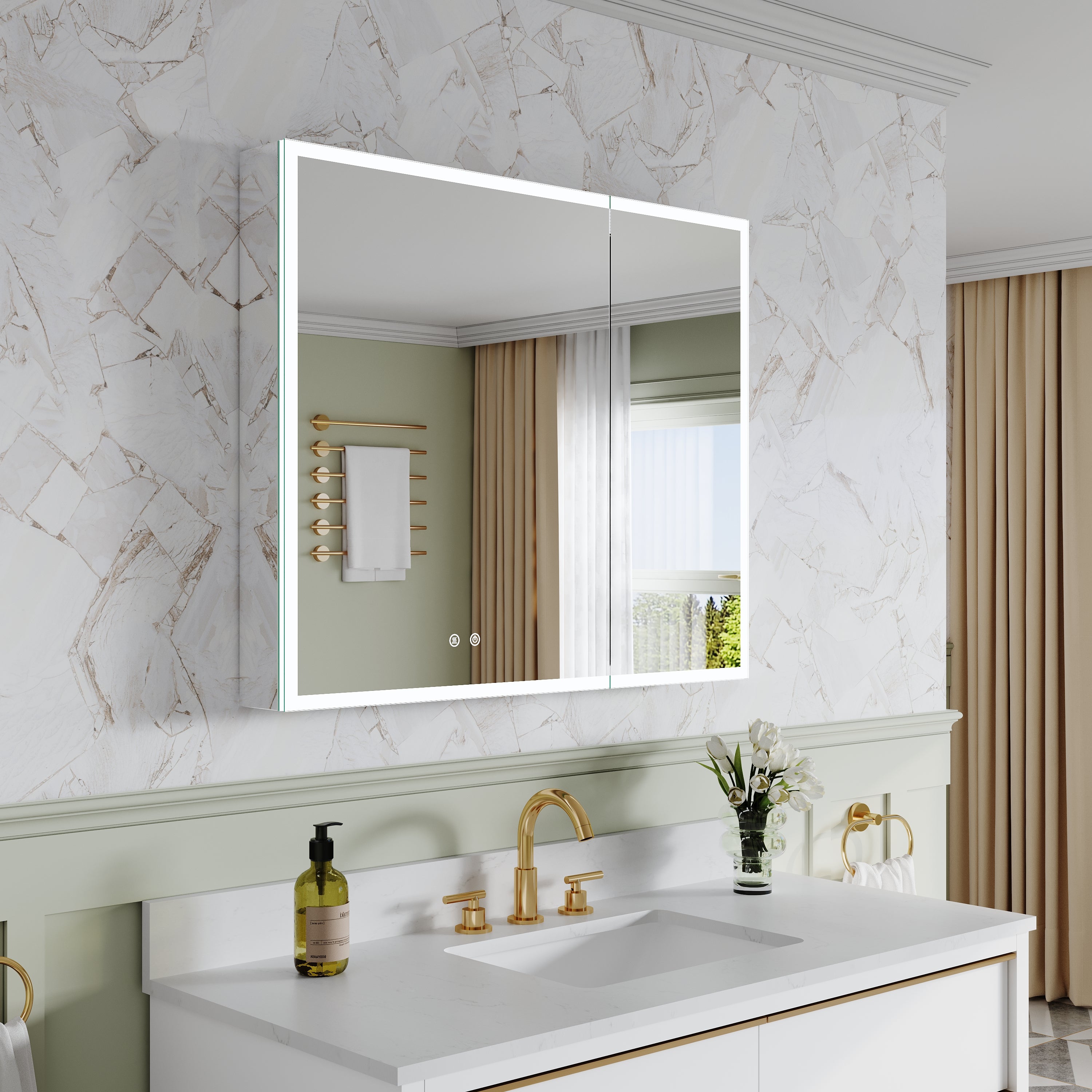
The design industry generally follows a proportionality principle: the width of the mirror should be 80%- 100% of the tabletop width and should not exceed the tabletop width; otherwise, the visual center of gravity will shift upwards, weakening overall stability.
For example:
30-inch basin → mirror recommended 24-30 inch
36-inch basin → mirror recommended 28-36 inch
48-inch basin → mirror recommended 40-48 inch
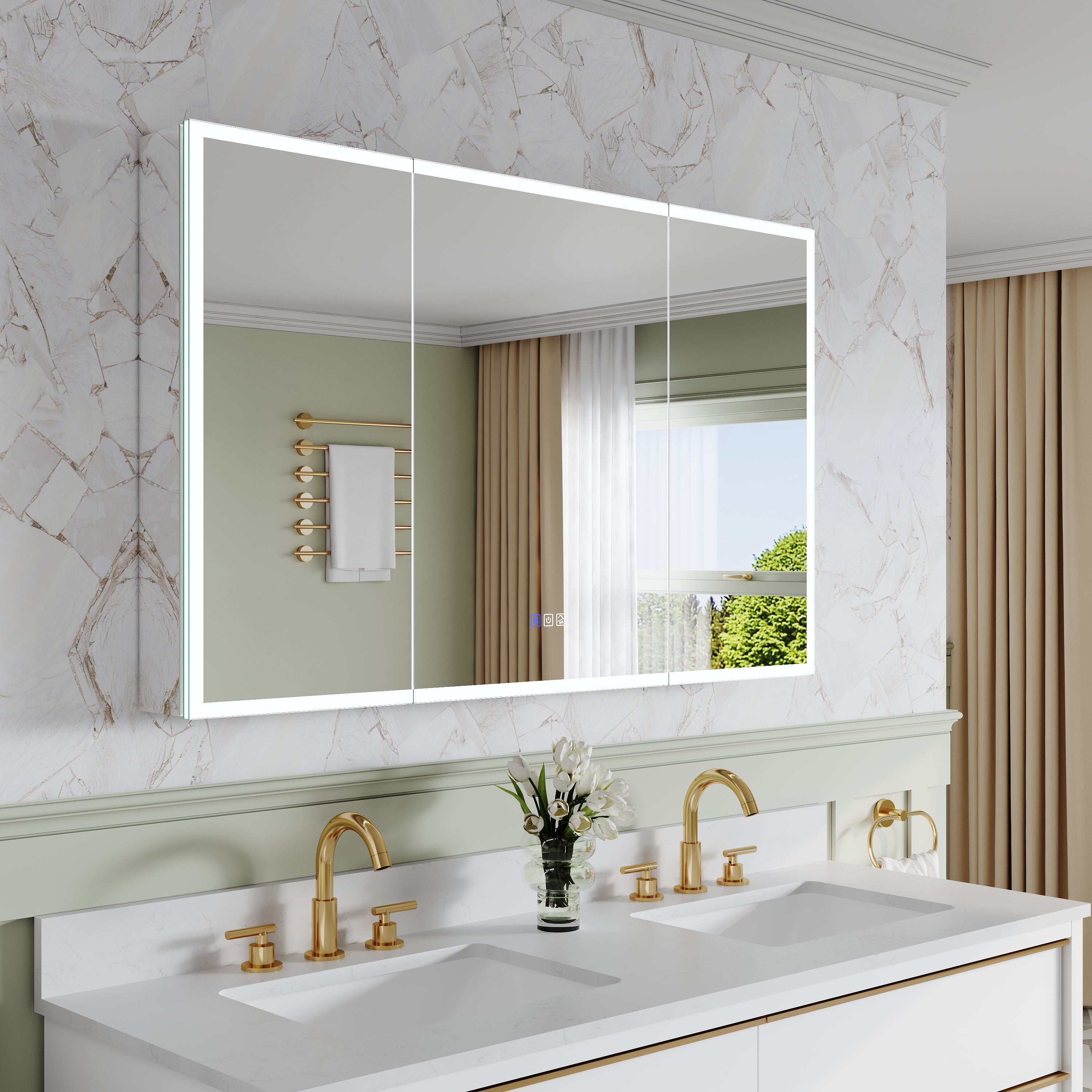
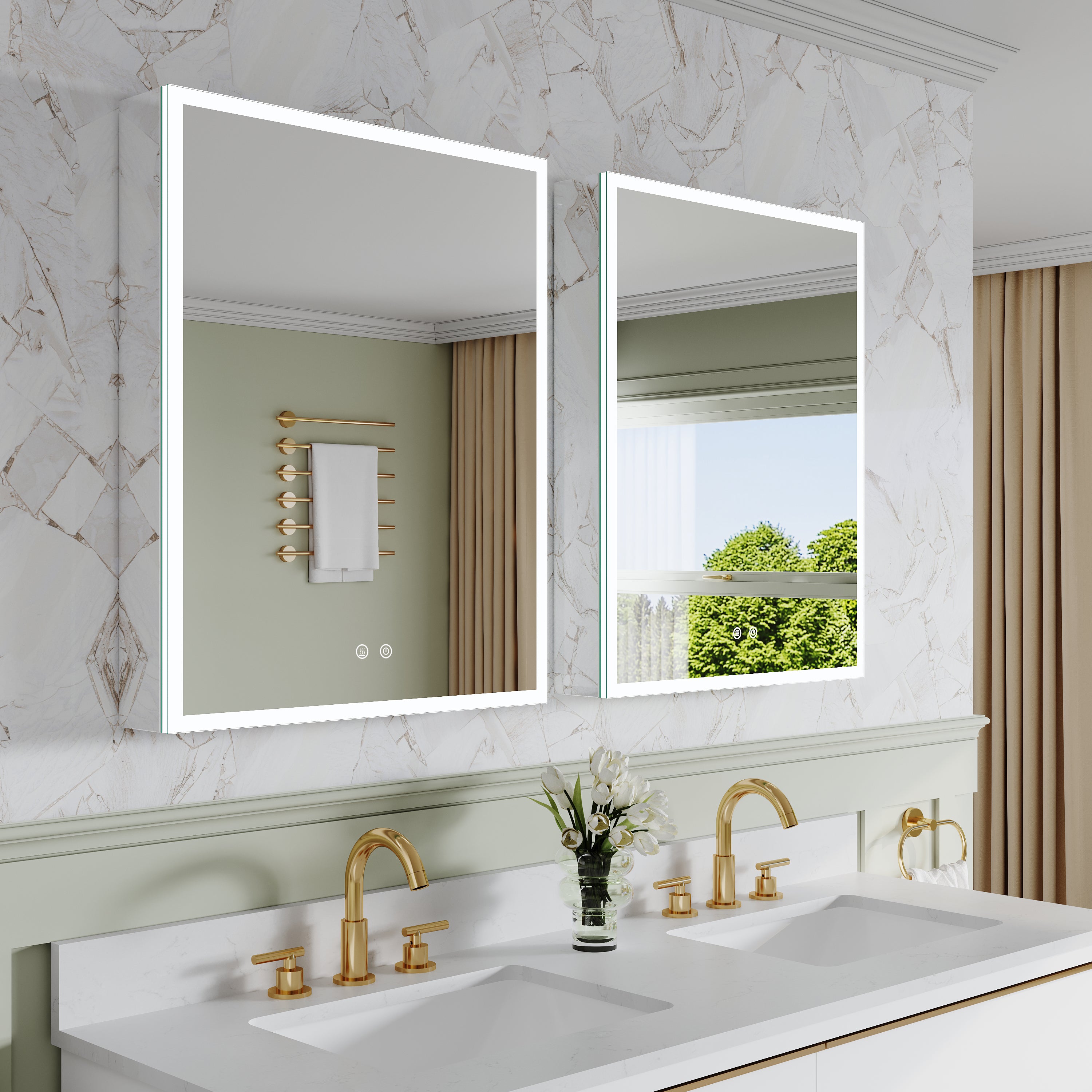
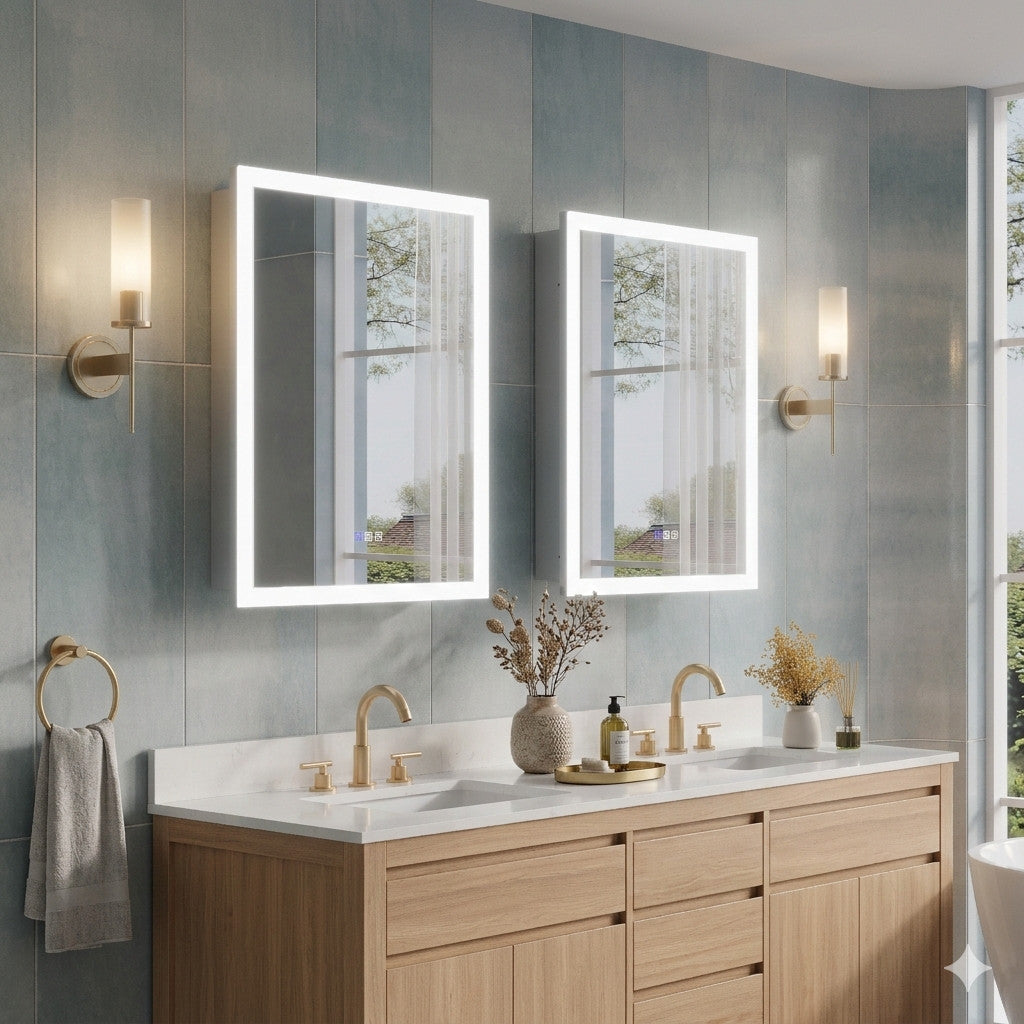
If it is a 60-inch or 72-inch double basin space, you can choose a full mirror or two independent mirrors (28-36 inches each), with a 4-8-inch gap in the middle to create a symmetrical structure.
In high-end double-basin projects, over 55% of designs lean toward a dual-mirror separation structure, as it enhances the sense of spatial rhythm.
2. Mirror height: the key to vertical proportion
The height of mirrors is usually between 30 and 40 inches, which is the most common. If the ceiling height is 96 inches (8 feet) and the standard tabletop height is 34-36 inches, the common installation logic is as follows:
The distance between the bottom of the mirror and the tabletop is 5-10 inches.
The distance between the top of the mirror and the ceiling should be at least 6 inches.
This ratio can ensure a sense of spatial breathing while avoiding visual pressure.
For high ceilings (108 inches or more), the mirror height can be appropriately increased to 40 inches or higher to enhance longitudinal extension.
3. Mirror centerline to human body ratio
Professional design advice suggests that the mirror's centerline should be approximately 60-65 inches above the ground. This height covers most adults' line of sight, making daily use more natural.
If there is a significant difference in height among family members, it is possible to fine-tune 1-2 inches within the standard range. Still, it is not recommended to deviate too much from this range, as the overall proportion may become imbalanced.
4. Single mirror or dual mirror? Analysis of Double Basin Layout
The selection of mirrors is particularly crucial in the 60-inch and 72-inch double basin spaces.
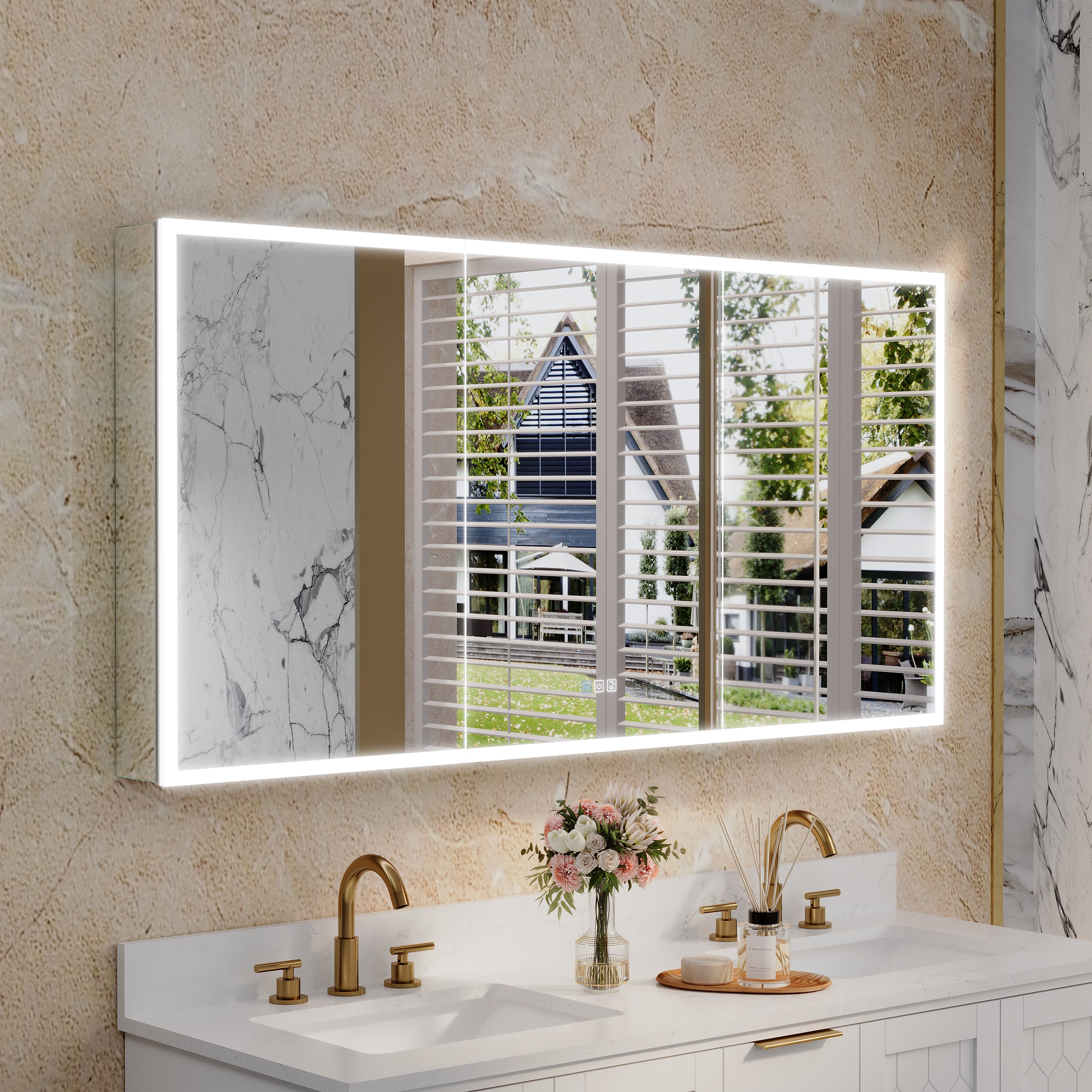
Integrated large mirror
The advantage lies in:
Visual coherence
Amplify the sense of space.
Improve lighting reflection
Data shows that in main bathrooms with an area less than 80 square feet, integrated mirrors are more popular because they can increase visual expansion by about 20%.
Dual independent mirrors
The advantage lies in:
Clearly define functional zoning.
Strengthening Symmetrical Aesthetics
Easy to personalize lighting control
In recent years, the proportion of independent mirrors has steadily increased, especially in modern and light luxury styles.
5. The influence of shape selection on proportion
Rectangular mirror
With over 65% market share, this proportion is the easiest to control. Horizontal rectangles are suitable for wide countertops, while vertical rectangles are suitable for spaces with higher ceilings.
Circular mirror
The common diameter is 30 inches or 36 inches. Suitable for breaking straight structures and increasing softness. Data shows that small bathrooms tend to use round mirrors because they have a lower visual burden.
Arched mirror
In recent years, there has been significant growth, and the top curve can enhance the sense of vertical spatial extension. Suitable for modern transitional styles.
6. The influence of lighting on size judgment
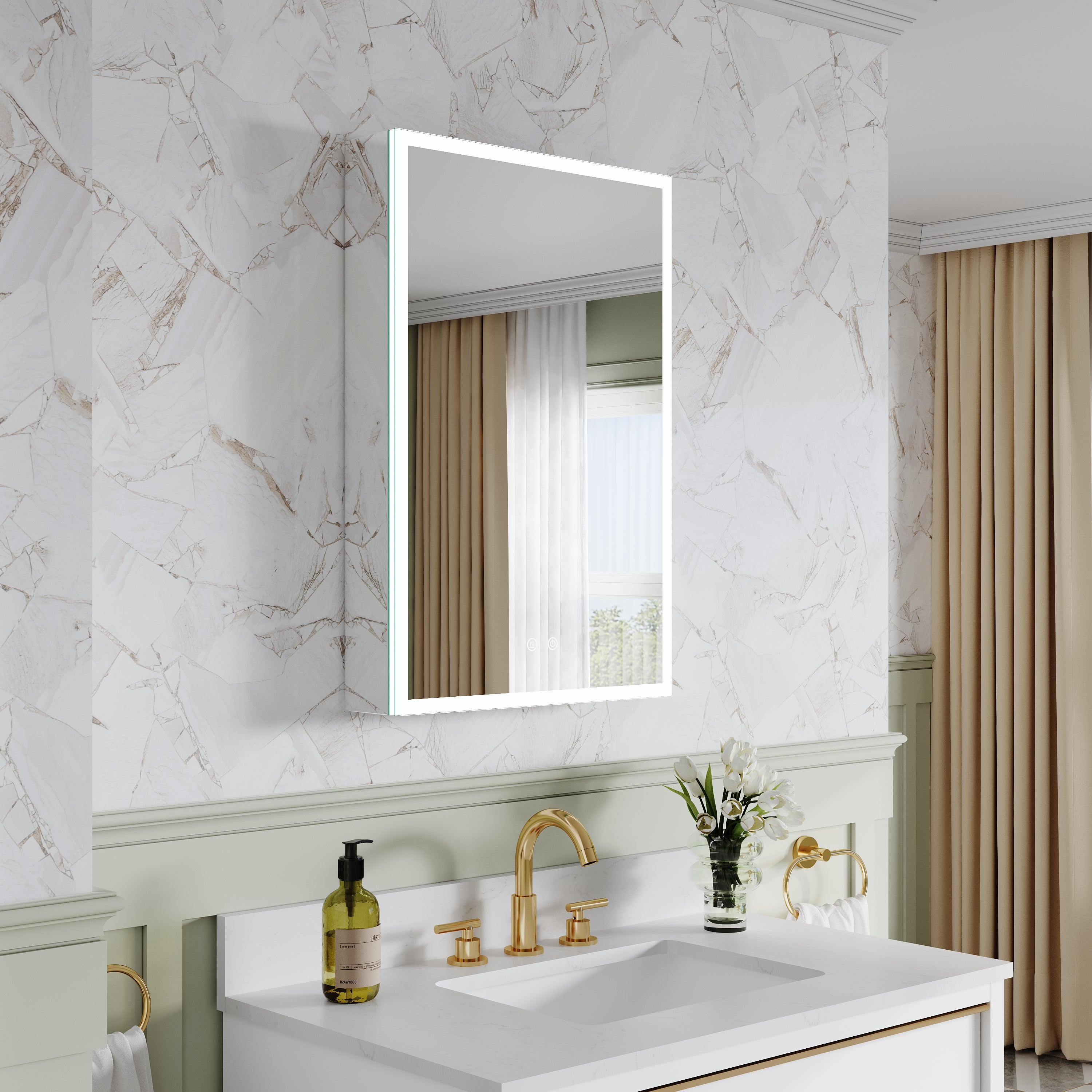
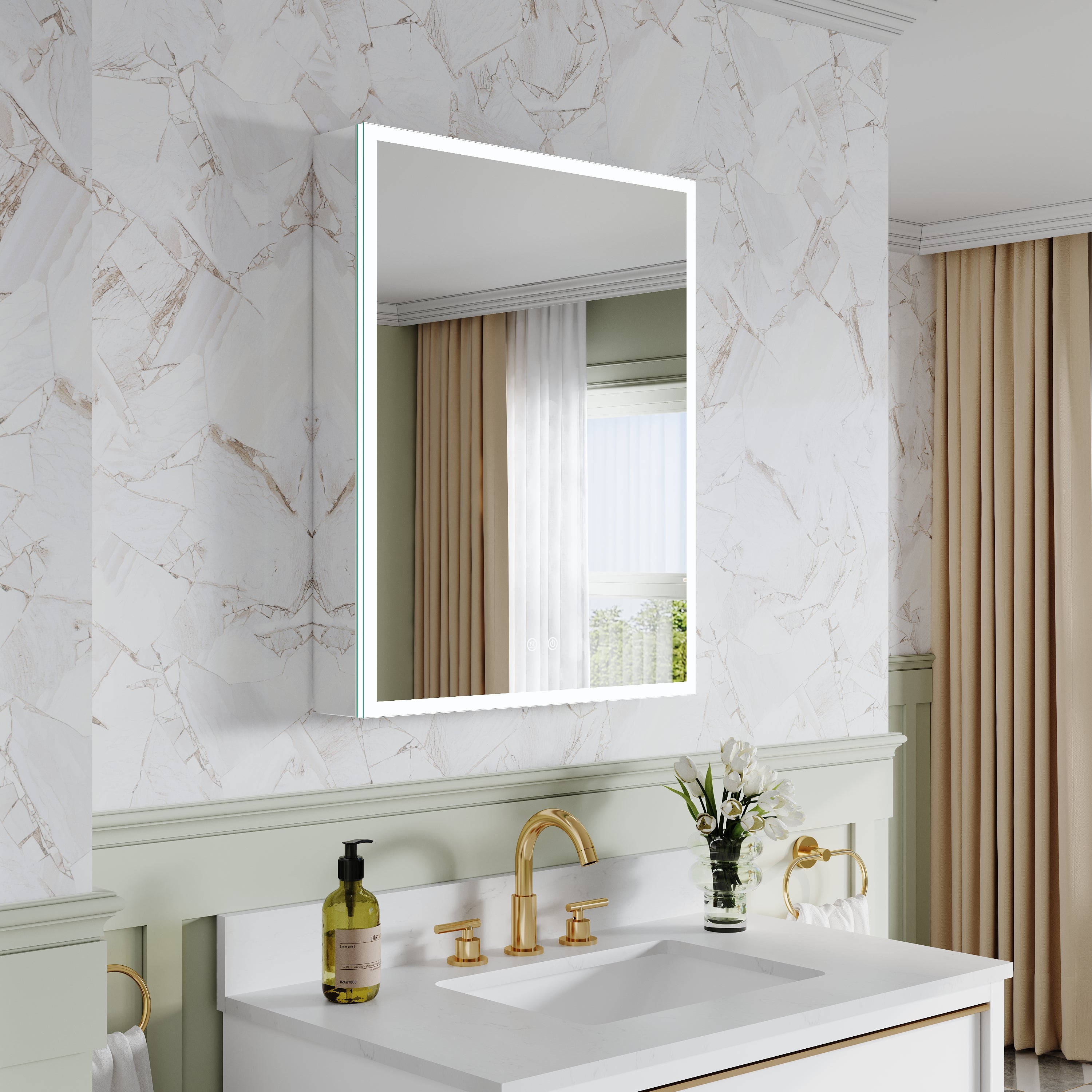
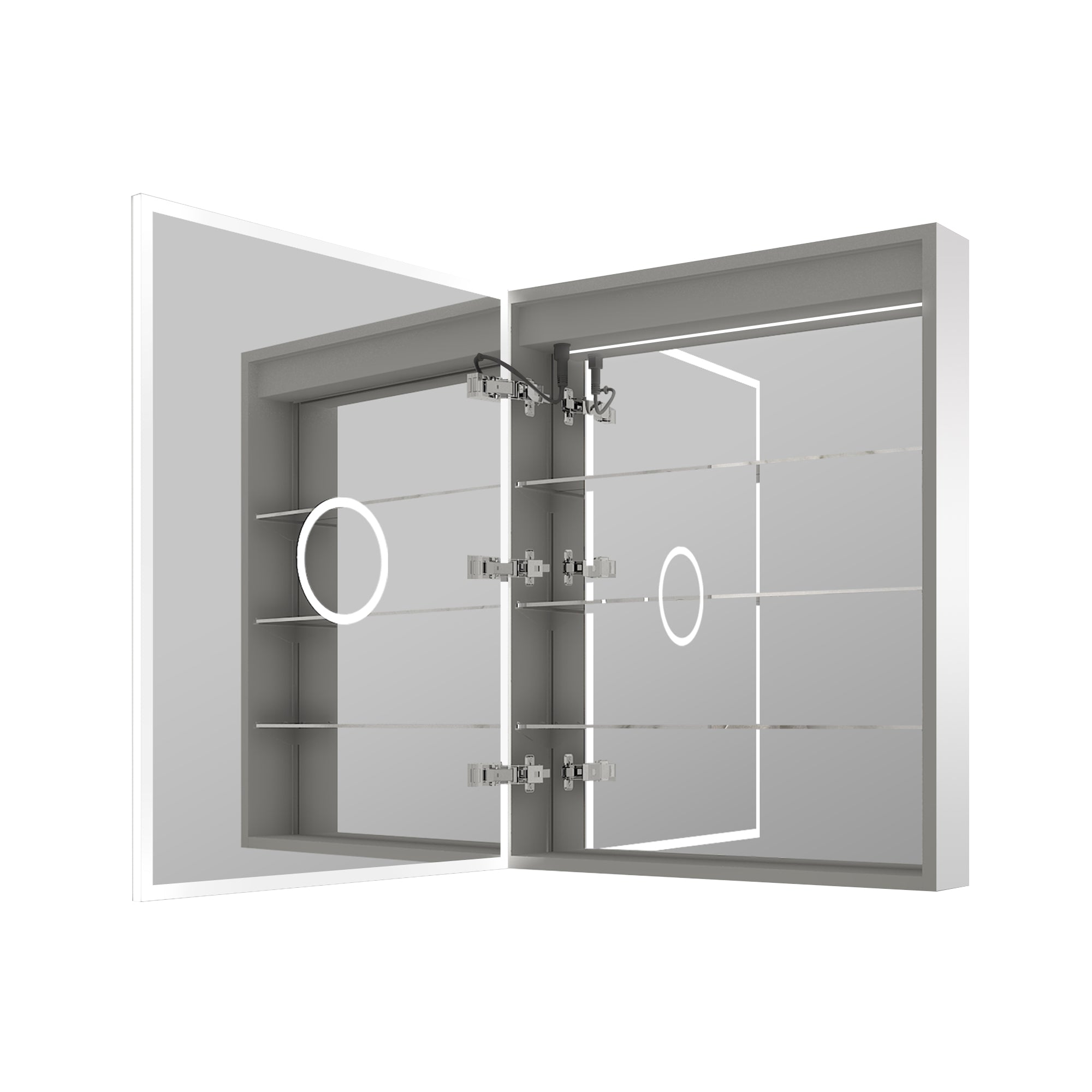
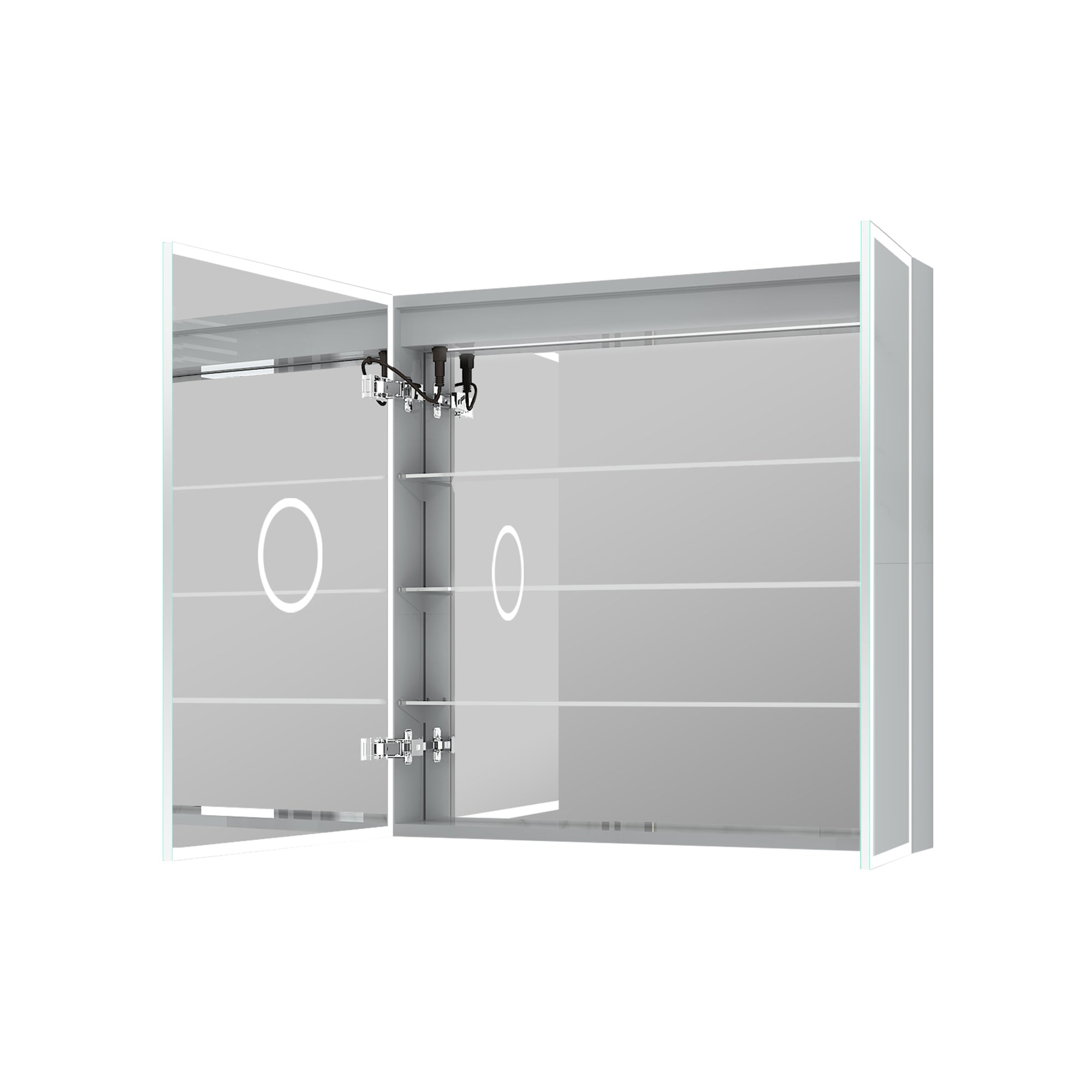
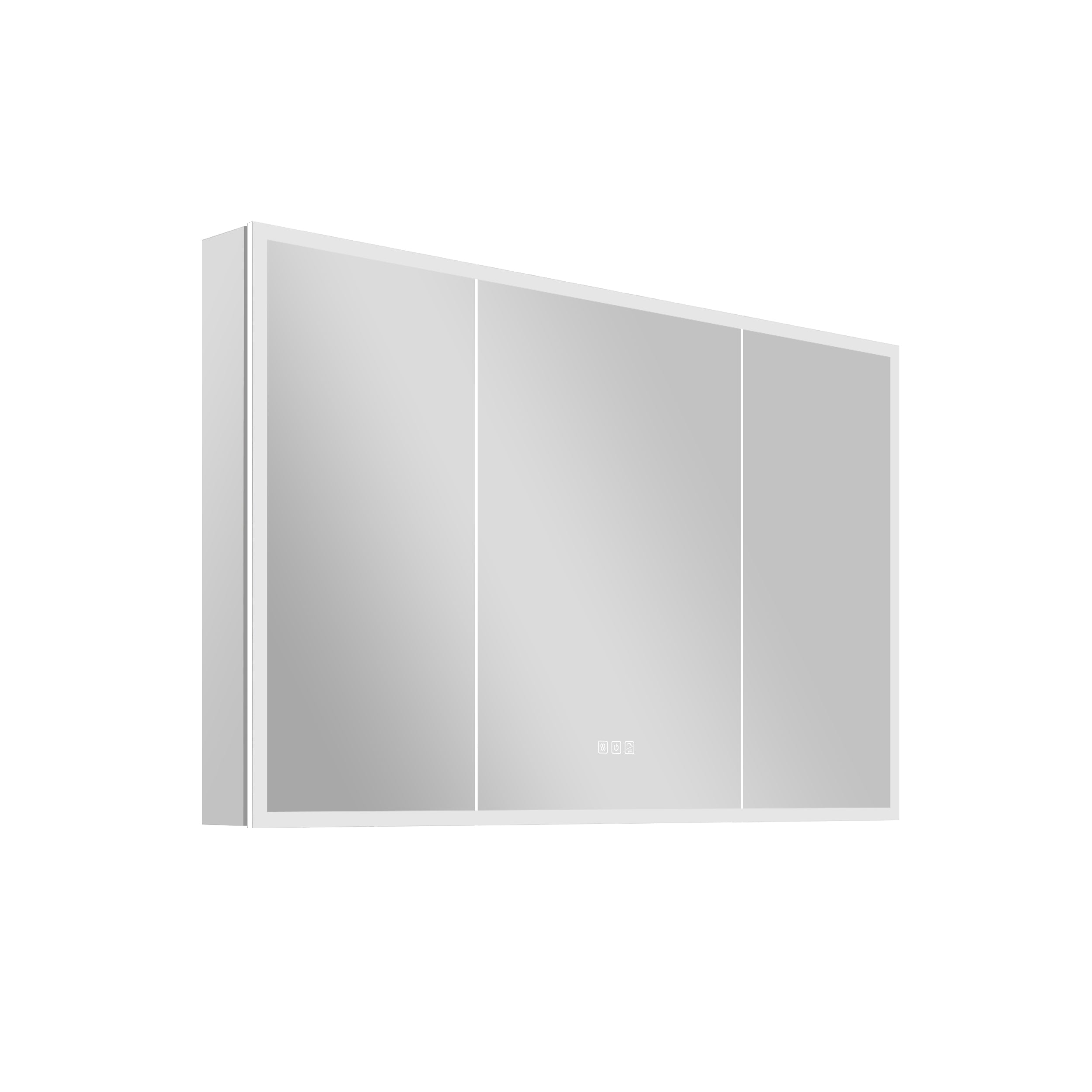
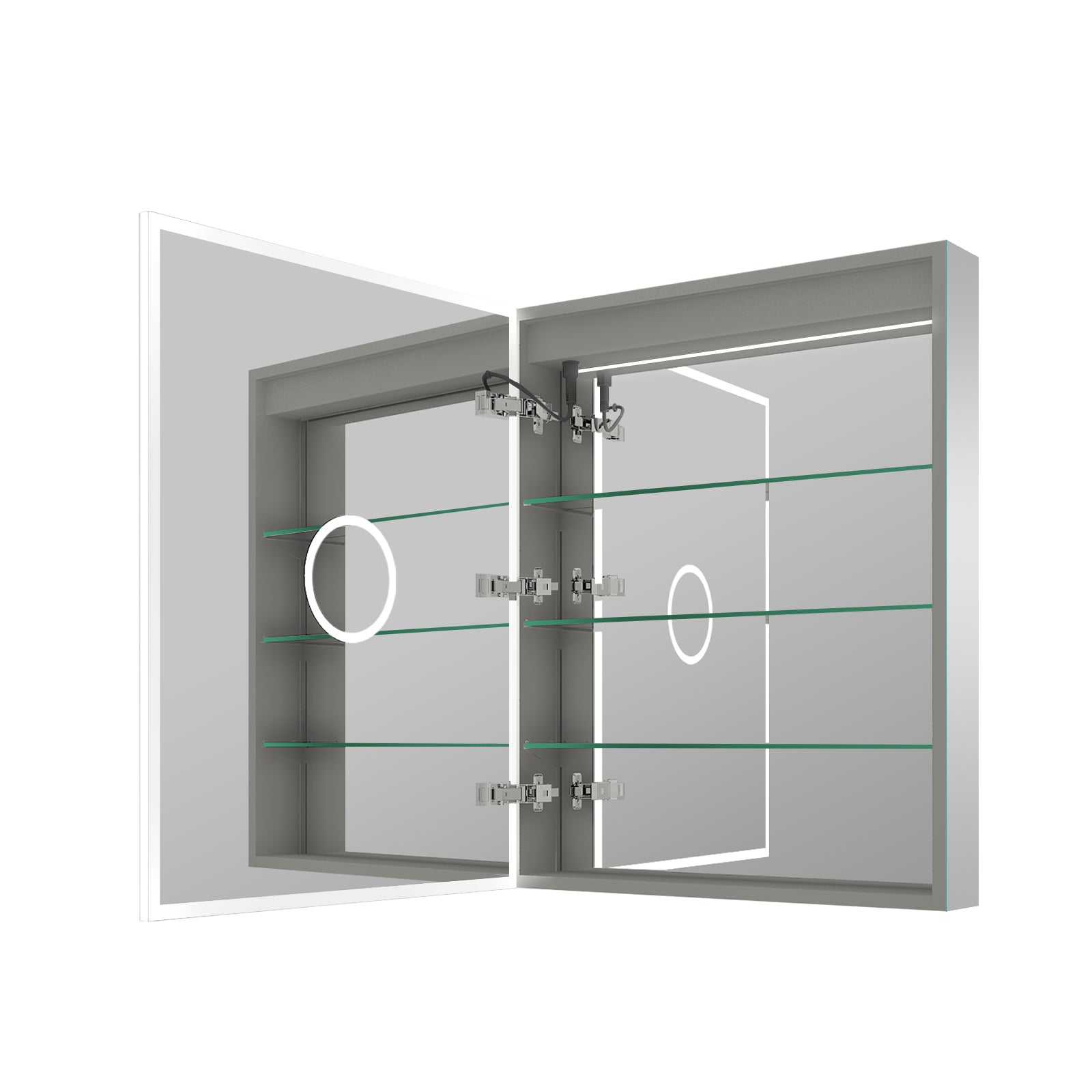
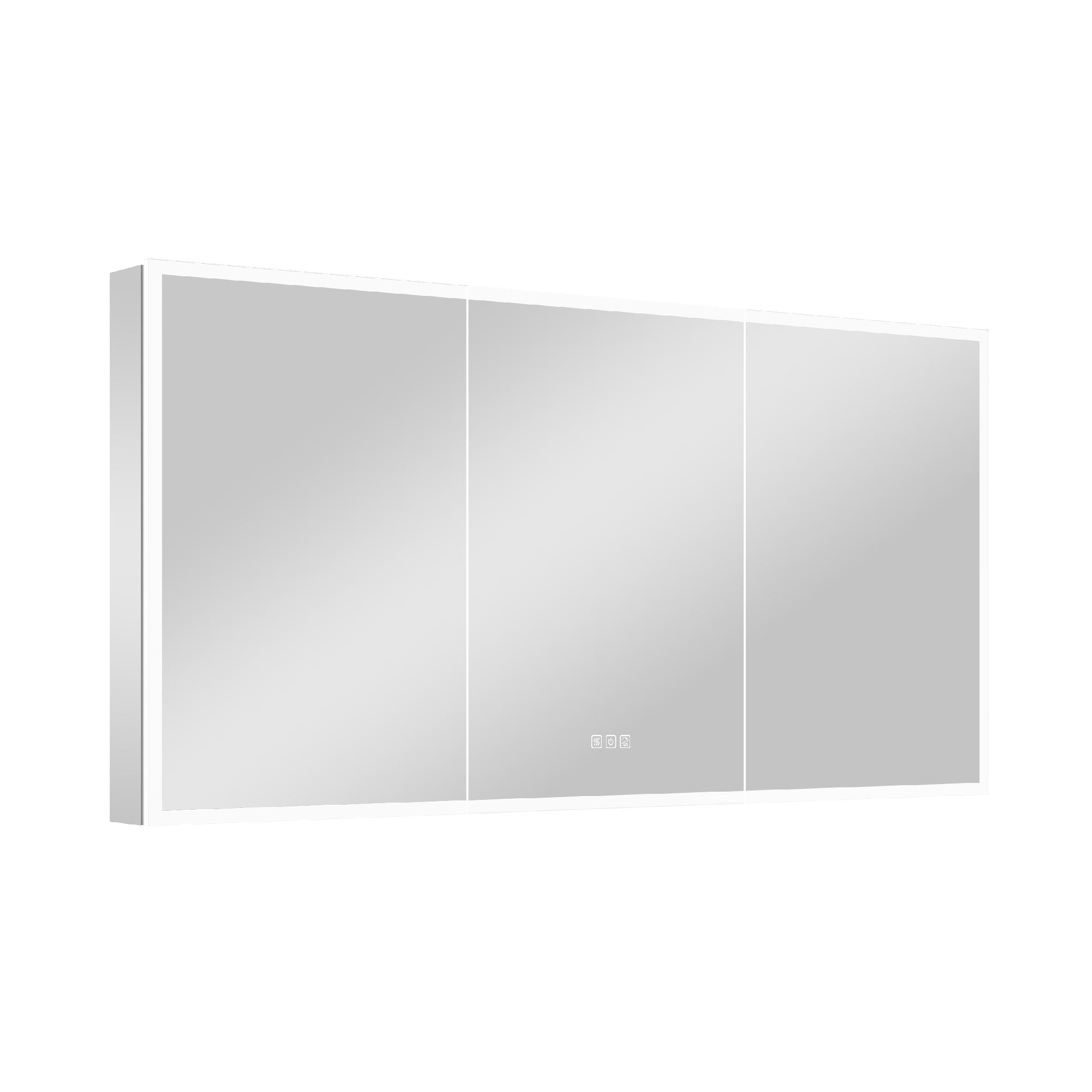
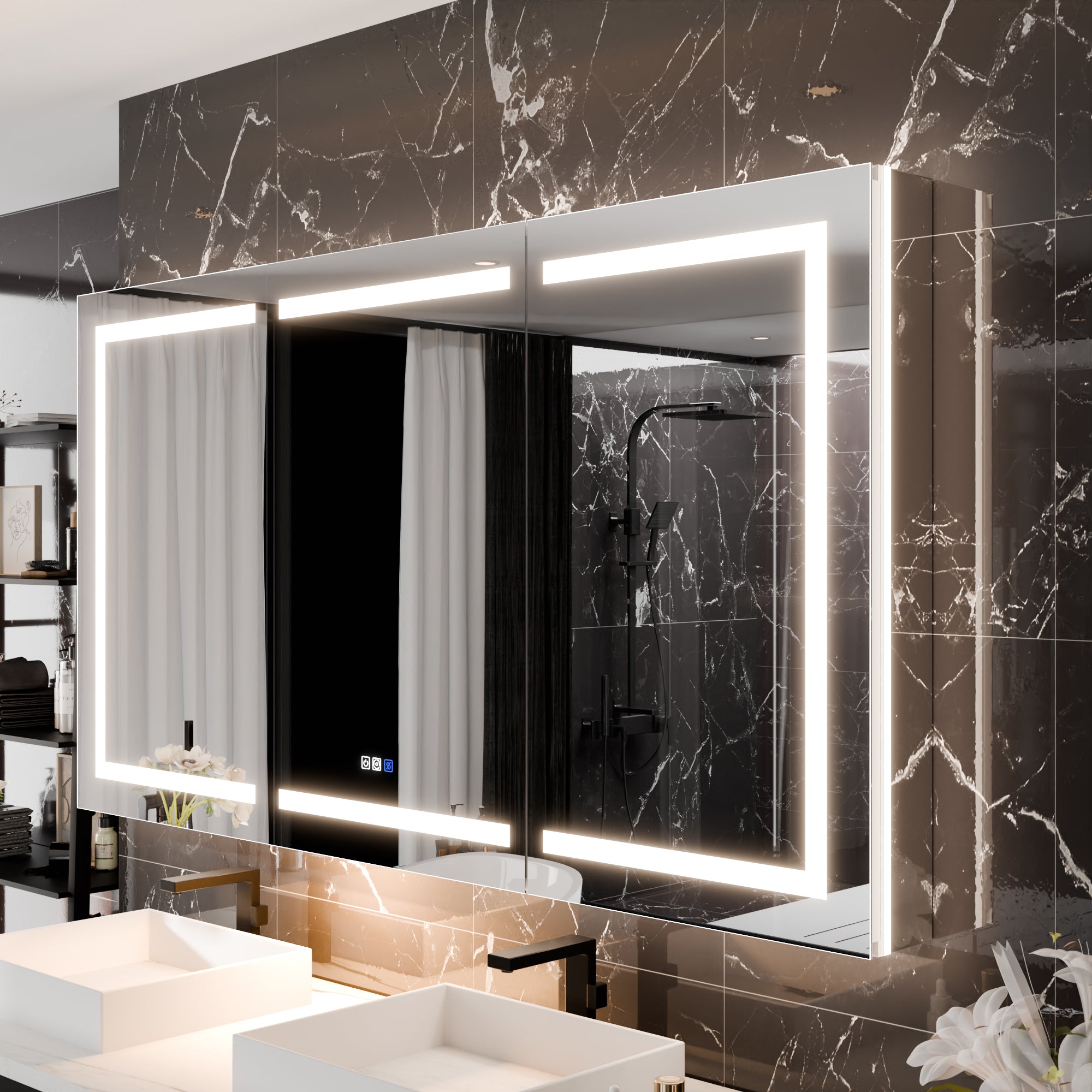
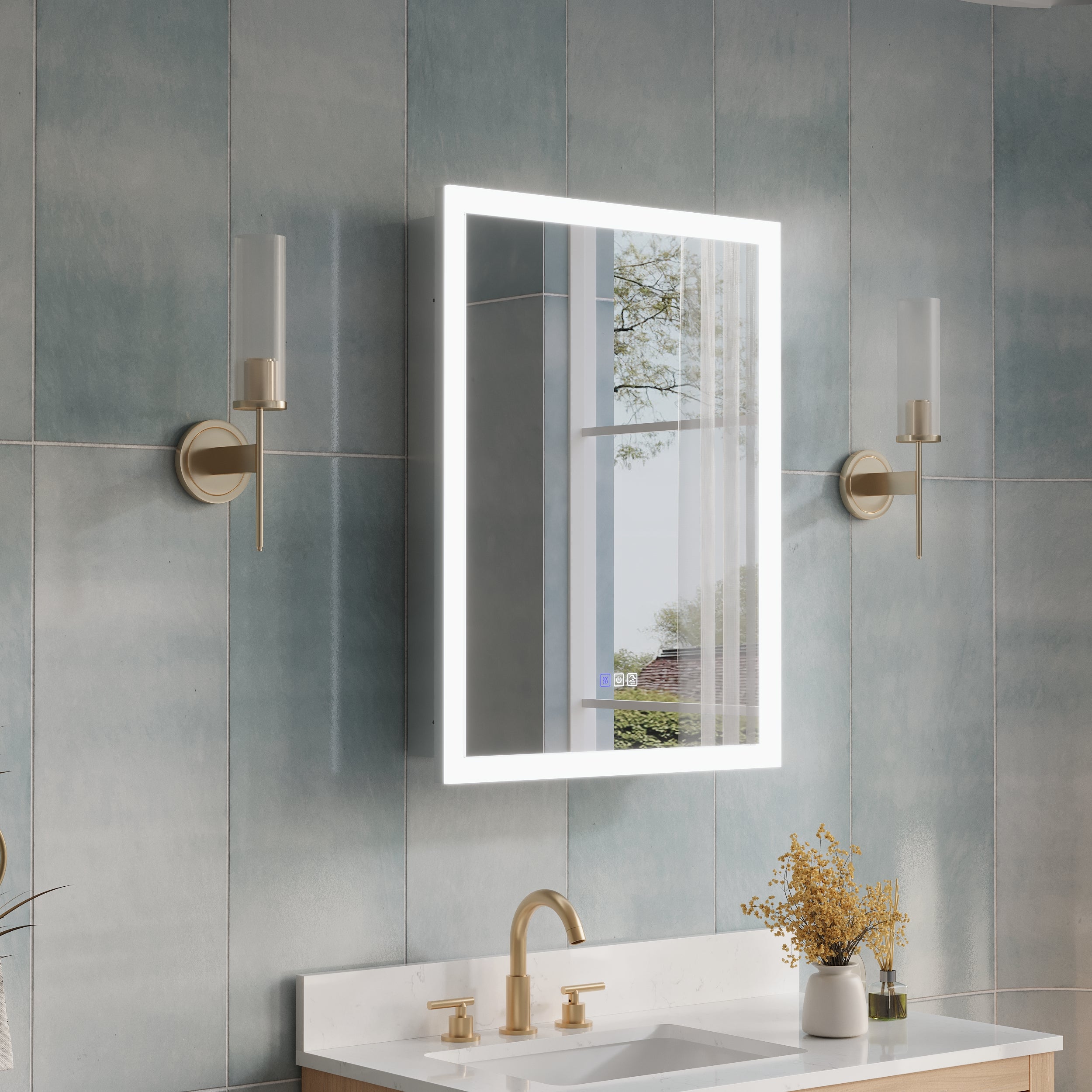
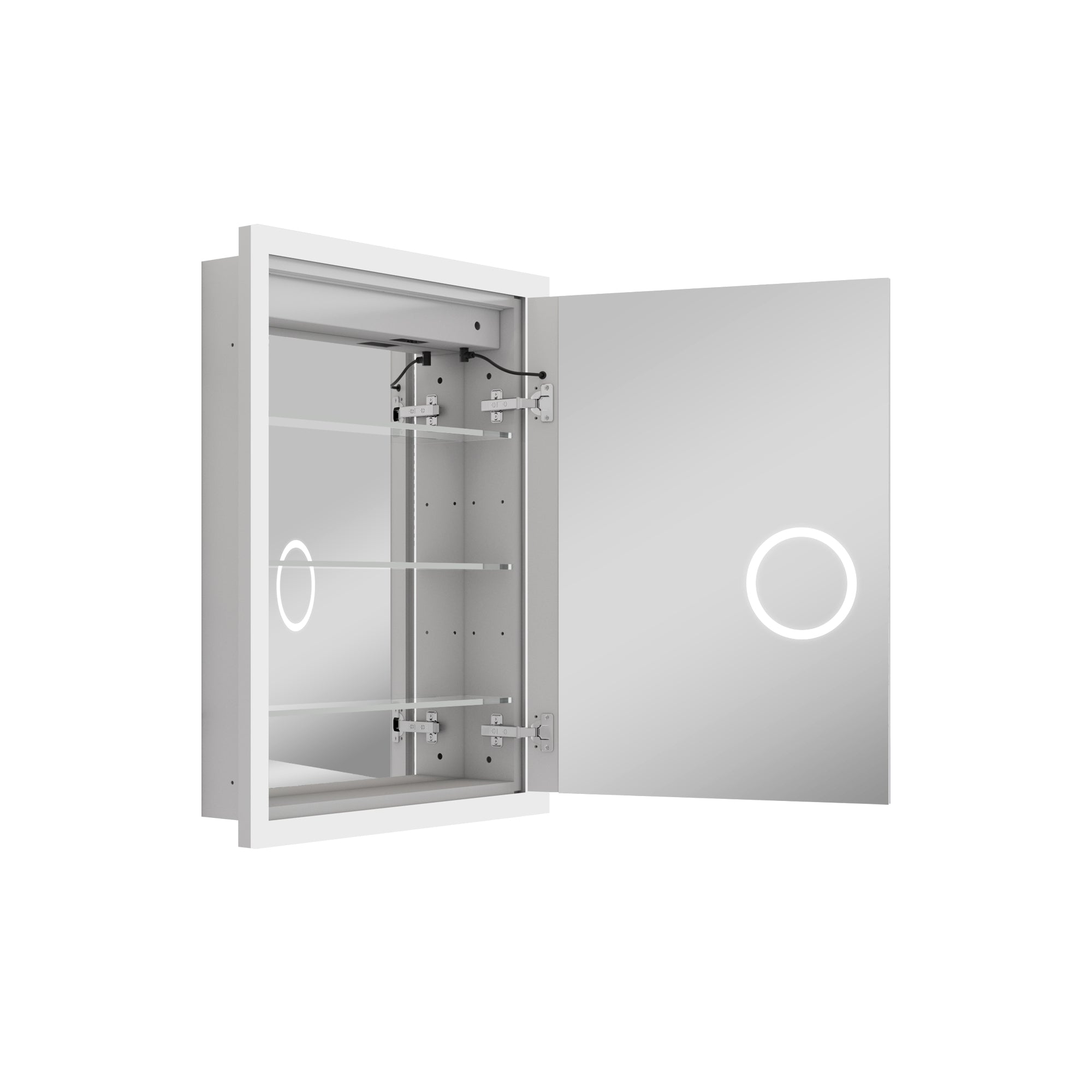
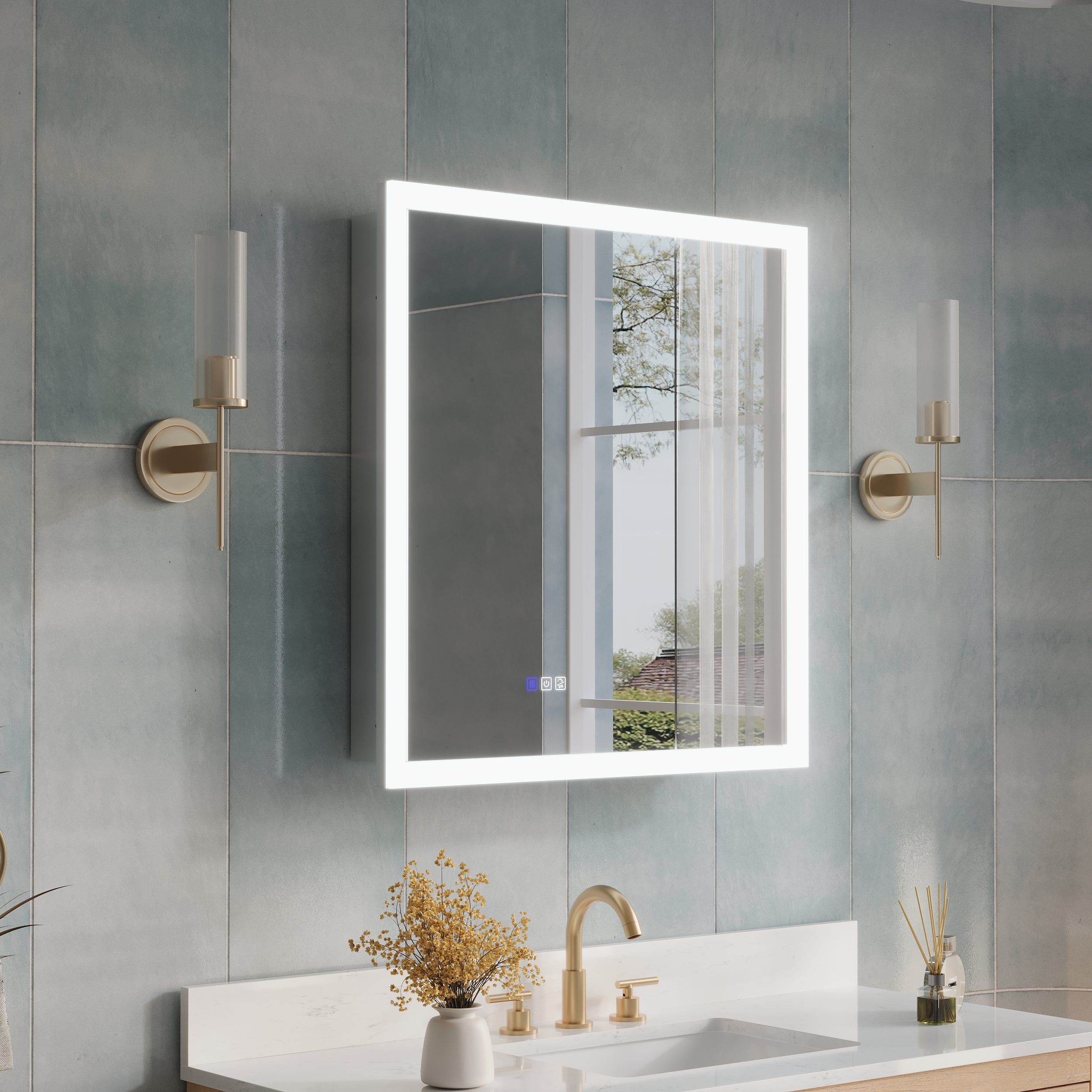
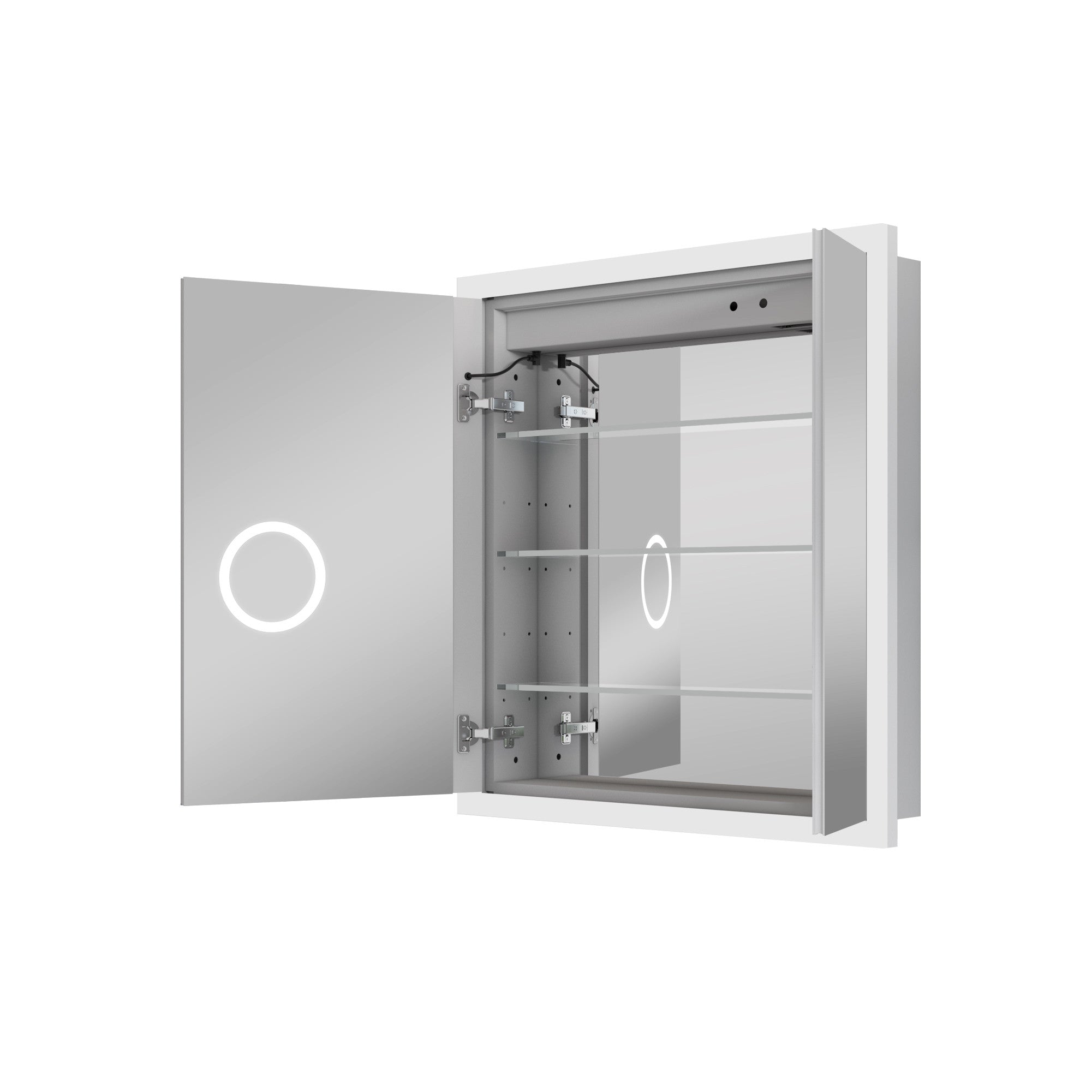
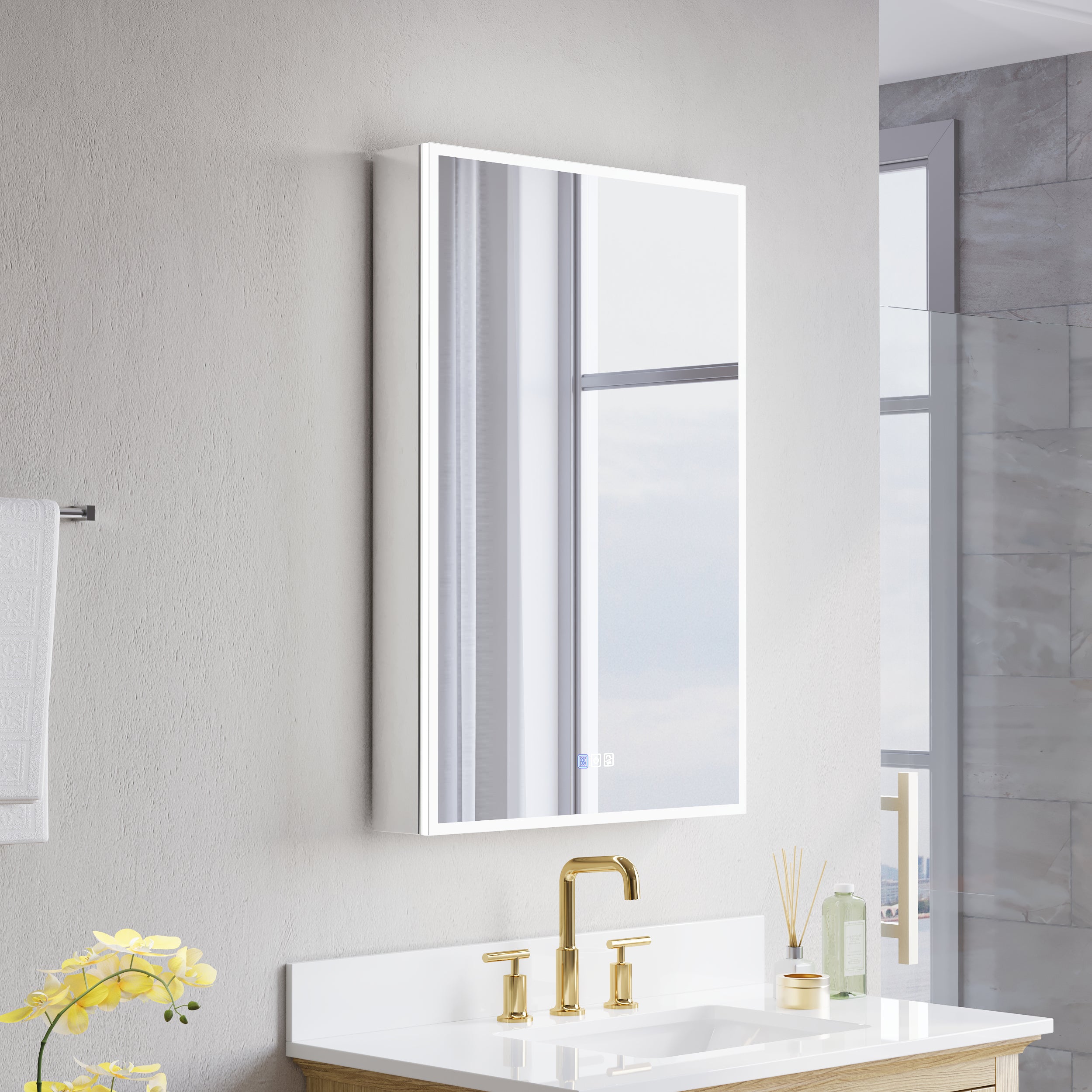
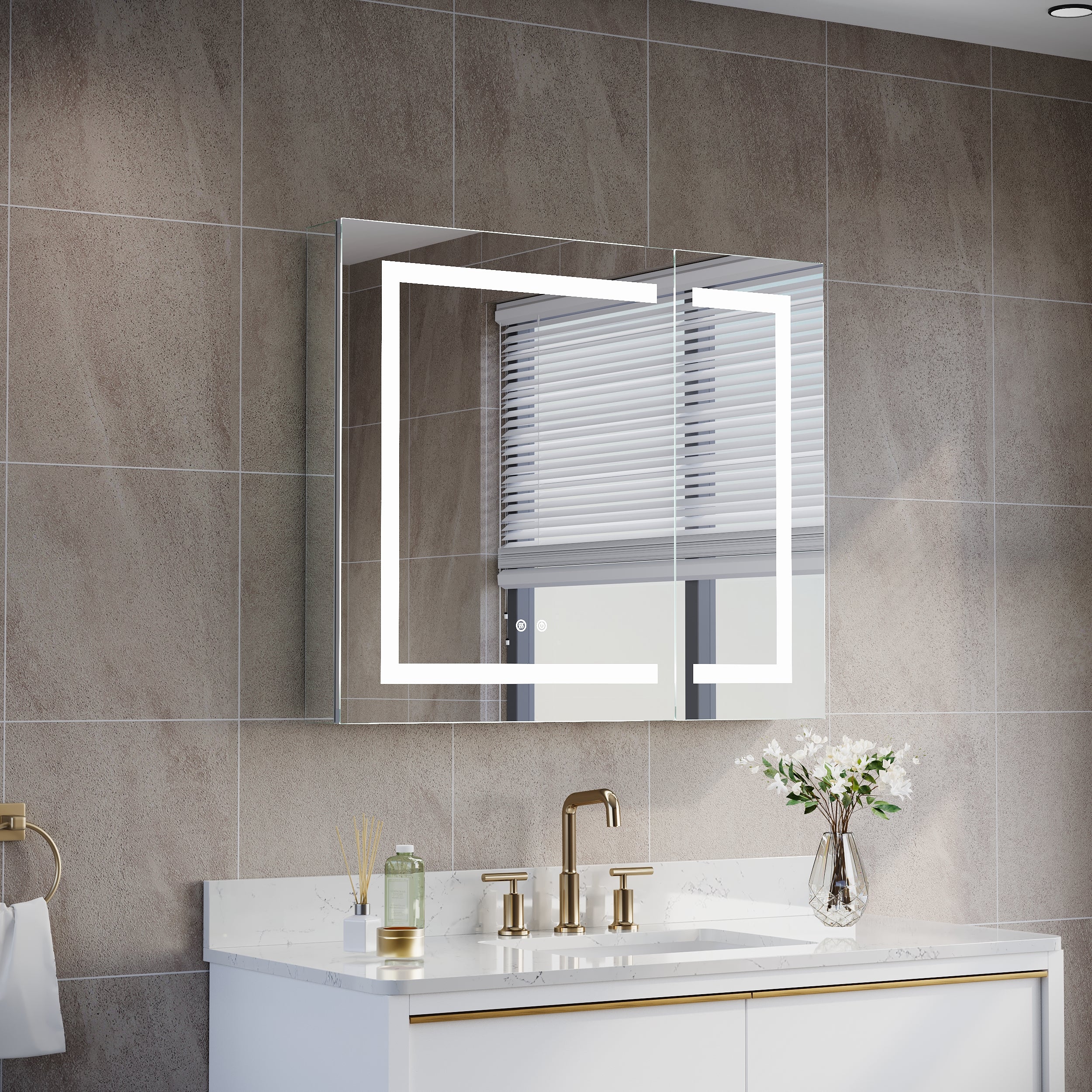
If the mirror integrates LED light strips, the size selection should be slightly conservative because the illuminated area itself forms a visual boundary.
The lighting industry recommends using CRI 90 or higher light sources in the dressing area, with color temperatures typically adjustable from 3000K to 6000K. The penetration rate of illuminated mirrors in mid to high-end projects has exceeded 60%.
In a single basin space with a width less than 48 inches, the integrated luminous mirror can reduce the need for side wall lamps, thereby saving wall space.
7. Border thickness and visual weight
The border thickness is usually 1-2 inches. Borderless design accounts for about 60% of the market and is suitable for a modern minimalist style.
Metal thin frames (black or brushed gold) emphasize structural lines more. If the space is small, it is recommended to choose a narrow border or frameless design to avoid visual compression.
8. Anti-fog and functional area integration
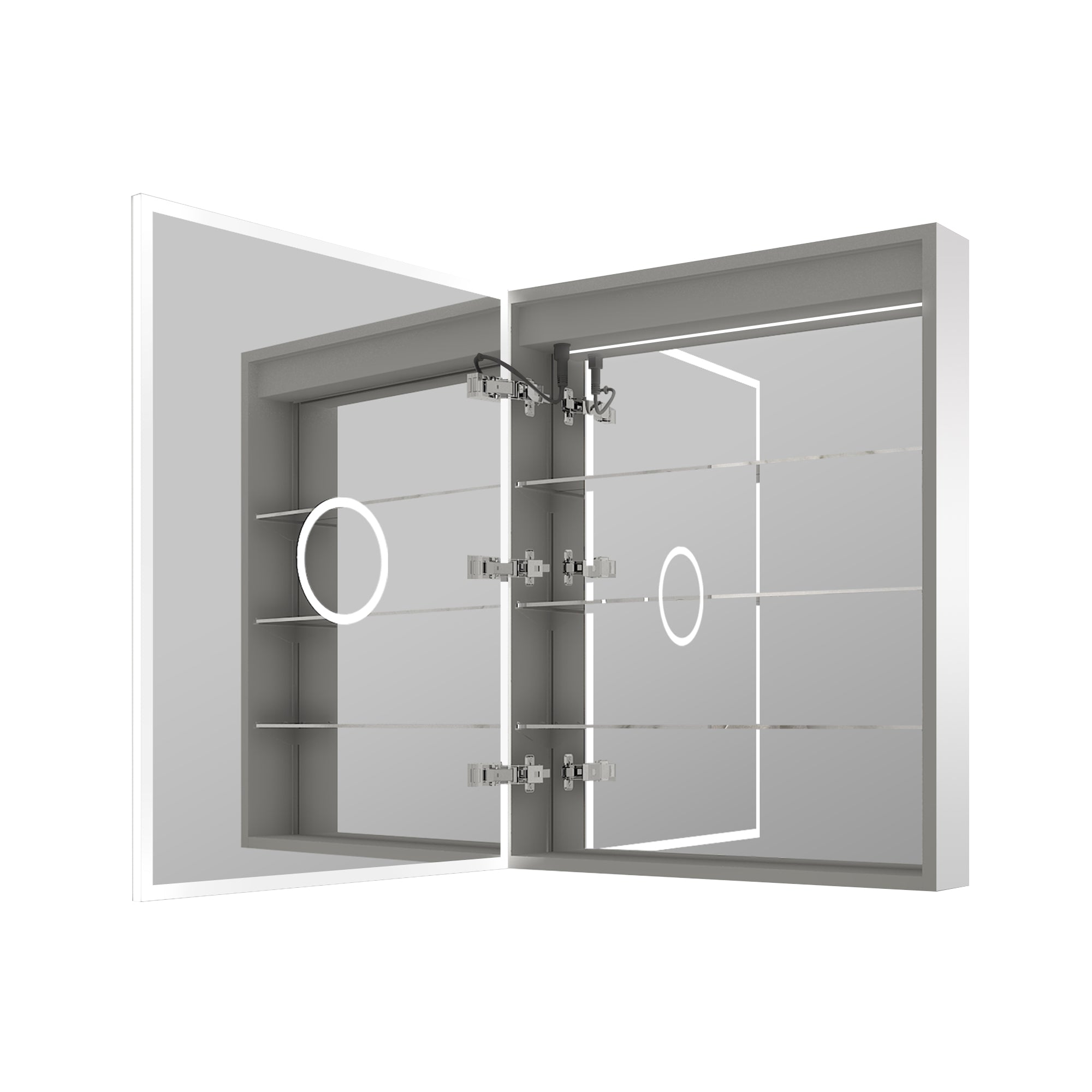
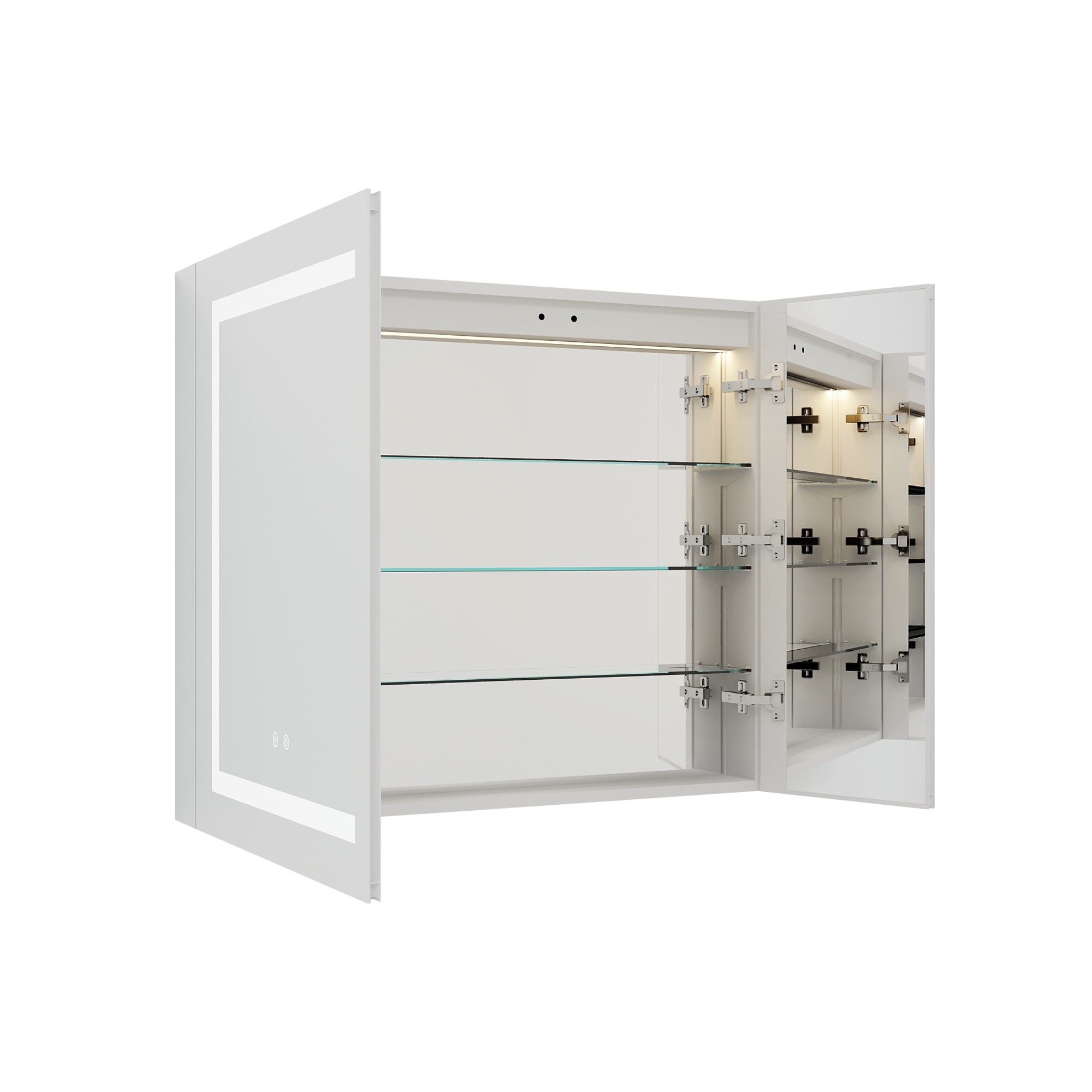
Mirror anti-fog function is becoming increasingly popular in bathroom environments with showers. Industry data shows that in the main bathroom upgrade project, over 50% of high-end mirror products have been equipped with heating and defogging modules.
Although the number of smart modules (Bluetooth, touch, time display) is gradually increasing, it is recommended to prioritize ensuring a reasonable proportion of core dimensions before considering additional features.
9. The relationship between the mirror and the lighting
Mirrors not only reflect people, but also enhance spatial brightness. Data shows that in windowless bathrooms, adding large areas of mirrors can increase overall brightness by about 20% -30%.
Therefore, in spaces with insufficient natural light, it is recommended to choose mirrors with a width close to the countertop and combine them with ambient lighting to enhance overall comfort.
10. Summary of Common Size Matching Examples
If using common basin widths for matching, the following logical description can be referred to:
24-inch basin → mirror 20-24 inches wide, 30 inches high
30-inch basin → mirror 24-30 inch wide, 30-36 inch high
36-inch basin → mirror 30-36 inches wide, 32-40 inches high
60-inch double basin → 28-32 inches for each double mirror or 56-60 inches for the entire mirror
72-inch double basin → 32-36 inches for each double mirror or 66-72 inches for the entire mirror
These ratios can ensure the stability of the visual center of gravity while avoiding the mirror from exceeding the structural boundaries.
11. Conclusion

The size of a mirror never exists in isolation; it must be in a synergistic relationship with the countertop width, the floor-to-ceiling ratio, the lighting system, and the spatial layout. Reasonable selection of vanity mirrors not only enhances aesthetics but also affects user comfort and spatial texture.
In actual planning, first determine the basin width, then calculate the mirror width ratio; control the distance between the bottom and top of the mirror; choose single or double mirrors based on the spatial structure; finally, refine by combining lighting and border style. Only by balancing proportion and function can we truly achieve professional and durable bathroom design.











Leave a comment
This site is protected by hCaptcha and the hCaptcha Privacy Policy and Terms of Service apply.