






















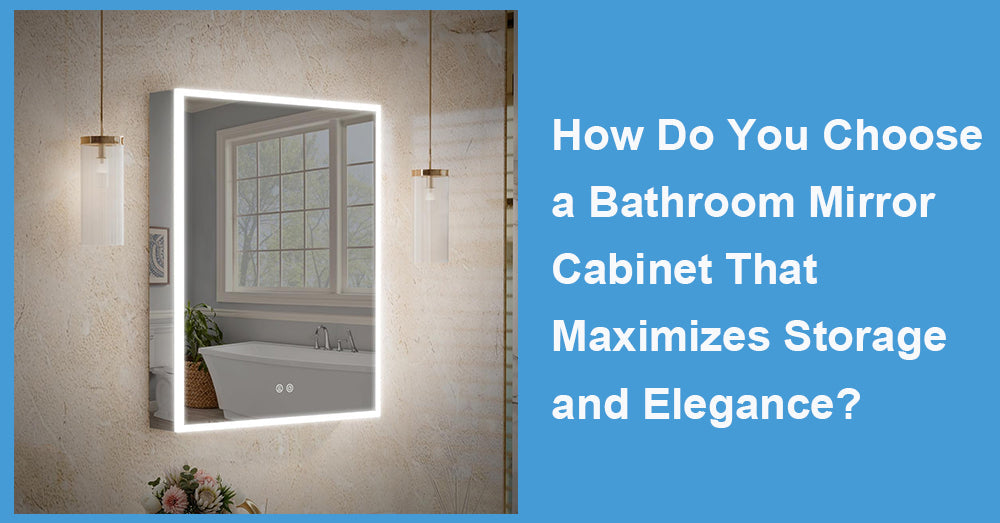
A bathroom mirror cabinet can be the most “quietly powerful” upgrade in a bathroom: it hides clutter, improves daily routines, and elevates the wall visually—if you choose the right size, depth, lighting, and installation style. The wrong one, however, can feel bulky, cast unflattering shadows, fog constantly, or become a daily battle of slammed doors and cramped shelves. This guide breaks the decision down into practical, measurable steps so you get both usable storage and clean, refined design—with data-backed references you can trust.
1. Decide the Installation Style First: Recessed vs. Surface-Mount
Your best-looking option depends on what the wall can support.
Recessed (in-wall) mirror cabinets
Recessed cabinets sit inside the wall cavity, creating a flush, built-in look. They are often the best choice when you want maximum elegance because they visually reduce bulk.
What to verify:
· Wall depth: Many guides recommend at least 4 inches of wall depth for recessed installation (Source: AquaDom USA sizing guide; Dreamwerks installation guide).
· Stud spacing: Most wall studs are typically spaced 16 inches apart (Source: Home Depot “How to Install a Medicine Cabinet”).
· Cavity depth reality check: Many recessed cabinet options are designed around 3.5 inches depth for standard 2x4 walls (Source: WG Wood Products listing notes 3.5" depth as correct for standard 2x4 walls; Wgwood Products recessed cabinet depth options).
Surface-mount mirror cabinets
Surface-mount cabinets are easier to install and avoid cutting drywall or tile. They can still look high-end if you choose slim proportions and refined door details.
What to verify:
· Projection into the room: If a cabinet sticks out too far, it can feel crowded—especially over a shallow vanity.
· Door swing clearance: Make sure doors can open without hitting sconces, nearby walls, or your own shoulders in a tight space.
2. Measure Like a Pro: Width, Height, and Depth That Feel “Built-In”
Width: align with the vanity and the wall
A mirror cabinet usually looks most intentional when it aligns with the vanity width (or slightly smaller), rather than floating randomly on the wall. The goal is balance: enough cabinet width to store daily items without overpowering the vanity.
Practical rules:
· Single-sink vanity: match cabinet width closely to the sink zone.
· Double vanity: consider two cabinets or one wide cabinet that visually matches the full vanity span (depending on lighting and wall layout).
Height: don’t mount it too high
Comfort matters more than symmetry. A helpful real-world reference comes from accessibility guidance:
· Mirrors above a lavatory or countertop: bottom edge of the reflecting surface 40 inches max above the finished floor (Source: U.S. Access Board, ADA Standards 603.3).
Even if you’re not building to accessibility specs, this number is a strong reality check to prevent “why do I have to tilt my head back?” placement.
Depth: the hidden factor that decides usability
Depth determines what you can store and whether the cabinet feels bulky.
Useful benchmarks:
· Many sources suggest recessed cabinets often need 4 inches or more wall depth to sit cleanly (Source: AquaDom USA; Dreamwerks).
· Product listings show common recessed cabinet depths around 3.5 inches, designed for standard wall construction (Source: Wgwood Products recessed cabinet options; Home Depot example listing with 3.5 in. D).
If you store taller bottles (hair products, electric toothbrush heads, skincare), depth matters. If your goal is sleek minimalism, a slimmer cabinet can still work—just plan storage more intentionally.
3. Storage That Actually Works: Shelf Design and Interior Layout
A cabinet can be “large” and still store poorly if the interior is awkward. Look for storage that matches real bathroom items.
Features that improve daily use:
· Adjustable shelves: lets you fit tall bottles and avoid wasted vertical space.
· Shelf spacing that supports categories: daily items at eye level, backups higher, rarely-used items lower.
· Door storage (optional): can be useful, but avoid designs that make doors feel heavy or unstable.
A quick planning method:
· Group what you store into three tiers: daily / weekly / backup.
· Measure your tallest “must-fit” item and ensure the cabinet can accommodate it without forcing diagonal placement.
4. Elegance Comes From the Details: Door Style, Frame, and Hardware
Even a practical cabinet can look expensive with the right design cues.
Door style choices
· Frameless mirrored doors: clean, modern, visually light.
· Thin-frame metal doors: adds a premium outline without feeling bulky.
· Arched or softly rounded corners: can make a wall feel more refined than a hard rectangle.
Hinges and closing feel
If you want “luxury” in daily use, prioritize:
· Soft-close hinges (many quality cabinets include this feature; it reduces slamming and wear).
· Good alignment and adjustability so doors don’t drift over time.
Hardware tip:
· Choose handles that are comfortable with wet hands and easy to clean. Minimal doesn’t have to mean slippery.
5. Lighting and Power: Make It Useful Without Looking “Techy”
If your cabinet includes lighting, treat it like a performance feature, not a decoration.
LED longevity and efficiency (why it matters long-term)
Residential LEDs—especially ENERGY STAR-rated products—use at least 75% less energy and can last up to 25 times longer than incandescent lighting (Source: U.S. Department of Energy, “LED Lighting”). That’s a meaningful durability advantage for a fixture you use daily.
What to look for:
· Even, diffused light that avoids harsh “raccoon eye” shadows.
· Dimming capability if you use the bathroom early morning or late night.
· A clean light strip design that doesn’t show visible dots or glare.
Built-in outlets and USB power
A built-in outlet can be genuinely useful for toothbrushes, trimmers, or hair tools—but only if it’s designed cleanly and placed so cords don’t hang in your face. If you hate countertop clutter, this feature can be a big win.
6. Fog, Humidity, and Materials: What Survives Bathroom Reality
Bathrooms experience humidity spikes. The cabinet you choose should resist warping, corrosion, and mirror damage.
Humidity reference:
· A widely cited guideline is keeping relative humidity in habitable spaces between 30% and 60% (Source: ASHRAE humidifiers chapter PDF). In bathrooms, humidity can rise quickly during showers, so materials and ventilation matter.
Practical durability checks:
· Rust-resistant hardware: hinges and screws should be corrosion-resistant.
· Quality mirror backing: helps prevent edge deterioration over time.
· Anti-fog (optional): valuable if your mirror fogs daily and ventilation is limited. If your fan clears humidity fast, anti-fog may be optional.
7. Installation Planning: The Fastest Way to Avoid Costly Mistakes
If you’re going recessed, do not treat it like a simple wall cutout. Confirm what’s behind the wall first.
Key structural realities:
· Studs are typically 16 inches apart (Source: Home Depot medicine cabinet installation guide). This often determines the maximum width of a recessed cabinet without reframing.
· Plumbing vents, supply lines, and electrical wiring can block the perfect location—so placement flexibility matters more than aesthetics.
If you’re unsure, it’s often smarter to:
· Choose a cabinet sized for stud bays, or
· Use a surface-mount cabinet with a slimmer profile and refined trim.
8. A Copy-Friendly Buying Checklist
Use this checklist to choose a cabinet that feels custom and performs well for years:
Sizing and fit
· Cabinet width aligns with vanity and wall layout.
· Cabinet height supports comfortable viewing; avoid mounting too high (Source: U.S. Access Board ADA 603.3 mirror guidance).
· Depth fits your storage needs without crowding the space; recessed installations often target 3.5"–4"+ depth depending on wall structure (Source: Wgwood Products; AquaDom USA; Dreamwerks).
Storage design
· Adjustable shelves for real items (tall bottles, grooming tools).
· Interior layout supports daily/weekly/backup organization.
Elegance details
· Clean door lines, refined edges, and stable hardware.
· Soft-close hinges when possible for long-term feel and reduced wear.
Lighting and power (if included)
· LED lighting designed for daily use; LED efficiency and longevity advantages are well-established (Source: U.S. Department of Energy).
· Outlet placement supports real routines without visual clutter.
Humidity and durability
· Corrosion-resistant hinges and hardware.
· Materials designed for humid rooms; ventilation matters (Source: ASHRAE 30–60% RH guideline).
Installation reality
· Recessed planning accounts for stud spacing (commonly 16 inches) and avoids hidden obstacles (Source: Home Depot installation guide).

Final Thoughts
A bathroom mirror cabinet that truly maximizes storage and elegance is the one that looks “built-in” and feels effortless: doors align cleanly, shelves hold what you actually use, lighting supports real grooming tasks, and materials stay stable through years of humidity swings. Start with the wall constraints (recessed vs. surface-mount), size it intentionally, and then choose the details—hinges, lighting, and interior layout—that make it feel high-end every single day.









































Leave a comment
This site is protected by hCaptcha and the hCaptcha Privacy Policy and Terms of Service apply.